Experiments That Changed Everything
Sometimes, the biggest shifts in the world come from quiet moments in labs, strange ideas, or even mistakes. Some were simple. Some were complex.
But all of them made a lasting impact, whether they meant to or not.
The apple and the falling force

It sounds like a children’s story, but Isaac Newton watching an apple fall helped him ask a bigger question—why do things fall? That curiosity led to the discovery of gravity. Newton didn’t invent gravity, but he explained how it works, and that explanation shaped physics forever.
His laws helped people send rockets into space hundreds of years later. All from observing something so ordinary.
Boiling frogs and learned behavior

Ivan Pavlov noticed his dogs would drool even when they only heard a sound, if they thought food was coming. It wasn’t about hunger anymore.
It was a pattern. His experiment with dogs and bells proved that people and animals can be trained to react to things in ways they weren’t born with.
That shaped everything from education to therapy techniques.
Like Go2Tutors’s content? Follow us on MSN.
Lighting the path to electricity
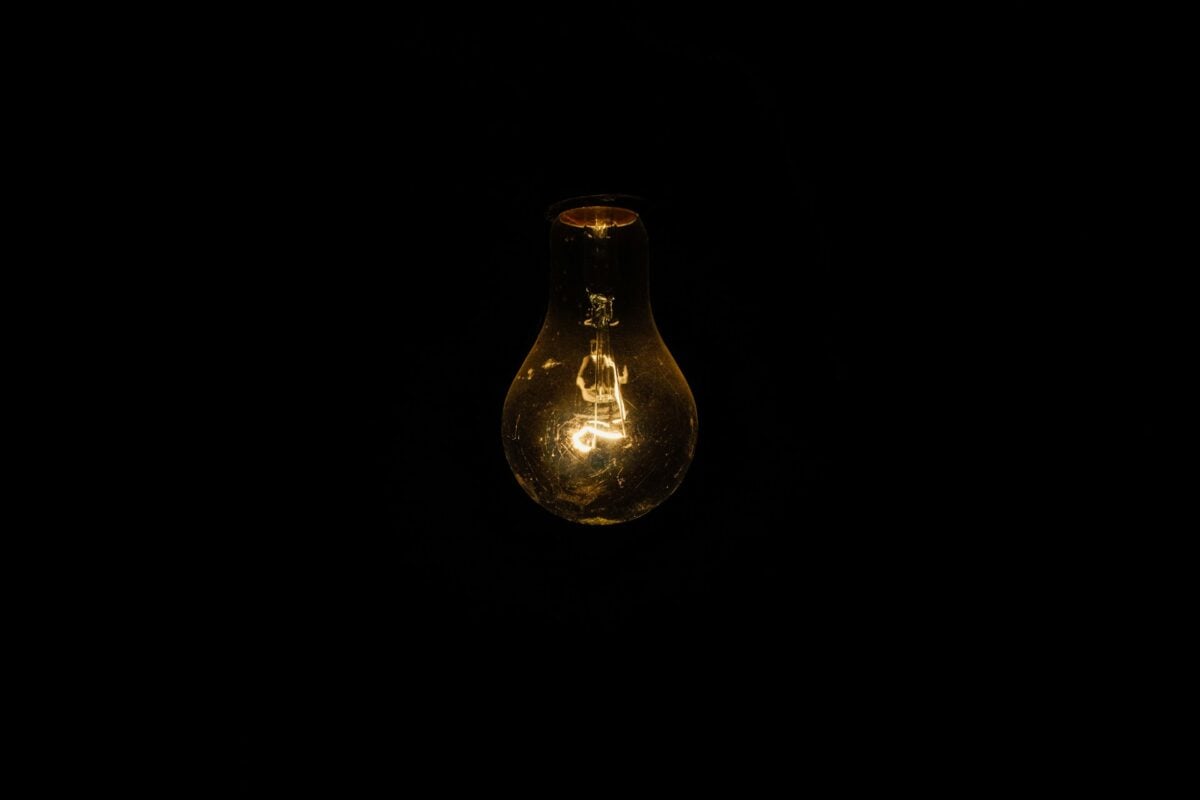
When Benjamin Franklin flew a kite during a storm, he wasn’t just being curious. He wanted to prove that lightning and electricity were the same thing.
The key on the kite got a little charge when lightning struck, and that small shock proved his point. This bold test helped people understand electricity better and set the stage for lightbulbs, power plants, and modern life.
Breaking bread and discovering mold’s power

Alexander Fleming didn’t mean to leave his Petri dish out, but that mistake led to penicillin. He noticed mold had killed the bacteria around it.
That moment sparked the birth of antibiotics, which later saved millions of lives. Before this, people died from simple infections.
After, medicine changed forever.
A peek inside the atom

The gold foil experiment led by Ernest Rutherford showed that atoms aren’t just solid blobs. They have a tiny center—a nucleus—and lots of empty space around it.
That was a huge change from how scientists thought matter worked. It helped people understand atomic structure, which later played a role in everything from nuclear power to chemistry class.
Like Go2Tutors’s content? Follow us on MSN.
One small step with fruit flies

Gregor Mendel’s pea plants get all the attention, but Thomas Hunt Morgan’s work with fruit flies made genetics real for many scientists. He found out that traits were linked to chromosomes.
That meant things like eye color or disease risk could be passed down in clear patterns. It opened the door to modern genetics and made DNA studies possible later.
Discovering what’s in the middle

In the early 1900s, Robert Millikan figured out the charge of a single electron by watching oil drops fall between two charged plates. It sounds dry, but this tiny detail helped complete the puzzle of atomic structure.
That small electron charge became the foundation for countless inventions and discoveries later on. Sometimes small data leads to big change.
The quiet code in every cell

James Watson and Francis Crick, with help from Rosalind Franklin’s X-ray images, revealed the double-helix structure of DNA. Before that, people knew DNA existed, but didn’t really understand how it worked.
Once the twisted ladder shape was discovered, scientists could figure out how genetic information is stored and passed along. That changed medicine, forensics, and even how families trace their ancestry.
Like Go2Tutors’s content? Follow us on MSN.
Listening to static from the past

Two radio engineers, Arno Penzias and Robert Wilson, were just trying to get rid of annoying background noise in their antenna. But that noise turned out to be the leftover heat from the Big Bang.
Their accidental find gave strong proof that the universe had a beginning. Cosmology—how the universe started and grew—got a major boost from that static.
A chimp, a stick, and a new way to think

Jane Goodall didn’t just observe chimps. She noticed them using tools, like using sticks to get termites.
That went against what most people believed at the time—that only humans used tools. Her findings showed that animals are smarter and more complex than scientists thought.
It shifted how people view animals and even themselves.
Measuring how memories form

In the 1950s, a patient known as “HM” had parts of his brain removed to treat seizures. Afterward, he couldn’t form new memories.
This led researchers to realize that the hippocampus plays a key role in storing long-term memories. The case changed how people understand the brain, memory loss, and how learning works.
Like Go2Tutors’s content? Follow us on MSN.
Taking flight into the modern age

The Wright brothers didn’t just build a machine. They ran test after test to understand lift, drag, and control.
Their experiments with wind tunnels and gliders led to the first powered flight in 1903. That short trip changed travel forever.
The world felt smaller after that.
Catching rays and changing cancer care

In the late 1800s, Wilhelm Röntgen discovered X-rays by accident. He noticed a glow on a screen while working with tubes and electricity.
That strange glow turned out to be something that could pass through flesh but not bone. His work opened the door to medical imaging, which lets doctors see inside the body without surgery.
Copying genes like a machine
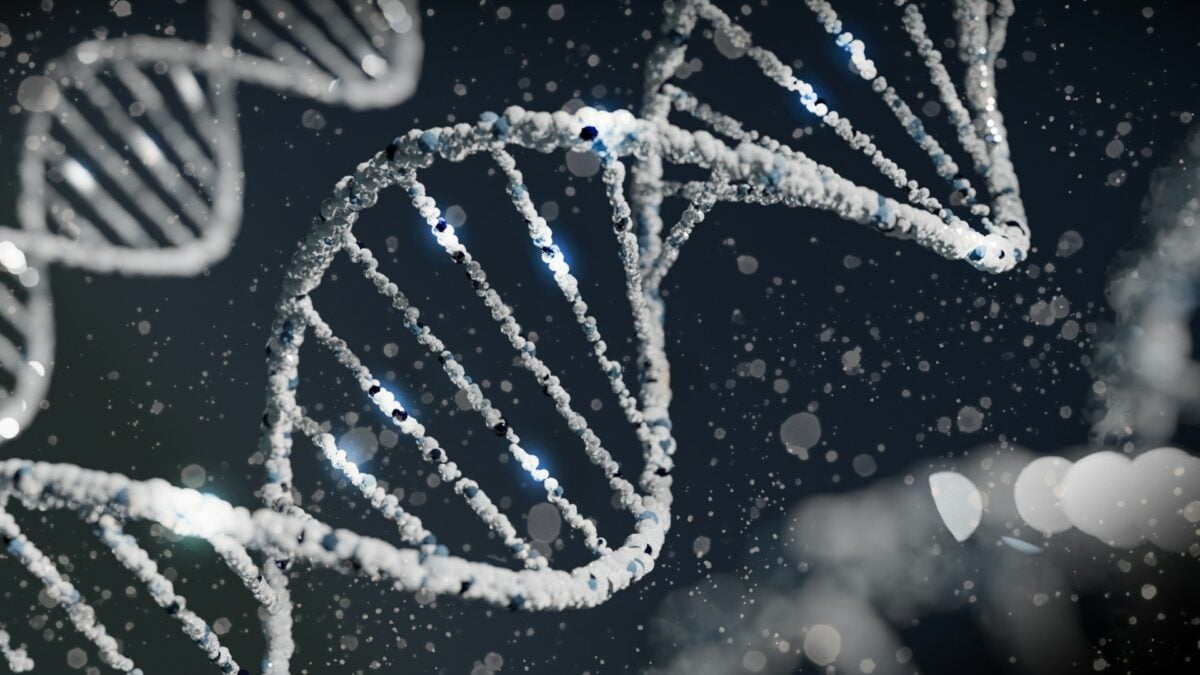
In the 1980s, Kary Mullis came up with a way to copy DNA quickly. The method, called PCR, lets scientists take a tiny bit of DNA and make millions of copies.
It changed how crime scenes are investigated, how diseases are diagnosed, and how genes are studied. Fast and accurate testing became possible.
Like Go2Tutors’s content? Follow us on MSN.
Trying to split soup and finding quarks

Physicists firing particles at each other in huge machines found that protons and neutrons weren’t the smallest pieces after all. They found even smaller parts inside—called quarks.
That discovery helped shape the Standard Model of physics, which explains the basic building blocks of everything. It’s a reminder that there’s always more to learn, even when people think they’ve gone as small as they can.
Proving time can stretch

Albert Einstein didn’t build rockets, but his thought experiments proved time isn’t always steady. His theory of relativity showed that time and space change depending on speed and gravity.
Later, this was tested with fast-moving planes and super-accurate clocks. It wasn’t just math.
It’s why GPS systems work today, adjusting for time differences as satellites fly around Earth.
Finding bacteria in the wrong place

For years, doctors thought stomach ulcers came from stress or spicy food. Then Barry Marshall drank bacteria to prove his idea right—that Helicobacter pylori caused ulcers.
He got sick, then treated himself, and proved his point. It shocked the medical world and changed how doctors treat ulcers today.
Like Go2Tutors’s content? Follow us on MSN.
Saving kids by keeping it simple

A doctor in Bangladesh noticed that kids with diarrhea didn’t need fancy treatment. They just needed a simple mix of salt, sugar, and clean water.
This became known as oral rehydration therapy. It’s cheap, easy, and has saved millions of lives around the world.
Sometimes the most powerful experiments are the ones that don’t cost much at all.
From yesterday’s labs to today’s life

Each of these experiments started with a question, a problem, or even a mistake. But they didn’t stay in labs or books.
They found their way into hospitals, homes, schools, and space. The world people live in now is shaped by the risks others took back then.
It’s a strong reminder that curiosity and action, no matter how small, can change everything.
More from Go2Tutors!

- 16 Historical Figures Who Were Nothing Like You Think
- 12 Things Sold in the 80s That Are Now Illegal
- 15 VHS Tapes That Could Be Worth Thousands
- 17 Historical “What Ifs” That Would Have Changed Everything
- 18 TV Shows That Vanished Without a Finale
Like Go2Tutors’s content? Follow us on MSN.