Facts About Battles You Learned Incorrectly
History loves a good story, and battles seem to bring out the storyteller in all of us.
The problem is that somewhere between the smoke clearing and the textbooks arriving, facts get stretched, heroes get manufactured, and entire narratives get rewritten to fit whatever moral the winners want to tell.
From ancient Greece to the Montana plains, some of the most famous battles in history have been wrapped in myths so persistent they’ve become harder to dislodge than the original combatants.
Let’s dig into some of the biggest misconceptions about famous battles—the ones that stubbornly refuse to die despite historians’ best efforts to correct the record.
The 300 Spartans Stood Alone at Thermopylae

The legend is irresistible: 300 Spartan warriors holding off the entire Persian Empire in a suicidal last stand at the narrow pass of Thermopylae in 480 BCE.
It’s been painted, filmed, and turned into a rallying cry for underdogs everywhere.
The reality is that there were roughly 7,000 Greek soldiers at Thermopylae, not just 300 Spartans.
The Spartans brought along several thousand helots (their enslaved population) who fought alongside them, plus contingents from other Greek city-states including Thespiae and Thebes.
When the final stand came and most Greeks retreated, it was 300 Spartans, 700 Thespians, and 400 Thebans who stayed behind.
The Spartans get all the glory in popular memory, but they had plenty of company during the actual fighting.
Ancient Greek historians like Herodotus documented the presence of these other forces, yet somehow the story narrowed to just the Spartans over the centuries, probably because a story about 300 sounds more dramatic than one about several thousand.
Napoleon Was Defeated at Waterloo Because He Was Sick and Incompetent

Popular accounts of Waterloo often paint Napoleon as a sick, over-the-hill commander who made catastrophic mistakes against the Duke of Wellington on June 18, 1815.
While Napoleon did face challenges at Waterloo, the battle was far more complex than a simple story of French incompetence versus British brilliance.
The timing of the Prussian army’s arrival proved decisive—they hit Napoleon’s right flank at a critical moment when the French were pushing Wellington’s forces hard.
The battle hung in the balance for hours, and small changes in timing or weather conditions could have swung the outcome.
Wellington himself reportedly said it was ‘the nearest-run thing you ever saw in your life’.
Napoleon’s strategic position was already compromised before the battle even began, facing two large enemy armies (British and Prussian) that could coordinate against him.
Blaming the outcome on one commander’s errors misses the larger strategic realities and reduces a complicated military engagement to a morality tale.
The Revolutionary War Was Won by Frontier Guerrillas Against Rigid British Tactics

American mythology loves the image of scrappy colonial sharpshooters hiding behind trees and picking off British redcoats marching in straight lines like clockwork soldiers.
The Continental Army fought primarily using conventional European military tactics, not guerrilla warfare.
George Washington spent enormous effort training his troops to fight in the standard linear formations of the era, with help from European officers like Baron von Steuben.
Most major battles of the Revolution—Bunker Hill, Brandywine, Germantown, Monmouth—involved traditional line formations and set-piece battles.
The British weren’t stupid, either; they adapted their tactics throughout the war and often fought in loose formation when terrain demanded it.
Guerrilla actions by militia did occur, particularly in the Southern campaigns, but they weren’t the primary reason the Americans won.
French military and naval support, British overextension, and American persistence in maintaining a conventional army were far more significant factors.
Custer’s Last Stand Was a Heroic Defense Against Overwhelming Odds

Few American battles have been mythologized quite like the Battle of Little Bighorn on June 25, 1876.
The story Americans are generally taught depicts Lieutenant Colonel George Armstrong Custer and his men dying heroically in a sneak attack by Native Americans, when in reality it was a successful defense by Native people against an attempted attack on their camp.
Custer divided his forces before the battle, refusing to wait for reinforcements or coordinate with other Army units.
Neither Major Marcus Reno nor Captain Frederick Benteen moved to help Custer despite hearing heavy gunfire from his position, and the exact sequence of events remains debated since no one from Custer’s immediate command survived.
Archaeological evidence suggests the ‘last stand’ may not have been the organized defensive fight depicted in paintings and films.
Custer’s widow, Libbie, wrote three books glorifying her husband and transforming him from a reckless, aggressively ambitious military politician into a heroic legend.
The mythmaking began almost immediately after news of the battle reached the public during the nation’s centennial celebrations in 1876, and that version proved far more appealing than the messier reality of a failed attack.
The Charge of the Light Brigade Was Just a Tragic Mistake
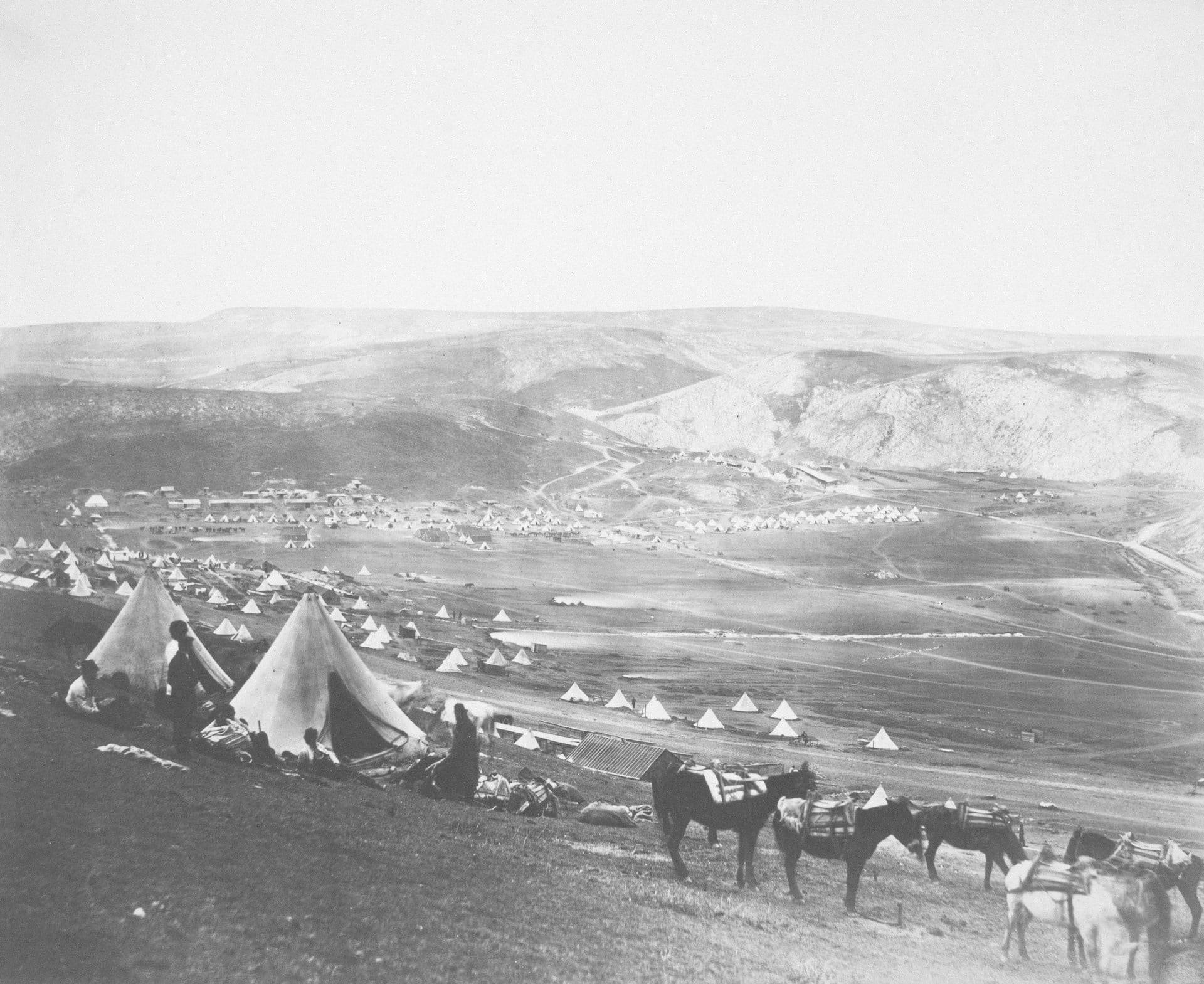
The British cavalry charge at Balaclava on October 25, 1854, during the Crimean War has gone down in history as a classic military blunder—brave but pointless.
The charge did result from miscommunication and confused orders, but the cavalrymen involved were attacking what they believed was a legitimate military objective.
The Light Brigade charged down a valley directly into Russian artillery because of vague orders and the personal animosity between commanders.
Lord Raglan, the British commander, sent an order telling the cavalry to ‘prevent the enemy carrying away the guns’, but he meant guns on a different part of the battlefield than the one visible to the cavalry commander.
The aide who delivered the order gestured vaguely toward the wrong set of Russian guns—the ones at the end of a valley lined with artillery.
The result was catastrophic, but the men weren’t charging blindly for no reason; they thought they were following orders to capture enemy guns.
The breakdown was in command and communication, not in the courage or tactical sense of the cavalrymen themselves.
Pearl Harbor Was a Complete Surprise

December 7, 1941, lives in American memory as the ultimate surprise attack, but the situation was considerably more complicated.
The United States was not ‘sleeping’ at the time of Pearl Harbor—the Roosevelt administration had been playing hardball with Japan for years, trying to get Japan to stop its war of conquest in China.
The U.S. had embargoed strategic goods and raw materials to Japan, and in summer 1941, Washington froze all Japanese assets and made it impossible for Japan to purchase oil.
Washington issued ‘war warning’ messages to military commanders at the end of November, though most officials believed Japan would strike in Southeast Asia or the Philippines, not Hawaii.
American cryptographers had broken Japanese diplomatic codes and could read many Japanese communications, though crucially they couldn’t read military codes that would have revealed attack plans.
On the morning of the attack, radar picked up incoming aircraft, but the warning was dismissed as expected by American B-17 bombers from the mainland.
The attack achieved tactical surprise, but strategic warning signs had been flashing for months—American leaders just didn’t believe Japan would launch an attack across 3,400 miles of ocean.
Medieval Knights Always Wore Full Plate Armor in Battle

Pop culture depicts medieval warfare as armies of knights clanking around in full suits of plate armor, barely able to move.
The reality was far more varied.
Full plate armor didn’t become widespread until the 15th century, relatively late in the medieval period.
For most of the Middle Ages, soldiers wore chain mail, padded armor, or combinations of different types.
Even when full plate armor became available, it was extremely expensive—only wealthy nobles and knights could afford complete suits.
Most soldiers in medieval armies were infantry wearing much lighter protection, if any armor at all.
Knights in full plate could actually move quite well; the armor was carefully articulated at the joints and distributed weight across the body.
Knights trained in armor from youth and could mount horses, fight, and even do acrobatics while wearing it.
The image of the immobile, helpless knight comes partly from later periods when armor was more for ceremony than combat, and partly from centuries of storytelling that exaggerated armor’s impracticality.
The Alamo Was About Freedom

The 1836 Battle of the Alamo has been burnished into American mythology as freedom-loving Texans making a heroic stand against Mexican tyranny.
The actual context was significantly more complicated, involving disputes over land, immigration, and particularly the issue of slavery.
Mexico had abolished slavery in 1829, but many American settlers in Texas wanted to keep enslaved people for cotton farming.
Tensions between the Mexican government and American settlers involved multiple issues, including centralization of power under Mexican President Santa Anna, but slavery was a major factor that later narratives tended to minimize.
The defenders of the Alamo did fight bravely against overwhelming numbers, but framing the battle purely as a struggle for liberty ignores the less heroic economic and political motivations that helped drive the Texas Revolution.
Like many historical events, reducing the Alamo to a simple story of good versus evil strips away the messier human motivations that actually drove people to fight.
Why These Myths Persist
Battles become legends because people need heroes, and heroes need clear narratives.
The truth is that most military engagements are chaotic, morally ambiguous affairs where luck matters as much as skill, and where the winners’ version of events gets carved into stone while other perspectives fade.
We keep telling simplified versions because they’re easier to remember, more satisfying emotionally, and more useful for making larger points about courage, sacrifice, or national identity.
Historians spend careers untangling these myths, armed with archaeological evidence, archival documents, and indigenous oral histories that contradict the official stories.
The myths persist anyway, passed down through movies, textbooks, and commemorative speeches.
Perhaps that says something about how we prefer our history—simplified, heroic, and neatly packaged.
The real story is almost always stranger, more complicated, and far more interesting than the legend, if we’re willing to look past the smoke and mirrors.
More from Go2Tutors!

- The Romanov Crown Jewels and Their Tragic Fate
- 17 Halloween Costumes Once Considered Taboo
- Famous Hoaxes That Fooled the World for Years
- 15 Child Stars with Tragic Adult Lives
- 16 Famous Jewelry Pieces in History
Like Go2Tutors’s content? Follow us on MSN.



