Facts about the Great Pyramids of Giza
Standing at the edge of Cairo, these ancient structures dominate the horizon in a way that photographs never quite capture. The pyramids have been there for thousands of years, watching civilizations rise and fall, and they still raise questions that even modern technology struggles to answer completely.
The Giza pyramid complex sits on a limestone plateau on the west bank of the Nile River, just outside modern Cairo. Ancient Egyptians chose this location deliberately—the west represented the realm of the dead in their cosmology, where the sun set each evening.
Building these monuments took extraordinary planning, resources, and human effort during Egypt’s Old Kingdom period, roughly 4,500 years ago. What remains today represents one of the most ambitious construction projects in human history.
The Khufu Pyramid Reaches Higher Than You’d Think
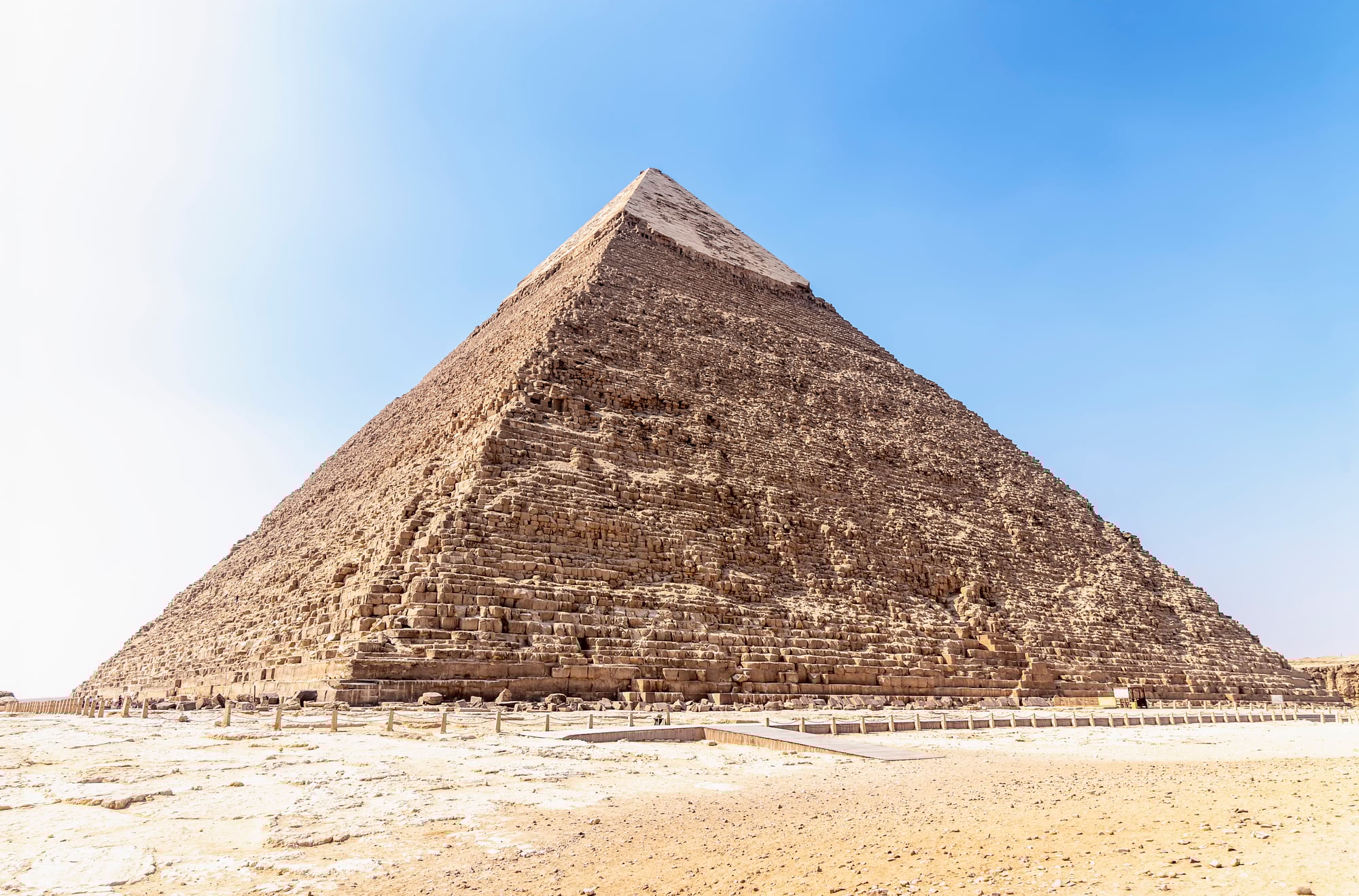
The Great Pyramid, built for Pharaoh Khufu, originally stood at 481 feet tall. That’s about as high as a 48-story building.
Over the centuries, erosion and the removal of its smooth outer casing stones brought it down to 455 feet, but it remained the tallest human-made structure in the world for over 3,800 years. No other building came close until Lincoln Cathedral’s central spire finally surpassed it in 1311 CE—though the exact height of that spire, which collapsed in the 1500s, remains debated.
Estimates suggest it reached around 525 feet.
Each Block Weighs as Much as a Car

The pyramid contains roughly 2.3 million stone blocks. Most of them weigh between 2.5 and 3 tons—about the weight of a modern SUV.
Some special blocks used in foundations and ceilings reach up to 15 tons, while the massive granite blocks in the King’s Chamber weigh up to 80 tons. Moving these without modern machinery required creativity and massive coordination.
The limestone blocks came from quarries nearby, but the granite traveled much farther. Workers cut granite from quarries in Aswan, about 500 miles south of Giza.
They likely floated these massive stones down the Nile on barges during the annual flood season when the river ran high. Getting them from the riverbank to the construction site still required enormous effort—probably wooden sledges pulled across paths lubricated with water to reduce friction.
Construction Took About Two Decades

Historians estimate that building the Great Pyramid took around 20 years. That timeline seems almost impossible when you consider the scale.
Some modern estimates suggest workers placed an average of 800 tons of stone daily, but many Egyptologists caution that this oversimplifies the actual workflow. The construction likely involved periods of intense activity and slower phases, with different teams working on various tasks simultaneously.
The workforce probably numbered in the tens of thousands. Some worked year-round as skilled craftsmen—stone cutters, engineers, surveyors, and artisans who created the fine details.
Others arrived seasonally, joining the project during the Nile’s flood when farming became impossible. This rotating system allowed Egypt to mobilize huge numbers of workers without completely disrupting agricultural production, which remained the foundation of the economy.
The Pyramids Weren’t Built by Slaves

For years, popular culture painted a picture of thousands of enslaved people dragging stones across the desert. Archaeological evidence tells a different story.
The workers were a mix of skilled laborers, conscripted workers fulfilling labor obligations, and rotating corvée labor—not enslaved people but not entirely voluntary either. Many may have been farmers who worked during the Nile’s flood season when their fields were underwater.
They received payment in the form of food, and nearby workers’ villages show they had access to medical care and proper burials.
The Original Surface Looked Nothing Like Today
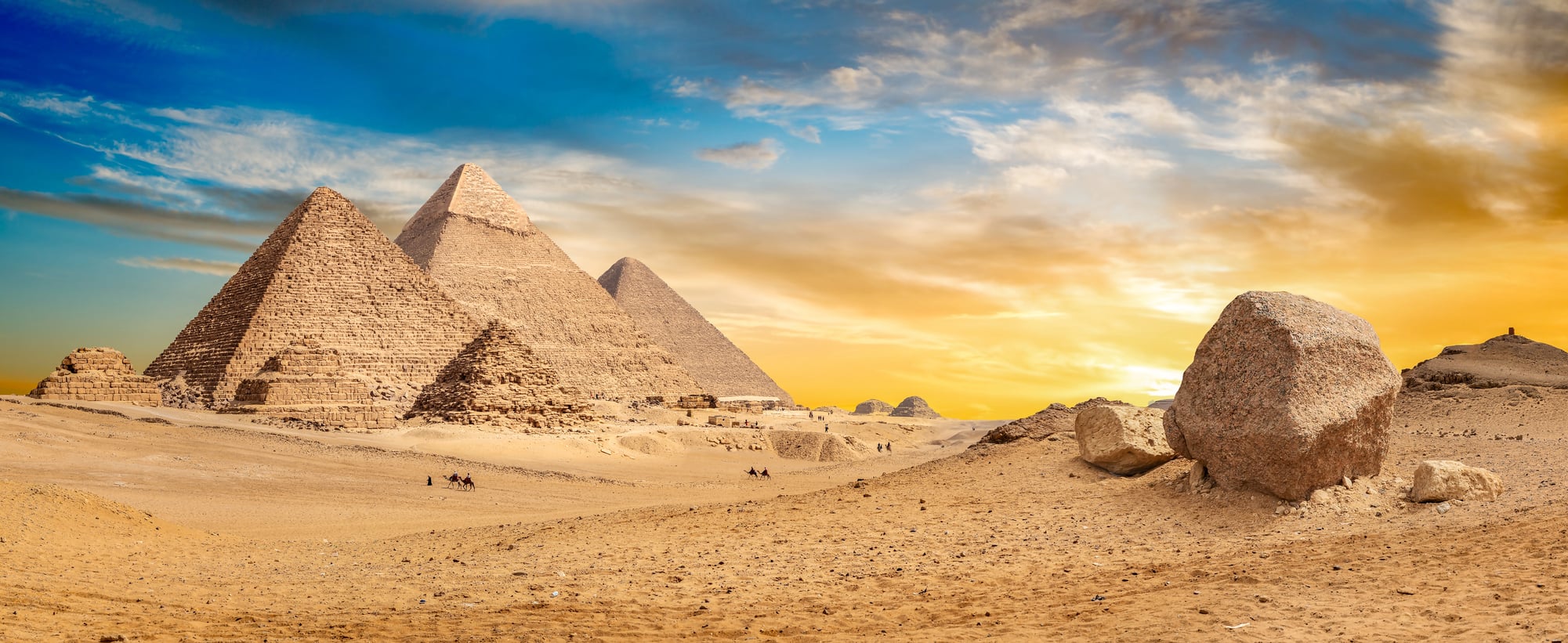
When completed, the pyramids gleamed. They were covered in highly polished white limestone casing stones that reflected the sun’s light and made them visible from miles away.
Ancient writers described them as dazzling. Over time, earthquakes loosened these stones, and later builders repurposed them for mosques and other structures in Cairo.
Now, only the rough inner core remains visible, giving the pyramids their familiar stepped appearance.
Perfect Alignment with Cardinal Directions

The Great Pyramid’s sides align almost perfectly with true north, south, east, and west. The precision is remarkable—off by only about 0.05 degrees.
How ancient builders achieved this without compasses or sophisticated instruments remains debated. Some theories suggest they used the stars, possibly tracking the rotation of a circumpolar star around the North Pole, but the exact method is still unclear.
This alignment wasn’t just for show. The entrances and internal passages of the pyramids often aligned with celestial events or directions that held religious significance.
The narrow shafts extending from the King’s Chamber and Queen’s Chamber point toward specific stars that mattered in Egyptian cosmology. Whether these alignments served practical purposes for construction or purely symbolic ones continues to spark discussion among archaeologists and astronomers.
The Temperature Inside Stays Relatively Stable

No matter how hot or cold it gets outside, the interior chambers of the pyramids maintain relatively stable temperatures, generally ranging from about 60 to 70 degrees Fahrenheit depending on the chamber and season. This happens naturally due to the massive thermal mass of the stone and the design of the internal passages.
The ancient Egyptians probably didn’t plan for this specifically, but it helped preserve what was inside for millennia.
Three Main Pyramids Stand at Giza

While the Great Pyramid gets most of the attention, two other major pyramids share the Giza plateau. The Pyramid of Khafre, built for Khufu’s son, appears taller because it sits on higher ground, but it’s actually slightly shorter.
The Pyramid of Menkaure, built for Khafre’s successor, is significantly smaller but still impressive. Together, these three create the iconic skyline that defines Giza.
The Sphinx Guards the Complex

The Great Sphinx sits nearby, carved from a single piece of limestone bedrock. With the body of a lion and the head of a human—likely representing Pharaoh Khafre—it measures 240 feet long and 66 feet high.
Time and wind have weathered it severely, and its nose has been missing for centuries. Napoleon’s troops didn’t shoot it off, as the myth goes.
Sketches from before Napoleon’s time already show the nose missing.
The Sphinx has spent much of its existence buried in sand. Ancient Egyptians themselves had to dig it out multiple times over the centuries.
A stela placed between its paws by Pharaoh Thutmose IV describes a dream where the Sphinx asked to be freed from the sand. Even in ancient times, the monument was already ancient and mysterious.
Its original purpose remains debated—some think it served as a guardian, others suggest it represented the pharaoh as a manifestation of the sun god Ra.
Hidden Voids Still Exist

In 2017, scientists using cosmic ray muon radiography discovered a large void within the Great Pyramid. This space, about 100 feet long, sits above the Grand Gallery.
Nobody knows what purpose it serves—some experts think it might be a structural void rather than an intentional chamber. The pyramid might hold other undiscovered spaces, waiting for the right technology to reveal them.
Mathematical Patterns in the Design

The dimensions and proportions of the Great Pyramid contain mathematical relationships that have fascinated researchers. The ratio of the pyramid’s perimeter to its height comes close to 2π (two times pi), the same ratio as a circle’s circumference to its radius.
Most experts consider this coincidental rather than evidence of intentional design—the builders likely used practical construction methods that happened to produce this relationship. Still, the debate continues.
Millions of Tourists Visit Every Year
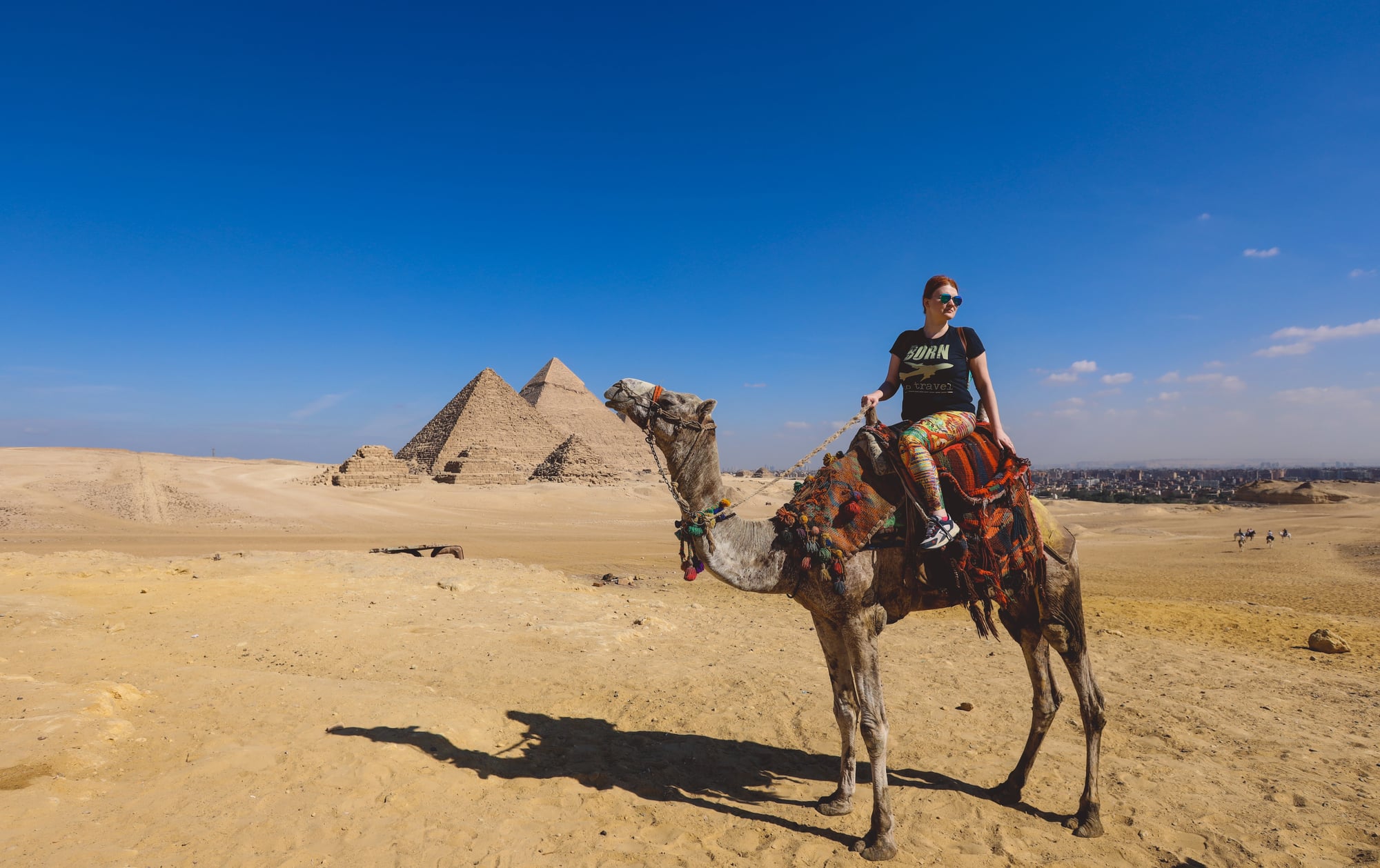
Egypt draws around 14 million tourists annually, with many making the pyramids their primary destination. This constant flow of people brings revenue but also creates preservation challenges.
Moisture from breath, touch, and the general wear of foot traffic slowly damages the ancient structures. Egyptian authorities continually balance access with conservation needs.
Access to the interior chambers gets restricted at times to allow for restoration work. The humidity from thousands of visitors breathing inside the narrow passages threatens the structural integrity and any remaining decorative elements.
Some areas stay permanently closed to protect them. Authorities have installed ventilation systems, lighting that minimizes heat damage, and pathways designed to direct traffic away from the most vulnerable areas.
The challenge of keeping these monuments accessible while ensuring they survive for future generations requires constant attention and innovation.
Building Methods Remain Partially Unknown

Despite decades of research, archaeologists haven’t definitively solved how ancient Egyptians moved and lifted such massive stones to great heights. Evidence suggests they used ramps, but the exact design is disputed.
Some theories propose a single external ramp, others suggest spiral ramps around the pyramid’s exterior, and some argue for internal ramps. Experiments with ancient tools and techniques show these methods work, but the full picture remains incomplete.
Modern researchers have tested various theories by attempting to move and lift replica stones using only the tools and materials available to ancient Egyptians. These experiments show that copper tools can cut limestone effectively, especially when combined with abrasive sand.
Wooden sledges on wet sand can move multi-ton blocks with surprisingly few people. Levers and counterweights can lift stones to significant heights.
But scaling these techniques to match the actual construction of the pyramids—the speed, the precision, the sheer scale—still leaves questions. The ancient Egyptians clearly possessed knowledge and organizational skills that we’re still working to fully understand.
When Desert Sand Meets Ancient Stone
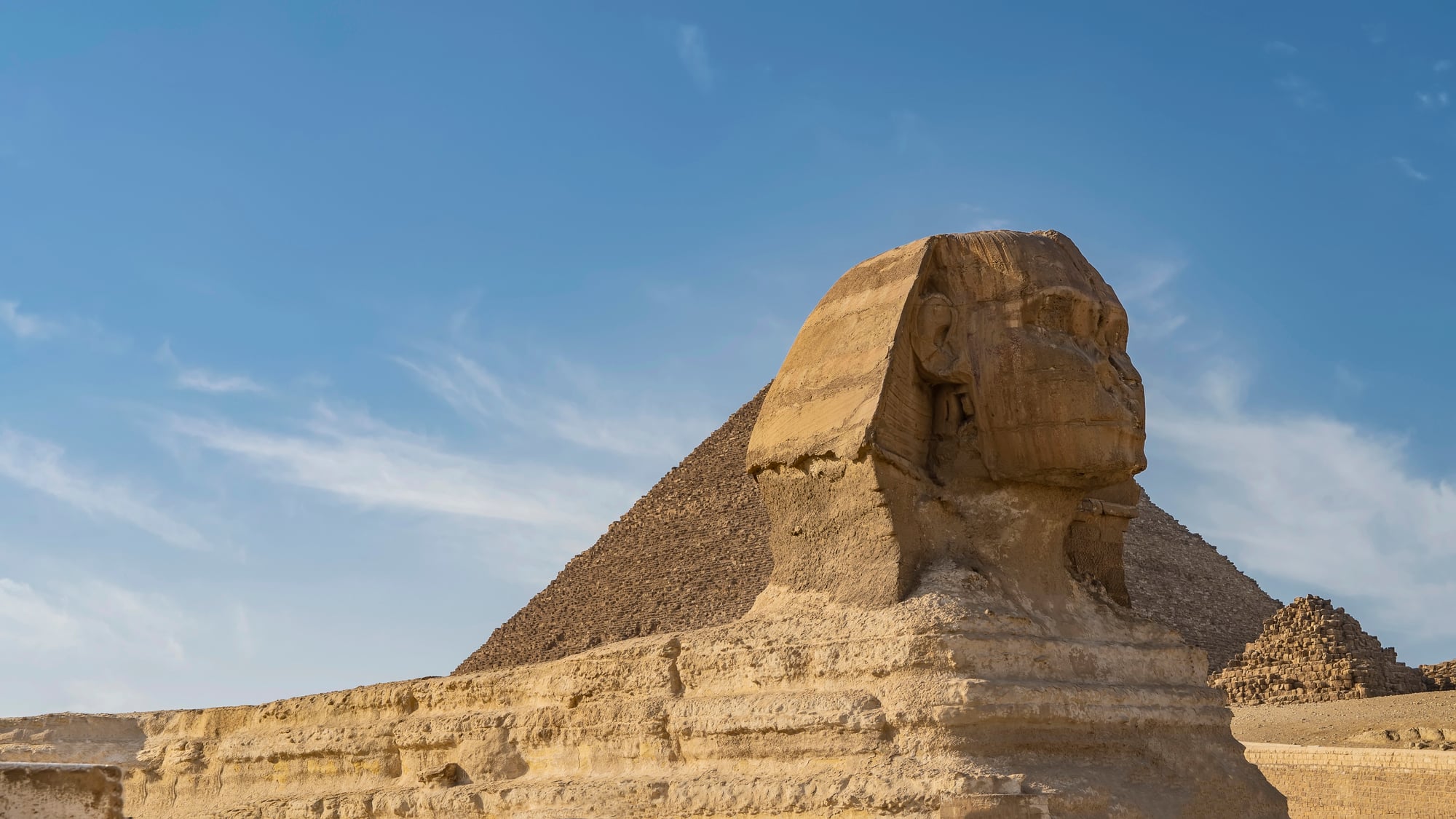
Standing near the pyramids today, you see the suburbs of Cairo creeping ever closer, modern buildings pressing against ancient monuments. The Giza plateau sits at the edge of the vast Sahara, where the desert begins its sweep across North Africa.
These structures have watched the landscape change dramatically, rivers shift, and forests turn to sand. They’ve outlasted empires, religions, and languages.
And they’ll likely stand long after everything around them changes again.
The pyramids have survived not just through durability but through continuous human interest and fascination. Every generation rediscovers them, studies them, tries to understand them.
Medieval Arab scholars wrote about them. European explorers measured them. Modern scientists scan them with particle physics.
Each era brings new questions and new tools to seek answers. The relationship between these monuments and the people who encounter them keeps evolving, but the pyramids themselves remain fundamentally unchanged—silent, massive, and enduring.
What makes them compelling isn’t just their age or size or architectural achievement. It’s the realization that humans built them with determination and ingenuity, organizing society in ways that allowed such projects to exist.
They represent a civilization at its peak, confident enough to invest decades of labor and resources in monuments for their rulers. Understanding them means understanding not just ancient engineering techniques but ancient culture, belief systems, and social organization.
And despite everything we’ve learned over the centuries, they still hold secrets.
More from Go2Tutors!

- The Romanov Crown Jewels and Their Tragic Fate
- 13 Historical Mysteries That Science Still Can’t Solve
- Famous Hoaxes That Fooled the World for Years
- 15 Child Stars with Tragic Adult Lives
- 16 Famous Jewelry Pieces in History
Like Go2Tutors’s content? Follow us on MSN.