Facts About the Liberty Bell
Few American symbols are as instantly recognizable as the Liberty Bell. It does not tower like a monument or stretch across a skyline.
Instead, it sits quietly in Philadelphia, marked by a crack that has become as famous as the bell itself. Cast in the 18th century and carried through centuries of political change, the Liberty Bell has accumulated stories, myths, and layers of meaning.
Some of what people believe about it is accurate. Some of it is romanticized.
All of it reflects the power of symbols to outgrow their original purpose. Here’s a closer look at the facts behind the Liberty Bell.
It Was Not Originally Called The Liberty Bell

When the bell was first ordered in 1751 for the Pennsylvania State House, it was simply known as the State House Bell. Its purpose was practical.
It was meant to summon lawmakers and alert citizens to meetings and public announcements. The name ‘Liberty Bell’ did not gain popularity until the 19th century.
Abolitionists adopted the bell as a symbol of freedom in their fight against slavery. That shift transformed it from a civic instrument into a national emblem.
It Was Cast In London

The original bell was cast in 1752 by the Whitechapel Bell Foundry in London. It was commissioned by the Pennsylvania Assembly and shipped across the Atlantic.
Upon arrival in Philadelphia, it cracked during testing. The disappointment was immediate.
The bell was melted down and recast locally by metalworkers John Pass and John Stow, whose names remain engraved on its surface.
It Cracked More Than Once

The Liberty Bell’s famous crack was not the result of a single dramatic moment. The first crack occurred shortly after its arrival from England.
The bell was recast to fix the flaw. Over time, the bell developed additional fractures.
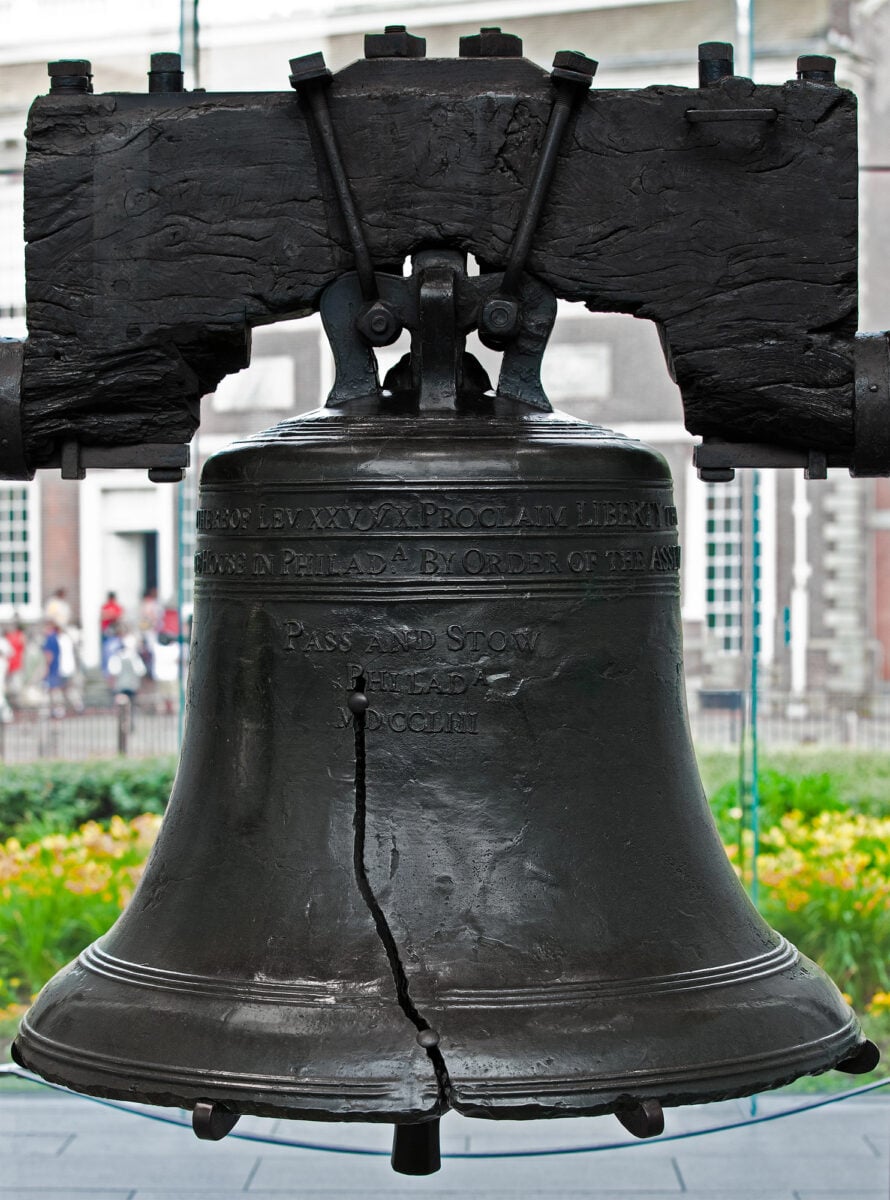
The large crack visible today widened during use in the early 19th century. To prevent further damage, workers attempted to repair it by drilling out the crack, creating the distinctive shape now associated with the bell.
It Bears A Biblical Inscription

The bell carries a verse from Leviticus 25:10: ‘Proclaim Liberty Throughout All the Land Unto All the Inhabitants Thereof.’ This inscription was chosen by Pennsylvania’s colonial assembly.
At the time, the phrase reflected a broader religious and civic sentiment rather than a specific revolutionary message. Yet in hindsight, the words aligned perfectly with the American independence movement and later abolitionist causes.
It Likely Did Not Ring On July 4, 1776

Popular lore suggests the Liberty Bell rang loudly on July 4, 1776, to announce the signing of the Declaration of Independence. Historical evidence, however, indicates that the Declaration was not publicly read until July 8.
Even then, records do not conclusively confirm that this specific bell rang for the occasion. The story grew over time, fueled by patriotic storytelling and 19th-century literature.
The myth endured because it felt right, even if the documentation remains uncertain.
It Weighs Over One Ton

The Liberty Bell weighs approximately 2,080 pounds. It stands about 3 feet tall and has a circumference of roughly 12 feet around the lip.
Despite its modest appearance compared to towering monuments, its physical presence is substantial. Its bronze composition includes copper and tin, with trace amounts of other metals typical of 18th-century bell casting.
It Became A Symbol For Abolitionists
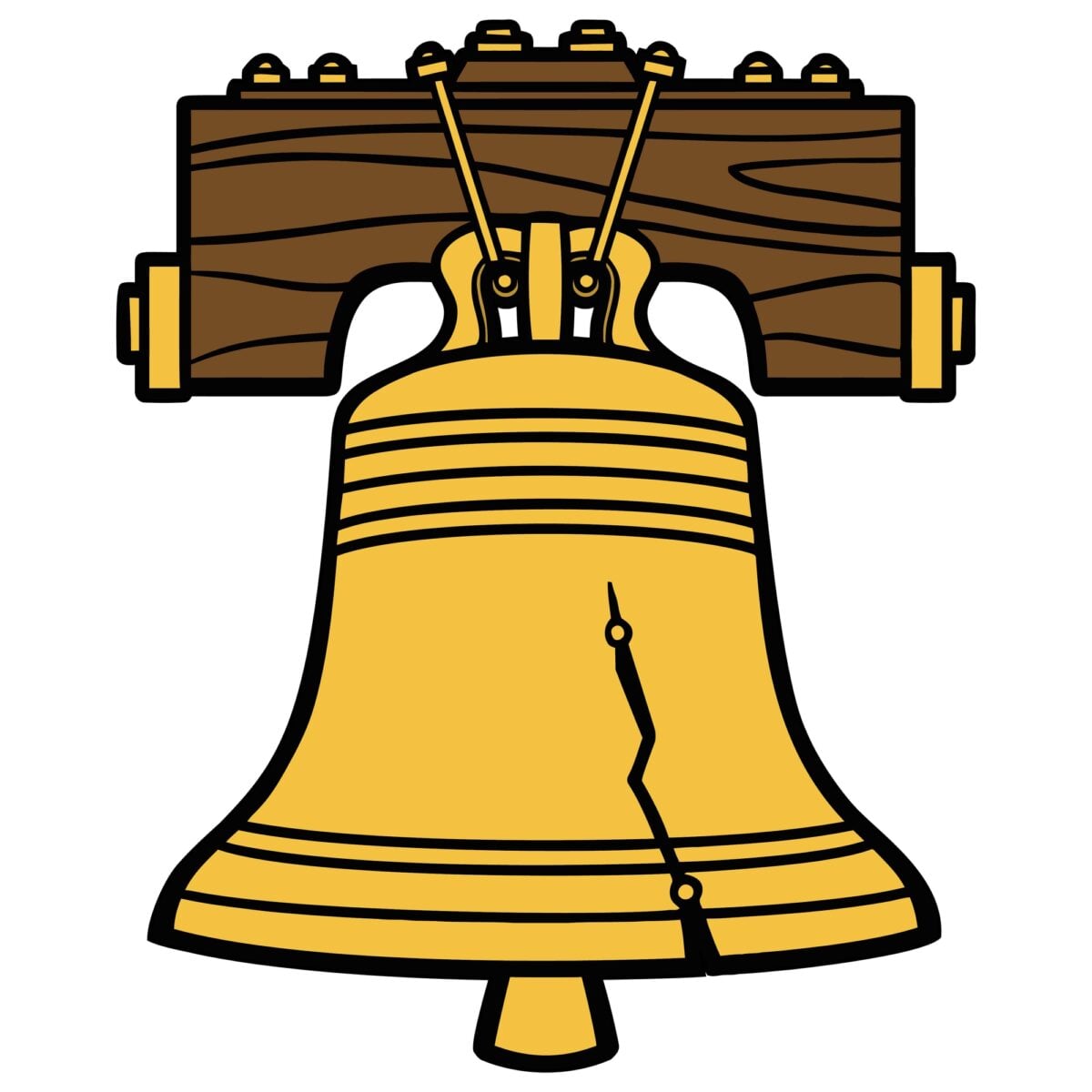
In the 1830s, abolitionists began using the bell’s inscription to highlight the contradiction between American liberty and the institution of slavery. They renamed it the ‘Liberty Bell’ to strengthen that message.
Publications and pamphlets featured images of the bell as a call for emancipation. The crack itself became symbolic, representing a fractured nation struggling to live up to its founding ideals.
It Traveled Across The Country

During the late 19th century, the Liberty Bell toured the United States by train. It appeared at expositions and public celebrations from New Orleans to Chicago.
These journeys were meant to inspire unity following the Civil War. Crowds gathered in massive numbers to see it.
Over time, however, the repeated movement raised concerns about structural damage, and officials eventually decided to keep it permanently in Philadelphia.
It Is No Longer Rung

The Liberty Bell has not been rung publicly since the mid-19th century. The crack makes it structurally vulnerable.
In modern times, it is tapped lightly during ceremonial occasions, often on Independence Day. The gentle strike produces a dull tone rather than a resonant chime, a reminder that its role has shifted from function to symbolism.
It Survived The Revolutionary War In Hiding

During the Revolutionary War, British forces occupied Philadelphia. To prevent the bell from being melted down for ammunition, local residents removed it from the city.
It was hidden in Allentown, Pennsylvania, beneath a church floor. The precaution worked.
After the British left, the bell returned safely to Philadelphia.
Its Color Was Not Always Iconic

Today, the Liberty Bell’s dark bronze surface is familiar to visitors. However, over time, exposure to air and handling altered its appearance.
Early photographs suggest it once had a lighter tone. Oxidation and preservation efforts have contributed to its current look.
The patina tells its own story of age and endurance.
It Helped Shape National Memory

The Liberty Bell gained widespread popularity in the 19th century through children’s literature and patriotic campaigns. A short story published in 1847 dramatized the idea that it rang on July 4, 1776.
Though historically uncertain, that narrative cemented the bell’s association with independence in the public imagination. Symbols often grow through storytelling as much as through documented events.
It Was Once Nearly Recast Again
In its early years, some officials considered recasting the bell yet again to eliminate persistent flaws in its sound. Ultimately, they decided against it.
The imperfect tone became part of its identity. In hindsight, that decision preserved not just the metal, but the narrative of resilience attached to it.
It Has Been Repositioned Multiple Times

The bell has been housed in several locations over the centuries, including Independence Hall and a glass pavilion near its current site.
Today, it resides in the Liberty Bell Center in Philadelphia. The structure allows visitors to view both the bell and Independence Hall in the background, reinforcing its historical context.
It Remains A Living Symbol

The Liberty Bell continues to appear in civic ceremonies, political movements, and educational materials. Its image is widely reproduced, often detached from the fine details of its origin.
The crack, once a flaw, now defines it. It serves as a reminder that ideals can endure even when tested.
A Sound That Carries Beyond Metal

Not built for show, the bell first called officials together when the government needed order. Slowly, though, it started standing for more than just schedules and sessions.
Fighters for independence saw it. Then those who demanded an end to slavery claimed it too.
Each era shaped what it stood for next. A sudden break ended its chime, yet magnified what it stands for.
This bell carries a history mirroring a country chasing an ideal etched into its frame. In this way, its echo lives on – not in noise, because of the meaning it holds.
More from Go2Tutors!

- The Romanov Crown Jewels and Their Tragic Fate
- 13 Historical Mysteries That Science Still Can’t Solve
- Famous Hoaxes That Fooled the World for Years
- 15 Child Stars with Tragic Adult Lives
- 16 Famous Jewelry Pieces in History
Like Go2Tutors’s content? Follow us on MSN.



