Facts about the library that straddles two nations
Imagine checking out books while standing in Canada and returning them while standing in the United States. This isn’t science fiction—it’s daily life at one of the world’s most unusual libraries. The Haskell Free Library and Opera House is a Victorian building that straddles the Canada–United States border, in Rock Island (now part of Stanstead), Quebec, and Derby Line, Vermont, respectively.
Most people have never heard of a building that exists in two countries simultaneously, let alone visited one. The Haskell Free Library breaks every rule about how libraries are supposed to work, and it’s been doing so for over a century.
Here are some remarkable facts about this extraordinary cross-border institution.
It Was Built Deliberately on the Border
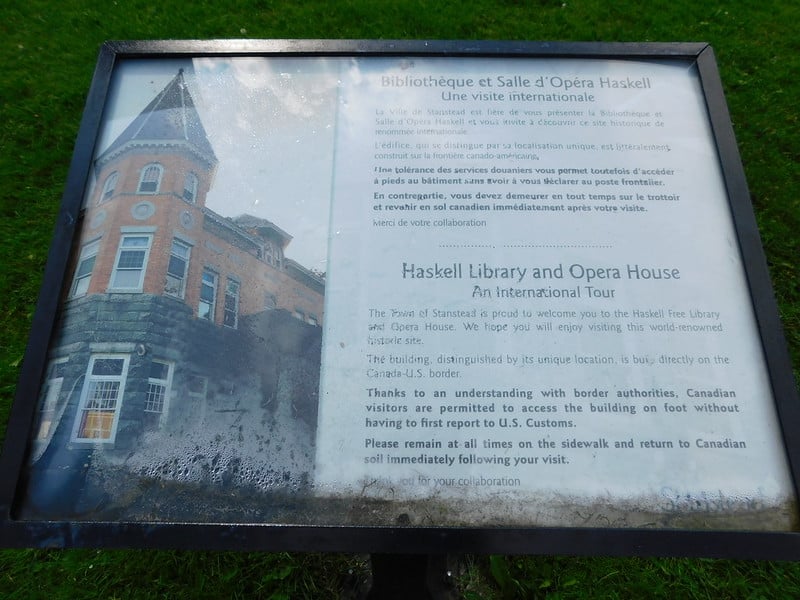
The Opera House opened on June 7, 1904, having deliberately been built on the international border. This wasn’t an accident or oversight—the location was chosen intentionally. The Haskells wanted Canadians and Americans to have equal access to the Library and Opera House, and so they chose to build on the (then open) border. It was built in memory of her parents Catherine and Horace Stewart and her husband Carlos Freeman Haskell.
The Building Has Two Addresses in Different Countries

The library has two different addresses and postal codes: 93 Caswell Avenue, Derby Line, Vermont, 05830 and 1 rue Church (Church Street), Stanstead, Quebec, J0B 3E2. Think about that for a moment—this building literally exists in two postal systems. Mail carriers from both countries deliver to the same building, just different sides of it.
A Black Line Marks the International Border

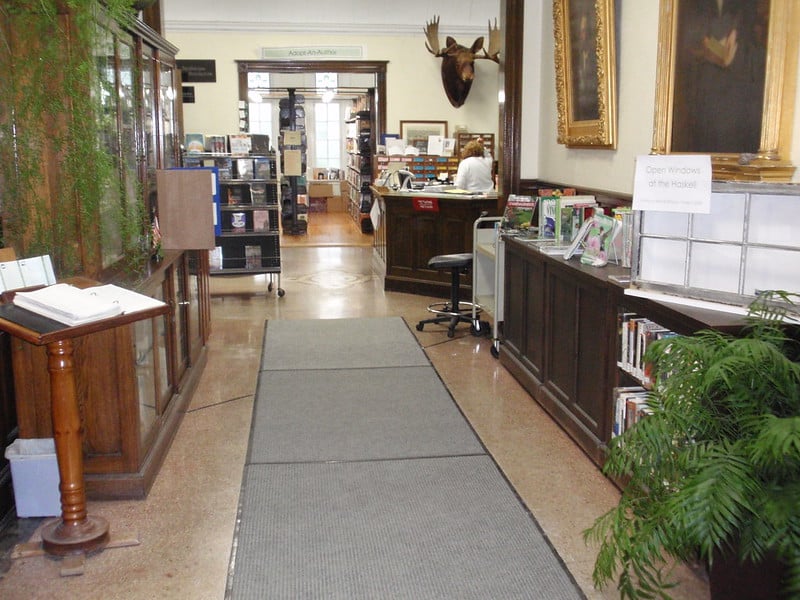
A thick black-tape line runs diagonally across the center of the library to mark the Canada–United States border. Walking across this line means you’re crossing from one nation to another. The international border is a black line on the floor of the library’s reading room. It’s like having a permanent reminder that you’re standing in two places at once.
The Stage Is in Canada, the Audience in America

The stage and half of the seats are in Canada; the remainder of the opera hall is in the United States. This creates one of the world’s most unique theater experiences. A thick black line runs beneath the seats of the theater to mark the Canada–United States border. Performers literally perform for an international audience every single night.
It’s Called the Only American Opera House Without a Stage

— Photo by marimar8989
Because of this, the Haskell is sometimes called “the only opera house in the U.S.A. with no stage.” Since the stage sits on the Canadian side, technically the American portion has seats but no stage. It’s also been called the only American library with no books, since most of the book collection sits on the Canadian side.
It Holds Over 20,000 Books in Two Languages

The library, located on the first floor, has a collection of more than 20,000 books in English and French and is open to the public five days a week. French and English books are organized separately. The bilingual collection reflects the multicultural nature of the border community it serves.
The Architecture Mixes Multiple Styles
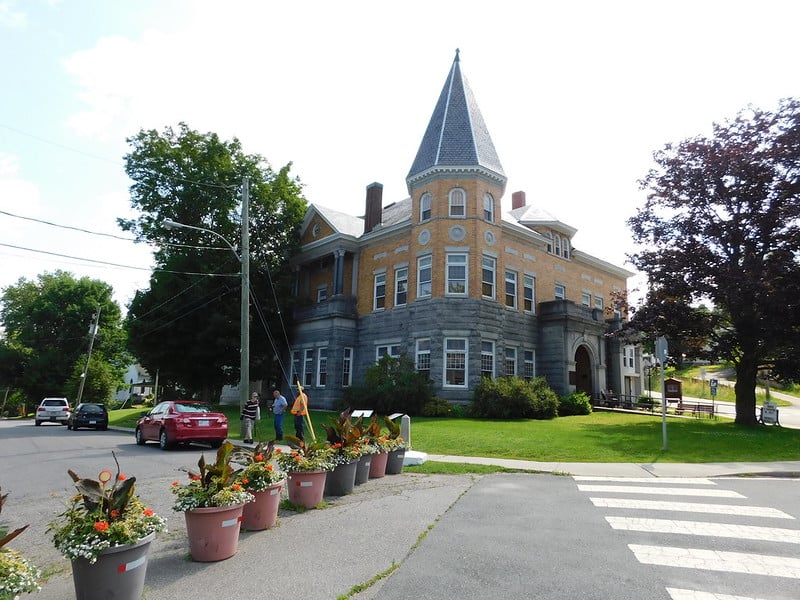
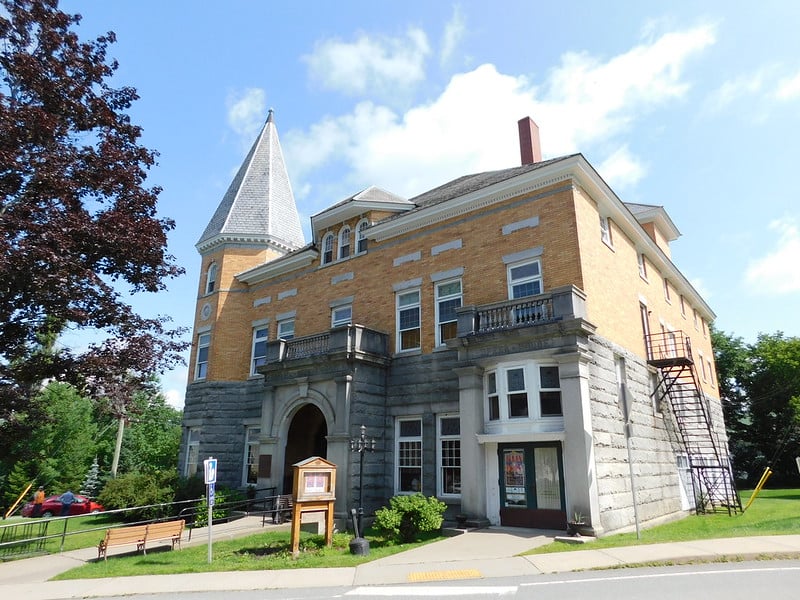
The building was designed by architect James B. in the Queen Anne Revival style. Some of the outstanding features of the building include the structural and ornamental use of granite, stained glass windows imported from Scotland, ornate fireplaces and rich woodworking on the library interior. The building cost $50,000 when completed in 1904—a substantial sum for the time.
It’s One of Only Six Buildings That Straddle This Border
The Haskell library is just one of six buildings that straddle the border line. These cross-border structures are extremely rare. In 1925, the International Boundary Commission began banning new on-the-border structures. The Haskell was grandfathered in, making it even more precious as an architectural curiosity.
It Operates Under a Unique International Management

It is run by a private board of four American and three Canadian directors. This seven-person board manages the only public building shared between the United States and Canada. The Haskell family later donated the building to the towns of Derby Line and Rock Island (now Stanstead) in Haskell’s memory.
Both Countries Recognize It as Historic

In the United States, it has been registered in the National Register of Historic Places since 1976. In Canada, it has been a provincial heritage site since 1977 and was designated a National Historic Site in 1985. Having historic designation in two countries makes this building triply protected from demolition or major alterations.
The Opera House Was Modeled After Boston’s

The opera house on the second floor was rumored to be modeled after the old Boston Opera House in a somewhat scaled down fashion (it seats four hundred), but the Boston Opera house was built afterwards. This makes Haskell’s design even more impressive—it may have influenced Boston’s later opera house rather than the other way around.
It Features Original Victorian Theater Equipment

A painted scene of Venice on the drop curtain and four other backdrops by Erwin Lamoss (1901) and plaster scrollwork complete with plump cherubs built in Boston ornament the opera hall. All this original equipment still works over a century later. The Victorian-era stage machinery remains functional, giving audiences an authentic period theater experience.
It Has Granite Walls Two Feet Thick
This historic building, which was constructed with two-foot-thick (0.61 m) walls built of granite from Stanstead. These massive walls were built to last centuries, and they’ve done exactly that. The local granite gives the building its distinctive appearance and incredible durability.
Border Security Has Created Recent Challenges

The U.S. government is making it more difficult for Canadians to access the Stanstead, Que., library, an iconic building that straddles the border, according to town and library officials. In March 2025, at the start of the second presidency of Donald Trump, the United States government announced its intent to restrict Canadians from using the main entrance starting October 1, 2025, unless they first passed through US Customs.
A Famous Author Helped Fund Recent Renovations
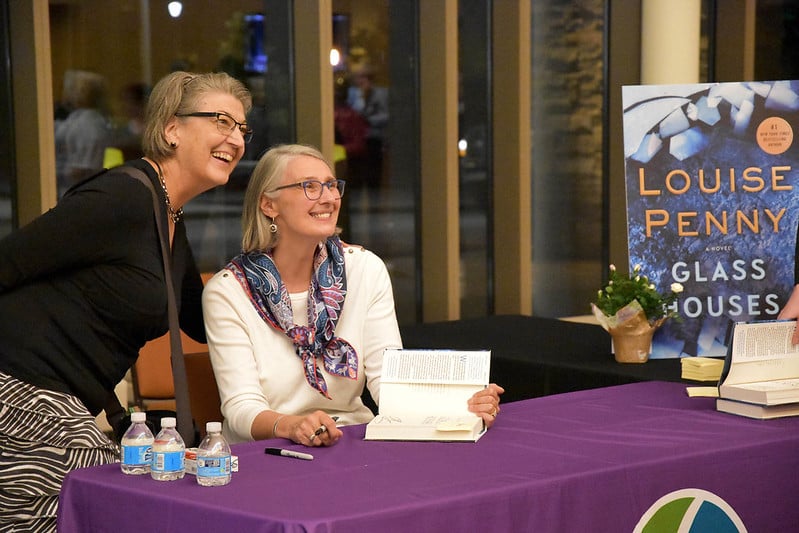
The Haskell also launched a fundraiser for a permanent, accessible entrance on the Canadian side, with author Louise Penny making a major donation; the library initially planned to raise CA$100,000 but was able to raise CA$170,000 within a week. Louise Penny, the bestselling mystery novelist, stepped up to help preserve this unique institution.
It Once Nearly Hosted a Beatles Reunion

— Photo by Elenaferns-photo
The Haskell offered a perfect solution to their dilemma. Here, John and George would be able to join up with Paul McCartney and Ringo Starr without risk of breaking the law or creating any future legal entanglements. Inevitably, it was not to be, nicked by prudent local law enforcement who conceded that the crowds such a meeting was sure to gather would reach unmanageable proportions. This remains the ‘most famous thing that never happened’ at the library.
The Theater Seats 400 People

The Victorian structure was completed in 1904 for $50,000, and the 400-seat opera house on the second floor opened that year. This makes it a substantial venue for a border town. The opera house continues to host regular performances throughout the season, from spring through fall.
It Serves as a Symbol of International Friendship

For around 200 years Derby Line, Vermont, and Stanstead, Quebec, essentially functioned as one town. The library embodies this spirit of cooperation. Obama referenced several border towns, including my hometown of Derby Line, noting a resident’s comment, “We’re two different countries, but we’re like one big town and people are always there for you.”
People Can Move Freely Between Countries Inside

Once inside the library, Canadian and American citizens have been able to mingle freely across the border line drawn on the floor as long as they return to the proper country afterwards. This freedom of movement within the building makes it a unique space where international borders become meaningless, at least temporarily.
It Has Become a Tourist Destination

A visit to the Haskell is great fun for tourists, many of whom discover it by accident, as the Haskell is a real hidden gem. A popular photo opportunity is in the library’s reading room where the international line cuts through at an angle, indicated by black masking tape on the gleaming hardwood floor. Visitors love the novelty of standing in two countries simultaneously.
The Library Cards Work on Both Sides

Library cards are available to anyone within a 30-mile radius of the location. This radius crosses international boundaries, meaning both Canadian and American residents can get cards. The library also offers mobile delivery services to patrons in the surrounding area.
Where Past Meets Present
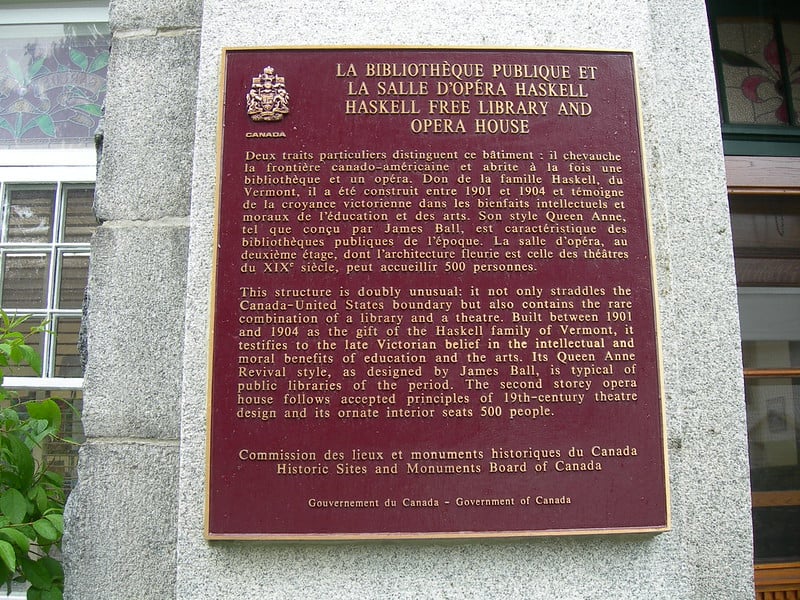
The Haskell Free Library represents something increasingly rare in our world—a place where cooperation trumps division. The Haskell Free Library and Opera House, built in 1904, has been declared a heritage site in both countries and has long been considered a symbol of harmony between Canada and the U.S. Even as modern border security measures create new challenges, this century-old institution continues to serve both communities. It’s a place to reunite the two countries, two communities. We’re all friends, we’re all family. We stick together. In an era of increasing nationalism, the Haskell reminds us that some things are more important than the lines we draw on maps.
More from Go2Tutors!

- 16 Historical Figures Who Were Nothing Like You Think
- 12 Things Sold in the 80s That Are Now Illegal
- 15 VHS Tapes That Could Be Worth Thousands
- 17 Historical “What Ifs” That Would Have Changed Everything
- 18 TV Shows That Vanished Without a Finale
Like Go2Tutors’s content? Follow us on MSN.



