Forgotten Athletes Who Pioneered Their Sport
Every sport has its famous legends. The household names everyone knows, the faces on posters, the records that get repeated in every conversation.
But behind those celebrated figures stand others who broke ground first, who changed the rules, who made the impossible suddenly possible. These pioneers often get lost in time, their contributions fading as newer stars rise. Their stories deserve to be remembered.
Let’s take a closer look at the athletes who shaped sports history but somehow slipped through the cracks of public memory.
Major Taylor became cycling’s first Black champion against impossible odds

Marshall “Major” Taylor dominated bicycle racing at the turn of the 20th century when most tracks wouldn’t even let him compete. He won the world championship in 1899 and set multiple speed records that stood for decades.
Other riders would literally team up against him during races, trying to box him out or force him to crash. Track owners banned him. Fans threw things at him.
Yet he kept winning, kept pushing forward, and opened doors that had been welded shut. His success proved that talent could overcome even the most vicious racism, though the fight cost him dearly.
Gertrude Ederle swam the English Channel faster than any man before her

In 1926, this 19-year-old from New York became the first woman to swim across the English Channel. That alone would have been historic, but she did it nearly two hours faster than the five men who had managed the crossing before her.
The swim took 14 hours and 34 minutes through cold water, strong currents, and terrible weather. When she returned home, New York threw her a parade bigger than the one for Charles Lindbergh.
Within a few years, though, her name faded from popular memory while other athletes claimed the spotlight. She spent her later years teaching deaf children to swim, passing on her courage quietly.
Like Go2Tutors’s content? Follow us on MSN.
William Henry Lewis became the first Black player at Harvard and then the first to make All-American

Long before Jackie Robinson or any integrated professional league, Lewis played football at Harvard in the 1890s. He made the All-American team twice, in 1892 and 1893, earning recognition as one of the best players in the country.
After graduation, he coached the team and published one of the first football strategy books ever written. Later, he became a lawyer and the first Black person appointed to a federal position when President Taft made him assistant attorney general.
His athletic achievements opened minds at a time when most institutions kept their doors firmly closed.
Toni Stone played professional baseball with men and held her own

Stone joined the Indianapolis Clowns of the Negro Leagues in 1953, becoming the first woman to play as a regular on a big-league professional baseball team. She played second base and batted against legends like Satchel Paige.
Her teammates didn’t want her there at first, and opposing players tried to intimidate her with harsh slides and verbal attacks. She lasted three seasons, proving women could compete at the highest levels of America’s favorite game.
When baseball history gets told, her name rarely comes up, overshadowed by the men who played alongside her.
Manfred Curry revolutionized sailing with science and weather prediction

Most people have never heard of Curry, but every modern sailor uses techniques he developed in the 1920s and 1930s. He won an Olympic gold medal in 1928, but his real contribution was applying aerodynamics and meteorology to sailing.
He built wind tunnels to test sail shapes, studied weather patterns obsessively, and wrote technical manuals that changed how people understood boat speed. Before Curry, sailing relied mostly on tradition and instinct.
After him, it became a science. His name vanished from popular awareness even as his methods became standard practice everywhere.
Like Go2Tutors’s content? Follow us on MSN.
Alice Coachman became the first Black woman to win Olympic gold and nobody threw her a parade

Coachman won the high jump at the 1948 London Olympics, breaking both Olympic and American records. When she came home to Georgia, her own hometown wouldn’t hold an integrated celebration for her.
No ticker tape parade, no national recognition that matched her achievement. She had dominated track and field for a decade before the Olympics, winning national championships while training on dirt tracks without proper equipment.
Her victory should have made her as famous as Jesse Owens, but America in 1948 wasn’t ready to celebrate a Black woman’s triumph. She lived quietly afterward, her historic achievement barely remembered.
Fanny Blankers-Koen won four gold medals while being called too old and too much a mother
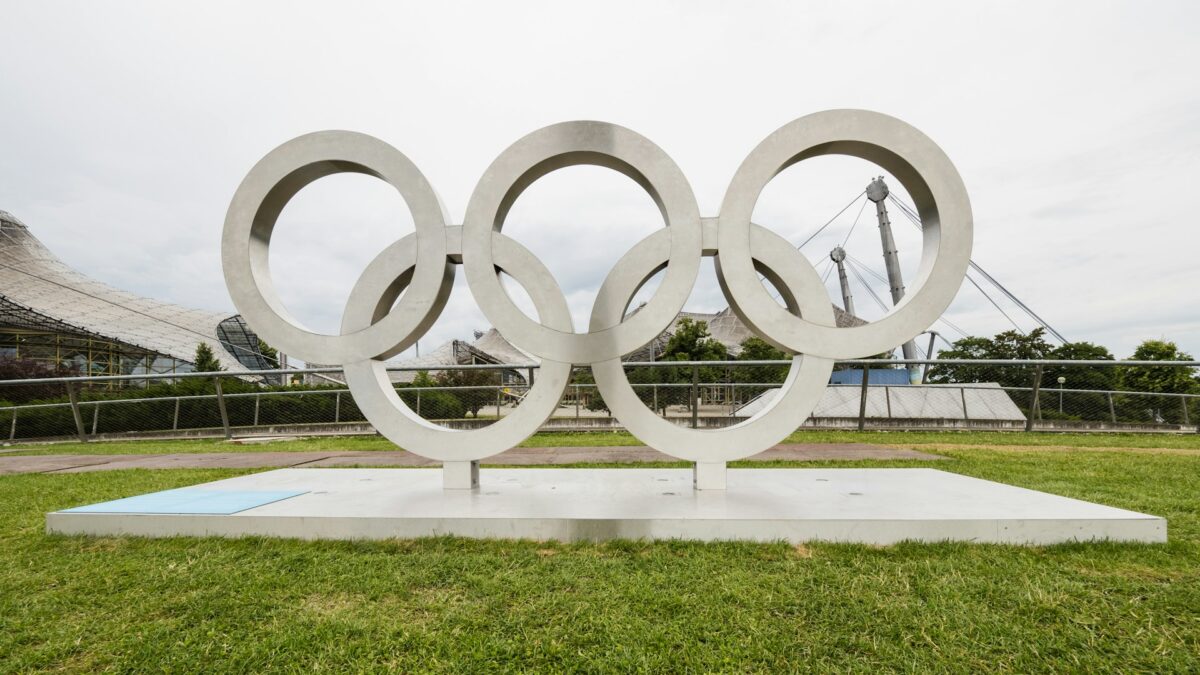
The Dutch runner showed up at the 1948 Olympics at age 30, already a mother of two children. Newspapers called her too old to compete, said she should be home with her family instead of running.
She proceeded to win gold in four different events, which remains an Olympic record for a female track athlete. She held or tied 12 world records during her career across seven different events.
People called her the “Flying Housewife,” a nickname that diminished her athletic greatness by defining her through domestic roles. Modern sports fans rarely hear her name despite achievements that would make her legendary if accomplished today.
Fritz Pollard integrated professional football and coached while facing constant threats

Pollard became the first Black quarterback in professional football in 1920 and later the first Black coach in the NFL. He had to be smuggled into some stadiums, couldn’t stay in the same hotels as his teammates, and received death threats regularly.
On the field, opposing players targeted him viciously, trying to injure him out of games. He played through it all, then coached, then helped integrate the league even as owners tried to push Black players out.
By the 1930s, the NFL had banned Black players entirely, a ban that lasted until after World War II. Pollard’s pioneering work got erased, remembered by few outside of sports historians.
Like Go2Tutors’s content? Follow us on MSN.
Eleonora Sears scandalized society by playing sports seriously

This Boston socialite competed in everything during the early 1900s, at a time when women weren’t supposed to break a sweat. She won national tennis doubles championships, played squash, rode horses in competitions, and walked absurd distances for sport.
Once she walked from Boston to Providence, 47 miles, just to prove women had endurance. She wore trousers when women were supposed to wear skirts. She competed against men when she could.
Her family had money and status, which protected her from some criticism but couldn’t stop the scandal her athletic life created. History books mention her as a socialite and fashion rebel but rarely as the groundbreaking athlete she was.
Kenny Sailors invented the jump shot and changed basketball forever

Before Sailors, basketball players kept their feet on the ground when shooting. He started jumping into his shots in the 1930s, playing at the University of Wyoming.
Coaches thought it was a gimmick that would never work in real games. He proved them wrong, leading Wyoming to the 1943 NCAA championship and winning the tournament’s Most Outstanding Player award.
Within a decade, every player in basketball was copying his technique. The jump shot became fundamental to the sport, yet Sailors never got rich or famous from his innovation. He spent years coaching in remote Alaska, far from the basketball world he had transformed.
Annette Kellerman got arrested for wearing a fitted swimsuit and then became a movie star

This Australian swimmer advocated for women’s right to wear practical swimsuits instead of the heavy, restrictive outfits required by 1900s modesty laws. Police arrested her on a Boston beach in 1907 for indecency.
She fought back, arguing that women couldn’t swim properly in the approved clothing. Her activism helped change swimwear regulations worldwide.
She also performed in vaudeville, set multiple swimming records, and starred in early Hollywood films where she did her own underwater stunts. Her name disappeared from public memory even though every woman who wears a comfortable swimsuit owes her a debt.
Like Go2Tutors’s content? Follow us on MSN.
Where the path leads from here

These athletes didn’t just play sports. They broke down walls, changed rules, and proved that boundaries were illusions created by fear and prejudice.
Their absence from popular memory says something about who gets remembered and why. Fame often depends less on achievement and more on timing, on who tells the stories, on which narratives society chooses to preserve.
The pioneers who came first often get forgotten once the path they cleared becomes crowded with others. But their courage and skill made everything that came after possible, and that deserves more than a footnote in sports history.
More from Go2Tutors!

- 16 Historical Figures Who Were Nothing Like You Think
- 12 Things Sold in the 80s That Are Now Illegal
- 15 VHS Tapes That Could Be Worth Thousands
- 17 Historical “What Ifs” That Would Have Changed Everything
- 18 TV Shows That Vanished Without a Finale
Like Go2Tutors’s content? Follow us on MSN.