Fortunes Lost by Famous Families in One Generation
There’s an old saying among wealth advisors: the first generation makes it, the second maintains it, and the third blows it. But sometimes, the collapse happens much faster.
Some families watch centuries of accumulated wealth vanish in a single lifetime, burned through by bad investments, lavish spending, or simply the inability to understand that money, no matter how vast, eventually runs out. These aren’t stories of gradual decline.
They’re cautionary tales of empire-sized fortunes that evaporated before the next generation could even get their hands on the inheritance.
The Vanderbilts: America’s First Rags-to-Riches-to-Rags Story
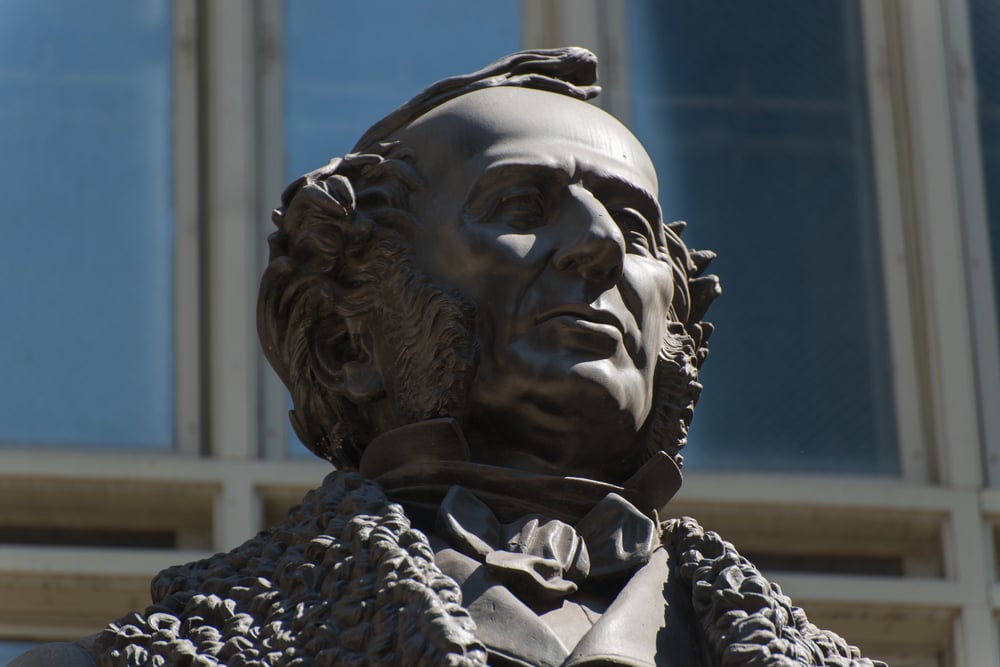
Cornelius “The Commodore” Vanderbilt started with $100 borrowed from his mother in 1810 and turned it into a $100 million fortune through railroads and shipping. That’s roughly $3 billion in today’s money.
When he died in 1877, he was the richest man in America. His son William doubled the fortune to $200 million.
And then everything fell apart. William divided the money among his children, who built competing mansions along Fifth Avenue to outdo each other.
His grandson George Washington Vanderbilt spent $5 million building Biltmore, a 250-room chateau in North Carolina, the equivalent of roughly $150 million today. Reginald Claypoole Vanderbilt drank and gambled away his $10 million inheritance, famously noting that every Vanderbilt son had increased the family fortune except him.
By 1973, when 120 Vanderbilt descendants gathered for a family reunion at the university their ancestor had endowed, not a single one was a millionaire. The ten palatial Fifth Avenue mansions? All demolished by 1947.
“There’s no trust fund,” Gloria Vanderbilt told her son Anderson Cooper, the CNN anchor and sixth-generation descendant. Cooper has said he views inherited wealth as “an initiative sucker” and was raised to make his own way.
Barbara Hutton: The Poor Little Rich Girl
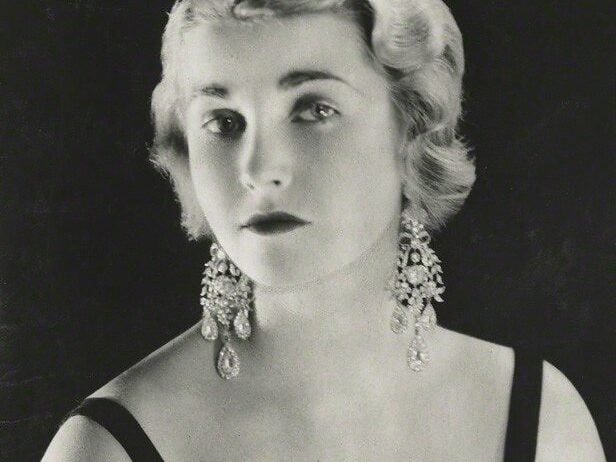
When Barbara Hutton turned 21 in 1933, she inherited roughly $50 million from her grandfather Frank Woolworth, founder of the five-and-dime empire. That’s close to $1 billion adjusted for inflation.
The press called her “the richest girl in the world.”By the time she died in 1979, she had $3,500 left. Hutton married seven times.
Six of her husbands walked away with substantial pieces of her fortune. Only Cary Grant, her third husband, left the marriage without taking alimony.
She gifted one husband a coffee plantation, a B-25 bomber, polo ponies, and $2.5 million in their divorce settlement. Another got $3.5 million and his own converted bomber.
Her spending was legendary and often reckless. She threw a $60,000 debutante party during the Great Depression, earning the public’s scorn.
She maintained a permanent staff of over 200 people across five houses. Drug addiction and anorexia plagued her later years.
When the press dubbed her “the poor little rich girl” as a child, they meant it mockingly. By the end of her life, the nickname fit all too well.
The Stroh Family: A Minnow Swallowing a Whale
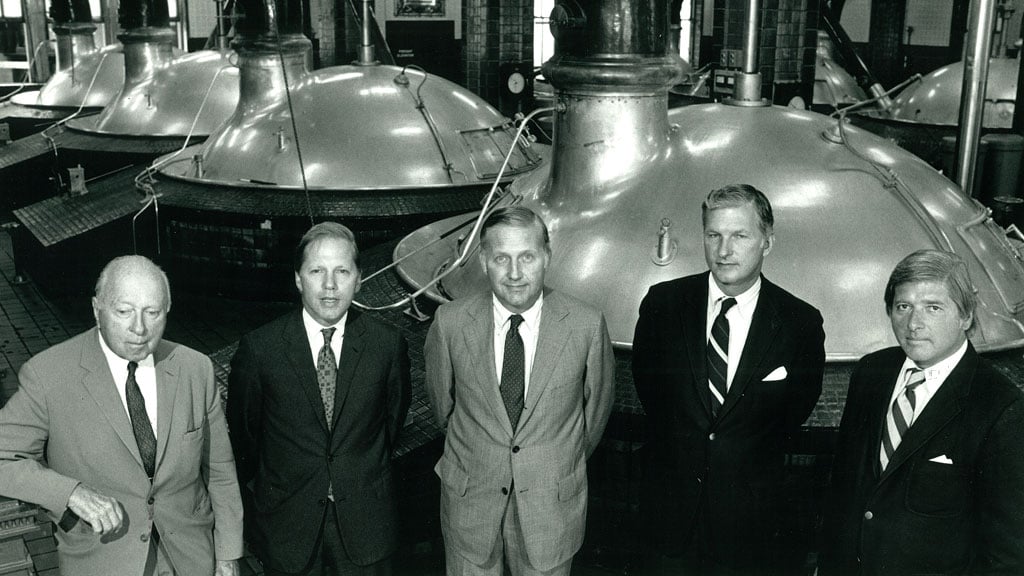
In 1988, Forbes valued the Stroh brewing empire at $700 million, making them one of America’s richest families. Had they matched the S&P 500’s returns, that fortune would be worth roughly $9 billion today.
The family had been brewing since Bernhard Stroh immigrated from Germany in 1849 with $150 and a secret beer recipe. By the 1980s, Stroh’s was America’s third-largest brewing company.Then Peter Stroh decided to expand.
In 1982, he borrowed $500 million to acquire rival Schlitz. The problem? Stroh’s itself was only worth $100 million.
The Wall Street Journal called it “a minnow swallowing a whale. “Saddled with crushing debt, the company couldn’t keep up with competitors or catch the light beer trend.
Peter made a series of additional missteps in packaging, marketing, and pricing. An Australian financier offered $1 billion for the company in the early 1980s.
The family declined. Within a few years, Coors offered $500 million, then backed out. By 1999, Stroh Brewing was sold off to Miller and Pabst for a fraction of its former value.
Most of the $350 million sale went to pay business debts. What remained was placed in a fund for surviving family members, which was completely exhausted by 2008.
Frances Stroh, a fifth-generation family member, later wrote a memoir titled “Beer Money: A Memoir of Privilege and Loss.” In it, she describes watching her father learn at a dinner in 2008 that the quarterly dividends would soon stop entirely.
The man who had been near the top of the Forbes richest families list would now live on a small pension.
Huntington Hartford: The A&P Heir Who Couldn’t Stop Spending

George Huntington Hartford II inherited an estimated $90 million from his grandfather, who founded the Great Atlantic & Pacific Tea Company. By the 1950s, A&P rivaled General Motors as a multi-billion-dollar corporation.
Hartford received a $1.5 million annual income just from sitting on his inheritance. Architect Frank Lloyd Wright once described him as “the sort of man who will come up with an idea, pinch it in the fanny and run.”
Hartford pinched and ran constantly. He opened the Gallery of Modern Art in New York, which closed at a $7.4 million loss. He launched Show magazine, a glossy arts journal that hemorrhaged money.
He founded an artists’ colony in Los Angeles, a modeling agency, a handwriting institute, and an oil shale mining company. He produced Broadway plays and films, including a disastrous adaptation of “Jane Eyre” that he wrote himself.
His most spectacular failure was Paradise Island in the Bahamas. Hartford bought the island in 1959 and poured $30 million into developing it as a resort.
Without a gambling license, the venture flopped. He eventually sold it at a massive loss. By the 1980s, Hartford was living as a recluse.
His neighbors evicted him from a Manhattan apartment, complaining about the unsavory characters streaming through at all hours. His daughter Juliet eventually rescued him and moved him to a modest rented home in the Bahamas, where he died in 2008 with roughly $11 million remaining in a trust fund he never touched.
Mike Tyson: From $400 Million to Filing for Bankruptcy
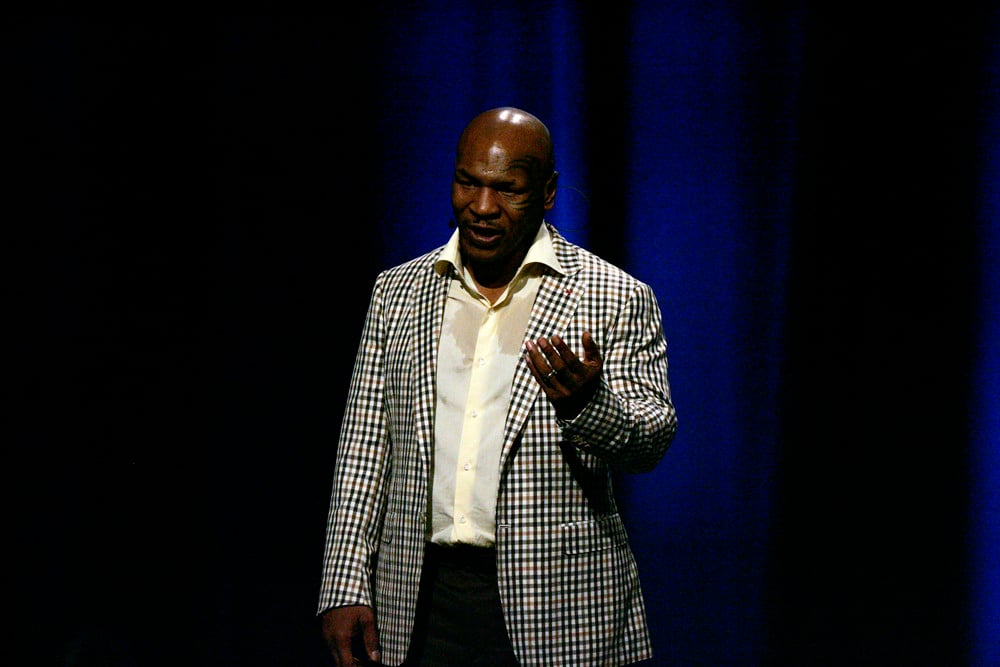
Mike Tyson earned an estimated $400 million during his boxing career. At his peak, he commanded $30 million for a single fight.
Forbes ranked him among the 40 highest-paid entertainers, alongside Sean Connery and Jack Nicholson. In 2003, he filed for bankruptcy with $23 million in debt.
The spending was astronomical. He maintained a 52-room mansion and traveled with an entourage of 50 people, which cost him between $500,000 and $1 million monthly.
He bought three Bengal tigers at $70,000 each, then spent $200,000 annually to care for them. He purchased a $2.2 million bathtub made of 24-karat gold for his first wife.
He accumulated 110 cars, including fleets of Bentleys, Ferraris, and Rolls Royces. When creditors came calling, the list was grimly comprehensive: $13.4 million to the IRS, $4 million to British tax authorities, $600,000 to seven law firms, $800,000 to a former trainer, and $73,000 in back child support.
“I never even think about losing $400 million,” Tyson later said. “It’s not your lifestyle. I think about everybody I looked up to, Joe Louis, Jack Dempsey, everybody had a great deal of money and lost it. I blew money and I’m going to get it again.”
He has, somewhat. Through his podcast, cannabis business, and continued appearances, Tyson has rebuilt his net worth to an estimated $10-20 million.
MC Hammer: Please Hammer, Don’t Spend ‘Em
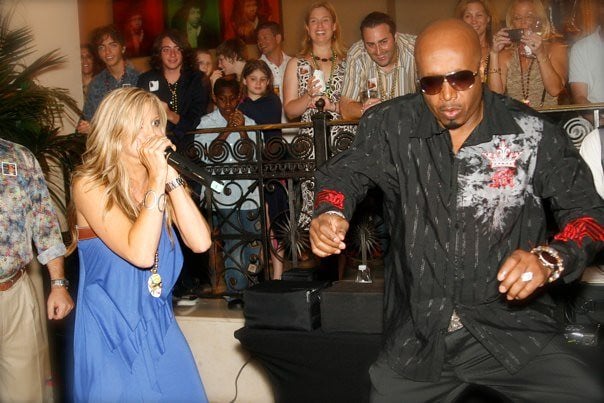
In 1991, MC Hammer earned $33 million in a single year. His album “Please Hammer, Don’t Hurt ‘Em” was the first hip-hop record to achieve diamond certification, selling over 10 million copies.
He was everywhere: on stages, in commercials, even starring in a Saturday morning cartoon. By 1996, he was filing for bankruptcy with $13 million in debt.
Hammer built a $12 million mansion in Fremont, California, featuring a bowling alley, two swimming pools, a 17-car garage, a baseball diamond, and Italian marble floors. He employed a staff of 200 people.
He bought racehorses. His concerts featured elaborate productions with dozens of dancers. The problem was that music trends shifted.
Gangsta rap replaced upbeat hip-hop. Album sales plummeted.
But the spending didn’t slow down. Hammer hired his older brother to manage his finances.
The brother had no accounting experience. When the rapper declared bankruptcy, he owed everyone from the IRS to personal lawyers to Deion Sanders, who had loaned him $500,000.
“My priorities were out of order,” Hammer told Ebony magazine. “My priorities should have always been God, family, community and then business.
Instead they had been business, business and business.”
Burt Reynolds: The Biggest Movie Star Goes Broke
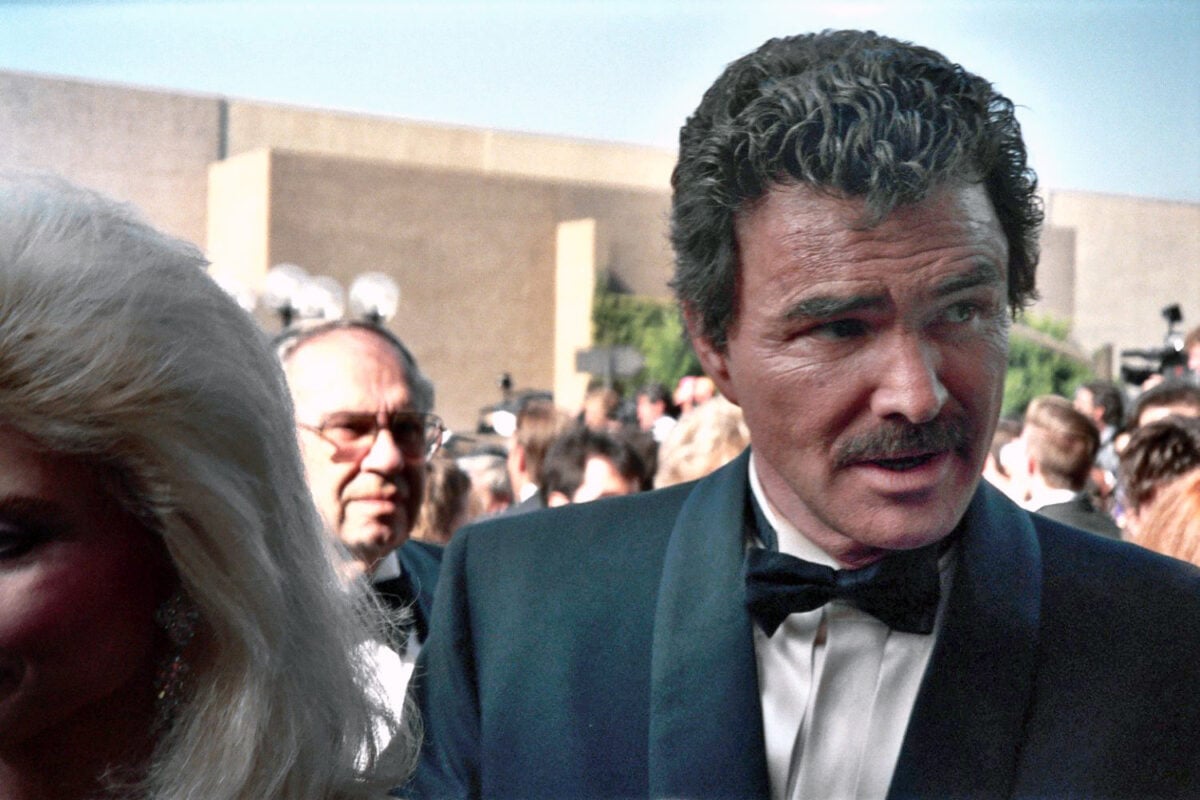
In the late 1970s and early 1980s, Burt Reynolds was the biggest draw in Hollywood. For five consecutive years, from 1978 to 1982, he ranked as the top box office star. His mustached face was inescapable.
His estimated net worth peaked at $60 million, equivalent to about $150 million today. In 1996, he declared bankruptcy with over $10 million in debt.
The spending was relentless. Reynolds owned a private jet, a helicopter, and multiple mansions.
He invested in failed restaurant chains, including a venture called Po’ Folks that cost him an estimated $15 million. He borrowed $4 million from CBS to finance his lifestyle while starring in “Evening Shade,” expecting to repay it when the show hit syndication.
It was cancelled one season short. His divorce from Loni Anderson in 1993 drained millions more.
At one point, Reynolds was borrowing money from friends just to cover alimony payments. The bankruptcy documents contained embarrassing details.
Reynolds owed $121,000 to his toupee maker. In later years, he was forced to sell prized memorabilia, including the Pontiac Trans-Am from “Smokey and the Bandit,” a canoe from “Deliverance,” and a gold pocket watch from Sally Field.
His beloved Florida estate fell into foreclosure. A friend bought it and let Reynolds live there for a nominal rent until his death in 2018.
By then, his net worth had dwindled to an estimated $500,000.
Nicolas Cage: 15 Houses, Two Castles, and a Dinosaur Skull
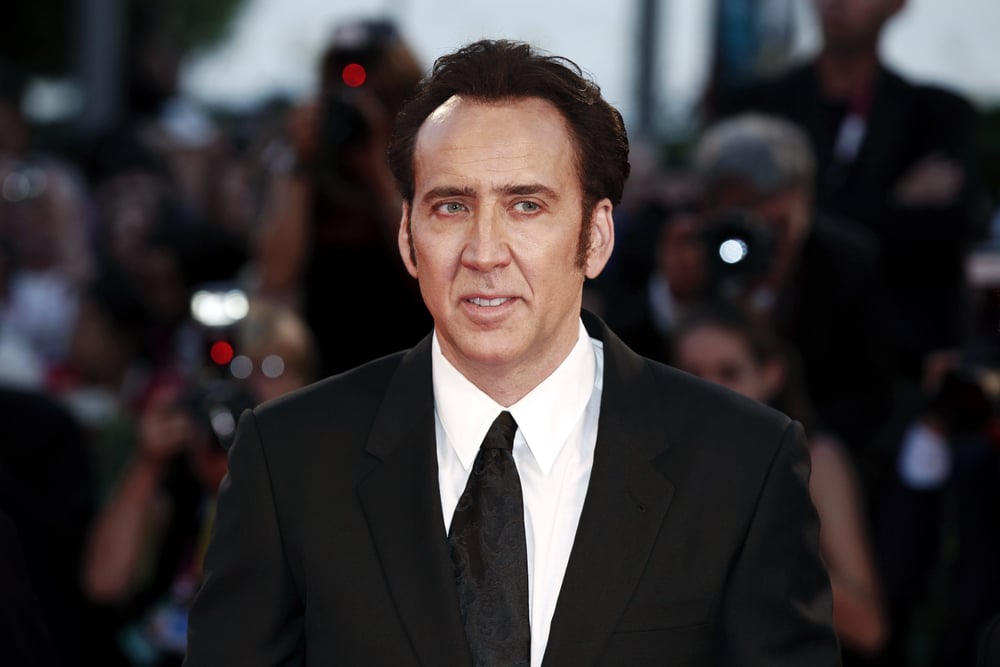
At his peak, Nicolas Cage was worth an estimated $150 million, one of Hollywood’s highest-paid actors commanding $20 million per film. He owned 15 residential properties, including a waterfront home in Newport Beach worth $25 million, two European castles, and a private island in the Bahamas.
He also owned a 70-million-year-old dinosaur skull that he bought for $276,000. It turned out to be stolen, and he had to return it to Mongolia.
By 2009, Cage owed the IRS $14 million in back taxes and was millions more in debt to various creditors. He sued his former business manager for “sending him down a path toward financial ruin.”
Others blamed his exotic purchases, which included two albino king cobras, shrunken pygmy heads, a nine-foot-tall pyramid-shaped tomb for himself in New Orleans, and a $450,000 Lamborghini once owned by the Shah of Iran. Cage refused to file for bankruptcy.
Instead, he took every acting role offered, churning out three to four films a year, many of them straight-to-video releases. “Work was always my guardian angel,” he said.
“It may not have been blue chip, but it was still work. Even if the movie ultimately is crummy, they know I’m not phoning it in.”
It worked. By 2022, Cage confirmed he had settled his debts. His net worth has rebounded to an estimated $25-40 million.
The Gettys: When the Richest Man Won’t Pay
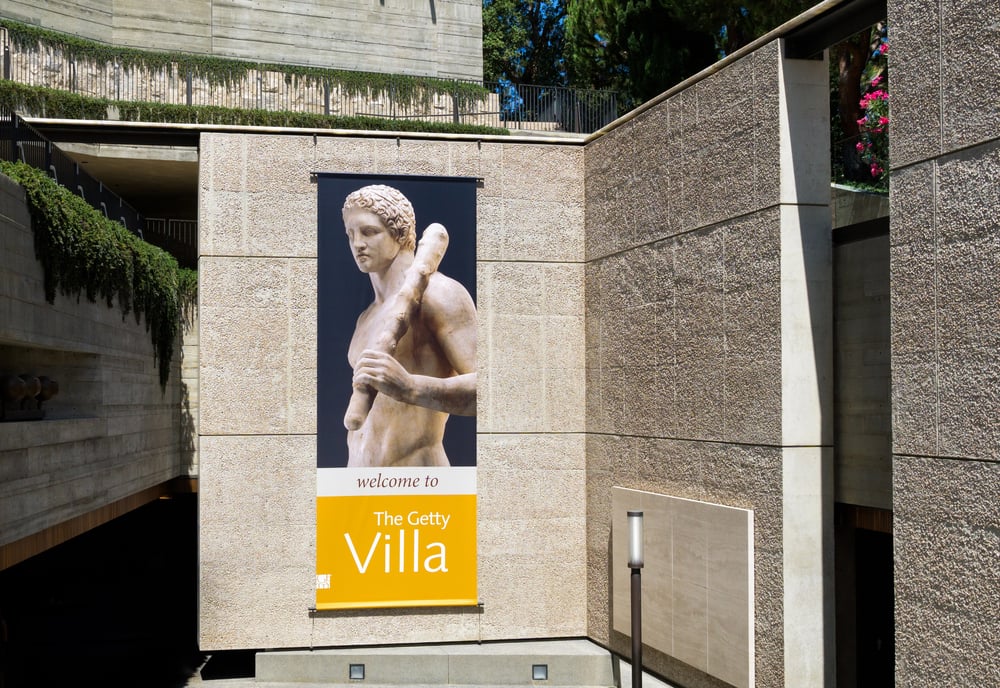
J. Paul Getty was declared the world’s richest man in 1957, worth over $1 billion. His fortune came from oil, including a 30-year concession in the Middle East that proved spectacularly lucrative.
He was also legendarily cheap, once installing a payphone in his mansion so guests wouldn’t run up his phone bill. The Getty fortune didn’t disappear in one generation, but it nearly destroyed several family members along the way.
When Getty’s 16-year-old grandson John Paul Getty III was kidnapped in Rome in 1973, the old man initially refused to pay the $17 million ransom, arguing it would encourage kidnappings of his other grandchildren. He relented only after the kidnappers cut off the boy’s ear and mailed it to a newspaper.
Even then, Getty paid only $2.2 million, the maximum amount that was tax-deductible. He loaned the remainder to his son at four percent interest. John Paul III never recovered.
He became a drug addict, suffered a stroke that left him paralyzed, and died at 54. His father, John Paul Jr., battled his own addiction and estrangement from the family for years.
J. Paul Getty left most of his fortune to his art museum. The family trust, managed by various heirs, produced decades of lawsuits and infighting before Getty Oil was eventually sold to Texaco for $10 billion.
Today, the Getty fortune remains substantial, estimated at around $5 billion, but it has been distributed among so many descendants and trusts that few individual Gettys command the kind of wealth their patriarch once held.
The Pattern in the Wreckage

Statistics suggest that 70 percent of wealthy families lose their fortune by the second generation. By the third generation, that number climbs to 90 percent.
The reasons vary, but common threads emerge: children raised without financial education, sudden wealth without preparation, divorce settlements, failed business ventures, and the simple mathematics of dividing assets among an ever-growing number of heirs. Commodore Vanderbilt never taught his children about money management.
Barbara Hutton’s grandfather died when she was young, leaving her fortune without guidance. The Stroh family passed the company through bloodlines rather than competence.
Mike Tyson hired his brother, who had no financial training, to manage hundreds of millions of dollars. The Forbes 400 list turns over constantly.
Old money becomes no money. New fortunes rise and fall within decades.
The lesson might be that wealth, no matter how immense, requires stewardship, discipline, and the uncomfortable recognition that abundance is never permanent.
What Remains
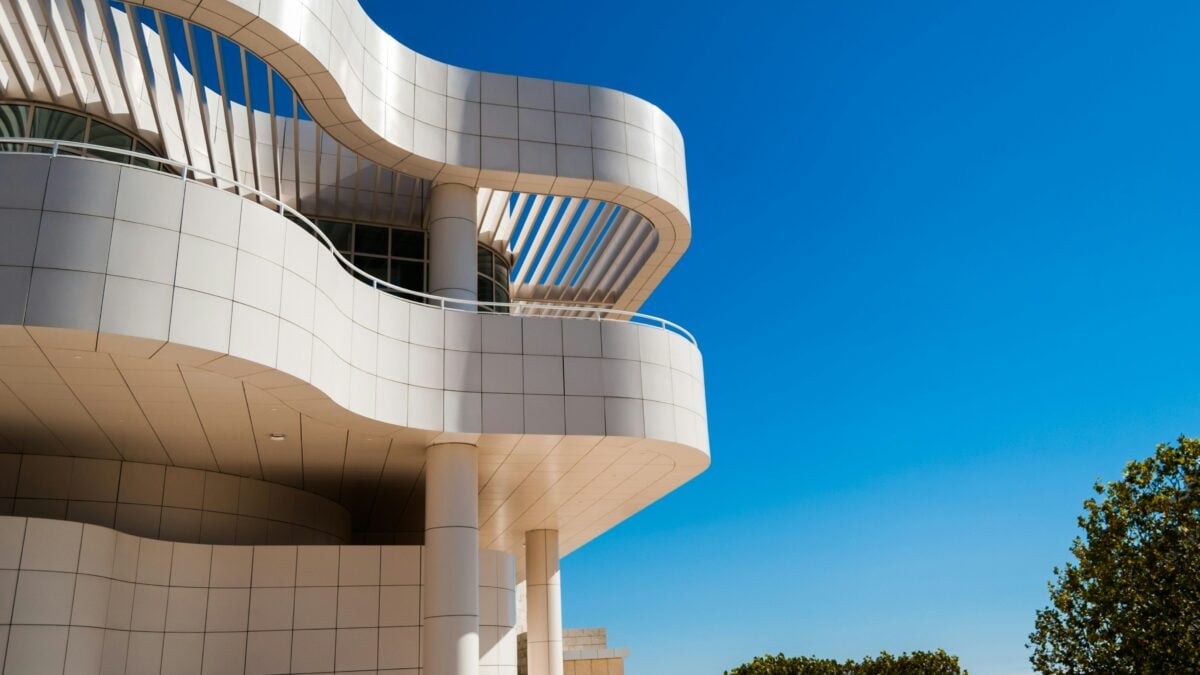
Some of these families left behind more than cautionary tales. The Vanderbilts endowed a university.
Doris Duke, a contemporary of Barbara Hutton who managed her inherited fortune more carefully, left $1.2 billion to charity. The Getty Museum houses one of the world’s great art collections.
Others left only stories of excess and regret. Huntington Hartford wanted to be remembered as a patron of the arts.
Instead, there’s a book about him titled “Squandered Fortune.” Mike Tyson became a punchline before becoming a redemption story.
Burt Reynolds sold his most treasured possessions to pay debts. Money, it turns out, does not solve problems.
It creates new ones. The families on this list had more resources than most people will ever see, and they found countless ways to watch it disappear.
What distinguishes them isn’t greed or stupidity, necessarily. It’s the reminder that a fortune without wisdom is just a countdown to zero.
More from Go2Tutors!

- The Romanov Crown Jewels and Their Tragic Fate
- 13 Historical Mysteries That Science Still Can’t Solve
- Famous Hoaxes That Fooled the World for Years
- 15 Child Stars with Tragic Adult Lives
- 16 Famous Jewelry Pieces in History
Like Go2Tutors’s content? Follow us on MSN.



