Historic Heists Where the Thieves Were Never Caught
Some crimes become legends not just for their audacity, but for their mystery. The thieves who pulled off these heists walked away with millions and vanished into history, leaving behind only questions and empty safes.
These aren’t just stories about stolen money or missing art—they’re puzzles that have frustrated investigators for decades, turning criminals into ghosts and victims into cautionary tales. Whether it was meticulous planning, incredible luck, or simply the limitations of their era’s investigative technology, these perpetrators managed something that seems almost impossible today: they got away with it completely.
The Gardner Museum Heist

Two men dressed as police officers talked their way into Boston’s Isabella Stewart Gardner Museum on March 18, 1990. They tied up the guards and spent 81 minutes selecting 13 pieces of art worth over $500 million.
Gone forever.
The thieves knew exactly what they wanted. They ignored easier targets and went straight for specific paintings, including Vermeer’s “The Concert” and works by Rembrandt.
The FBI has chased thousands of leads across three decades. The museum still displays empty frames where the stolen art once hung.
The Antwerp Diamond Heist

Leonardo Notarbartolo spent years preparing for this one. He rented an office in the Antwerp Diamond Center, learned the building’s rhythms, and somehow bypassed a security system that was supposed to be impenetrable.
Over a weekend in 2003, his crew emptied 123 safe deposit boxes.
The estimated haul was $100 million in diamonds, gold, and jewelry. Police caught Notarbartolo, but the loot never surfaced.
He served time but never revealed where the diamonds went or who his accomplices were.
D.B. Cooper

The man who called himself Dan Cooper (the media added the “D.B.”) was polite when he hijacked Northwest Orient Flight 305 in 1971, and he wasn’t bluffing about the bomb in his briefcase. After collecting $200,000 and four parachutes, he jumped into a stormy night over southwestern Washington and became America’s most famous unsolved case.
Cooper understood aircraft—he knew the plane’s capabilities, requested specific flap settings, and chose the right altitude for his jump. But jumping in a business suit during a November rainstorm with zero visibility was essentially signing his own death warrant (and the FBI spent decades assuming he’d died on impact).
The money never entered circulation, despite the serial numbers being tracked. And yet people keep searching the forests of Washington, because Cooper represents something irresistible: the polite criminal who said “thank you” before disappearing into folklore.
So investigators developed theories about experienced skydivers, disgruntled Boeing employees, and even Cooper being a woman in disguise, but the case officially closed in 2016 without resolution.
The Great Train Robbery
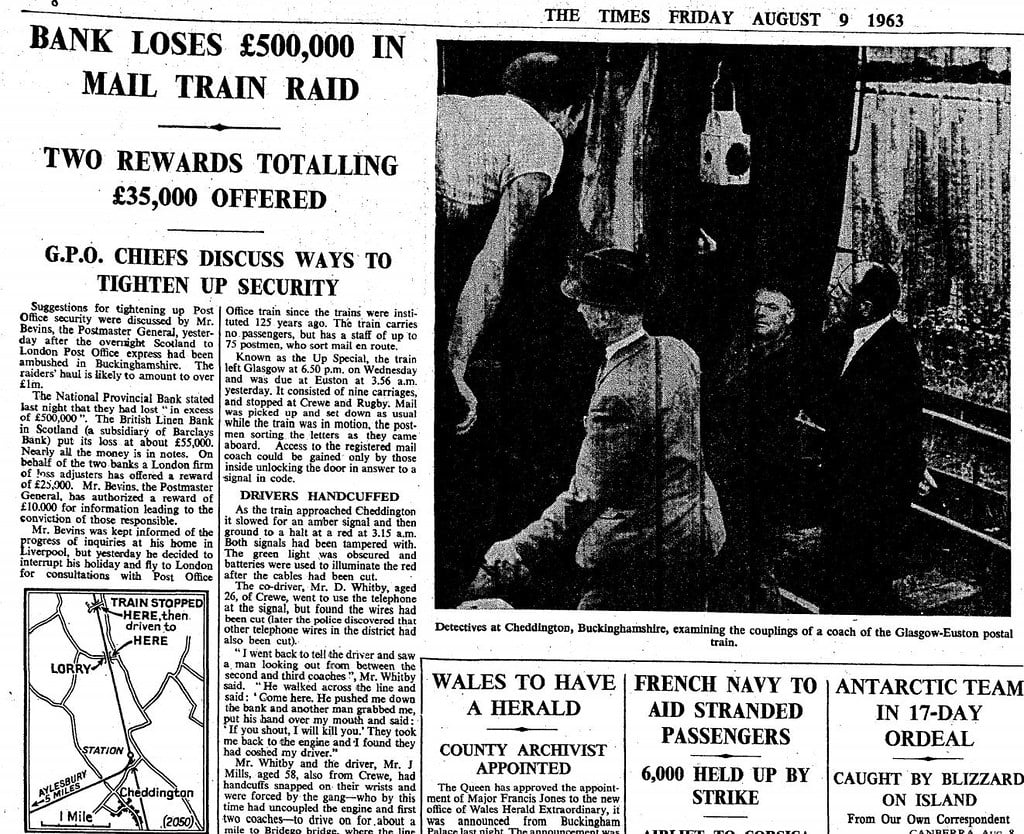
The 1963 robbery of the Royal Mail train between Glasgow and London was supposed to be a quick cash grab. The gang stopped the train using fake signals, overpowered the crew, and made off with £2.6 million—worth about $50 million today.
Most of the 15-member gang got caught within months. Their downfall was staying too long at their hideout, a farmhouse that became a forensics goldmine.
But several members were never identified, and most of the money vanished. Even the gang members who were caught and served time never revealed where they’d hidden their shares.
The Brink’s-Mat Warehouse Robbery

Six men walked into a Brink’s-Mat warehouse near London’s Heathrow Airport in 1983 expecting to find a few million in cash. Instead, they discovered three tons of gold bullion worth £26 million.
The problem wasn’t stealing it—the problem was what to do with that much gold.
The gold was likely melted down and mixed with legitimate metal, making it untraceable. Some gang members were caught, but the gold never was.
Investigators believe pieces of the stolen Brink’s-Mat gold are still circulating in jewelry stores across Britain, invisible and impossible to identify.
The Lufthansa Heist

Jimmy Burke orchestrated the 1978 robbery of a Lufthansa cargo building at JFK Airport, but he was smart enough to stay away from the actual crime—Burke understood that the planning was just half the job, and that keeping people quiet afterward was often harder than the heist itself. His crew took $5.8 million in cash and nearly $1 million in jewelry, then Burke systematically eliminated most of the participants to protect himself.
The money disappeared, Burke died in prison on unrelated charges, and the case remains officially unsolved despite everyone knowing exactly who planned it. Law enforcement could never prove Burke’s involvement directly enough to charge him with the heist (though they got him for other crimes).
Turns out being ruthless with your own crew is an effective way to eliminate witnesses, even if it doesn’t make you particularly sympathetic.
The Pierre Hotel Heist

New Year’s Day 1972 was supposed to be quiet at Manhattan’s Pierre Hotel. Instead, a crew led by Bobby Comfort walked into the lobby, took control of the building, and systematically robbed safety deposit boxes and wealthy guests.
They collected an estimated $10 million in 90 minutes.
The robbery was flawlessly executed—no shots fired, no one seriously hurt, and the thieves were gone before police realized what had happened. Comfort eventually got caught for other crimes, but most of his crew remained unidentified.
The majority of the stolen jewelry and cash never surfaced.
The Millennium Dome Diamond Heist

The plan was brilliant: ram a speedboat through the Thames Barrier, smash into London’s Millennium Dome with a JCB digger, grab the De Beers diamonds worth £350 million, and escape down the river. The execution on November 7, 2000, was flawless right up until the moment armed police surrounded them.
The diamonds were fake—the whole display had been swapped out after police learned about the plot months earlier. The gang members were arrested on the spot, but here’s the thing: investigators never figured out who the mastermind was.
The men caught at the scene were clearly the muscle, not the brains. Someone planned this operation with inside knowledge of the dome’s security and the diamond display, then stayed safely away while others took the fall.
The Swedish Helicopter Heist
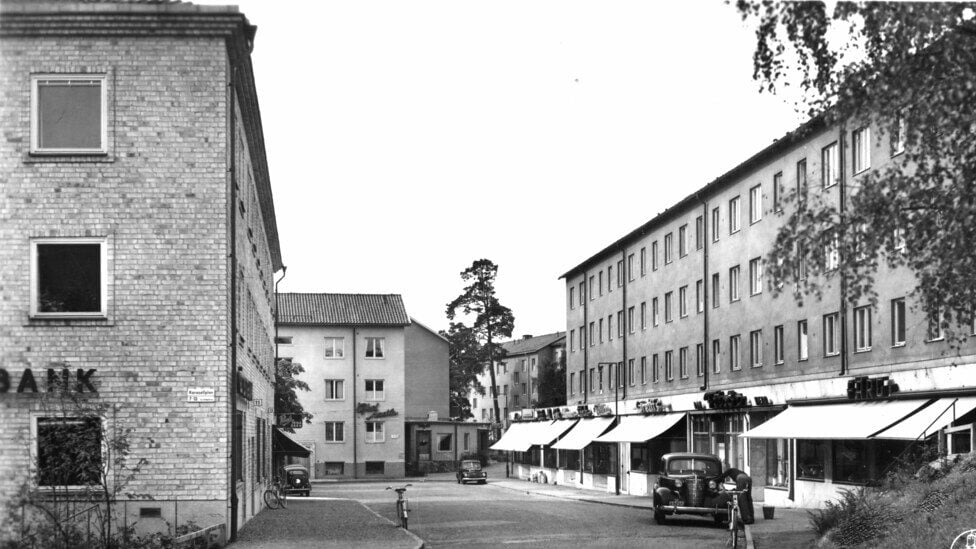
At 5:15 AM on September 23, 2009, a helicopter landed on the roof of a cash depot in Västberga, Sweden—and it wasn’t there to help security, because the crew that climbed out immediately began cutting through the building’s roof with power tools. They rappelled into the facility, grabbed 39 million kronor (about $5 million), and flew away before police could mount any meaningful response.
The helicopter was later found abandoned and burned, along with the power tools and other equipment, but the money and the thieves had vanished completely. Swedish police arrested several suspects over the following months, but the evidence was circumstantial at best, and most were eventually released (the few who were convicted received relatively light sentences and never revealed anything about the money’s location).
So the case technically remains open, though investigators acknowledge they’ll probably never recover the cash or prove exactly who was involved.
The Banco Central Heist

The 2005 robbery of Brazil’s Banco Central in Fortaleza required three months of digging a 656-foot tunnel from a rented house to the bank’s vault. The crew worked only at night, disposing of 3.5 tons of dirt without anyone noticing.
Over a weekend, they broke through and stole 164 million reais—about $70 million.
Police caught some of the diggers and a few low-level organizers, but the mastermind was never identified. Most of the money disappeared, probably moved out of Brazil before the crime was even discovered.
The tunnel itself was a masterpiece of engineering, complete with air circulation and wooden supports.
The Belgian Diamond Heist
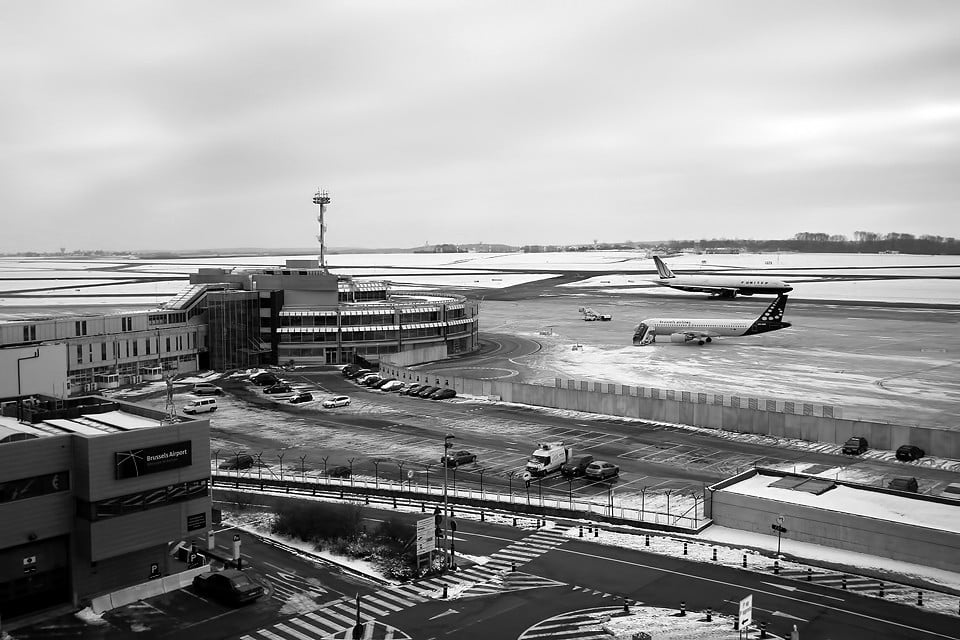
This wasn’t the Antwerp job—this was the 2013 robbery at Brussels Airport where eight men dressed as police officers drove onto the tarmac and intercepted a Swiss International Air Lines plane loaded with diamonds. In 15 minutes, they grabbed 120 packages worth $50 million and vanished.
The operation required inside knowledge of flight schedules, cargo manifests, and airport security procedures. Police arrested more than 30 people in raids across Europe, but the diamonds were gone and the evidence was mostly circumstantial.
Most suspects were eventually released.
The Central Bank of Iraq

During the 2003 invasion of Iraq, someone walked into the Central Bank of Iraq and removed $920 million in cash. Not stolen—removed.
As in, someone with access simply took nearly a billion dollars during the chaos of the war and disappeared.
The theft wasn’t discovered for weeks because record-keeping had broken down completely. By then, whoever had taken the money had plenty of time to move it out of the country.
No one was ever charged, and investigators couldn’t even determine exactly who had access to the vault during those crucial days.
The Securitas Depot Robbery

The 2006 robbery of a Securitas cash depot in Kent, England, started when thieves kidnapped the manager and his family. They forced him to open the facility, then spent hours loading £53 million into trucks.
It was the largest cash robbery in British history.
Police caught most of the gang members, but only recovered a fraction of the money. The cash had been quickly moved through a network of accomplices and money launderers.
Some bills turned up years later in various countries, but the bulk of the £53 million stayed gone.
The Mysteries That Endure

These heists share something beyond their unsolved status: they represent perfect storms of planning, timing, and luck that seem impossible to replicate today. Modern surveillance, digital tracking, and forensic science have closed most of the loopholes these thieves exploited.
And yet the mysteries persist, not just because of what was taken, but because of how completely the perpetrators managed to vanish. They remind us that sometimes the most carefully constructed systems fail not because of their weaknesses, but because someone was clever enough to find the one door that was left unlocked.
More from Go2Tutors!

- The Romanov Crown Jewels and Their Tragic Fate
- 13 Historical Mysteries That Science Still Can’t Solve
- Famous Hoaxes That Fooled the World for Years
- 15 Child Stars with Tragic Adult Lives
- 16 Famous Jewelry Pieces in History
Like Go2Tutors’s content? Follow us on MSN.