Historical Photos of Rooftop Life in Cities
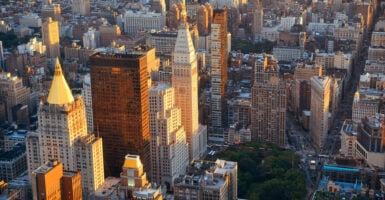
In crowded cities, the roof was the one place that did not belong to the street. Families slept there in heat waves, children played there when sidewalks were crowded, and entrepreneurs built gardens, farms, and theaters above the noise.
The photographs and records below come mostly from New York, where rooftops became an extension of daily life. They show that the skyline was never only a set of buildings, but also a landscape of people finding room to breathe.
Hammerstein’s Paradise Roof Garden
Oscar Hammerstein I opened the Venetian Terrace Roof Garden atop his Victoria Theatre on June 26, 1899, and it grew into the Paradise Roof Garden when he connected it to the roof of the neighboring Theatre Republic. The combined space seated about 1,000 patrons, and from 1904 to 1914 his son Willie ran it with popular vaudeville acts.
The painter William Glackens captured the scene in his canvas Hammerstein’s Roof Garden.
The Rooftop Dairy Farm
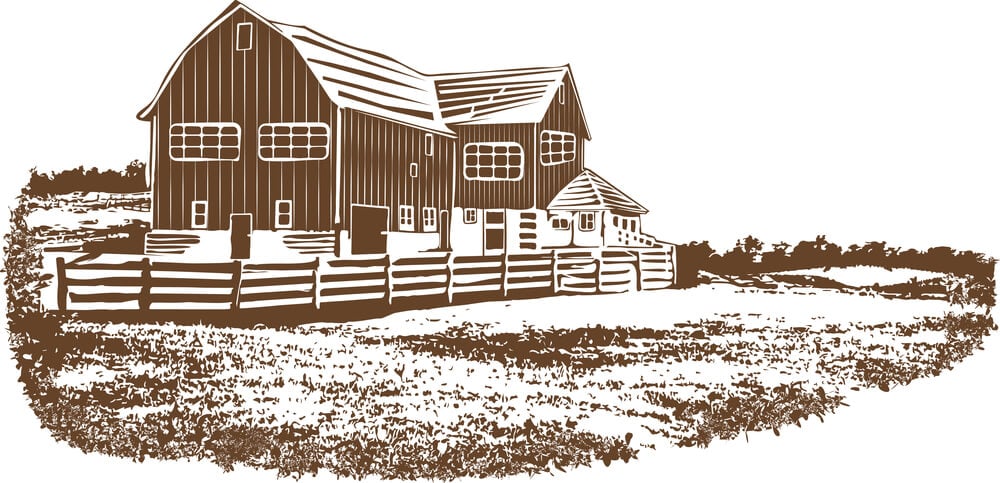
Hammerstein’s roof included a pond, a windmill, and a farm that was first a Swiss farm and, in 1905, became a Dutch farm. One attraction was a Holstein cow tended by a Swiss milkmaid who sold fresh milk in tiny glasses to visitors.
A 1911 Variety photograph even shows women in overalls posing as suffragette farmers at the Dutch farm.
Arabian Acrobats on the Roof
The Museum of the City of New York holds a photograph of Arabian acrobats posing as a group on the roof of Hammerstein’s Victoria Theatre. They stand on a bridge in front of the windmill and blacksmith shop, a setting that mixed circus, farm, and fantasy.
The image shows how rooftop theaters blended entertainment with oddity to draw summer crowds.
The Roof of Madison Square Garden
Stanford White designed the second Madison Square Garden, which opened in 1890 and stood until it was demolished in 1925. Its rooftop theater, which evoked the Italian Renaissance, hosted musical shows during warm months.
On June 25, 1906, the opening night of the musical Mam’zelle Champagne became infamous when Harry Kendall Thaw shot and killed White there.
The Schoolboys Who Turned Down Stanford White
At Thaw’s trial, a lawyer named Garvan described how Stanford White took Garvan’s son Lawrence and a schoolmate to dinner at Cafe Martin on the evening of the shooting. White invited them to join him at the Madison Square roof garden, but the boys had tickets to the roof garden of the New York Theatre and declined.
White went on alone and sat at a small table near the stage.
The Heat Wave of 1896
A 10-day heat wave in the summer of 1896 killed nearly 1,500 people in New York, many of them tenement dwellers. A historian described streets, rooftops, and fire escapes as filled with people at all hours because there was not room for everyone inside.
Theodore Roosevelt, then a police commissioner, championed efforts to distribute ice from station houses.
The Reading Room at Seward Park
A New York Public Library photograph from about 1910 shows the rooftop reading room of the Seward Park Library, where girls embroider while a woman reads aloud. The roof gave a library on the Lower East Side extra room to serve neighborhood residents.
It shows that rooftops could be places of learning as well as relief.
Playing on a Schoolhouse Roof
A Byron Company photograph in the Museum of the City of New York shows children on the rooftop playground of a public school on Clinton Street on the Lower East Side. A state law passed in 1895 declared that no schoolhouse could be built in New York City without an open-air playground attached to it.
With little ground to spare, many schools put those playgrounds on the roof.
Living on a Skyscraper

George G. Bain’s news photographers visited New York rooftops around 1909 and 1910, producing a series called Living on a Skyscraper. A photograph from April 28, 1910, shows children playing on a roof, and others show girls with dolls, boys with marbles, and families gathering for cards.
The collection is held at the Library of Congress and offers a rare view of ordinary rooftop leisure.
The Pine Grove at the Waldorf-Astoria

On March 29, 1909, children gathered to dance at the pine grove on the roof of the Waldorf-Astoria Hotel for a benefit for the Parks and Playground Association. It was the first time the public was admitted to the grove. T
he event shows that rooftops could serve elegant causes as well as everyday needs.
A Playground Above the Department Store
A Bain News Service photograph from about 1919 shows a children’s playground on the roof of a large New York store while mothers shopped below. It is an early example of a retailer offering child care as a way to keep customers inside.
The roof turned a commercial space into a family amenity.
The Pigeon Men of the Lower East Side
Photographer Roy Perry captured men tending pigeon coops on Lower East Side rooftops around 1940, and the Museum of the City of New York holds his work. Pigeon keeping on New York roofs was recorded as far back as the 1800s, and in the 1940s and 1950s the rooftops of the Lower East Side were dotted with coops.
A young Mike Tyson later said that pigeons were the first loving relationship he ever had.
The Game of Catch-and-Keep
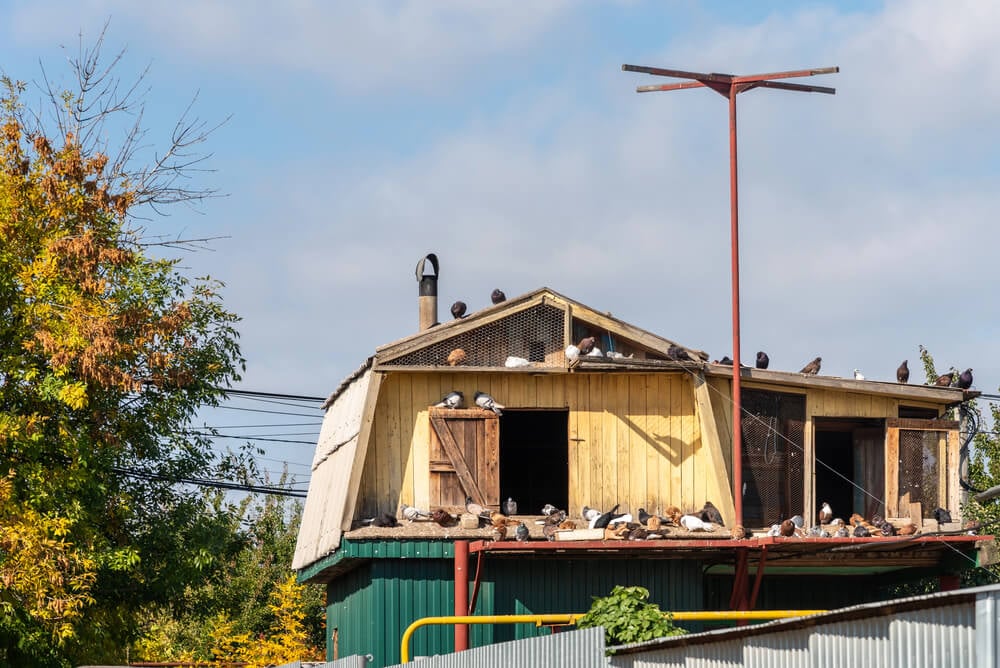
New York pigeon fliers release their flocks into the air at the same moment, and the birds intermingle before returning to their home roofs. Often they return with strays from a rival’s flock, which the owner may band and add to his own.
Some keepers had informal handshake agreements with building owners to tar roofs or perform other maintenance in exchange for a coop.
Hood’s Hanging Gardens at Rockefeller Center
— Photo by resulmuslu
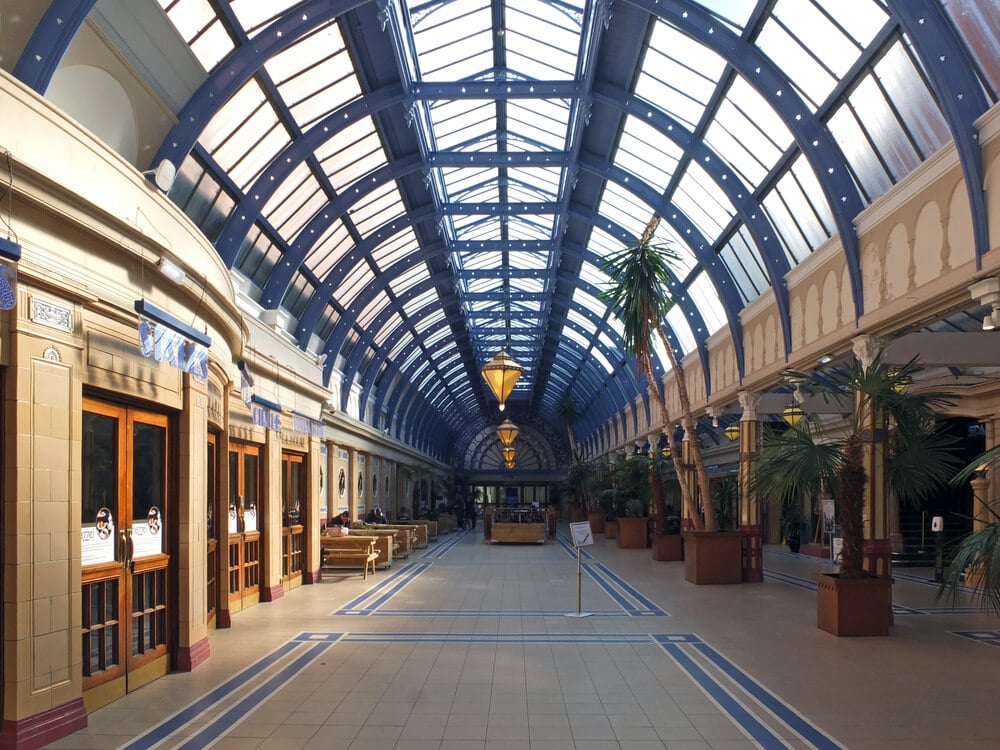
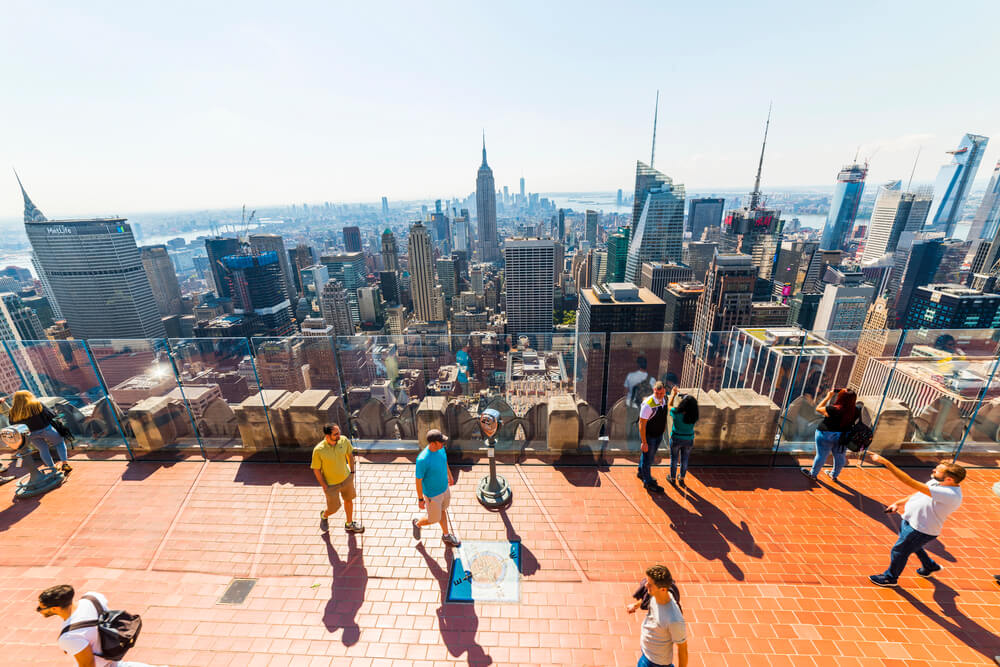
Architect Raymond Hood saw roof gardens as a transformative element of the modern city and proposed nearly seven acres of gardens for Rockefeller Center. About four acres were actually built, and the roof gardens went up between 1933 and 1936.
The roof of Radio City Music Hall did not receive its garden until Radio Park opened there in 2021.
Victory Gardens Above the Streets
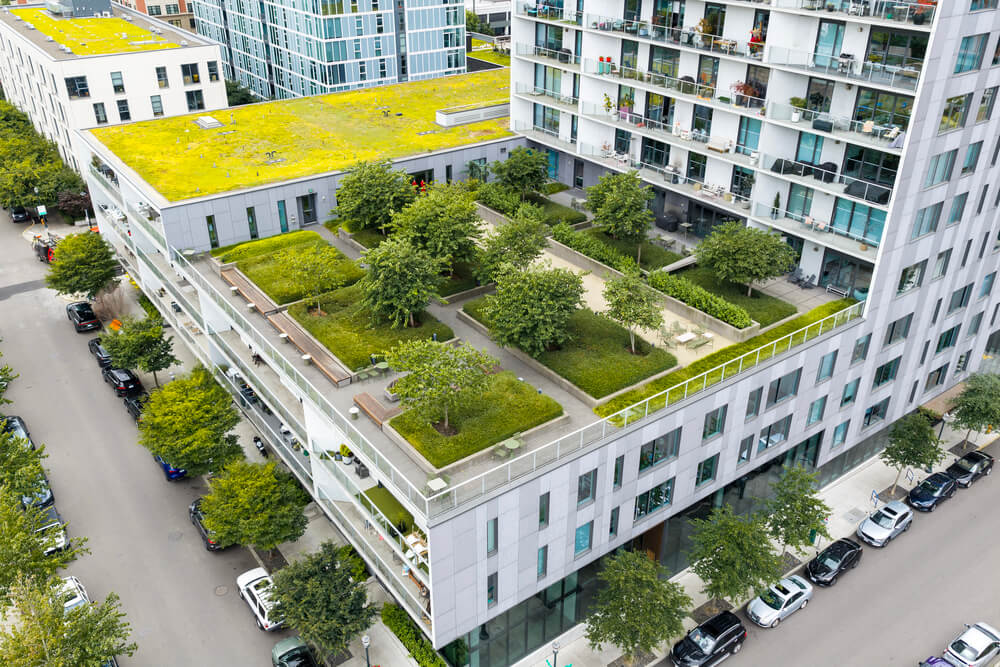
During World War II, victory gardens were grown on farms, in backyards, in window boxes, and on city rooftops. New York had roughly 400,000 victory gardens after the program began in 1943, and its amateur gardeners cultivated about 200 million pounds of vegetables.
The effort turned bare concrete and spare roofs into small farms.
Rooftops for Firefighters
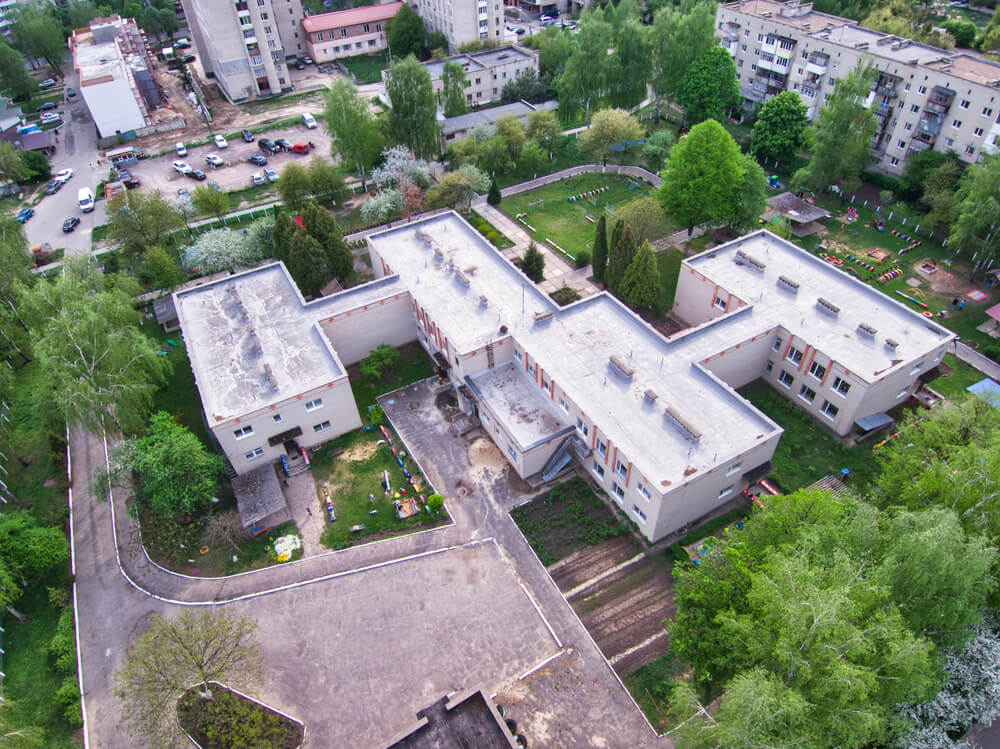
A 1912 article reported that New York firehouses were being built in Brooklyn, Queens, and Manhattan with roof gardens to provide exercise, health, and comfort for firefighters. The idea made use of an otherwise empty space on top of the station.
It shows that city agencies, not only hotels and theaters, saw the value of roof gardens.
The Wooden Tanks Above the City
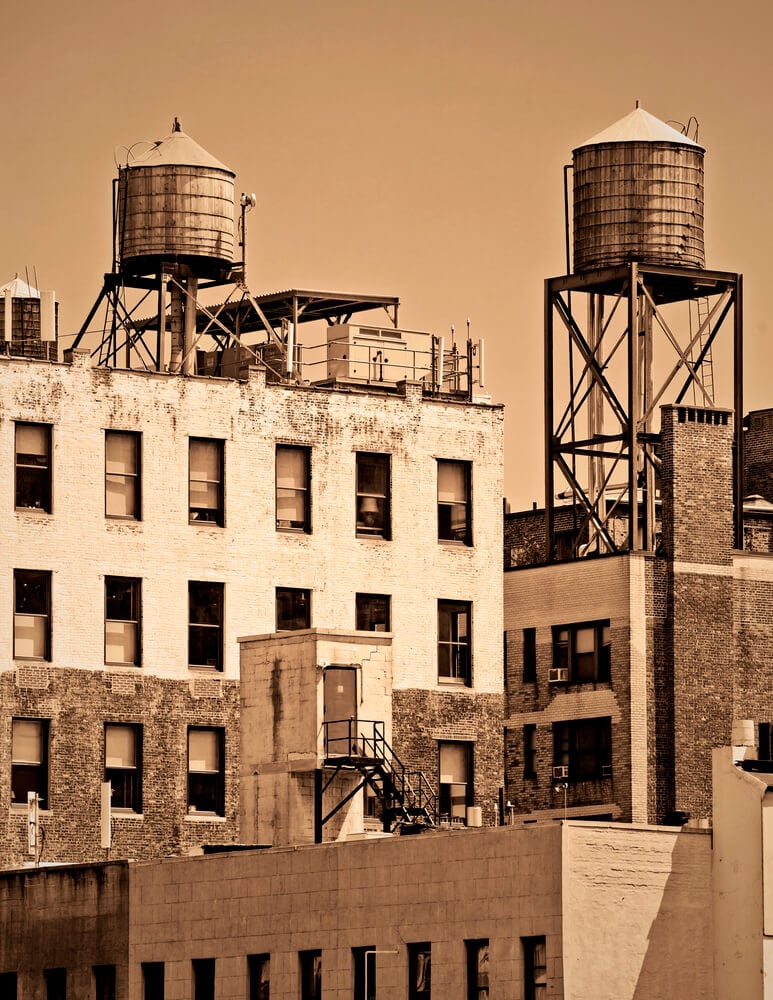
New York’s wooden water tanks are as much a part of rooftop life as any garden. City water pressure climbs only about six stories by itself, so taller buildings rely on cedar or redwood barrels on the roof to supply water by gravity.
The Rosenwach Tank Company traces its origin to a barrel maker named William Dalton who began on the Lower East Side in 1866.
William Fox’s Japanese Roof Garden
The Japanese Roof Garden of William Fox was identified as the first East Coast rooftop theater to receive permission to be equipped for sound in 1929. The addition of sound shows the roof theater’s late attempt to compete with the movies.
Within a few years, rooftop entertainment would fade as enclosed theaters and air conditioning took over.
The American Theatre Roof Garden

The roof garden of the American Theatre on 42nd Street had both an outdoor and an indoor auditorium. The indoor space was decorated with twinkling stars on a blue ceiling and forest scenes painted on the walls.
The effect aimed to make visitors feel they had left the city, even though they were only a few floors above its streets.
Rooftops as Escape Valves
Whether a roof held a vaudeville stage, a pigeon coop, or a family’s bedding on a hot night, it offered what the street could not: air, light, and a measure of privacy. The photographs show how people shaped the same limited space to different needs.
They also show how a city’s unseen layer served its residents in practical and imaginative ways. Many of those uses have disappeared or changed, but the instinct to climb upward remains.
Today’s rooftop gardens, bars, and playgrounds follow patterns first set by hotel managers, school reformers, and tenement families. The old photographs make clear that the idea of living above the street is nothing new.
More from Go2Tutors!

- 27 Silver Dollars and Half Dollars Worth Keeping
- 28 Restaurant Menu Items Nobody Orders Anymore
- 17 Places Built in Seemingly Impossible Spots
- 27 Vintage Rings Worth More Than They Look
- 25 Restricted Sites Tourists Can’t Enter
Like Go2Tutors’s content? Follow us on MSN.