Images Of Most Unique Tree House Hotels In The World
There’s something deeply appealing about sleeping among the branches. Maybe it connects to childhood fantasies of having the perfect fort, or maybe it’s the simple pleasure of falling asleep to the sound of leaves rustling overhead.
Tree house hotels have evolved far beyond basic platforms with walls—they’ve become architectural marvels that blend luxury with the wild in ways that seem almost impossible. These aren’t just accommodations; they’re experiences that remind you what it feels like to be genuinely surprised by where you can lay your head for the night.
Treehotel, Sweden

The mirrored cube appears to float. Nothing more, nothing less.
Guests sleep inside what looks like a magic trick performed by the forest itself. The reflection shifts with the seasons—snow, green leaves, bare branches—so the room essentially disappears into whatever surrounds it.
Playa Viva, Mexico

Sleeping here feels like being cradled in the palm of something vast and patient, where the tree doesn’t just hold the structure—it becomes part of your dreams. The open walls let the ocean breeze move through freely, carrying salt air and the distant percussion of waves that never quite sync with your breathing but somehow match it anyway.
And there’s something about waking up to howler monkeys in the distance (they sound more alarming than they actually are) that makes you realize how rarely you hear anything truly wild from your bedroom. The tree house doesn’t fight the environment; it borrows from it, so you’re never quite sure where the accommodation ends and the jungle begins.
Free Spirit Spheres, Canada
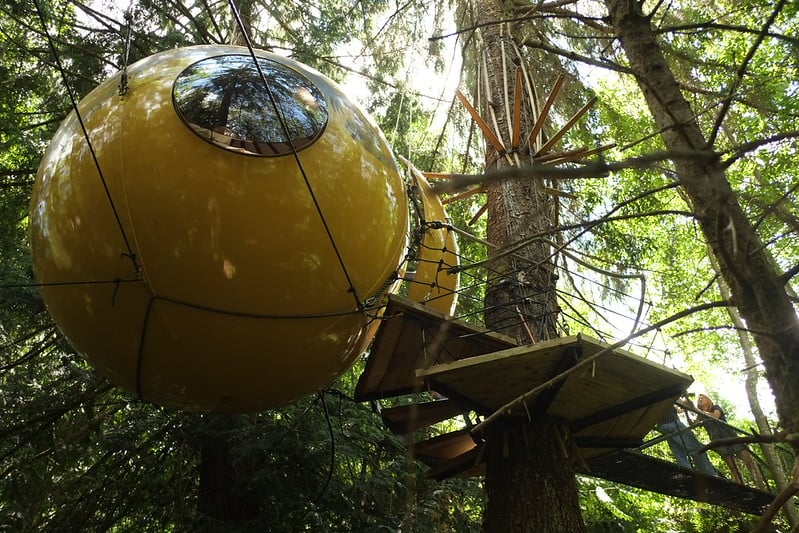
These hanging orbs shouldn’t work, but they do. Picture sleeping inside a wooden planet suspended by cables, swaying just enough to remind you that solid ground is optional.
The spherical shape means there are no corners where anxiety can hide—everything curves back on itself in the most soothing way possible. The whole experience operates on dream logic rather than architectural sense.
And yet when you’re lying in the curved bed, listening to rain hit the wooden shell above your head, it becomes obvious why someone thought hanging a bedroom from a tree was a reasonable idea.
Hapuku Lodge, New Zealand

Tree houses with a view of snow-capped mountains don’t mess around with subtlety. These elevated pods perch in kanuka trees like they’ve always belonged there, which is remarkable considering they’re essentially luxury hotel rooms balanced on stilts.
The contrast works—refined interiors with floor-to-ceiling windows that frame the kind of scenery normally reserved for postcards. The height puts you at eye level with birds that aren’t expecting visitors at this altitude.
Fair enough.
Keemala, Thailand
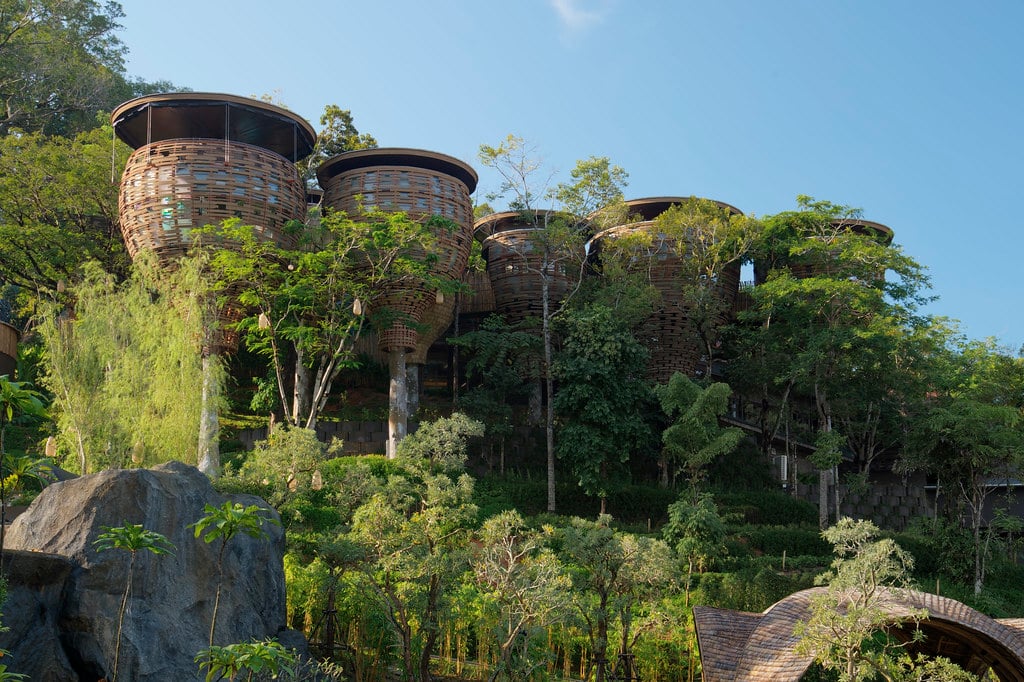
Each tree house here tells a different story, designed to look like the dwellings of four fictional ancient tribes—which sounds like it could go terribly wrong but somehow doesn’t. The Bird’s Nest villas actually resemble enormous nests woven around living trees, complete with curved walls and organic shapes that make straight lines feel like a design mistake.
There’s something deeply satisfying about staying in a space that looks like it grew rather than was built, where the bathroom might curve around a tree trunk and the bed sits in what feels like a natural hollow (even though it’s meticulously crafted). So the fantasy holds up because the details commit to it completely, refusing to compromise with conventional hotel expectations.
Inkaterra Reserva Amazonica, Peru

The Amazon doesn’t do anything halfway, including tree house accommodations. These canopy suites sit 100 feet above the ground, connected by suspension bridges that sway just enough to remind you how far up you are.
The sounds at night—howlers, insects, things moving through branches you can’t see—create a symphony that no sleep machine has ever successfully replicated. Falling asleep this high in the rainforest feels like being trusted with something secret.
Nothofagus Hotel, Chile

Wooden pods hang from southern beech trees like oversized pine cones that someone decided to make habitable—and the comparison isn’t far off, considering how naturally they seem to fit into the forest canopy. The interiors curve and flow in ways that make you forget about right angles, with windows positioned to catch specific slices of light as it filters through the forest at different times of day.
But what makes these tree houses memorable isn’t their shape or their elevation; it’s how quiet they become at night, when the only sounds are wind moving through beech leaves and the occasional crack of a branch settling. The forest holds the pods gently, like it’s protecting something valuable, and sleeping there feels like being granted temporary membership in an exclusive club that doesn’t usually admit humans.
Post Ranch Inn, California

Big Sur doesn’t need much help being dramatic. These tree houses simply elevate you into the best seats for the show.
Perched among redwoods with the Pacific stretching endlessly beyond, the accommodations manage to feel both luxurious and wild without betraying either impulse. The hot tubs on private decks shouldn’t make sense this high up, but they do.
Sometimes the most impractical ideas turn out to be the most necessary.
Tongabezi Lodge, Zambia
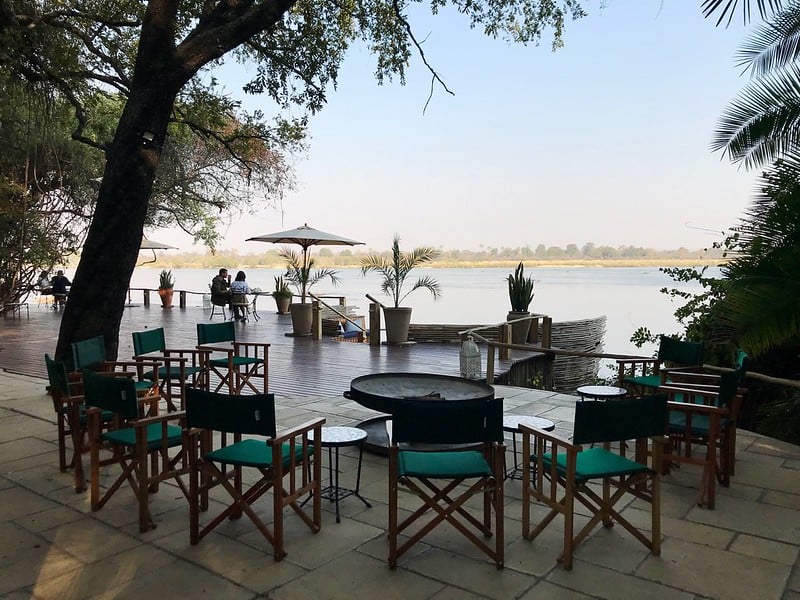
Tree houses overlooking the Zambezi River operate on their own sense of scale and timing. The elevated position puts you above the river action—hippos surfacing, elephants drinking, the occasional crocodile that serves as a reminder of who actually owns this territory.
The open design means privacy comes from height and distance rather than walls, so you’re always aware of the river’s presence even when you’re sleeping. And there’s something about falling asleep to the sound of water moving steadily past, knowing that same river has been following this exact path for thousands of years, that makes your own temporary presence feel both significant and properly small.
The tree house doesn’t compete with the river; it offers you a seat at the performance.
Gibbon Experience, Laos
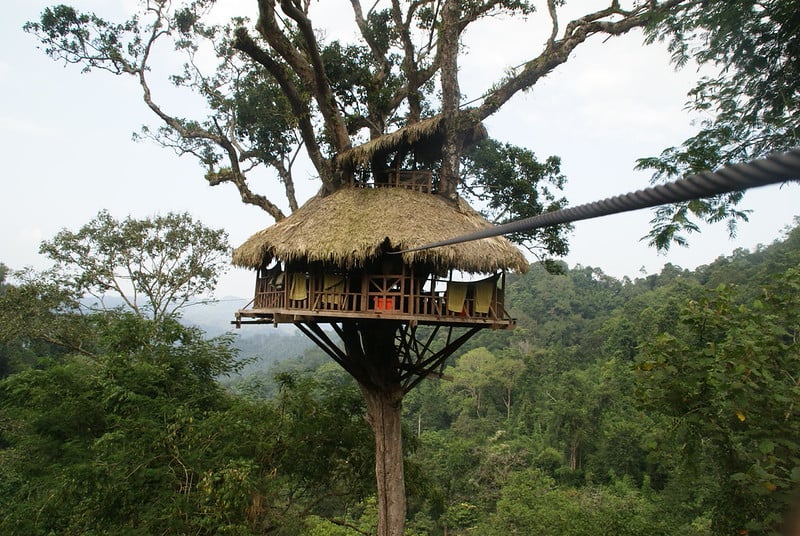
Ziplining to your bedroom changes the entire concept of arrival. These tree houses, built 130 feet high in the jungle canopy, are accessible only by a network of ziplines that turn getting to bed into an adventure sport.
The structures themselves are simple—basic sleeping quarters with mosquito nets and little else—but the location makes luxury irrelevant. The gibbons that gave this place its name call out at dawn, their voices carrying across the canopy in a way that makes alarm clocks seem prehistoric.
Which they are, comparatively speaking.
Primland Resort, Virginia

These tree houses prove that elevation creates magic even in familiar territory. Built among Virginia oaks and maples, the structures offer a perspective on American forests that most people never experience—the view from inside the canopy rather than beneath it.
The design balances rustic charm with actual comfort, so you get the adventure without sacrificing sleep quality. The Blue Ridge Mountains provide a backdrop that shifts with weather and season, reminding you that even well-known landscapes hold surprises when viewed from the right angle.
Lions Sands Game Reserve, South Africa

Nothing quite prepares you for sleeping in a tree house while elephants pass beneath in the darkness, their footsteps creating vibrations you feel more than hear through the wooden platform. The Chalkley Treehouse sits on stilts in ancient leadwood trees, with no walls and only mosquito netting between you and the African night—which sounds terrifying until you realize how safe the elevation makes you feel.
But the real magic happens during those moments when large animals move through the area below, completely unaware of your presence above, going about their nocturnal business with the kind of purpose and calm that makes you understand why people travel across the world just to witness it. The tree house doesn’t offer luxury in any conventional sense; it offers proximity to something wild and authentic, which turns out to be worth more than thread counts or room service.
Longitude 131, Australia

Red sand and ghost gums shouldn’t provide the foundation for luxury accommodations, but Uluru makes its own rules. These elevated tents—technically tree houses since they’re built around and among the trees—offer unobstructed views of the monolith that defines this landscape.
The elevation provides perspective on just how vast and empty this part of Australia really is. Falling asleep with Uluru visible through floor-to-ceiling windows feels like being entrusted with something sacred.
Because you are.
Where Dreams Take Root

Tree house hotels succeed because they solve a problem most people didn’t know they had—the need to sleep somewhere that challenges assumptions about what constitutes shelter. They remind you that comfort doesn’t require being indoors, that luxury can mean proximity to something wild rather than distance from it, and that the best rest sometimes comes from places that initially seem impossible.
These accommodations work because they trust you to find magic in unexpected locations, and they’re usually right.
More from Go2Tutors!

- The Romanov Crown Jewels and Their Tragic Fate
- 13 Historical Mysteries That Science Still Can’t Solve
- Famous Hoaxes That Fooled the World for Years
- 15 Child Stars with Tragic Adult Lives
- 16 Famous Jewelry Pieces in History
Like Go2Tutors’s content? Follow us on MSN.



