International Jazz Day: Fascinating Stories Behind Famous Jazz Songs
Jazz has this way of carrying secrets in its melody lines and leaving mysteries tucked between the notes. Every April 30th, International Jazz Day reminds us that behind those timeless standards and revolutionary compositions lie stories that shaped not just music, but entire generations.
The tales aren’t always what you’d expect — some involve stolen melodies, desperate late-night recording sessions, and lyrics written on napkins during heartbreak. These aren’t just songs. They’re snapshots of human experience, frozen in improvisation and passed down through countless interpretations.
Take Five

Dave Brubeck didn’t write “Take Five.” His saxophone player Paul Desmond did, and he wrote it in 5/4 time — something that should have made it completely unlistenable to mainstream audiences. Radio stations shouldn’t have touched it.
Instead, it became the first jazz instrumental to sell over a million copies. Desmond got the inspiration from hearing Turkish street musicians, but the real genius was making something mathematically complex feel effortless.
The song counts five beats instead of four, but most people never notice they’re tapping their foot wrong.
Strange Fruit
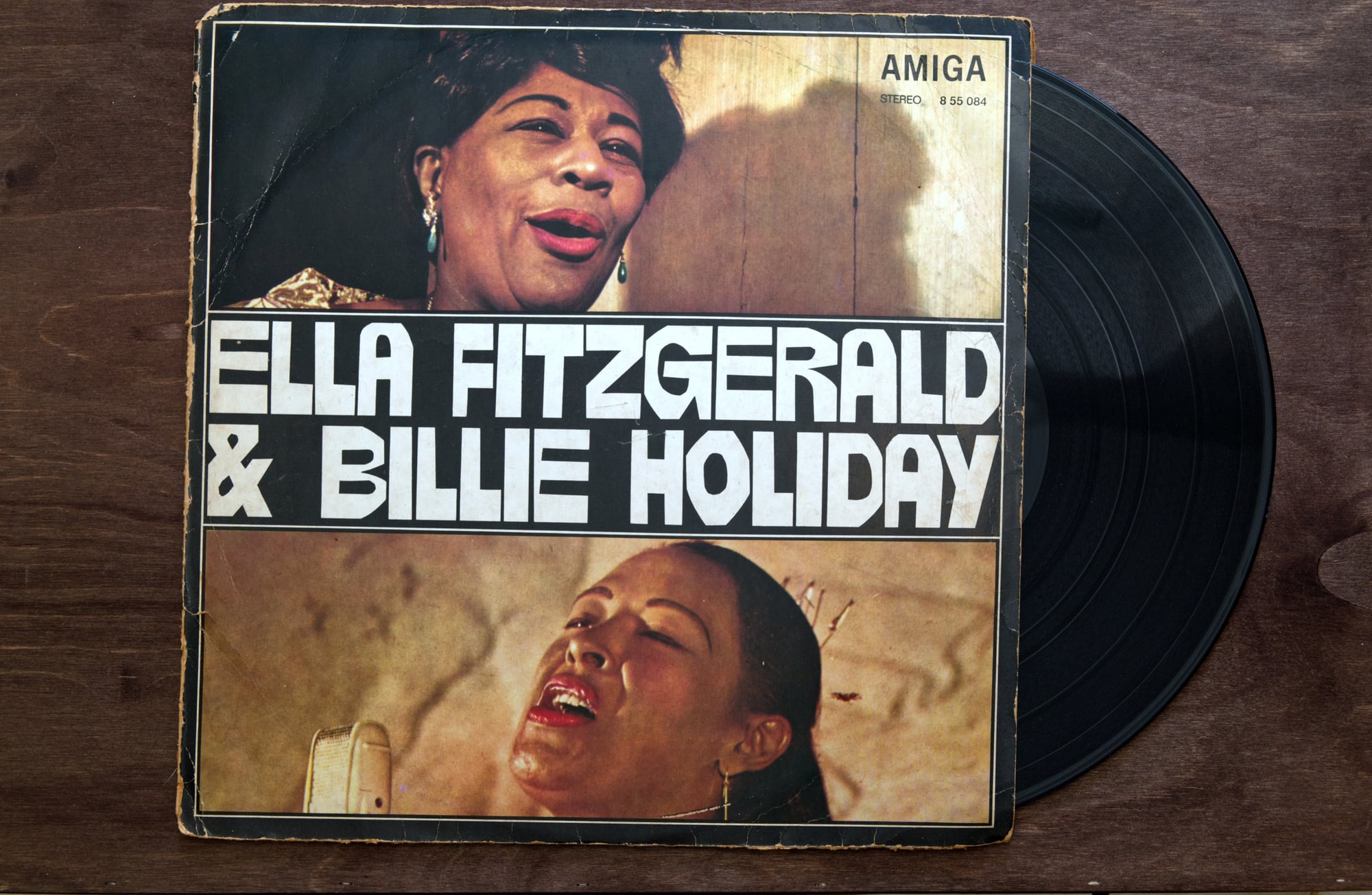
Billie Holiday didn’t want to sing “Strange Fruit” at first. The song terrified her (and rightfully so, considering what happened when she performed it), but teacher-turned-songwriter Abel Meeropol wouldn’t let it go — he’d written the haunting anti-lynching anthem after seeing a photograph that he couldn’t shake from his mind, and he knew Holiday was the only voice powerful enough to carry its weight.
Meeropol later adopted the two sons of Julius and Ethel Rosenberg after their parents were executed for espionage. The man who wrote one of the most politically dangerous songs of the 20th century spent the rest of his life raising the children of two other people destroyed by political persecution.
Holiday, despite her fears, sang it at the end of every set for the rest of her career — even when club owners begged her not to.
Round Midnight

“Round Midnight” exists because Thelonious Monk was essentially nocturnal. He wrote it sometime in the 1940s (the exact date remains fuzzy, which seems appropriate for a song about the witching hour), and it became the most recorded jazz standard by a jazz musician rather than a Tin Pan Alley songwriter.
The melody moves like someone walking through empty streets at 3 AM — hesitant, reflective, slightly off-balance. Monk never explained what the song meant to him, but every jazz musician since has found their own darkness in it.
Mack the Knife
Kurt Weill and Bertolt Brecht wrote “Die Moritat von Mackie Messer” for “The Threepenny Opera” in 1928 Berlin — a twisted little ditty about a serial killer meant as satire of bourgeois morality. But the song had an irresistible swing that made people want to dance to lyrics about murder.
Louis Armstrong recorded the first jazz version in 1956, barely understanding the German lyrics he was translating. Bobby Darin turned it into a Vegas standard.
The song about a sociopathic street criminal became the kind of thing people requested at weddings. Which, when you think about it, might have been Brecht’s point all along.
Summertime

George Gershwin spent months in South Carolina researching African American musical traditions before writing “Porgy and Bess.” He wanted authenticity, but he was still a white composer from Brooklyn trying to capture the experience of poverty in the rural South during the Depression.
The result was “Summertime” — a lullaby that sounds ancient even though Gershwin wrote it in 1935. The melody borrows from spirituals, but the lyrics paint a picture of ease and plenty that was fantasy for most of the people whose musical traditions inspired it.
Billie Holiday made it heartbreaking. Ella Fitzgerald made it soar. Every jazz singer since has had to figure out how to make it their own without getting lost in its deceptive simplicity.
Blue Moon

“Blue Moon” is the only Rodgers and Hart song that became a standard without being written for a specific show or movie. They wrote it three different times with three different sets of lyrics before landing on the version everyone knows.
The first version was called “Prayer,” which tells you something about how far they wandered before finding their way. The song feels inevitable, like it always existed.
Frank Sinatra made it smoky and romantic. Billie Holiday made it ache. The melody is simple enough for beginners but deep enough that masters spend decades finding new corners in it.
All of Me

Seymour Simons and Gerald Marks wrote “All of Me” in 1931 as a Tin Pan Alley pop tune, but jazz musicians transformed it into something else entirely. They heard improvisational space in its chord progressions.
Billie Holiday made it intimate. Louis Armstrong made it exuberant. Count Basie made it swing hard enough to move furniture. The song adapts to whoever’s playing it while remaining itself.
Body and Soul

Coleman Hawkins recorded the definitive version of “Body and Soul” in 1939, but he barely played the melody at all. Instead, he turned the chord structure into an improvisational framework that changed jazz forever.
The original song was written by Johnny Green in 1930, but Hawkins transformed it into something new entirely. He proved that interpretation could become authorship.
Every jazz musician since has tried to reach that same level of reinvention.
Autumn Leaves

“Les Feuilles mortes” was written for a French film in 1945, but Johnny Mercer’s English lyrics turned it into “Autumn Leaves.” The song became a standard because it makes nostalgia feel specific rather than sentimental.
The melody falls like leaves, and the harmony moves like memory. Miles Davis made it sound like fading light. Nat King Cole made it conversational.
Fly Me to the Moon

Frank Sinatra made “Fly Me to the Moon” famous, but it was originally titled “In Other Words.” Sammy Cahn wrote lyrics that were not really about space travel — they were about love’s exaggerated promises.
Sinatra sold both the romance and the absurdity, making them inseparable. The song works because it understands emotional exaggeration better than literal meaning.
My Funny Valentine

Richard Rodgers and Lorenz Hart wrote “My Funny Valentine” for a 1937 Broadway musical, but jazz musicians later transformed it into a standard of emotional ambiguity.
The lyrics describe love directed at someone imperfect — “less than Greek,” with a “weak” mouth. Chet Baker made it tender. Billie Holiday made it ache with recognition.
Giant Steps

John Coltrane wrote “Giant Steps” in 1959 as a harmonic challenge that redefined jazz improvisation. The chord changes move through distant keys at speed that demands total mastery of harmony.
Coltrane wasn’t showing off — he was exploring new musical structures that would shape his spiritual period. The song became a rite of passage for jazz musicians.
The Music Lives On

These songs endure because they leave room for interpretation while still holding structure. They are not fixed artifacts — they are evolving conversations between musicians across generations.
International Jazz Day celebrates that ongoing dialogue between composition and improvisation, intention and reinvention. Every performance adds another layer to stories that never fully settle into one version.
More from Go2Tutors!

- The Romanov Crown Jewels and Their Tragic Fate
- 13 Historical Mysteries That Science Still Can’t Solve
- Famous Hoaxes That Fooled the World for Years
- 15 Child Stars with Tragic Adult Lives
- 16 Famous Jewelry Pieces in History
Like Go2Tutors’s content? Follow us on MSN.