Landscapes Featured in Famous Paintings
Art galleries around the world display countless landscape paintings, but some have captured something that goes beyond technical skill. These works changed how people see the natural world, and they continue to draw crowds centuries after artists first put brush to canvas.
Looking at these paintings today still feels fresh, even when you’ve seen them reproduced a thousand times.
The Starry Night’s Swirling Sky

Van Gogh painted this view from his asylum window in Saint-Rémy-de-Provence, and the result became one of the most recognized images in art history. The night sky moves in spirals and waves, transforming a simple village scene into something that feels both peaceful and chaotic.
That steeple rises up from the town like an anchor point, keeping everything grounded while the heavens swirl above. The cypress tree on the left shoots up like a dark flame.
Van Gogh painted it during a difficult period, and you can feel that intensity in every brushstroke. The landscape doesn’t just sit there—it pulses with energy.
Monet’s Water Lilies at Giverny
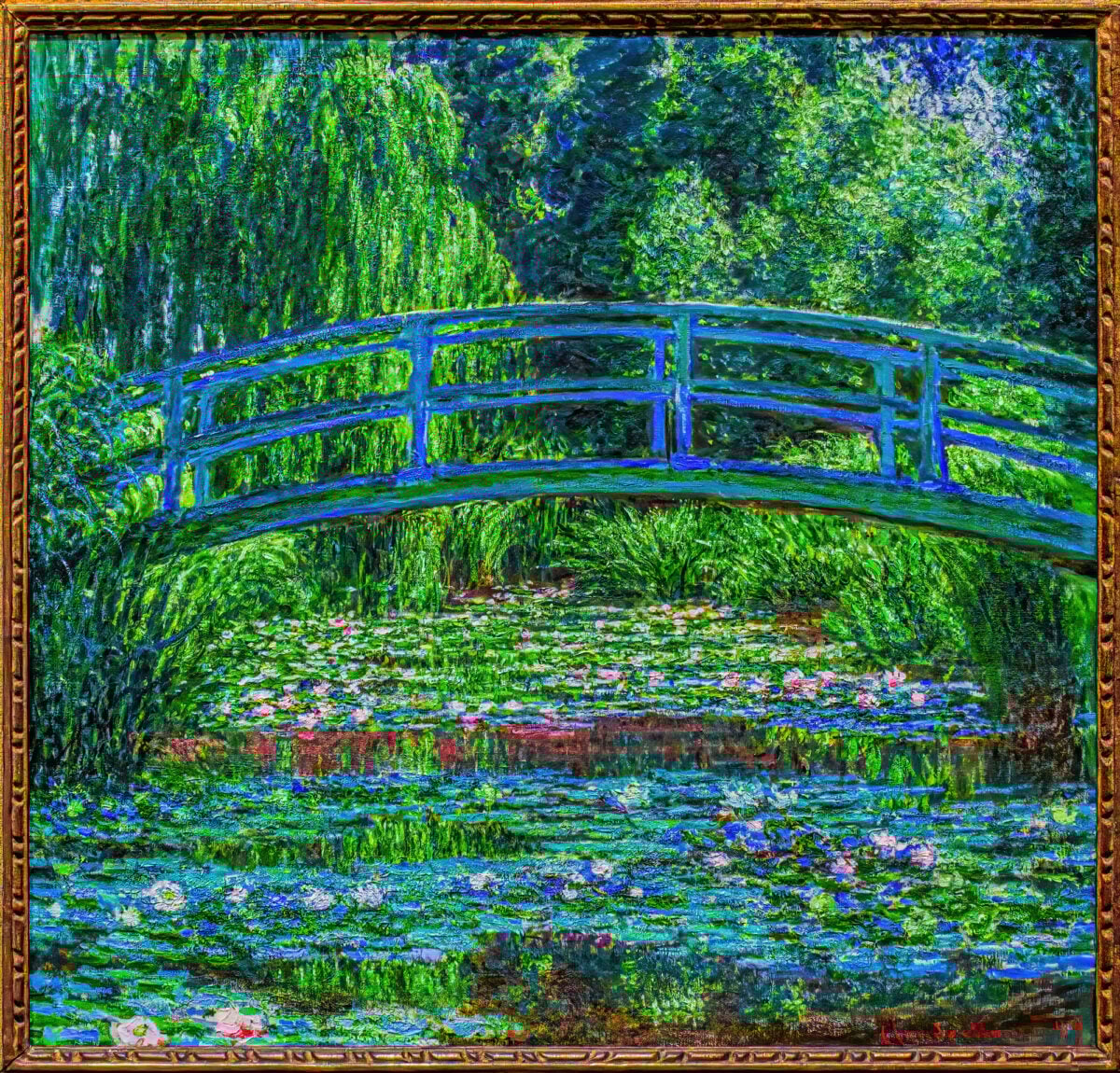
Monet spent the last thirty years of his life obsessing over his garden pond. He painted it again and again, watching how light changed the water’s surface at different times of day.
The lily pads float in a world where sky and water blur together, and you can’t always tell what’s reflection and what’s real. These paintings got larger and more abstract as Monet aged and his eyesight failed.
But that loss of detail somehow made them more powerful. Standing in front of the massive panels at the Orangerie in Paris feels like stepping into the water itself.
The Great Wave off Kanagawa

Hokusai’s woodblock print shows Mount Fuji tiny in the distance while a massive wave dominates the foreground. The foam on the wave’s crest looks like claws reaching for the boats below.
This image has appeared on everything from t-shirts to coffee mugs, but seeing a quality print reveals details that reproductions miss. The composition creates this perfect tension.
The mountain stays calm and permanent while the wave threatens to destroy everything. Hokusai was in his seventies when he made this, and he’d spent decades perfecting his craft. That experience shows in every line.
Turner’s Rain, Steam, and Speed
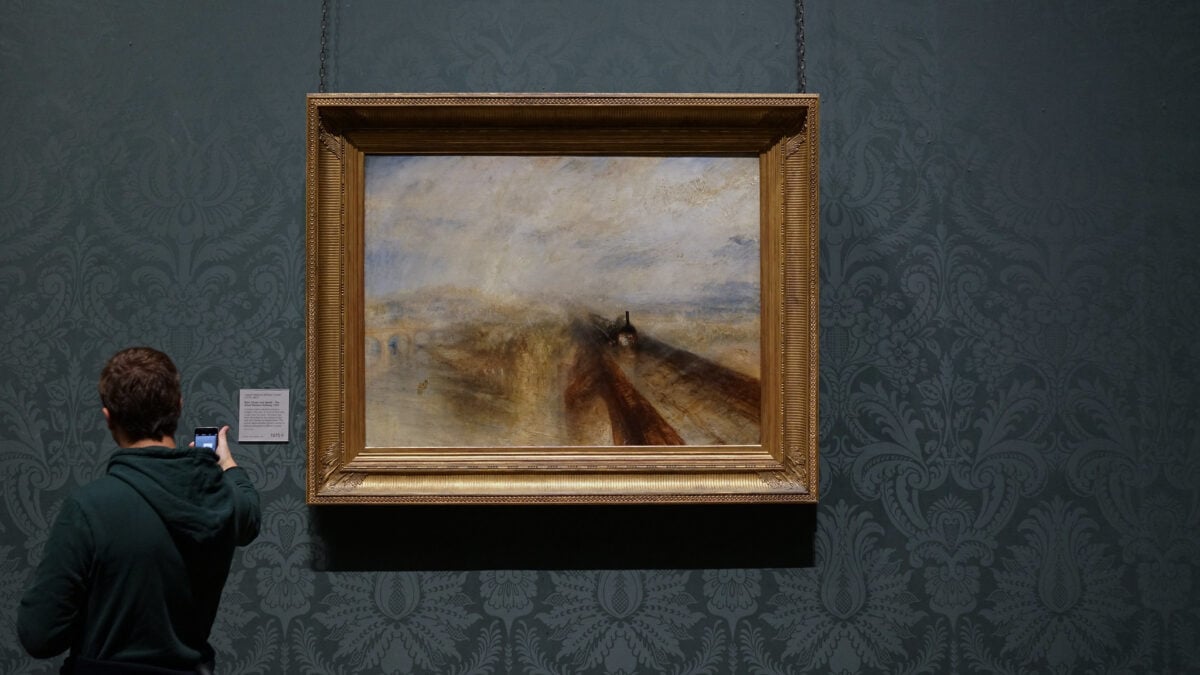
Turner painted a train rushing across a bridge through fog and rain, and critics at the time thought he’d lost his mind. The locomotive barely emerges from the atmospheric blur.
Everything feels like it’s dissolving into color and light. People who saw early trains described them as terrifying and magical at the same time.
Turner captured that feeling by making the landscape itself seem to vibrate with the machine’s presence. The painting sits in the National Gallery in London, and you need to see it in person to understand how he layered those colors.
Friedrich’s Wanderer Above the Sea of Fog

A man stands on a rocky peak, his back to the viewer, looking out over mountains wrapped in mist. This painting became the defining image of German Romanticism.
The figure’s dark coat contrasts with the pale fog, and you can almost feel the wind and cold. Friedrich positioned the viewer exactly where the wanderer stands, so you share his perspective.
The landscape stretches out vast and unknowable. Mountains emerge from the fog like islands, and you sense there’s more hidden than revealed.
Constable’s The Hay Wain

This scene of a rural cart crossing a stream in Suffolk looks simple at first glance. Constable painted the English countryside with such specific detail that you can almost smell the damp earth and hear the water flowing.
The clouds above carry real weight—you can tell if rain is coming or passing. He made dozens of sketches outdoors before completing the final version in his studio.
That preparation gave the painting an authenticity that resonated with viewers. When it was exhibited in Paris, French artists crowded around it, amazed at how he’d captured natural light.
Cézanne’s Mont Sainte-Victoire

Cézanne painted this mountain near his home in Aix-en-Provence over and over, more than sixty times. Each version breaks the landscape into geometric shapes—cones, cylinders, spheres.
The mountain itself becomes almost abstract, built from blocks of color rather than realistic detail. This approach influenced the Cubists who came after him. Picasso and Braque studied these paintings closely, seeing how Cézanne fragmented space while still keeping the scene recognizable.
The mountain rises solid and permanent while the foreground shifts and reorganizes itself.
Church’s Heart of the Andes

Frederic Edwin Church created this massive panorama after traveling through South America. The painting measures over five feet tall and ten feet wide, and Church filled every inch with precise botanical and geological detail.
Waterfalls cascade down distant peaks, tropical vegetation fills the foreground, and a tiny cross stands on a hill in the middle distance. When Church first exhibited it in New York, he charged admission and displayed it in a darkened room with special lighting.
Thousands of people paid to see it, treating the viewing like a theatrical event. The painting overwhelmed viewers with its scale and detail, offering a vision of a paradise that most would never visit themselves.
Bruegel’s Hunters in the Snow

Three hunters trudge home through deep snow, their dogs trailing behind them. The landscape spreads out below—a frozen pond where people skate, snow-covered roofs, distant mountains.
Bruegel painted this as part of a series depicting different seasons, and this winter scene became the most famous. The composition pulls your eye down from the hunters in the foreground to the village below and then out to the mountains beyond.
Everything feels cold and still. The hunters’ posture suggests exhaustion and perhaps disappointment—their hunt hasn’t gone well.
But life continues in the village below, people making the best of winter.
Bierstadt’s Among the Sierra Nevada
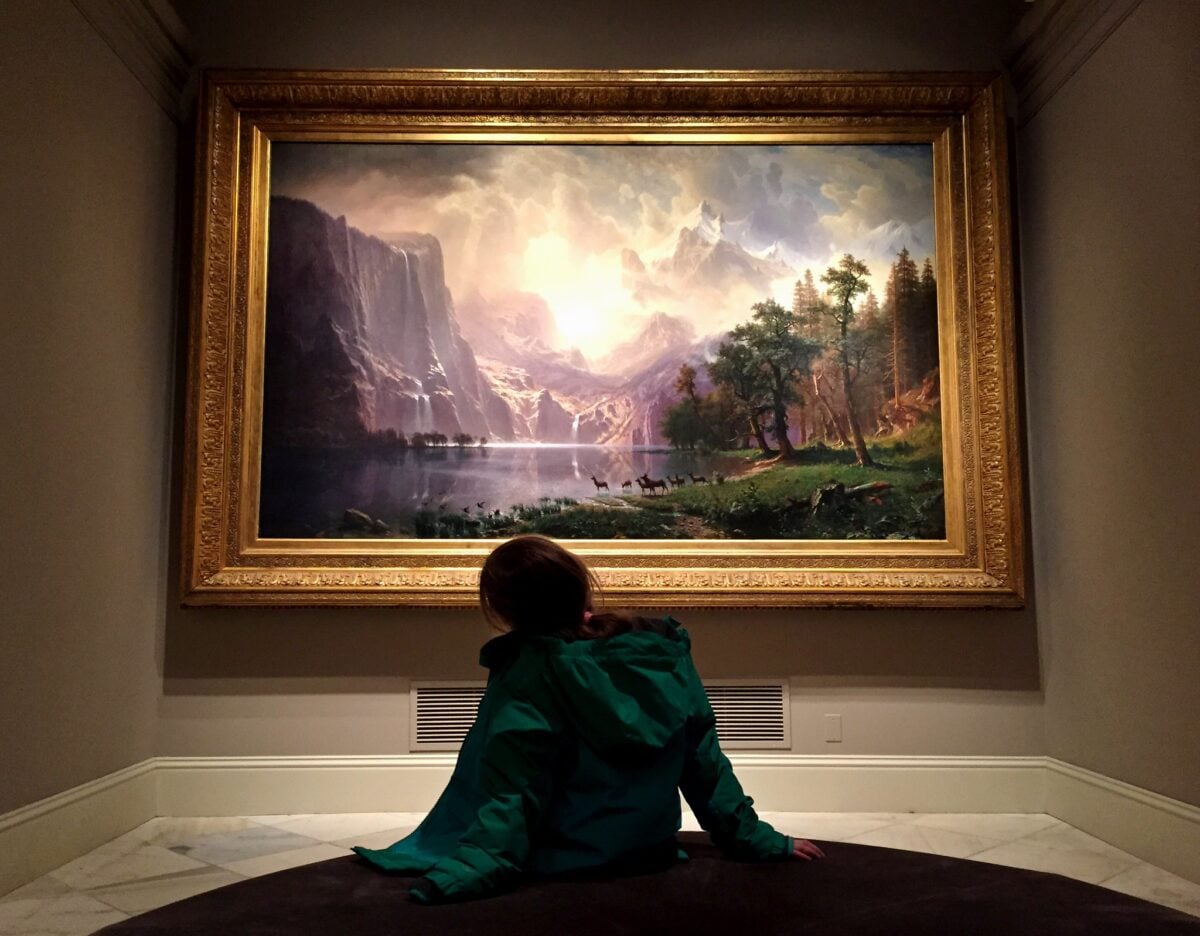
Albert Bierstadt traveled west with survey expeditions and came back with sketches that he transformed into huge, dramatic paintings. This view of the Sierra Nevada mountains bathes everything in golden light.
A waterfall pours down granite cliffs, deer drink from a still lake, and the peaks rise in the distance like a promised land. Bierstadt exaggerated the scale and beauty, creating landscapes that were more theatrical than strictly accurate.
But Americans in the 1860s wanted to see their continent as magnificent and unspoiled. These paintings helped establish the idea that Western landscapes deserved protection, contributing to the national park movement.
Hokusai’s Red Fuji
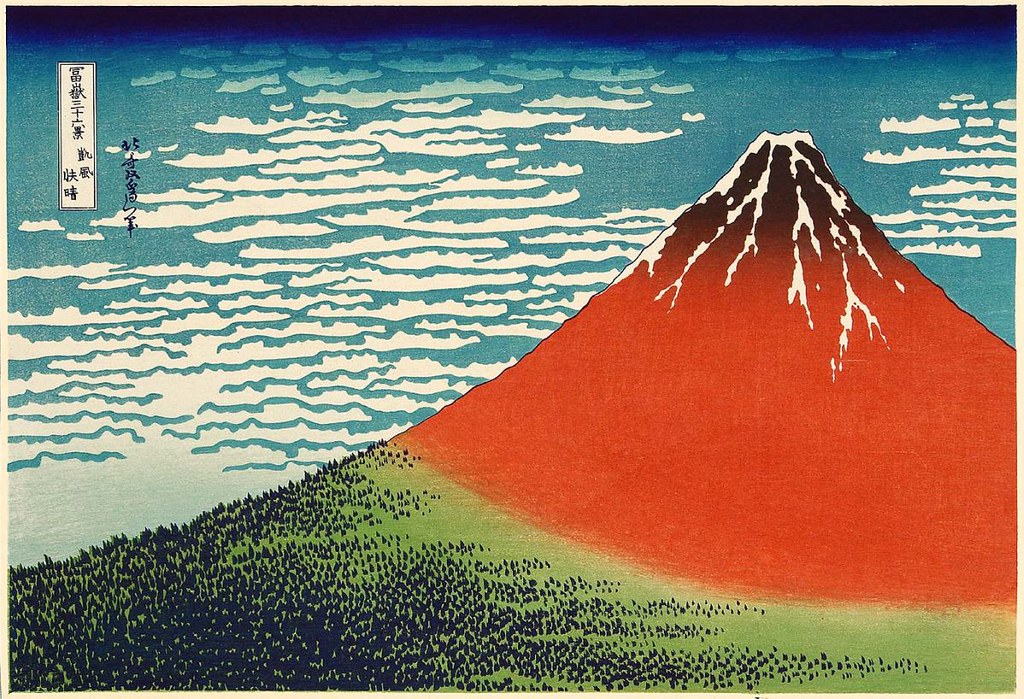
Mount Fuji turns red in the early morning light, its perfectly symmetrical slopes rising against a deep blue sky. Hokusai made this as part of his “Thirty-Six Views of Mount Fuji” series, and it’s often called “Red Fuji” for obvious reasons.
The composition is almost impossibly simple—just the mountain, some clouds, and sky. That simplicity gives the image tremendous power.
The mountain becomes more symbol than place, representing permanence and natural beauty. Hokusai printed thousands of copies, making this view of Fuji familiar across Japan and eventually around the world.
Wyeth’s Christina’s World

A woman in a pink dress lies in a brown field, looking toward a gray farmhouse on the distant hill. Andrew Wyeth painted this landscape in Maine with such precise realism that you can see individual blades of grass.
But the scene feels strange and dreamlike despite—or maybe because of—that precision. Christina was a real person, Wyeth’s neighbor who had a degenerative condition that made walking difficult.
The vast field between her and the house suggests both longing and isolation. The painting hangs in the Museum of Modern Art, and it remains one of the most popular American paintings ever created.
Klimt’s The Birch Forest

Gustav Klimt usually painted portraits and allegorical scenes, but this forest landscape shows a different side of his work. Thin birch trees rise straight up, their white trunks dotted with black marks.
Fallen leaves cover the ground in a carpet of gold and orange. The trees fill the entire frame, creating a pattern that feels almost decorative.
Klimt painted this during summer retreats to the Austrian countryside. The trees stand so close together that you can’t see far into the forest.
Everything feels enclosed and intimate, like you’re standing among the trees yourself rather than looking at them from a distance.
Munch’s The Scream’s Dramatic Sky

While the twisted figure in the foreground gets all the attention, the landscape behind it is what makes the painting so disturbing. The sky burns in waves of orange and red, the fjord below reflects those violent colors, and the bridge cuts a harsh diagonal across the scene.
The landscape isn’t just a backdrop—it’s part of what’s causing the figure’s terror. Munch wrote about walking along that path and feeling a scream pass through nature.
The landscape expresses that feeling, making the viewer uncomfortable in a way that wouldn’t work without that turbulent sky. The colors aren’t realistic, but they capture something real about anxiety and dread.
Hopper’s Nighthawks Without the People
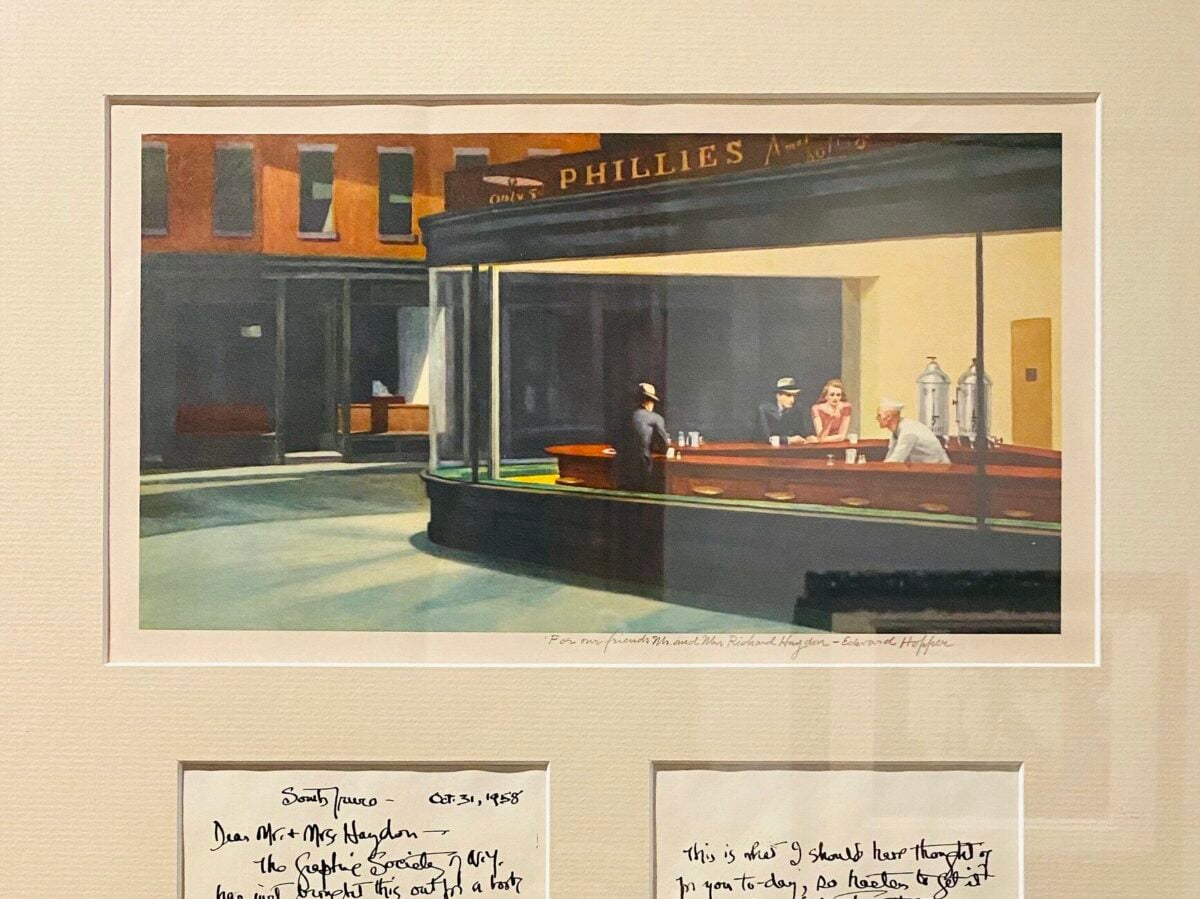
Edward Hopper’s known for city pictures with solitary folks – yet beyond the characters in works such as Nighthawks, the skyline speaks volumes. Streets run blank into the night; bright electric glow carves deep silhouettes, while structures sit quiet, cold, distant.
Design influences feeling just as strongly as human presence does. Hopper captured everyday places – town corners, quiet countrysides – with a sense of loneliness and pause.
Roads stretch beyond hilltops, lonely lights sit by deserted shores, homes stand cut off from neighbors across open land. Instead of action, there’s tension – like moments before or after an unseen event.
Each scene seems observed, holding its breath without showing why.
Where Landscape Becomes Memory

Check out those well-known landscape paintings today, yet you’re really viewing countless copies stacked on top of each other. Seen in school books, ads, wall prints, or funny re-creations – over and over – it’s tough to recall why they stood out back then.
Stick around the actual works awhile, though, and a spark still gets through. These painters weren’t only copying views – they poured their emotions into every scene, which somehow hits people differently, even after decades pass.
The lands they showed live half in dreams, half on maps; spots you walk up to in galleries, but can’t truly step foot in outside your mind.
More from Go2Tutors!

- The Romanov Crown Jewels and Their Tragic Fate
- 13 Historical Mysteries That Science Still Can’t Solve
- Famous Hoaxes That Fooled the World for Years
- 15 Child Stars with Tragic Adult Lives
- 16 Famous Jewelry Pieces in History
Like Go2Tutors’s content? Follow us on MSN.