Largest Private Yachts Built
Building a boat reaches a different level entirely when money stops being an object. The ocean becomes a canvas where billionaires commission floating palaces that dwarf most residential buildings.
These vessels push shipyards to their limits, demanding years of construction and coordination between thousands of skilled workers. What started as simple transport has evolved into an arms race of luxury and engineering.
The Reigning Champion of Length

Azzam holds the crown for the longest private yacht at 180 meters. Built by German shipyard Lürssen in 2013, this vessel stretches nearly 600 feet across the water.
The late Sheikh Khalifa bin Zayed Al Nahyan commissioned it, reportedly spending around 605 million dollars on construction alone. The yacht required only three years to build, which stands as a record for something this massive.
Around 4,000 people worked on the project at various stages. The main salon spans 29 meters with no support pillars, creating an open space that defies typical engineering limitations.
Christophe Leoni designed the interior in a French Empire style, incorporating an entire year’s production of mother-of-pearl for the intricate marquetry work throughout the vessel.
What makes Azzam particularly unusual is her speed. Most yachts this size crawl through the water, but Azzam can hit over 30 knots thanks to two gas turbines and two diesel engines producing 94,000 horsepower combined.
She was specifically designed to reach diving spots quickly in shallow waters around Abu Dhabi. The yacht accommodates 36 guests and requires a crew of 60 to 80 people to operate.
Annual running costs hover around 50 to 65 million dollars just to keep everything functioning.
The Coming Giant

REV Ocean aims to surpass Azzam when construction finishes. At 182 meters, she will claim the title by just two meters. Norwegian billionaire Kjell Inge Rokke commissioned this vessel as both a research ship and luxury yacht.
The project has faced technical delays, but when completed, REV Ocean will serve as a floating laboratory for ocean research while maintaining the amenities expected in a superyacht. The vessel will accommodate 36 guests and 54 crew members, with a gross tonnage of 19,045.
Her range extends to 21,120 nautical miles at 11 knots, allowing expeditions to the most remote ocean regions. The design prioritizes scientific capability alongside comfort, creating a hybrid that serves both environmental research and private use.
When Size Means Volume

Dilbar breaks records differently. At 156 meters, she falls short of Azzam in length but dominates in gross tonnage at 15,917 tons. Built by Lürssen for Russian billionaire Alisher Usmanov, Dilbar packs more interior volume than any other yacht on the water.
That extra space translates to features like the largest swimming pool ever installed on a yacht, holding 180 cubic meters of water. The yacht includes two helipads and can accommodate guests across multiple decks.
Her sheer mass means moving her requires careful planning and specialized facilities. When you stand next to Dilbar, the scale becomes almost incomprehensible.
She weighs roughly one and a half times as much as the Eiffel Tower.
The Secretive Royal Vessels

Fulk Al Salamah belongs to the Omani Royal family and measures 164 meters. Built by Italian shipyard Mariotti Yachts in 2016, almost nothing is known about her interior.
The vessel maintains an air of mystery that many royal yachts cultivate. When she appears in port, cameras try to capture details, but her owners keep specifics closely guarded.
Al Said, another Omani royal yacht built by Lürssen, stretches 155 meters and was launched in 2007. She can accommodate 65 guests and includes a concert hall capable of hosting a 50-piece orchestra.
The yacht serves as both a personal vessel and a diplomatic tool for the Sultan of Oman. Her presence in foreign ports makes political statements while providing comfortable accommodations for state visits.
Eclipse and Her Defense Systems

Roman Abramovich’s Eclipse measures 162.5 meters and cost an estimated 605 million dollars. Built by Blohm + Voss in Germany, she features security measures that seem pulled from spy films.
A missile defense system, laser shields against paparazzi cameras, and a bulletproof master suite protect her owner from various threats. The yacht includes space for three helicopters, two swimming pools, and accommodations for up to 100 crew members.
One pool measures 16 meters and can drain, raise, and transform into a dance floor. Eclipse can accommodate 36 guests across 18 cabins.
The submarine stored onboard extends her capabilities beyond surface exploration. Annual maintenance and operation costs run into tens of millions.
Just keeping Eclipse staffed, fueled, and maintained requires the budget of a small company. But for someone with Abramovich’s wealth, these expenses barely register.
The United Arab Emirates Fleet

Blue, launched by Lürssen in 2022, measures 158 meters and belongs to Mansour bin Zayed Al Nahyan, Vice President of the UAE. She accommodates 48 guests with a crew of 80 and features two helipads.
Details about her interior remain private, but the exterior suggests a more modern design aesthetic than some older vessels in this category. Dubai, another UAE-owned yacht at approximately 162 meters, serves Sheikh Mohammed bin Rashid al-Maktoum as his royal vessel.
Originally commissioned by Prince Jefri of Brunei, the Dubai government acquired and completely refurbished her. The yacht can host 24 guests and includes a 90-guest dining room, disco, cinema, submarine, and even a squash court.
Almost 800 people worked directly on her completion, with hundreds more subcontractors contributing.
Project Deep Blue Emerges

Lürssen launched Project Deep Blue in 2025 at 134.2 meters and 9,079 gross tons. She represents one of the first vessels to use the builder’s new slipway designed for heavier loads.
Much about her remains undisclosed, but her Winch Design exteriors feature striking blue overhangs and distinctive lower-deck glasswork. The yacht includes five decks of amenities, two pools, a helipad, and a sloping mast that creates an unusual profile.
Her launch and subsequent sea trials attracted attention from yacht watchers trying to identify her eventual owner and full capabilities.
The Yacht-Liner Concept

Somnio plans to become the largest at 222 meters, but she breaks the mold entirely. Rather than a single private yacht, she combines elements of a superyacht, cruise ship, and residential building.
The vessel will include 30 luxury private residences starting around 11 million dollars each, all available by invitation only. Construction at VARD in Norway, part of Italy’s Fincantieri Group, has faced delays.
Originally scheduled for mid-2024, delivery keeps pushing back. When finished, Somnio will offer a 10,000-bottle wine cellar, medical facilities, fitness centers, a spa, movie theater, beach club, restaurants, sports bars, and a library.
She represents a new category where ownership splits among multiple wealthy individuals rather than belonging to one person.
How Shipyards Build These Giants
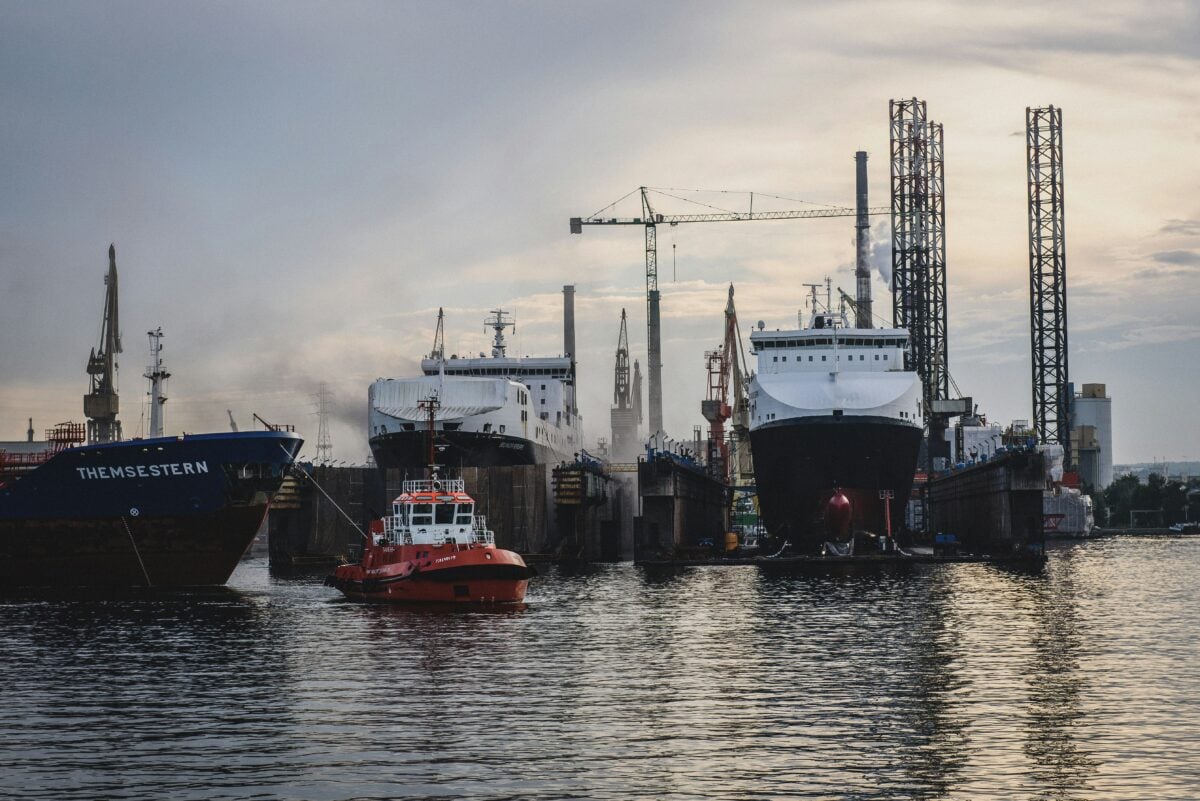
Only a handful of shipyards worldwide can construct vessels this large. Lürssen in Germany dominates the list, having built more than half of the top ten largest yachts.
The company’s facilities in Bremen and Hamburg handle projects that can take four to seven years from initial design to delivery. Feadship in the Netherlands, Blohm + Voss in Germany, and a few Italian yards round out the short list of capable builders.
Each project requires coordination between naval architects, interior designers, engineering firms, and hundreds of specialized craftspeople. A single yacht might employ thousands of workers during peak construction phases.
The technical challenges multiply with size. Supporting structures must handle enormous weights while maintaining the elegant lines owners demand.
Propulsion systems need to move thousands of tons through water efficiently. Stabilization becomes critical as vessels grow larger, requiring sophisticated gyroscopic systems to prevent uncomfortable rolling.
The Environmental Question

These massive yachts consume fuel at rates that make environmentalists cringe. A single transatlantic crossing can burn hundreds of thousands of dollars worth of diesel.
Annual fuel costs for the largest yachts reach millions. Some newer vessels incorporate hybrid propulsion systems and solar panels.
Bill Gates commissioned Breakthrough, a 118-meter yacht powered by hydrogen fuel cells, making her the first hydrogen-powered superyacht. The technology remains experimental but points toward possible futures where these vessels operate with reduced environmental impact.
Critics argue that no amount of green technology justifies the private ownership of vessels this large. Supporters counter that technological development often starts with early adopters willing to pay premium prices for unproven systems.
The debate continues while shipyards experiment with cleaner propulsion methods and more efficient designs.
The Real Costs Beyond Construction

Building the yacht represents just the beginning of expenses. Annual operating budgets for the largest vessels run between 50 and 75 million dollars.
Crew salaries alone consume millions. A yacht like Azzam requires 60 to 80 trained professionals on constant rotation.
These aren’t minimum wage positions. Captains, engineers, and specialized crew members command substantial salaries. Insurance premiums reach into the millions annually.
Maintenance schedules demand regular dry-dock periods where the vessel gets pulled from the water for hull inspections, painting, and major repairs. Port fees at exclusive marinas are charged by the meter, making brief stops cost tens of thousands.
Fuel represents another massive ongoing expense. These yachts carry millions of liters of fuel, and filling the tanks costs hundreds of thousands each time.
Many owners keep their vessels moving constantly between Mediterranean summers and Caribbean winters, burning fuel the entire time.
Who Buys These Floating Palaces

The market for yachts over 150 meters contains maybe a few dozen potential buyers worldwide. These aren’t merely wealthy people.
They’re individuals with net worths measured in tens of billions. Royalty from oil-rich nations, Russian oligarchs, tech billionaires, and a handful of others comprise the exclusive club of owners.
For many, the yacht serves as both a pleasure craft and a diplomatic tool. When a ruler arrives in a foreign port aboard a vessel like Azzam or Al Said, it makes a statement about their nation’s wealth and power.
Business deals happen in floating offices removed from standard protocol and prying eyes. The yacht becomes a mobile headquarters that travels wherever needed.
Some owners rarely use their yachts. The vessels sit docked for months while the crew maintains them in pristine condition.
Others cruise constantly, moving with the seasons between favored locations. Usage patterns vary wildly, but the common thread is that all owners have enough wealth that even the staggering operating costs don’t impact their lifestyle.
The 2025 Building Boom

This year saw ten yachts over 100 meters delivered, marking a record for the industry. Average length hit 110.9 meters with an average volume of 5,295 gross tons.
The trend toward larger vessels continues despite economic uncertainty and increased scrutiny of extreme wealth. Project Tanzanite from Amels in the Netherlands will measure 120 meters when delivered in early 2026, becoming the largest Dutch-built motor yacht in history.
Amalya, a 78-meter flagship from Italy’s The Italian Sea Group, represents the country’s largest 2025 launch and features innovative diesel-electric propulsion with lithium-polymer batteries. These newer vessels push boundaries not just in size but in technology and design philosophy.
Glass-bottom pools, submarine garages, onboard nightclubs, and IMAX theaters show how designers accommodate increasingly ambitious requests from owners.
The Shipyards’ Waiting Lists

Ordering a yacht this size means waiting years for delivery. Lürssen’s order book extends several years into the future.
Clients wait patiently while their vessels take shape in massive construction halls. Some yards work on multiple projects simultaneously, carefully managing resources and scheduling to keep everything moving forward.
The process starts with initial concepts that might take a year just to finalize. Naval architects work with the client to understand their needs and desires, then translate those into technical specifications.
Interior designers create renderings and scale models. Once approved, actual construction begins with steel cutting and hull assembly.
As work progresses, clients visit regularly to check progress and make decisions about thousands of details. Marble selections for bathrooms, wood choices for furnishing, electronic systems, propulsion options, and countless other choices require owner input.
The collaboration between client and shipyard spans years and tests both parties’ patience.
When Size Becomes a Problem

These giant yachts face practical limitations their owners might not initially consider. Many marinas can’t accommodate vessels over 150 meters.
Port infrastructure designed for standard yachts struggles with the weight, length, and draft of these monsters. Finding places to dock becomes a challenge that requires advance planning.
Canals and waterways that smaller yachts navigate easily become impassable. The Suez Canal charges based on tonnage, making transits cost hundreds of thousands.
Some shallow channels and ports remain entirely off-limits due to draft restrictions. Azzam’s shallow draft of 4.3 meters was specifically requested to allow access to Abu Dhabi’s diving sites, but most yachts this size draw much deeper.
Crew recruitment and retention present ongoing challenges. Finding qualified people willing to spend months at sea working around the clock isn’t easy.
Turnover creates training burdens and threatens the smooth operation that owners expect. Some yachts employ over 100 crew members in total, with teams rotating on and off to maintain coverage.
Where the Water Carries Dreams

Out here, dreams take shape as floating steel. Sitting where design meets money and machines, these boats do things buildings on solid ground simply cannot.
Your opinion – seen as either wild waste or clever breakthroughs – might just come down to your bank balance. Working carefully, the builders care deeply about what they make, even when others argue over money and fairness.
Every boat shows long stretches of hands-on skill and clever fixes along the way. Some fit delicate wood patterns piece by piece, while others shape engines down to the last detail; meanwhile, designers check how it all fits and functions as one.
Out there, the sea keeps making room for heavier loads. At this moment, sparks fly in a yard where workers shape metal into a vessel meant to outsize today’s giants.
That push forward rolls on without pause. So long as fortunes stretch high and waters stay open, desire grows for a craft larger than any seen so far.
More from Go2Tutors!

- 16 Historical Figures Who Were Nothing Like You Think
- 12 Things Sold in the 80s That Are Now Illegal
- 15 VHS Tapes That Could Be Worth Thousands
- 17 Historical “What Ifs” That Would Have Changed Everything
- 18 TV Shows That Vanished Without a Finale
Like Go2Tutors’s content? Follow us on MSN.