Fun Math Tricks That Actually Work
Math can be your secret weapon instead of your worst enemy. While most people struggle with calculations, you can master some seriously impressive shortcuts that work like magic but are actually based on solid mathematical principles.
These aren’t the typical tricks you learned in elementary school – they’re more advanced techniques that can make you lightning-fast with numbers. The beauty of these methods lies in their reliability.
They work every single time, regardless of the specific numbers you’re dealing with. Once you understand the patterns, you’ll wonder why nobody taught you these techniques years ago.
Here are advanced math tricks that will transform how you handle calculations forever.
The Ancient Vedic Cross Method

This technique comes from ancient Indian mathematics and can multiply any two numbers using a cross-pattern approach. Draw your two numbers vertically and multiply diagonally, then add the cross products.
For 23 × 14, multiply 2×1 for the hundreds place, add (2×4) + (3×1) for the tens place, and multiply 3×4 for the units place. The result is 322 without traditional long multiplication.
The cross method works because you’re essentially applying the distributive property in a visual way. Ancient mathematicians discovered this pattern centuries ago, and it remains one of the fastest ways to multiply multi-digit numbers mentally.
With practice, you can solve problems that would normally require paper and pencil.
Numbers Close to 100 Made Simple

When multiplying two numbers that are both close to 100, you can use a component-wise approach that breaks the problem into manageable pieces. For 94 × 98, subtract each from 100 to get 6 and 2, then subtract their sum from 100 to get 92.
Multiply 6 × 2 to get 12, and your answer is 9,212. This works because of how the algebra expands when you factor numbers as (100-a)(100-b).
The terms separate cleanly, giving you distinct parts of the final answer. It’s particularly useful for mental calculations involving numbers in the 90s, where traditional multiplication becomes cumbersome.
Like Go2Tutors’s content? Follow us on MSN.
The Reciprocal Division Shortcut

Instead of dividing by difficult numbers, you can multiply by their reciprocals using patterns. To divide by 5, multiply by 2 and shift the decimal left.
To divide by 25, multiply by 4 and shift two places left. For division by 125, multiply by 8 and shift three places left.
These patterns emerge because 5, 25, and 125 are powers of 5, which relate simply to powers of 10. This technique transforms division problems into multiplication problems, which most people find easier to handle mentally.
The key is recognizing when a divisor has a simple reciprocal relationship with powers of 10. Once you spot these patterns, division becomes almost as easy as multiplication.
The Digit Sum Check for Accuracy

This ancient verification method can instantly tell you if your multiplication or addition is correct. Add up all the digits in your numbers until you get a single digit, then perform your operation on these single digits.
Your answer should have the same digital root. For 47 × 83 = 3,901, check: (4+7) × (8+3) = 11 × 11 = 121, which reduces to 4.
The answer 3,901 also reduces to 4, confirming correctness. The digital root method works because of modular arithmetic principles.
While it won’t catch every possible error, it catches most calculation mistakes and provides a quick sanity check for your work. It’s especially useful when you’re doing multiple calculations and want to verify your results quickly.
Advanced Percentage Calculations

Beyond basic percentage shortcuts lies a more powerful technique: the cross-multiplication percentage method. To find what percentage X is of Y, multiply X by 100 and divide by Y.
But here’s the advanced part – you can estimate this quickly by recognizing common percentage patterns. 37 out of 148 is approximately 25% because 37 × 4 = 148.
This pattern recognition approach works because percentages are really just ratios in disguise. When you train yourself to see the underlying ratios, calculating percentages becomes intuitive rather than mechanical.
It’s particularly useful in real-world situations where exact calculations aren’t necessary but quick estimates are valuable.
Like Go2Tutors’s content? Follow us on MSN.
The Complement Subtraction Method
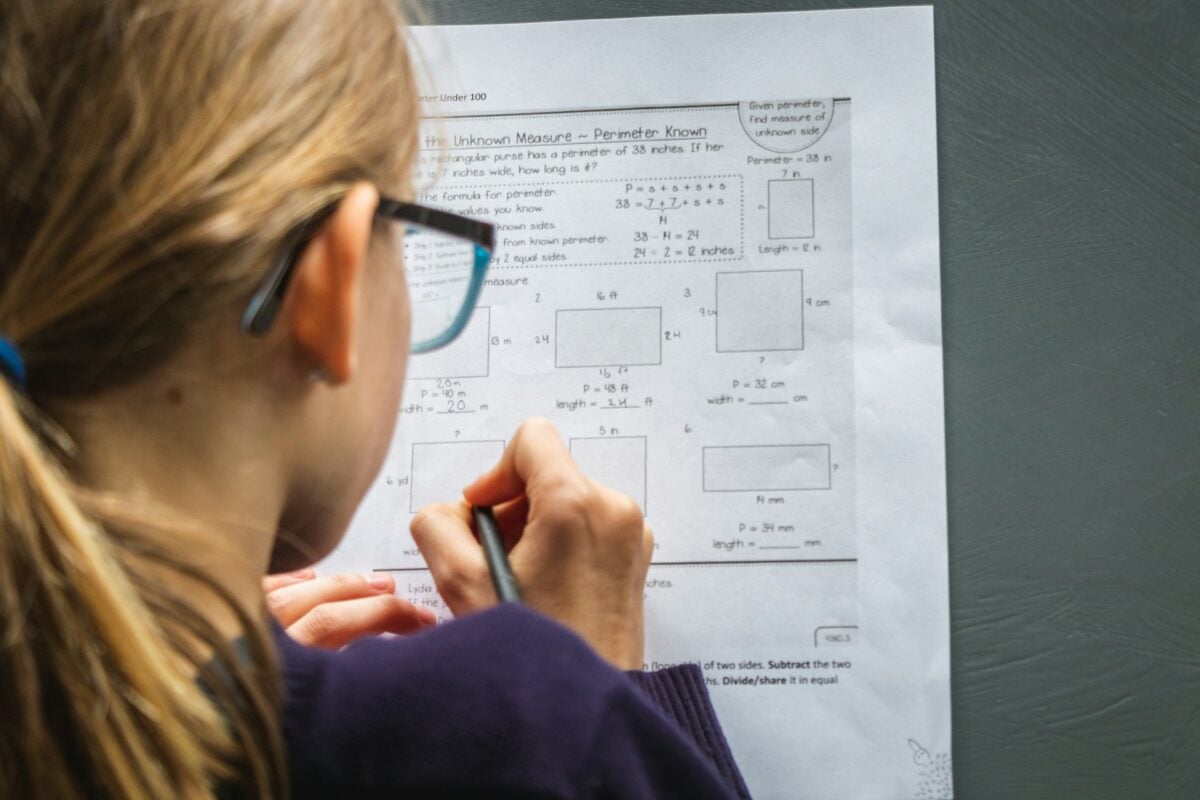
When subtracting from numbers with lots of zeros like 1,000 or 10,000, use the complement method instead of borrowing. To calculate 1,000 – 347, subtract each digit from 9 except the last, which you subtract from 10.
So 1,000 – 347 becomes 9-3, 9-4, 10-7, giving you 653. This technique works because you’re essentially adding the complement to reach the next higher power of 10.
It eliminates the tedious borrowing process and reduces the chance for errors. The method extends to any subtraction from powers of 10, making it incredibly versatile for mental math.
Three-Digit Multiplication Mastery
The vertical-and-crosswise method can handle three-digit multiplication with surprising efficiency. For 134 × 256, work systematically: multiply straight down for the units, cross-multiply for the tens and hundreds places, then combine results with proper carrying.
This eliminates the multiple partial products of traditional long multiplication. The beauty of this approach is that you’re building the answer digit by digit from right to left, handling carries as you go.
It requires practice to keep track of multiple cross-multiplications, but once mastered, it’s faster and less error-prone than conventional methods. Professional mathematicians often prefer this approach for complex calculations.
The Factor-Based Simplification Trick

Complex multiplications become manageable when you factor numbers into their components. To multiply 144 × 35, recognize that 144 = 12² and work with simpler factors.
Or factor 35 as 7 × 5, making the problem 144 × 7 × 5. Now you can multiply 144 × 7 = 1,008, then multiply by 5 to get 5,040.
This technique leverages the fact that multiplication is associative – you can rearrange and regroup factors however makes the calculation easier. The key is developing a mental library of common factors and learning to spot them quickly in larger numbers.
It’s particularly powerful for numbers that are products of small primes.
Like Go2Tutors’s content? Follow us on MSN.
Why These Advanced Methods Work
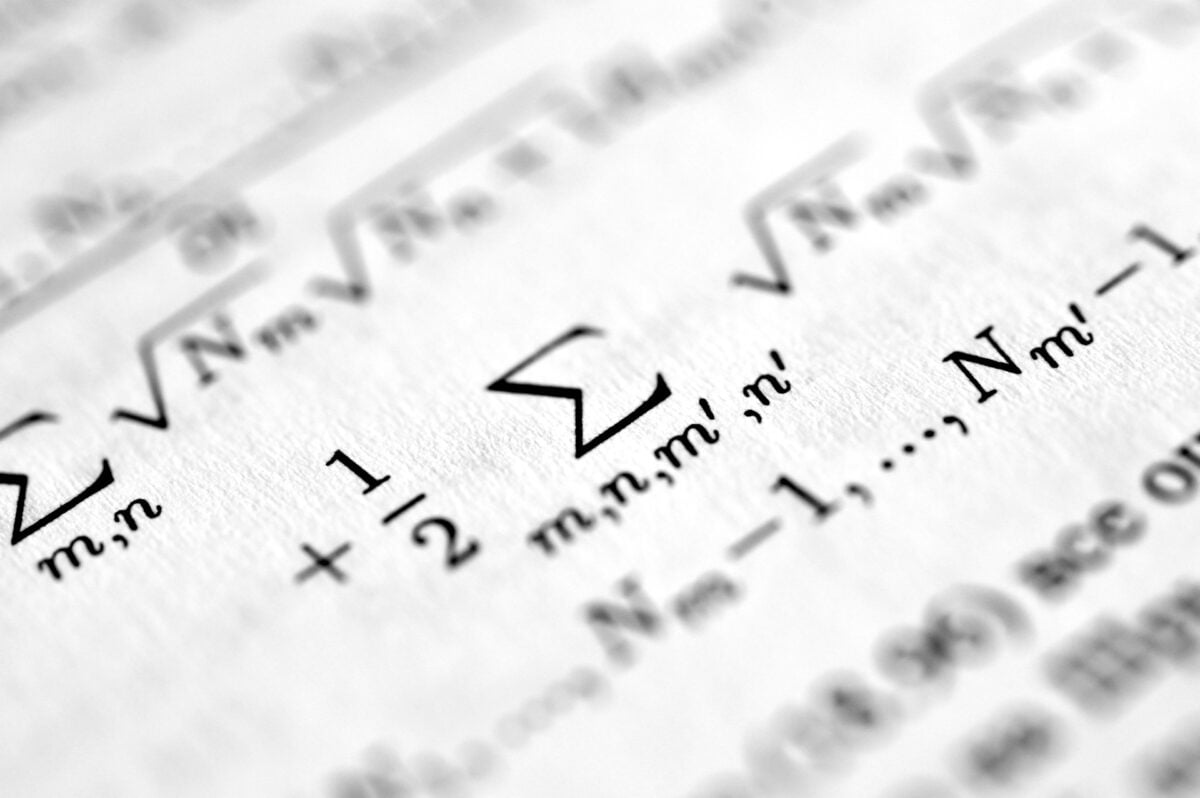
These techniques aren’t just clever shortcuts – they reveal deep mathematical relationships that connect different areas of mathematics. The cross-multiplication method relates to algebraic expansion, digital roots connect to modular arithmetic, and base-shifting techniques illustrate principles from number theory.
Understanding these connections helps you remember the methods and adapt them to new situations. Mathematics is fundamentally about patterns and relationships, and these advanced tricks let you exploit those patterns for computational advantage.
The ancient mathematicians who developed many of these techniques understood that calculation is just pattern recognition in disguise. Master these patterns, and you master the numbers themselves.
More from Go2Tutors!

- 16 Historical Figures Who Were Nothing Like You Think
- 12 Things Sold in the 80s That Are Now Illegal
- 15 VHS Tapes That Could Be Worth Thousands
- 17 Historical “What Ifs” That Would Have Changed Everything
- 18 TV Shows That Vanished Without a Finale
Like Go2Tutors’s content? Follow us on MSN.