Most Dangerous Bridges to Cross
Some structures test your nerves before you even set foot on them. Bridges that sway in the wind, span impossible distances, or hang hundreds of feet above raging water force you to confront basic fears.
These crossings demand more than just physical passage—they require trust in engineering, balance, and sometimes a complete disregard for your own survival instincts.
Hussaini Hanging Bridge, Pakistan

The planks don’t line up. That’s the first thing you notice when approaching this bridge in northern Pakistan.
Gaps wide enough to fall through separate rotting wooden boards, and the whole structure tilts at angles that seem physically impossible. The cables holding it together haven’t been replaced in decades.
Wind coming down from the Karakoram mountains hits the bridge hard. People crossing have to time their movements between gusts.
The old bridge that used to run parallel to this one collapsed into the Hunza River years ago, and nobody bothered to remove the debris. You can see it tangled in the water below as you cross.
Locals use this bridge daily to reach the other side of the valley. They’ve learned which planks to trust and which to avoid.
Tourists take hours to make a crossing that villagers complete in minutes.
Carrick-a-Rede Rope Bridge, Northern Ireland

Fishermen built this bridge 350 years ago to reach a small island where they caught Atlantic salmon. The design hasn’t changed much since then.
Rope cables and wooden planks suspended 100 feet above rocky water and crashing waves.
The bridge bounces with every step. Groups crossing together create a rhythm that makes the whole structure sway side to side.
On windy days, the movement intensifies to the point where the bridge operators close it down entirely.
The worst part isn’t the height or the movement. It’s looking down through the gaps between planks and seeing the rocks and churning water directly below your feet.
Your brain keeps reminding you that only rope and wood separate you from that 100-foot drop.
Trift Bridge, Switzerland
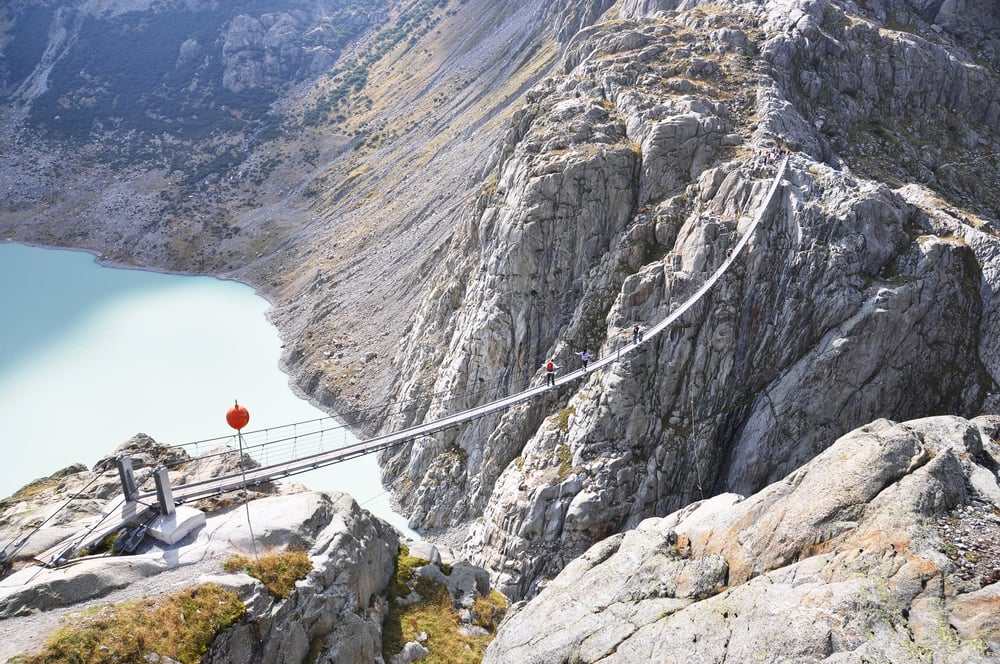
This suspension bridge hangs 558 feet above a glacier lake in the Swiss Alps. When they first built it in 2004, engineers made it too narrow and it swayed too much.
They had to rebuild it five years later to make it safer, but that doesn’t mean it feels safe.
The bridge stretches for 560 feet across an alpine valley. Wind funnels through the mountains and hits you from changing directions.
You can watch the bridge cables vibrate under the strain. The water below looks deceptively calm until you realize you’re looking at a glacier-fed lake filled with ice chunks.
Hikers use this bridge to access remote trails in the Alps. The views are spectacular, but you have to keep moving forward because stopping in the middle only makes you more aware of the drop beneath you.
Langkawi Sky Bridge, Malaysia

A curved bridge that hangs from a single pylon 2,300 feet above sea level doesn’t inspire confidence, even when engineers assure you it’s perfectly safe. The Langkawi Sky Bridge wraps around the peak of Gunung Mat Cincang mountain in Malaysia, suspended by eight cables attached to a single tower.
The bridge doesn’t go straight. It curves in a way that means you can’t see the end when you start crossing.
This curved design forces you to walk along the outer edge where the drop is most visible. Glass panels built into sections of the deck let you look straight down at the jungle canopy far below.
Weather changes fast at this altitude. Clear skies can turn to thick fog within minutes, reducing visibility to a few feet.
The bridge operators close it during storms, but even on calm days, the height and the curve create a persistent sense of exposure.
Canopy Walk, Ghana

Most hanging bridges cross rivers or valleys. This one crosses trees.
The Kakum National Park canopy walkway consists of seven separate bridges connecting platforms built into massive rainforest trees. Each bridge section hangs 130 feet above the jungle floor.
The bridges use rope and wire construction that allows them to move with the trees when wind hits the canopy. This flexibility keeps the bridges from tearing apart, but it makes crossing them feel like walking on something that’s constantly trying to throw you off balance.
Animals move through the canopy around you as you cross. Monkeys sometimes use the bridges at night after the park closes.
During the day, you share these swaying walkways with other tourists, and every person who steps onto a bridge section sends vibrations down the entire length.
Seven Mile Bridge, Florida

Distance creates its own kind of danger. The Seven Mile Bridge connects the middle Florida Keys to the lower keys, running parallel to the old bridge that hurricane damage made too dangerous to use.
For seven miles, you drive over open water with nothing but ocean on both sides.
Hurricanes regularly target this stretch of Florida. When storms approach, the bridge becomes the only escape route for tens of thousands of people trying to evacuate.
Traffic backups during evacuations can trap people on the bridge for hours as wind speeds increase around them.
The bridge sits low to the water. During storm surge, waves wash over the roadway.
Even on calm days, strong winds push vehicles around. Motorcyclists and RV drivers struggle to maintain control when crosswinds hit.
Deception Pass Bridge, Washington
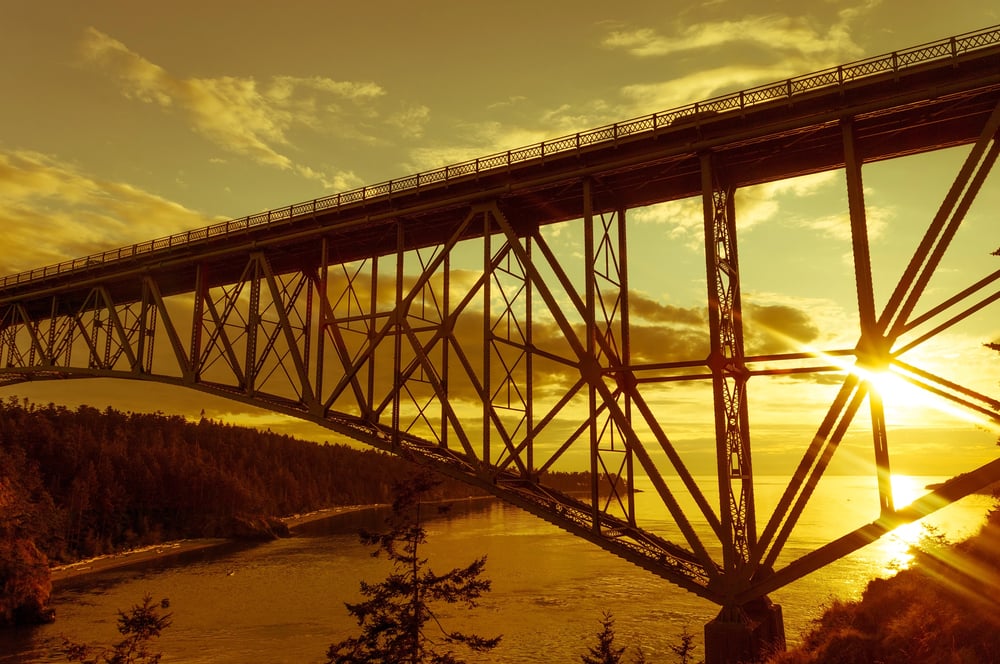
Two bridges span a narrow channel where the Strait of Juan de Fuca meets Skagit Bay in Washington state. Currents running through this pass create some of the fastest-moving tidal waters on the Pacific coast.
The water churns and swirls 180 feet below the bridges.
Engineers built these bridges in 1935 during the Great Depression. They used old construction techniques and materials that wouldn’t pass modern safety standards.
The bridges were designed for much lighter traffic than they carry now. Trucks rumbling across make the steel beams vibrate in ways that feel alarming even though engineers say the structures are still sound.
Wind coming through the pass regularly exceeds 40 miles per hour. The bridges run high above the water to allow ships to pass, but that height puts them directly in the path of wind funneling through the channel.
Walking across the pedestrian path, you have to lean into the wind to maintain balance.
Royal Gorge Bridge, Colorado
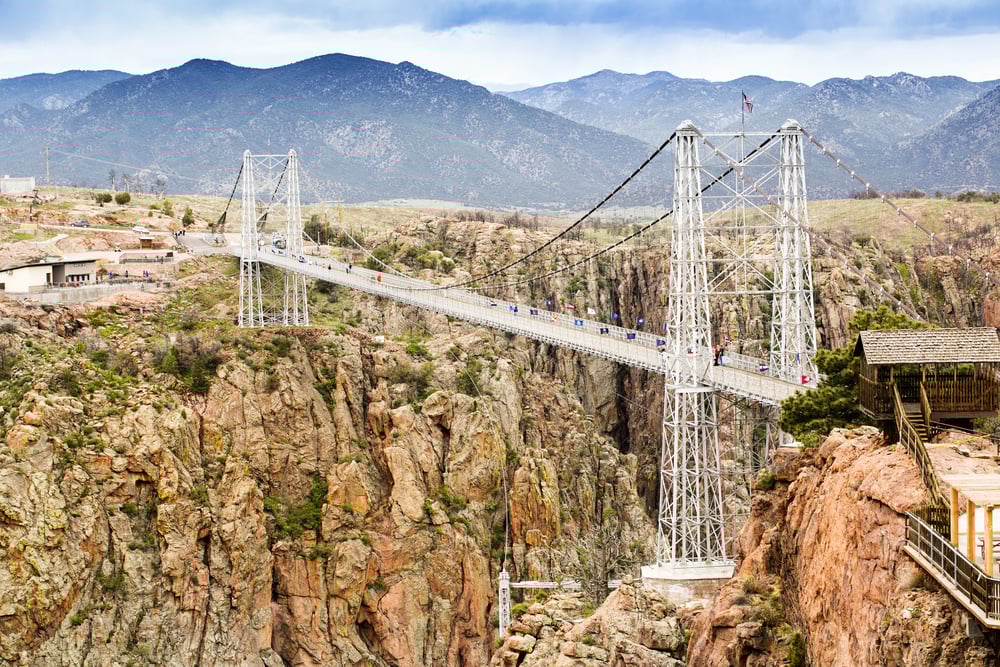
This bridge held the world record for highest bridge for 75 years. It crosses the Royal Gorge of the Arkansas River at a height of 955 feet—more than three times the height of the Statue of Liberty.
The wooden planks on the deck are spaced with gaps that let you see straight down to the river below.
The bridge was built in 1929 as a tourist attraction, not as a necessary crossing. Engineers designed it to sway in the wind rather than resist it.
This design keeps the bridge from tearing apart during storms, but it means the entire structure moves noticeably even in moderate wind.
Park operators installed metal grating over some of the gaps between planks after too many people froze in fear while crossing. The grating helps, but it doesn’t eliminate the visual reminder of the massive drop beneath your feet.
Looking over the side railings, you can watch birds flying far below you at heights that would normally be considered high off the ground.
Iya Kazurabashi, Japan

Vines hold this bridge together. Not steel cables or modern rope—actual vines woven together in traditional patterns that Japanese craftsmen have used for centuries.
The Iya Valley in Shikoku island contains several of these vine bridges, built the same way warriors constructed them hundreds of years ago to defend mountain villages.
The vines need replacing every three years before they rot and weaken. Between replacements, the bridges develop soft spots where vines have started to decay.
You can feel these weak areas shift under your weight as you cross. The bridges were designed this way intentionally—if enemies tried to cross, defenders could cut the vines and drop the whole structure into the gorge.
Modern safety cables run underneath the visible vine construction, but you can’t see them when you’re walking across. All you see is ancient vines flexing with each step, and the river rushing over rocks 45 feet below.
Quepos Bridge, Costa Rica
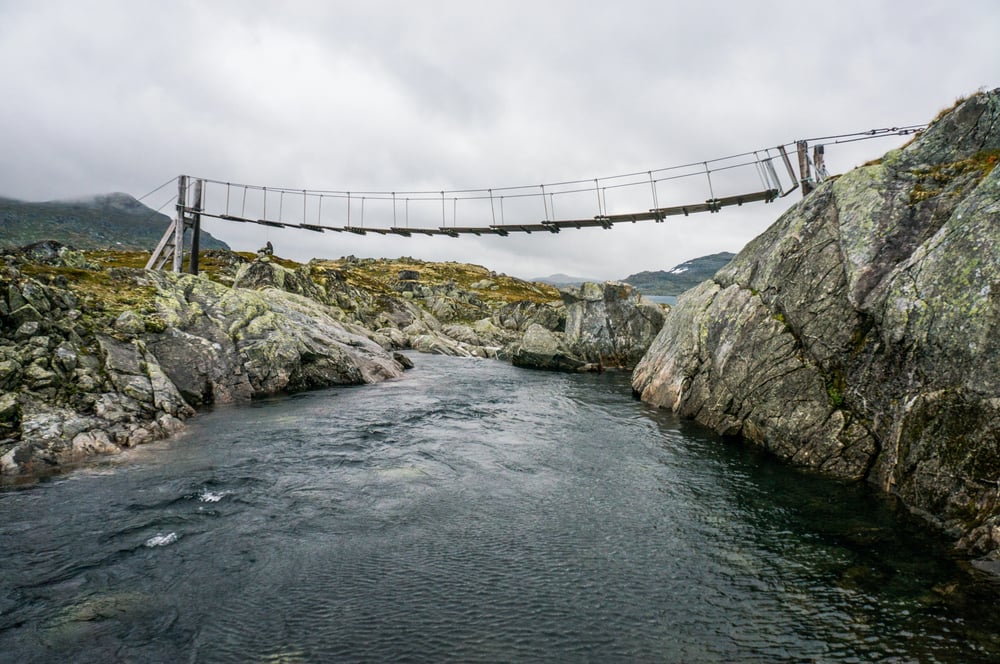
Two lanes wide, but barely. This bridge carries all traffic between Quepos and Manuel Antonio National Park, including tour buses, supply trucks, and rental cars driven by tourists unfamiliar with Costa Rican roads.
The bridge was built in 1969 and hasn’t been substantially improved since. Weight limits get ignored routinely.
The bridge was designed for lighter vehicles from decades ago, but modern trucks and buses cross it daily. Engineers have warned that the structure is reaching the end of its functional lifespan.
Cracks appear in the concrete regularly. Heavy rain season brings additional risks.
The river below floods quickly during storms, raising the water level to within feet of the bridge deck. Debris floating downstream has struck the bridge supports multiple times over the years.
Plans to replace the bridge have been discussed for decades without action.
Storseisundet Bridge, Norway
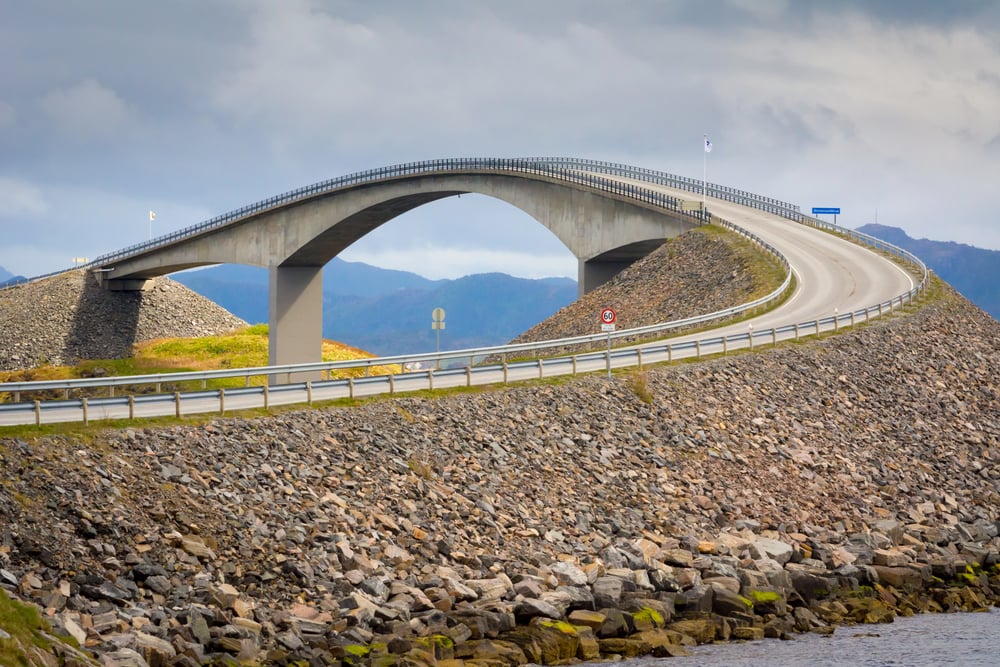
This bridge appears to end in mid-air. From certain angles, the Storseisundet Bridge looks like it drops off into nothing.
The road curves sharply as it crosses, creating an optical illusion that makes it seem like you’re about to drive off the edge and fall into the Norwegian Sea.
The bridge connects small islands along Norway’s Atlantic Road. Its unusual curved design allows ships to pass underneath while also creating a visually striking structure that photographers love.
But driving across it requires trusting your navigation and ignoring what your eyes tell you.
Atlantic storms hit this bridge with full force. Waves crash over the roadway during severe weather.
The bridge has no barrier walls on the sides, just low railings that wouldn’t stop a vehicle from going over the edge. In winter, ice and wind combine to create conditions that close the bridge for days at a time.
The Weight of Empty Space

Height and distance reshape how you understand risk. Walking across solid ground, you don’t think about each step.
Put that same path 500 feet in the air on a swaying bridge, and every movement requires conscious decision. These structures prove that context matters more than actual danger.
A three-foot gap means nothing on flat ground. Suspended above a gorge, that same gap becomes paralyzing.
The bridges that test you most aren’t necessarily the ones in the worst condition. They’re the ones that force you to acknowledge how much empty space exists between you and solid ground.
Engineering ensures most of these crossings are safer than they appear. Your nervous system doesn’t care about engineering tolerances when you’re standing on wooden planks watching the ground far below through the gaps at your feet.
More from Go2Tutors!

- The Romanov Crown Jewels and Their Tragic Fate
- 13 Historical Mysteries That Science Still Can’t Solve
- Famous Hoaxes That Fooled the World for Years
- 15 Child Stars with Tragic Adult Lives
- 16 Famous Jewelry Pieces in History
Like Go2Tutors’s content? Follow us on MSN.



