Most Devastating Fires in Urban History
Cities thrive on closeness—people, markets, houses pressed together. But that same density has always made them vulnerable to fire. When flames roar through crowded streets, they don’t just destroy buildings; they wipe out livelihoods, reshape skylines, and sometimes change the course of history.
Below are some of the most devastating urban fires ever recorded, moments when entire cities seemed to vanish overnight.
Great Fire of London

In 1666, a blaze that began in a bakery on Pudding Lane tore through the wooden heart of London. Within days, more than 13,000 houses were gone. Churches, shops, even St. Paul’s Cathedral—all lost.
Strangely, the official death toll was small, though many suspect the numbers were undercounted. Ashes paved the way for a rebuilt, stone-faced city.
Chicago Fire

The fire of 1871 consumed much of Chicago in less than two days. Sparked under uncertain circumstances, it swept across wooden buildings and wooden sidewalks—yes, even the sidewalks burned.
More than 100,000 people were left homeless. Still, out of the devastation came a chance for Chicago to reinvent itself as a modern metropolis of steel and glass.
San Francisco Earthquake Fires

When the earthquake of 1906 struck San Francisco, fire soon followed. Broken gas lines and toppled stoves ignited flames that raged for three days. Entire districts disappeared into the smoke.
People fled with what they could carry; others camped out in parks, watching their city burn in the distance. The quake shook the ground, but the fire sealed the destruction.
Great Fire of Rome
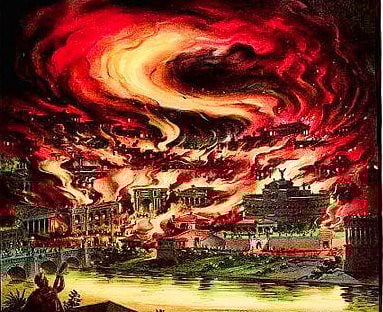
In 64 CE, flames consumed much of Rome, spreading for nearly a week. Ancient writers claimed Emperor Nero played music while the city burned, though historians debate the tale. Regardless, the fire destroyed neighborhoods and temples, forcing massive rebuilding.
The story of Nero and his fiddle—likely false—still lingers louder than the fire itself.
Tokyo Firebombing

— Photo by kuremo
World War II brought devastation from the sky. In March 1945, American bombers dropped incendiaries on Tokyo, creating a firestorm that flattened entire districts. Tens of thousands died in a single night.
The heat was so intense it boiled rivers and left metal twisted like soft wire. Not just a fire—an inferno born of war.
Halifax Explosion Fires

In 1917, two ships collided in Halifax harbor, one packed with explosives. The resulting blast was one of the largest non-nuclear explosions ever.
Fires swept across the port city, leveling blocks in seconds. Windows shattered miles away. Snow fell later that day, blanketing the wreckage—an eerie calm after a sudden, fiery storm.
Great Fire of New York 1835

Winter in Manhattan turned catastrophic when fire broke out near Wall Street. Strong winds and frozen hydrants left firefighters helpless.
Merchants watched as warehouses and banks crumbled, their fortunes vanishing into smoke. Even so, the rebuilding pushed New York further into its role as America’s financial hub.
Lisbon Earthquake Fires
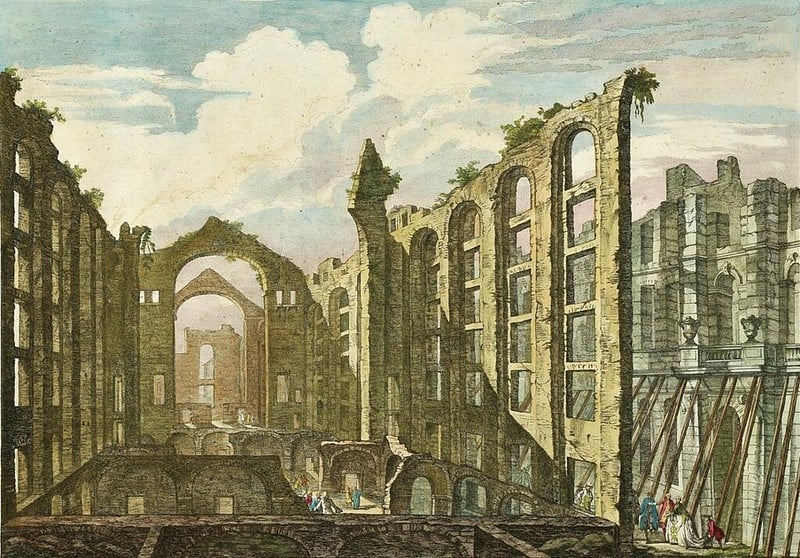
In 1755, a massive earthquake struck Lisbon, followed by a tsunami. Fires then tore through what was left, sealing the city’s fate. Survivors wandered stunned through rubble while flames devoured what the quake had spared.
The disaster influenced philosophy, politics, even architecture. Voltaire wrote about it. Builders redesigned Lisbon with broad boulevards meant to resist the spread.
Great Fire of Smyrna

In 1922, during the Greco-Turkish War, fire broke out in the port city of Smyrna (modern Izmir). Thousands of buildings were destroyed, and tens of thousands of civilians fled to the harbor as flames closed in.
The event remains steeped in controversy—who started it, and why. Smoke blackened the Aegean sky for days.
Meireki Fire in Edo

Known as the Great Fire of Meireki, it swept through Edo (modern Tokyo) in 1657. Over 100,000 people died, making it one of the deadliest urban fires in history. Houses of paper and wood fueled the blaze, turning neighborhoods into kindling.
Afterward, Edo was rebuilt with wider streets and open spaces—small defenses against the inevitable next fire.
Peshtigo Fire
Often overshadowed by the Chicago Fire, the Peshtigo Fire of 1871 struck the same night but in Wisconsin. It consumed entire towns, killing more than 1,000 people—far more than Chicago’s blaze.
Survivors described tornadoes of flame ripping through forests and settlements. Terrifying, and yet largely forgotten outside the region.
Great Fire of Moscow 1812

During Napoleon’s invasion, much of Moscow went up in flames. Whether set by retreating Russians or by accident remains debated, but the effect was decisive.
Napoleon’s troops entered a city reduced to smoldering ruins, with supplies destroyed. Fire did what armies could not—it forced retreat.
Tangshan Earthquake Fires

The 1976 Tangshan earthquake in China caused widespread devastation, but the fires that followed made the tragedy worse. Collapsed buildings sparked blazes across the industrial city.
Survivors faced not only rubble but smoke and flames, choking the air as they searched for loved ones. A layered catastrophe.
Thessaloniki Fire

In 1917, Greece’s second-largest city lost much of its historic core in a single fire. Narrow streets, wooden homes, and limited firefighting made it impossible to stop.
By the end, two-thirds of the population was homeless. Ironically, the disaster gave planners a blank slate to modernize the city.
Cloquet Fire

In 1918, a series of wildfires swept into the towns of northern Minnesota, fueled by drought and logging debris. The Cloquet Fire killed hundreds and left tens of thousands homeless.
It blurred the line between forest fire and urban disaster, swallowing neighborhoods as easily as pines.
Flames That Rebuilt Cities
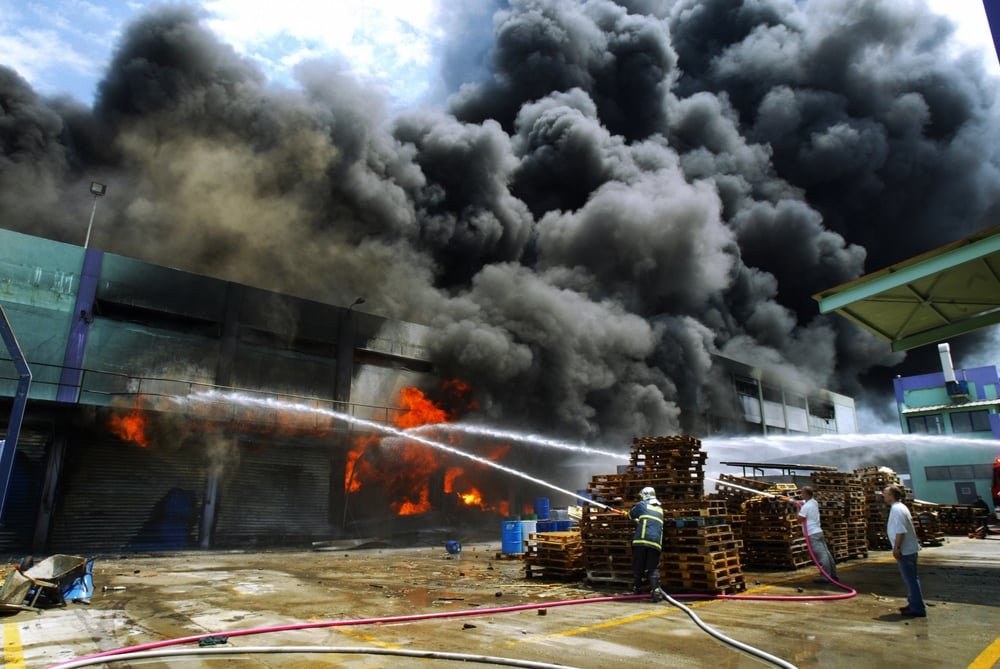
— Photo by thelefty
Urban fires leave behind more than ash. They reshape skylines, spark reforms, and sometimes change entire nations.
As destructive as they are, these infernos have also forced cities to rise again—reborn in stone, steel, and memory.
More from Go2Tutors!

- 16 Historical Figures Who Were Nothing Like You Think
- 12 Things Sold in the 80s That Are Now Illegal
- 15 VHS Tapes That Could Be Worth Thousands
- 17 Historical “What Ifs” That Would Have Changed Everything
- 18 TV Shows That Vanished Without a Finale
Like Go2Tutors’s content? Follow us on MSN.