Most Influential People Of the Cold War
The Cold War was not a traditional war with front lines and decisive battles. It was a prolonged geopolitical standoff that shaped nearly every continent from the late 1940s until 1991.
Ideology, nuclear weapons, proxy conflicts, espionage, and diplomacy replaced conventional combat between the United States and the Soviet Union. The tension influenced governments, economies, scientific advancement, and everyday life across the globe.
At the center of that decades-long confrontation stood individuals whose decisions altered the course of history. Here is a closer look at the figures whose influence defined the Cold War era.
Joseph Stalin

Stalin stood at the helm of the USSR when World War II gave way to a new kind of standoff. Power tightened under his rule through nations on Moscow’s side of the continent.
One by one, regimes loyal to Soviet ideals took root where war had left openings. These states, later called the Eastern Bloc, formed a line others saw as a barrier.
What emerged was less an alliance and more a sphere shaped by force and control. Decades unfolded with that split at the center of world affairs.
Out of Stalin’s actions grew a colder stance between the USSR and America. When Berlin got cut off in ’48, it showed trust was gone.
Power spreading eastward made clear the old partnership had broken apart. Because he ruled through fear and tight grip, tension became normal right from the start.
Harry S. Truman

As the U.S. president who formally ushered in the Cold War framework, Harry S. Truman set the policy of containment. The Truman Doctrine pledged American support to nations resisting communism, first in Greece and Turkey.
This marked a decisive shift toward active global engagement. Truman also oversaw the Marshall Plan, which provided economic aid to rebuild Western Europe.
The policy was not purely humanitarian; it was strategic. Strong economies were seen as a defense against communist expansion.
His presidency established the pattern of ideological competition that followed.
Winston Churchill

That speech in 1946 came after Churchill had left office, yet it echoed what many feared. From Missouri, his words painted a split where unity once stood.
Behind closed doors or not, tension was now out in the open. A line drawn not on maps but through beliefs – that stuck in people’s minds.
Framing the moment more than starting it, Churchill’s words shaped how people saw rising tensions. Shifting views slowly, his address turned cautious cooperation into deep doubt about Moscow’s aims.
Heavy with meaning at a turning point, those remarks bent history without beginning conflict.
Mao Zedong

Mao Zedong’s victory in the Chinese Civil War in 1949 transformed the global balance of power. The establishment of the People’s Republic of China expanded communist influence dramatically.
Suddenly, the Cold War was not confined to Europe. China’s alignment with the Soviet Union deepened Western fears of a unified communist bloc.
Mao’s later split with Moscow added complexity to the global landscape, reshaping alliances and rivalries within the communist world itself.
Dwight D. Eisenhower

Dwight D. Eisenhower’s presidency emphasized nuclear deterrence and strategic alliances. A former military commander, he understood both the costs of war and the power of military posture.
Under his leadership, the United States expanded its nuclear arsenal and reinforced NATO. Eisenhower also warned of the ‘military-industrial complex’ in his farewell address.
Even while overseeing defense expansion, he cautioned against unchecked military influence. That dual awareness reflected the delicate balance of the era.
Nikita Khrushchev

After Stalin’s death, Nikita Khrushchev steered the Soviet Union through some of the Cold War’s most volatile moments. He denounced Stalin’s excesses in a secret speech, signaling a partial thaw within the Soviet system.
Yet his leadership also saw confrontation. The Cuban Missile Crisis in 1962 brought the world to the brink of nuclear war.
Khrushchev’s eventual agreement to withdraw missiles from Cuba marked a turning point. The crisis underscored how individual decisions could carry existential consequences.
John F. Kennedy

Midway through his time in office, tensions shaped everything John F. Kennedy did. First came a botched attempt to overthrow Castro at the Bay of Pigs, then a standoff over access to Berlin.
After that, missiles in Cuba brought the world close to disaster. Instead of rushing into force, he stood steady while quietly talking through secret lines.
Because of those moves, war didn’t ignite. A leap toward the stars began when he pushed America to reach the moon.
Not just battles, but minds were drawn into the contest, shifting how people saw progress.
Fidel Castro

Fidel Castro’s rise in Cuba transformed a small Caribbean nation into a Cold War flashpoint. His alliance with the Soviet Union placed communist ideology just 90 miles from the U.S. mainland.
The Cuban Missile Crisis elevated Castro’s influence far beyond his country’s size. Cuba became a symbol of superpower rivalry and a hub for revolutionary movements across Latin America and Africa.
Leonid Brezhnev
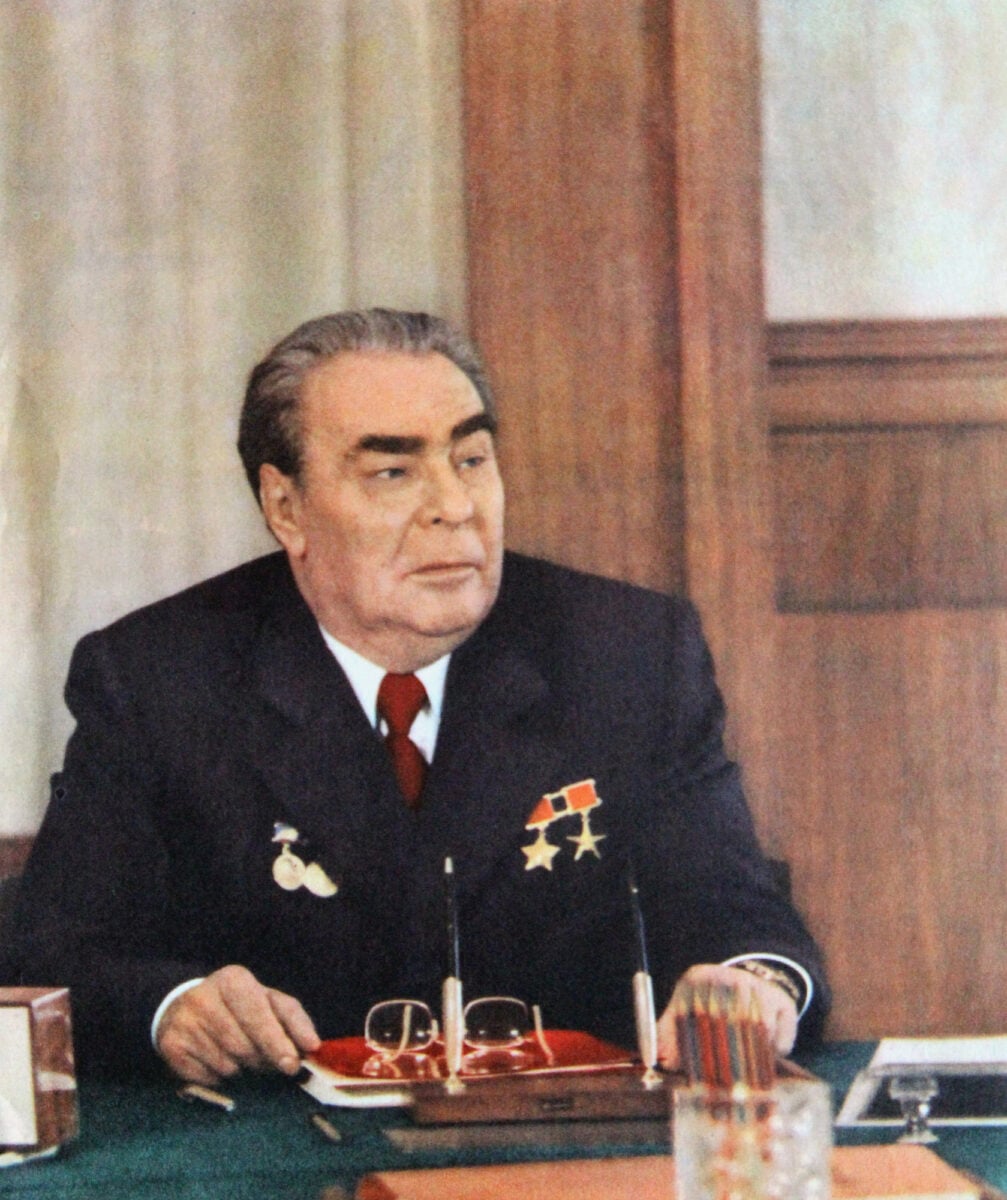
Leonid Brezhnev presided over a period often described as détente, a relative easing of tensions between East and West. Arms control agreements such as the Strategic Arms Limitation Talks emerged during his tenure.
However, his leadership also included the Soviet invasion of Afghanistan in 1979, which reignited confrontation. Brezhnev’s era reflected the oscillation between cooperation and conflict that defined the Cold War’s middle decades.
Richard Nixon
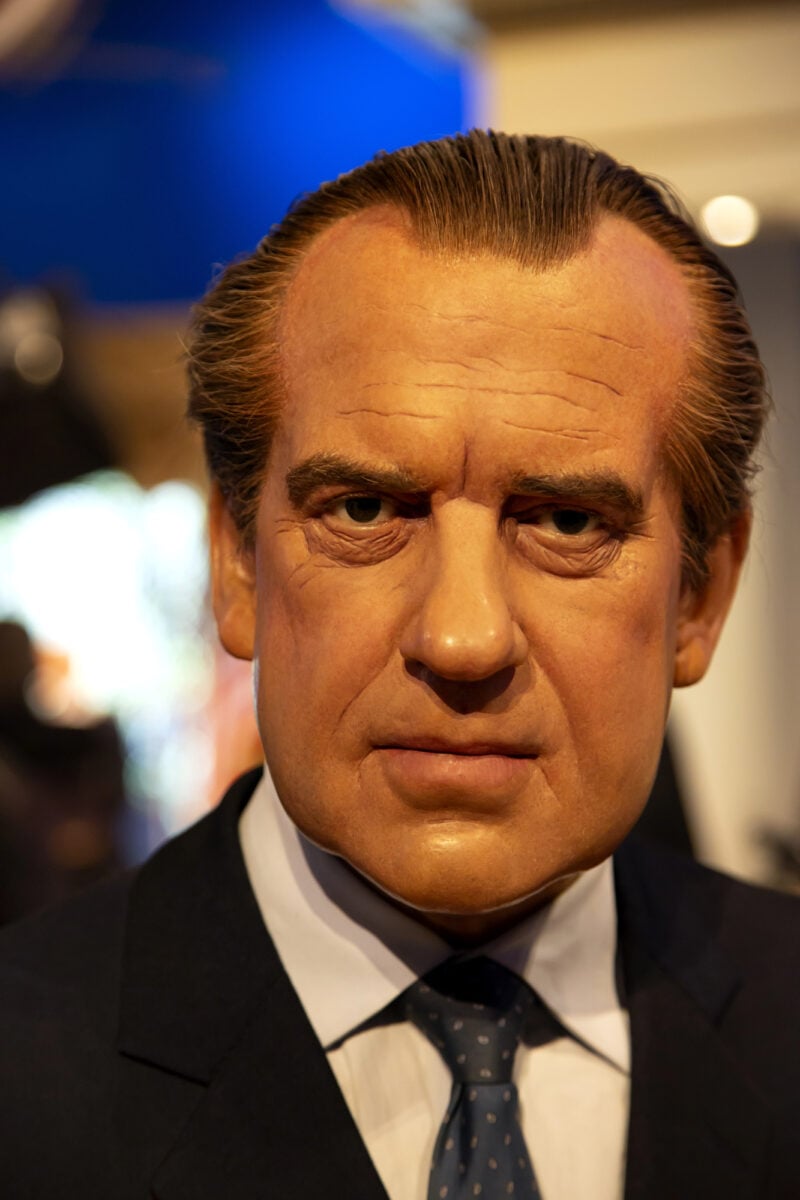
Richard Nixon reshaped Cold War diplomacy through strategic engagement. His 1972 visit to China marked a dramatic shift in global politics.
By opening relations with Beijing, he altered the triangular balance between the United States, China, and the Soviet Union. Nixon also pursued détente with Moscow, signing arms control agreements that sought to stabilize nuclear competition.
His approach demonstrated that rivalry did not exclude negotiation.
Ronald Reagan

Ronald Reagan entered office with a confrontational stance toward the Soviet Union, describing it as an ‘evil empire.’ He accelerated military spending and advanced the Strategic Defense Initiative, signaling renewed pressure.
Yet his later engagement with Soviet leader Mikhail Gorbachev shifted the tone. The Intermediate-Range Nuclear Forces Treaty eliminated an entire class of nuclear weapons.
Reagan’s presidency illustrated how ideological firmness and diplomatic openness could coexist.
Margaret Thatcher

Margaret Thatcher was a staunch ally of the United States and a vocal critic of Soviet communism. Her partnership with Reagan reinforced Western unity during a tense period.
However, she also recognized the significance of Mikhail Gorbachev early on, famously stating that she could do business with him. Her support helped create conditions for dialogue as the Cold War neared its end.
Mikhail Gorbachev
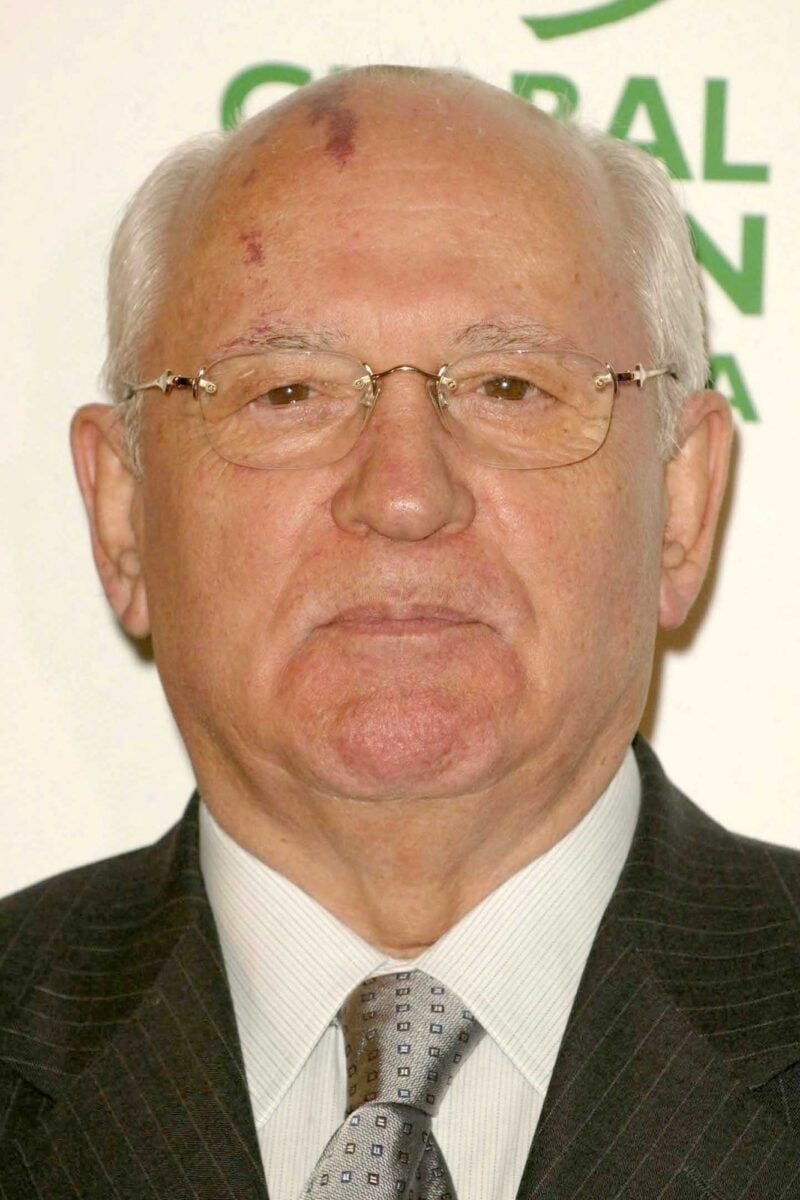
Mikhail Gorbachev’s reforms fundamentally altered the trajectory of the Cold War. Through policies of glasnost and perestroika, he introduced openness and restructuring within the Soviet system.
His willingness to reduce military commitments in Eastern Europe and negotiate arms reductions marked a departure from previous Soviet leaders. The fall of the Berlin Wall in 1989 symbolized the unraveling of the division that had defined the era.
Gorbachev’s decisions accelerated that transformation.
Lech Walesa

In Poland, Lech Walesa led the Solidarity movement, challenging communist authority through organized labor activism. His leadership demonstrated that resistance within the Eastern Bloc could take nonviolent forms.
Solidarity’s persistence pressured the Polish government and signaled broader cracks in Soviet influence. Walesa’s eventual election as president of Poland symbolized the shifting political landscape of Eastern Europe.
Vaclav Havel

Vaclav Havel emerged as a leading figure in Czechoslovakia’s Velvet Revolution. A playwright turned dissident, he advocated for civil liberties and democratic reform.
His election as president after the peaceful overthrow of communist rule represented the power of intellectual and civic resistance. Havel’s influence underscored that the Cold War was not only a contest between governments but also between ideas.
Martin Luther King Jr.

From Birmingham to Berlin, eyes watched. Martin Luther King Jr., often tied to marches and speeches, quietly shifted how nations saw America during tense decades.
Racial injustice on display clashed with claims of freedom. This gap did not go unnoticed overseas.
As protests unfolded on television screens worldwide, U.S. image wavered under foreign gaze. Ideals rang hollow when streets told another story.
Justice championed by King echoed beyond borders. When beliefs shaped power, change at home counted in worldwide terms.
The Individuals Who Defined An Era

Not just ideas drove the Cold War forward. People did – leaders, rebels, negotiators, visionaries – each choice they made rippled far.
A few poured fuel on the fire. Some turned down the heat.
Most flipped between these roles, depending on the hour. One step at a time, choices made during the rise and fall of Soviet control shaped paths we still walk.
Though declared finished in 1991, echoes linger – visible in borders drawn long ago, in treaties signed, in minds trained by old fears. Behind every shift stood someone whose voice tipped balances, whose silence spoke volumes.
Their actions reveal how power held tightly deepens rifts, while courage sometimes cracks them open.
More from Go2Tutors!

- The Romanov Crown Jewels and Their Tragic Fate
- 13 Historical Mysteries That Science Still Can’t Solve
- Famous Hoaxes That Fooled the World for Years
- 15 Child Stars with Tragic Adult Lives
- 16 Famous Jewelry Pieces in History
Like Go2Tutors’s content? Follow us on MSN.