Most Toughest Exams in the World
Getting a degree or certification doesn’t always mean sitting through a few tests and calling it done. Some exams around the globe are so brutally hard that they’ve become legendary for breaking the spirit of even the smartest students.
These tests don’t just check what you know; they push you to your absolute limits and make you question everything you’ve studied.These exams are difficult not just because of the material, but also due to low pass rates, time pressure, and the sheer amount of knowledge required.
Here’s a look at some of the most challenging tests worldwide.
JEE Advanced (Joint Entrance Examination)

India’s JEE Advanced is fiercely competitive. Over a million students take the regular JEE Main exam each year, but only around 16,000 qualify for Advanced.
The test covers physics, chemistry, and mathematics, demanding creative problem-solving rather than rote memorization. Students often prepare for years, dedicating countless hours daily. Partial knowledge is not enough—the exam demands mastery.
MCAT (Medical College Admission Test)
The MCAT is a seven-hour marathon in the U.S., covering biology, chemistry, psychology, biochemistry, and physics, alongside reading comprehension for medical passages. Scores heavily influence medical school admissions.
Preparation often spans three to four months, with students spending over 300 hours. Many attempt the exam multiple times to achieve a competitive score.
Bar Exam (Law)

Each U.S. state administers its own bar exam, testing hundreds of legal concepts including contracts, criminal law, constitutional law, and evidence. The two- or three-day exam mixes multiple choice with essays that demand deep analysis.
Even top law graduates can fail, as passing requires applying knowledge under intense pressure. Some states report pass rates below 50 percent.
CFA Level III (Chartered Financial Analyst)

The CFA program culminates in Level III, testing portfolio management, ethics, and finance concepts through morning essays and afternoon multiple-choice questions. Candidates spend over 300 hours preparing, and many retake the exam to pass.
Only around half of test-takers succeed at each level.
USMLE Step 1 and Step 2 CK (Medical Licensing)

American medical students must pass these exams to practice medicine. Step 1 tests basic sciences, using adaptive questioning, while Step 2 CK covers clinical knowledge.
Both assess years of education condensed into intense preparation periods. Scores dictate residency placements, making preparation obsessive and stressful.
Chartered Professional Accountant (CPA) Exam

The CPA exam comprises four parts covering auditing, taxation, financial accounting, and business concepts. Scenario-based questions test real-world application, not memorization.
Candidates often spend 1,200 to 2,500 hours preparing, and failure is common, emphasizing the rigor behind the CPA designation.
Chinese Gaokao (College Entrance Exam)

China’s Gaokao determines college placement for millions annually. Years of preparation in cram schools culminate in a high-pressure, high-stakes test.
Near-perfect scores are essential for admission to top universities, making the competition extreme. Small mistakes can dramatically impact a student’s future.
Fellowship Exams (Medicine)

Specializing doctors take fellowship exams that cover narrow areas like surgery or psychiatry at an expert level. The exams combine written and oral components, requiring candidates to defend their knowledge before senior physicians.
Pass rates hover around 70 to 80 percent, showing even experienced doctors can struggle.
Japanese Kanji Test

The Japanese Kanji Test assesses mastery of thousands of characters, including obscure meanings and historical usages. Even native speakers sometimes fail at the highest levels.
The exam demonstrates how language proficiency can become a formidable challenge.
Professional Exam for Engineers (PE Exam)

Engineers seeking licensure face an eight-hour exam with both breadth and depth questions. Open-book testing doesn’t reduce the difficulty, as time constraints and the breadth of topics demand rigorous preparation.
Failure rates range from 20 to 50 percent, ensuring only qualified engineers protect public safety.
LSAT (Law School Admission Test)

The LSAT measures logical reasoning, analytical thinking, and reading comprehension, irrespective of prior study. Law schools heavily weigh scores for admissions, where a single point can change an applicant’s fate.
Students prepare intensively with practice tests to endure the mental strain.
German Abitur (High School Exit Exam)
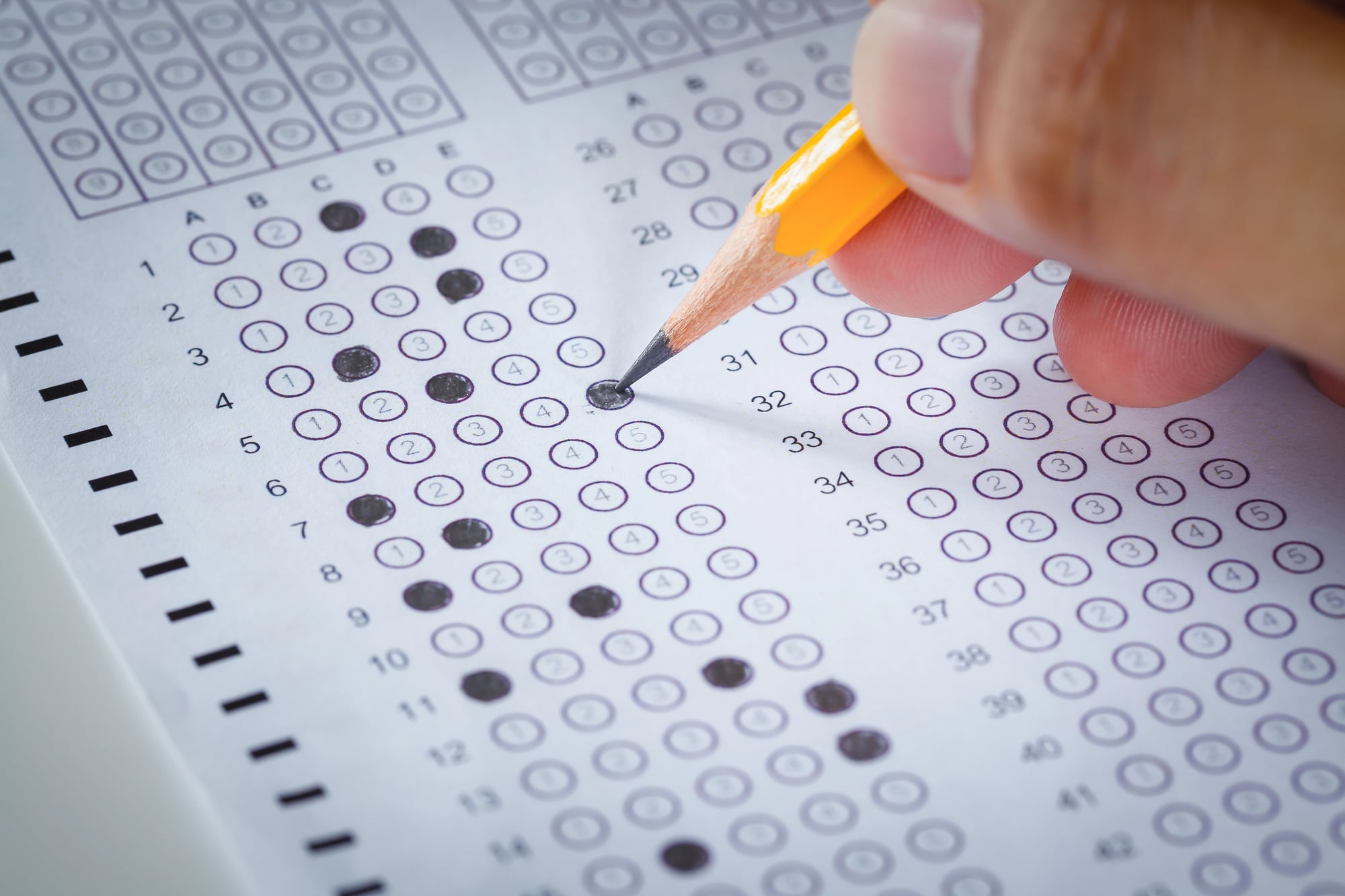
The Abitur determines university eligibility in Germany, testing multiple subjects under national standards. Competitive programs like medicine require near-perfect scores.
Many students spend two years preparing intensively for this decisive exam.
Australian Pharmacy Exam

Australian pharmacists must pass the Pharmacy Board exam, which tests drug knowledge and clinical decision-making. International candidates face additional hurdles to match local standards. Pass rates range from 50 to 60 percent, reflecting the exam’s rigor and its role in ensuring patient safety.
Financial Risk Manager Exam (FRM)

The FRM exam challenges candidates on market, credit, and operational risks. It has two parts, each requiring months of preparation.
Pass rates hover around 40 to 50 percent, reflecting the exam’s difficulty even for experienced finance professionals.
Turkish Medical Board Exam

This exam licenses doctors in Turkey, testing medical knowledge and ethical reasoning. Written sections and clinical cases make it notoriously hard, with pass rates sometimes below 30 percent.
Many candidates require multiple attempts to succeed.
Indian Civil Services Exam (UPSC)

The UPSC exam selects India’s top government officials. Its three stages—preliminary, mains, and interview—cover history, geography, economics, and current events.
Only a few thousand pass out of millions of applicants, with intense preparation spanning years.
Why These Tests Matter

These exams ensure that professionals in critical fields truly know their craft. Doctors, lawyers, and engineers bear responsibilities that directly impact lives and safety..
The difficulty of these tests protects the public by verifying competence. Passing one proves readiness for the challenges and responsibilities of the profession.
More from Go2Tutors!

- The Romanov Crown Jewels and Their Tragic Fate
- 13 Historical Mysteries That Science Still Can’t Solve
- Famous Hoaxes That Fooled the World for Years
- 15 Child Stars with Tragic Adult Lives
- 16 Famous Jewelry Pieces in History
Like Go2Tutors’s content? Follow us on MSN.



