Mountains With Unusual or Striking Formations
Strange shapes jut out where green forests meet open sky. These are not gentle slopes dusted in white, but odd structures that challenge what stone should do.
Flat tops appear suddenly above tangled roots and vines. Spikes of rock emerge, hard and jagged, ready to tear through leather soles.
Built by time, not hands, these rock towers rise through fog as if sleep had sculpted them. Standing there, you can’t help but picture ancient rivers cutting deep when the world was young.
Zhangjiajie’s Floating Pillars
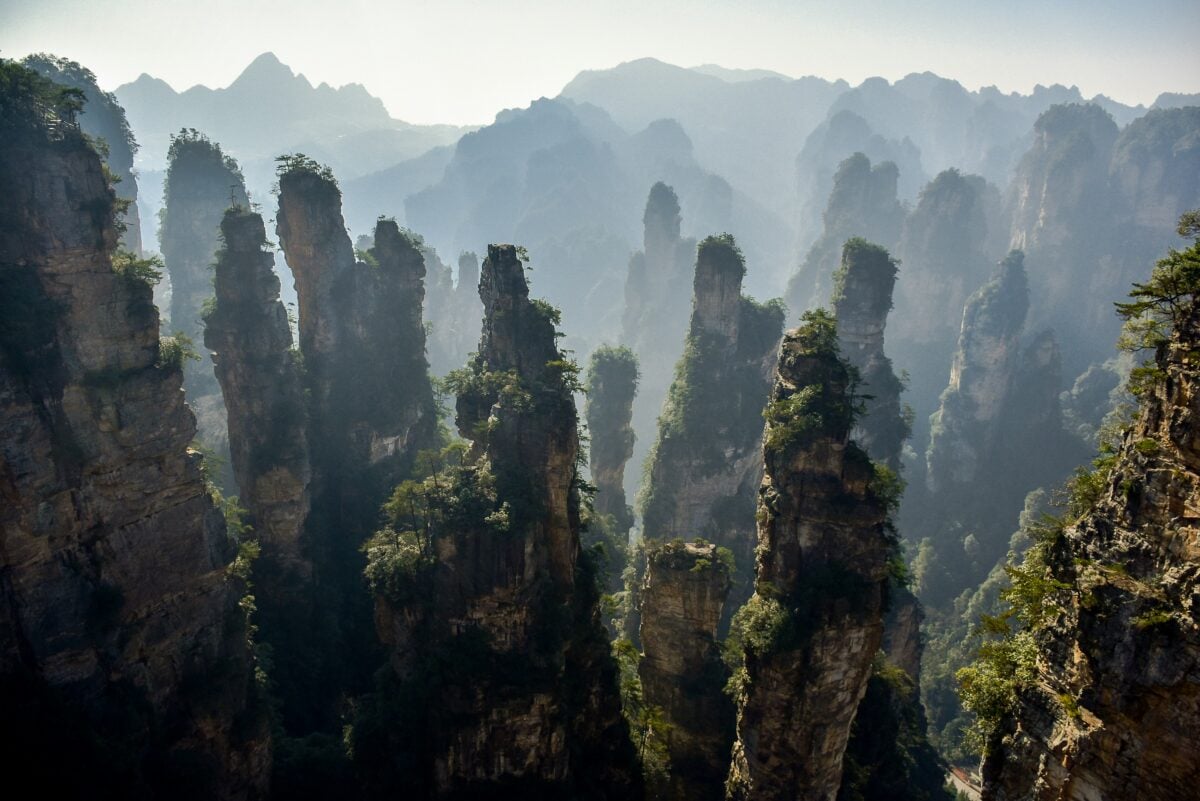
In China’s Hunan Province, more than 3,000 quartz-sandstone pillars rise from forested valleys like the spines of a sleeping giant. Some towers are over 200 meters, their bases narrower than their vegetation-covered tops.
When morning mist rolls through the park, the pillars appear to float in midair. The effect is so otherworldly that director James Cameron used photographs of Zhangjiajie as reference for the floating Hallelujah Mountains in the film Avatar.
In 2010, one pillar was officially renamed Avatar Hallelujah Mountain, though locals had called it the Southern Sky Column for centuries. The pillars formed through physical erosion rather than the chemical dissolution that creates typical karst landscapes.
Expanding ice in winter and plant roots wedging into cracks have been slowly shaping these columns for millions of years.
Devils Tower in Wyoming
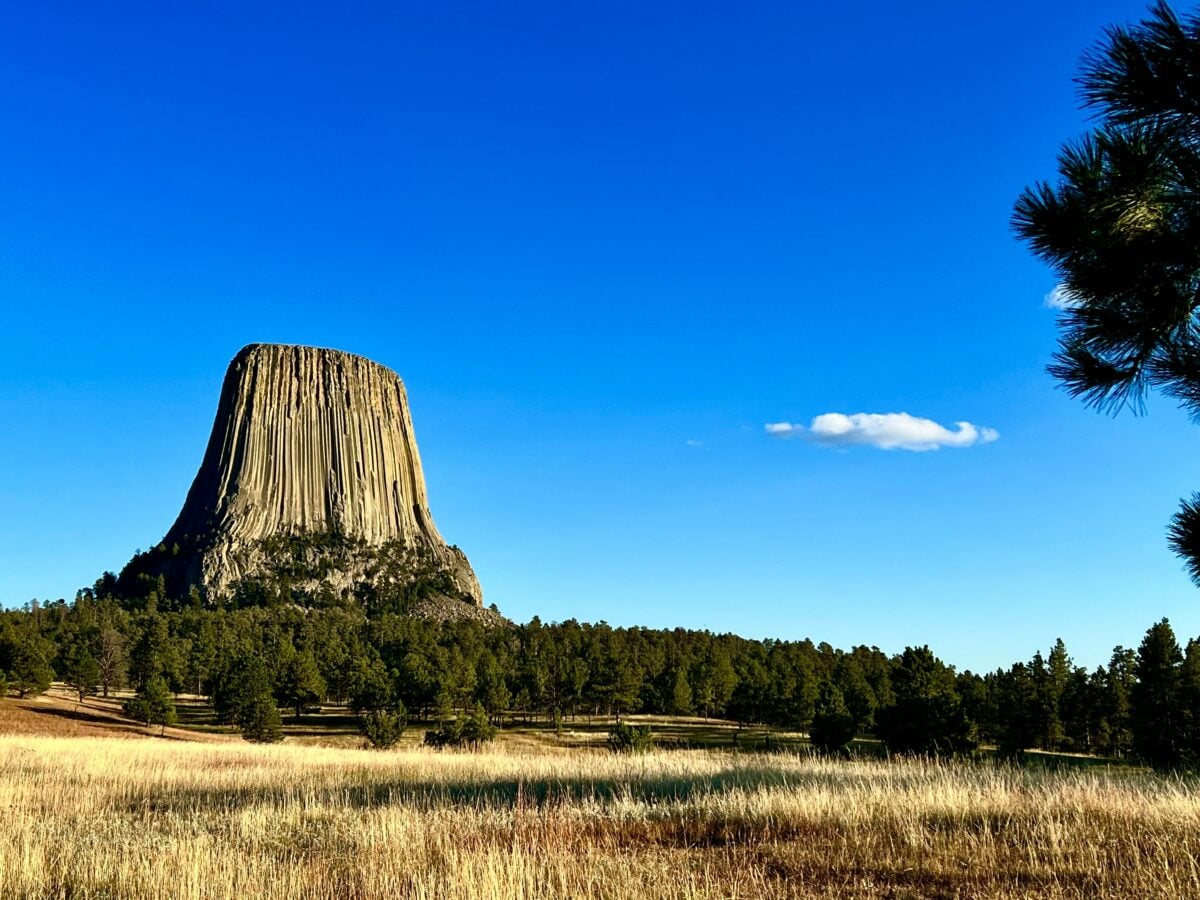
Rising 867 feet from the surrounding prairie, Devils Tower looks like a massive tree stump made of stone. The formation’s most striking feature is its columnar jointing, where hundreds of polygonal columns run vertically from base to summit.
Most columns have five or six sides, though some have as many as seven. Geologists still debate exactly how the tower formed about 50 million years ago.
The leading theories suggest it was either a volcanic plug, the solidified core of an ancient volcano whose softer outer layers eroded away, or perhaps a laccolith, where magma intruded between sedimentary rock layers and cooled underground. Either way, the surrounding sediments eventually wore away, leaving this phonolite porphyry monolith standing alone.
Theodore Roosevelt designated it as America’s first national monument in 1906.
Trolltunga in Norway
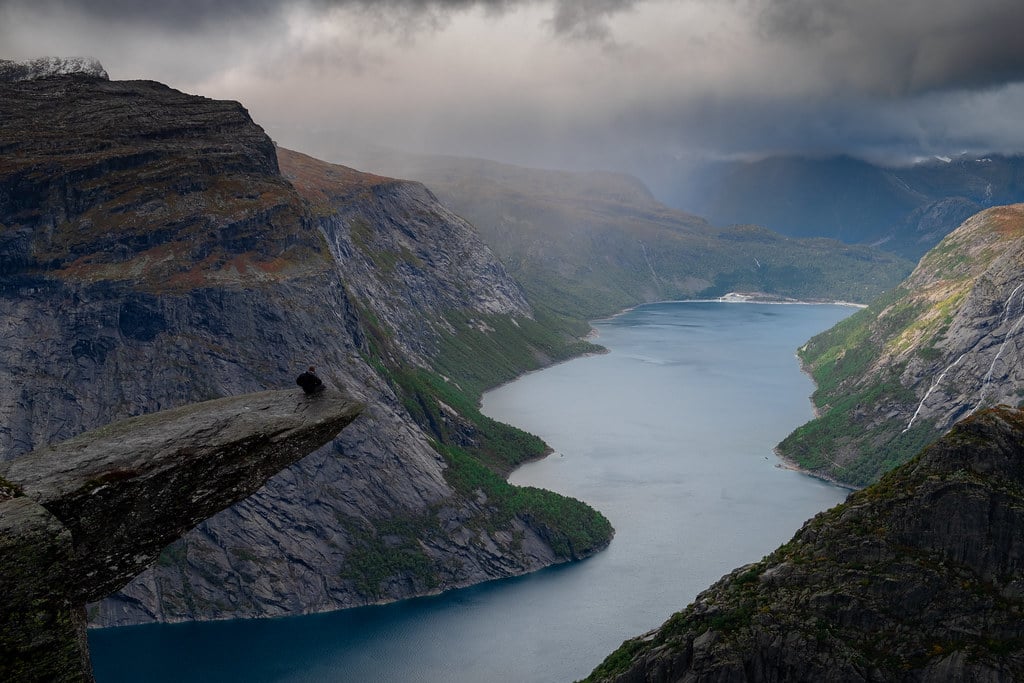
Jutting horizontally from a cliff face about 700 meters above a glacial lake, Trolltunga looks exactly like its name suggests: the Troll’s Tongue. This flat slab of gneiss rock extends roughly 10 meters into thin air, creating one of the most photographed natural formations in Scandinavia.
The tongue broke away from the main cliff during the ice ages, when glacial water froze in the crevices and slowly pried the rock apart. What makes Trolltunga remarkable is its precarious appearance.
From certain angles, it looks impossibly thin, as if it might snap off at any moment. The round-trip hike from Skjeggedal covers 27 kilometers and takes between 10 and 12 hours, climbing 800 meters through high-mountain terrain.
Vinicunca, Peru’s Rainbow Mountain

Until recently covered by glacial ice, Rainbow Mountain in Peru’s Andes reveals itself as bands of color striped across its flanks: reds, yellows, greens, purples, and browns. Standing at 5,036 meters above sea level, the mountain displays its mineral layers like geological bacon.
The red tones come from iron oxide. Yellow and mustard shades result from limonite and sulfur-bearing sandstones.
Greens indicate the presence of chlorite and magnesium-rich phyllites. These sedimentary layers were deposited millions of years ago in ancient lakes and seas, then tilted by the Andean uplift and carved by erosion into their current cross-section.
Climate change accelerated the mountain’s visibility, as retreating snow and ice exposed the vivid colors that had been hidden for thousands of years. Local Quechua people consider the mountain sacred, part of the Ausangate range that holds deep spiritual significance in Andean tradition.
Mount Roraima’s Tabletop Summit
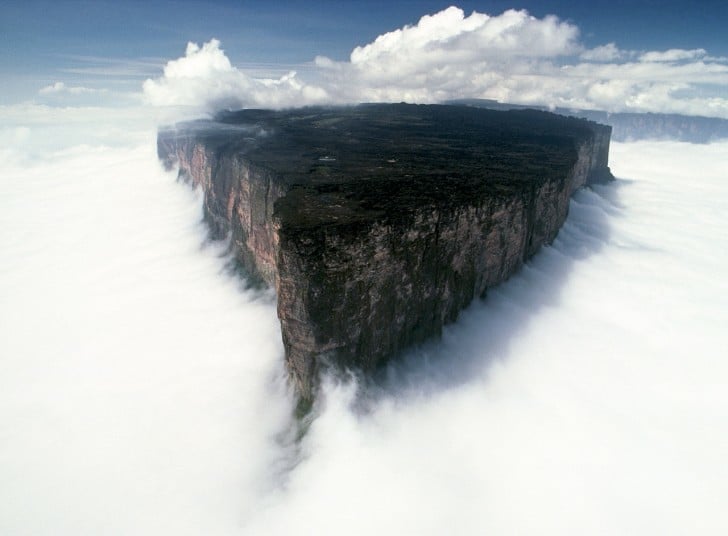
Where Venezuela, Brazil, and Guyana meet, a flat-topped mountain rises nearly 3,000 meters above the surrounding savanna. Mount Roraima is a tepui, a type of tabletop mountain found in the Guiana Highlands.
Its vertical walls drop 400 to 1,000 meters on all sides, and its summit plateau covers about 31 square kilometers. The rocks composing Roraima are some of the oldest on Earth, dating back roughly two billion years.
Centuries of rainfall have carved the summit into a surreal landscape of deep pits, caves, and bizarre rock sculptures. The isolation has allowed unique species to evolve here, including carnivorous plants and endemic frogs found nowhere else.
Arthur Conan Doyle used reports of tepuis as inspiration for his novel The Lost World. The Pemon people, indigenous to the region, call tepuis “house of the gods.”
The Matterhorn’s Perfect Pyramid
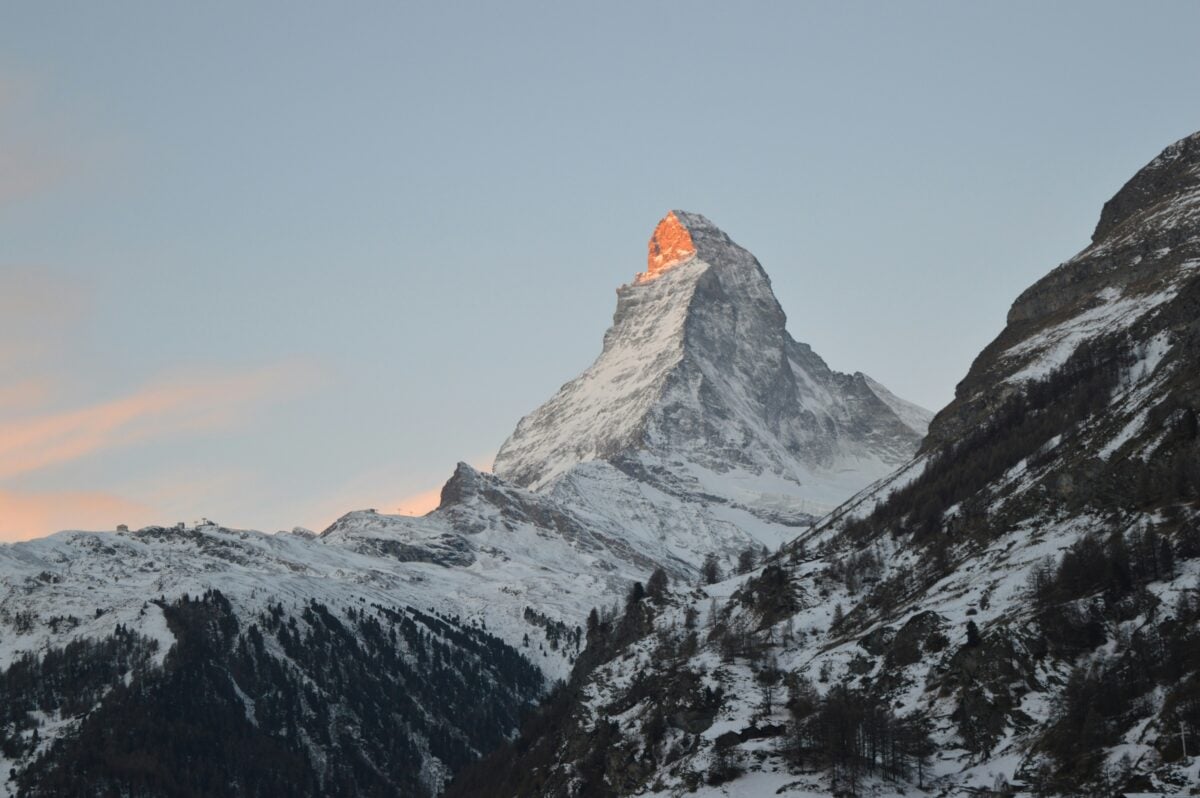
Straddling the Swiss-Italian border, the Matterhorn rises to 4,478 meters and presents one of the most recognizable silhouettes in mountaineering. Its four steep faces align almost exactly with the cardinal directions, giving it an uncanny symmetry.
The mountain’s pyramidal shape is a textbook example of a glacial horn, formed when cirques, bowl-shaped glacial basins, eroded the mountain from multiple directions. As the glaciers retreated, they left behind the sharp ridges and faces that define the peak today.
Interestingly, the rocks at the Matterhorn’s summit originated in Africa. They’re part of the Dent Blanche klippe, remnants of the ancient Apulian plate that were thrust northward during the Alpine orogeny when Africa collided with Europe.
The first successful ascent came in 1865, and the mountain has been testing climbers ever since.
Tsingy de Bemaraha’s Limestone Needles
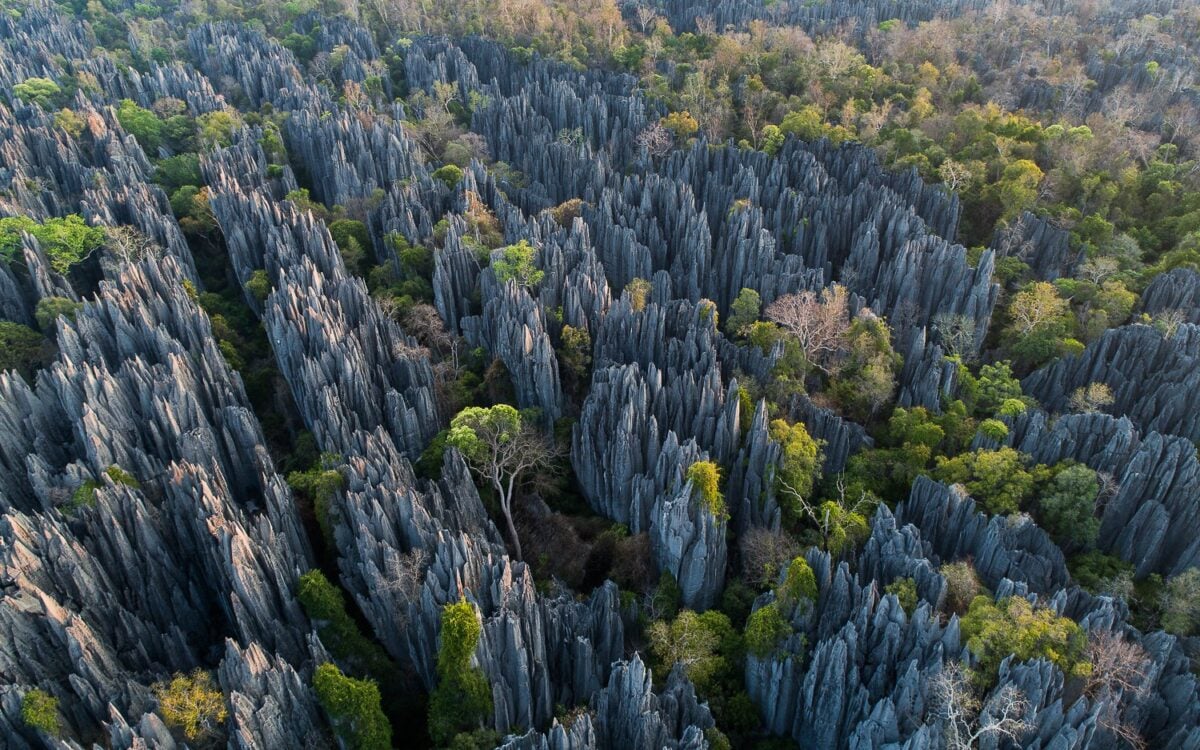
In western Madagascar, a forest made of stone rises from the earth. The Tsingy de Bemaraha is a vast labyrinth of razor-sharp limestone pinnacles, some reaching 100 meters tall.
The word “tsingy” in Malagasy means “walking on tiptoes” or “the place where one cannot walk barefoot,” a fitting description for terrain so sharp it can shred boots and equipment. The formation began about 200 million years ago when calcite deposits accumulated on the floor of a lagoon.
Tectonic activity later elevated the limestone, and monsoon rains carved vertical fissures into the rock, slowly dissolving the softer material and leaving behind the knife-edged pinnacles. Hidden forests grow in the narrow canyons between the blades, sheltered from the wind and nourished by trapped moisture.
Lemurs leap between the pinnacles, somehow avoiding the edges that would cut human flesh.
Bryce Canyon’s Hoodoo Army

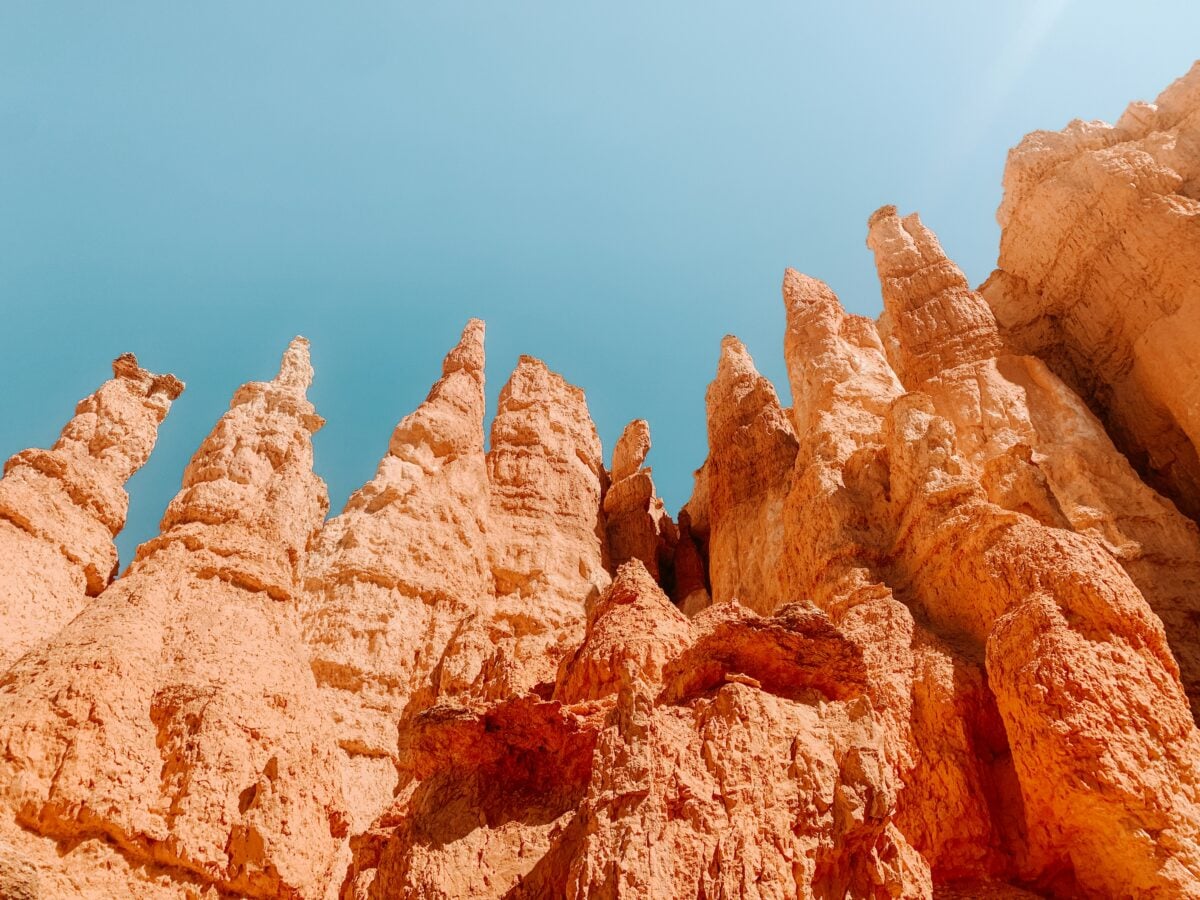
Bryce Canyon in Utah contains the largest concentration of hoodoos on Earth. These tall, thin rock spires stand like silent sentinels in natural amphitheaters, their colors shifting from orange to pink to white depending on mineral content.
Unlike most rock formations, hoodoos aren’t carved primarily by wind. They form through frost wedging.
Water seeps into cracks in the rock, freezes overnight, expands by nearly 10 percent, and gradually pries the stone apart. Bryce Canyon experiences over 200 freeze-thaw cycles each year, which explains why the landscape looks so actively sculpted.
Each hoodoo typically has a harder caprock that protects the softer limestone beneath. When the caprock finally erodes away, the hoodoo collapses.
Thor’s Hammer, one of the park’s most famous formations, displays this structure clearly, with its hammer-shaped top balanced on a narrower column below.
Cappadocia’s Fairy Chimneys
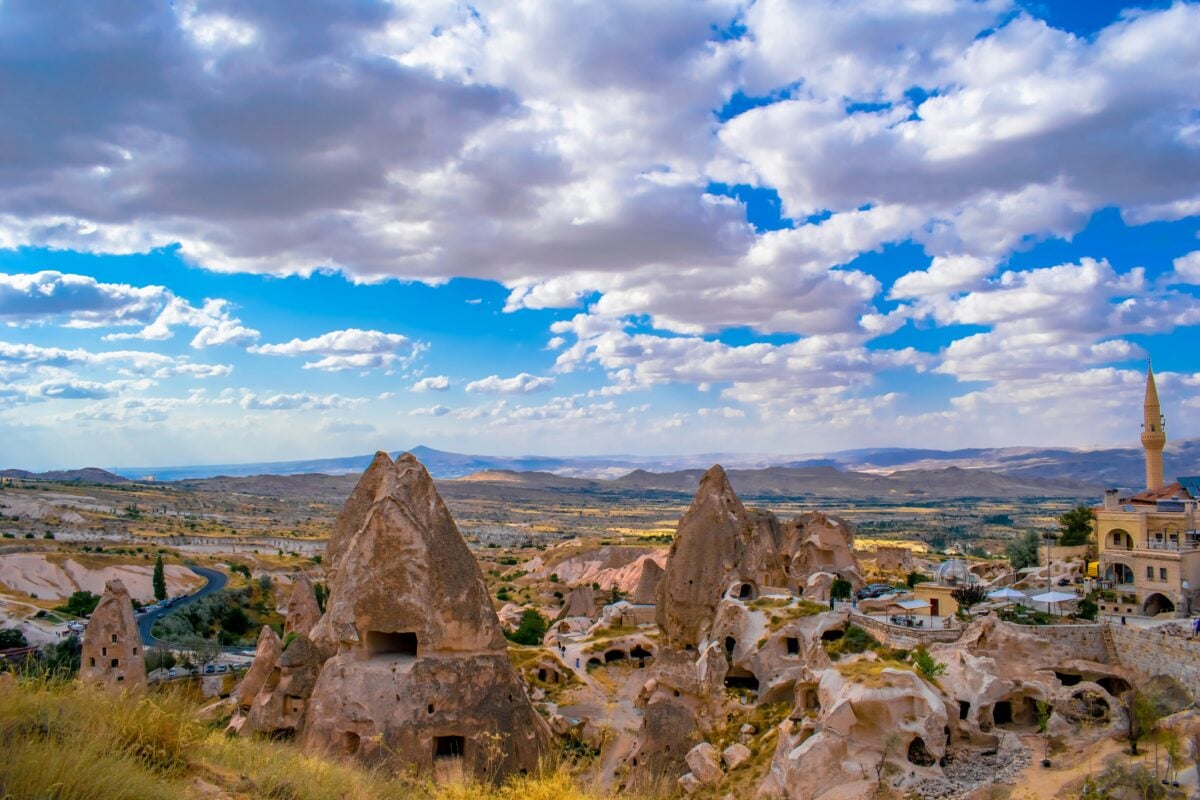
Central Turkey’s Cappadocia region is covered with cone-shaped rock formations that locals call fairy chimneys. The spires were formed from volcanic ash, known as tuff, deposited during eruptions millions of years ago.
The tuff hardened into soft rock, while basalt caps formed on top. As rain and wind eroded the tuff, the harder basalt protected the columns beneath, creating the distinctive mushroom and chimney shapes.
What sets Cappadocia apart from other hoodoo landscapes is human intervention. For thousands of years, people carved homes, churches, and entire underground cities into the soft rock.
Some fairy chimneys still contain rooms that were inhabited until recently. Hot air balloon rides over the valleys at sunrise have become a popular way to appreciate the density and variety of the formations.
Half Dome in Yosemite
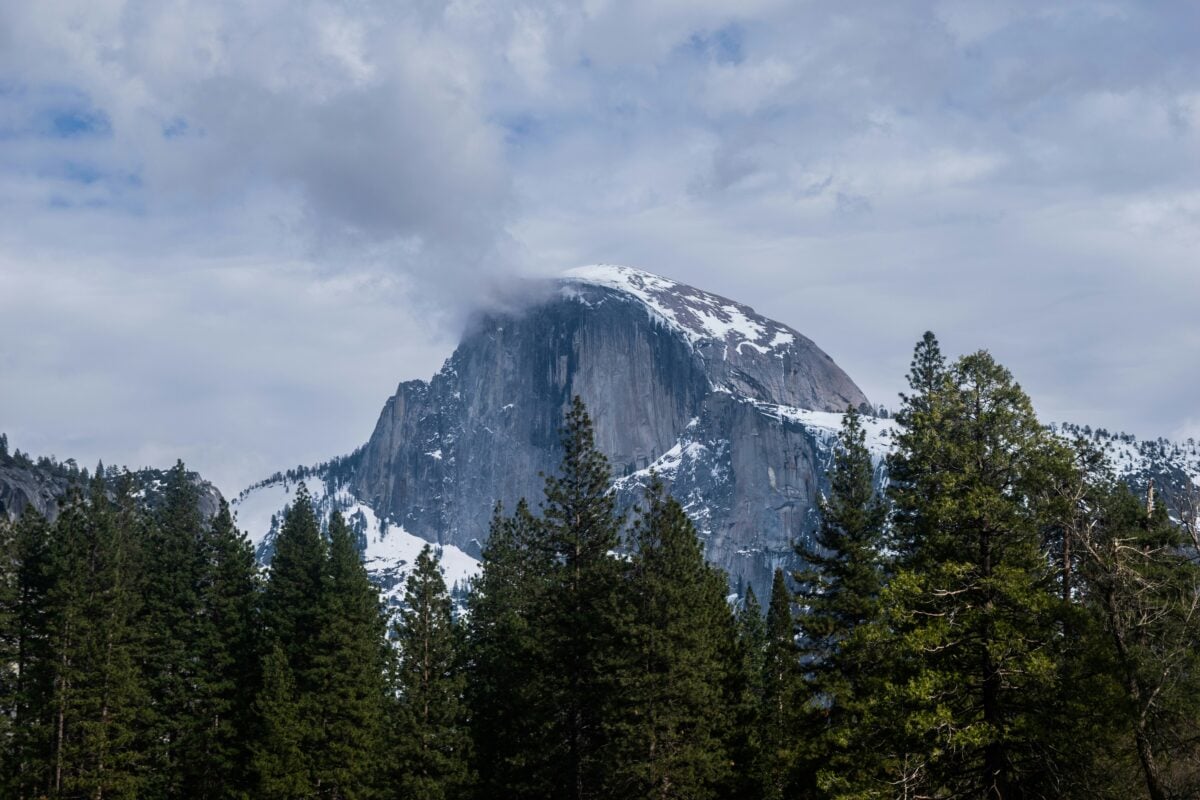
Yosemite’s most distinctive rock formation looks like a granite sphere sliced cleanly in half. Half Dome rises 1,444 meters above the valley floor, its sheer northwest face dropping almost vertically for 600 meters.
The formation didn’t actually get cut in half. Glaciers carved the valley around it during the ice ages, and the northwestern portion simply fell away through a process called exfoliation.
As the granite cooled and pressure released, the rock expanded and cracked in layers, like the skin of an onion. The “missing” half was never there in the way people imagine.
Half Dome has been drawing climbers since 1875, when George Anderson drilled iron eyebolts into the rock to reach the summit. Today, a cable route installed in 1919 allows hikers to attempt the final 120-meter ascent during summer months.
The Wave in Arizona
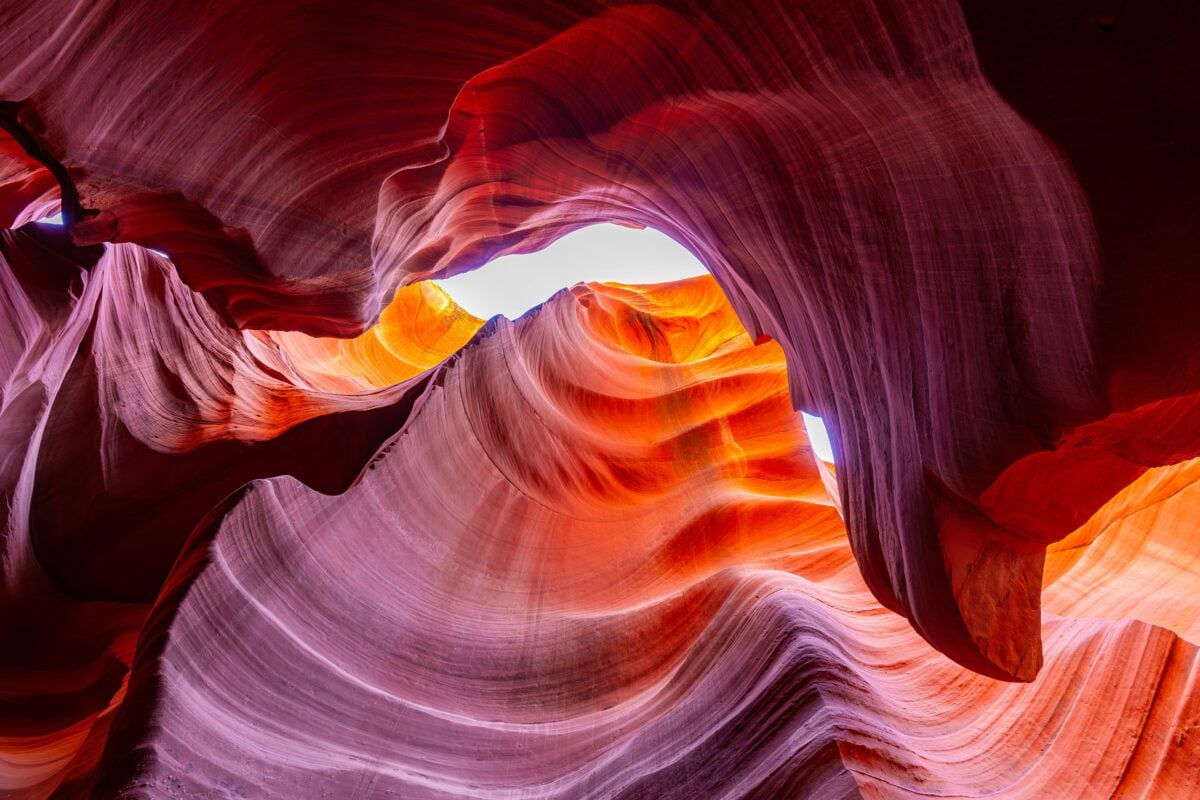
Hidden in the Vermilion Cliffs Wilderness, a sandstone formation ripples across the landscape like frozen liquid. The Wave’s undulating bands of red, orange, pink, and white curve in ways that seem impossible for stone.
The formation began as sand dunes during the Jurassic period, roughly 190 million years ago. Over time, the dunes lithified into Navajo Sandstone, and wind erosion carved the smooth, flowing shapes visible today.
Cross-bedded layers from different dune faces intersect at odd angles, creating the swirling patterns that draw photographers from around the world. Access is strictly limited to protect the fragile formation.
Only 64 permits are issued daily, and the process involves a lottery system that attracts thousands of applicants.
Giant’s Causeway in Northern Ireland
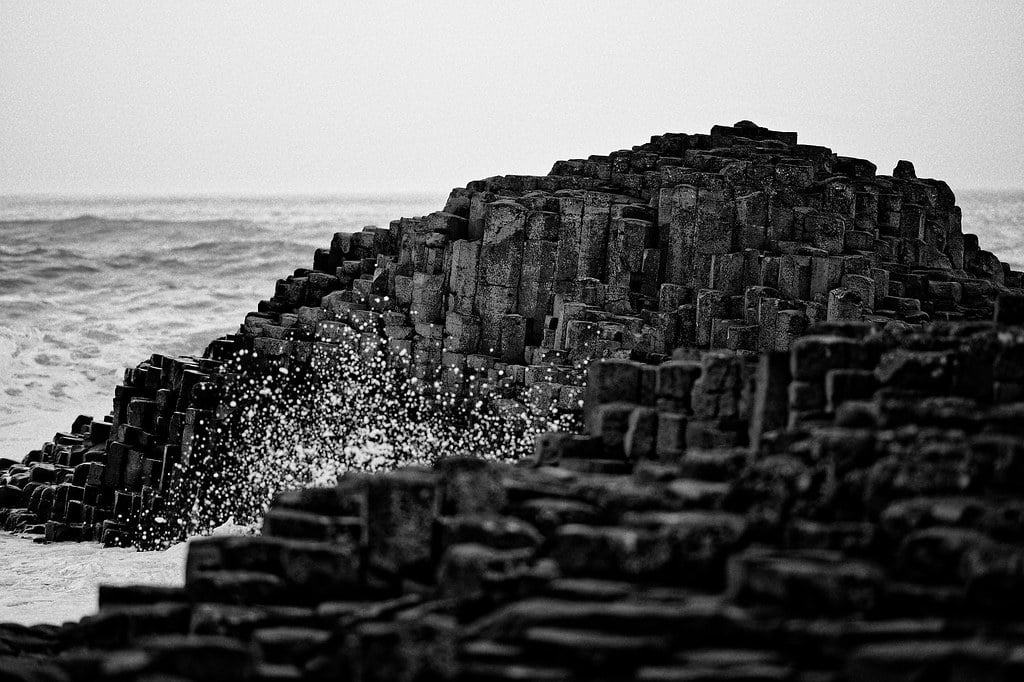
Roughly 40,000 interlocking basalt columns form a natural pavement on Northern Ireland’s Antrim Coast. Most columns are hexagonal, though some have five or seven sides, and they fit together like enormous pencils packed in a box.
The formation occurred about 60 million years ago when volcanic basalt erupted and cooled rapidly. As the lava contracted during cooling, it cracked into these geometric shapes.
The phenomenon is similar to the pattern that forms in drying mud, but scaled up and preserved in stone. Local legend offers a different explanation: the Irish giant Finn McCool built the causeway to reach Scotland for a confrontation with a rival.
Matching formations across the sea at Fingal’s Cave on the Scottish island of Staffa seem to support the mythological connection.
Uluru in the Australian Outback
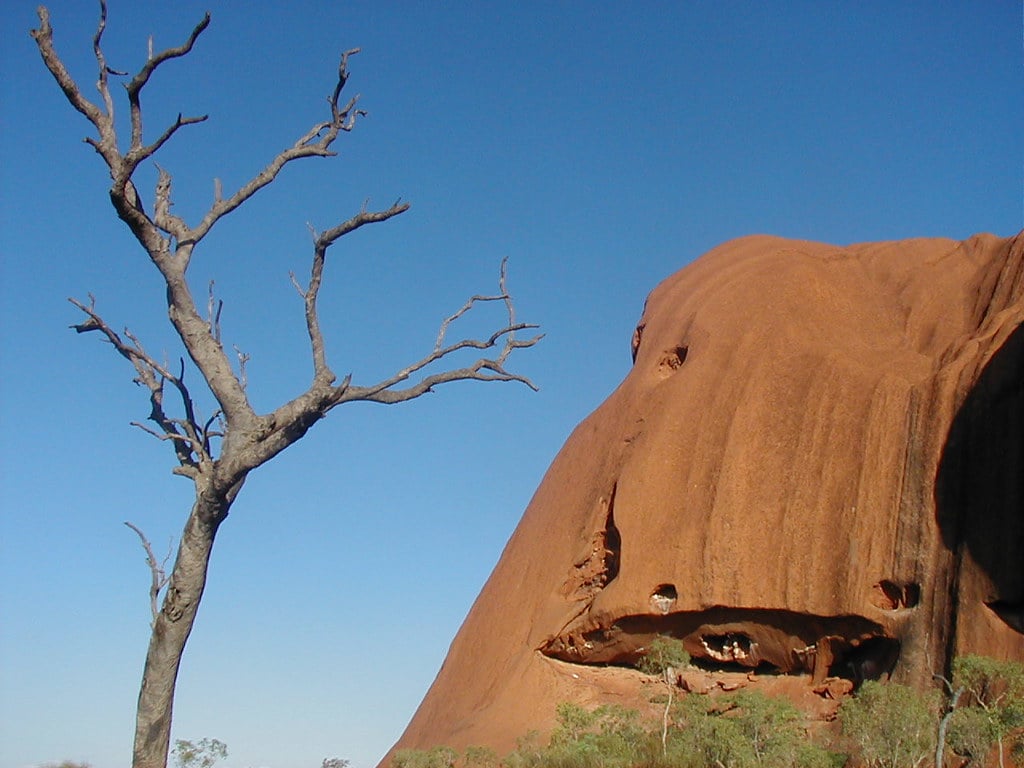
Rising 348 meters above the flat red plains of central Australia, Uluru appears as a massive sandstone monolith. From a distance, it looks like a single enormous boulder half-buried in the desert.
In reality, the visible rock extends several kilometers underground and is the exposed portion of a massive arkose sandstone formation. The rock’s distinctive red color comes from iron in the sandstone oxidizing over millennia.
Uluru is sacred to the Anangu people, who have lived in the area for tens of thousands of years. Caves at the base contain ancient rock art and served as sites for ceremonies.
In 2019, climbing the rock was officially banned out of respect for its cultural significance.
Where Stone Becomes Story
Out here, mountains stand like old records of Earth’s quiet labor. Not one shaped yesterday – each formed while centuries slipped by unseen.
Water slips through stone, bit by bit, carving paths only age can explain. Frost pries open fractures, widening them when no one’s around to hear.
Whole lands have crashed together, then stretched thin again over eons. These ridges and peaks? They’re what’s left after endless small acts pile up.
Watch closely – the silence speaks in timelines longer than memory. Stone does not rush, yet somehow everything shifts.
More from Go2Tutors!

- The Romanov Crown Jewels and Their Tragic Fate
- 13 Historical Mysteries That Science Still Can’t Solve
- Famous Hoaxes That Fooled the World for Years
- 15 Child Stars with Tragic Adult Lives
- 16 Famous Jewelry Pieces in History
Like Go2Tutors’s content? Follow us on MSN.