Movie Plots That Were Never Explained
You know that feeling when the credits roll and you’re sitting there thinking, “Wait, what just happened?” Sometimes it’s intentional. Sometimes the director clearly ran out of budget or ideas.
And sometimes—well, nobody really knows what the filmmaker was thinking. Movies love their mysteries, but not all of them get solved by the time you’re walking out of the theater.
Here’s a look at some of the most baffling, frustrating, and downright bizarre plot points that filmmakers just… never bothered to explain.
The Spinning Top in Inception
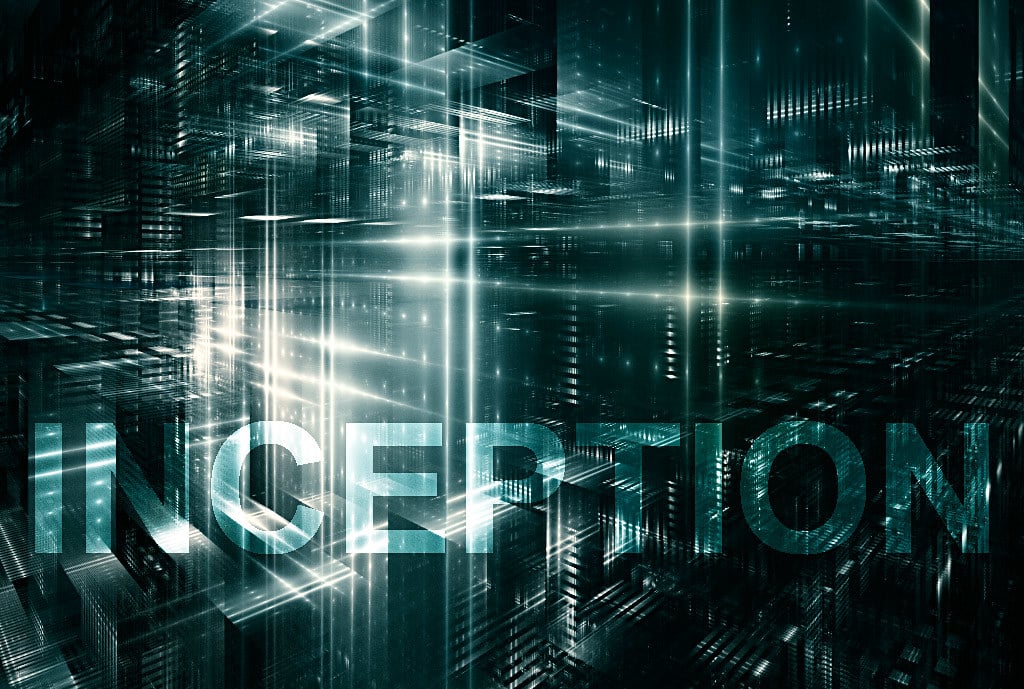
Does it fall or doesn’t it? Christopher Nolan’s 2010 mind-bender ends with Leonardo DiCaprio’s Cobb spinning his totem and walking away before we see if it topples. The movie cuts to black while it’s still spinning.
Nolan has said he knows the answer but won’t tell, which is honestly kind of annoying (though it did spark a decade of Reddit arguments). Some people say the real clue is that Cobb walks away without watching—he doesn’t care anymore whether he’s dreaming.
Others insist the wobble means it’s about to fall. The internet remains divided.
What’s in the Briefcase in Pulp Fiction
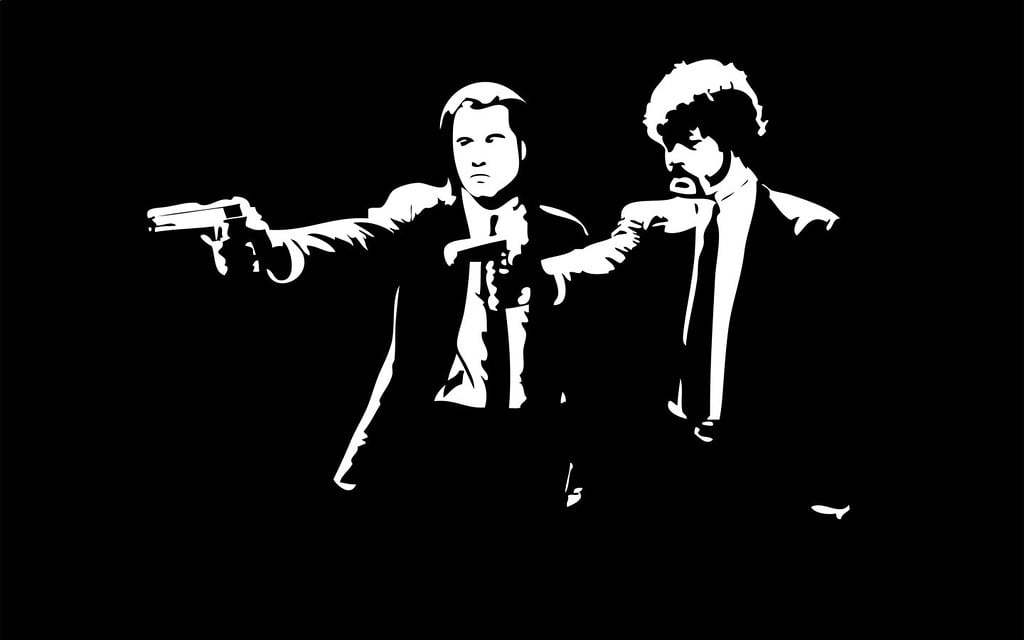
It glows. People die for it. Vincent and Jules treat it like the Holy Grail. But Quentin Tarantino never tells us what’s actually inside Marsellus Wallace’s briefcase in Pulp Fiction.
The combination is 666, which spawned theories about it containing Marsellus’s soul (notice the band-aid on the back of his neck? Some say that’s where the devil extracted it). Tarantino has said it’s whatever you want it to be, which is a very film school answer. Originally, the script called for it to contain diamonds, but that felt too ordinary.
So they went with a mysterious orange glow instead, and forty years later we’re still talking about it.
The Monolith’s Purpose in 2001: A Space Odyssey
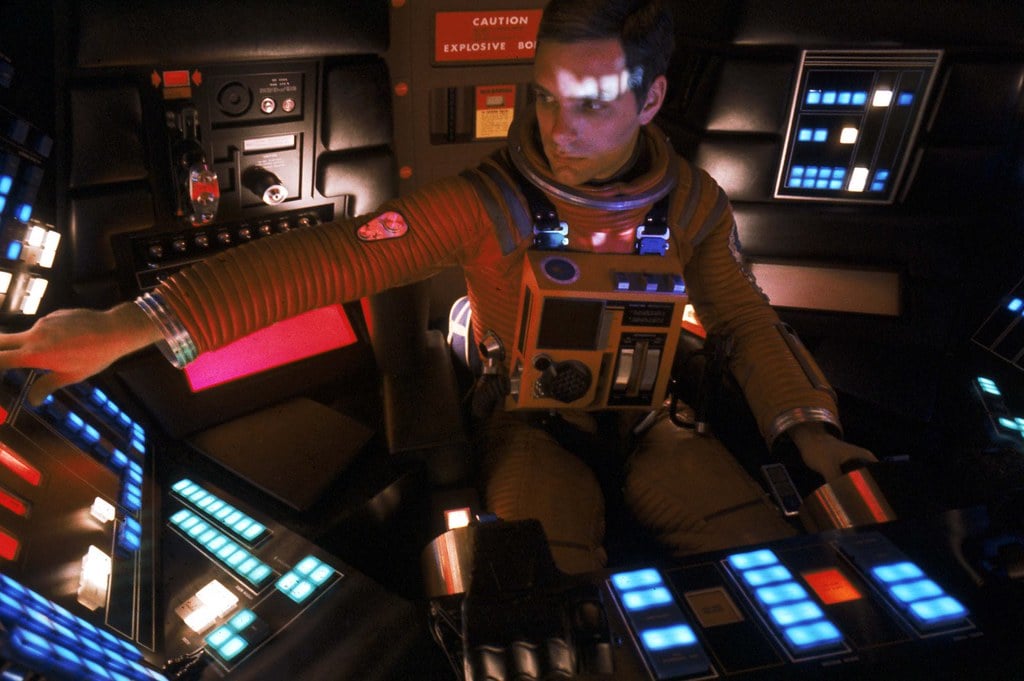
Stanley Kubrick’s 1968 masterpiece gives us a big black rectangle that shows up at key moments in human evolution, but good luck figuring out what it actually does or who sent it. It appears to ape-men, gets buried on the moon, floats near Jupiter, and somehow transforms Dave into a space baby.
Arthur C. Clarke’s novel explains more (it’s an alien teaching tool, basically), but Kubrick stripped all that exposition out of the film. You’re left with striking imagery and a lot of questions.
The monolith has been interpreted as everything from God to a movie screen itself—a reflection of humanity’s relationship with the unknown, or with cinema, or with technology. Or maybe it’s just a cool-looking prop.
Mulholland Drive’s Entire Second Half
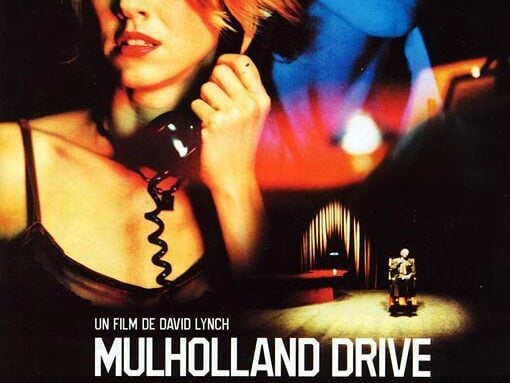
David Lynch made a movie that was supposed to be a TV pilot, but ABC rejected it, so he added 20 more minutes and released it as a feature film. The result?
Two hours of Hollywood noir that suddenly shatters into a completely different story halfway through. Characters swap identities.
Plot threads dissolve. Betty becomes Diane, or was Diane dreaming she was Betty?
There’s a weird blue box, a rotting corpse, a hitman whose day keeps getting worse (which is honestly the most coherent part), and a cowboy who shows up to deliver cryptic warnings. Lynch refuses to explain any of it.
He’s said the movie is about Los Angeles and dreams and darkness, which, sure, but that doesn’t tell us who the old people are or what’s real.
The Pale Man’s Connection to the Plot in Pan’s Labyrinth

In Guillermo del Toro’s dark fairy tale, Ofelia encounters the Pale Man—a horrifying creature with eyes in his hands who sits at a feast in an empty hall and then chases her. It’s terrifying and visually unforgettable, but it has almost nothing to do with the main story.
Del Toro has said the Pale Man represents the Church and institutional greed (the creature sits idle while children starve, surrounded by uneaten food), but within the plot itself? It’s just a test Ofelia fails.
There’s no explanation for who he is, why he’s there, or what would’ve happened if she’d succeeded. He exists purely as nightmare fuel.
Why the Aliens Invade in Signs

M. Night Shyamalan’s aliens travel across the galaxy to invade Earth—a planet that’s 70% water. And water kills them.
It’s literally toxic to them (we see this when Morgan accidentally leaves a glass out). So why would an advanced alien species capable of interstellar travel choose to invade a planet covered in the one substance that’s lethal to them? It’d be like humans deciding to colonize the sun.
Some fans have theorized they’re actually demons, not aliens, which would explain the water thing (holy water), but the movie presents them as extraterrestrials. Shyamalan never addressed this loophole, and honestly it kind of ruins the whole premise once you think about it for more than five seconds.
The Entire Timeline in Donnie Darko

Time travel. Alternate universes.
A guy in a bunny suit. A jet engine falls from the sky.
Donnie dies but also doesn’t die. The theatrical cut of Donnie Darko is deliberately vague about its own rules, and even the director’s cut—which adds exposition—doesn’t fully clarify what’s happening.
Something about tangent universes and living receivers and manipulated dead. Frank the rabbit tells Donnie the world will end in 28 days, and it sort of does? Richard Kelly has given interviews explaining the metaphysics, but it’s still confusing, and the movie itself never spells it out.
You’re left to decide whether Donnie was schizophrenic, actually did time travel, or saved the universe by dying.
What the Entity Is in It Follows

It walks. It follows.
It looks like different people. It will kill you if it catches you, and you can only pass the curse to someone else by sleeping with them.
But what is it? David Robert Mitchell’s horror film never explains the origin of the sexually transmitted demon (ghost? curse? metaphor?). There’s no backstory, no mythology, no way to permanently stop it—you can only pass it along.
Is it a manifestation of STD anxiety? A metaphor for death itself, which can’t be escaped, only delayed? Just a really persistent stalker? The movie doesn’t say, and Mitchell has been intentionally vague in interviews, suggesting he doesn’t want to define it too specifically.
Interstellar’s Fifth-Dimensional Beings

At the climax of Christopher Nolan’s space epic, Cooper ends up inside a tesseract behind his daughter’s bookshelf, manipulating gravity to send messages to the past. The movie tells us this was all constructed by fifth-dimensional future humans who evolved beyond our understanding of time.
But how did humanity survive to become fifth-dimensional if Cooper needed to save them first? It’s a bootstrap paradox that the film acknowledges but doesn’t resolve. Also, why did these advanced beings need Cooper specifically? And why communicate through Morse code in dust patterns when you’re capable of bending spacetime? Nolan loves his ambitious concepts, but sometimes the ambition outruns the explanation.
Where the Creatures Come From in A Quiet Place
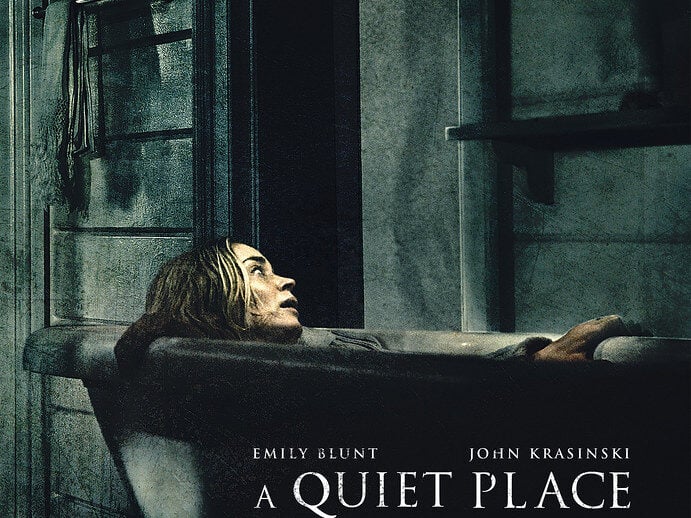
They hunt by sound. They’re nearly indestructible.
They wiped out most of humanity. But A Quiet Place never tells you where they came from, how they arrived on Earth (meteor? portal? military experiment gone wrong?), or why they’re here.
The sequel adds a little more context—we see the initial invasion—but still no origin story. John Krasinski has said he knows the backstory but deliberately left it out because the movie is about this family’s experience, not the creatures’ origin.
Which is a fair creative choice, but also leaves a pretty massive question unanswered. Are they aliens? Demons? Bioweapons? Mutants? We just don’t know.
The Old Couple in The Lighthouse

Robert Eggers’ black-and-white psychological horror film is packed with ambiguity, but one detail stands out as particularly unexplained. Near the beginning, we see an old couple lying dead (or asleep?) in a bed, and then the movie just moves on and never mentions them again.
They’re not a dream sequence (or if they are, the movie doesn’t indicate it). They’re not referenced later. They just… exist in that one scene.
Eggers’ films are full of folklore, mythology, and symbolism (the seagulls might be reincarnated sailors, the mermaid might be a figment, the light might be godhood or madness), but those old people? No idea. The whole movie is basically unexplained, but at least the rest of it feels intentional.
Why the Machines Keep Humans Alive in The Matrix

The Wachowskis tell us the machines use humans as batteries—as an energy source. But this makes no sense thermodynamically. Humans consume more energy (in the form of food) than they produce.
You can’t violate the laws of thermodynamics by keeping humans in pods and feeding them liquefied dead people to generate energy; you’d get a net loss. The original script reportedly had humans being used for processing power (using our brains as organic CPUs), which actually makes sense, but the studio thought audiences wouldn’t understand that, so they changed it to batteries.
The movie never addresses this loophole, and it’s a pretty foundational one—the entire premise of the Matrix relies on it.
What Tommy Wiseau’s Character Actually Does in The Room
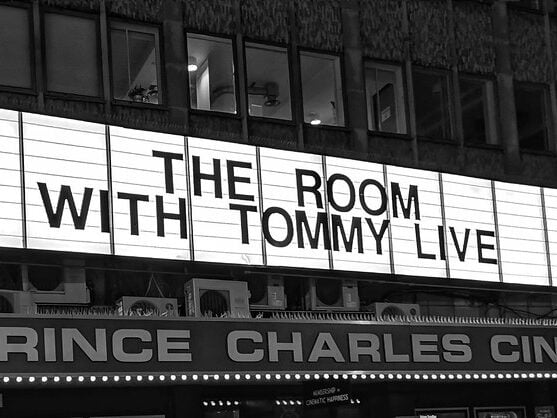
Okay, this one might be cheating because The Room doesn’t explain much of anything, but still: what is Johnny’s job? He mentions he has a promotion coming at “the bank” and later says “I have to go to the bank,” but we never see him do any work or understand what his position is. Does he work at a retail bank branch? Investment banking? Is he a teller? A manager? Tommy Wiseau wrote, directed, produced, and starred in this movie but apparently didn’t think it was important to clarify what his character does for a living (despite spending $6 million of mysterious money to make it).
The Room is full of unexplained plot points—where does Denny live, what’s with the drug dealer, why does Michelle exist—but Johnny’s job is the most basic worldbuilding failure.
The Entire Conspiracy in The Conversation
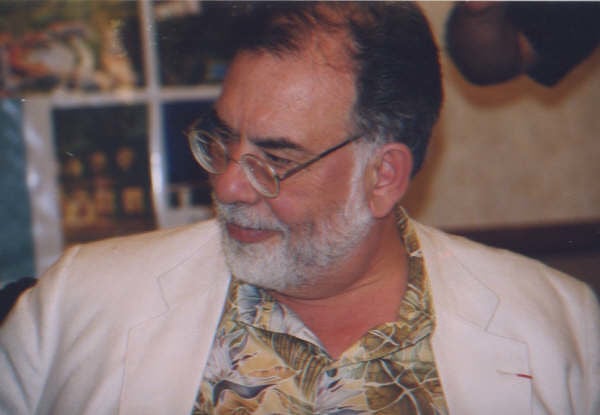
Francis Ford Coppola’s 1974 thriller follows a surveillance expert who records a conversation that may involve a murder plot. Gene Hackman’s character becomes obsessed with figuring out what’s really going on, and by the end… we still don’t really know.
There’s a twist about who’s actually in danger, but the broader conspiracy, who’s behind it, and what they’re ultimately after remains murky. The film is more interested in paranoia and obsession than in providing clear answers.
Coppola leaves the actual plot deliberately opaque—you’re meant to feel as lost and paranoid as the protagonist. It works as a mood piece, but if you’re looking for a coherent explanation of the conspiracy, you won’t find it.
Why They’re Underground in Snowpiercer
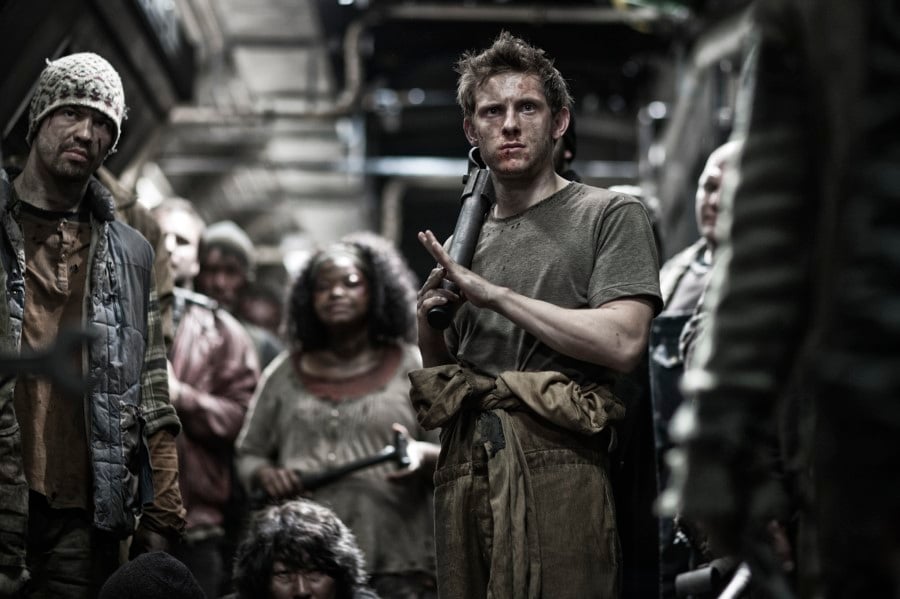
Wait, no—why are they on a train? Bong Joon-ho’s class allegory takes place entirely on a train that circles the frozen Earth, but it never really explains why the train is necessary. The Snowpiercer is described as a perpetual motion machine, which violates physics, but okay, let’s accept that.
Why does survival require constant movement? Why can’t they stop and build a proper shelter? The train has an entire ecosystem, agriculture, and industry—couldn’t all that work in a stationary structure that doesn’t require infinite motion? The movie is brilliant as social commentary, but the basic premise doesn’t hold up to scrutiny.
Bong is more interested in the vertical hierarchy within the train than explaining why the train exists in the first place, and fair enough, but still.
Giving Up on Answers

Here’s the thing about unexplained plots: sometimes they’re frustrating, sometimes they’re intriguing, and sometimes they’re just evidence that the filmmaker didn’t think things through (or ran out of time, or money, or interest). The best ambiguous endings leave you with something to think about.
The worst ones just feel incomplete, like nobody bothered to finish the story. And then there’s Tommy Wiseau, who exists in a category entirely his own.
More from Go2Tutors!

- The Romanov Crown Jewels and Their Tragic Fate
- 13 Historical Mysteries That Science Still Can’t Solve
- Famous Hoaxes That Fooled the World for Years
- 15 Child Stars with Tragic Adult Lives
- 16 Famous Jewelry Pieces in History
Like Go2Tutors’s content? Follow us on MSN.