Movies That Catapulted Animation to the Forefront
Most astonishing of all, these links imply that mathematical patterns are not icy abstractions forced upon a universe that does not want them.
Anywhere there is vibration, frequency, and time, they naturally appear.
Not only does music follow mathematical formulas, but it also demonstrates how those formulas capture a basic aspect of physical reality.
You experience mathematics as a living, breathing, profoundly human phenomenon when you hear a perfect fifth or feel a rhythm that matches your heartbeat.
Since there was no template yet, the movies that revolutionized everything didn’t adhere to it.
Here’s a closer look at the films that brought animation from the periphery to the forefront of the film industry.
Snow White and the Seven Dwarfs

Walt Disney’s 1937 masterpiece didn’t just launch a studio—it proved animation could carry a feature-length story.
Before Snow White, the industry considered full-length cel-animated films a financial and artistic impossibility.
The project was nicknamed ‘Disney’s Folly’ by skeptics who believed audiences wouldn’t sit through 83 minutes of drawings.
They were spectacularly wrong.
The film cost $1.49 million to produce, an astronomical sum during the Great Depression, and it earned $8 million worldwide by 1939.
Adjusted for inflation, that makes it one of the highest-grossing films of all time.
What made Snow White revolutionary wasn’t just its length but its ambition.
Disney and his team developed the multiplane camera to create depth and dimension, giving forests and castles a tangible sense of space.
The animation itself was painstakingly detailed—each frame drawn by hand, each movement studied from live-action reference footage.
Audiences had never seen anything like it.
Critics called it a work of art, not just entertainment.
Snow White established animation as a legitimate storytelling medium and set a standard that would define Disney for generations.
Fantasia

Three years after Snow White, Disney released something even more audacious.
Fantasia wasn’t interested in narrative in the traditional sense.
It was a visual symphony, eight animated segments set to classical music conducted by Leopold Stokowski.
The film featured everything from dancing mushrooms to demons on a mountaintop, all rendered in lush Technicolor.
It was experimental, borderline avant-garde, and it initially lost money at the box office when it was released in 1940.
Audiences didn’t quite know what to make of it, though it eventually became profitable through later re-releases.
But Fantasia’s influence outlasted its initial reception.
It introduced Fantasound, a revolutionary stereophonic sound system that used between 33 and 54 speakers depending on the theater—a breakthrough that required specially equipped venues.
The film demonstrated that animation could be abstract, emotional, and intellectually ambitious.
It didn’t need talking animals or happy endings to justify its existence.
Decades later, Fantasia became a cult classic, celebrated for its daring vision.
It remains a touchstone for animators who want to push beyond conventional storytelling and explore what the medium can do when it’s unshackled from plot.
Akira

Japanese animation had been thriving for years before Akira arrived in 1988, and while it wasn’t the first anime to reach international audiences—films like Nausicaä of the Valley of the Wind had already made their way abroad—Katsuhiro Otomo’s dystopian epic achieved a breakthrough that changed everything.
Set in a post-apocalyptic Tokyo, the film follows a biker gang caught up in a government conspiracy involving psychic powers and urban decay.
It was violent, philosophically dense, and visually stunning.
The animation quality was extraordinary—roughly 160,000 cels were used, animated at 24 frames per second, and the film featured pre-scored dialogue, meaning the animation matched the actors’ performances with precise lip-syncing.
That level of craftsmanship was virtually unheard of in anime at the time.
Akira shattered Western assumptions about what animation was for.
This wasn’t a kids’ movie.
It dealt with trauma, authoritarianism, and the psychological cost of power.
Its cyberpunk aesthetic influenced everything from The Matrix to Blade Runner 2049.
More importantly, it opened the door for anime to be taken seriously outside Japan.
Film festivals started programming anime.
Video stores created dedicated sections.
A generation of filmmakers, including the Wachowskis and Guillermo del Toro, cited it as a formative influence.
Akira proved animation could be dark, mature, and artistically significant.
The Lion King
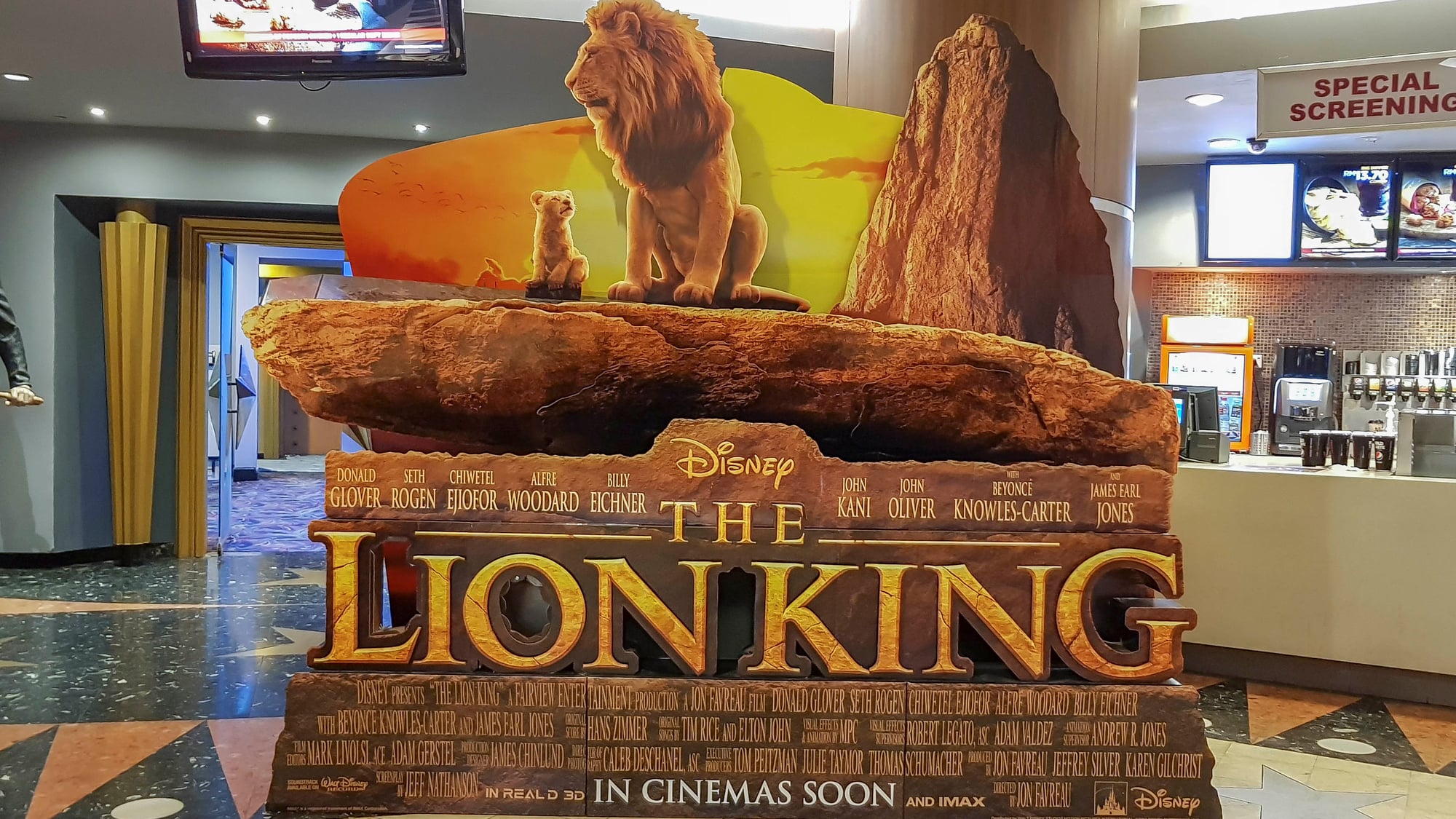
Disney’s 1994 epic wasn’t the first animated film to achieve massive commercial success, but it was the one that made animation feel like an event.
The Lion King earned over $760 million worldwide during its original theatrical run, making it the highest-grossing film of the year and the highest-grossing traditionally animated film ever until the 2019 remake.
It featured a screenplay inspired by Hamlet, a soundtrack by Elton John and Tim Rice, and some of the most technically impressive animation Disney had produced.
The wildebeest stampede alone used 3D simulation through Disney’s CAPS and CGI systems to animate the massive herd.
What set The Lion King apart was its crossover appeal.
Adults went to see it without kids in tow.
The themes—grief, responsibility, legacy—resonated beyond the typical family film audience.
Critics treated it seriously, and the film earned two Academy Awards.
It became a cultural phenomenon, spawning a Broadway musical that’s still running today and cementing Disney’s position as the dominant force in animation.
The Lion King reminded Hollywood that animated films could be blockbusters, not just charming sideshows.
Toy Story
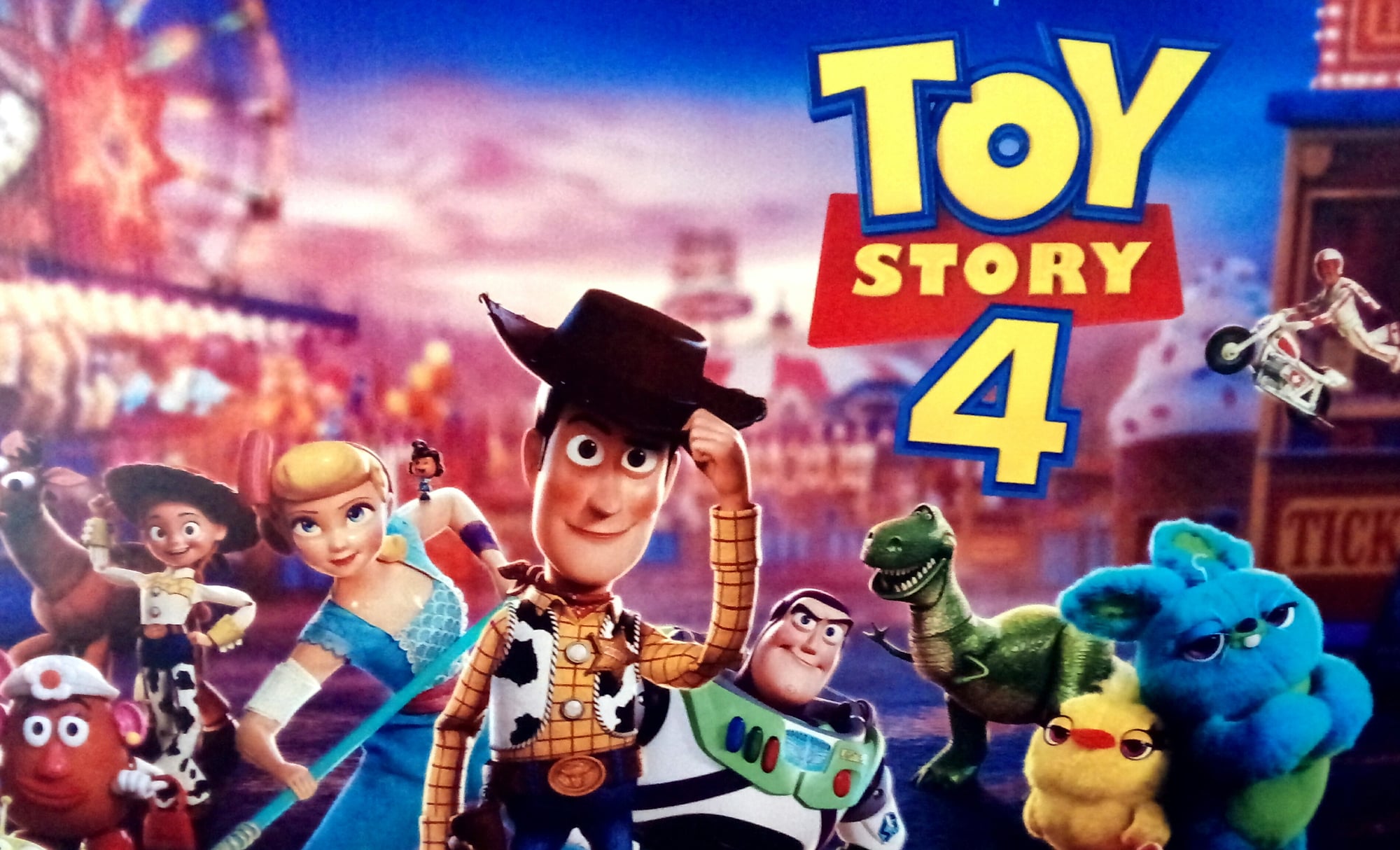
In 1995, Pixar and Disney released the first fully computer-animated feature film, and it changed everything.
Toy Story wasn’t just a technical achievement—though it absolutely was that.
It was also a genuinely great film, funny and emotionally resonant with a screenplay that worked on multiple levels.
The story of toys coming to life when humans aren’t around was simple enough for children but layered with themes of obsolescence, identity, and friendship that adults could appreciate.
Tom Hanks and Tim Allen’s vocal performances gave Woody and Buzz Lightyear depth and personality across the film’s 81-minute runtime.
The animation itself was groundbreaking.
Every surface, every texture, every beam of light was rendered by computers in ways that had never been done before.
Pixar spent four years developing the technology and the story simultaneously, refusing to compromise on either.
The result was a film that looked unlike anything audiences had seen and felt more sophisticated than most live-action comedies.
Toy Story launched Pixar into the stratosphere and triggered an industry-wide shift toward computer animation.
It proved that the medium could evolve, that new tools could unlock new kinds of stories.
Spirited Away

Hayao Miyazaki’s 2001 masterpiece took anime to a level of international recognition that even Akira hadn’t achieved.
Spirited Away won the Academy Award for Best Animated Feature, becoming the first non-English language film to do so.
It also became the highest-grossing film in Japanese history, earning ¥31.68 billion at the domestic box office—roughly $305 million—with later re-releases pushing the total to around $395 million worldwide.
The story follows a young girl named Chihiro who stumbles into a magical bathhouse populated by spirits, gods, and strange creatures.
It’s a coming-of-age tale steeped in Japanese folklore, environmental themes, and Miyazaki’s signature blend of whimsy and melancholy.
The film’s hand-drawn animation was breathtaking.
Every frame was rich with detail—steam rising from bathwater, shadows shifting across paper lanterns, characters moving with weight and intention.
Miyazaki and Studio Ghibli rejected the industry’s increasing reliance on computer animation, insisting that traditional techniques could convey emotion and artistry in ways digital tools couldn’t replicate.
Spirited Away proved them right.
It introduced Western audiences to Miyazaki’s work on a massive scale and demonstrated that animation didn’t need to conform to Hollywood’s aesthetic or narrative conventions to succeed globally.
Shrek

DreamWorks Animation’s 2001 hit was irreverent, self-aware, and gleefully subversive.
Shrek took the fairy tale formula Disney had perfected and turned it inside out.
The hero was an ogre, the princess was unconventional, and the film was packed with pop culture references and humor aimed squarely at adults.
It was also a technical showcase, with detailed character models, expressive facial animation, and lush environments that proved computer animation could handle comedy as well as it handled adventure.
Shrek became a phenomenon.
It grossed $487 million worldwide, spawned three sequels, and won the first-ever Academy Award for Best Animated Feature in 2002.
More importantly, it established DreamWorks as a legitimate rival to Disney and Pixar.
The film’s success proved there was room for different tones and styles in mainstream animation.
Not every animated film needed to be earnest or wholesome.
Shrek made space for satire, edge, and a little bit of chaos.
Frozen

When Disney released Frozen in 2013, nobody predicted it would become a cultural juggernaut.
The film earned $1.28 billion worldwide, becoming the highest-grossing animated film at its release before being surpassed by The Lion King remake in 2019 and later by Frozen II.
It won two Academy Awards, including Best Original Song for ‘Let It Go,’ which became utterly inescapable.
But Frozen’s impact went beyond numbers.
It represented a shift in how Disney told stories, particularly stories about women.
The film centered on the relationship between two sisters, Anna and Elsa, rather than a traditional romance.
It challenged the ‘true love’ trope that had defined Disney’s princess films for decades.
The animation was stunning, particularly the ice and snow effects, which required new rendering techniques to achieve the right level of realism and fantasy.
Elsa’s transformation sequence remains one of the most visually striking moments in modern animation.
Frozen resonated with audiences in ways that felt fresh and urgent.
It sparked conversations about representation, empowerment, and what kinds of stories animated films could tell.
Disney had been a powerhouse for decades, but Frozen reminded everyone that the studio could still surprise us.
Where Animation Stands Now

Not only did the films that advanced animation succeed, but they also pushed the limits of what the medium was capable of.
They demonstrated that there were no geographical, genre, or age restrictions on animation.
An Oscar could go to a hand-drawn fantasy.
A computer-generated comedy could compete with popular live-action films.
Western viewers’ expectations of anime could be redefined by a Japanese production.
With each innovation building on the one before it, animation has emerged as one of the most respected and adaptable art forms in film.
These days, animated films consistently do better at the box office than live-action ones.
Since 2019, big streaming services like Netflix, Disney+, and Amazon have made billions of dollars in animation because they see its creative potential and widespread appeal.
With stop-motion seeing a critical comeback thanks to movies like Pinocchio and Isle of Dogs, filmmakers like Guillermo del Toro and Wes Anderson are turning to animation to tell their most intimate tales.
The stigma has vanished.
Animation is defining the future of filmmaking, not battling for legitimacy anymore.
And it all stems from those seminal movies that resisted the boundaries that others imposed on them.
More from Go2Tutors!

- The Romanov Crown Jewels and Their Tragic Fate
- 17 Halloween Costumes Once Considered Taboo
- Famous Hoaxes That Fooled the World for Years
- 15 Child Stars with Tragic Adult Lives
- 16 Famous Jewelry Pieces in History
Like Go2Tutors’s content? Follow us on MSN.