Oldest Pieces of Jewelry Ever Discovered
Long before written language, before cities, before farming — people were making jewelry. That’s one of the more quietly astonishing things about human history.
The impulse to decorate the body, to mark identity, to signal something about who you are or where you belong, appears to be almost as old as the species itself. Archaeologists keep pushing that timeline further back, and each discovery tends to raise more questions than it answers.
Shell Beads from Bizmoune Cave — 150,000 Years Old
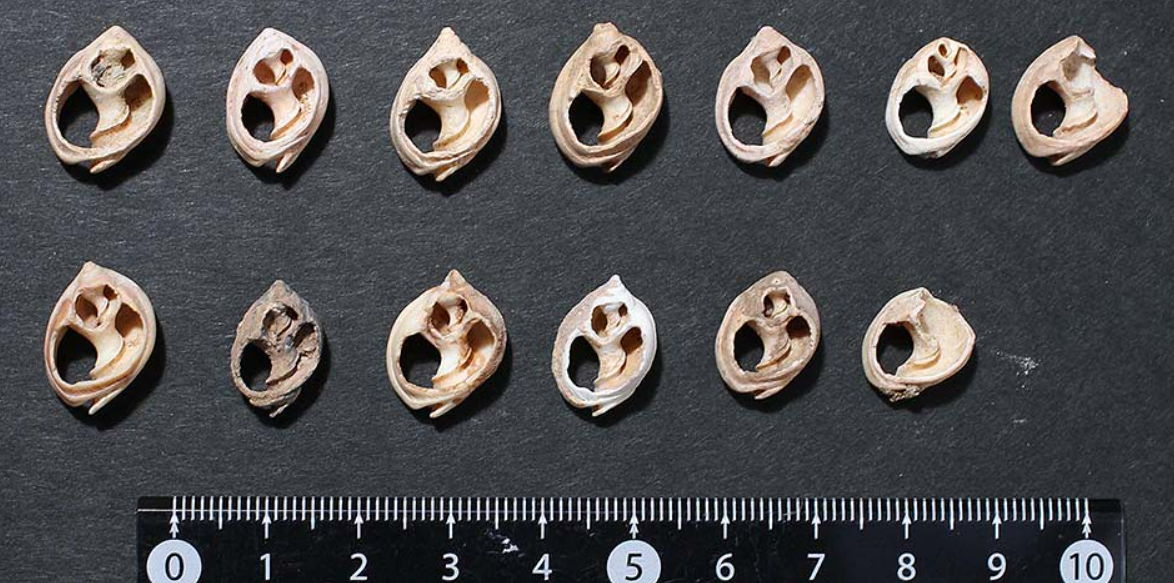
In 2021, researchers announced the discovery of 33 small sea snail shells in Bizmoune Cave in Morocco. The shells, from a species called Tritia gibbosula, had gaps worn through them — consistent with being strung together and worn.
Dating placed them at between 142,000 and 150,000 years old. What makes them significant isn’t just their age.
It’s what they imply. Stringing shells together takes planning and intent.
It suggests the people making them had a concept of personal adornment — and possibly of how others perceived them.
Nassarius Shell Beads from Skhul Cave — 135,000 Years Old

Found in Skhul Cave on Mount Carmel in Israel, these small perforated shells from the Nassarius species are among the oldest known ornaments found outside Africa. They date to roughly 135,000 years ago and show signs of deliberate perforation and traces of red ochre — suggesting they were dyed or handled alongside pigment.
The Skhul beads weren’t just decoration. The ochre connection points toward ritual or symbolic use, which tells us something important about how early humans were thinking about the world around them.
Nassarius Beads from Oued Djebbana — 130,000 Years Old

A similar find came from Algeria, where Nassarius shells with perforations were discovered at Oued Djebbana and dated to around 130,000 years ago. These beads closely resemble the ones found at Skhul, despite being located hundreds of kilometres apart.
That distance is part of what makes the find so striking. It suggests that the practice of making and wearing shell beads wasn’t an isolated invention — it was something spreading across a wide region, possibly through trade routes or shared cultural contact between populations.
Blombos Cave Beads — 75,000 Years Old
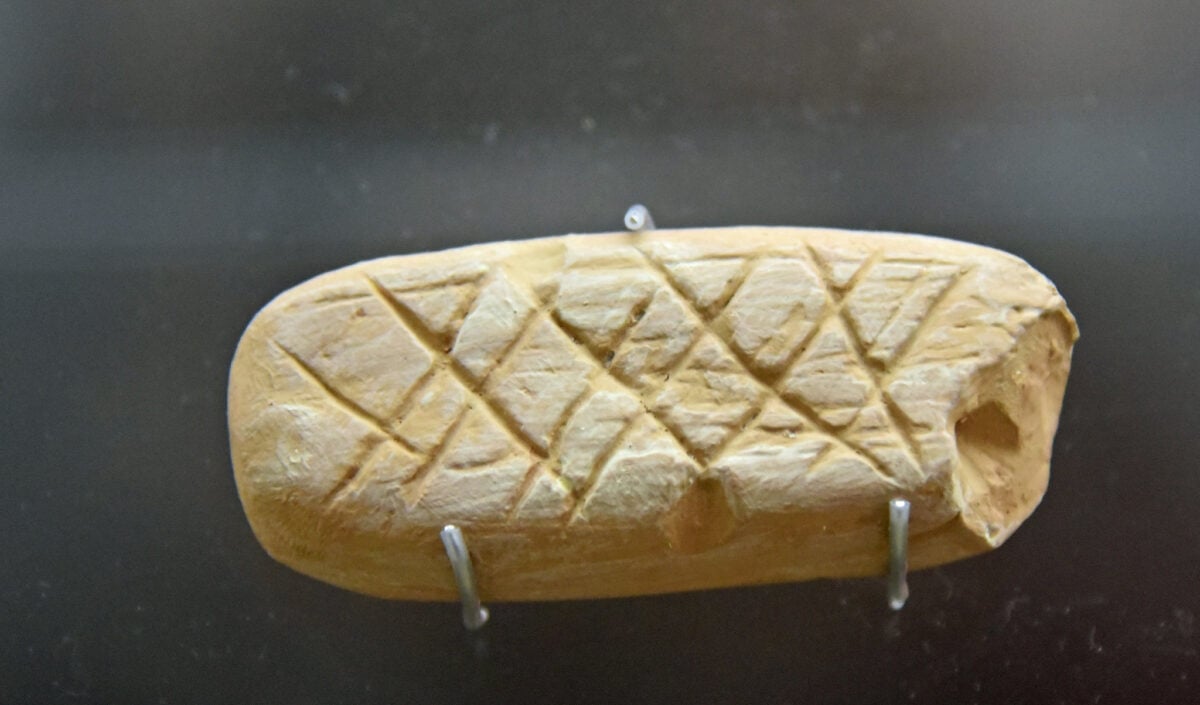
Blombos Cave in South Africa has produced some of the most important early evidence of symbolic behaviour ever found. Among the finds are 41 small Nassarius kraussianus shells, all perforated through the same point and showing wear patterns consistent with being strung together and rubbed against each other over time.
At 75,000 years old, these are not the oldest beads ever found, but they are among the best documented and most studied. Some shells also show traces of ochre, reinforcing the idea that colour played an important role in how these objects were used and understood.
Ostrich Eggshell Beads from the Kalahari — 33,000 Years Old
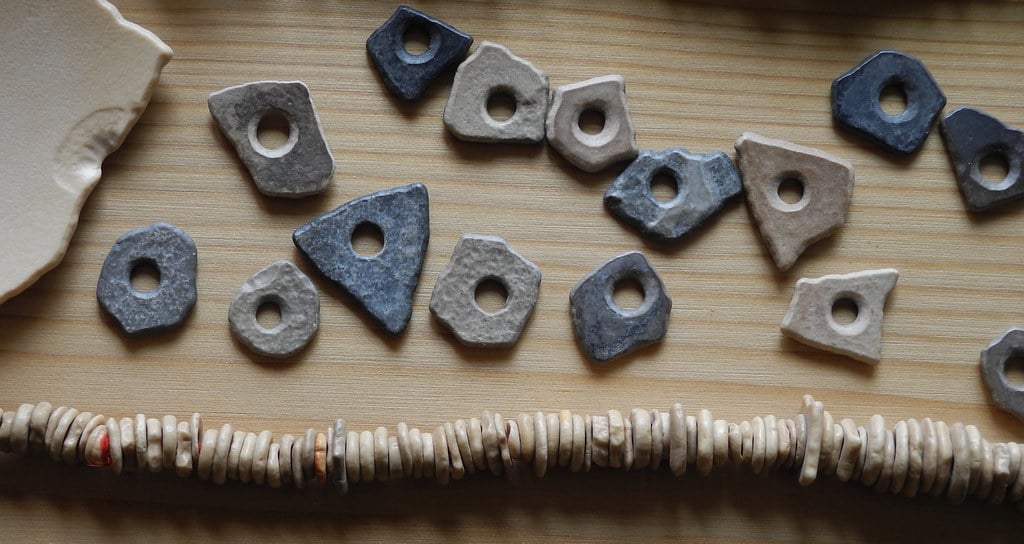
Ostrich eggshell beads have been made in southern Africa for a very long time. Evidence from sites in the Kalahari region suggests that small, disc-shaped beads carved from ostrich eggshell were being produced and worn around 33,000 years ago — and the tradition continues among some San communities today.
These beads are remarkable for the continuity they represent. A craft tradition persisting for tens of thousands of years, largely unchanged, is rare in the archaeological record.
The beads were used not just for decoration but as a form of social currency, exchanged between communities across vast distances.
Mammoth Ivory Beads from Sungir — 30,000 Years Old

The burial site of Sungir, near Vladimir in Russia, uncovered something that stopped researchers in their tracks. A man and two children were buried roughly 30,000 years ago, each adorned with thousands of ivory beads carved from mammoth tusks.
The adult male alone was buried with around 3,000 beads arranged in rows across his body. Experimental archaeology suggests that producing that many beads would have taken thousands of hours of labour.
Someone — a community — invested enormous time and resources in creating this burial. The beads weren’t just ornaments.
They carried weight, socially and symbolically.
Perforated Animal Teeth from Europe — 40,000 Years Old
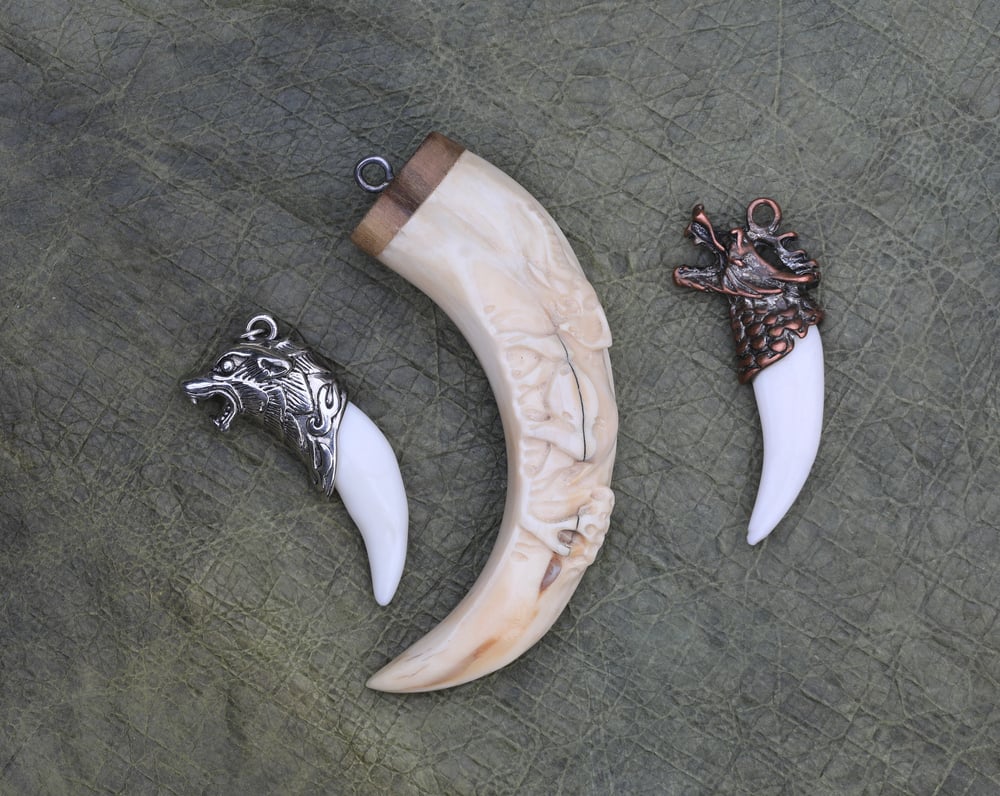
Around 40,000 years ago, at multiple sites across Europe, people began wearing perforated animal teeth as pendants. Deer teeth, bear teeth, and the teeth of other large animals were drilled through and strung, likely worn around the neck or sewn onto clothing.
Some of the most well-documented examples come from sites in southwestern France and northern Spain, associated with both early modern humans and, controversially, late Neanderthals. The Neanderthal connection remains debated, but some researchers argue that eagle talons and animal teeth found at Neanderthal sites show clear signs of deliberate modification — which would push symbolic ornament-making back even further.
Eagle Talon Jewelry from Croatia — 130,000 Years Old
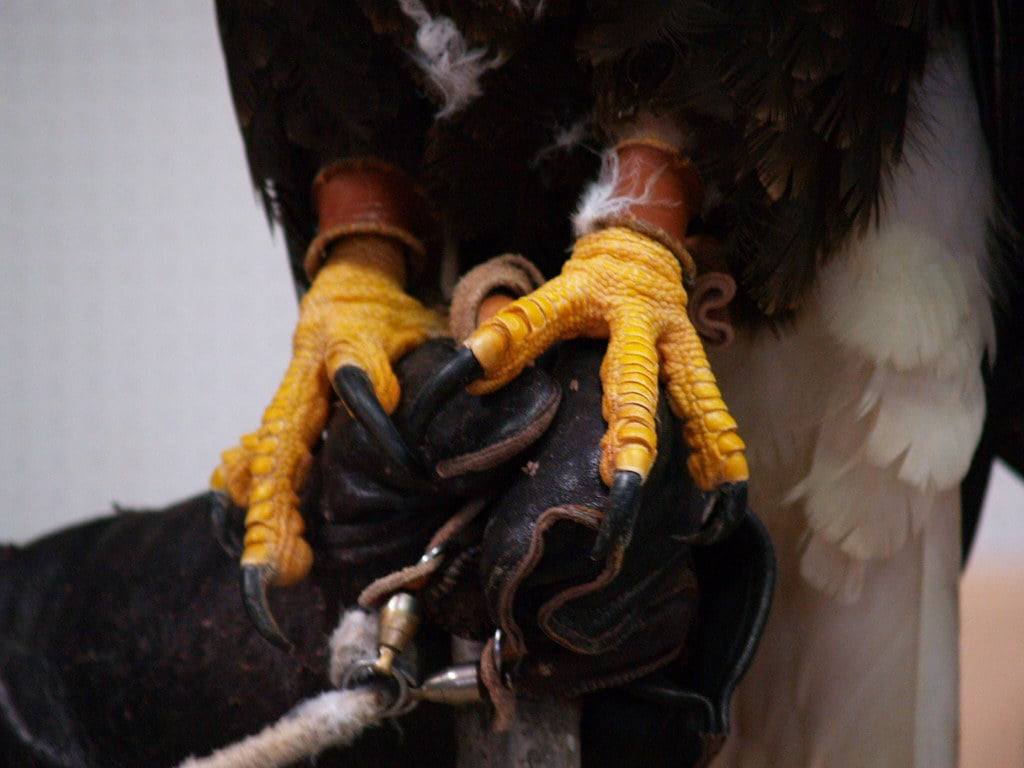
In 2015, researchers re-examined a collection of white-tailed eagle talons found at Krapina, a Neanderthal site in Croatia. Eight of the talons showed cut marks and polishing consistent with being strung together and worn as a bracelet or necklace.
They date to around 130,000 years ago. If these were made by Neanderthals — which the evidence strongly suggests — then the capacity for symbolic thinking and personal adornment wasn’t unique to modern humans.
That’s a significant shift in how the story of jewelry gets told.
Chlorite and Carnelian Beads from the Indus Valley — 5,000 Years Old
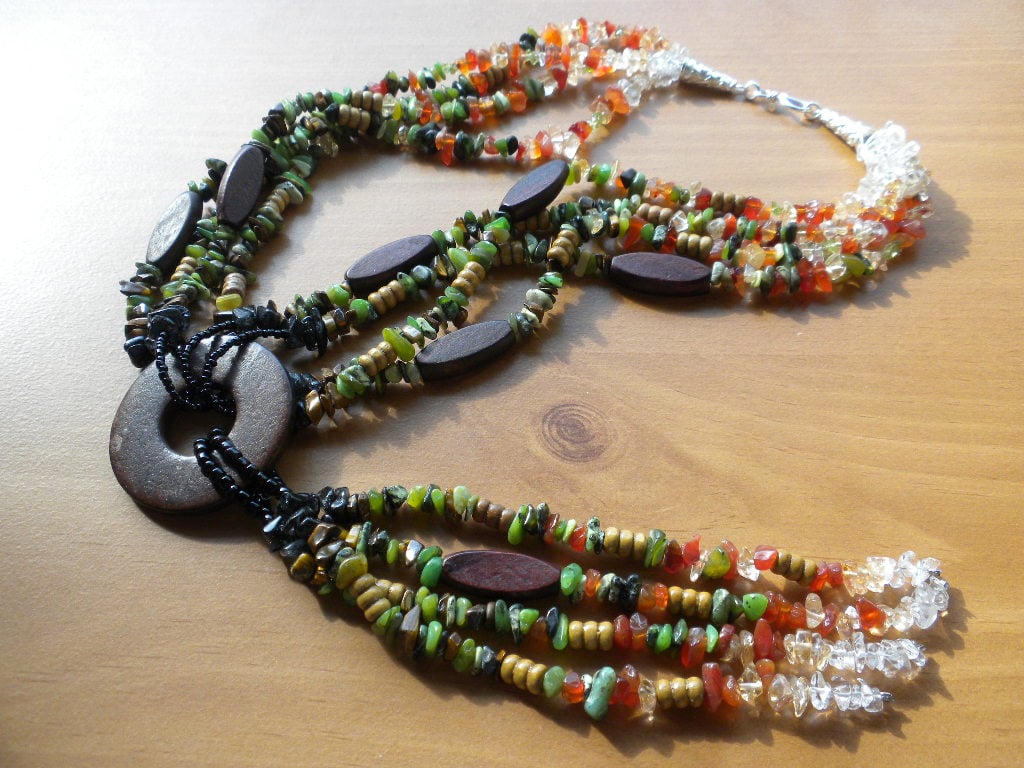
Moving into the era of early civilisations, the Indus Valley culture produced remarkably sophisticated jewelry by around 3000 BCE. Beads made from carnelian, lapis lazuli, gold, and chlorite have been found at sites like Mohenjo-daro and Harappa, showing advanced drilling techniques and trade connections stretching across thousands of kilometres.
Carnelian beads in particular required a precise heating process to achieve their deep red colour. The fact that craftspeople had mastered this process five thousand years ago speaks to a level of technical skill and cultural investment in jewelry that feels surprisingly modern.
Gold Jewelry from the Varna Necropolis — 6,500 Years Old

The Varna Necropolis in Bulgaria, discovered in 1972 during construction work, produced the oldest collection of worked gold objects ever found. Dating to around 4500 BCE, the site contained over 3,000 gold artifacts — rings, bracelets, beads, and decorative pieces — buried with individuals in elaborate graves.
One grave alone contained more gold than has been found in the entire rest of the world from that period combined. The craftsmanship is precise and intentional.
Whoever these people were, gold carried enormous significance — and they knew exactly what to do with it.
Lapis Lazuli Beads from Afghanistan — 6,500 Years Old
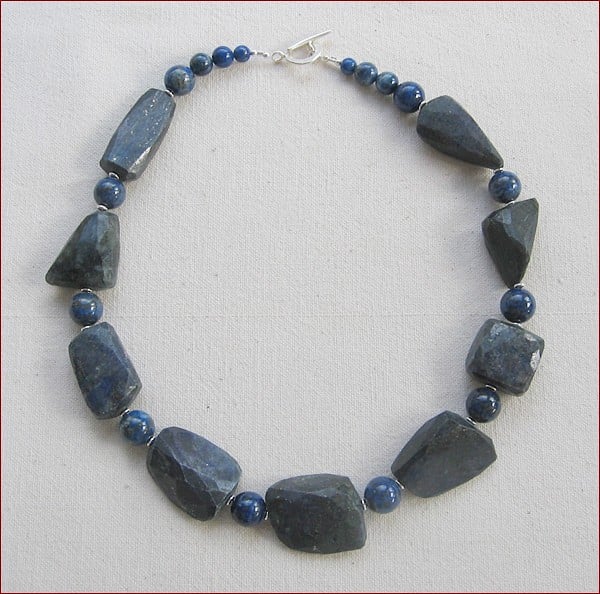
Lapis lazuli, the deep blue stone prized throughout ancient history, was mined in the Badakhshan region of Afghanistan and fashioned into beads by at least 6,500 years ago. These beads have been found thousands of kilometres from their source — in Mesopotamia, Egypt, and the Indus Valley — pointing to trade networks of remarkable reach for such an early period.
The stone’s vivid blue colour made it one of the most valued materials in the ancient world. Wearing lapis lazuli wasn’t just decoration.
It was a statement of wealth, connection, and access to a world far beyond your immediate surroundings.
Baltic Amber in Northern Europe — 13,000 Years Old
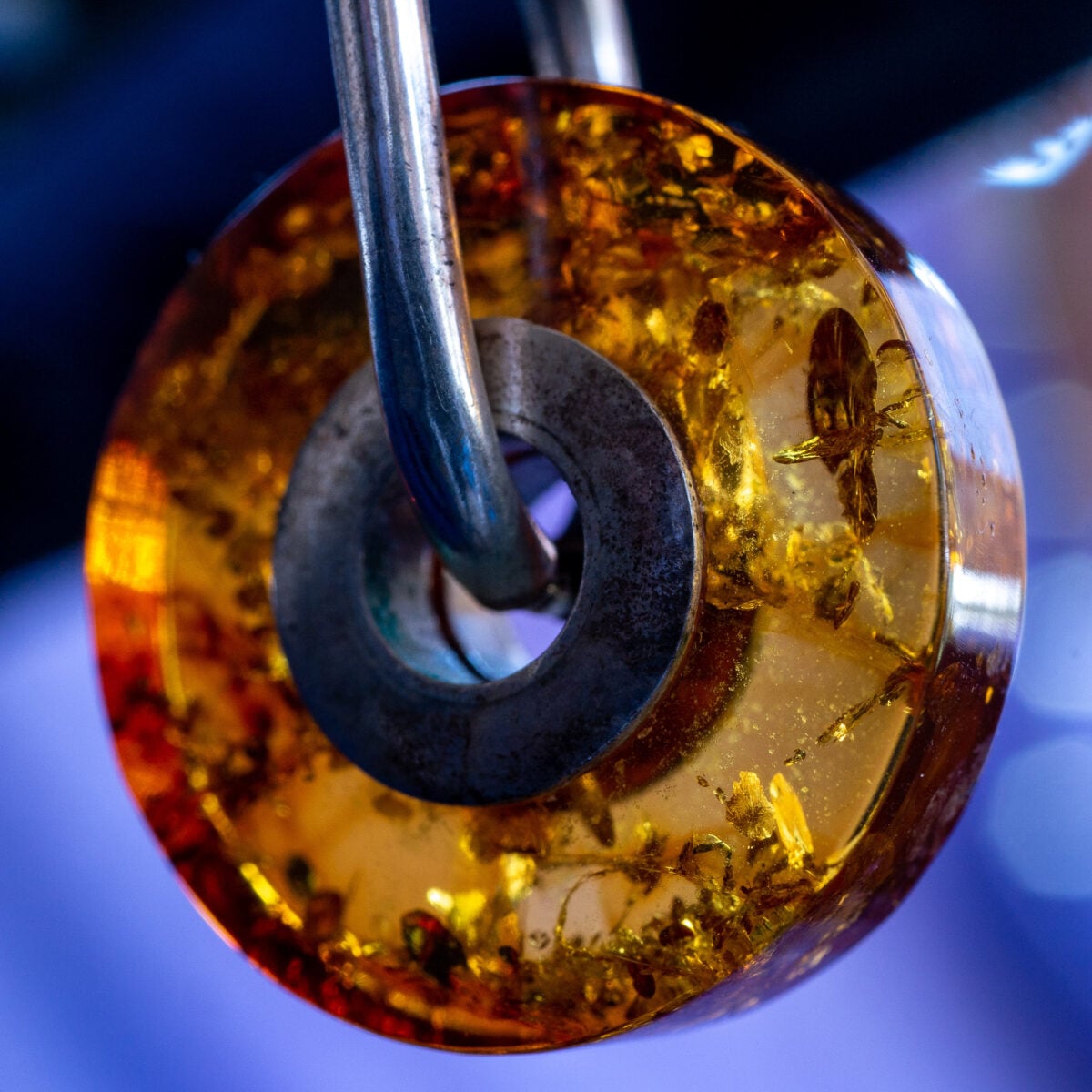
Amber — fossilised tree resin — has been collected and shaped into ornaments in northern Europe since the end of the last Ice Age. Pieces dating back 13,000 years have been found across Scandinavia and the Baltic region, carved into animal shapes and perforated for stringing.
Amber’s warmth, translucency, and the way it generates static electricity when rubbed gave it a mysterious quality that many cultures associated with power or protection. It travelled far along trade routes — Baltic amber has turned up in ancient Egypt and at Mycenaean sites in Greece, thousands of kilometres from where it formed.
What These Objects Tell Us

A single piece from this collection speaks less about adornment, more about awareness. Not DNA or bone – instead, what matters most: noticing someone else’s gaze, imagining how you appear, wearing symbols like second skin.
Time lines shift – not slowly – with every fresh clue pulled from dust. Earlier guesses about ancient decoration? Replaced again, somewhere deep in rock, some far-off land.
Every time this happens, our picture of ourselves grows just a bit clearer. Wearing beauty close to the body, stitched into clothing, started far earlier than anyone guesses – yet still moves forward today.
What begins as art often ends up next to skin.
More from Go2Tutors!

- The Romanov Crown Jewels and Their Tragic Fate
- 13 Historical Mysteries That Science Still Can’t Solve
- Famous Hoaxes That Fooled the World for Years
- 15 Child Stars with Tragic Adult Lives
- 16 Famous Jewelry Pieces in History
Like Go2Tutors’s content? Follow us on MSN.