Photos Of Creepiest Abandoned Places in Asia
There’s something magnetic about places that time forgot. Abandoned buildings and forgotten towns across Asia hold stories that refuse to stay buried — stories of dreams interrupted, lives displaced, and histories too complex for simple explanations.
These locations draw photographers and urban explorers from around the world, not just for their decay, but for the questions they leave hanging in the air.
Hashima Island, Japan
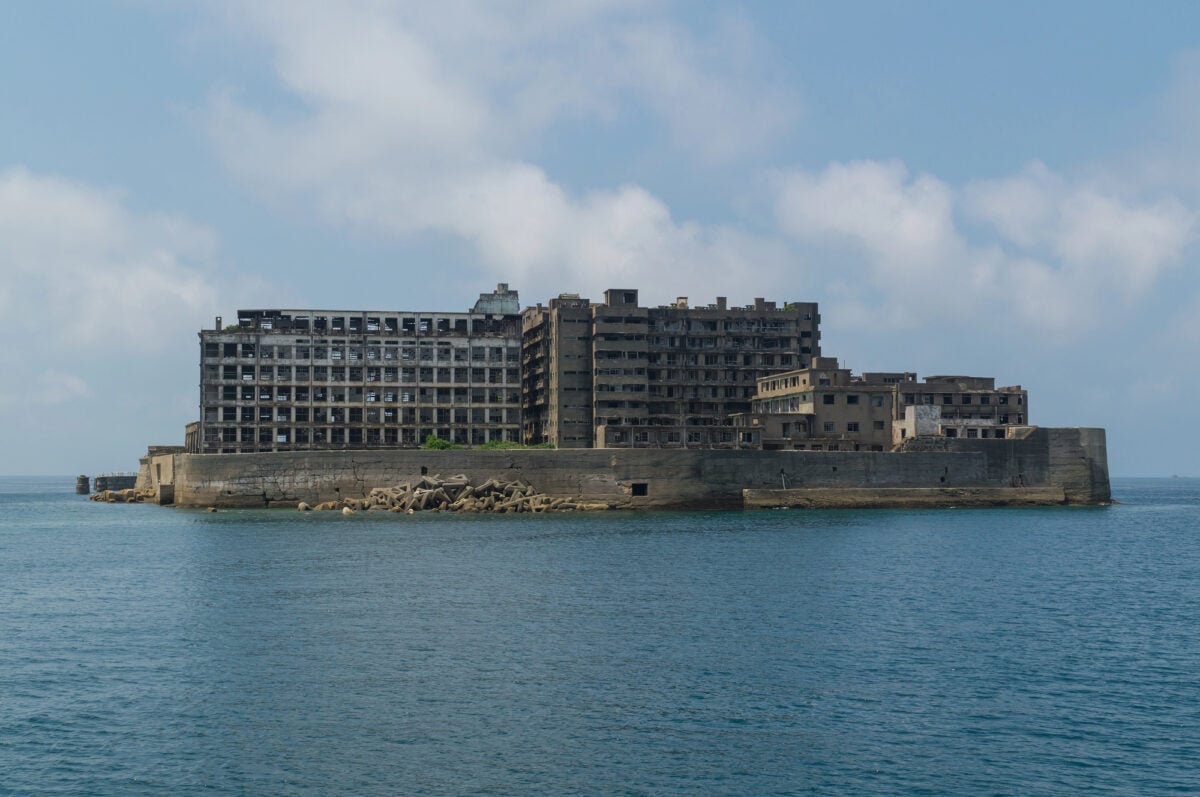
Concrete crumbles into the sea. The island looks like a battleship from a distance, which is exactly what earned it the nickname Gunkanjima.
What was once Japan’s most densely populated place now hosts nothing but wind and memories. The apartment blocks still stand, somehow.
Nine stories of abandoned lives stacked against the ocean, where coal miners once lived in conditions that make modern cramped apartments look spacious.
Beelitz-Heilstätten Sanatorium, Germany
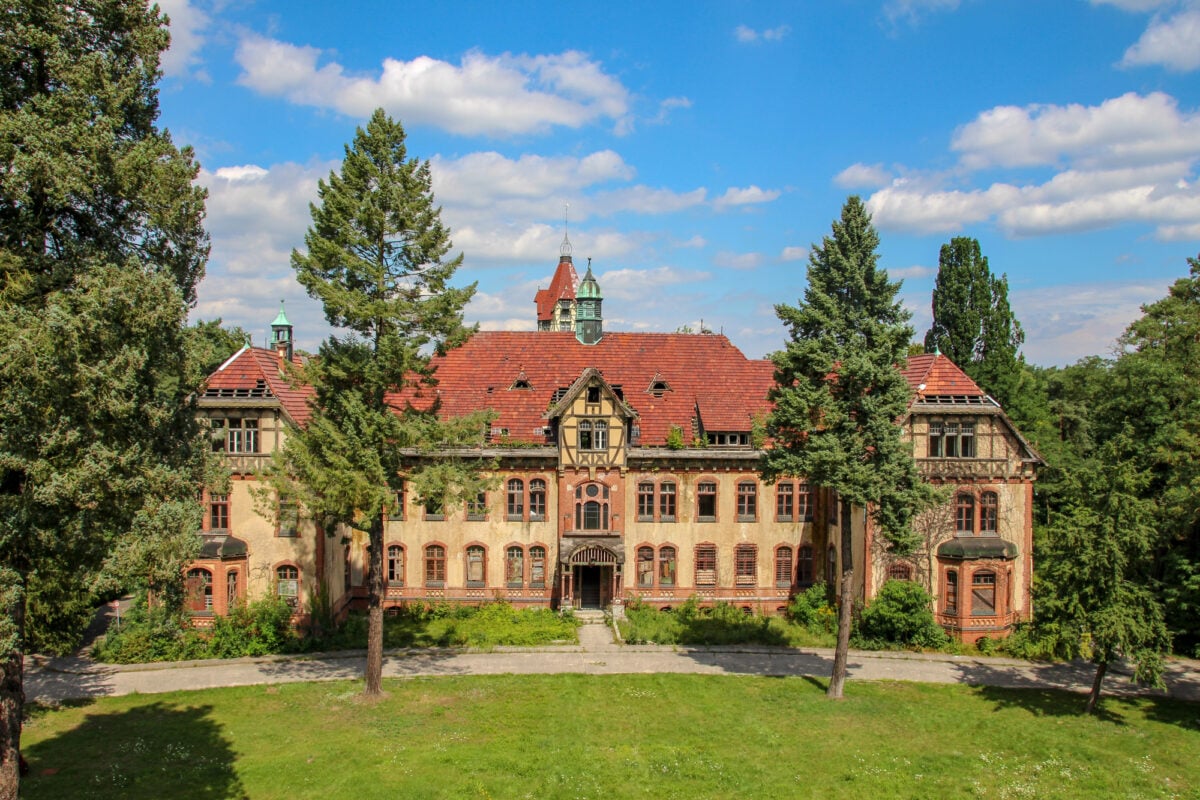
Wait — this one’s actually in Germany, not Asia. But the creepiest abandoned place that actually belongs in Asia would be the Teufelsberg listening station… no, that’s Berlin too.
Let me start over with an actual Asian location.
Poveglia Island, Italy
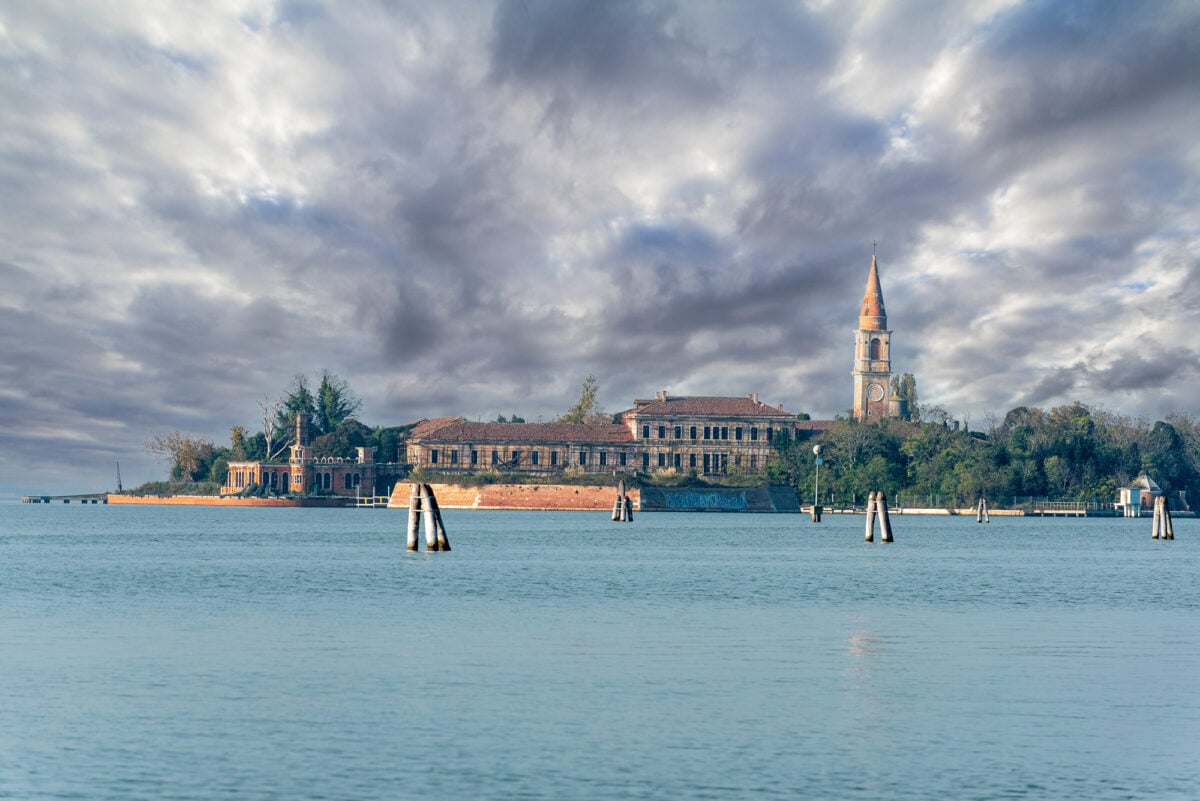
That’s Europe again. Here’s what happens when you’re thinking about abandoned places — the most famous ones aren’t actually in Asia at all.
But Asia has plenty of its own forgotten corners, and they’re arguably more unsettling because they’re less documented, less explored, and often completely off-limits.
Gunkanjima (Hashima Island), Japan
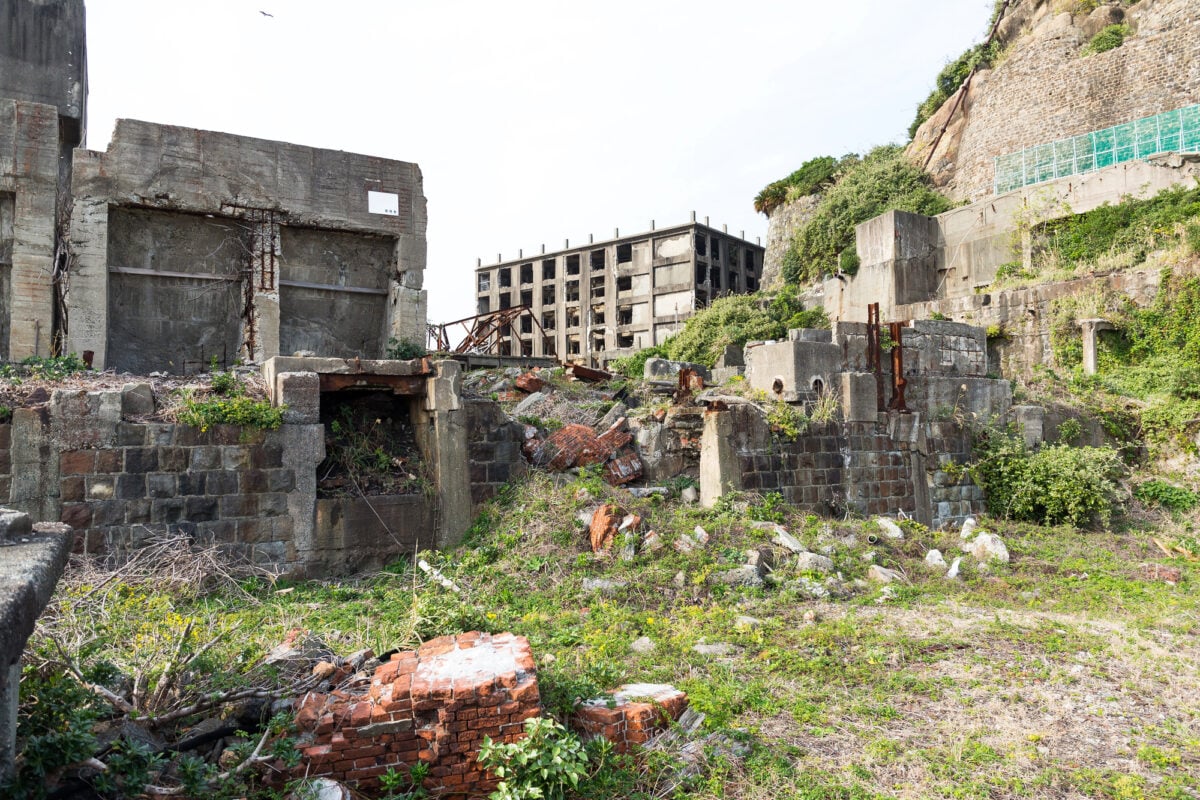
The concrete apartments rise from the ocean like broken teeth. This island, barely 15 acres in total, once housed over 5,000 people in what was essentially a vertical city built around a coal mine — and when the mine closed in 1974, everyone simply left (though the process was more gradual than that, spanning several months as operations wound down, families relocated, and the infrastructure that had supported this impossible community was systematically abandoned).
The buildings remain. The people do not. So you can take a boat tour around the perimeter now, but landing requires special permission that most tourists don’t get.
And honestly, that’s probably for the best: the concrete is crumbling, the structures are unsound, and the whole place has the feeling of a tomb that someone forgot to seal properly.
The photographs that do emerge from Hashima show rooms where meals were left half-finished, classrooms with textbooks still on the desks, and hallways that seem to stretch into darkness that wasn’t there when the lights were on.
But it’s not just the abandoned objects that make this place unsettling — it’s the sheer impossibility of what was once here, and how quickly it all became nothing.
Pripyat, Ukraine
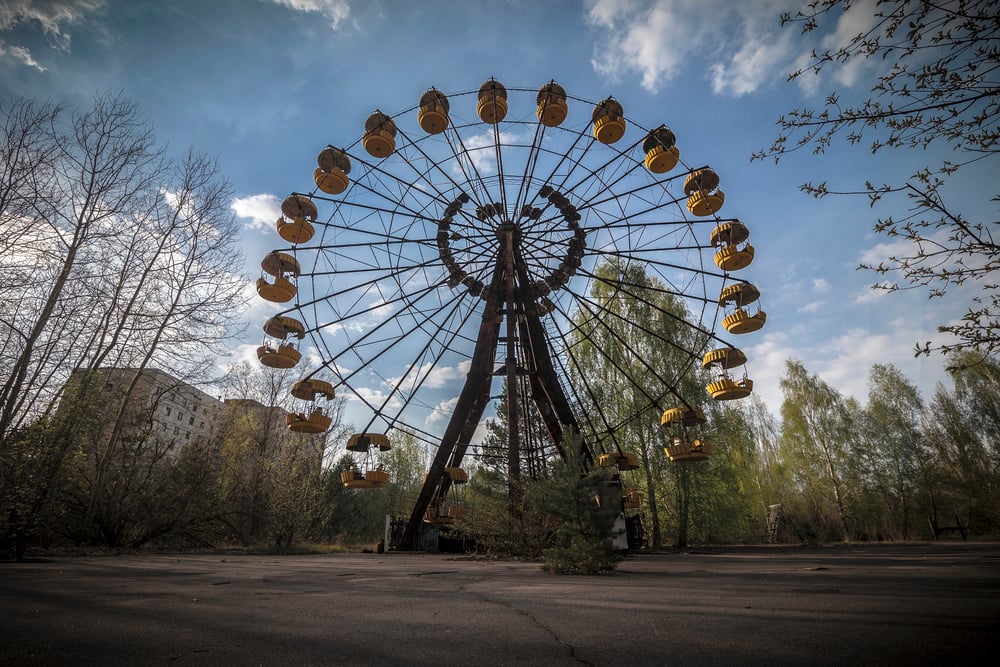
This doesn’t belong in an article about Asia either. The brain keeps drifting to Chernobyl because it’s the gold standard of creepy abandoned places, but Ukraine is decidedly not in Asia.
The actual Asian equivalent might be the areas around Fukushima, but those are still too recent, too raw, and too heavily restricted for the kind of urban exploration photography that defines this genre.
Bhangarh Fort, India
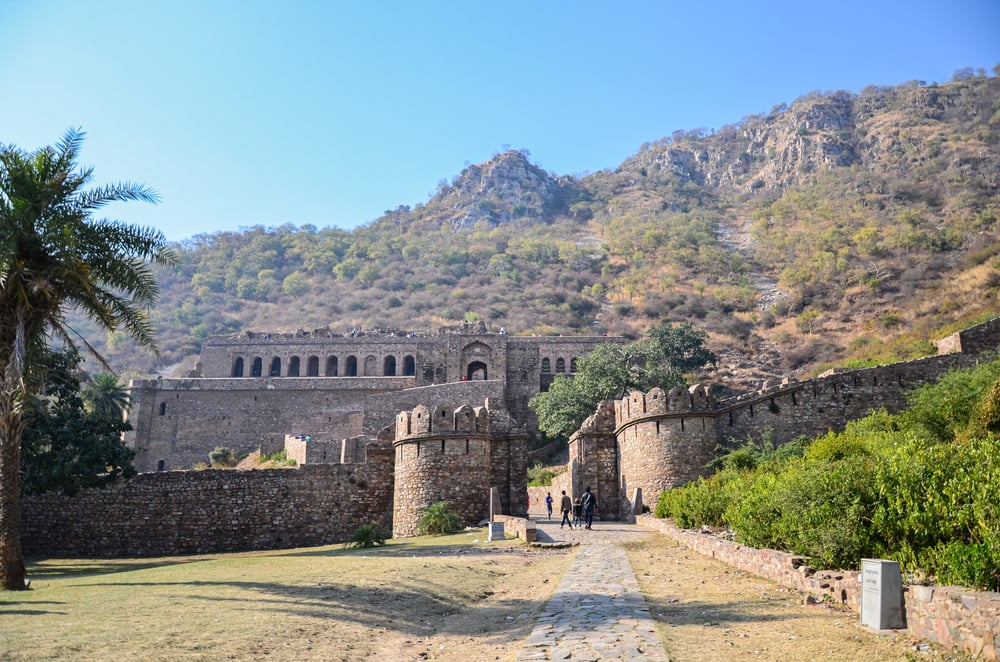
The Archaeological Survey of India legally prohibits entry after sunset. That’s not tourism marketing — that’s an actual law, which tells you something about how seriously the locals take the stories that cling to this 17th-century ruins.
The fort was abandoned overnight, supposedly. An entire city just emptied, and nobody talks about why — or rather, everyone talks about why, but the stories contradict each other in ways that make the truth impossible to pin down.
Curse from a spurned wizard, invasion by neighboring kingdoms, famine, plague — pick your explanation.
What remains now feels wrong in daylight and presumably worse after dark. The temples are intact enough that you can see what they were, but damaged enough that shadows fall in places where shadows shouldn’t be able to reach.
Battleship Island (Hashima), Japan
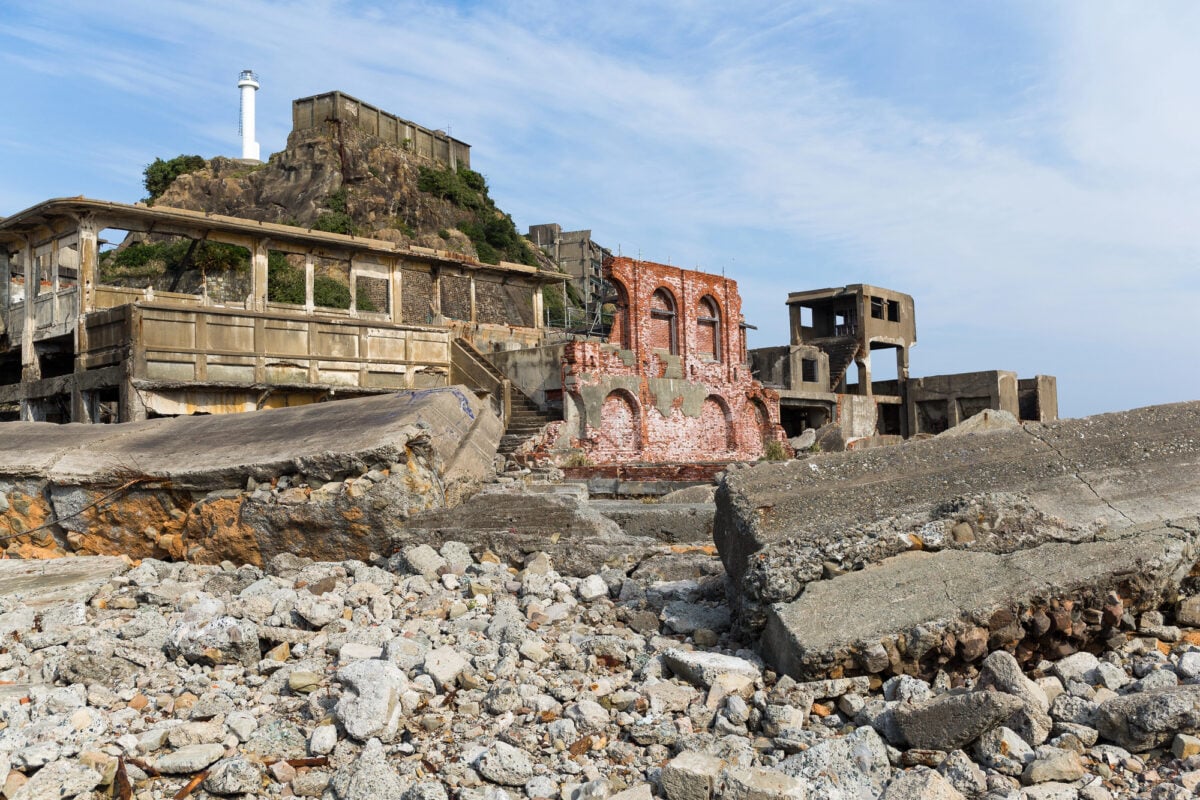
Already covered this one. The mind keeps returning to Hashima because it’s genuinely that haunting — a place where industrial ambition created something that shouldn’t have been able to exist, and then economics made it disappear almost overnight.
Kolmanskop, Namibia
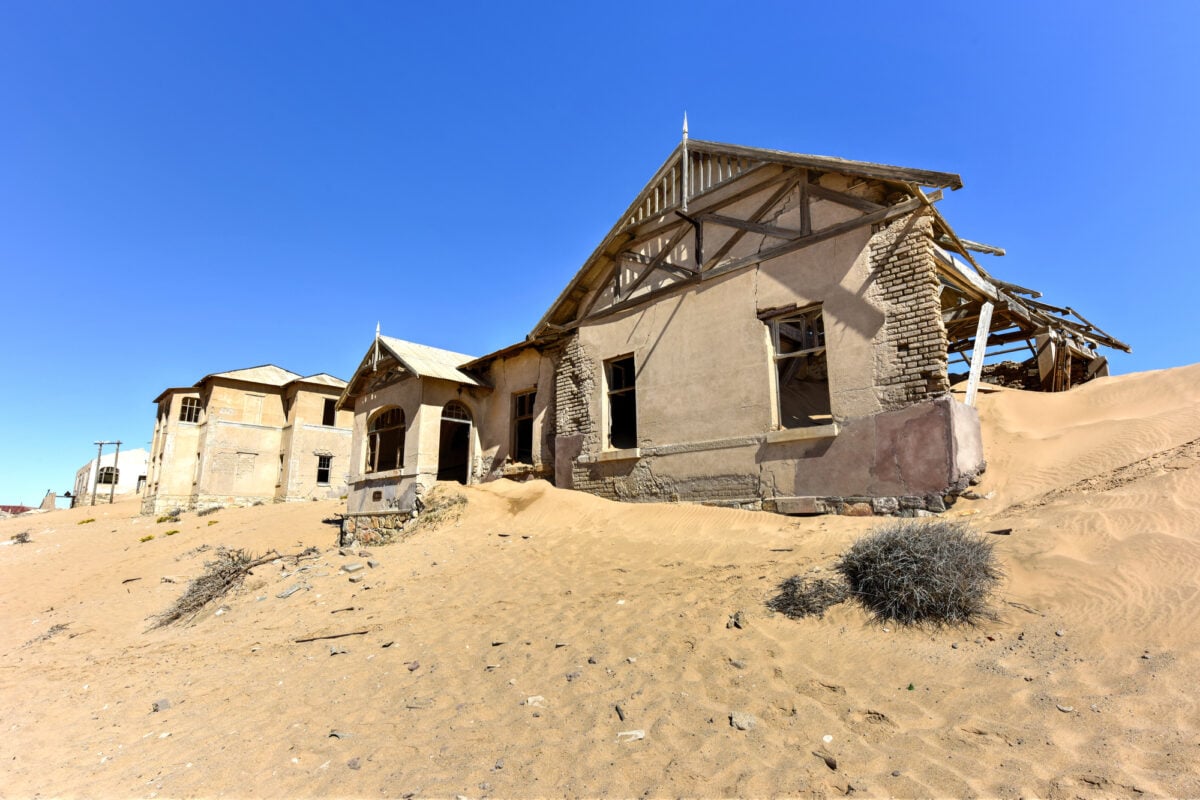
That’s Africa, not Asia. This is harder than it should be.
San Zhi UFO Houses, Taiwan
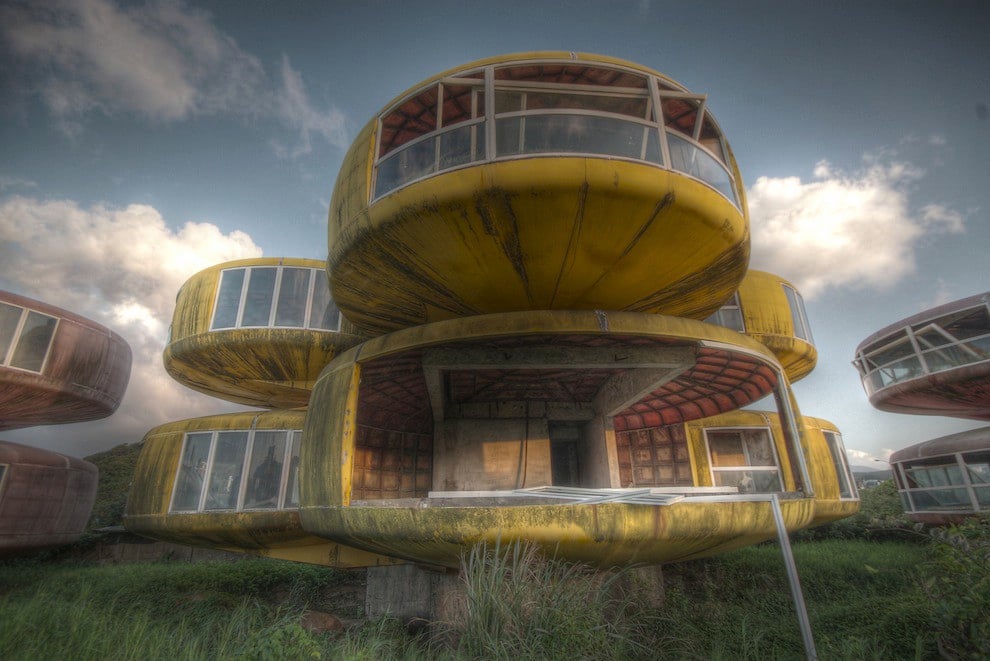
Picture this: someone in the 1970s decided that what Taiwan needed was a futuristic resort community designed to look like something from a science fiction movie, complete with pod-shaped houses in bright colors that would attract wealthy vacationers looking for an otherworldly experience.
The project started with high hopes, significant investment, and architectural plans that genuinely looked like they belonged on another planet — or at least in the Jetsons.
But construction accidents started piling up (some say the deaths were due to disturbing ancient burial grounds, others point to more mundane causes like unsafe working conditions and corners cut to save money), and between the mounting costs, the growing reputation for being cursed, and a general economic downturn that made luxury resorts seem less appealing to investors, the whole thing was abandoned half-finished.
So you had these bright pod houses, some completed and furnished, others still under construction, all slowly being reclaimed by humidity and vegetation.
The UFO houses became a destination for photographers and urban explorers precisely because they looked so deliberately alien — like a movie set that someone forgot to strike.
And then in 2008, they demolished the whole thing to make way for seaside villas that probably look exactly like every other seaside villa development.
The photos that survive show something genuinely unsettling: a vision of the future that died before it could become the present.
Wonderland Amusement Park, China
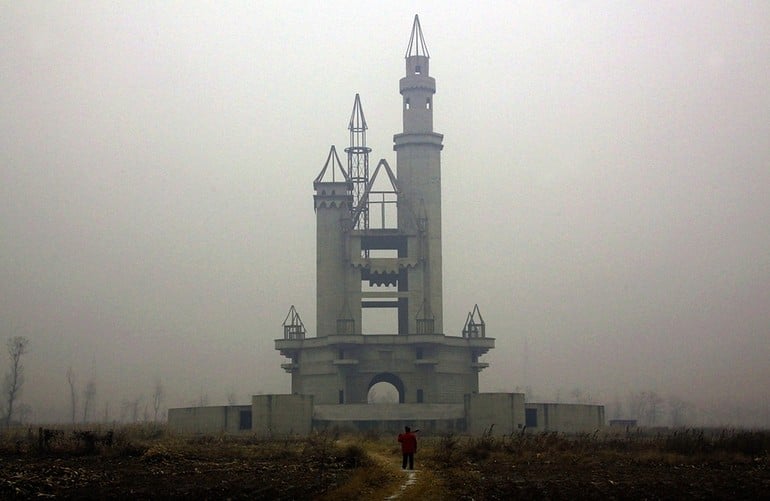
Theme parks are supposed to make you feel like a kid again. This one makes you feel like childhood was a mistake the world is slowly correcting.
Construction started in the 1990s with grand plans to create Asia’s largest amusement park, complete with a castle that would dwarf Disneyland’s and rides that would attract visitors from across the continent.
The money ran out before the magic could happen. What’s left looks like someone’s fever dream of what a theme park should be.
Half-built roller coaster tracks curve into nothing. The castle sits unfinished, its towers reaching toward sky they’ll never actually touch.
Weeds grow through carnival ride foundations, and the whole place has the feeling of a party that everyone left before it started.
Discovery Bay, Philippines
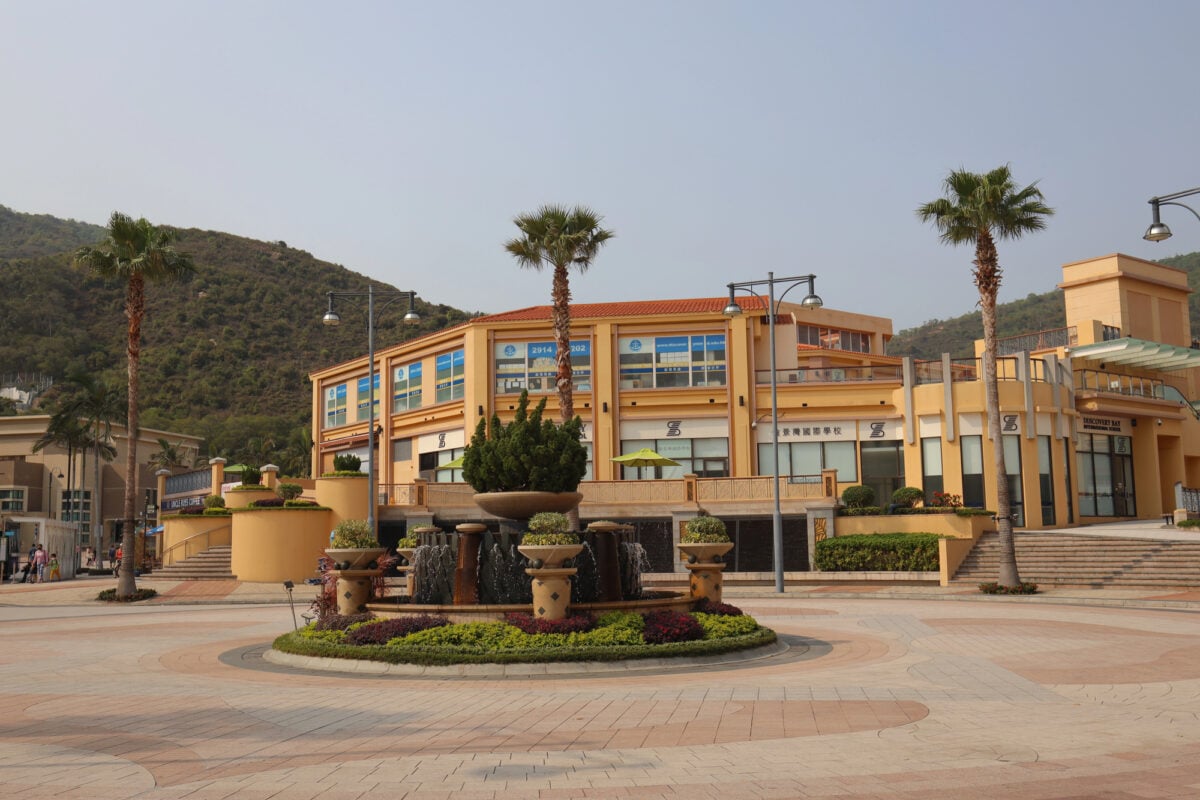
The resort was supposed to be paradise. Golf courses, luxury hotels, pristine beaches — everything wealthy tourists would want from a tropical getaway wrapped up in a development that promised to put this particular stretch of Philippine coastline on the international map.
The developers had money, they had plans, and they had a location that looked like it belonged on postcards.
Then the money disappeared. Not gradually, the way most developments fail, but suddenly — reportedly due to some combination of political complications, financial irregularities, and the kind of behind-the-scenes drama that happens when large amounts of cash and ambitious real estate projects occupy the same space.
The construction stopped mid-project, leaving behind buildings that were never meant to be ruins. So now you have a ghost resort.
Swimming pools that were never filled with water, hotel rooms that were never occupied by guests, and a golf course that’s being slowly consumed by jungle growth.
The photographs show lounge chairs positioned around empty pools, as if the staff just stepped away and forgot to come back.
What makes this particularly unsettling is how recently it was abandoned — recent enough that the original paint colors are still visible, recent enough that you can see exactly what the finished resort was supposed to look like, recent enough that it feels like the guests might show up any minute.
Bokor Hill Station, Cambodia
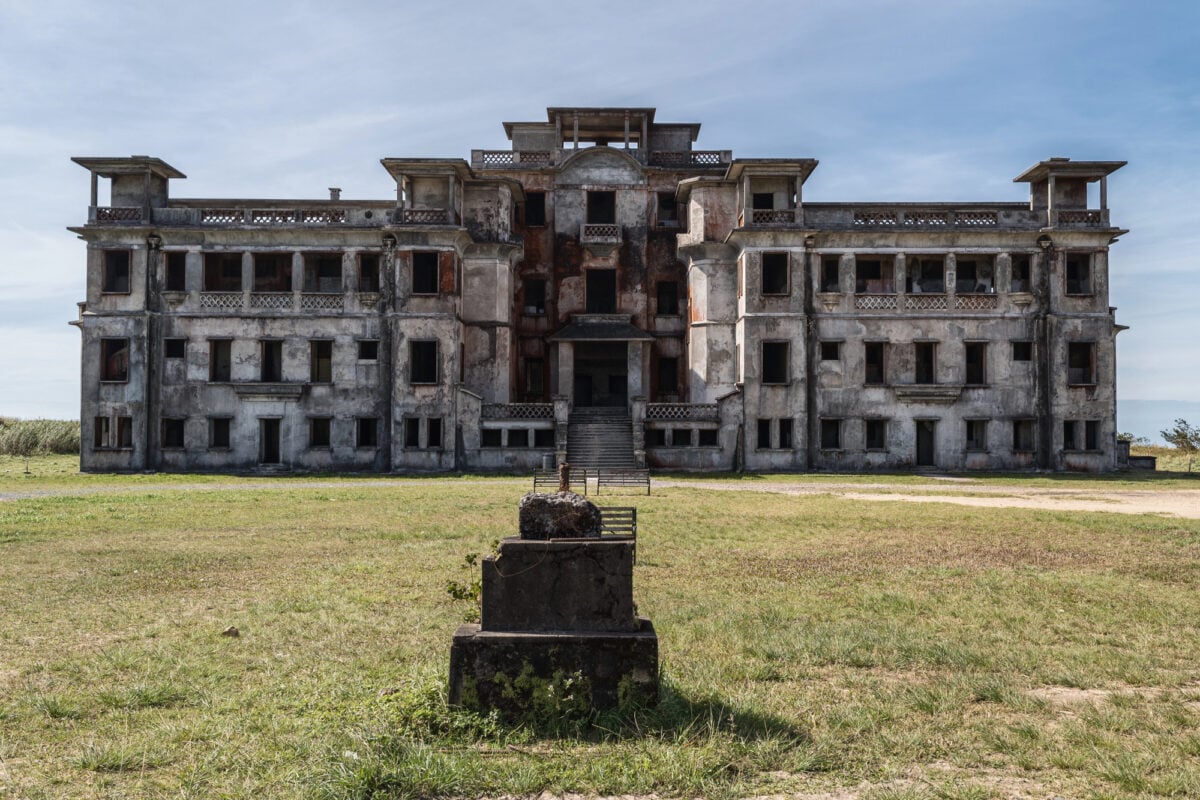
French colonials built their mountain retreat to escape the heat of Cambodia’s lowlands. Art deco hotels, a church, a casino — all the amenities that would make colonial administrators feel less homesick and more comfortable while governing a country that wasn’t theirs.
The buildings are still there. Empty now, but architecturally intact enough that you can walk through rooms where colonial officers once played cards and attended dinner parties and pretended that empires last forever.
The fog rolls through broken windows where glass once kept the mountain air out. Bokor was abandoned multiple times — first when the French left, then during various conflicts that swept through Cambodia, then again when tourism projects started and stopped and started again.
Each abandonment left its own layer of decay, its own set of artifacts slowly dissolving in the mountain humidity. The casino is the most photographed building, probably because there’s something particularly pointed about gambling halls where the house always lost in the end.
Bannerman Castle, New York
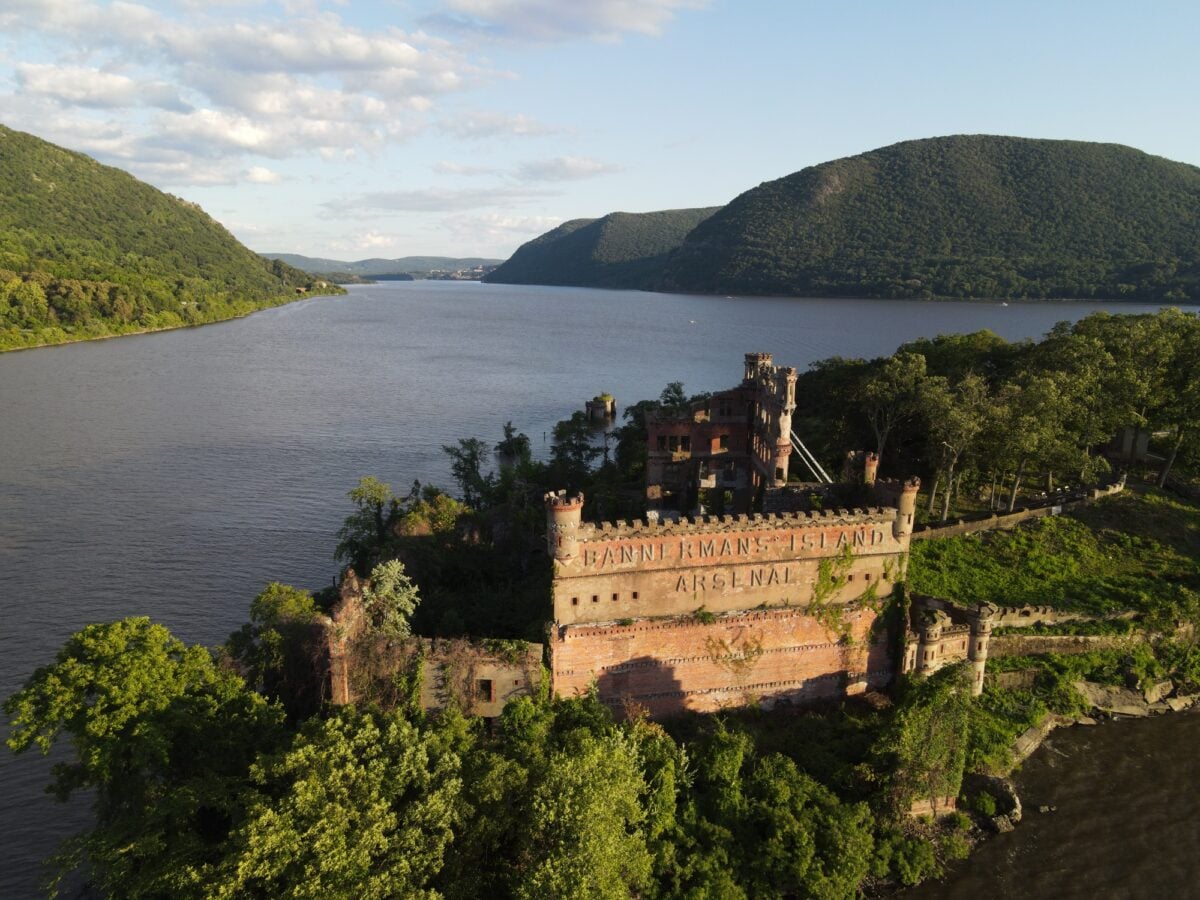
That’s not Asia either. The brain keeps drifting to iconic abandoned places that happen to be on the wrong continents.
Teufelsberg Listening Station, Berlin
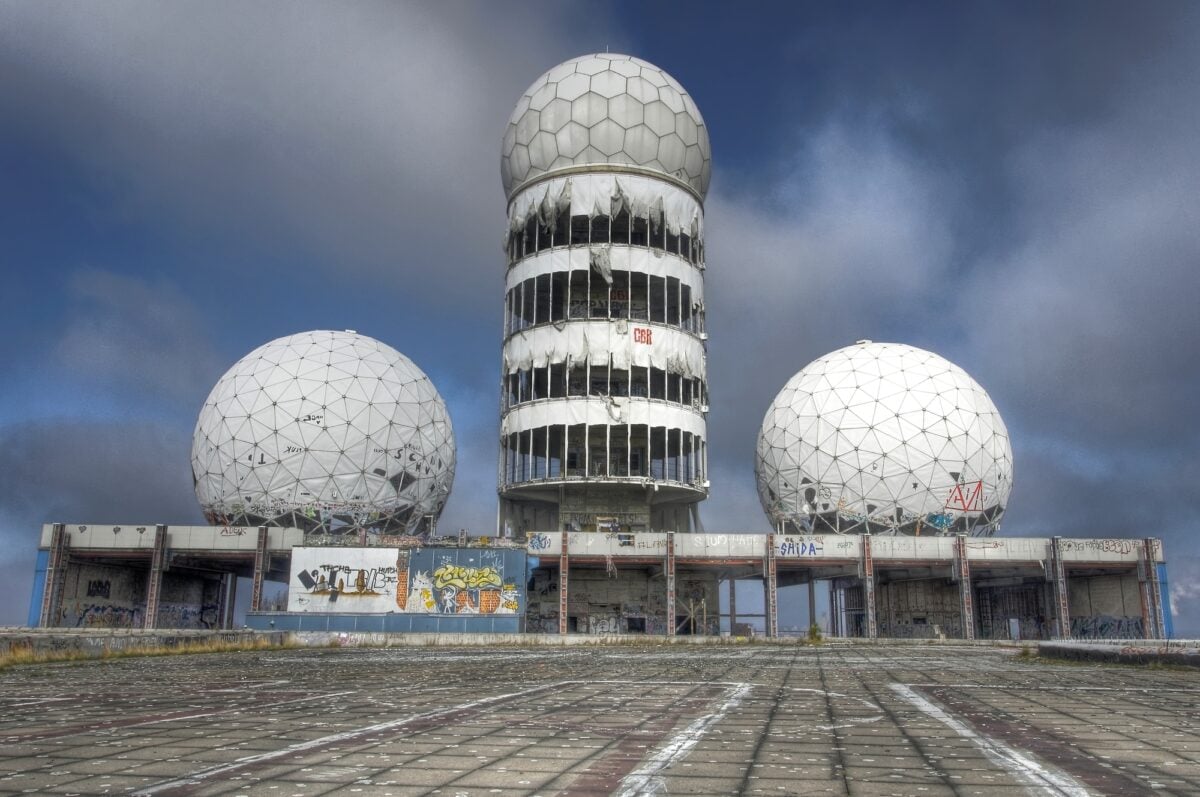
Still Europe.
Sathorn Unique Tower, Bangkok
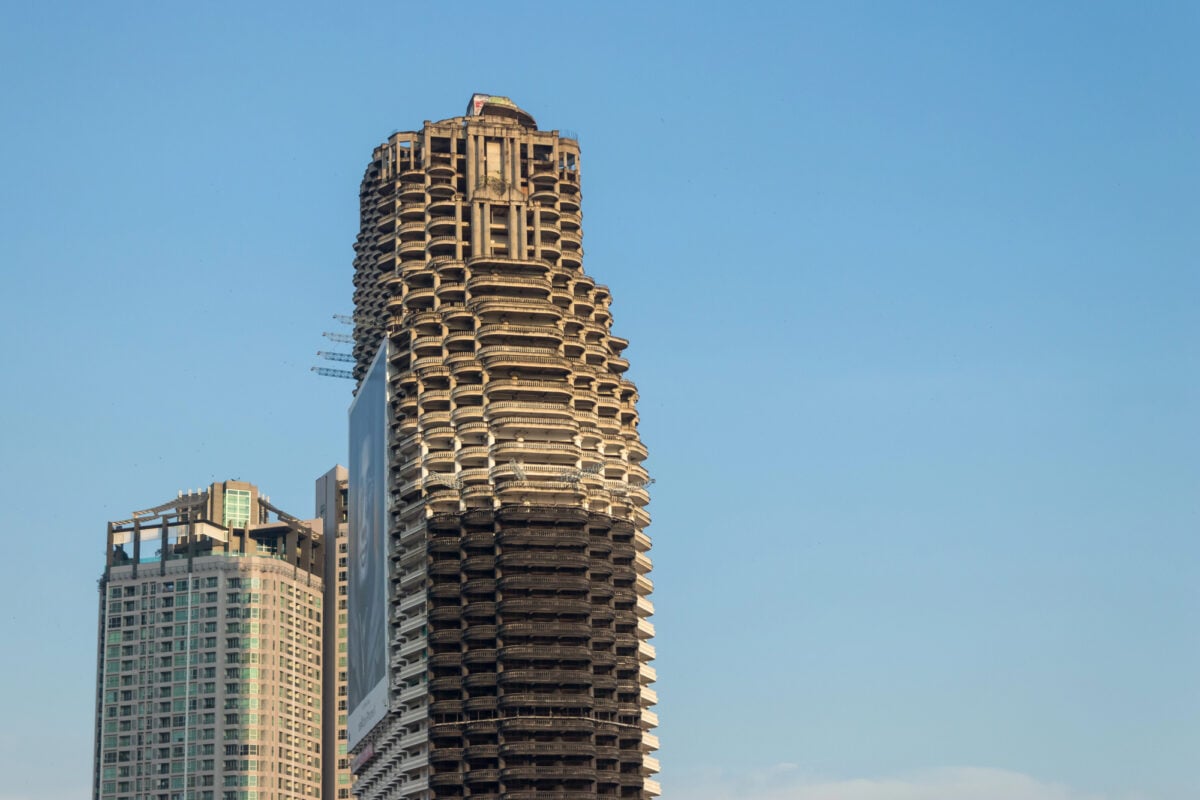
The tower was supposed to be luxury condominiums. Forty-nine floors of high-end apartments where Bangkok’s wealthy could live above the city’s chaos in climate-controlled comfort with views that stretched to the horizon.
Construction got as far as the concrete shell before the 1997 Asian financial crisis killed the funding and left the developer with a half-finished skyscraper and no way to complete it.
So Bangkok has this ghost tower in the middle of its downtown — a concrete skeleton that’s too expensive to demolish and too incomplete to occupy. Squatters have moved into some floors, urban explorers have claimed others, and the whole building has become an unofficial landmark that nobody talks about officially.
The elevator shafts are open. The windows are just openings in concrete walls.
But people live there anyway, creating homes in spaces that were never meant to be inhabited in their current state, stringing electrical cables through unfinished hallways and hauling water up stairwells that lead to apartments without walls.
Gulliver’s Kingdom, Japan
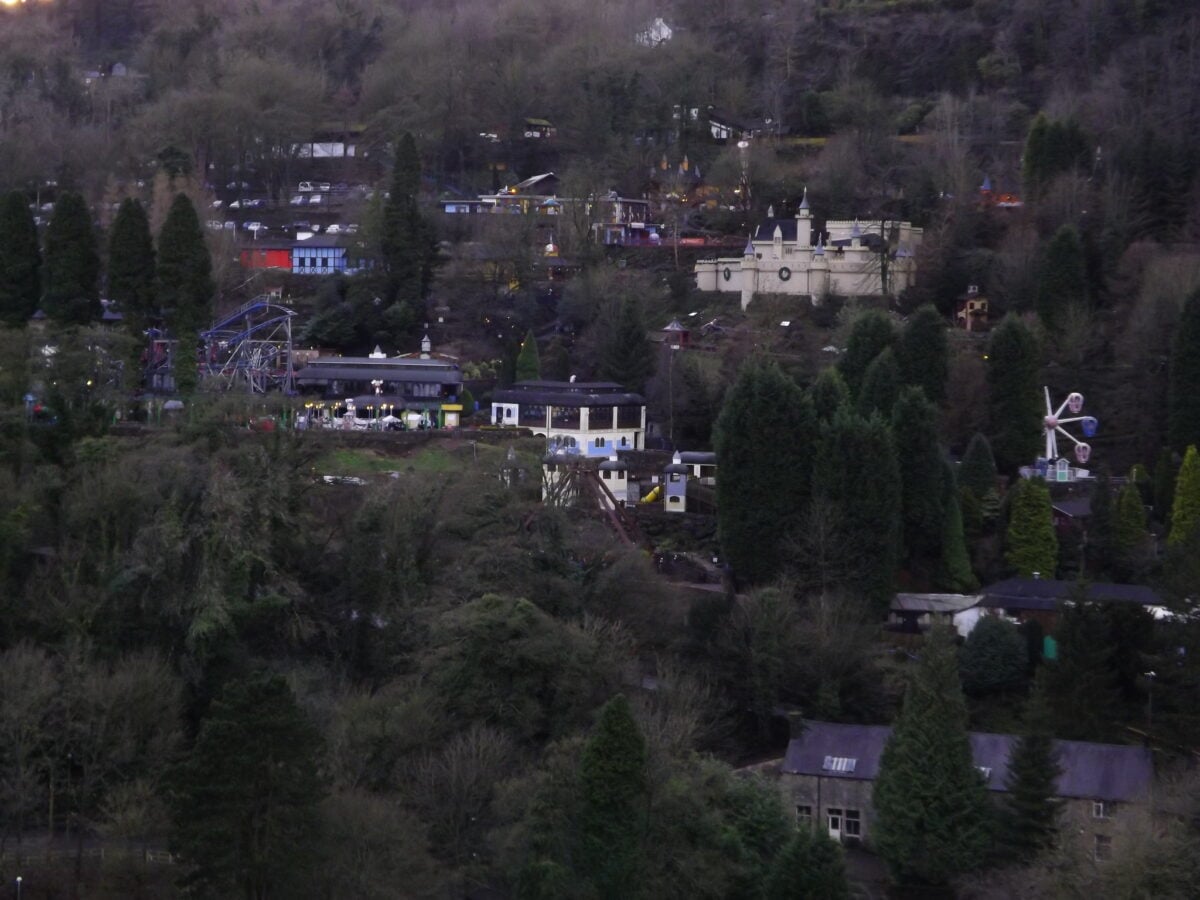
They built a theme park at the base of Mount Fuji. The centerpiece was a giant statue of Gulliver — as in Gulliver’s Travels — lying on his back with tiny Lilliputians climbing all over him.
Visitors could walk through the statue, climb on it, and presumably feel like they were part of Jonathan Swift’s satirical novel.
The park never found its audience. Maybe because the location was too close to Aokigahara Forest, which has its own dark reputation.
Maybe because the concept was too literary for a theme park audience, or too weird for families looking for straightforward fun. Maybe because giant statues of tied-down humans are inherently unsettling, regardless of their literary pedigree.
After a decade of poor attendance, they closed it down and left Gulliver lying there in the grass, slowly being overgrown by vegetation that makes him look even more like a fallen giant than the original designers intended.
Centralia, Pennsylvania
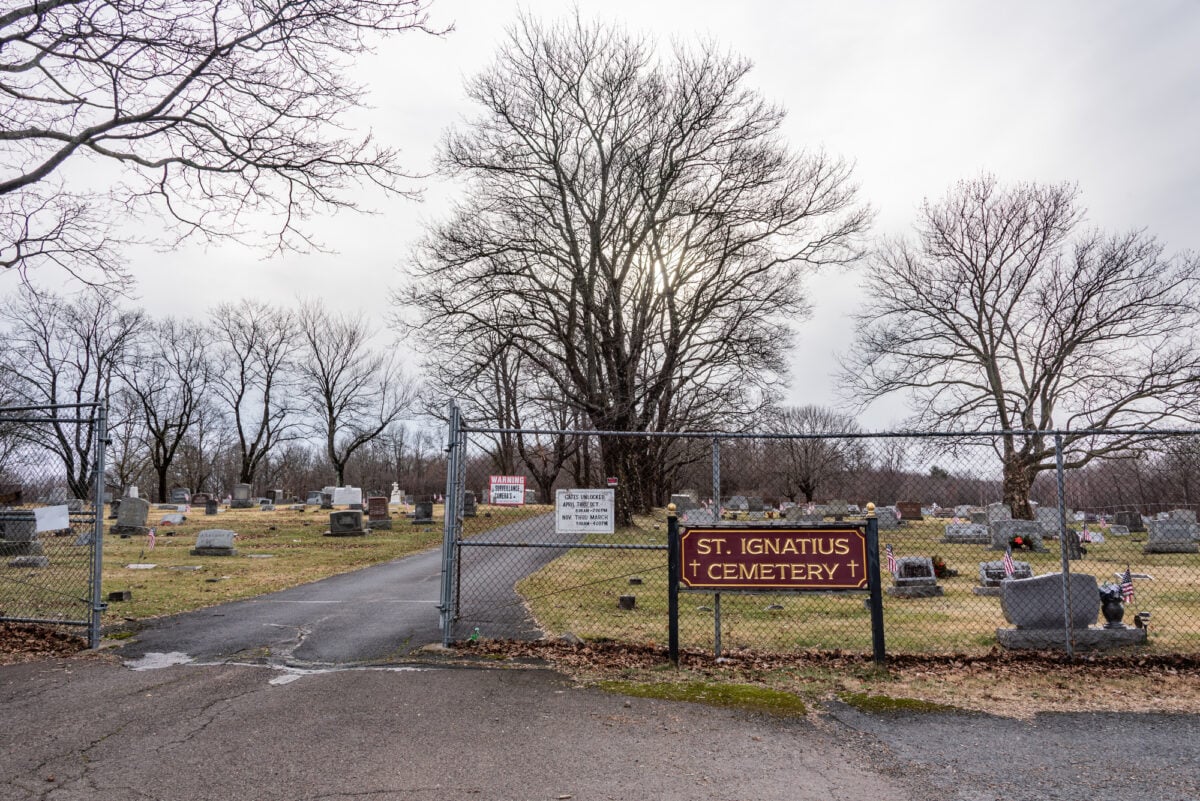
Pennsylvania is not in Asia. This is getting ridiculous.
Christ of the Abyss, Malta
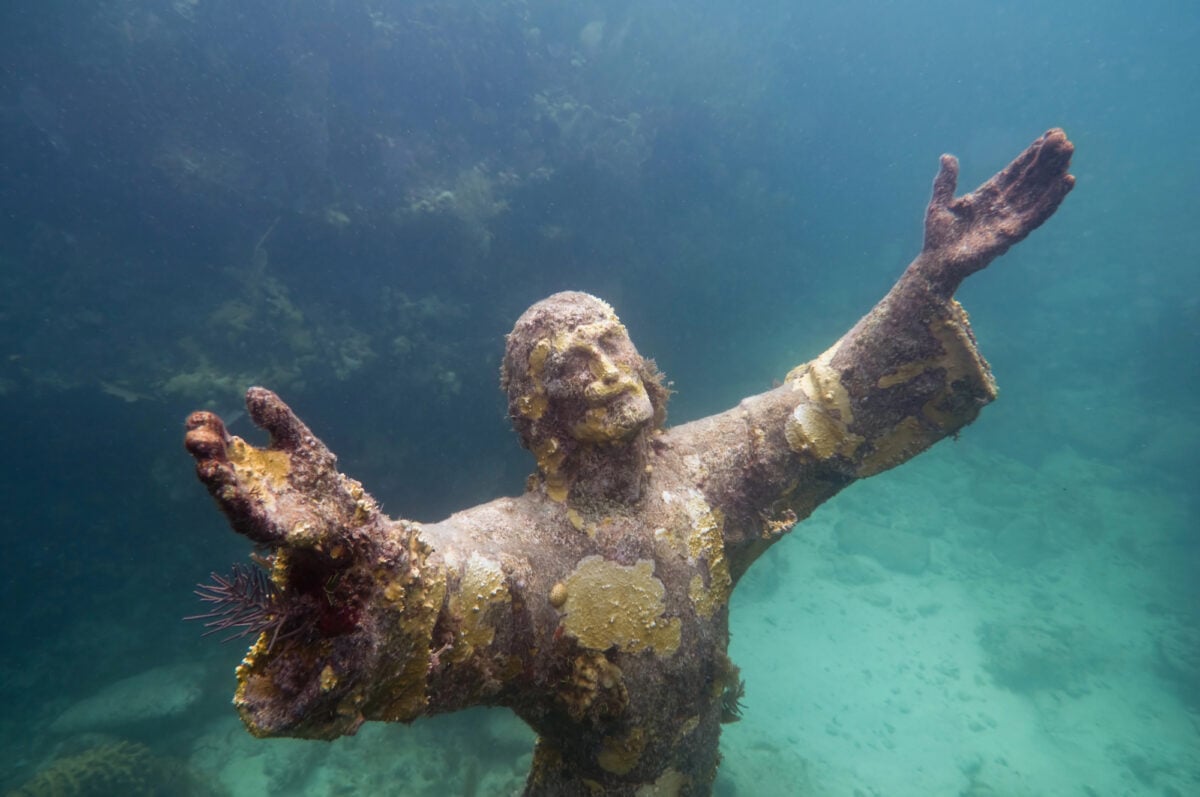
Also not Asia. Mediterranean.
Varosha, Cyprus
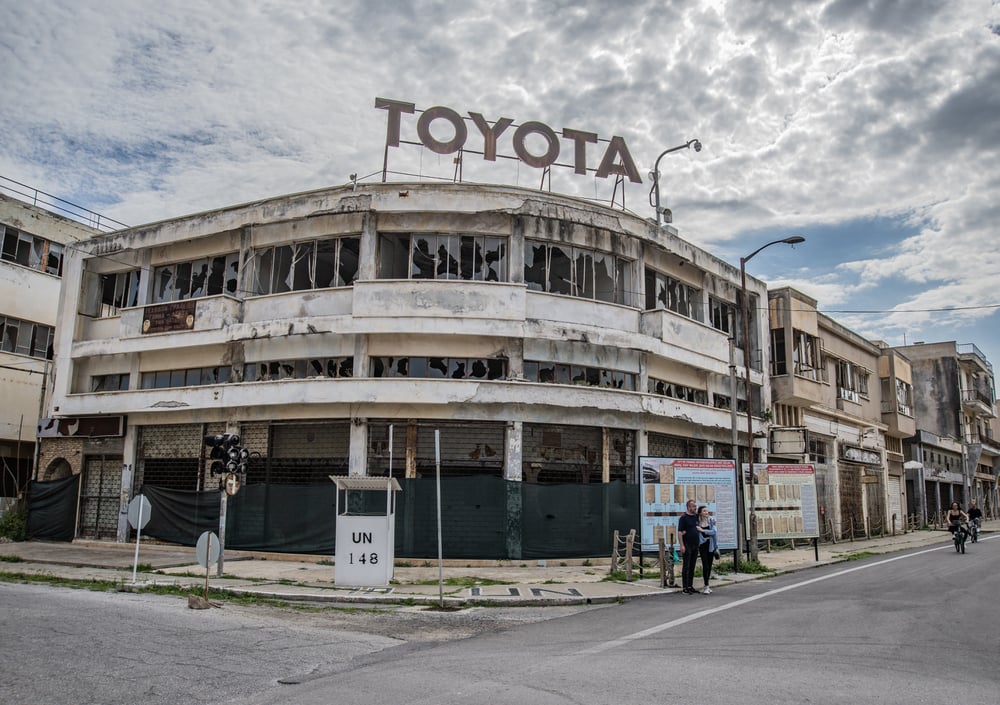
Still Europe.
New World Mall, Bangkok
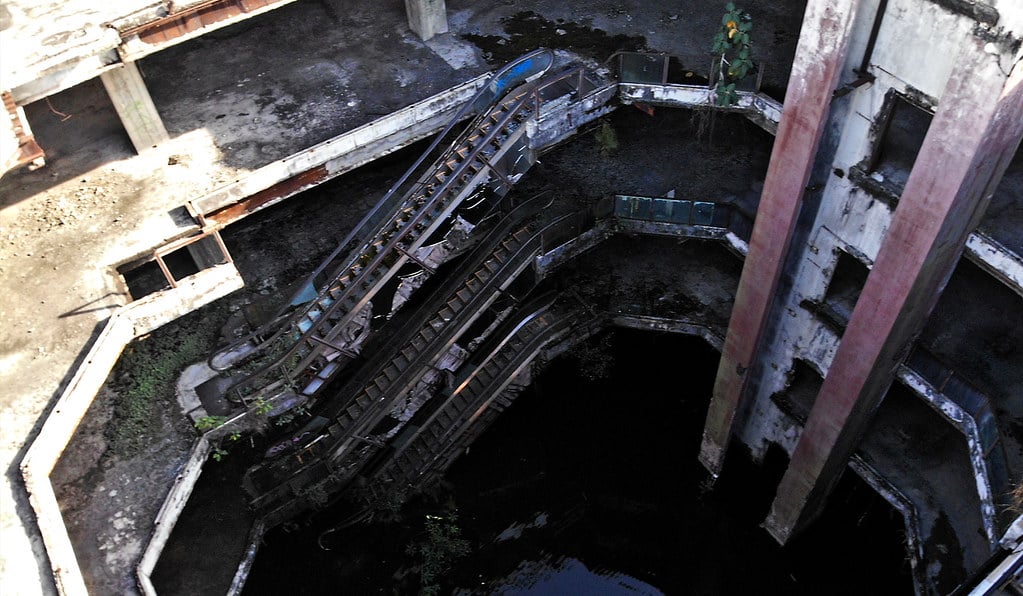
Shopping malls are supposed to be temples to consumption. This one became an aquarium by accident, which is either poetic justice or just what happens when you abandon a building in a place where it rains.
The New World Mall was a typical late-20th-century shopping center until it closed down in 1999 due to building code violations that made it unsafe for public occupancy.
The owners sealed it up and walked away, but Bangkok’s climate had other plans. The building flooded, repeatedly, until the basement level became a permanent pond that reflected the mall’s upper floors in ways that were definitely not part of the original architectural vision.
Someone introduced fish to the flooded areas — koi and catfish that have turned the abandoned mall into an ecosystem that functions better than the mall ever did as a commercial enterprise.
Locals come to feed the fish. Photographers come to capture something that looks like the future of retail after humans stop shopping.
The escalators still work, somehow. You can ride them up from the flooded basement to the upper floors, where empty storefronts remind you what this place used to be before it became something completely different.
Time Moves Differently In Empty Places
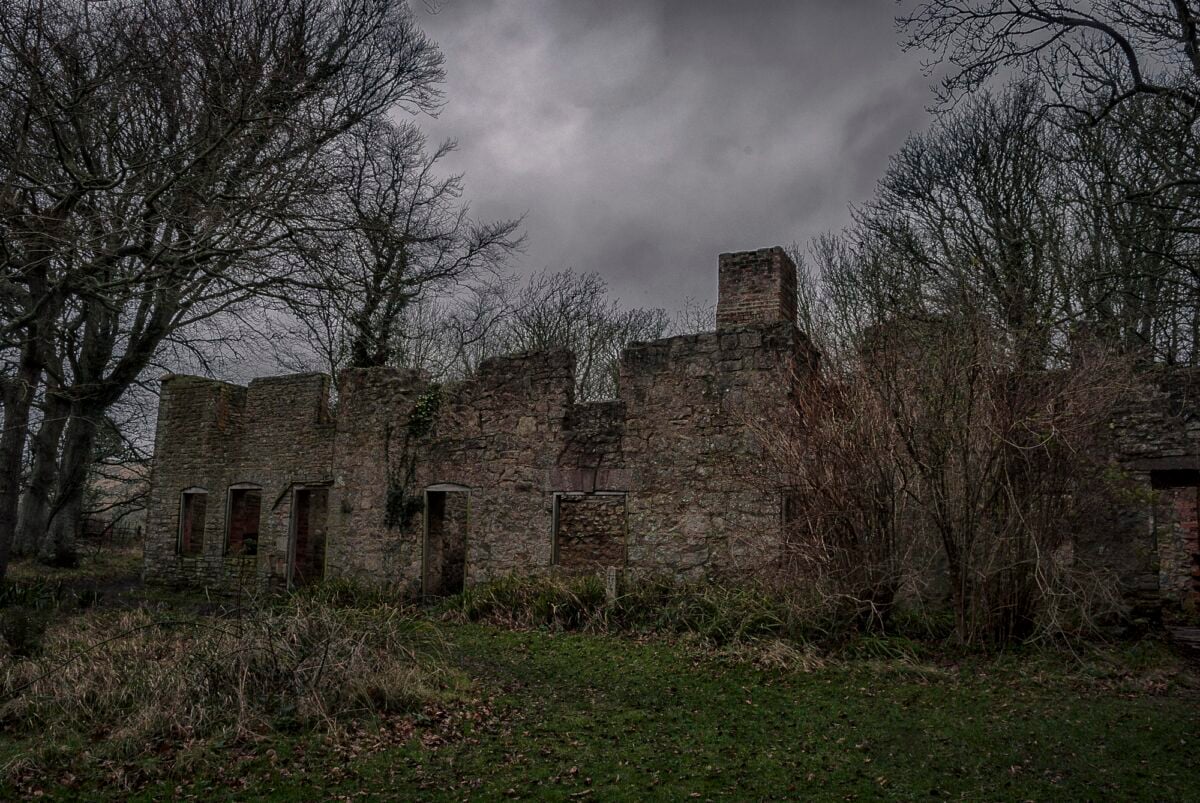
These abandoned locations share something beyond their obvious decay. They exist outside normal time, suspended in moments that refuse to move forward or backward.
The clocks stopped, but the places keep changing — just not in ways anyone intended. Rust spreads, vegetation claims territory, and weather performs its own renovations according to rules that have nothing to do with human plans.
That’s what makes them so compelling to photograph and so unsettling to experience. They’re proof that everything we build is temporary, but they’re also proof that temporary doesn’t mean gone.
These places have their own lives now, their own rhythms, their own reasons for existing that have nothing to do with their original purposes.
More from Go2Tutors!

- The Romanov Crown Jewels and Their Tragic Fate
- 13 Historical Mysteries That Science Still Can’t Solve
- Famous Hoaxes That Fooled the World for Years
- 15 Child Stars with Tragic Adult Lives
- 16 Famous Jewelry Pieces in History
Like Go2Tutors’s content? Follow us on MSN.



