Photos of Historic Buildings Rebuilt After Disasters
There is something deeply moving about watching a city rise again. When fire, floods, earthquakes, or wars tear through a place, the buildings that disappear take stories with them.
But the ones that come back carry even bigger ones. And really, nothing tells that story better than the photos sitting side by side, one showing the ruin, the other showing what people refused to let die.
Notre-Dame Cathedral, Paris
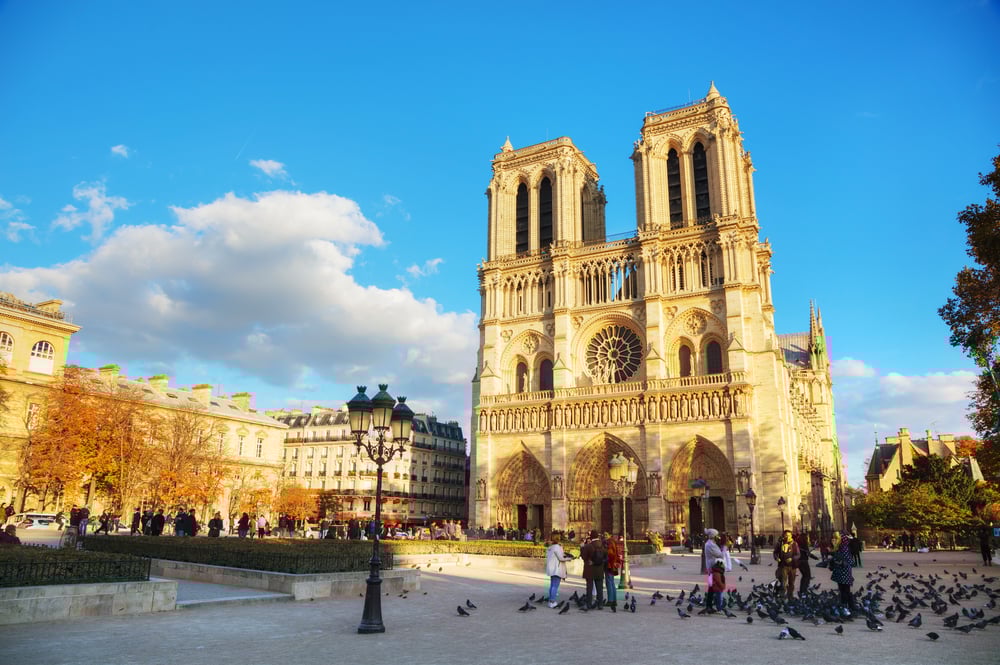
Notre-Dame caught fire in April 2019, and the world watched the spire collapse on live television. The damage was devastating, but the rebuild began almost immediately, drawing craftsmen and architects from across the globe.
Five years later, the cathedral reopened in December 2024, looking very much like itself again. The before-and-after images, one showing a smoldering shell and the other a restored Gothic masterpiece, became some of the most shared photos of the decade.
The Frauenkirche, Dresden

This Lutheran church was destroyed in the February 1945 bombing of Dresden and sat as a pile of rubble for decades. East Germany actually kept the ruins as a war memorial, which meant the rebuild only began after reunification in the 1990s.
Workers used original stones from the ruins wherever possible, so the ‘new’ building is technically part of the old one. The restored dome now towers over Dresden again, and the photos showing the dark original stones mixed with lighter new ones tell the whole story without a single word.
The City of Warsaw, Poland
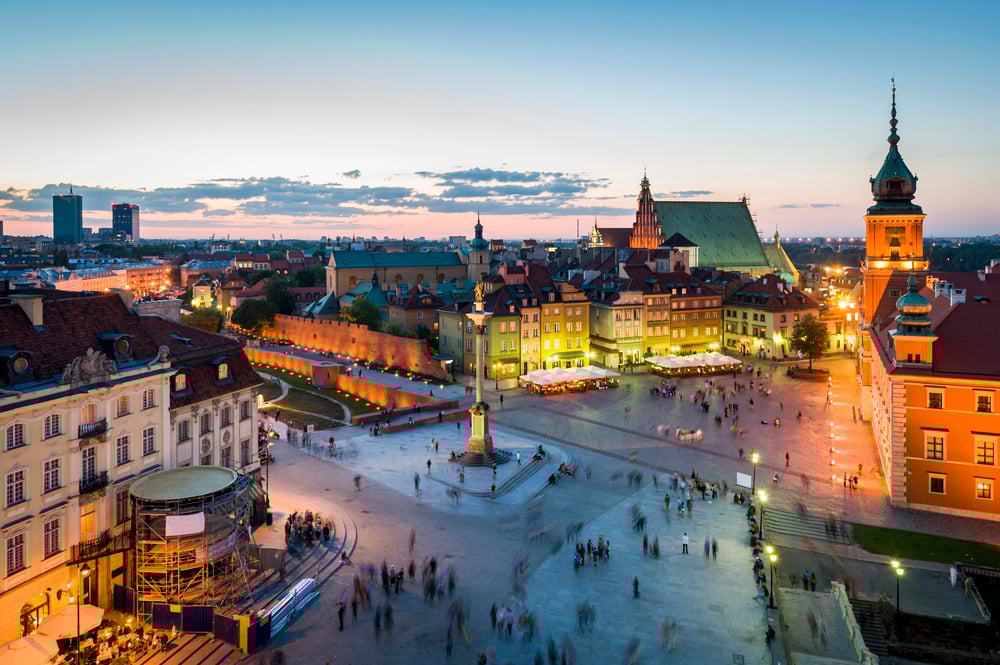
After World War II, Warsaw’s Old Town was roughly 85% destroyed. Poland rebuilt it almost entirely from scratch, using old paintings, photographs, and architectural drawings to get the details right.
The effort was so thorough and historically faithful that UNESCO added the reconstructed Old Town to its World Heritage List in 1980. The contrast between the black-and-white rubble photos and today’s colorful market square is almost hard to believe.
Ise Grand Shrine, Japan

Here is something interesting: this Shinto shrine in Mie Prefecture has been deliberately rebuilt from scratch every 20 years for over 1,300 years. It is not disaster-driven but intention-driven, a practice called Shikinen Sengu.
The idea is that the building stays new while the tradition stays ancient. Side-by-side photos of the old and new structures look nearly identical, which is the entire point.
The Uffizi Gallery, Florence

A car containing a large amount of explosives went off near the Uffizi in May 1993, killing five people and damaging hundreds of artworks. The Italian government and the public poured resources into the restoration, and the gallery reopened its damaged wing faster than most people expected.
Photos from right after the blast show blown-out windows and shattered stonework, a stark contrast to the calm, grand facade visitors see today. The restoration became a turning point in how Italy approached the protection of cultural heritage.
Christchurch Cathedral, New Zealand

The 2011 Canterbury earthquake badly damaged this Victorian-era cathedral, and the city has spent years arguing about what to do next. A temporary ‘cardboard cathedral’ was built nearby while debates continued, and it became famous in its own right.
Restoration of the original building is now underway after years of legal and political back-and-forth. The photos of the cracked towers and collapsed spire make the progress shots that much more satisfying to look at.
The Reichstag, Berlin

The Reichstag building was burned in 1933, badly bombed during World War II, and then sat neglected on the edge of the Berlin Wall for decades. After German reunification, architect Norman Foster was brought in to redesign it, and he added the now-famous glass dome on top.
The dome was not in the original building, making this a rebuild that also became something new. Photos of the bombed-out shell next to today’s gleaming, visitor-friendly dome capture one of architecture’s most dramatic turnarounds.
Hiroshima Peace Memorial, Japan
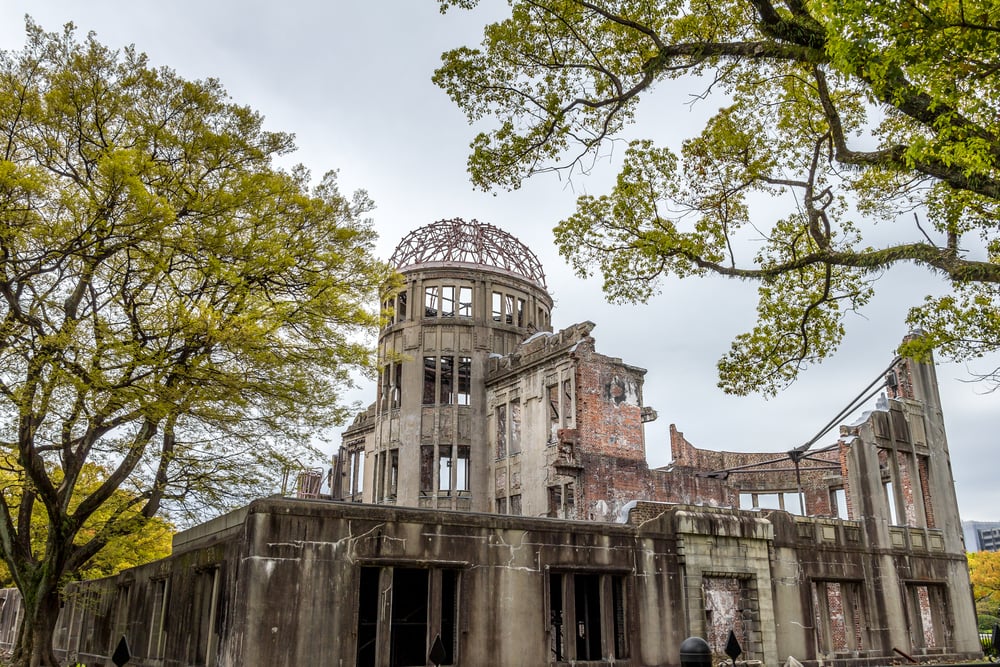
The Genbaku Dome was one of the few structures left standing near the hypocenter of the 1945 atomic bombing. Rather than rebuild it, Japan preserved the ruins as a permanent reminder.
Around it, though, Hiroshima rebuilt itself completely, and the contrast between the preserved ruin and the modern city behind it makes for one of the most striking visual narratives in architectural history. Photos from the 1940s and photos from today, placed side by side, show how much a city can recover.
The Lahaina Historic District, Hawaii

When wildfires swept through Lahaina in August 2023, they destroyed much of the town’s historic core, including buildings that dated back to the 19th century. It was the deadliest U.S. wildfire in over a century.
Recovery efforts and rebuilding debates are still ongoing, and the before-and-after photos circulating online carry a raw, recent weight that older disaster recoveries do not. The story of what Lahaina becomes next is still being written.
Galveston, Texas

After the 1900 hurricane, which remains the deadliest natural disaster in U.S. history with an estimated 8,000 deaths, Galveston rebuilt with serious upgrades. The city constructed a massive seawall and raised the grade of the island by pumping in sand, lifting some buildings by as much as 17 feet.
Photos from right after the storm show total destruction across the coastal neighborhoods. The fact that Galveston still exists, with its Victorian buildings intact, is largely down to that reconstruction effort.
Greensburg, Kansas

One night in 2007, a tornado wiped out almost everything in this tiny Kansas community. Rather than copy the old layout, Greensburg chose a different path – focusing on sustainability from the ground up.
Nearly every public building now hits the highest level of LEED certification. First came pictures of rubble, then shots of sleek, smartly designed homes and offices rising in their place.
San Francisco Civic Center

Whole chunks of San Francisco vanished when the ground shook and flames spread in 1906, taking down nearly every government building. Afterward, officials shaped a new heart for the city using Beaux-Arts designs popular back then, so today’s Civic Center stands bold with stately structures rooted in that era.
Snapshots from just after the disaster reveal blocks flattened to nothing, yet now the towers rising there seem to whisper resistance without saying a word. Work moved quickly because leaders refused to let the city fade, pushing hard to keep it central among America’s key urban centers.
Coventry Cathedral, England
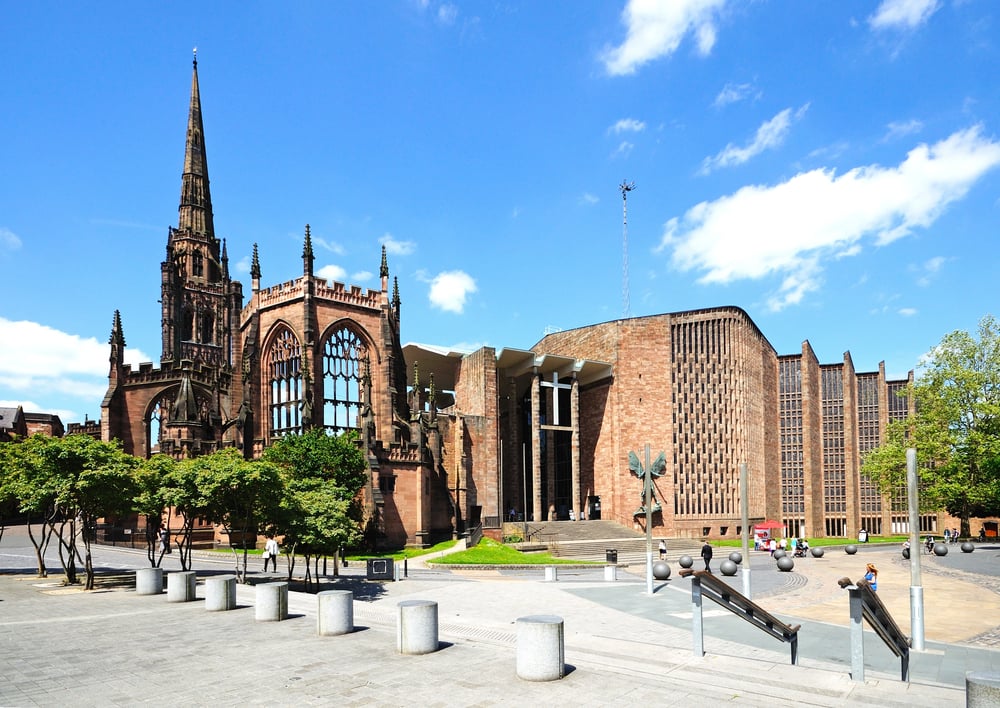
In November 1940, German bombs tore through Coventry Cathedral, sparing just the outside walls and tower. Instead of clearing away the wreckage, locals chose to preserve it, placing a fresh cathedral right alongside.
Architect Basil Spence shaped the new structure so it links straight into the remains, guiding people from one into the other. Images of the hollowed-out shell sitting beside sharp-edged modern lines serve as quiet proof – scars can remain open even when moving forward.
The White House, Washington, D.C.

Fire from British troops turned the president’s house into a shell, its inside destroyed, outside stained dark. Rebuilding finished by 1817 brought fresh work – walls coated thick in white paint to hide scars underneath.
A few experts think that act might explain how it earned its famous color-name over time. Pictures showing those repairs hardly exist today. Yet this moment remains one odd truth behind America’s best-known residence.
Chicago After the Great Fire

Flames tore through Chicago for forty-eight hours in 1871, wiping out more than three square miles of buildings. Out of the ashes came an intense wave of reconstruction, pulling talent from across the globe who helped shape what we now recognize as the modern high-rise.
Instead of slowing down, the city sped up – turning rubble into a testing ground for bold designs. When you compare old pictures of charred blocks with shots from ten years on, the change feels almost unreal.
When Ruins Become the Record
Before and after shots of these structures go beyond blueprints or plans. What stands in frame reveals choices – what people hold onto, what gets reshaped, yet also what stubbornly remains.
Certain towns reassembled facades exactly, matching old bricks one at a time. Elsewhere, ruin became space to imagine different shapes rising up. Still, each photograph holds gravity; newer walls cannot match, whispering across years: endings often feel heavy because they’re really tough starting lines.
More from Go2Tutors!

- The Romanov Crown Jewels and Their Tragic Fate
- 13 Historical Mysteries That Science Still Can’t Solve
- Famous Hoaxes That Fooled the World for Years
- 15 Child Stars with Tragic Adult Lives
- 16 Famous Jewelry Pieces in History
Like Go2Tutors’s content? Follow us on MSN.