Politicians Whose Names Became Everyday Words
Language has a funny way of capturing history. Sometimes a person does something so memorable—or notorious—that their name stops being just a name.
It becomes a verb, an adjective, a concept that outlives them by centuries. Politicians seem particularly good at this.
Maybe it’s because they make decisions that affect so many people, or maybe it’s because their actions are just too distinctive to forget. The words these politicians left behind tell stories.
Some are warnings. Others are jokes that stuck around long after the punchline stopped being funny.
And a few are just accidents of history that happened to land in the dictionary.
Gerrymandering

Elbridge Gerry was a founding father, a signer of the Declaration of Independence, and the ninth Vice President of the United States. But what he’s remembered for most is a salamander-shaped voting district he approved while serving as governor of Massachusetts in 1812.
The district stretched and twisted across the state, designed to keep Gerry’s Democratic-Republican Party in power. When a local newspaper printed a cartoon of the district with claws, wings, and a dragon’s head, someone called it a “Gerry-mander.”
The name stuck instantly, even though Gerry himself wasn’t the mastermind behind the plan. Gerry died two years later while serving as vice president.
The practice named after him is still going strong.
Silhouette

Étienne de Silhouette served as France’s Controller-General of Finances in 1759, right when the country was losing money from the Seven Years’ War. His solution was simple: tax the rich and cut spending everywhere else.
The French aristocracy hated him. Within eight months, he was out of a job.
But the mockery continued. Anything cheap or poorly made became “à la Silhouette.” One theory suggests that the simple black profile portraits popular at the time—cheaper than painted portraits—got labeled as silhouettes because they were the thrifty option.
Silhouette probably would have preferred to be remembered for his economic reforms. Instead, he’s remembered for an art form he had nothing to do with.
McCarthyism

Senator Joseph McCarthy stood before a crowd in Wheeling, West Virginia, in 1950 and claimed to have a list of communists working in the U.S. State Department. He waved papers in the air.
The number of names on his list kept changing—205, 81, 57—depending on when he was asked. What followed was four years of accusations, hearings, and ruined careers.
McCarthy targeted Hollywood, universities, and government agencies. Most of his charges were baseless. But fear spread faster than facts, and the senator kept talking.
By 1954, the Senate had censured him. He died three years later at 48. The term “McCarthyism” now means making accusations without evidence, particularly about disloyalty or subversion.
It’s used across the political spectrum, which McCarthy himself probably wouldn’t have appreciated.
Machiavellian

Niccolò Machiavelli never held high office himself, but he spent years as a diplomat and political advisor in Renaissance Florence. After the Medici family took power in 1512, he found himself out of work, arrested, and tortured on suspicion of conspiracy.
While in exile, he wrote “The Prince,” a handbook for rulers that advised leaders to be pragmatic rather than moral. Better to be feared than loved.
The ends justify the means. Cruelty, when necessary, should be swift and effective. The book was published five years after his death in 1527.
By the end of the century, “Machiavellian” meant cunning, scheming, and unscrupulous. Machiavelli probably intended his book as practical advice based on how politics actually worked, not how people wished it worked.
But nuance rarely makes it into the dictionary.
Draconian
Draco was an Athenian lawmaker in the 7th century BCE who created Athens’ first written legal code. Before Draco, laws were oral traditions interpreted by aristocrats who could make up the rules as they went along.
Draco changed that by writing everything down. The problem was what he wrote. Almost every crime carried the death penalty.
Steal a cabbage? Death. Late on a debt? Death.
Someone asked him why he made the laws so harsh. He supposedly said that small crimes deserve death, and he couldn’t think of anything worse for serious crimes.
The laws were so unpopular that most of them got repealed within a generation. Only the homicide laws survived.
But the word “draconian” stuck around to describe any law or rule that seems unreasonably harsh. Draco got his name in the dictionary, even if his legal code didn’t last.
Quisling
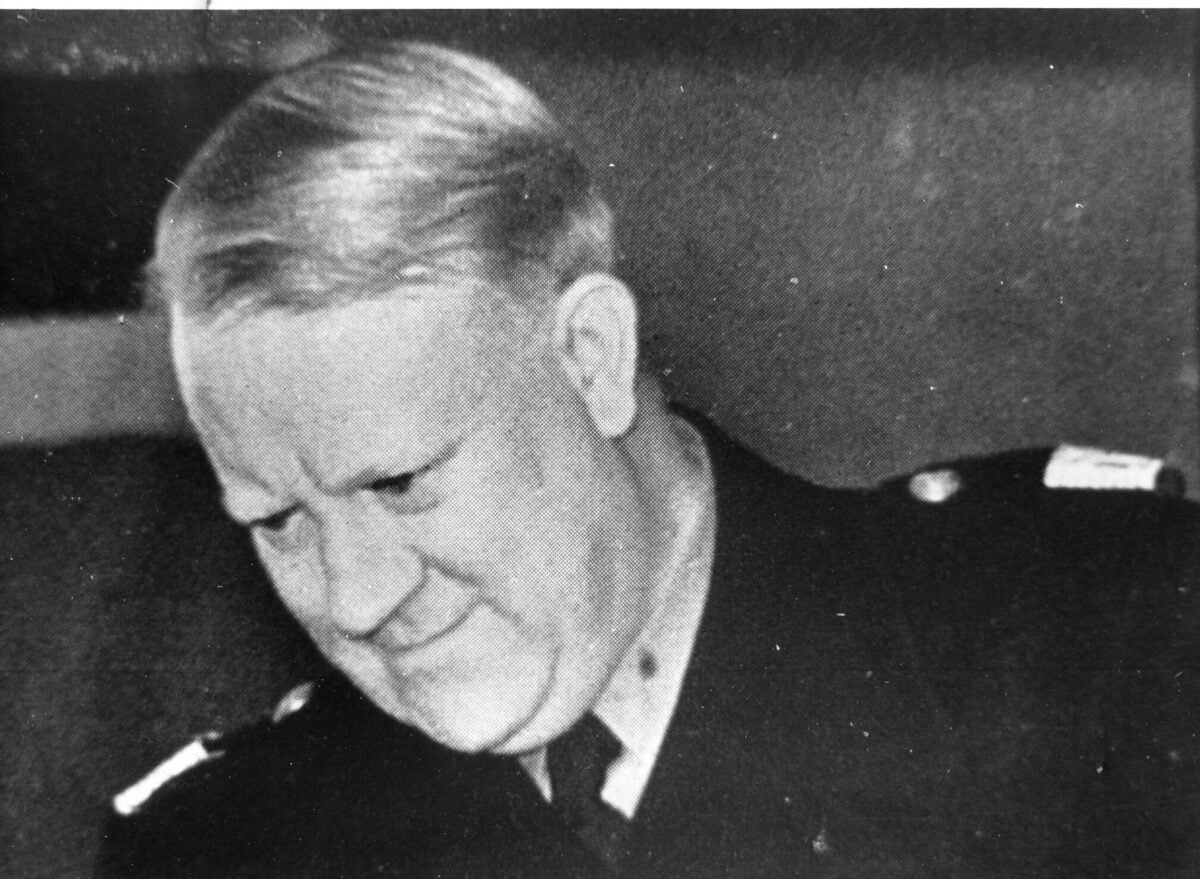
Vidkun Quisling was a Norwegian military officer and politician who founded the fascist Nasjonal Samling party in 1933. When Nazi Germany invaded Norway in April 1940, Quisling tried to seize power by declaring himself head of a new pro-German government.
The Norwegian government rejected him, but the Germans found him useful. They installed him as Minister-President in 1942, making him the face of occupied Norway.
He spent the war enforcing Nazi policies and sending Norwegian Jews to concentration camps. After Germany’s surrender, Quisling was arrested, tried for treason, and executed by firing squad in October 1945.
Within months, “quisling” had entered English as a term for traitor or collaborator. Norway still uses it the same way. It’s one of the fastest journeys from proper name to common noun in linguistic history.
Guillotine

Joseph-Ignace Guillotin was a French physician and politician who opposed the death penalty. That makes it ironic that his name is permanently attached to a killing machine.
During the French Revolution, Guillotin proposed that executions should be carried out humanely and equally, regardless of social class. At the time, nobles were beheaded with a sword, while commoners were hanged or broken on the wheel.
He suggested a mechanical beheading device that would be quick and painless. The National Assembly adopted his proposal in 1791.
A German engineer named Tobias Schmidt built the actual machine, but people started calling it “the guillotine” after the doctor who recommended it. Guillotin spent the rest of his life trying to distance himself from it. His family later petitioned the French government to change the name.
The government refused, so the family changed their own name instead.
Sandwich

John Montagu, the 4th Earl of Sandwich, served in various British government positions including First Lord of the Admiralty and Secretary of State for the Northern Department.
He was also an enthusiastic gambler who supposedly didn’t want to leave the card table for meals. The story goes that in 1762, he asked for meat to be served between two slices of bread so he could keep playing.
Others at the table started ordering “the same as Sandwich,” and the name caught on. The story is probably too neat to be entirely true.
Putting meat between bread wasn’t new, and Montagu was known more for his work ethic than his gambling. But the name stuck anyway.
Montagu would be shocked to know he’s more famous for a lunch item than for his political career or his patronage of Captain Cook’s voyages.
Reaganomics

Ronald Reagan served as president from 1981 to 1989, bringing with him an economic philosophy that mixed tax cuts, reduced government spending on social programs, and deregulation. The press called it “Reaganomics,” and the term spread fast.
The idea was that cutting taxes would stimulate economic growth, which would eventually increase tax revenue. Critics called it “trickle-down economics” and argued it mostly helped the wealthy.
Supporters pointed to the economic expansion of the 1980s as proof it worked. The debate over Reagan’s economic policies hasn’t stopped.
But the word “Reaganomics” stuck around as shorthand for supply-side economics, whether you think those policies were brilliant or disastrous. Reagan’s name became a permanent part of political vocabulary before he left office.
Thatcherism
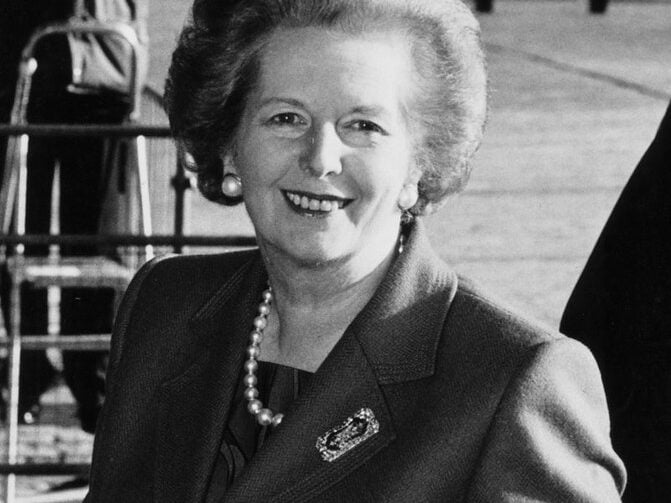
Margaret Thatcher served as British Prime Minister from 1979 to 1990, making her the longest-serving PM of the 20th century. Her economic policies—privatization, reduced trade union power, and free-market capitalism—came to be called “Thatcherism.”
She sold off state-owned industries, broke the power of striking coal miners, and cut taxes while reducing social spending. Some saw her as a savior who rescued Britain from economic decline.
Others saw her as ruthless and uncaring about working-class communities. Like Reagan, Thatcher’s name became an “-ism” while she was still in power.
Politicians today still describe themselves as Thatcherites or anti-Thatcherites. She reshaped British politics so thoroughly that even her opponents had to define themselves in relation to her policies.
Sideburns

Ambrose Burnside was a Union general during the American Civil War who later served as governor of Rhode Island and as a U.S. Senator. He was a competent administrator but a mediocre military commander, which became painfully clear at the Battle of Fredericksburg in 1862.
What he was truly memorable for was his facial hair. Burnside wore distinctive mutton chop whiskers that connected to his mustache but left his chin clean-shaven.
The style became popular, and people started calling them “burnsides.” Over time, the word flipped around to “sideburns,” probably because the hair was on the sides of the face.
Burnside died in 1881, having served as a senator and railroad executive. But his real legacy lives on every time someone decides to grow out their sideburns.
Maverick

Samuel Maverick lived in Texas during the 1800s, working as a lawyer while getting involved in politics. Instead of just focusing on law, he joined the state’s legislative group and put his name on the Texas Declaration of Independence.
Beyond government work, he managed livestock – but did things differently when it came to marking calves.
Rather than branding them like most ranchers, he skipped the process altogether. Many ranchers marked cows with a sign to prove they owned them.
Instead, Maverick said no – thought it caused pain to the animals. Others around him weren’t so sure; figured he might take any calf without marks.
Without clear signs on the livestock, each lost one could end up his by choice. Some saw him as honest, others just clever – either way, he stood apart from the crowd.
Being called a maverick means thinking for yourself, not copying what everyone else does. These days, it’s meant nicely; back then, local cattle owners probably said it with a sneer.
When Names Outlive Legacies

Most politicians want folks to recall what they got done – laws pushed through, changes backed, tough moments handled. Yet occasionally, people only remember them for one single phrase.
Gerry wasn’t the one who started gerrymandering – still, people link him to it. Guillotin actually hated capital punishment; even so, his name got tied to the machine.
Silhouette aimed to fix France’s money troubles yet wound up naming low-cost drawings. Sometimes, what you mean versus what sticks feels oddly funny.
Yet these terms stick around – they point to ideas we actually need labels for. Not only do they describe habits or attitudes, but also fit them perfectly in a way nothing else could.
This is the odd strength of speech: it grabs someone, ditches the background noise, then keeps only what truly matters. Sometimes that core idea works like a caution.
Other times, it’s more of a tease. Yet now and then, it simply hints that memory keeps what suits it, not what you’d prefer.
More from Go2Tutors!

- The Romanov Crown Jewels and Their Tragic Fate
- 13 Historical Mysteries That Science Still Can’t Solve
- Famous Hoaxes That Fooled the World for Years
- 15 Child Stars with Tragic Adult Lives
- 16 Famous Jewelry Pieces in History
Like Go2Tutors’s content? Follow us on MSN.