Rare Coins and Currency Worth a Fortune
Walking past a coin collection at an estate sale or finding old bills in an attic trunk usually means nothing special. But sometimes, what looks like pocket change turns out to be worth more than a house.
The difference between worthless and priceless often comes down to tiny details that most people never notice.
The 1794 Flowing Hair Silver Dollar Sets Records

The first silver dollar ever minted by the United States sold for over $10 million in 2013. Only about 1,750 of these coins were produced, and fewer than 150 survive today.
The specimen that broke records shows a woman with flowing hair on one side and an eagle on the other. What makes this particular coin so valuable goes beyond its age.
Experts believe this specific dollar was among the very first struck at the Philadelphia Mint. The quality of the strike stands out compared to other surviving examples.
Collectors prize first strikes because they capture history at its exact beginning.
The 1933 Double Eagle Never Circulated

The U.S. government ordered nearly half a million gold Double Eagles minted in 1933, then destroyed almost all of them. President Roosevelt had just banned private gold ownership, making the coins illegal to possess.
Only a handful escaped destruction, and owning one remained a federal crime for decades. One coin surfaced in the hands of King Farouk of Egypt, giving it a legitimate claim to exist.
After years of legal battles, that coin sold at auction for over $7 million. The government still considers most surviving examples stolen property.
A few have been tracked down and confiscated over the years.
Five Liberty Head Nickels From 1913 Create Mystery
The U.S. Mint never officially produced Liberty Head nickels in 1913. They had already switched to the Buffalo nickel design that year.
Yet five specimens exist, and nobody knows exactly how they came to be. A mint employee probably struck them secretly, though that remains speculation.
All five coins stayed together for years before being sold separately. Each one now sits in a different collection, and they rarely come up for sale.
When one does appear at auction, bidding easily reaches seven figures. The mystery around their creation adds to their appeal.
Collectors love a good story, and these nickels deliver one that has never been fully explained.
The 1804 Silver Dollar Carries Presidential History

This coin wasn’t actually minted in 1804. The U.S. Mint produced them in the 1830s as diplomatic gifts for foreign dignitaries.
They backdated the coins to 1804 to match the year on official mint records. Only 15 specimens are known to exist, divided into three distinct classes based on when and why they were struck.
These dollars traveled with American diplomats to places like Siam and Muscat. Some ended up in royal collections abroad.
Others stayed in the United States and changed hands among wealthy collectors. One sold for over $4 million, making it one of the most expensive coins ever auctioned.
An English Florin From 1343 Breaks Medieval Records

The Edward III florin represents medieval English coinage at its finest. Only three examples survive today.
Made of gold during the reign of King Edward III, this coin predates the discovery of America by 150 years. Two of the three known specimens reside in the British Museum.
The third sold at auction for £480,000. Medieval coins rarely survive in good condition because people used them heavily.
Gold coins especially got melted down for their metal content during economic crises. Finding a medieval coin in excellent preservation requires extraordinary luck.
Most show significant wear or damage from centuries of handling and storage.
The Brasher Doubloon Comes From Early America

Ephraim Brasher, a New York goldsmith and neighbor of George Washington, created his own gold coins in 1787. The new United States didn’t yet have an official mint, so private individuals filled the gap.
Brasher stamped his initials “EB” on each coin he produced. Only seven Brasher doubloons are known to exist. One sold for nearly $7.4 million.
These coins hold special significance because they represent America’s transition from British currency to an independent monetary system. Collectors view them as tangible pieces of Revolutionary-era history.
Brasher’s craftsmanship was exceptional. The weight and purity of the gold match the standards of Spanish doubloons circulating at the time.
He wanted his coins to be trusted and accepted in commerce.
The 1343 Edward III Gold Penny Stands Alone
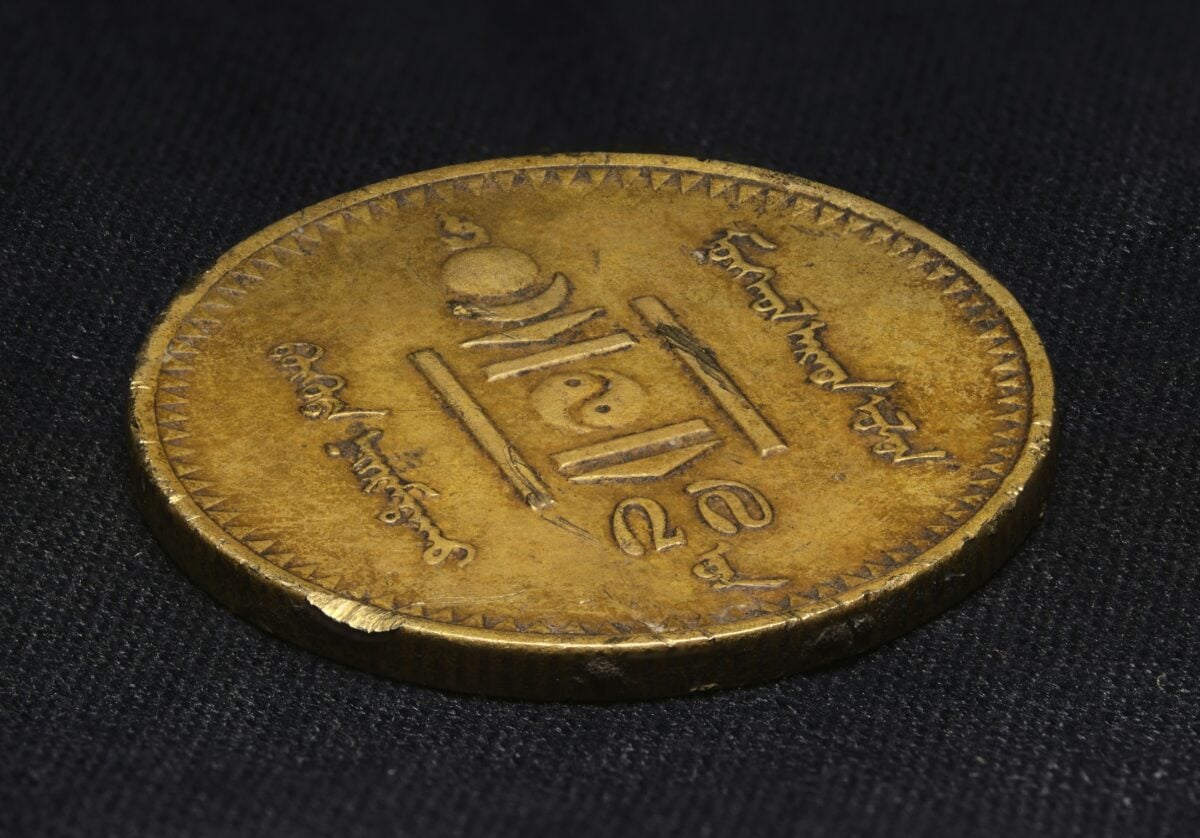
This coin exists as the only known example of its kind. The British Museum discovered it in 1857 among a collection of coins donated decades earlier.
For years, scholars debated whether it was genuine or a later forgery. Modern analysis confirmed its authenticity.
The Edward III gold penny represents an experimental denomination that England abandoned almost immediately. The rarity of a single surviving specimen makes it nearly impossible to value accurately.
Museums consider it priceless. Private collectors could never legally purchase it, as British law prevents national treasures from leaving the country.
Similar unique specimens rarely if ever come to market.
Canada’s Million Dollar Coin Weighs 100 Kilograms

The Royal Canadian Mint created this massive gold coin in 2007 as a showpiece. It contains 100 kilograms of pure gold and measures over half a meter in diameter.
At the time of creation, the gold alone was worth about $1 million. With today’s gold prices, the metal value exceeds $6 million.
Originally meant as a one-time promotional piece, the mint received orders from collectors who wanted their own. They’ve produced several since then.
These coins don’t circulate as currency. They serve as investments and spectacular additions to private collections.
Moving one requires special equipment. The sheer weight makes display and storage challenging.
Insurance costs alone make ownership impractical for most people.
The 1943 Bronze Penny Shouldn’t Exist
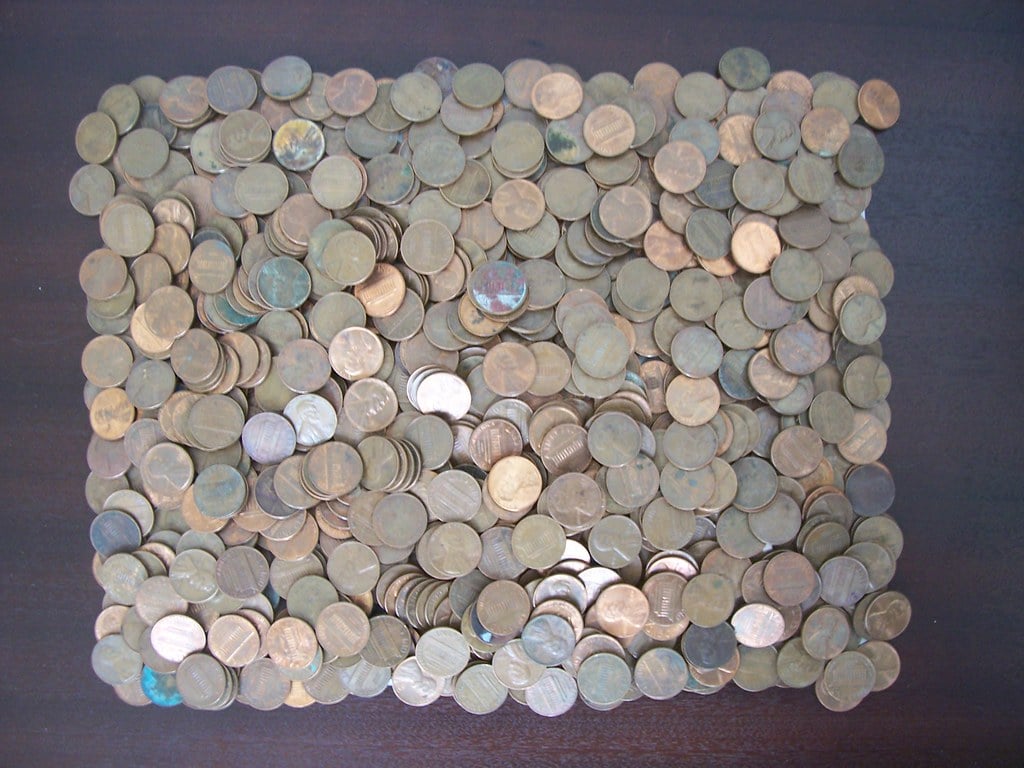
During World War II, the U.S. Mint switched from copper to steel for penny production. The copper was needed for ammunition and military equipment.
But a few bronze planchets from 1942 accidentally got mixed into the 1943 production run. Fewer than 20 bronze pennies from 1943 are confirmed to exist.
For decades, the mint insisted they didn’t exist at all. People who found them faced accusations of altering the dates on 1948 pennies.
Eventually, authentication confirmed several specimens were genuine. One sold for over $1 million.
The coin looks nearly identical to a regular penny at first glance. Only the color gives it away—steel pennies have a silvery appearance, while the errors show the characteristic copper-brown color.
The 1822 Half Eagle Remains Nearly Unobtainable

Only three examples of the 1822 Half Eagle gold coin exist. Two belong to the Smithsonian Institution.
The third sits in a private collection. That third coin last sold in 1982 for $687,500.
If it came to market today, experts estimate it would fetch tens of millions. The extreme rarity combined with the historical significance of early American gold coinage creates extraordinary demand.
Collectors know they have essentially no chance of ever acquiring one. The Smithsonian will never sell its specimens.
The private owner shows no interest in selling. This creates a situation where the coin exists more in theory than in practice for potential buyers.
Singapore’s $10,000 Note Stopped Production

Singapore issued $10,000 notes from 1973 until 2014. The government discontinued them due to money laundering concerns.
These large-denomination notes made it easy to transport huge sums of cash without detection. Financial regulators worldwide have moved away from high-value currency.
The notes remain legal tender, but Singapore stopped printing them. As time passes and notes get damaged or removed from circulation, surviving examples become scarcer.
Well-preserved specimens command premiums over face value from collectors. The artwork on these notes showcases Singapore’s financial district.
The quality of the printing and security features represents sophisticated currency design. Collectors prize them both for their scarcity and their technical excellence.
The Grand Watermelon $1,000 Bill Shows Stunning Design
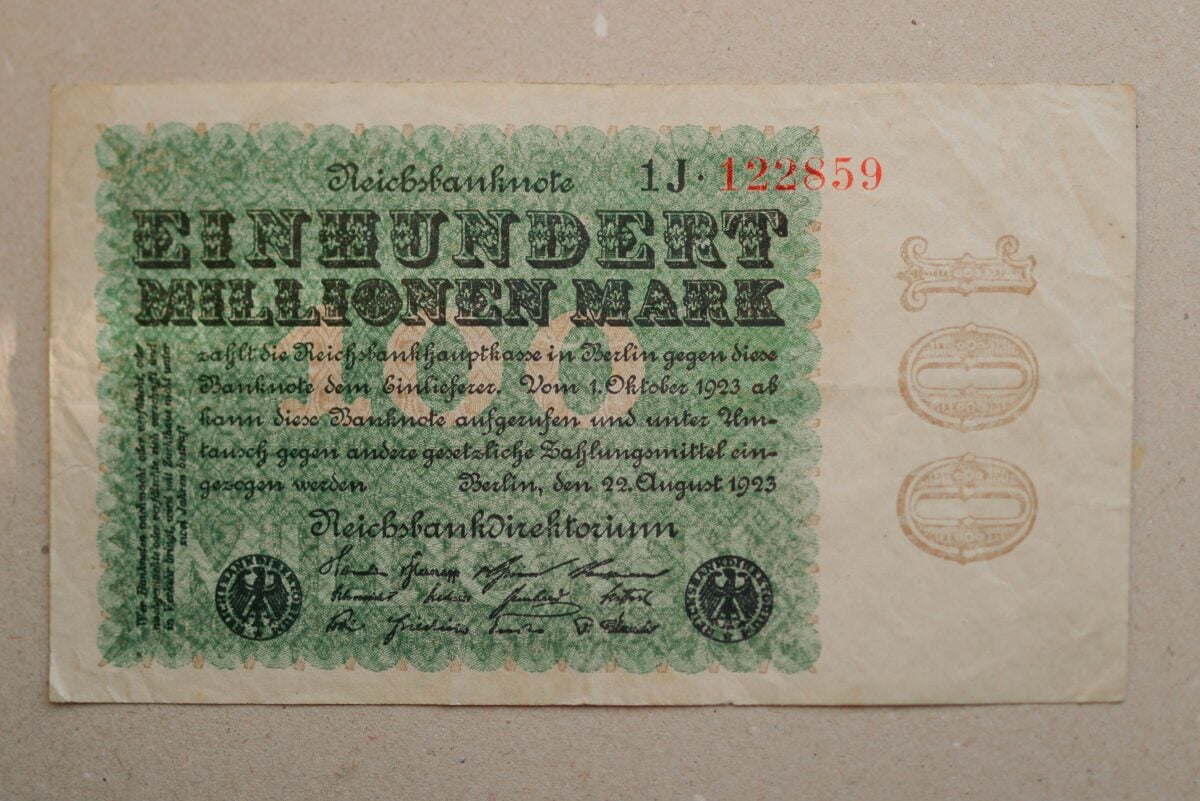
This 1890 treasury note gets its nickname from the zeros on the reverse, which resemble watermelons. Only seven examples are known to exist.
The elaborate engraving and rich colors make it one of the most beautiful pieces of U.S. currency ever printed. One sold for over $3 million.
The note represents a brief period when the U.S. experimented with highly ornate currency designs. These large-denomination notes rarely circulated.
Most went directly into bank vaults and stayed there. The printing techniques used in 1890 allowed for more detailed artwork than modern security printing.
Engravers spent months creating the plates by hand. The result was more art than simple currency.
Zimbabwe’s Hyperinflation Creates Collectible Absurdity
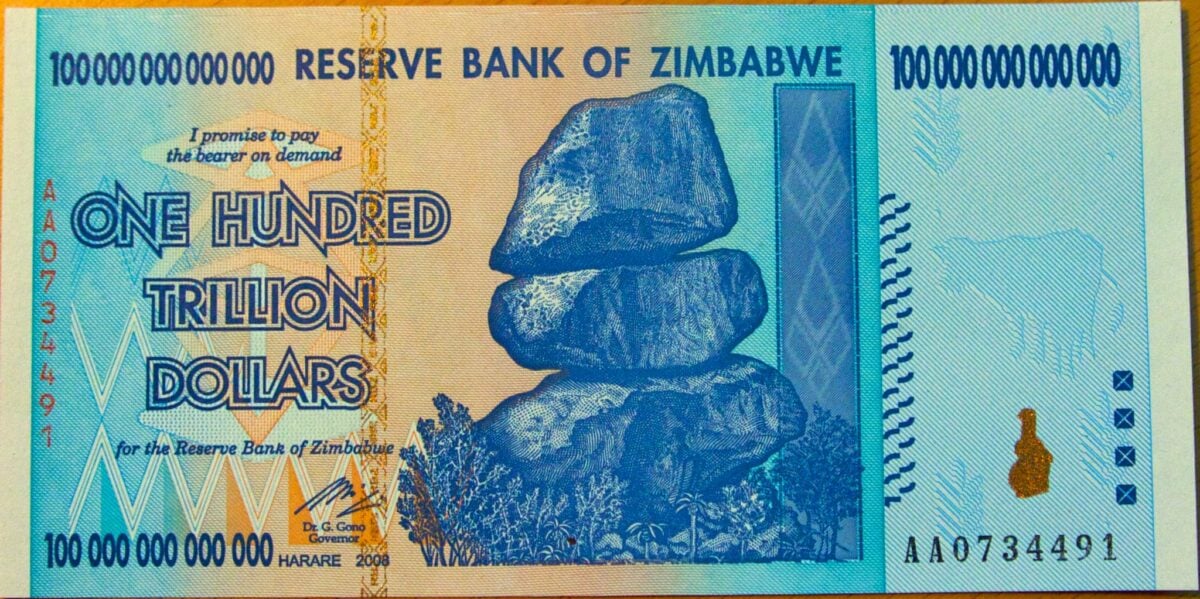
Zimbabwe printed a $100 trillion note in 2008 during one of history’s worst hyperinflation episodes. Prices doubled every day at the peak.
The currency became worthless almost as fast as it was printed. People needed wheelbarrows full of cash to buy bread.
These notes now sell for $5 to $50 to collectors. The absurdity of a $100 trillion bill appeals to people who want tangible proof of economic catastrophe.
The notes serve as educational tools and conversation pieces. The Zimbabwe dollar was eventually abandoned entirely.
The country now uses foreign currencies. The hyperinflation notes remain as souvenirs of a financial crisis that destroyed an economy.
Why Tiny Differences Matter More Than Age

A coin from last year can be worth more than one from two centuries ago. Rarity determines value far more than age does.
Millions of wheat pennies from the 1940s exist, making them worth almost nothing despite being old. A rare variety from the same era can be worth thousands.
Condition plays an enormous role too. A slightly worn rare coin might be worth half of what a pristine example commands.
Serious collectors obsess over tiny scratches, cleaning damage, and environmental toning. The difference between a grade of 64 and 65 on a 70-point scale can mean tens of thousands of dollars.
Provenance matters as well. Coins from famous collections or with interesting histories bring higher prices.
A coin that once belonged to a king or a legendary collector carries prestige that adds value beyond the coin itself.
The Hunt Never Really Ends

Valuable coins still turn up in unexpected places. Someone finds a rare variety in their change.
An old collection surfaces at an estate sale. A metal detector enthusiast unearths a colonial-era treasure.
The possibility keeps treasure hunters searching. Most old coins are worth face value or slightly more.
But the chance of finding something exceptional exists. Learning to spot the valuable varieties takes time and study.
Details like mint marks, die varieties, and error types separate the common from the extraordinary. The stories behind these rare coins and notes connect us to history in tangible ways.
Holding a coin struck hundreds of years ago makes the past feel immediate. The people who made them, spent them, and saved them lived real lives that led to this moment.
That connection—between past and present, history and hope—explains why people keep searching long after reason says to quit.
More from Go2Tutors!

- The Romanov Crown Jewels and Their Tragic Fate
- 13 Historical Mysteries That Science Still Can’t Solve
- Famous Hoaxes That Fooled the World for Years
- 15 Child Stars with Tragic Adult Lives
- 16 Famous Jewelry Pieces in History
Like Go2Tutors’s content? Follow us on MSN.