Real-Life Megastructures People Actually Live In
Science fiction loves its massive structures—space stations, arcologies, city-sized buildings that touch the clouds. But you don’t need to look to the future or flip through speculative fiction to find megastructures.
They exist right now, scattered across the planet, housing tens of thousands of people in single complexes that function as self-contained cities. These aren’t just big apartment buildings.
They’re architectural experiments in vertical living, places where entire communities exist within walls that stretch for blocks and rise stories into the sky. Some work beautifully.
Others have become cautionary tales. All of them push the boundaries of what we think buildings can be.
Whittier, Alaska – The Building That Is a Town

Whittier takes the concept of a megastructure to its logical extreme. Nearly the entire population of this Alaskan town—about 200 people—lives in a single 15-story building called Begich Towers, which has 14 residential floors.
The building contains apartments, a health clinic, a church, a grocery store, and a post office. The town’s school operates in a separate building connected by an underground tunnel.
Most residents can go weeks without stepping outside during the brutal winter months because everything they need exists within walking distance through the tunnel system. The building was originally constructed as army barracks in 1956, designed to house soldiers in a region where winter temperatures regularly drop below zero and snowfall measures in feet.
When the military abandoned the base, civilians moved in and transformed it into a residential complex. The isolation makes sense when you consider that Whittier sits in one of the wettest places in North America, with an average of 197 inches of precipitation annually.
The tunnel connecting Whittier to the rest of Alaska only opens at certain times, making the town feel even more like an isolated outpost where the building itself becomes the entire community.
Ponte City, Johannesburg – The Cylinder in the Sky

Ponte City stands as a 54-story cylindrical apartment tower in Johannesburg, visible from almost anywhere in the city. The building rises 173 meters high with a hollow core that creates a massive open shaft running from top to bottom.
When it opened in 1975, Ponte City represented luxury living for white South Africans during apartheid. The building featured high-end apartments with sweeping views of the city.
Then apartheid ended, white flight happened, and the building transformed into something else entirely. By the 1990s, Ponte City had become one of the most dangerous buildings in Johannesburg.
The hollow core filled with trash—literally tons of garbage thrown down from the apartments above, piling up stories high at the bottom. Crime ran rampant, and the building earned a reputation as a vertical slum.
Recent years have seen attempts at renovation and renewal, with considerable success. Today, Ponte City houses mainly middle-income residents who have moved in as the building has been renovated and stabilized.
The building remains a powerful symbol of urban change and the ways that megastructures can transform along with the cities around them.
Kowloon Walled City, Hong Kong – The Densest Place on Earth

Kowloon Walled City no longer exists, but it deserves mention as perhaps the most extreme residential megastructure ever created. This Hong Kong district grew without government oversight from the 1950s to the 1990s, eventually packing an estimated 33,000 to 50,000 people into a single city block measuring approximately 213 by 126 meters.
The buildings grew upward and outward until they merged into a single interconnected mass. Residents built their apartments on top of existing structures, creating a chaotic vertical maze where sunlight never reached the lower levels.
The interior resembled a three-dimensional labyrinth of narrow corridors, makeshift stairways, and apartments carved into spaces that shouldn’t have been habitable. Despite the chaos, a functioning community emerged.
Residents created their own schools, medical clinics, and businesses within the structure. The government demolished Kowloon Walled City in 1993, but photographs and documentaries preserve the memory of this accidental megastructure that pushed urban density to its absolute limit.
Habitat 67, Montreal – The Modular Experiment

Habitat 67 looks like someone stacked concrete boxes at random angles and called it architecture. Israeli-Canadian architect Moshe Safdie designed the complex for Montreal’s 1967 World Expo as a demonstration of modular housing concepts.
The building consists of 354 identical prefabricated concrete units, each approximately 600 square feet, arranged in various combinations to create 146 residences. Each unit weighs about 90 tons.
The stacking creates a structure where every apartment has access to a private terrace—often the roof of the unit below. The complex spreads across 12 floors arranged in a ziggurat-like formation that maximizes natural light and outdoor space.
Originally intended as affordable housing, Habitat 67 has become expensive real estate in Montreal, with apartments selling for well over a million dollars. The building stands as a successful experiment in high-density housing that maintains individual outdoor space, though the high construction costs prevented the model from being replicated widely.
The Interlace, Singapore – The Horizontal Skyscraper

Singapore’s The Interlace breaks from traditional tower design by stacking its 31 apartment blocks horizontally instead of vertically. The blocks arrange themselves in a hexagonal pattern, stacking and interlocking like a massive game of architectural Jenga.
The complex rises up to 70 meters at its highest point, but it spreads across 8 hectares and houses 1,040 apartments. The stacking creates eight large courtyards at ground level and numerous sky gardens where the blocks intersect.
German firm OMA designed the complex to challenge the standard Southeast Asian model of isolated vertical towers surrounded by leftover space. The Interlace creates communal spaces at multiple levels and integrates extensive landscaping throughout the structure.
The complex won the World Building of the Year award in 2015. The design succeeds in creating a sense of community within a high-density development, though the premium pricing means it serves wealthy residents rather than demonstrating solutions for mass housing.
Chungking Mansions, Hong Kong – The Vertical Third World

Chungking Mansions looks unremarkable from the outside—just another Hong Kong tower. Step inside and you enter what has been called “the most globalized building in the world.”
This 17-story complex houses budget guesthouses, curry restaurants, African textile shops, electronics dealers, and wholesale businesses alongside 3,000 to 4,000 permanent residents. An estimated 10,000 to 15,000 people pass through the building daily.
The building functions as a hub for African and South Asian traders conducting business in Hong Kong. The guesthouses on the upper floors rent beds for as little as 100 Hong Kong dollars per night, making them some of the cheapest accommodations in one of the world’s most expensive cities.
The building’s reputation has improved from its darker days in the 1980s and 1990s, but it retains an edge that most sanitized commercial spaces lack. Chungking Mansions demonstrates how a single structure can become a meeting point for global migration and commerce.
Barbican Estate, London – The Brutalist City Within a City
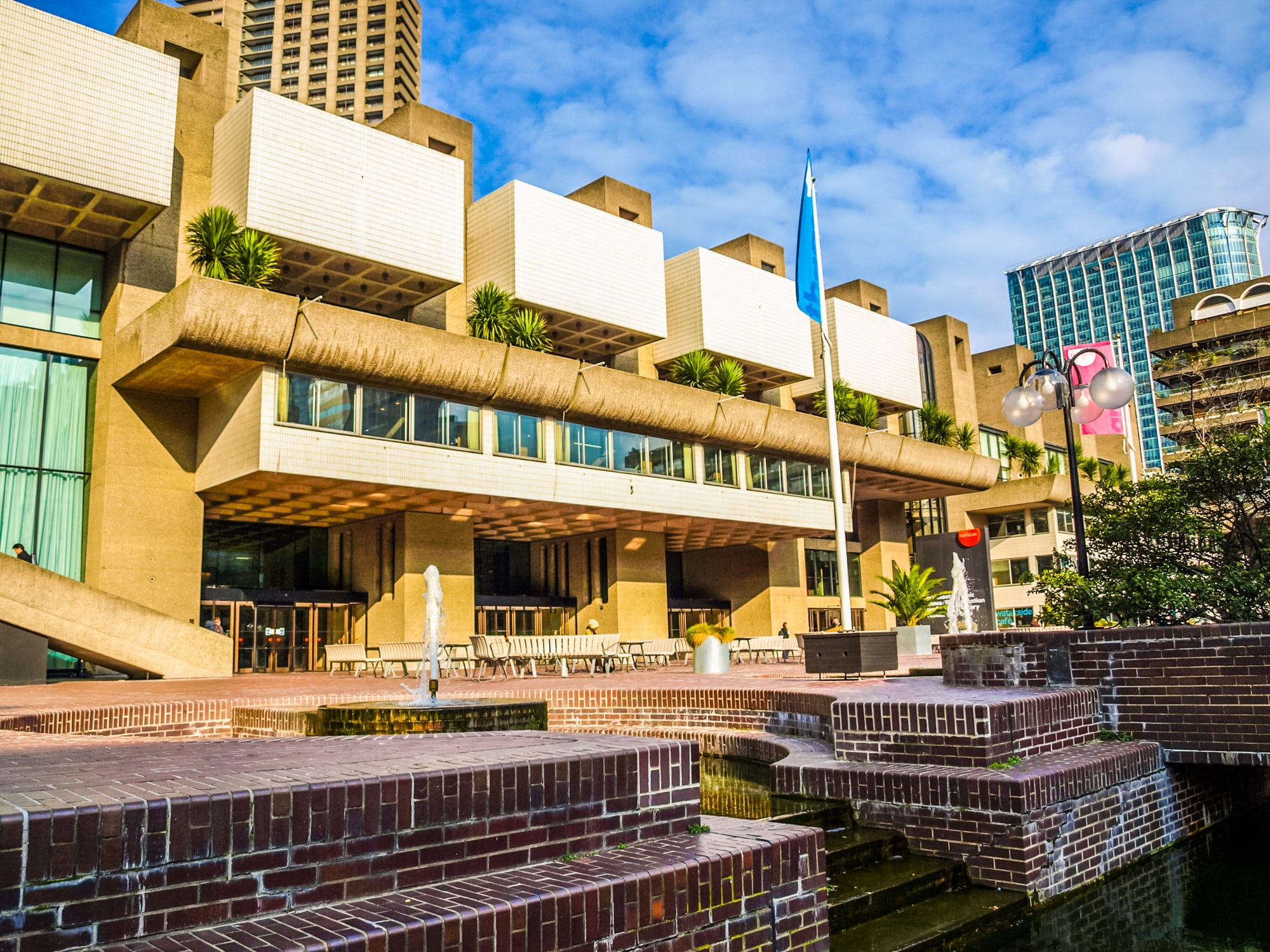
The Barbican Estate sprawls across 35 acres in central London, housing approximately 6,500 residents in over 2,000 flats within a complex of towers and terraces that epitomizes brutalist architecture. The estate took nearly 20 years to complete, opening in stages between 1965 and 1976.
The design includes three residential towers—the tallest reaching 42 stories—plus numerous low-rise blocks arranged around a series of elevated walkways and landscaped courtyards. The complex integrates a concert hall, theater, art gallery, library, and conservatory into its design.
The concrete architecture inspired strong reactions from the start, with critics calling it everything from a masterpiece to a monstrosity. The elevated walkways were supposed to separate pedestrians from vehicle traffic, but they create a confusing maze that baffles visitors and residents alike.
Despite the navigation challenges, the Barbican has aged into one of London’s most desirable addresses. The apartments combine generous space with proximity to the City of London financial district, and the cultural facilities give residents access to world-class performances and exhibitions without leaving the complex.
Pruitt-Igoe, St. Louis – The Failed Utopia

Pruitt-Igoe stands as a warning about what happens when megastructure ideals meet poor execution and insufficient support. This St. Louis public housing project consisted of 33 eleven-story buildings housing approximately 12,000 residents at its peak.
The complex opened in 1956 with high hopes and architectural awards. Designer Minoru Yamasaki—who later designed the World Trade Center—created a modernist vision of affordable housing with skip-stop elevators, gallery access corridors, and communal spaces.
The reality fell far short of the vision. The St. Louis Housing Authority received less funding than anticipated, forcing cuts to maintenance and services.
The skip-stop elevators created dangerous isolated corridors. The gallery spaces became crime hotspots rather than community gathering areas.
Within a decade, the complex had deteriorated into a symbol of urban failure. The city began demolition in 1972, less than 20 years after opening.
The infamous implosion footage of the towers became an iconic image representing the death of modernist public housing ideals.
Residential Complex on Ulitsa Grizodubova, Moscow – The Soviet Superblock

Moscow’s Residential Complex on Ulitsa Grizodubova represents Soviet experiments with mikrorayon planning—self-contained residential districts designed to provide all services within walking distance. This particular complex stretches for nearly a kilometer and houses approximately 12,000 to 15,000 residents in interconnected buildings that range from 9 to 17 stories.
The complex integrates schools, kindergartens, shops, and medical facilities into its ground floors. The buildings connect through heated underground passages, allowing residents to move between sections without going outside during Moscow’s harsh winters.
The architecture follows standard Soviet panel construction—prefabricated concrete panels assembled on-site with minimal variation. The result is functional but monotonous, with endless corridors and identical facades.
The complex succeeded in creating affordable mass housing but at the cost of architectural interest or individual expression. Today, the complex faces challenges common to aging Soviet housing—deteriorating infrastructure, outdated utilities, and a need for major renovation that no one wants to fund.
Pearl River Tower, Guangzhou – The Green Megastructure

Pearl River Tower rises 71 stories in Guangzhou, China, housing offices rather than residences but demonstrating technologies applicable to residential megastructures. The building was designed with wind turbines integrated into its structure at the mechanical floors, where cutouts in the building’s profile were intended to channel wind through turbines for power generation, though these were never fully implemented for continuous energy generation as originally planned.
The façade includes integrated photovoltaic cells that convert sunlight to electricity. The design achieves a 58% reduction in energy consumption compared to similar buildings.
The tower shows how megastructures can incorporate renewable energy generation into their basic design rather than treating sustainability as an add-on. While the building currently houses commercial tenants, the technologies it demonstrates could transform future residential megastructures into net-zero or even energy-positive developments.
Copan Building, São Paulo – The Serpentine Giant

Copan Building curves through downtown São Paulo like a massive concrete wave. This 38-story residential complex contains 1,160 apartments housing an estimated 4,000 to 5,000 residents.
Designed by Oscar Niemeyer and completed in 1966, the building stretches 115 meters long with a distinctive S-shaped footprint. The ground floor features a commercial gallery with shops and restaurants open to the public, creating a semi-public space that connects the building to the surrounding neighborhood.
The sinuous design maximizes the number of corner apartments while creating a sculptural presence on the skyline. The building has aged into a vertical neighborhood with residents from diverse economic backgrounds.
Some apartments have been extensively renovated into luxury units, while others remain basic accommodation. The mix creates an unusual socioeconomic diversity within a single structure.
Copan demonstrates how megastructures can maintain connection to street life rather than isolating residents in elevated towers.
Bibliothek Andreas Quartier, Düsseldorf – The Vertical Village

Bibliothek Andreas Quartier in Düsseldorf represents a smaller-scale approach to mixed-use urban development. The complex integrates residential units, offices, retail spaces, and cultural facilities in a single development that occupies an entire city block, though it operates at a more modest scale than the massive megastructures found elsewhere on this list.
The design stacks different programs vertically while maintaining visual and physical connections between levels. Public spaces penetrate the complex at multiple levels, creating a three-dimensional network of plazas, gardens, and walkways.
The development succeeds in creating urban density while maintaining the qualities of street-level neighborhoods. The integration of different uses means residents can work, shop, and socialize without leaving the complex, though the design encourages movement through and interaction with the surrounding city.
Linked Hybrid, Beijing – The City Loop

Linked Hybrid in Beijing connects eight residential towers through a series of sky bridges located between floors 12 and 18. These bridges contain communal facilities including a swimming pool, fitness center, café, and gallery spaces.
The complex houses 750 apartments plus a hotel, kindergarten, and Montessori school. The ground level remains largely open, with parking placed underground to preserve pedestrian space.
The sky bridges create an elevated public realm that encourages interaction between residents of different towers. The design addresses the isolation that typically comes with tower living by creating shared spaces that exist outside individual apartments but still within the complex.
The geothermal heating and cooling system reduces energy consumption, while rainwater collection systems reduce water usage.
Marina City, Chicago – The Corn Cobs
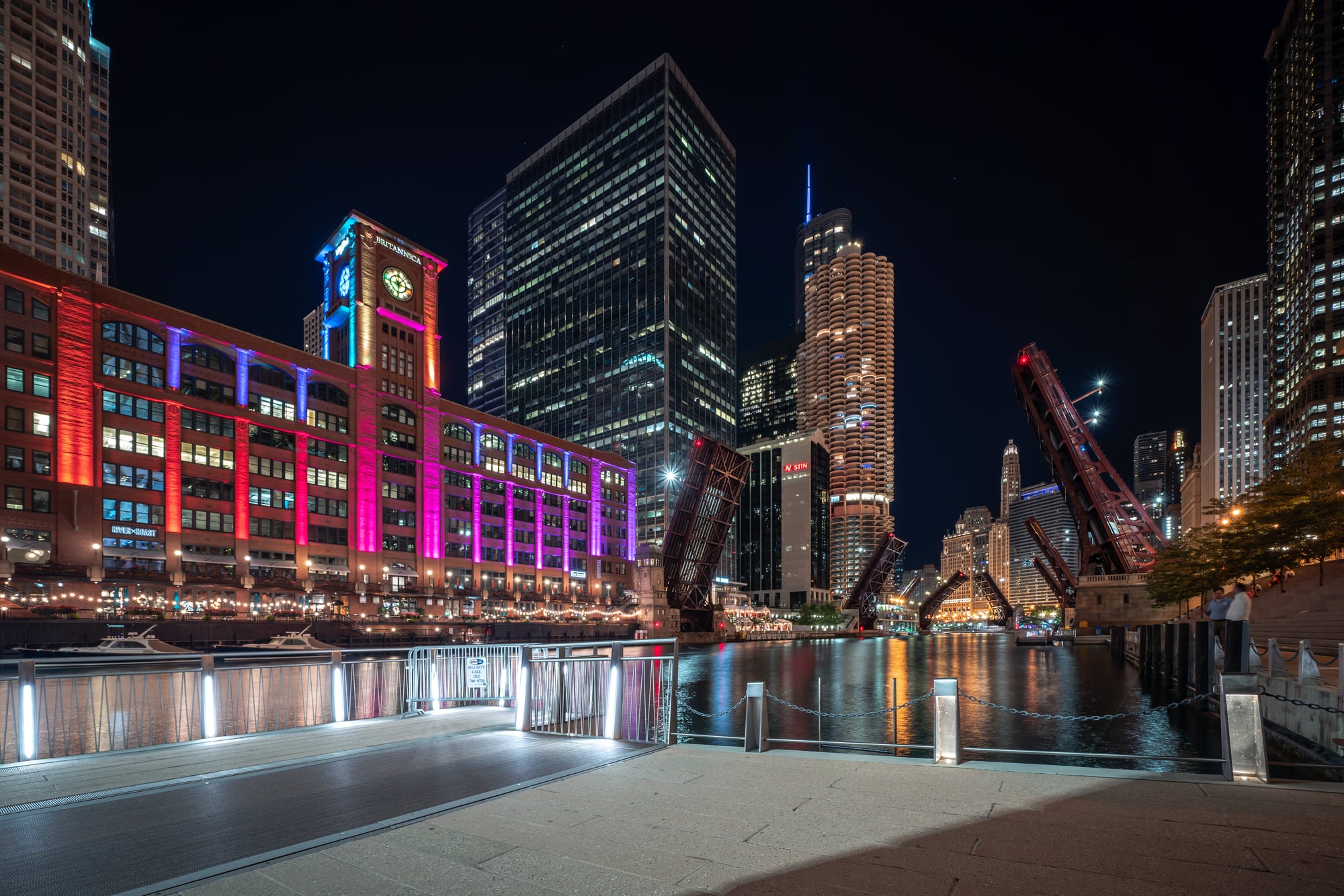
Marina City’s twin towers have defined Chicago’s skyline since 1964. The 65-story circular towers look like corn cobs, with pie-shaped balconies wrapping around the exterior of each floor.
Each tower originally contained 449 apartments, though the exact number varies today after condo conversions and renovations, with the lower 19 stories dedicated to parking—necessary when the complex was built to convince suburban residents to return to downtown living. The complex includes a theater, restaurants, a bowling alley, and a marina with berths for resident boats.
The circular design maximizes the number of corner units, ensuring every apartment gets natural light and views. The towers succeed in creating a self-contained community in the sky, though the open balconies and lack of interior walls create challenges for privacy and climate control.
The buildings have undergone several renovations to update infrastructure while maintaining their distinctive appearance.
Where Buildings Become Cities

These structures challenge the line between architecture and urbanism. They’re not just places to live—they’re experiments in how humans organize themselves in space when density forces vertical thinking.
Some succeed in creating genuine communities within their walls. Others demonstrate the limits of trying to contain urban life in a single structure.
The best examples maintain connections to the surrounding city while offering something unique within. The failures often come from isolation, whether physical barriers that cut residents off from the street or economic forces that create segregated enclaves.
The megastructures we’ve built so far provide lessons for the denser future we’re heading toward, where vertical living stops being an exception and becomes the rule.
More from Go2Tutors!

- The Romanov Crown Jewels and Their Tragic Fate
- 13 Historical Mysteries That Science Still Can’t Solve
- Famous Hoaxes That Fooled the World for Years
- 15 Child Stars with Tragic Adult Lives
- 16 Famous Jewelry Pieces in History
Like Go2Tutors’s content? Follow us on MSN.



