Retro Comic Strips We Followed Eagerly
There was a ritual to it. You’d grab the newspaper before anyone else got to it, flip past the front page and the sports section, and go straight for the comics.
It didn’t matter how old you were. The comics page was its own little world — a few square inches of ink that somehow felt more real than most of the news around it.
Some of those strips ran for decades, and the characters became as familiar as neighbors. Here are the ones that kept readers coming back, day after day.
Peanuts

Charles Schulz started drawing Peanuts in 1950, and it ran without interruption until the day he died in 2000. That’s not a coincidence — Schulz drew every single strip himself, never handing it off to assistants, never farming it out.
Charlie Brown’s quiet sadness, Snoopy’s elaborate fantasies, Lucy pulling the football away at the last second — these weren’t just gags. They were a whole philosophy about disappointment and resilience dressed up as children’s humor.
The strip worked on two levels at once. Kids loved Snoopy.
Adults recognized themselves in Charlie Brown.
Garfield

Jim Davis launched Garfield in 1978, and within a few years it was one of the most widely syndicated strips in history. The premise was simple: a fat, lazy orange cat who hates Mondays and loves lasagna.
But the humor held up because Garfield’s complaints about ordinary life — bad mornings, boring routines, annoying coworkers — were everyone’s complaints. You didn’t need to own a cat to understand Garfield.
You just needed to have a job. Jon Arbuckle, the hapless owner, became his own kind of comic icon.
The straight man who never quite figured out his cat was running the household.
Calvin and Hobbes
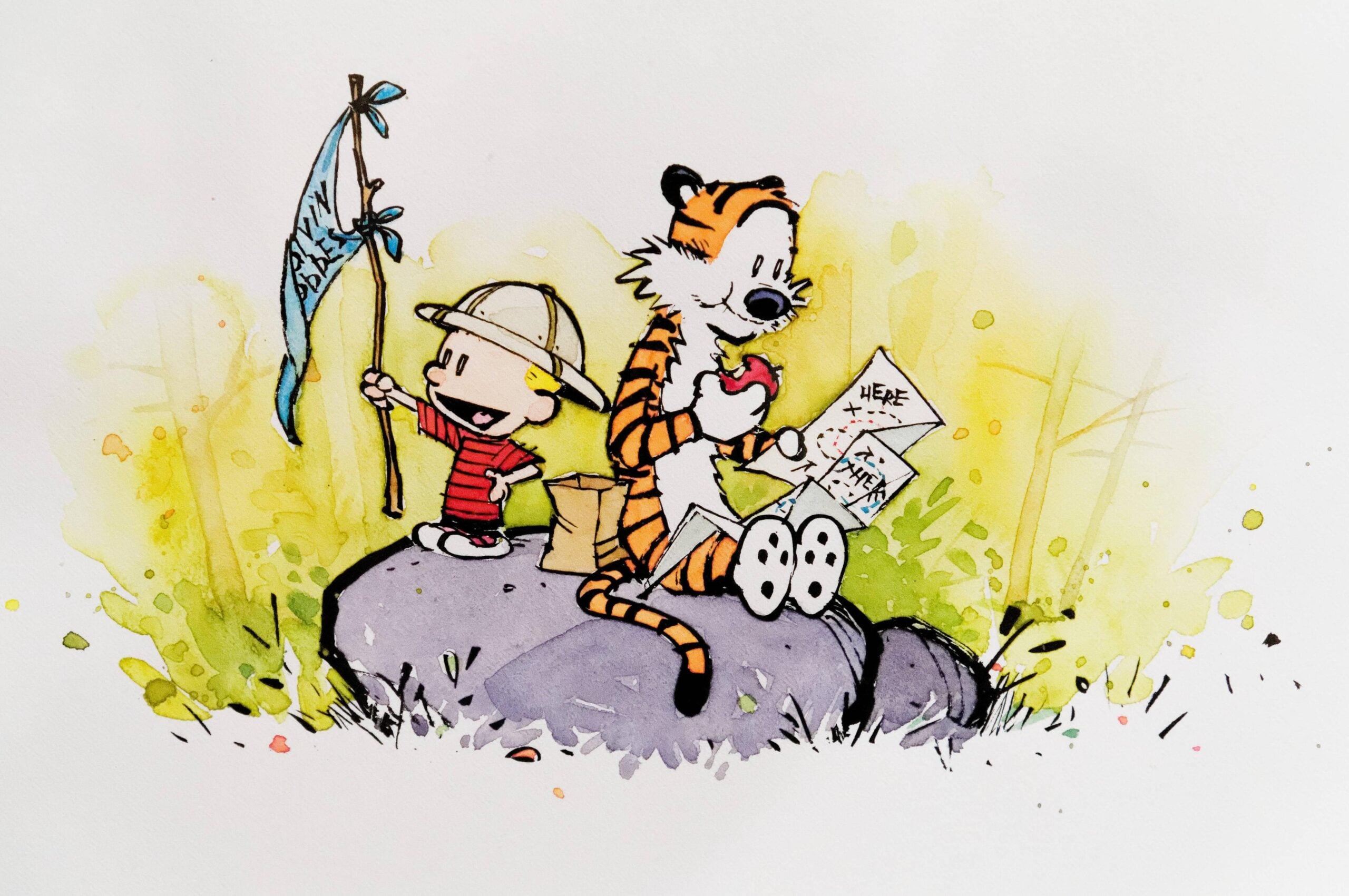
Bill Watterson drew Calvin and Hobbes from 1985 to 1995, and when he stopped, readers genuinely mourned. The strip followed a six-year-old boy and his stuffed tiger — who was a real, living companion in Calvin’s imagination — through childhood adventures that ranged from backyard snowball fights to philosophical debates about the nature of reality.
Watterson refused to merchandise the strip, which is why you’ve never seen an official Calvin plushie or lunchbox. He wanted the work to stay pure, and it did.
Reading old collections now, the strips hold up completely. That’s rare for something so rooted in a specific era.
The Far Side

Gary Larson ran The Far Side from 1980 to 1995, and it operated on a completely different wavelength from most comic strips. Single-panel, no recurring characters, no continuity — just one strange, deadpan joke per day.
Cows in human situations. Scientists making terrible decisions.
Animals with a startlingly good grasp of human behavior. The humor required you to actually look at the drawing, read the caption, and make a small mental leap.
Some people got it immediately. Some people never did.
That gap was part of the appeal.
Beetle Bailey

Mort Walker created Beetle Bailey in 1950, and it’s one of the longest-running strips in newspaper history. The setup — a lazy soldier stuck at an Army base with a hot-tempered sergeant — gave Walker endless material.
Sergeant Snorkel yelling at Beetle. Beetle sleeping through everything.
The general being haplessly out of touch. The jokes were broad, but the strip understood its audience and never tried to be something it wasn’t.
Blondie

Blondie started in 1930, which means it predates most of what you’d consider “retro.” Chic Young created it, and after his death in 1973, his son Dean Young took over and kept it running.
The strip followed Dagwood Bumstead — a sandwich-obsessed, nap-taking, perpetually-late office worker — and his wife Blondie through decades of domestic life. What’s interesting is how the strip quietly updated over time.
Blondie went from housewife to small business owner. The jokes shifted with the times.
But Dagwood’s giant sandwiches never changed. Some things are sacred.
Dennis the Menace

Hank Ketcham’s Dennis the Menace debuted in 1951 — the same day, famously, as a British strip of the same name that had nothing to do with it. The American Dennis was a blond five-year-old who caused havoc not out of malice but out of pure, relentless energy.
His neighbor Mr. Wilson bore the brunt of it, becoming one of the great suffering characters in comics history. The strip is rarely built on previous strips.
Each one was its own small disaster, neatly resolved. That simplicity made it easy to pick up and easy to set down, which probably explains its longevity.
Family Circus
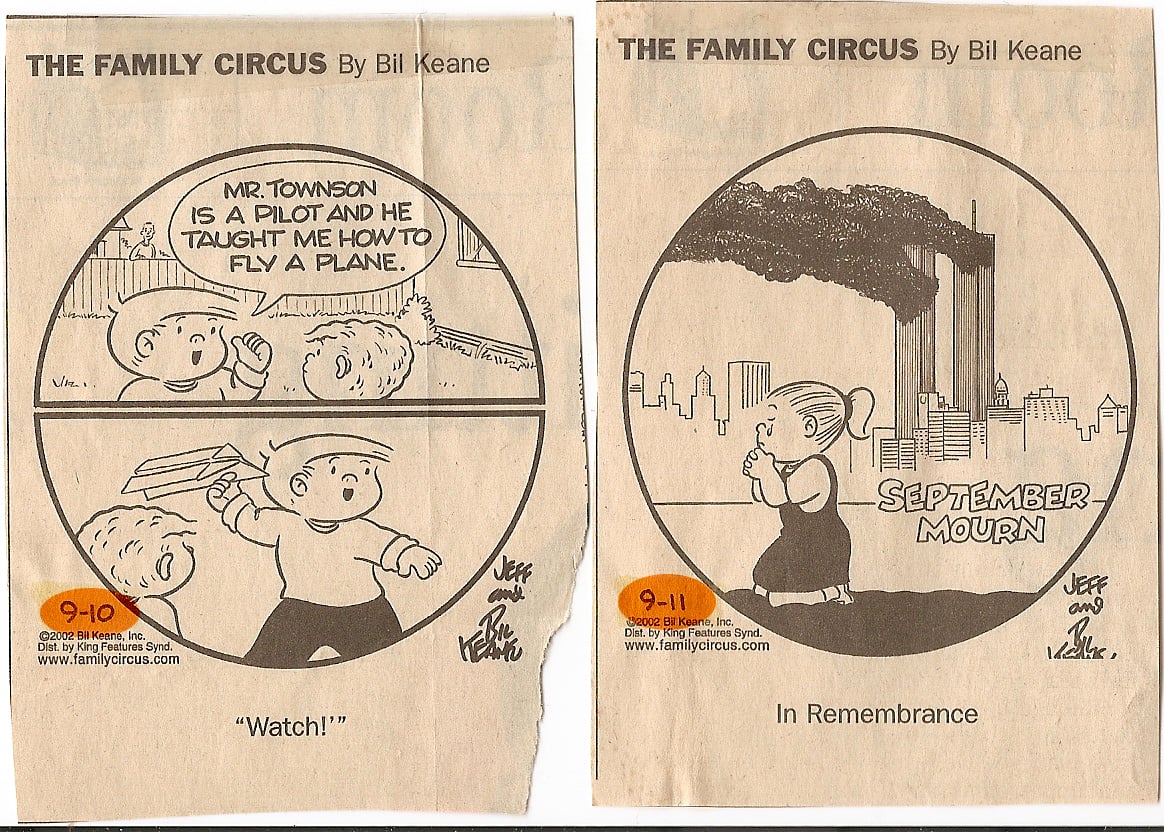
Family Circus began in 1960 by Bil Keane, showing daily life through one panel each time. So soft it barely bit – yet that tenderness made sense on its own terms.
Edginess wasn’t required for every comic drawn. A child blurting truth without knowing it, parents sharing quiet glances above him – that kind of moment stuck around.
A trail marked by dots – mapping how a kid wandered through an easy chore – turned widely recognized. Folks who’d seen youngsters take ages doing something quick got it right away.
Doonesbury

Starting out in dorm rooms back in sixty eight, Garry Trudeau shaped Doonesbury into something different. By seventy it reached newspapers across the country.
Politics showed up early, louder than usual for comic strips. Some editors reacted by shifting it away from funnies, placing it near editorials instead.
His edge stayed sharp over time. Public figures appeared again and again, drawn with intent.
The daily grind of headlines became material long before constant updates ruled attention spans. Opinions he voiced often sparked anger among certain readers.
Still going, it keeps moving forward. That tells you what people really want: stories with weight behind them.
Marmaduke

A big dog named Marmaduke caused trouble without trying. Brad Anderson made it up back in 1954, kept going for years after that.
He lived in a regular home but didn’t fit quite right. Sitting meant disaster when he plopped onto furniture.
Stuff broke whenever he moved around carelessly. Walking him turned into wild chases down sidewalks.
Same idea every time, day after day, drawn over and over again. Still, folks never stopped turning the pages.
A punchline that owns its truth completely – there’s weight in that kind of honesty.
Cathy
Cathy burst onto the scene in 1976, dreamed up by cartoonist Cathy Guisewite, sticking around until its final panel in 2010. Life swirled around one woman juggling jobs, love life stumbles, plus the yearly trauma of finding a swimsuit that fits.
Mirrors triggered it. Tight clothes brought it on.
Awkward chats sparked it. That sharp cry – “ACK!” – ripped straight from the gut when things got too real.
Over time, that shriek turned into code for a very particular flavor of everyday meltdown. Still, people brushed it off as repetitive, fixated on familiar worries.
Yet – exactly because of those unshifting fears – it stuck around. Worry never left, neither did the comic.
Bloom County
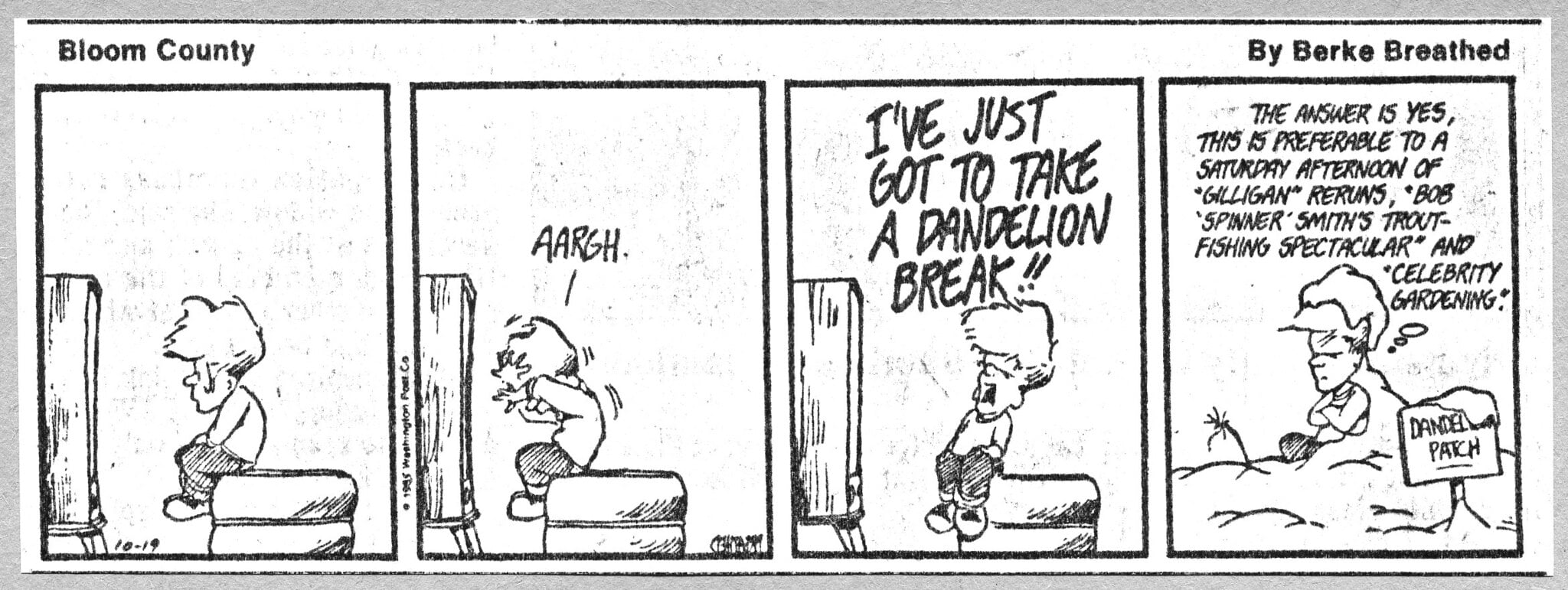
Bloom County began in 1980, created by Berkeley Breathed. A prize followed years later – Pulitzer recognition came his way in 1987.
Politics danced with celebrity jokes, oddball figures filling each panel. One penguin named Opus stood out, quiet yet central.
Readers grew attached without realizing they would soon lose it. Then, just as everyone paid attention, he ended it all in 1989.
Bloom County returned in 2015 with occasional new episodes, though the early years mattered most. What made it stand out was how clearly it mirrored the 1980s – not just the strange headlines, but the quiet unease beneath upbeat surfaces, along with that rare warmth found among misfit pals – capturing all of it more sharply than nearly any comic at the time.
The Ink Never Truly Dries

Morning after morning, flipping to that spot brought a quiet kind of comfort. Not because of punchlines, but because it was familiar ground.
Same faces showed up, like old neighbors stopping by without knocking. Routines played out, lines landed the way they always did, predictable in the best sense.
Even now, years since some vanished, their shapes remain sharp in your mind. Missing them? Maybe.
But really, it’s proof – the strongest stuff sticks without trying.
More from Go2Tutors!

- The Romanov Crown Jewels and Their Tragic Fate
- 13 Historical Mysteries That Science Still Can’t Solve
- Famous Hoaxes That Fooled the World for Years
- 15 Child Stars with Tragic Adult Lives
- 16 Famous Jewelry Pieces in History
Like Go2Tutors’s content? Follow us on MSN.