Sculptures Visible Only from the Air
Some artists don’t want people to see their work up close. They create massive pieces meant to be viewed from thousands of feet in the air, where the full picture finally makes sense.
These aren’t your typical gallery sculptures that fit on a pedestal or in a corner. They’re sprawling creations that stretch across deserts, fields, and hillways, transforming entire landscapes into canvases that only pilots and passengers can truly appreciate.
So what drives someone to make art that most people will never see in person? Let’s take a look at some of the most impressive examples scattered across the globe.
Spiral Jetty

Robert Smithson built this coiling masterpiece in 1970 at Utah’s Great Salt Lake, using nothing but rocks, salt crystals, and mud. The spiral stretches about 1,500 feet long and 15 feet wide, curling into the pink-tinted water like a giant nautilus shell.
Smithson chose this spot specifically because he wanted his work to change with nature, not fight against it. Sometimes the water level rises and swallows the whole thing for years at a time, and when it resurfaces, it’s covered in white salt crystals that make it look completely different.
The Marree Man
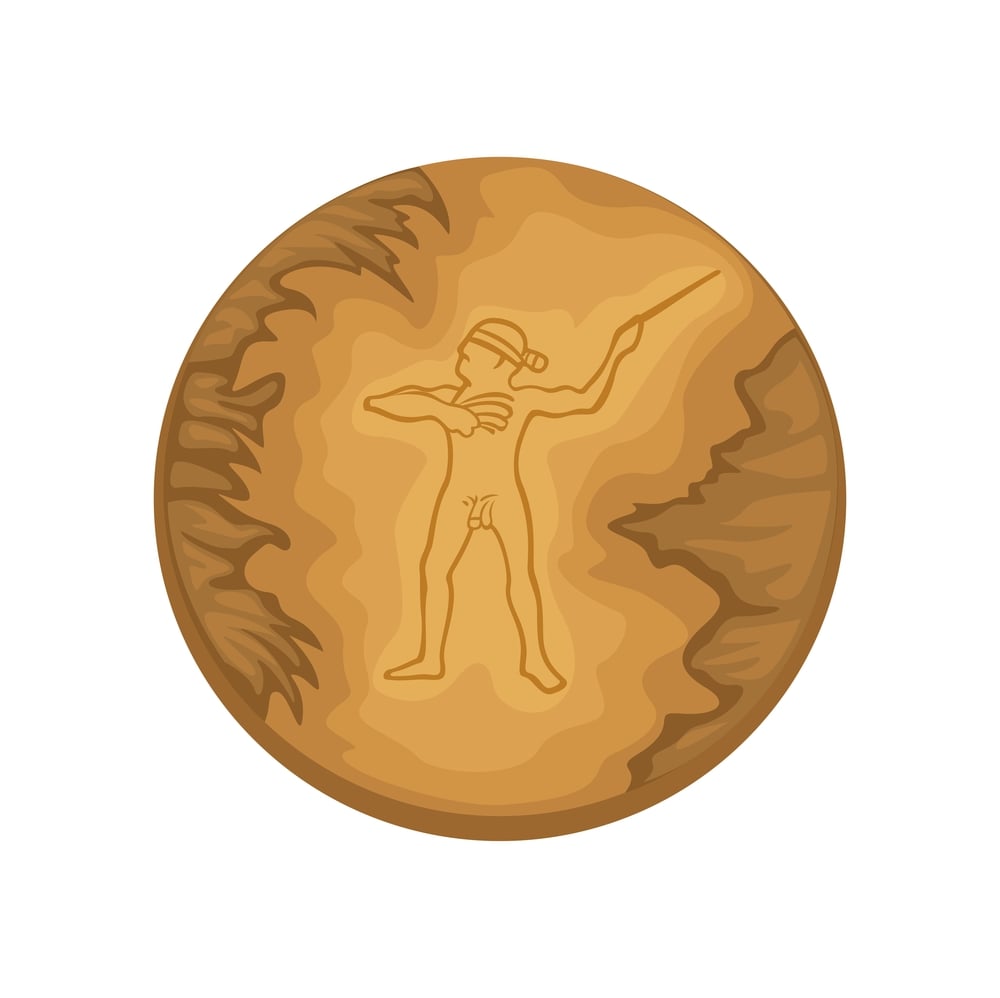
Australia’s outback hides a figure so large that it covers an area bigger than four football fields combined. Someone etched this 2.6-mile-tall outline of an indigenous hunter into the desert plateau near Marree, South Australia, back in 1998.
Nobody knows who made it or why they did it. The lines are about a foot deep and 115 feet wide, and the whole thing took serious planning and equipment to pull off.
Theories range from a tribute to indigenous culture to an elaborate art prank, but the creator has stayed completely anonymous for over two decades.
Nazca Lines

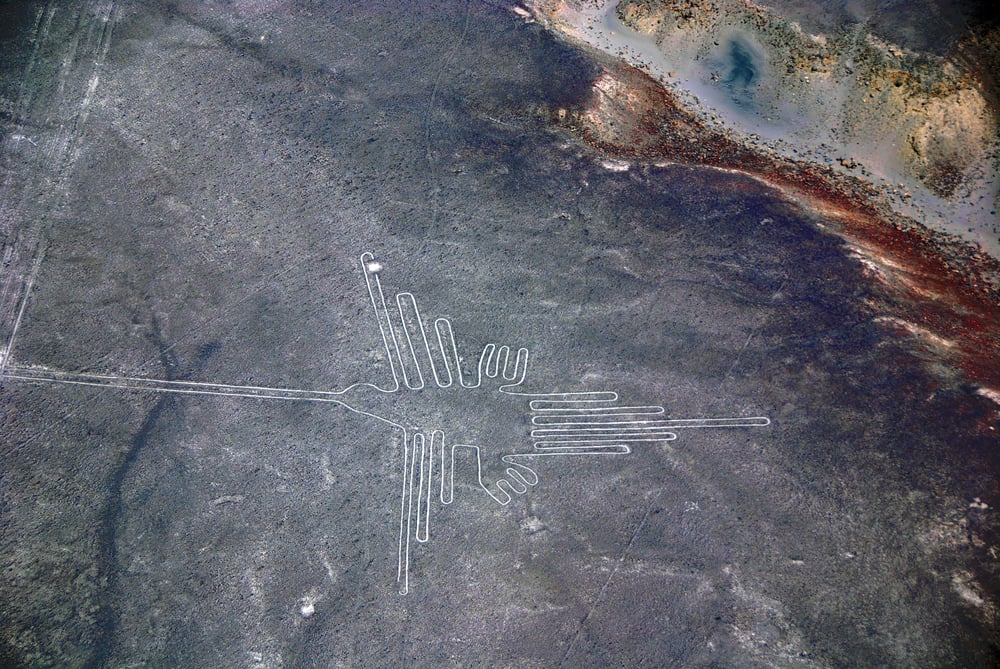
The ancient Nazca people in Peru created hundreds of these massive designs between 500 BC and 500 AD, and researchers still debate why they went through all that effort. The designs include a spider, a monkey, a hummingbird, and various geometric shapes that stretch across 170 square miles of desert.
Some of these figures measure over 1,200 feet across. The dry climate preserved them for centuries because it barely rains there, and the dark pebbles on top reveal lighter ground underneath when moved.
Modern theories suggest they might have been astronomical calendars, religious pathways, or requests to the gods for water.
Effigy Mounds

Native American communities across the Midwestern United States built these earthen sculptures shaped like animals and birds starting around 2,000 years ago. The most famous collection sits in northeastern Iowa, where you can find bears, birds, and other creatures molded from thousands of tons of soil.
Some reach over 200 feet in length and rise several feet off the ground. These weren’t just artistic projects but sacred burial sites and ceremonial spaces that connected communities to their spiritual beliefs.
Walking past them at ground level, they just look like random hills, but from above, the animal shapes become clear as day.
Desert Breath

Two Greek artists and an architect spent years planning this spiral formation in Egypt’s Sahara Desert near the Red Sea. Completed in 1997, the installation consists of 89 protruding cones and 89 matching depressions arranged in two interlocking spirals around a central water pool.
The whole thing covers about 100,000 square meters and was designed to slowly disappear as wind and sand gradually reclaim the shapes. It’s like watching nature take back what humans temporarily borrowed, and the artists knew from the start that their work had an expiration date.
Blythe Intaglios

California’s Colorado Desert contains six enormous human and animal figures carved into the ground by scraping away the dark surface to reveal lighter soil beneath. The largest human figure measures 171 feet from head to toe.
Native American tribes likely created these between 450 and 2,000 years ago, though their exact purpose remains unclear. They might have served as markers for travelers, religious symbols, or representations of creation stories.
The figures went unnoticed by modern society until a pilot spotted them in 1932 while flying between Las Vegas and Blythe.
Uffington White Horse
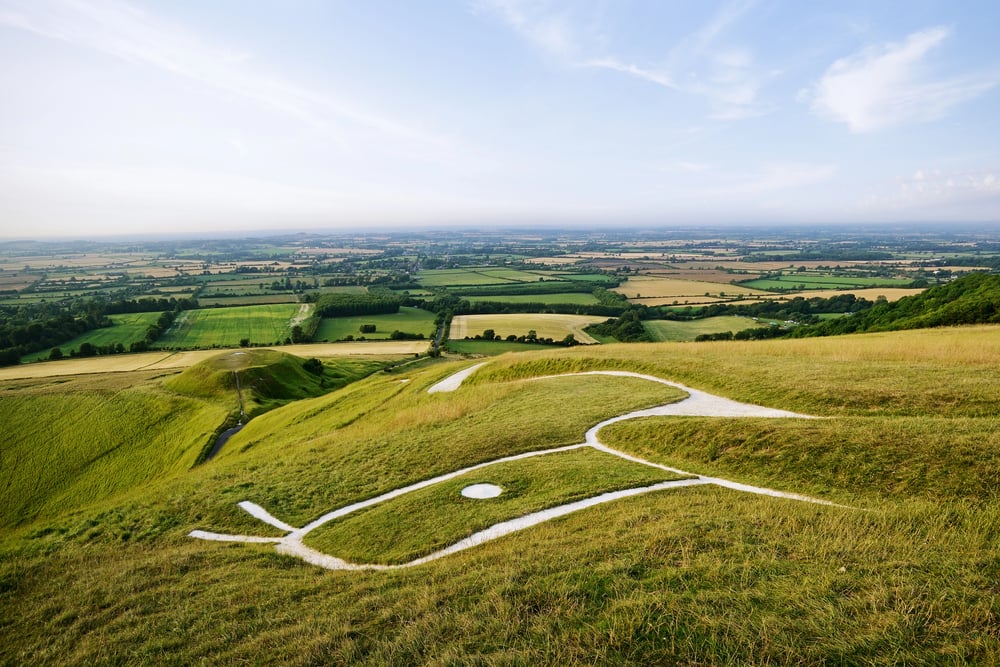
England’s oldest hill figure has been watching over the Oxfordshire countryside for at least 3,000 years. This 360-foot-long horse was cut into the chalk hillside, and locals have maintained it through the centuries by regularly scouring away grass and weeds.
The style looks almost abstract, with a flowing design that doesn’t match realistic horse proportions. Some experts think it might represent a dragon from local legends rather than a horse.
Communities used to gather every seven years for festivals where they’d clean the horse and celebrate with food and games.
The Atacama Giant

Chile’s driest desert hosts the world’s largest prehistoric human figure, standing 390 feet tall on a hillside near the town of Huara. The Atacama Giant dates back to somewhere between 1000 and 1400 AD and might have helped ancient travelers navigate or served as an astronomical calendar.
The figure includes geometric patterns on its head that some researchers think could represent headdresses or connections to sky gods. The extreme dryness of the Atacama Desert preserved it remarkably well, just like it protects the Nazca Lines to the north.
Andrew Rogers’ Geoglyphs
This Australian artist has been creating massive stone arrangements on every continent except Antarctica since the 1990s. His works follow ancient traditions but use modern planning and local labor from the communities where he builds.
One of his pieces in Sri Lanka uses over 20,000 tons of rock arranged into rhythmic patterns visible from commercial flight paths. Rogers collaborates with local people who help construct the pieces, turning each project into a community effort that provides jobs and brings attention to remote areas.
Michael Heizer’s City

Hidden in Nevada’s Garden Valley, this work in progress has been under construction since 1972 and spans over a mile of desert landscape. Heizer has created massive geometric structures from earth and concrete that echo ancient cities and ceremonial centers.
The public couldn’t visit for decades because Heizer wanted to finish it first, but limited access finally opened in 2022. The structures rise up to 80 feet high in some places and required moving millions of tons of material.
It’s less of a sculpture and more of an entire constructed environment that plays with perspective and scale.
Yellow Heart

This gigantic heart appeared in the French countryside in 2009 when Argentine artist Jorge Rodríguez-Gerada planted 30,000 oak trees in a pattern covering 20 acres. The work honors biodiversity and environmental concerns while creating something beautiful enough to spot from planes approaching a nearby airport.
The trees will grow for decades, making the heart even more prominent over time. It’s art that improves rather than degrades, filtering air and providing habitat while making its statement.
Sri Yantra

One person scratched a complex shape into a dried-up lake in Oregon’s desert around 1990 – lines ran more than a quarter mile. This pattern uses an old Indian sign built from nine linked triangles, yet no one ever said they did it.
Each groove measured roughly 10 inches across and 3 inches down; some guessed creators used tools like tripods or lasers, others joked aliens helped out. Later on, government workers flattened the site since it went up illegally.
Homme de Houilles

A big glowing shape sits on a hill near Paris – built with LED strips tucked into a public green space. It stretches close to 200 feet, shines after dark, transforming the area into a bright display you can spot from planes heading toward Charles de Gaulle Airport.
Created by an artist reflecting on city growth and how people alter nature’s layout. While old earth drawings faded slowly over decades, this version simply turns off with a switch.
Stupa of Dharmakaya

This Buddhist site in Colorado perches more than 8,000 feet up – built using classic Tibetan design yet placed so it stands out when viewed from high above. Standing 108 feet high, it’s topped with a shiny gold spire that glints in daylight, grabbing attention even from distant spots.
In Buddhism, the figure 108 isn’t random – it points to key steps on the path to awakening. Though not secret, its spot deep in the mountains means many folks only glimpse it mid-flight, riding between Denver and western parts of the state.
Geoglyphic Patterns of Kazakhstan
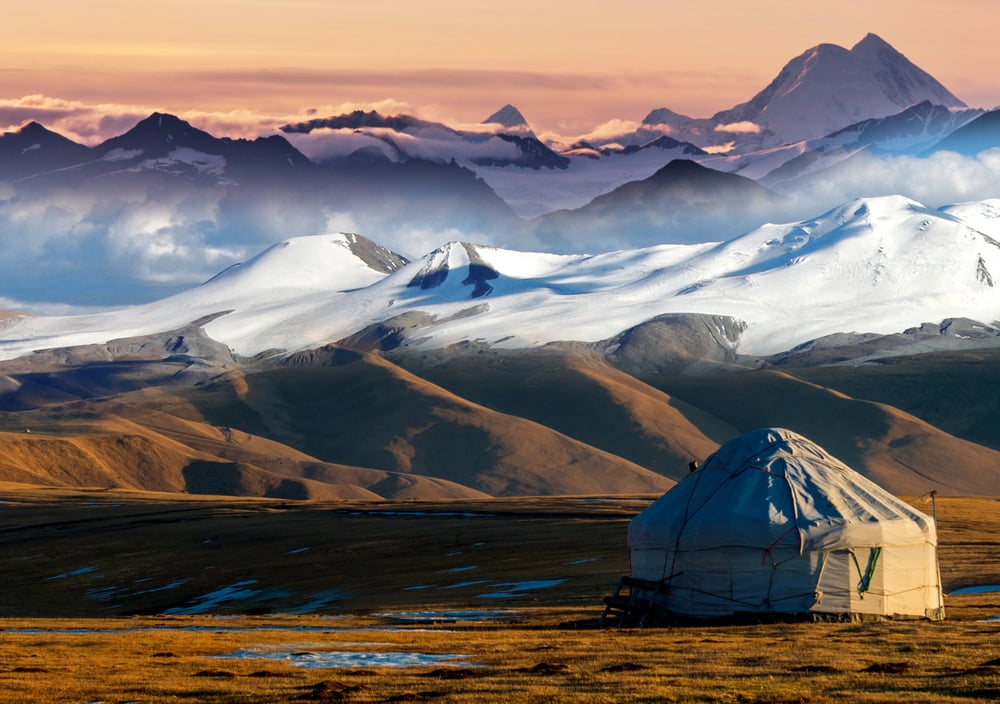
Satellite photos showed more than 200 huge ground designs in northern Kazakhstan from 2007 onward – yet they’d existed for ages. Shapes like squares, crosses, and circles stretch as wide as 1,300 feet, formed by piling dirt into raised banks.
Experts believe they’re roughly 8,000 years old, which means older than Stonehenge. Instead of just being random, these layouts could’ve worked as sky-watching spots, sacred meeting areas, or signs of land use by wandering groups.
Earthwork by Jim Denevan

This US-based creator makes short-lived art on sand and water surfaces – some stretching across multiple square miles – until natural elements erase them. Instead of driving, he either walks or cycles to carve shapes into shorelines and icy waters, putting in hours on works doomed by tides or melting seasons.
A design he made out there in Nevada’s Black Rock Desert looped more than 9 miles around, ranking among the biggest standalone art pieces ever attempted. For him, the fleeting side is key – it pushes people to value now instead of clinging to permanence.
Tree Mountain

Finnish creator Agnes Denes set out in 1996 to plant 11,000 trees across Finland using a math-based layout forming a spiral seen from the sky. Instead of working alone, she got help – each tree went into the ground thanks to one person doing it themselves.
As a thank-you, every participant was handed a paper saying their kin could care for that particular tree for four hundred years. Over time, this woodland will shift and evolve, serving not just as art you can walk through but also as a quiet message on looking after nature.
Unlike most efforts focused on quick results, this one thinks way ahead – far past how long any of us will live.
Art That Defies Gravity and Expectations

Some carvings show art can hit hard without walls or stands. Their makers knew folks might walk past, skip touching, not notice at all.
Still, they built beyond fame – turning open spaces into signs, puzzles, or markers for those glancing low. No matter if storms wipe them fast or time keeps them around, they shifted ideas on where art fits and who finds it.
More from Go2Tutors!

- The Romanov Crown Jewels and Their Tragic Fate
- 13 Historical Mysteries That Science Still Can’t Solve
- Famous Hoaxes That Fooled the World for Years
- 15 Child Stars with Tragic Adult Lives
- 16 Famous Jewelry Pieces in History
Like Go2Tutors’s content? Follow us on MSN.



