Secret Lives of the World’s Leading Architects
Architecture school teaches you about form, function, and the Bauhaus movement. What do they leave out? The affairs, the bankruptcy, the fact that some of these design legends were absolute nightmares to work with or live near.
Let’s dive into the messy, strange, and often shocking personal lives of the architects who shaped our skylines.
Frank Lloyd Wright abandoned his wife and six children for a client’s wife

In 1909, Wright ditched his family and ran off to Europe with Mamah Borthwick Cheney, the wife of a former client. The scandal rocked Chicago society.
When they returned, they lived openly together at Taliesin, his Wisconsin estate. The affair ended tragically in 1914 when a deranged servant set fire to Taliesin and murdered Mamah and six others with an axe. Wright was in Chicago at the time.
Zaha Hadid never married and called her buildings her children

Hadid remained single her entire life and was famously prickly about questions regarding marriage or family. She once said her buildings were her babies and she didn’t need anything else.
Friends described her as brutally demanding, working 16-hour days and expecting the same from her staff. She’d fire people on the spot for minor mistakes and refused to compromise on her vision, even when clients begged.
Le Corbusier wanted to demolish most of Paris

The Swiss-French architect proposed tearing down enormous sections of central Paris and replacing them with massive cruciform towers surrounded by highways. His “Plan Voisin” would have destroyed the Marais district entirely.
Parisians were horrified. He spent years trying to convince anyone who’d listen, growing increasingly bitter when rejected. He called traditional streets “donkey paths” and thought cars should rule cities.
Philip Johnson was a Nazi sympathizer who later tried to erase his past

Before becoming America’s most influential architect, Johnson spent time in Germany covering Hitler’s rise for a right-wing publication. He attended Nazi rallies and wrote approvingly about fascist architecture.
After the war, he reinvented himself and spent decades dodging questions about his political past. The full extent of his activities didn’t come out until near the end of his life.
Frank Gehry’s neighbors sued to stop him from building his own house

When Gehry wrapped his suburban Santa Monica home in corrugated metal and chain-link fence in 1978, the neighbors went ballistic. They filed lawsuits claiming the house was an eyesore that tanked property values.
Gehry’s wife was harassed at the grocery store. Someone shot a bullet through the kitchen window. The house is now considered a masterpiece and architecture students make pilgrimages to see it.
Buckminster Fuller lived in a car with his wife and daughter during the Depression
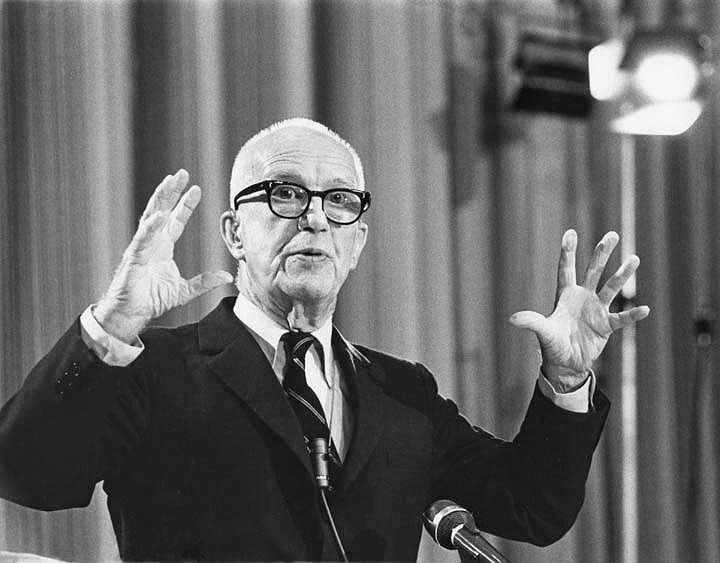
After his first business failed and his daughter died, Fuller sank into depression and considered ending his life. Instead, he dedicated himself to solving global problems through design.
For years, the family was essentially homeless, living out of their car while Fuller developed his theories. He slept only two hours per night using a polyphasic sleep schedule he invented, taking 30-minute naps every six hours.
Ludwig Mies van der Rohe left his wife and three daughters in Germany and never divorced
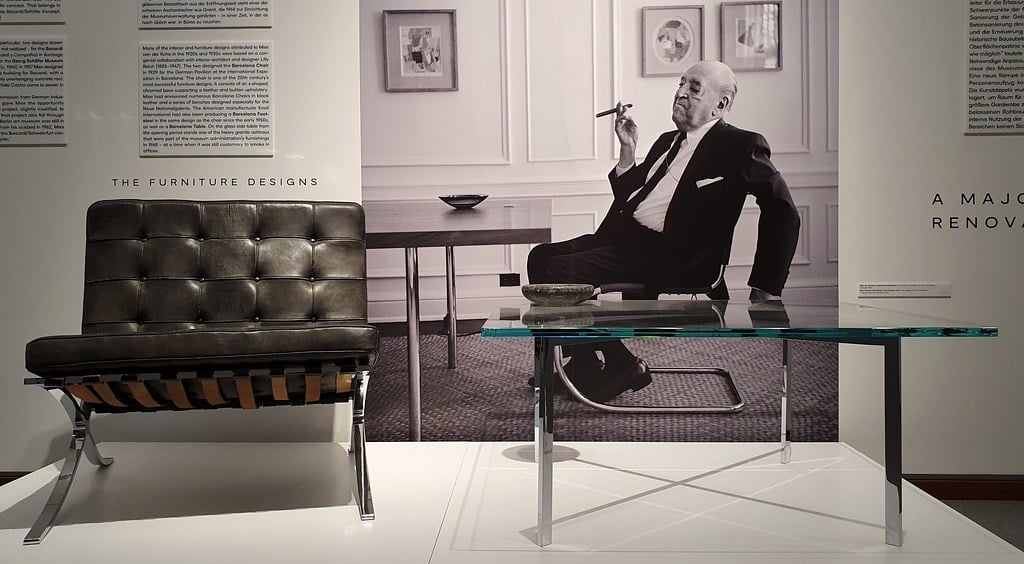
Mies separated from his wife in 1921 but remained legally married until she died in 1951. He moved to America in 1937 and had a decades-long relationship with designer Lilly Reich, but abandoned her when he emigrated.
He sent money back to his family but rarely saw them. His grandson later said Mies was emotionally distant and cared more about his work than any human relationship.
I.M. Pei’s Louvre pyramid was so hated Parisians demanded his deportation

When Pei unveiled plans for a glass pyramid in the Louvre courtyard in 1984, Parisians lost their minds. Critics called it a blasphemy and an architectural joke.
One newspaper ran the headline “Pharaoh Mitterrand and His Pyramid.” Protesters demanded Pei leave France. He received death threats.
The pyramid opened in 1989 and is now one of Paris’s most beloved landmarks, but Pei never forgot the vitriol.
Antoni Gaudí died after being hit by a tram and mistaken for a beggar

In 1926, the 73-year-old architect was struck by a streetcar in Barcelona. Because he dressed shabbily and carried no identification, bystanders assumed he was homeless.
He was taken to a pauper’s hospital where he received minimal care. By the time friends tracked him down the next day, his condition was critical.
He died two days later. Tens of thousands attended his funeral.
Oscar Niemeyer designed Brazil’s capital city while having an affair

While creating Brasília in the 1950s, Niemeyer was involved with a woman who wasn’t his wife. His marriage was complicated – he stayed legally married to his first wife for decades while maintaining other relationships.
He once said he was more interested in the curves of women than the straight lines of modernist architecture, which explains the sensual, flowing forms of his buildings.
Louis Kahn died broke and alone in a train station bathroom

Despite designing some of the 20th century’s most important buildings, Kahn was terrible with money. He juggled three separate families – a wife and daughter, plus mistresses with whom he had two additional children.
None of the families knew about the others. In 1974, returning from a project in India, he had a heart attack in a Penn Station bathroom. His body went unidentified for days because he’d crossed out his address on his passport. He was $500,000 in debt.
Rem Koolhaas worked as a journalist and screenwriter before architecture
Koolhaas didn’t study architecture until his late twenties. Before that, he wrote for a Dutch newspaper and worked on film scripts in Hollywood.
He interviewed Russ Meyer, the exploitation filmmaker. This background shows in his theoretical writing, which reads more like provocative journalism than typical architectural theory.
He approaches buildings like narratives and cities like screenplay scenarios.
Norman Foster’s first wife died falling down stairs in their home

Wendy Cheesman, Foster’s wife and business partner, died in 1989 from injuries sustained in a fall at their home. She was 49. The death devastated Foster, who threw himself into work.
Some colleagues say he became even more demanding afterward, working punishing hours and expecting his staff to match his pace. He remarried two years later.
Tadao Ando is entirely self-taught and never went to architecture school
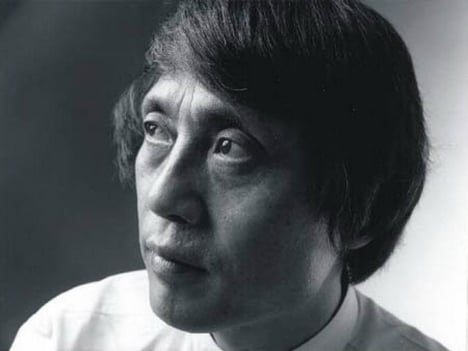
Ando was a professional boxer before becoming an architect. He taught himself by reading books and traveling to study buildings in person.
He visited Le Corbusier’s work in Europe and absorbed everything he could about traditional Japanese architecture. Japanese architectural associations initially rejected his applications because he lacked formal credentials.
Now he’s one of the most respected architects alive.
Where genius meets chaos

These architects changed how we build and live, but their personal lives were often train wrecks. Affairs, abandonments, financial ruin, political scandals – the usual mess of human existence, except amplified by ego and ambition.
Architecture schools focus on design principles and structural integrity. They skip over the part where great architects are frequently terrible at being regular people.
Maybe the two things are connected. Or maybe brilliant people are allowed to be disasters because we need what they create.
More from Go2Tutors!

- The Romanov Crown Jewels and Their Tragic Fate
- 13 Historical Mysteries That Science Still Can’t Solve
- Famous Hoaxes That Fooled the World for Years
- 15 Child Stars with Tragic Adult Lives
- 16 Famous Jewelry Pieces in History
Like Go2Tutors’s content? Follow us on MSN.