Smart Facts About Greenland and Its Fossils
Have you ever wondered what mysteries lie hidden in Greenland’s frozen landscapes? Imagine finding fossils that could change our perception of the origins of life on Earth, or holding a rock that predates the majority of life on Earth.Greenland is more than just a huge sheet of ice; it’s like nature’s time capsule, holding amazing geological artifacts that reveal the history of our planet’s early years.
Some of the most astounding findings in geology and paleontology can be found in the rocks beneath that ice.These fascinating facts about the geology and fossils of Greenland will completely change your perspective on this frozen island.
Earth’s Oldest Time Capsules Live Here
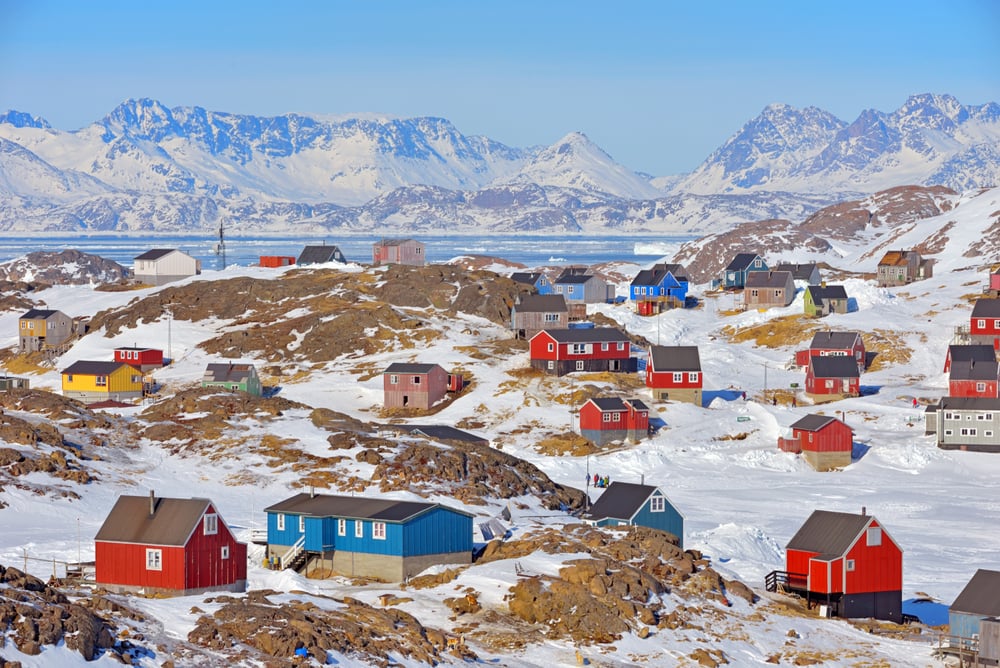
Picture this: while most ancient rocks on Earth have been twisted, heated, and transformed beyond recognition, Greenland preserved some of the oldest bedrock on the planet virtually unchanged. The Isua Greenstone Belt in southwestern Greenland contains rocks that are approximately 3.8 billion years old—that’s almost as old as Earth’s earliest solid crust.
These rocks are like geological museum pieces that somehow survived billions of years of planetary upheaval. What makes this even more remarkable is that most rocks this ancient have been completely altered by heat and pressure, but Greenland’s got lucky and escaped the worst of these destructive forces.
Life’s Earliest Signatures May Be Hidden in Ice

In 2016, scientists discovered what they claimed were 3.7-billion-year-old stromatolites—fossilized microbial mats created by some of Earth’s earliest life forms. If confirmed, these tiny cone-shaped structures in Greenland’s rocks would push back the earliest evidence of life by 220 million years.
Think about that timeline: these microbes might have been thriving when Earth was still recovering from a period of massive asteroid bombardment. The discovery happened almost by accident when an unusually warm spring melted snow that had covered the rock outcrop for years, finally exposing these potential ancient treasures.
Like Go2Tutors’s content? Follow us on MSN.
The Great Fossil Debate Continues

Here’s where things get really interesting: not everyone agrees these Greenland formations are actually fossils. Some scientists argue they’re just mineral structures created when ancient geological forces squeezed the rock, not evidence of life at all.
The controversy centers on the fact that some of these structures point in different directions—something that wouldn’t happen if they were created by microbes growing upward from a sea floor. It’s like a geological detective story where researchers are using cutting-edge tools like NASA’s Mars-bound PIXL instrument to analyze the chemical signatures and settle the debate once and for all.
Greenland Drifted from the Tropics to the Poles

Get ready for this mind-bender: Greenland wasn’t always frozen. Through the slow dance of continental drift, this massive landmass has journeyed from the southern hemisphere through tropical latitudes to its current polar position over hundreds of millions of years.
Ancient rocks preserve evidence of this incredible journey, containing fossils of creatures that lived in warm, shallow seas where glaciers now reign. Imagine palm trees and tropical marine life where today there’s nothing but ice and snow—that’s the power of geological time and plate tectonics at work.
Ancient Atmospheres Were Alien Worlds

The chemical signatures in Greenland’s ancient rocks tell us they formed in shallow marine environments that would seem alien to us today. These primordial seas were likely different in chemistry and color than today’s oceans—possibly greenish from dissolved iron, under skies with much higher carbon dioxide levels than we’re used to.
The rare earth elements preserved in these rocks match the signatures of ancient seawater, providing compelling evidence that some of Earth’s earliest life forms were already establishing complex communities in shallow coastal waters billions of years ago.
Like Go2Tutors’s content? Follow us on MSN.
Fossils Help Guide the Search for Alien Life
Here’s something that connects Greenland directly to space exploration: the potential stromatolites discovered there are helping NASA scientists develop better techniques for finding life on Mars. If microbes could thrive on Earth during such hostile early conditions—right after the planet was getting pummeled by asteroids—then similar life might have emerged on Mars during its own early period.
Mars lacks the plate tectonics that have twisted and destroyed most of Earth’s ancient rocks, so signs of ancient Martian life might be better preserved than what we find here.
Greenland’s First Named Dinosaur Species

Fast-forward to more recent geological times, and Greenland tells a completely different story. In 2021, scientists announced the discovery of Issi saaneq, the first new, endemic dinosaur species formally named from Greenland.
This two-legged herbivore lived about 214 million years ago during the Late Triassic period, when Greenland was part of the supercontinent Pangaea and enjoyed a much warmer climate. While dinosaur remains had been found in Greenland before, Issi saaneq represents the first species that scientists could definitively identify as unique to the region.
The name ‘Issi saaneq’ means ‘cold bone’ in Greenlandic Inuit language—a poetic nod to where these ancient creatures ended up.
The Ice Reveals Secrets by Melting

Climate change, for all its negative impacts, has unexpectedly opened new windows into Greenland’s ancient past. As ice and permanent snow patches melt, they’re exposing rock outcrops that have been hidden for potentially thousands of years.
The very stromatolites that may represent Earth’s earliest life were only discovered because melting snow revealed the outcrop in a region that’s typically buried. It’s an ironic twist—modern climate change is helping us understand ancient climate changes preserved in the rocks below.
Like Go2Tutors’s content? Follow us on MSN.
Rare Earth Treasures Hide Beneath the Ice

Beyond fossils, Greenland’s geology holds incredible mineral wealth that’s become increasingly important in our modern world. The country has significant deposits of rare earth elements, including massive reserves at Kvanefjeld that contain materials essential for everything from smartphones to wind turbines.
There’s also substantial magnetite deposits in the ancient Isua region, and Greenland even has its first operating gold mine at Nalunaq. These mineral resources represent billions of years of geological processes concentrating valuable elements in accessible deposits.
Ancient Soft Tissues Preserved in Stone

In one of paleontology’s most extraordinary achievements, researchers found 518-520 million-year-old nervous systems preserved in Greenland’s Sirius Passet fossil site. These remarkable fossils of early arthropods contain mineralized structures that reveal incredible details about their brains and nervous systems—something extraordinarily rare in the fossil record.
The preservation was so exceptional that scientists could study the neural organization of creatures that lived over half a billion years ago. Finding soft tissues like nervous systems fossilized is like winning the paleontological lottery, and it’s helping researchers understand how complex body systems evolved in Earth’s early animals.
Windows Into Deep Time

Each fossil found in Greenland serves as a reminder of the vastness of Earth’s past. Only remnants of these extinct life forms can be found in stone, as they vanished after millions of years.
Holding a 3.7-billion-year-old rock that may have once supported life on Earth is like reaching back in time, connecting with a time period so old that it predates nearly everything we know about our planet. The real wonder of Greenland’s fossils is that they suddenly give the unfathomable scope of geological time a concrete and real appearance.
More from Go2Tutors!

- 16 Historical Figures Who Were Nothing Like You Think
- 12 Things Sold in the 80s That Are Now Illegal
- 15 VHS Tapes That Could Be Worth Thousands
- 17 Historical “What Ifs” That Would Have Changed Everything
- 18 TV Shows That Vanished Without a Finale
Like Go2Tutors’s content? Follow us on MSN.