Smartest Animals After Humans
Not every clever act fits one clear label when it comes to creatures of fur or feather. How smarts appear depends heavily on where an animal lives, who they live with, who watches their back.
Solving puzzles might define sharpness for crows, while whales master signals across dark seas. Judging one against another? That mirror reflects what we value more than facts in the wild.
Patterns catch a scientist’s eye more than anything else. Learning from what happened before, handling objects with purpose, knowing one face from another, thinking steps ahead, adjusting when things change – these actions point toward deeper thought.
If such actions show up often, yet shift smoothly with circumstances, something smarter than mere reflexes might be at work.
Peek under the surface of creatures often seen as next in line behind people when it comes to smarts. Their skills show cleverness isn’t just one thing – it shifts shape across species.
Some solve puzzles without ever seeing them before. Others remember faces years later.
A few even grasp symbols like signs or sounds on purpose. Each mind works differently, yet each finds its own way through challenges.
Watching them teaches more than facts – it reshapes ideas.
Chimpanzees
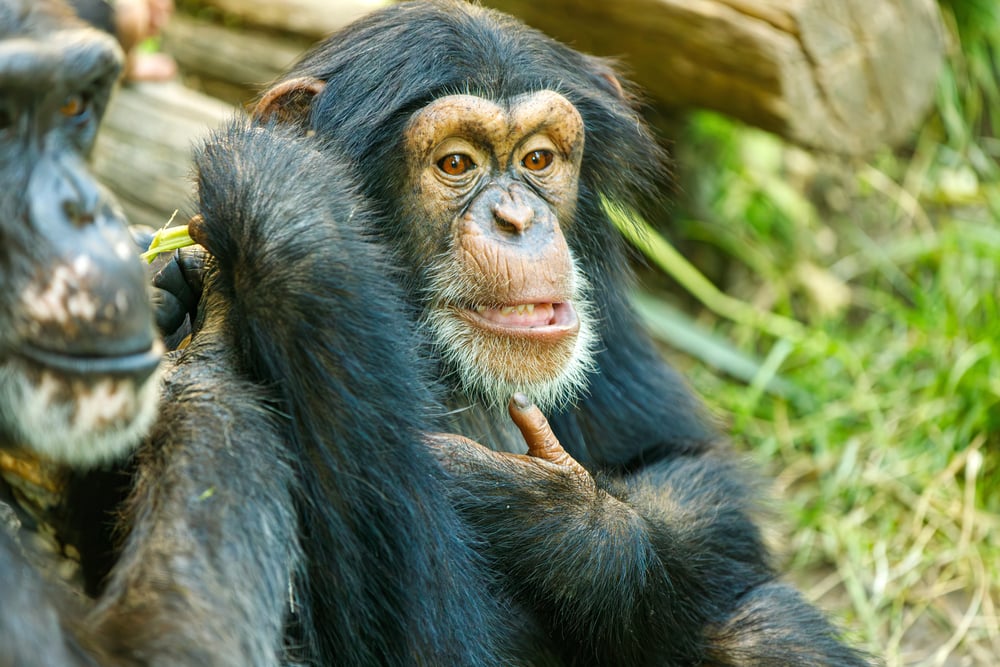
Chimpanzees are often considered the closest comparison point for human intelligence, and not only because of genetic similarity. Their cognitive abilities have been studied extensively, revealing complex problem-solving skills and rich social awareness.
They use tools in the wild, fashioning sticks to extract insects or stones to crack open hard shells. These behaviors are learned, shared, and refined within groups, suggesting cultural transmission rather than isolated discovery.
Young chimpanzees observe adults closely and practice repeatedly before mastering techniques.
Equally impressive is their social intelligence. Chimpanzees recognize individuals, remember past interactions, form alliances, and adjust behavior based on social rank.
Their intelligence is deeply tied to navigating group life, much like our own.
Dolphins
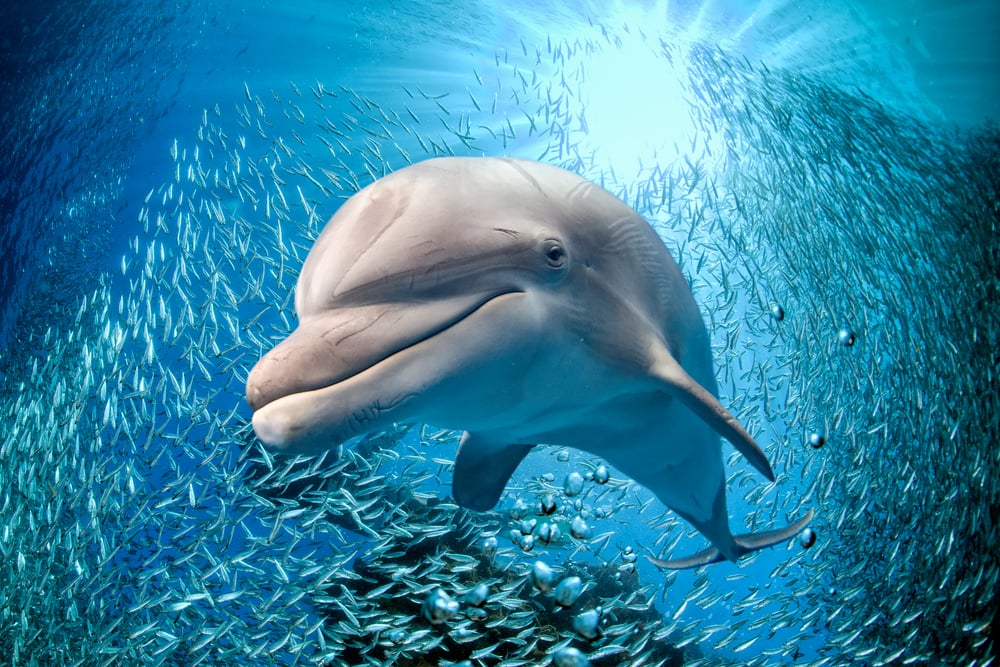
Dolphins demonstrate a form of intelligence shaped by social complexity and communication. They live in intricate social networks, maintain long-term relationships, and cooperate in ways that require coordination and memory.
Research has shown that dolphins can recognize themselves in mirrors, a rare trait associated with self-awareness. They also use signature whistles that function much like names, allowing individuals to identify and call to one another.
Their problem-solving abilities are equally notable. Dolphins learn new tasks quickly, adapt strategies when conditions change, and sometimes invent novel solutions.
Intelligence, for them, is expressed through flexibility and communication rather than manipulation of objects.
Elephants

Elephants possess one of the largest brains among land animals, and their intelligence is reflected in memory, empathy, and long-term social bonds. They remember water sources over vast distances and across many years, a skill essential for survival in variable environments.
Their social awareness is especially striking. Elephants recognize individuals they have not seen for long periods and respond differently to familiar and unfamiliar voices.
They also show behaviors associated with empathy, such as comforting distressed companions.
Problem-solving experiments reveal that elephants can understand cause and effect, using objects to reach food or adjusting strategies when obstacles change. Their intelligence is slow, deliberate, and deeply tied to social and environmental knowledge.
Octopuses
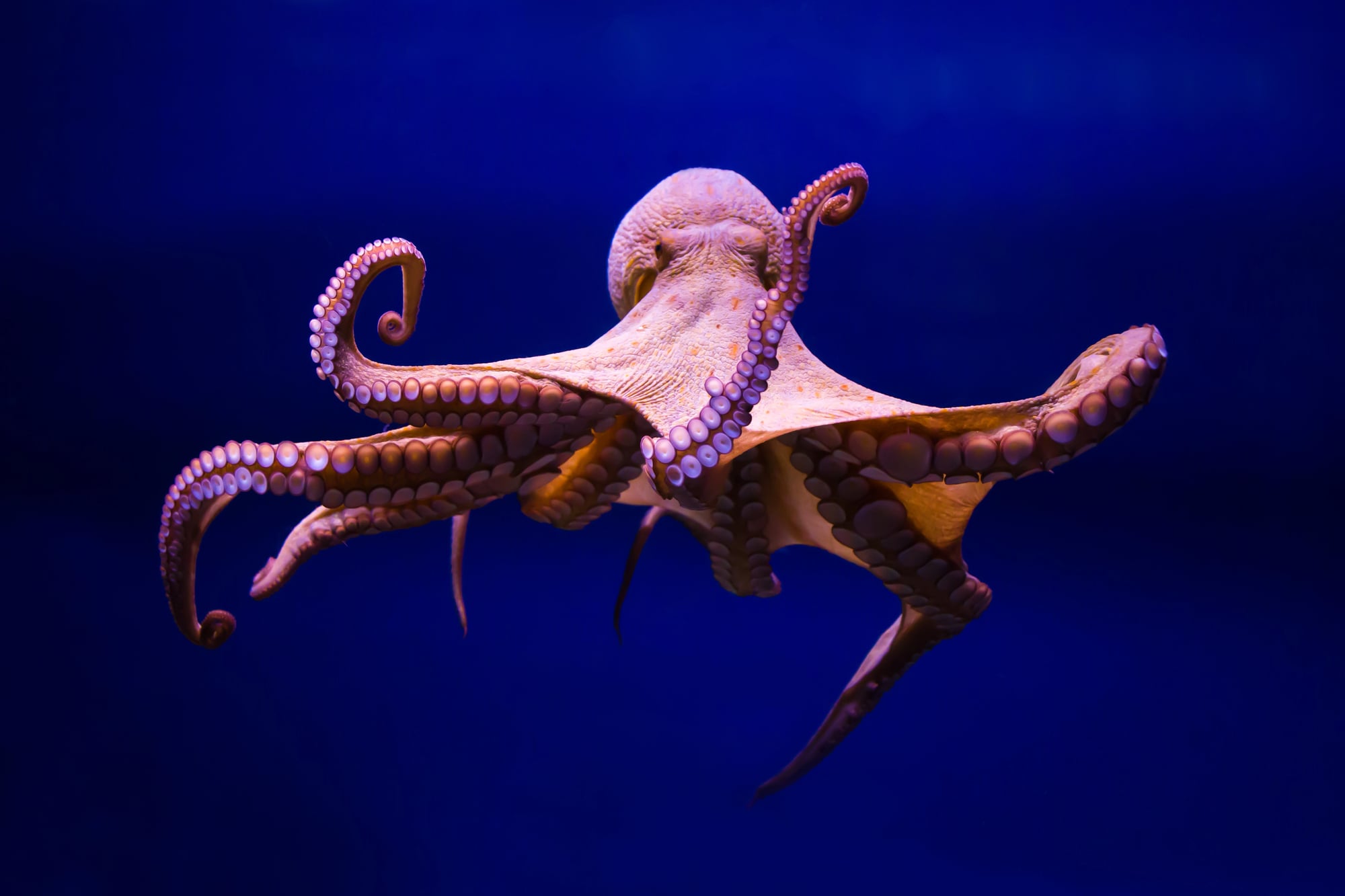
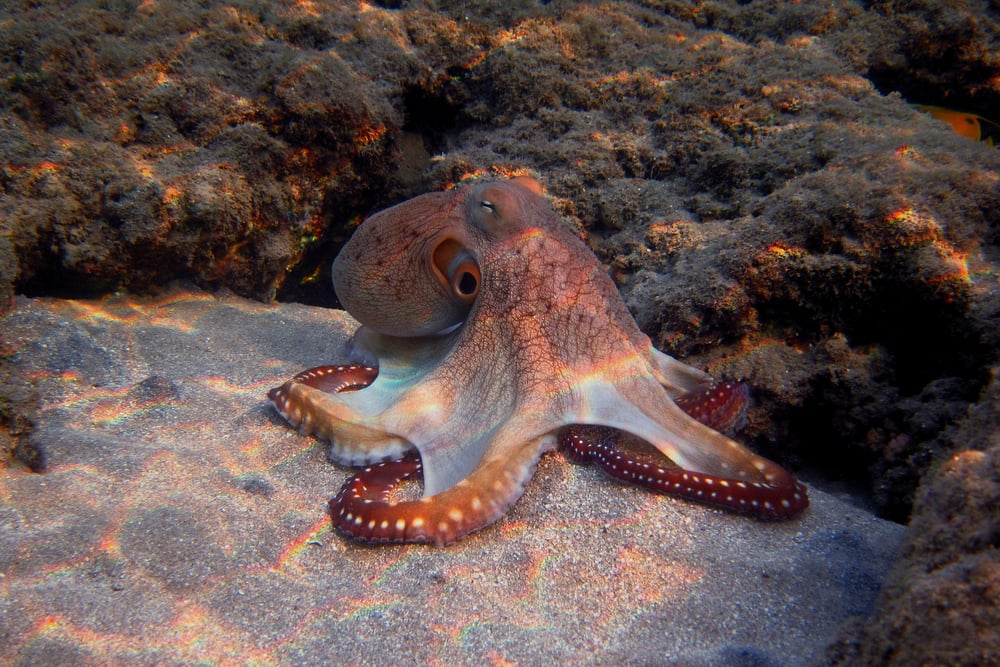
Octopuses represent a very different kind of intelligence, one that evolved independently from mammals. With no backbone and a radically different nervous system, they still display remarkable cognitive abilities.
They solve puzzles, open containers, and navigate mazes with ease. In controlled environments, octopuses learn through observation and remember solutions long after first encountering a task.
Some have even been seen using objects as tools for protection or mobility.
What makes octopus intelligence particularly fascinating is its distribution. Much of their neural processing occurs in their arms rather than a centralized brain, suggesting a form of problem-solving that is both flexible and decentralized.
Crows and ravens
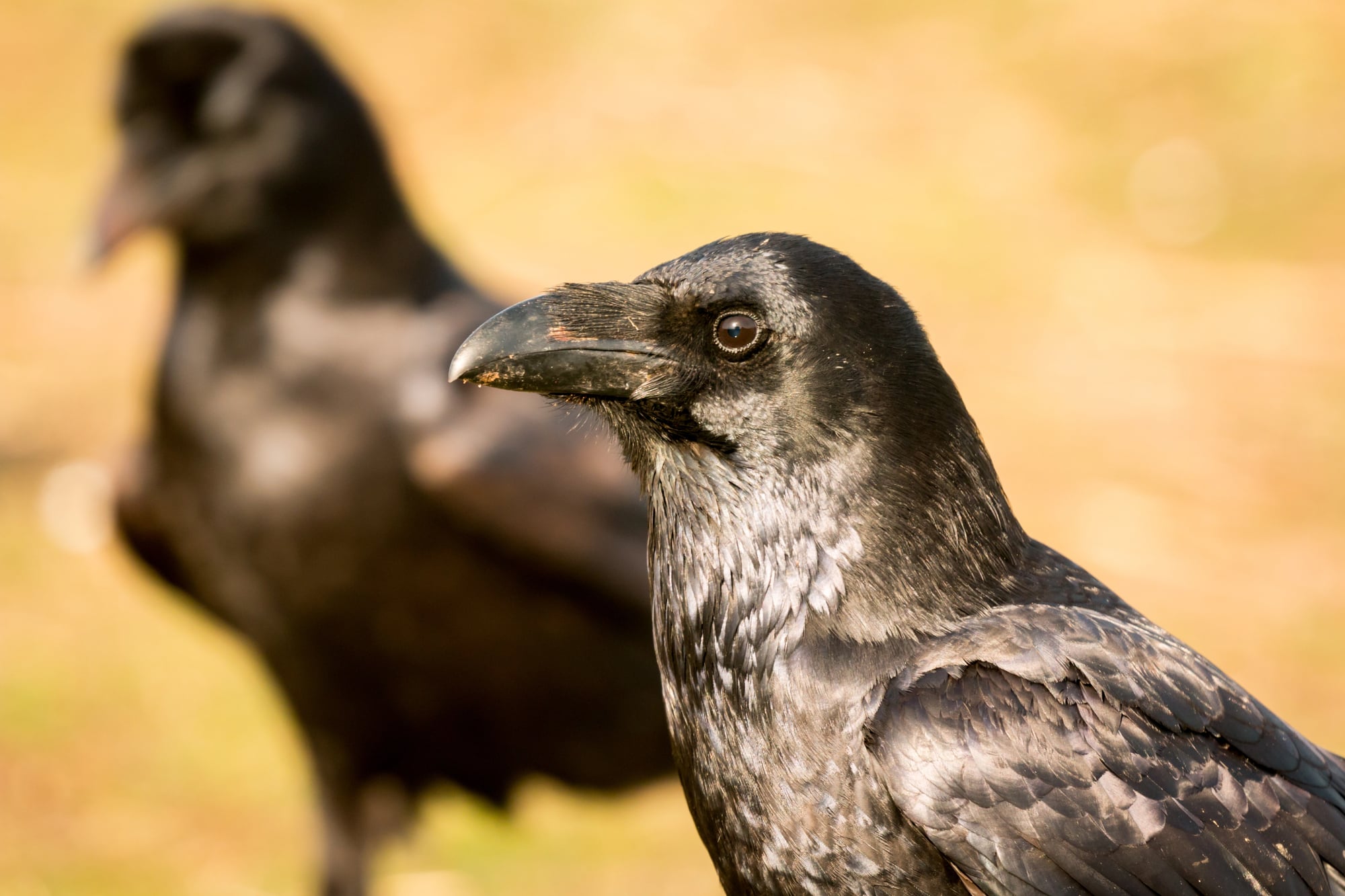
Members of the crow family consistently rank among the most intelligent birds, and in some tasks they rival primates. They use tools, plan ahead, and solve multi-step problems that require foresight.
Experiments have shown that crows can select tools they will need later, even when no immediate reward is present. This suggests an ability to anticipate future situations, a cognitive skill once thought to be uniquely human.
They also recognize individual human faces and remember past interactions, responding differently to those perceived as friendly or threatening. Their intelligence combines memory, adaptability, and an acute awareness of their surroundings.
Parrots
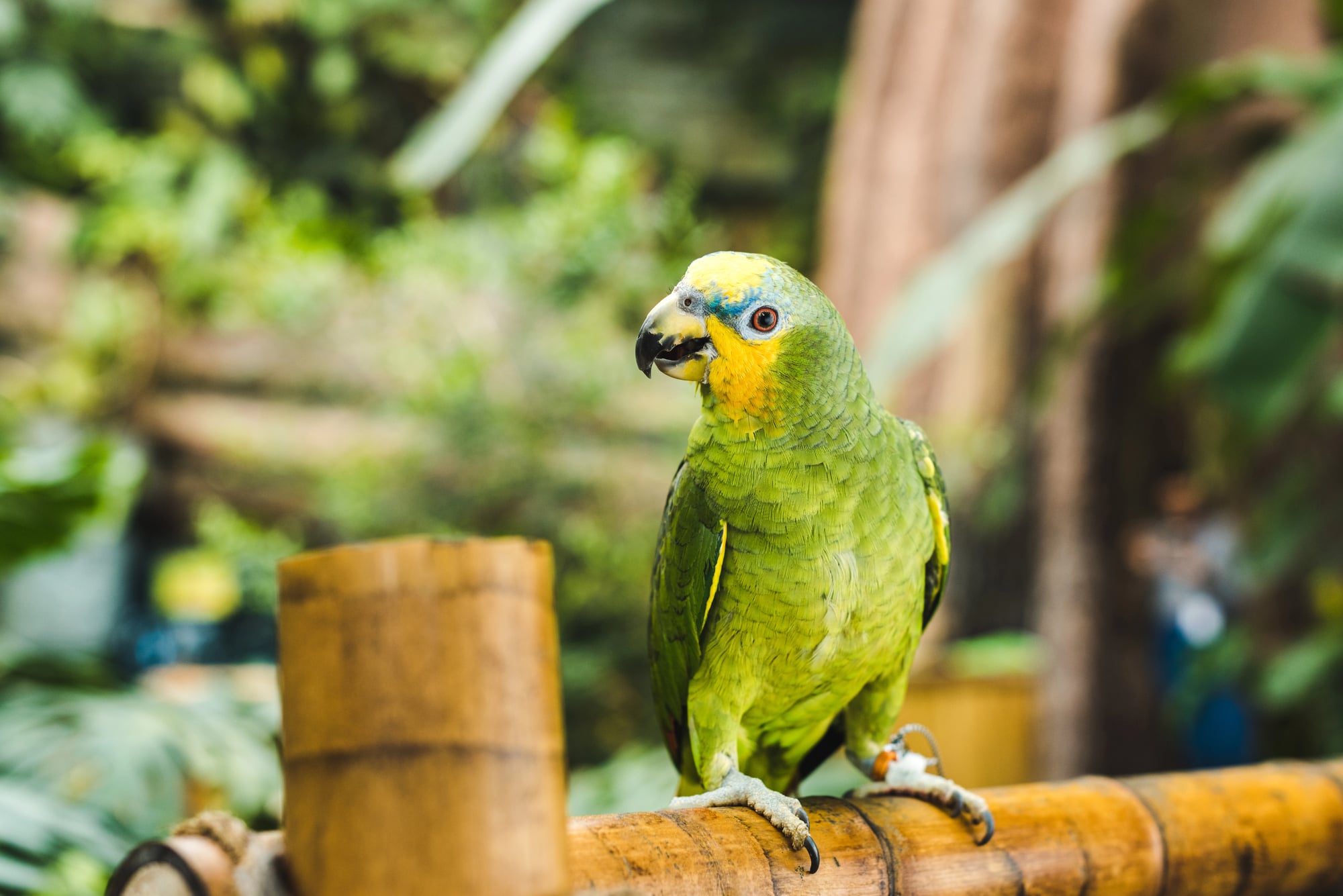
Parrots are best known for vocal mimicry, but their intelligence goes far beyond repeating sounds. Some species understand concepts such as shape, color, quantity, and sequence, using words meaningfully rather than randomly.
They learn through social interaction and problem-solving, often showing persistence when faced with challenges. In experimental settings, parrots have demonstrated the ability to categorize objects and make choices based on abstract properties.
Their intelligence thrives in interactive environments. Without mental stimulation, parrots can become bored or distressed, highlighting how closely cognition and emotional well-being are linked in highly intelligent animals.
Pigs
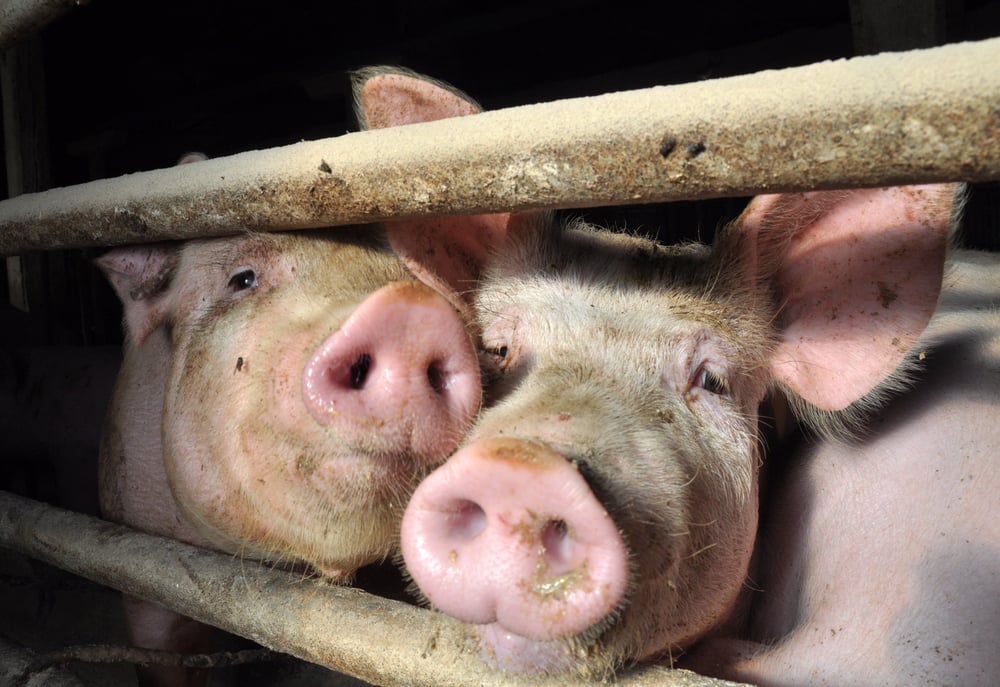
Pigs are often underestimated, yet research consistently shows they possess strong learning and memory abilities. They quickly learn routines, solve spatial tasks, and adapt to new challenges with surprising speed.
In studies, pigs have demonstrated the ability to use mirrors to locate hidden food, indicating an understanding of reflected information rather than simple trial and error. They also remember locations and outcomes over long periods.
Their intelligence is practical and adaptable, shaped by foraging behavior and social living. Pigs observe one another, learn from experience, and adjust strategies efficiently when conditions change.
Dogs
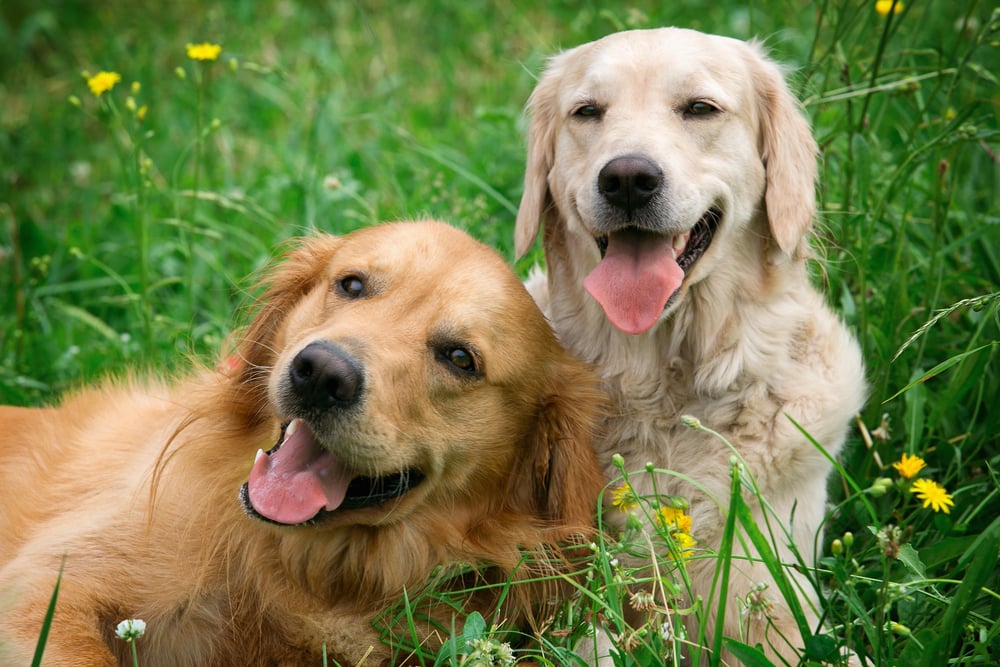
Dogs display intelligence that is closely intertwined with humans. Over thousands of years of coexisting with people, they have developed an exceptional ability to read human cues, gestures, and expressions.
They learn words, recognize routines, and respond to subtle changes in tone and posture. Some dogs understand hundreds of object names and can retrieve items by category, showing more than simple conditioning.
While dogs may not excel at abstract problem-solving compared to some species, their social intelligence is unmatched. Their ability to cooperate and communicate across species is a unique cognitive achievement.
How intelligence varies across species

Comparing animal intelligence requires caution. A crow solving a puzzle, an elephant navigating social relationships, and an octopus opening a container are demonstrating different kinds of intelligence shaped by different evolutionary pressures.
Brain size alone does not explain these abilities. Structure, connectivity, and environmental demands all play roles.
Intelligence evolves where flexibility provides a survival advantage, not where it mirrors human thinking.
Recognizing this diversity helps shift the conversation away from ranking and toward understanding.
Why animal intelligence still surprises us
Many discoveries about animal intelligence challenge assumptions humans once held about uniqueness. Behaviors once considered rare or exceptional now appear across multiple species when studied carefully.
Advances in research methods have played a role. Observing animals in natural settings and designing fair experiments reveals abilities that laboratory constraints once obscured.
Intelligence often appears when animals are allowed to engage on their own terms.
These findings continue to reshape how humans think about cognition beyond our own species.
Why it still matters

Seeing animals think shifts something deep inside us. Because their minds work in ways we never guessed, old assumptions start to fade.
When feelings like fear or joy show up in a bird or a fox, everything feels different. That awareness nudges choices about protecting habitats or treating farm life fairly.
Decisions grow slower, quieter, shaped by what silent eyes seem to say.
What we call smart shows up in surprising ways across creatures. Seeing that doesn’t make people less special.
It fits us into a wider picture, one drawn by time and change. Thought isn’t just one high point reached alone.
The living world holds different kinds of cleverness, each its own shape.
Beyond human minds, something shifts when animal thoughts come into view. Curiosity shows up where we once assumed silence.
Flexibility appears in movements we barely notice. Awareness pulses in ways different from our own.
What feels unique here may simply be familiar there.
More from Go2Tutors!

- The Romanov Crown Jewels and Their Tragic Fate
- 13 Historical Mysteries That Science Still Can’t Solve
- Famous Hoaxes That Fooled the World for Years
- 15 Child Stars with Tragic Adult Lives
- 16 Famous Jewelry Pieces in History
Like Go2Tutors’s content? Follow us on MSN.



