Smartest Criminals Caught
Some criminals are just smarter than others. They plan every detail, think ten steps ahead, and almost pull off the perfect crime.
Almost. Even the most clever crooks make mistakes that bring their schemes crashing down. Intelligence can take someone far in the criminal world, but it rarely gets them all the way to freedom.
The gap between brilliant planning and actual success is where law enforcement finds its opening. Here are some of the smartest criminals who still ended up behind bars.
Frank Abagnale Jr.

Frank Abagnale pretended to be an airline pilot, a doctor, and a lawyer before he turned 21 years old. He forged checks worth millions of dollars across 26 countries and cashed them at banks that never suspected a teenage con artist.
His ability to study professions and fake credentials was so good that he actually taught classes at a university while posing as a sociology professor. The FBI finally caught him in France in 1969, but his skills were so valuable that they eventually hired him as a consultant.
He now runs a financial fraud consultancy and has helped the government catch other criminals for decades.
Victor Lustig

Victor Lustig sold the Eiffel Tower twice. He convinced scrap metal dealers that the French government needed to secretly dismantle the famous landmark and wanted bids from buyers.
After collecting a huge bribe from one dealer, Lustig left Paris before anyone realized the whole thing was fake. He came back a month later and did it again with a different buyer.
His downfall came from counterfeiting money in the United States, which brought him to the attention of the Secret Service. They arrested him in 1935, and he died in prison on Alcatraz Island.
Kevin Mitnick

Kevin Mitnick hacked into some of the biggest companies in the world during the 1980s and 1990s, including Motorola, Nokia, and Sun Microsystems. He didn’t steal money or destroy data, but instead copied software and source code just to prove he could break in.
His skills at social engineering were so good that he could convince employees to give him passwords over the phone. The FBI chased him for years before finally arresting him in 1995.
After serving five years in prison, he became a security consultant and now gets paid to find weaknesses in computer systems.
Carlo Ponzi

Carlo Ponzi didn’t invent the scheme that bears his name, but he perfected it. He promised investors a 50% return in 45 days by supposedly exploiting differences in international postal reply coupons.
In reality, he paid early investors with money from new investors while keeping most of the cash for himself. His operation took in millions of dollars before investigators figured out the math didn’t work.
He was arrested in 1920, served time in prison, and was eventually deported to Italy. The term ‘Ponzi scheme’ now describes any investment fraud that pays old investors with new investor money.
Bernie Madoff

Bernie Madoff ran the biggest Ponzi scheme in history, stealing approximately $65 billion from investors over several decades. He was a respected Wall Street figure who served as chairman of NASDAQ, which gave him credibility that other con artists could never achieve.
His investment firm produced steady returns year after year, which should have been impossible but nobody questioned him. The 2008 financial crisis finally exposed the fraud when too many investors tried to withdraw money at once.
He was arrested, pleaded guilty to 11 federal felonies, and died in prison in 2021 while serving a 150-year sentence.
D.B. Cooper
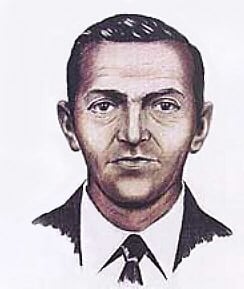
D.B. Cooper is the only person on this list who was never actually caught, but his crime was so smart it deserves mention. In 1971, he hijacked a plane, demanded $200,000 and parachutes, then jumped out over Washington state and disappeared.
The FBI investigated for decades and interviewed hundreds of suspects but never definitively identified him. Some of the ransom money was found along a river bank years later, suggesting he might not have survived the jump.
The case remains the only unsolved airplane hijacking in American history.
Willie Sutton
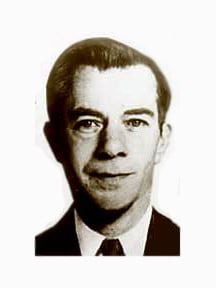
Willie Sutton robbed banks for over 40 years and stole an estimated $2 million during his career. He was a master of disguise who dressed as a maintenance worker, police officer, or messenger to get inside banks without raising suspicion.
When asked why he robbed banks, he supposedly said ‘because that’s where the money is,’ though he later claimed he never said it. He escaped from prison three times using various clever methods, including dressing as a guard.
Police finally caught him for good in 1952, and he served 17 years before being released for health reasons.
Charles Ponzi’s modern successor

Allen Stanford ran a $7 billion Ponzi scheme through his bank in Antigua, promising investors impossibly high returns on certificates of deposit. He used his wealth to buy influence in Caribbean politics and even sponsored international cricket tournaments to appear legitimate.
His operation lasted from the 1980s until 2009, when financial regulators finally shut it down during an investigation. He was convicted on 13 counts of fraud and conspiracy in 2012 and is currently serving a 110-year prison sentence.
His case showed that even after Madoff, investors still fall for the same basic con.
The Antwerp Diamond Heist mastermind

Leonardo Notarbartolo led a team that stole over $100 million in diamonds, gold, and jewelry from a vault in Antwerp, Belgium in 2003. The vault had 10 layers of security including infrared heat detectors, magnetic fields, and a seismic sensor.
His team spent years planning and even rented an office in the building to study the security systems. They successfully broke in and emptied over 100 safe deposit boxes, but got caught because they dumped garbage near the crime scene that contained DNA evidence.
Notarbartolo was sentenced to 10 years in prison, though he has always maintained he was just a member of the team, not the leader.
Jordan Belfort

Jordan Belfort ran a stock brokerage that defrauded investors out of approximately $200 million through pump and dump schemes in the 1990s. His firm would buy cheap stocks, artificially inflate the price through false information, then sell their shares at the peak while regular investors lost everything.
He lived an incredibly lavish lifestyle with yachts, mansions, and constant parties funded by his illegal activities. The FBI eventually built a case against him with help from cooperating witnesses within his own company.
He served 22 months in prison, wrote a memoir that became the movie The Wolf of Wall Street, and now works as a motivational speaker.
The Lufthansa Heist organizers

Jimmy Burke and his crew stole $5.8 million in cash and $875,000 in jewelry from a Lufthansa cargo building at JFK Airport in 1978. It was the largest cash robbery in American history at the time.
The planning was incredibly detailed, with inside information from airport workers and perfect timing to avoid security. The crew’s downfall came from their own greed and loose lips, as members started spending money too obviously and talking too much.
Burke allegedly killed several crew members to silence them, and while he was never convicted for the heist itself, he died in prison serving time for murder.
The Great Train Robbery gang

A group of 15 men stopped a Royal Mail train in England in 1963 and stole £2.6 million, equivalent to about $70 million today. They used inside information about the train’s schedule and cargo, disabled the signals to stop the train, and overwhelmed the crew without firing a shot.
The plan worked perfectly, but the gang left fingerprints all over their hideout because they played Monopoly with the stolen cash. Police arrested most of the gang within months.
The ringleader, Bruce Reynolds, spent five years on the run before being caught in 1968.
Albert Spaggiari

Albert Spaggiari organized a tunnel heist into a bank vault in Nice, France in 1976 and stole around $10 million. His crew spent months digging a tunnel from the city’s sewer system into the bank, working only on weekends when the bank was closed.
They welded the safe deposit boxes shut from the inside to delay discovery and left a note saying ‘without weapons, without violence, without hate.’ Spaggiari was caught and arrested, but escaped from a courthouse by jumping out a window onto a waiting motorcycle.
He lived in Argentina until his death in 1989 and the stolen money was never recovered.
The Carbanak Cyber Gang

A group of hackers from Russia and Ukraine stole over $1 billion from banks in 30 countries between 2013 and 2015. They used spear phishing emails to infect bank computers with malware, then watched employees to learn how the systems worked.
The gang programmed ATMs to dispense cash at specific times when their mules would be waiting to collect it. They also manipulated account balances to hide their tracks.
International law enforcement agencies arrested some members in 2018, but the investigation revealed the attacks were more widespread than initially believed.
The Theft From The Gardner Museum

One night in 1990, a pair of thieves wearing fake police uniforms walked into the Isabella Stewart Gardner Museum in Boston without forcing entry. Instead of rushing, they took their time – eighty-one minutes – to pick only certain artworks.
Thirteen pieces vanished that evening, valued at half a billion dollars today. Before leaving, they bound the security staff, making escape easier.
Among the losses were originals by Rembrandt, one rare Vermeer, plus several works by Degas. To this day, no arrests have followed, even with ten million dollars offered for clues.
Investigators remain stuck, going over old leads again and again. Inside the gallery, bare frames stay on display – not replaced, not forgotten.
Henry Hill and the wiseguys

Once tied to the Lucchese crime family, Henry Hill pulled off complex crimes – like the famous Lufthansa job already noted. Instead of working alone, he operated with a team handling bets, high-interest loans, and trafficking stolen items, pulling in big earnings.
When caught on narcotics charges in 1980, he shifted sides, offering information to federal agents. Because of what he revealed, many members of organized crime groups were sent to jail.
A film called Goodfellas later drew heavily from his experiences. Under a new identity, he stayed hidden through a special program until passing away in 2012, even though never spending long behind bars for all he’d done.
What catches the clever ones

Confidence often trips up even the sharpest offenders. A single misstep – born from arrogance or desire – can unravel everything.
Trusting someone careless cracks wide open what careful planning built. When emotions step in, logic usually exits fast.
Police now spot these errors quicker than before. Tools like data tracking and shared databases across departments change how cases unfold.
Years back, such coordination simply did not happen. Justice moves slow, yet even clever ones eventually face its grip.
Smarts can stretch time, though freedom often slips through fingers anyway. What one gains by wit gets lost in the fall when capture comes – no balance tips in favor.
More from Go2Tutors!

- The Romanov Crown Jewels and Their Tragic Fate
- 13 Historical Mysteries That Science Still Can’t Solve
- Famous Hoaxes That Fooled the World for Years
- 15 Child Stars with Tragic Adult Lives
- 16 Famous Jewelry Pieces in History
Like Go2Tutors’s content? Follow us on MSN.



