Surprising Facts About Numbers Used Every Day
Numbers are everywhere — on your phone, your receipts, your clock, the floor of an elevator. Most people use them all day without thinking twice.
But behind even the simplest figures there are strange histories, odd quirks, and genuinely surprising ideas that most people never hear about. Here are some of the most interesting ones.
Zero Was Once Considered Dangerous

For most of human history, zero didn’t exist as a number. Ancient Greeks, who were brilliant mathematicians, rejected the idea of zero entirely.
The philosopher Aristotle argued against it on logical grounds — how could nothing be something? It was mathematicians in India who formally developed zero as a number around the 5th century, and when the concept eventually reached Europe through Arab scholars, religious authorities in some regions pushed back hard.
The idea that you could represent “nothing” with a symbol felt philosophically threatening. Some places actually banned its use in commercial transactions.
Today you’d struggle to do anything mathematical without it.
One Is the Loneliest Number (Mathematically Speaking)

Ask most people what the first prime number is, and they’ll say one. But one isn’t prime.
It’s not composite either. It sits in its own category entirely — a unit — and mathematicians have very deliberate reasons for excluding it from the primes.
If one were prime, the fundamental theorem of arithmetic would break down. That theorem says every number can be expressed as a unique product of primes.
If one counted, you could just keep multiplying by it forever and get different “unique” factorizations for every number. So one gets its own special status: neither prime nor composite, just one.
Your Clock Comes From Ancient Babylon

The reason there are 60 seconds in a minute and 60 minutes in an hour has nothing to do with convenience. It comes from the Babylonians, who used a base-60 number system — called sexagesimal — around 2000 BCE.
They chose 60 because it’s divisible by an unusually large number of smaller numbers: 1, 2, 3, 4, 5, 6, 10, 12, 15, 20, and 30. That made fractions much easier to handle without decimals.
Their system also gave us the 360 degrees in a circle. You’ve been using Babylonian math every time you check the time.
The Number 12 Keeps Showing Up
Twelve eggs in a dozen. Twelve months in a year.
Twelve inches in a foot. Twelve items in a gross — wait, that’s 144, which is 12 times 12.
Twelve hours on a clock face, twelve notes in a musical octave, twelve signs in the zodiac. This isn’t a coincidence.
Twelve, like 60, is highly divisible. You can split it evenly into halves, thirds, quarters, and sixths without any remainders.
Before decimal systems took over, 12 was far more practical than 10 for everyday calculation. Many cultures independently landed on it for that reason.
Pi Goes On Forever, and Nobody Knows Why
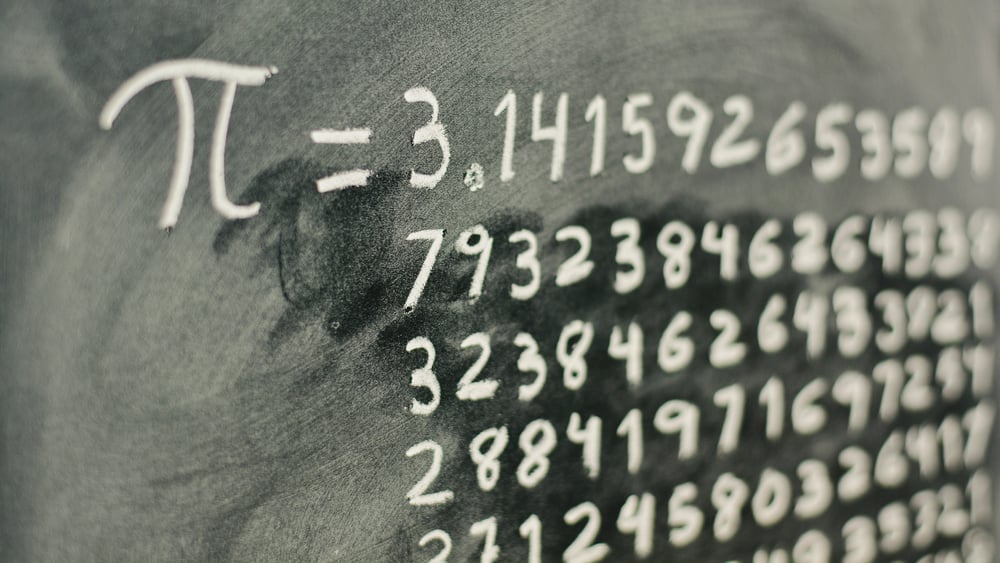
Pi — roughly 3.14159 — is the ratio of a circle’s circumference to its diameter. Every circle, everywhere, has the same ratio.
And the decimal expansion of that ratio never ends and never repeats. Mathematicians have calculated pi to over 100 trillion decimal places and found no pattern.
It just keeps going. What’s strange is that this irrational, infinitely long number shows up in equations that have nothing to do with circles — in probability, in physics, in the study of waves.
It’s woven into the fabric of mathematics in ways that still surprise researchers.
Negative Numbers Were Rejected for Centuries

Negative numbers seem obvious now, but European mathematicians as recently as the 17th century called them “absurd” or “fictitious.” The idea of a number less than zero seemed to make no sense in a world where numbers represented physical quantities.
How could you have negative three apples? Chinese and Indian mathematicians were more comfortable with negatives and used them in practice long before Europe came around.
It took the gradual acceptance of algebra — and the usefulness of negative numbers in solving equations — for Western mathematics to finally embrace them.
The Symbols You Use Are Only About a Thousand Years Old

The digits 0 through 9, which feel so natural they’re hard to imagine replacing, are called Hindu-Arabic numerals. They were developed in India and brought to Europe through the work of Arab mathematicians, arriving in widespread use in Europe around the 10th to 13th centuries.
Before that, Europeans used Roman numerals. Try doing long division with Roman numerals.
The shift to Hindu-Arabic notation is one of the most important changes in the history of practical math — it made calculation vastly easier and eventually made everything from accounting to engineering more accessible.
Why 7 Feels Special to So Many People

Ask someone to pick a random number between 1 and 10, and a huge portion of people say 7. Psychologists have studied this repeatedly and found it to be consistent across many cultures. Seven sits in a sweet spot — it’s not too small and predictable, not too large and forgettable.
It also can’t be divided evenly, which makes it feel more “random” to the human brain. Seven also appears across world religions and traditions: seven days of the week, seven deadly sins, seven wonders of the ancient world, seven notes in a musical scale.
Whether the cultural weight of seven influenced its appeal or whether its psychological distinctiveness drove the cultural weight is hard to untangle.
There Are Different Sizes of Infinity
Infinity isn’t just one thing. Mathematician Georg Cantor proved in the 19th century that some infinities are larger than others — a discovery so counterintuitive that it caused genuine controversy and damaged his professional reputation at the time.
The set of all whole numbers is infinite. The set of all real numbers (including every decimal between 0 and 1) is also infinite — but Cantor showed it’s a larger infinity.
You can’t match them up one-to-one, no matter how clever your method. This idea, called “uncountability,” is now a cornerstone of modern mathematics.
A Billion Means Different Things Depending on Where You Are

In the United States and most of the world today, a billion is 1,000,000,000 — a thousand millions. But in the traditional British system, which was also used in many other countries, a billion was a million millions — 1,000,000,000,000.
The UK officially switched to the American definition in 1974, but the older meaning persisted in informal use for years. This means historical texts using the word “billion” require careful attention to context.
The number your grandparents called a billion may be what you call a trillion.
13 Has Been Feared Across Unrelated Cultures
The fear of 13 — called triskaidekaphobia — is widespread enough that many buildings still skip the 13th floor, hospitals avoid room 13, and airlines skip row 13. The origin isn’t entirely clear.
Some trace it to the Last Supper having 13 attendees. Others point to Norse mythology, where a 13th guest at a dinner party caused chaos.
What’s interesting is that 13 is considered unlucky in cultures that have no obvious historical connection to each other. In some East Asian cultures, 4 carries the same weight — because the word for four sounds like the word for death in Mandarin, Cantonese, Japanese, and Korean.
Phone Numbers Were Deliberately Designed to Be Forgettable
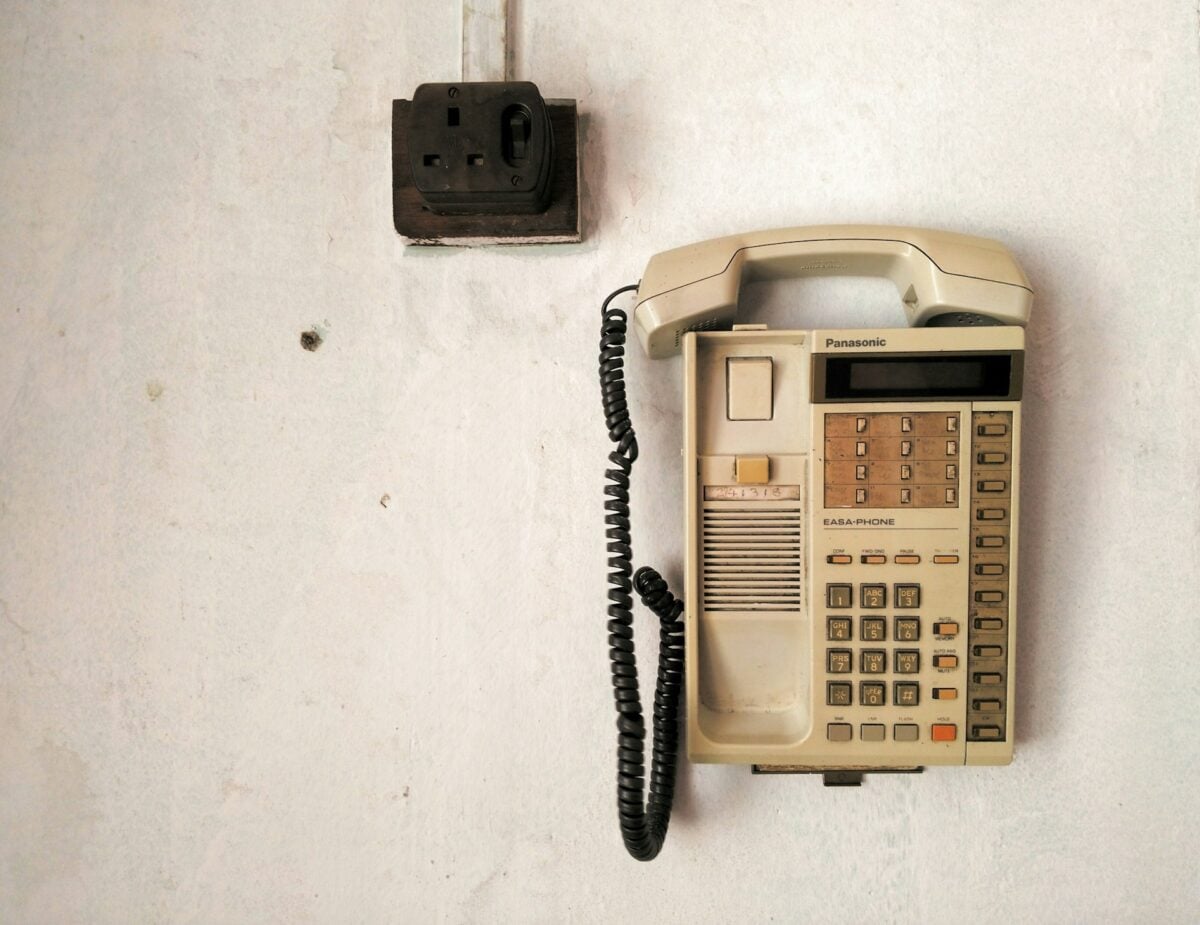
Early telephone engineers discovered that people made more dialing errors as phone numbers got longer. Bell Labs psychologist George Miller published a famous 1956 paper establishing that the average person can hold about seven items in short-term memory — plus or minus two.
That’s why American phone numbers were standardized at seven digits (not counting area codes). The design was intentional.
The number wasn’t chosen because of infrastructure — it was chosen because of how human memory works.
The Number 1,729 Has Its Own Famous Story
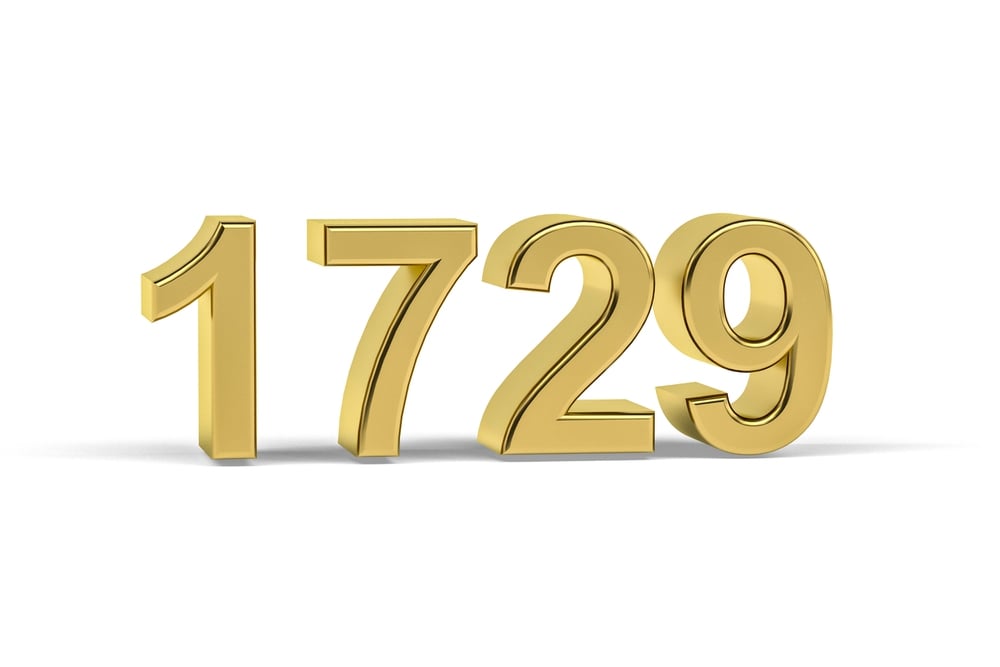
Most numbers don’t have biographies, but 1,729 does. When the mathematician G.H. Hardy visited his colleague Srinivasa Ramanujan in the hospital and mentioned he’d arrived in a taxi numbered 1,729, Ramanujan immediately replied that it was the smallest number expressible as the sum of two cubes in two different ways: 1³ + 12³ and 9³ + 10³.
Hardy was stunned. Ramanujan had apparently been playing with numbers mentally to the point where he recognized obscure properties instantly.
Numbers like 1,729 are now called “taxicab numbers” in honor of that exchange. It’s a reminder that even ordinary-looking numbers have hidden structure if you look closely enough.
The Decimal System Isn’t the Only Game in Town
Counting in tens feels natural, but that’s largely because humans have ten fingers. It’s a biological accident, not a mathematical inevitability.
Computers work in base 2 (binary) — just ones and zeros. Programmers often use base 16 (hexadecimal) because it maps neatly to binary.
The Yuki people of California traditionally counted in base 8 — using the spaces between fingers rather than the fingers themselves. The Babylonians, as mentioned earlier, used base 60.
Base 12 has serious advocates among mathematicians who argue it would make everyday arithmetic cleaner. The number system you learned in school is useful and widespread, but it’s not the only way.
When the Numbers Around You Start Talking Back
Once you start noticing the history behind everyday numbers, it’s hard to stop. The clock on your wall carries Babylonian math.
The zero on your keyboard was once banned. The number you just picked “at random” was almost certainly 7.
Numbers feel neutral and objective — just tools for counting things. But they carry centuries of argument, invention, and human quirk inside them.
The next time a number catches your eye, there’s a decent chance it has a stranger backstory than you’d expect.
More from Go2Tutors!

- The Romanov Crown Jewels and Their Tragic Fate
- 13 Historical Mysteries That Science Still Can’t Solve
- Famous Hoaxes That Fooled the World for Years
- 15 Child Stars with Tragic Adult Lives
- 16 Famous Jewelry Pieces in History
Like Go2Tutors’s content? Follow us on MSN.



