The Creepiest Myths and Legends from Ancient Egypt
Ancient Egypt fascinated people for thousands of years, and once you start digging into their mythology, it becomes clear why. These weren’t just stories about gods and pharaohs—they were tales that explored the darkest corners of human fear.
Death, transformation, judgment, and the thin line between the living and the dead permeated every aspect of their belief system. The ancient Egyptians understood something most cultures tried to avoid: that the most compelling stories are the ones that make your skin crawl.
Ammit the Soul Eater
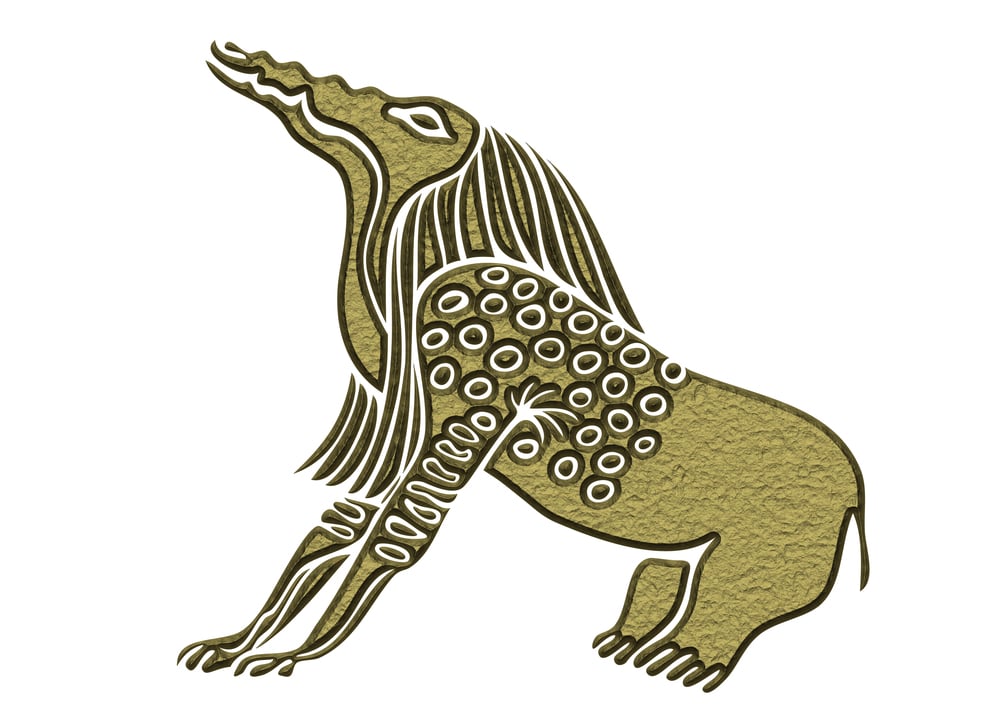
Ammit didn’t mess around. Part crocodile, part lion, part hippo—basically everything that could kill you in ancient Egypt rolled into one divine nightmare. She waited in the afterlife to devour hearts that failed the judgment test.
No second chances, no appeals process.
The Book of Coming Forth by Day
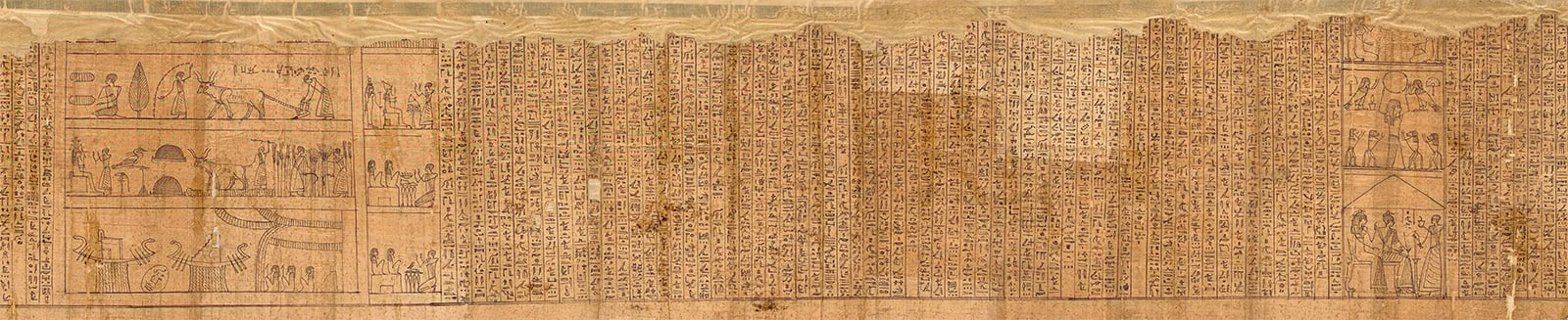
The ancient Egyptians believed that navigating the afterlife required a guidebook, and what they came up with reads like a fever dream written by someone who’d spent too long staring into the abyss (which, considering it dealt with death and the underworld, might not be far from the truth). This collection of spells and incantations—what we now call the Book of the Dead—wasn’t just about helping souls reach the afterlife.
It was about surviving a journey that involved being interrogated by demons, crossing lakes of fire, and avoiding having your heart eaten by a monster. And that was just the beginning, because the real terror came from the possibility that even if you followed every instruction perfectly, you might still end up as monster food if your heart weighed more than a feather—which, let’s be honest, whose wouldn’t after a lifetime of human existence?
The spells themselves read like someone trying to negotiate with cosmic horror. “I have not stolen food” and “I have not killed sacred animals” were among the denials a soul had to make, but mixed in were stranger confessions: “I have not made anyone weep” and “I have not been sexually impure.”
So the afterlife wasn’t just about big sins. Even making someone cry could doom you.
Set and the Dismemberment of Osiris
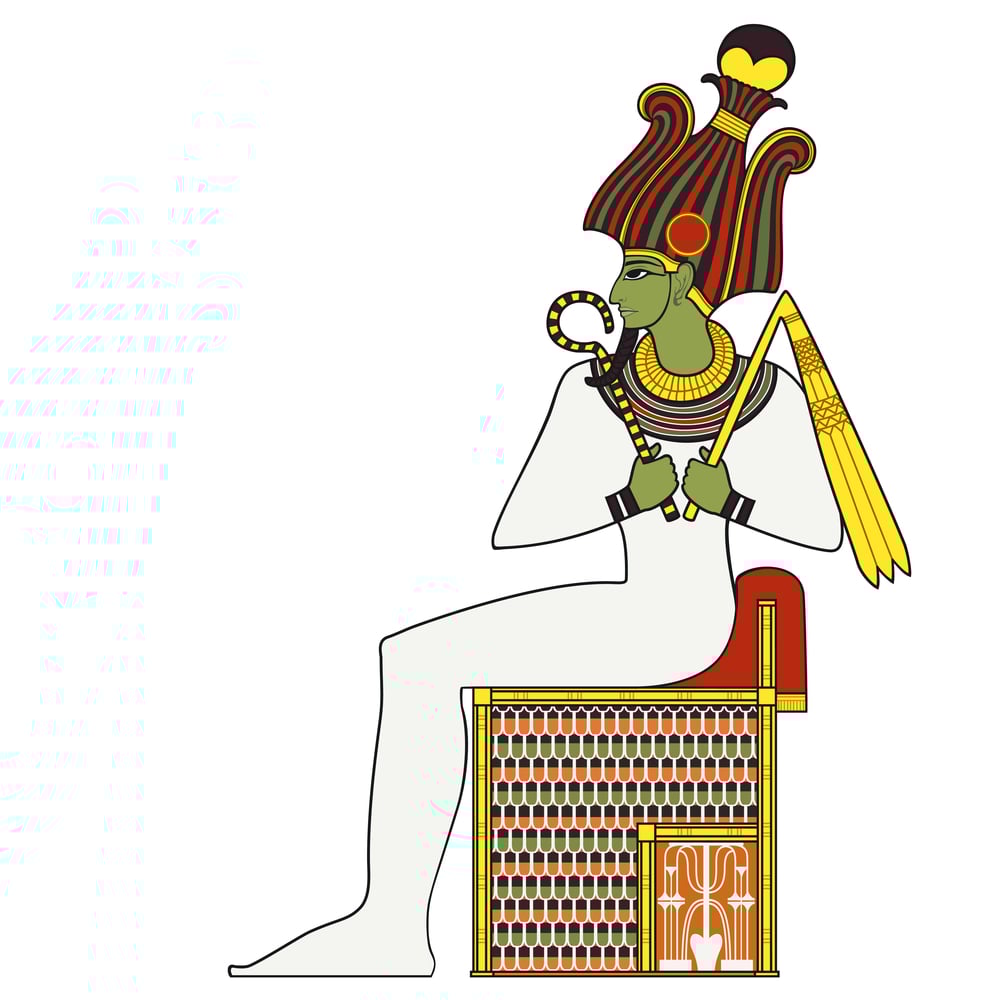
Think of family dysfunction, then multiply it by divine power and an obsession with bodily mutilation. Set didn’t just kill his brother Osiris—that would have been too simple, too clean.
Instead, he chopped him into fourteen pieces and scattered them across Egypt like some ancient jigsaw puzzle made of flesh and bone.
Isis had to wander the country collecting her husband’s body parts, and according to some versions of the myth, she never found all of them. The missing piece was usually his phallus, which had been eaten by a fish.
She had to craft a replacement from clay and magic. Which raises questions about the nature of resurrection that most people would rather not think about too deeply.
The Canopic Jar Ritual
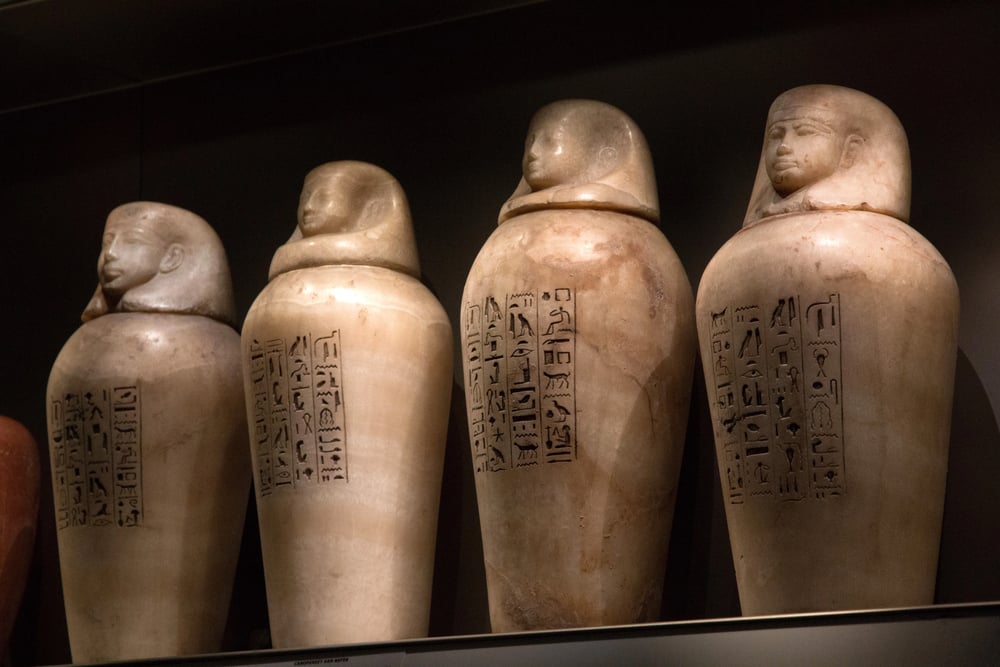
There’s something uniquely unsettling about the methodical way ancient Egyptians approached death preparation—not the gentle, respectful rituals you might imagine, but a process that treated the human body like a complex machine that needed to be disassembled with surgical precision. The four canopic jars weren’t just storage containers; they were homes for organs that would need to function again in the afterlife, each one guarded by a different deity who specialized in keeping body parts from rotting away into nothingness.
Imsety protected the liver (which they believed was the seat of emotion), Hapi guarded the lungs (breathing in the next world, apparently, required your original equipment), Duamutef watched over the stomach (eternal digestion), and Qebehsenuef kept the intestines safe (because even in paradise, waste management matters). But here’s what makes it genuinely creepy rather than just ancient and strange: they believed that if these organs weren’t properly preserved and protected, the deceased would spend eternity experiencing the specific agony of that organ’s failure—suffocating forever if the lungs rotted, starving eternally if the stomach decayed, feeling every emotion as physical pain if the liver corrupted.
The jars themselves were often carved with faces, giving them an almost human appearance that made the whole setup look less like a preservation method and more like a collection of severed heads watching over a tomb.
The Curse of the Pharaohs

Tomb robbers knew the risks. Ancient Egyptian burial sites came with explicit warnings about what would happen to anyone who disturbed the dead.
The curses weren’t just empty threats—they were detailed promises of specific punishments.
The texts carved into tomb walls described fates worse than death. Thieves would be judged by the gods, eaten by crocodiles, or condemned to wander as restless spirits.
Some curses promised that the criminal’s name would be erased from all records, effectively removing them from existence itself.
The Weighing of the Heart
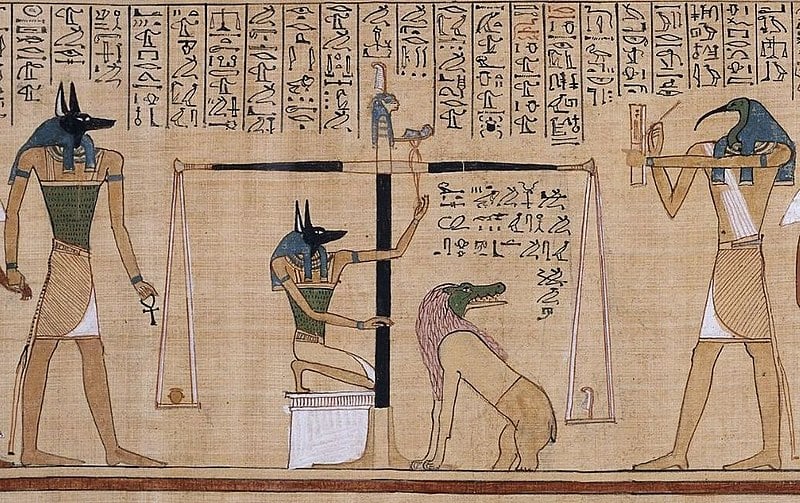
Picture this: you die, and instead of peaceful rest or immediate judgment, you find yourself in a cosmic courtroom where the evidence against you is your own heart—not metaphorically, but literally removed from your chest and placed on a scale opposite a feather so light that even the weight of a single guilty thought could tip the balance toward damnation. The ancient Egyptians believed that your heart recorded every deed, every lie, every moment of cruelty or kindness like some kind of organic recording device, and in the Hall of Ma’at, there was no hiding from what you’d actually been during your lifetime (as opposed to what you’d pretended to be, or what you’d convinced yourself you were).
Anubis, the jackal-headed god, would perform the weighing with the dispassionate precision of a laboratory technician, while Thoth, the ibis-headed god of wisdom, recorded the results—and if your heart proved heavier than the feather of truth, Ammit was right there waiting to devour it, which didn’t just mean death but complete obliteration, the kind of non-existence that made regular death look like a vacation.
The really disturbing part wasn’t the judgment itself, but the implication that your heart might betray you. Even if you thought you’d lived a good life, your heart might remember things differently.
Apep the Chaos Serpent
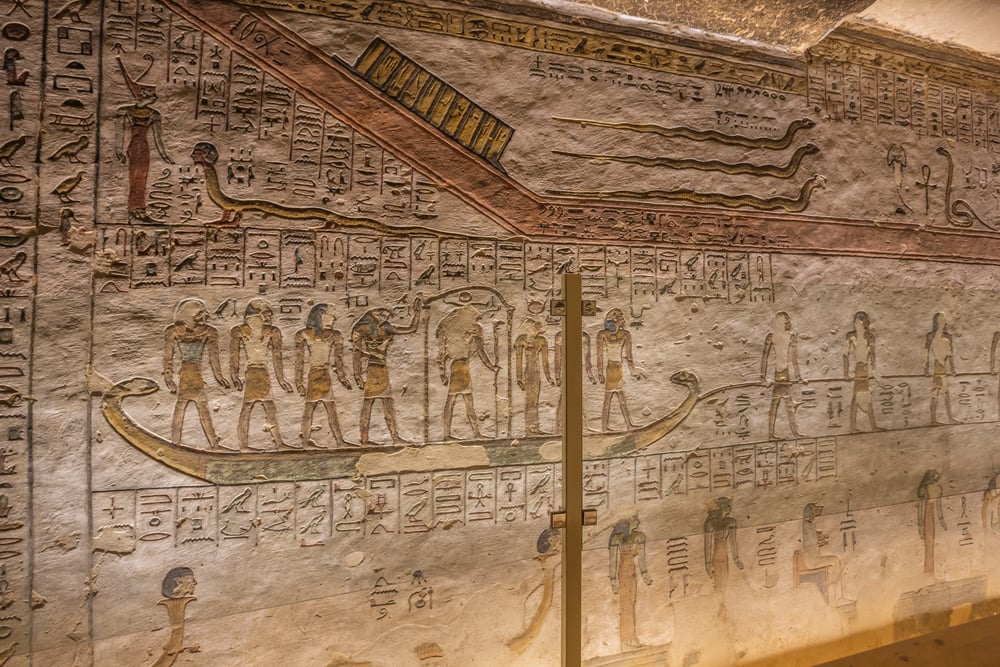
Every night, the sun god Ra had to fight a giant snake that wanted to swallow the world. Apep wasn’t just big—it was the physical embodiment of chaos and nothingness.
The battle happened in complete darkness, in the underworld, while everyone slept.
If Ra lost, the sun wouldn’t rise. Ever.
The world would be consumed by primordial chaos, and everything that had ever existed would be undone. The ancient Egyptians took this seriously enough to perform daily rituals to help Ra win the fight.
The Ba and the Ka
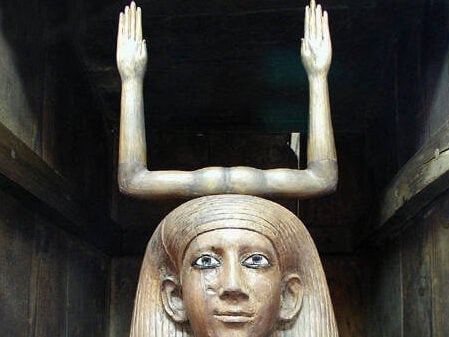
The ancient Egyptians understood something about consciousness that feels almost modern in its complexity: that what we call the self isn’t actually a single, unified thing but rather a collection of different aspects that can be separated, lost, or corrupted. The ba was your personality, your individual essence—often depicted as a bird with a human head that could fly free from the body but needed to return each night or risk becoming lost forever in the vast emptiness between life and death.
The ka was your life force, your spiritual double, created at the moment of birth and sustained by offerings from the living—but here’s where it gets genuinely disturbing: if the living forgot about you, if they stopped bringing food and drink to your tomb, your ka would starve. Not die, exactly, because it was already dead, but experience eternal hunger, wandering the underworld as a desperate ghost begging for sustenance that might never come.
So death wasn’t an ending but a transition into a state where you became completely dependent on the memory and care of people who would eventually forget about you. Which they always did, eventually.
Sekhmet the Destroyer
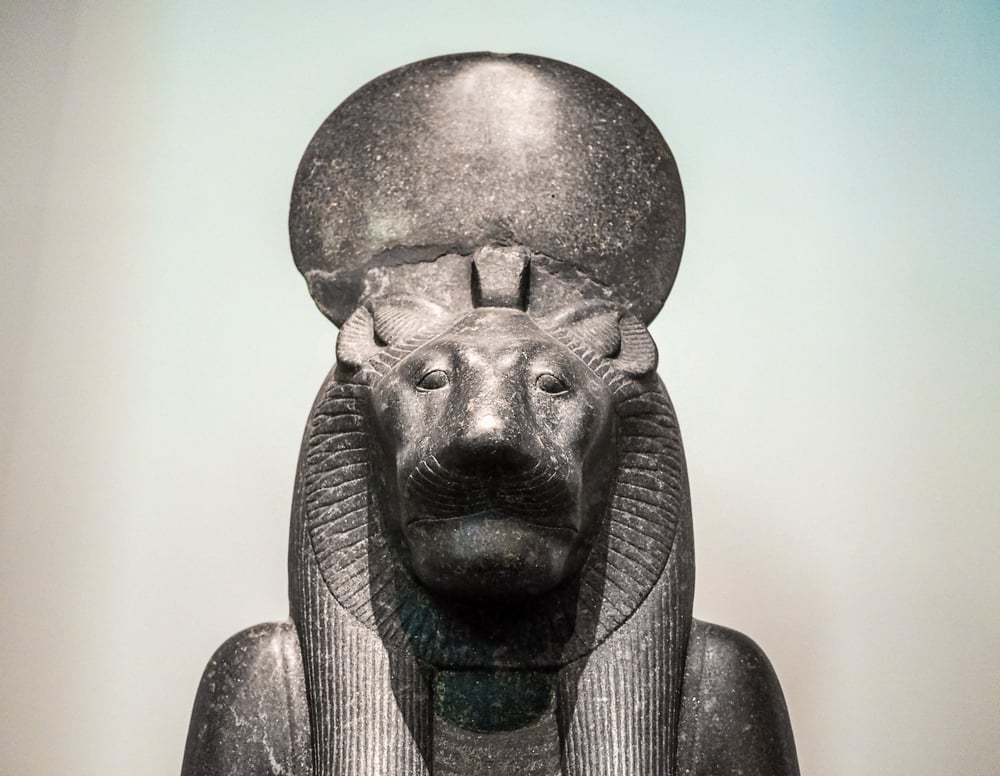
Sekhmet was supposed to be on humanity’s side. She was sent by Ra to punish some rebellious humans, but she got carried away.
The lioness goddess developed a taste for blood and decided to kill everyone.
Ra had to trick her into stopping by dyeing beer red and convincing her it was blood. She drank herself unconscious, which saved the human race.
But the myth makes it clear that she’s still out there, and her bloodlust can be awakened again.
The Opening of the Mouth Ceremony
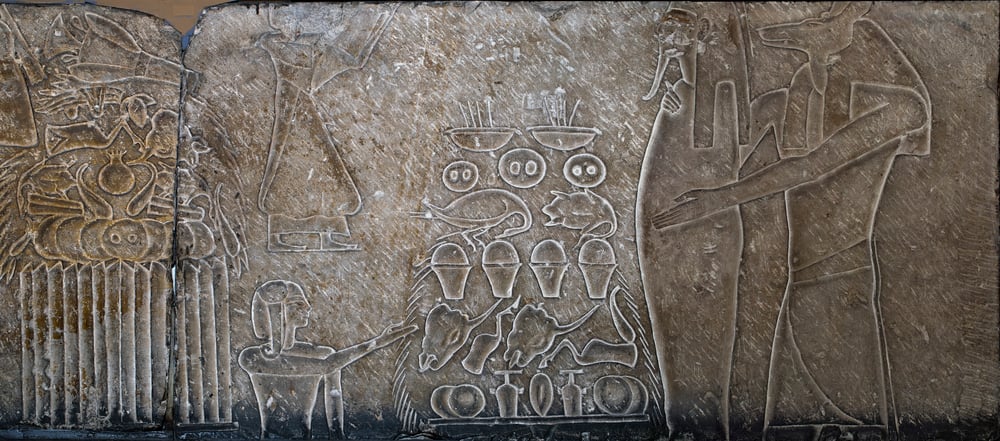
Death was just the beginning of a complex process that could go wrong in countless ways, and the Opening of the Mouth ceremony was designed to address one of the most fundamental fears: that you might be conscious but unable to speak, see, or interact with the world around you for all eternity. The ritual involved touching the mummy’s face with specific tools—adzes, knives, and other implements that looked more like torture devices than religious objects—while reciting spells that were supposed to restore the deceased’s ability to eat, drink, and breathe in the afterlife.
But the implications are unsettling. If the ceremony was necessary, it meant the ancient Egyptians believed you could be trapped in your dead body, aware but unable to move or communicate, until someone performed the right ritual.
And if no one did, or if they got it wrong, you’d be stuck that way forever.
The Seven Gates of the Underworld
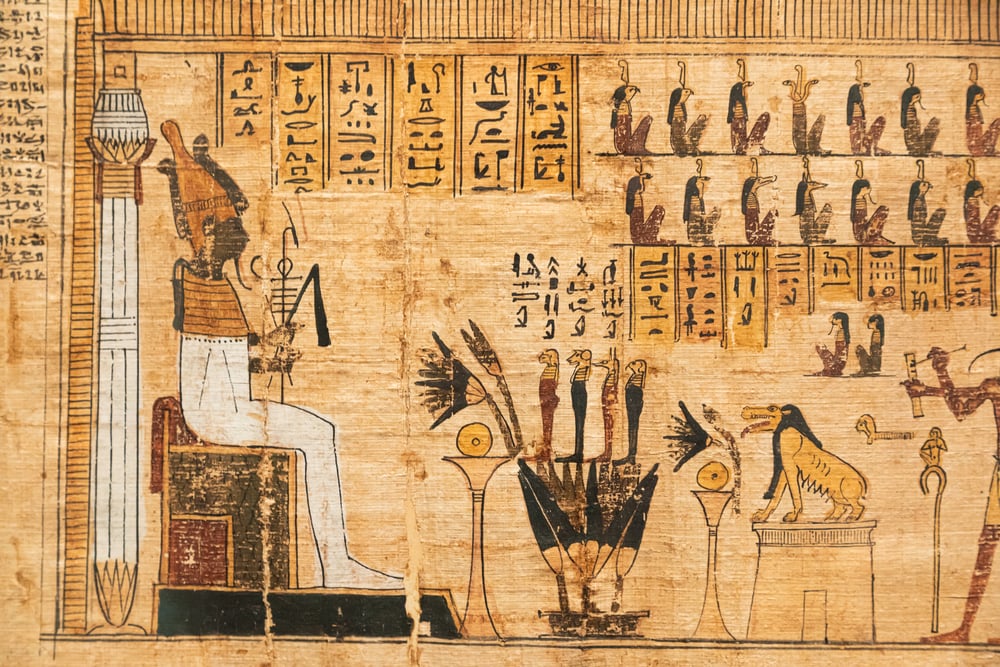
Getting through the afterlife required passing seven gates, each guarded by demons who asked riddles and demanded passwords. The questions weren’t about morality or wisdom—they were about obscure knowledge that you had to memorize before dying.
Wrong answer at any gate meant being turned back or destroyed. The gatekeepers had names like “Blood-drinker who comes from the slaughterhouse” and “Bone-smasher who comes from destruction.”
They weren’t interested in giving second chances.
The Lake of Fire
Even if you passed all the tests and judgments, the afterlife included a lake of burning fire that served multiple purposes. The righteous dead were supposed to drink from it to gain eternal life, but the damned were thrown into it for punishment.
The lake was guarded by four baboons who breathed fire and ate the hearts of the wicked. The ancient Egyptians believed you could see the flames from anywhere in the underworld, a constant reminder of what awaited the unworthy.
The False Door
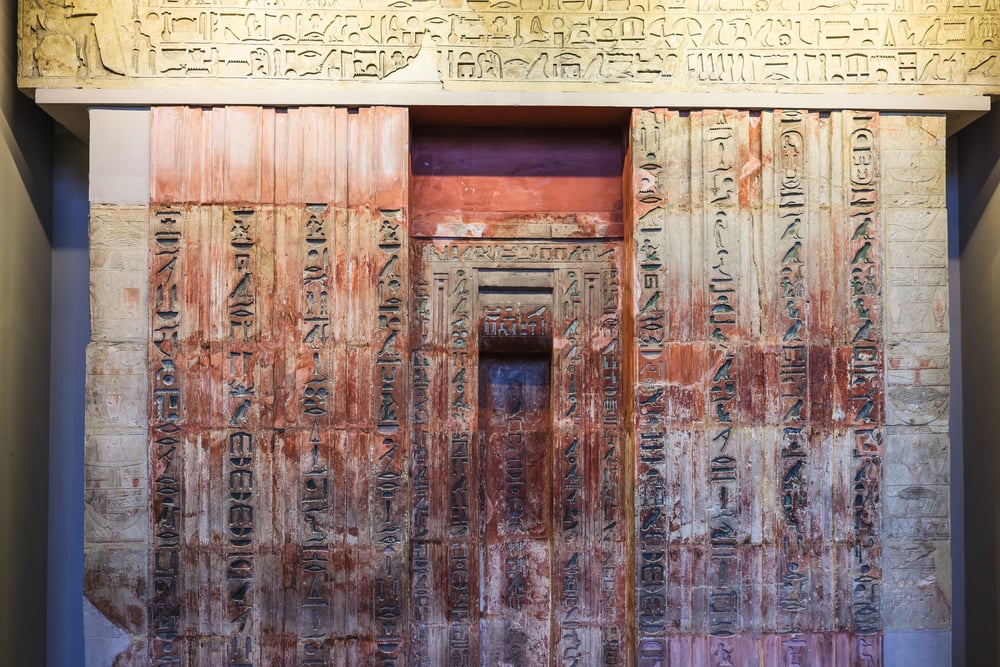
Tombs contained false doors—stone slabs carved to look like real doorways that led nowhere. These weren’t decorative elements but functional magical devices that allowed the deceased’s spirit to pass between the world of the living and the world of the dead.
But the doors worked both ways. Ancient Egyptians worried that dangerous spirits or demons might use them to enter the world of the living.
Some tombs included spells specifically designed to prevent the wrong kinds of beings from coming through.
When Nightmares Become Scripture
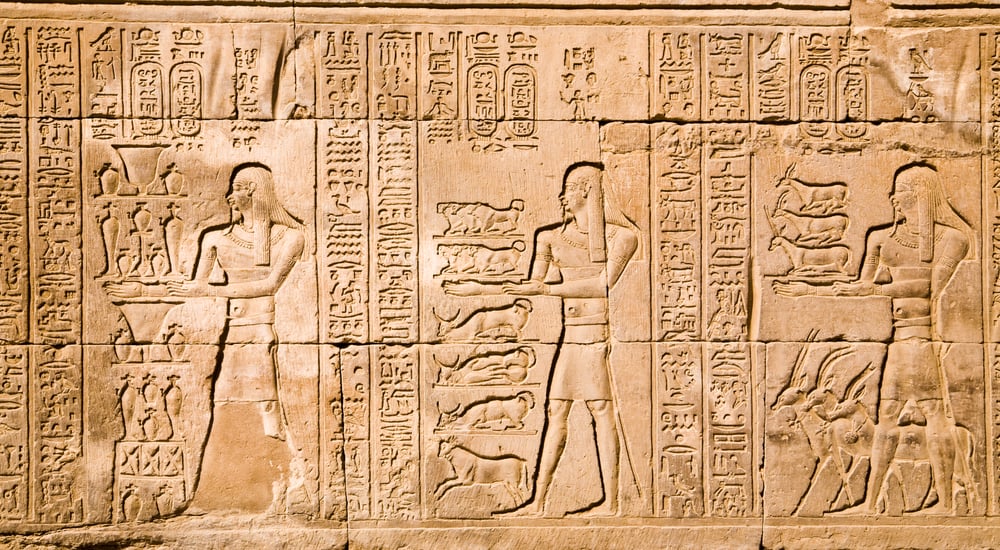
These stories weren’t entertainment for the ancient Egyptians—they were instruction manuals for navigating an afterlife that made Dante’s Inferno look like a guided tour. The level of detail in their death mythology suggests a culture that had thought very carefully about all the ways eternal existence could go wrong.
Perhaps that’s what makes these myths so enduringly creepy: they weren’t trying to comfort anyone with promises of peaceful rest. Instead, they mapped out a cosmic horror story where consciousness persists beyond death, but in forms that might be worse than simply ending.
More from Go2Tutors!

- The Romanov Crown Jewels and Their Tragic Fate
- 13 Historical Mysteries That Science Still Can’t Solve
- Famous Hoaxes That Fooled the World for Years
- 15 Child Stars with Tragic Adult Lives
- 16 Famous Jewelry Pieces in History
Like Go2Tutors’s content? Follow us on MSN.