The Little-Known History of the First Ever Bicycles
There are things you think you know about the bicycle — two wheels, pedals, handlebars — and then there’s the actual story of how it came to exist. It’s messier, stranger, and more contested than most history books let on.
The bicycle didn’t arrive as a finished idea. It stumbled into existence through a series of accidents, arguments, and half-formed contraptions that barely resembled what you’d recognize today.
Before It Had a Name

For most of human history, the idea of riding a two-wheeled machine was considered physically impossible. The assumption was simple: without something to hold it upright, a two-wheeled vehicle would just fall over.
Nobody had seriously tested this. It took a volcanic eruption to change that. In 1815, Mount Tambora in Indonesia erupted — one of the largest eruptions in recorded history.
The ash cloud it sent into the atmosphere disrupted weather patterns across the Northern Hemisphere so severely that 1816 became known as “The Year Without a Summer.” Crops failed across Europe and North America.
Horses starved because there was no grain to feed them. Horses were expensive to keep and essential for transportation, so their sudden scarcity created a real problem.
That problem prompted a German inventor named Karl von Drais to think differently about personal transportation.
The Running Machine

In 1817, Karl von Drais built what he called the Laufmaschine — German for “running machine.” It had two wheels connected by a wooden frame, a padded seat, and a rudimentary steering mechanism.
There were no pedals. You sat on it and pushed yourself along with your feet, like a toddler on a balance bike today.
It sounds underwhelming. But when Drais rode it from Mannheim to a coaching station about 7 miles away in under an hour, people paid attention.
A horse would have covered that distance faster, but a horse also needed feeding, stabling, and care. The running machine needed nothing.
Drais patented the device in 1818 and the design spread quickly across Europe, where it got several names: the draisine, the velocipede, and — in England — the hobby horse.
The Hobby Horse Craze
The English took to the hobby horse with the kind of enthusiasm that borders on mania. By 1819, riding schools had opened in London specifically to teach the thing.
Aristocrats rode them through Hyde Park. Caricaturists had a field day.
The hobby horse appeared in newspapers, pamphlets, and satirical prints as both a marvel and a joke. The craze lasted roughly two years before dying out almost completely.
The machines were expensive, they tore up clothing, and they were genuinely hard on the legs. Without pedals or any mechanical advantage, they were really just a way to glide down hills while looking fashionable.
On flat ground, walking was faster. What’s interesting is how quickly the idea disappeared.
For the next few decades, barely anyone worked on improving it.
A Scottish Claim That Won’t Go Away
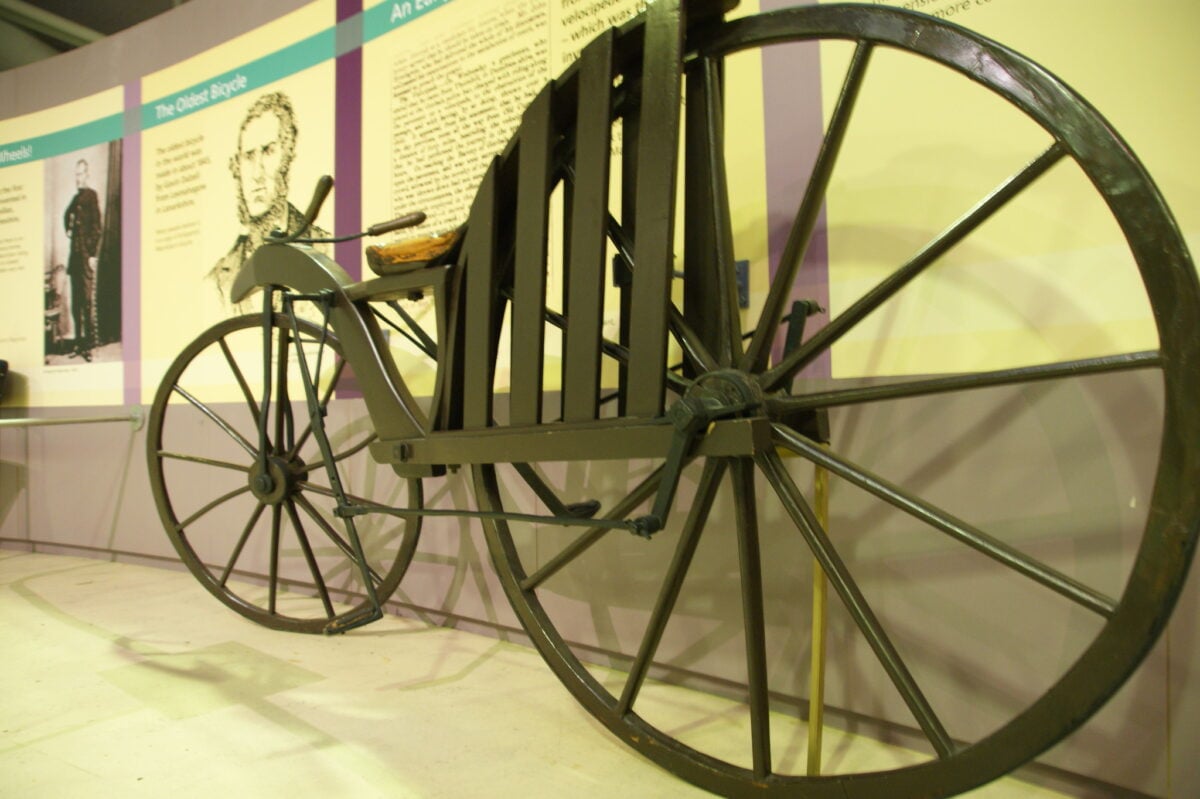
Depending on who you ask, the real history of the bicycle begins not in Germany but in Scotland, in the 1830s. A blacksmith from Dumfriesshire named Kirkpatrick Macmillan reportedly built a two-wheeled machine with cranks and pedals connected to the rear wheel by rods — something far closer to what you’d call a bicycle today.
The problem is the evidence. Most of what’s known about Macmillan’s machine comes from secondhand accounts written decades after the fact, often by relatives.
No original machine survives. The drawings are reconstructions.
The story has the shape of local legend more than documented history. That hasn’t stopped Scotland from claiming him as the true inventor of the bicycle.
Commemorative plaques exist. Books have been written.
But historians remain divided, and Macmillan’s place in the official record is still debated.
The Pedal Question

Here’s the part that trips people up: pedals didn’t appear on widely-used bicycles until the 1860s. The gap between Drais’s running machine and a pedal-powered bicycle spans nearly fifty years, depending on how you count.
Why so long? Partly because the hobby horse craze fizzled out before anyone had reason to keep experimenting. Partly because the mechanics of attaching pedals to a wheel in a useful way weren’t straightforward.
And partly because transportation in the mid-1800s was dominated by railways and horse-drawn vehicles — there wasn’t an obvious market gap pushing inventors to solve the problem. The solution, when it came, was almost accidental.
Pierre Michaux and the Velocipede
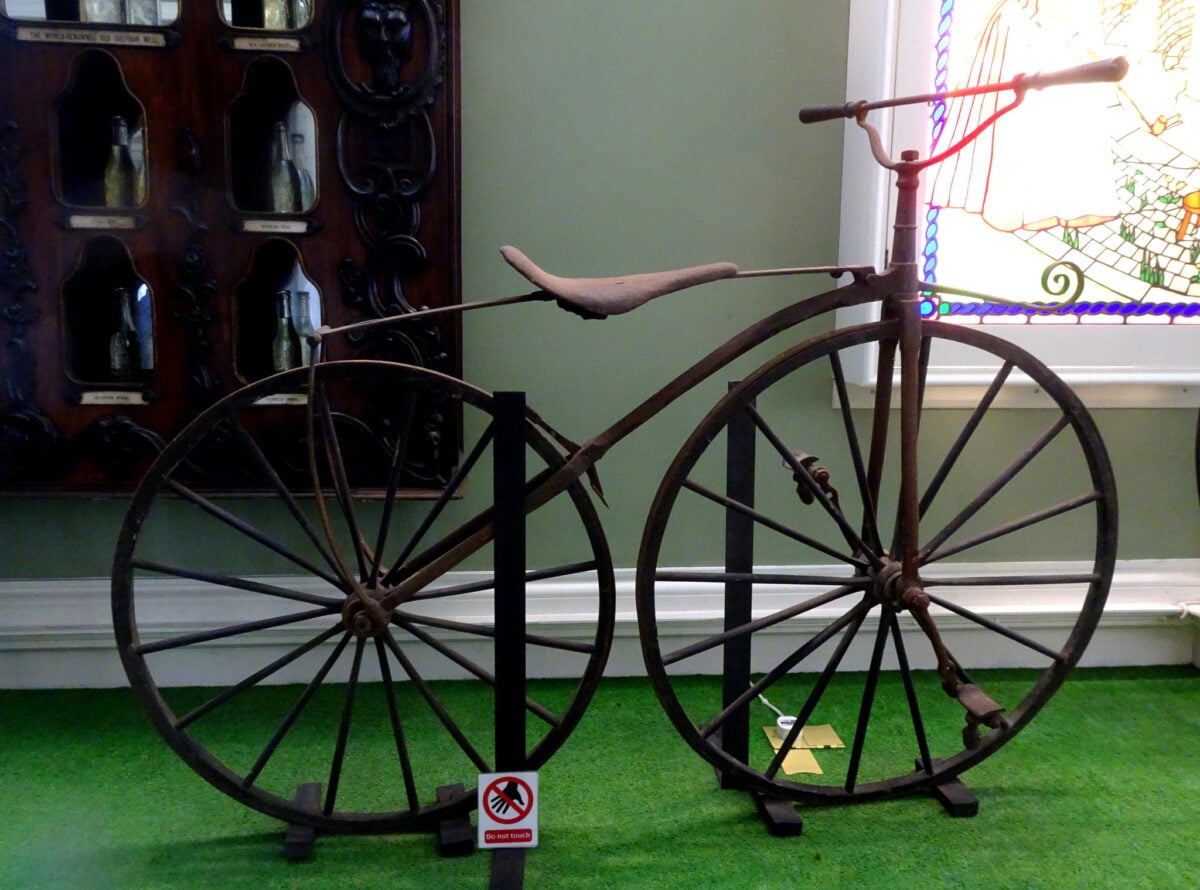
The story most commonly repeated credits a French carriage maker named Pierre Michaux — or possibly his employee Pierre Lallement — with attaching pedal cranks directly to the front wheel of a running machine sometime around 1863 or 1864.
Michaux began manufacturing the machines commercially and called them velocipedes. The design spread.
By the late 1860s, velocipede riding had become fashionable in Paris, and the machines were being exported to Britain and the United States. The dispute between Michaux and Lallement over who actually invented the pedal attachment has never been fully resolved.
Lallement emigrated to America and filed a patent there in 1866, which gave him a legal claim. Michaux had the factory and the commercial success.
Both men spent years arguing the point, and historians still disagree.
The Bone-Shaker Era

Early velocipedes earned their nickname honestly. The frames were wrought iron.
The wheels had iron rims. The roads were cobblestone or packed dirt.
Riding one of these machines was loud, jarring, and physically punishing in a way that modern cycling bears no resemblance to. Contemporary accounts describe the experience as something between exciting and deeply unpleasant.
Your teeth rattled. Your hands went numb.
You arrived at your destination shaken in ways that were hard to explain. Riding schools opened again, this time in America, where wealthy customers paid to learn to manage the machines indoors on smooth wooden floors — as far from real road conditions as possible.
Women and the Early Machine
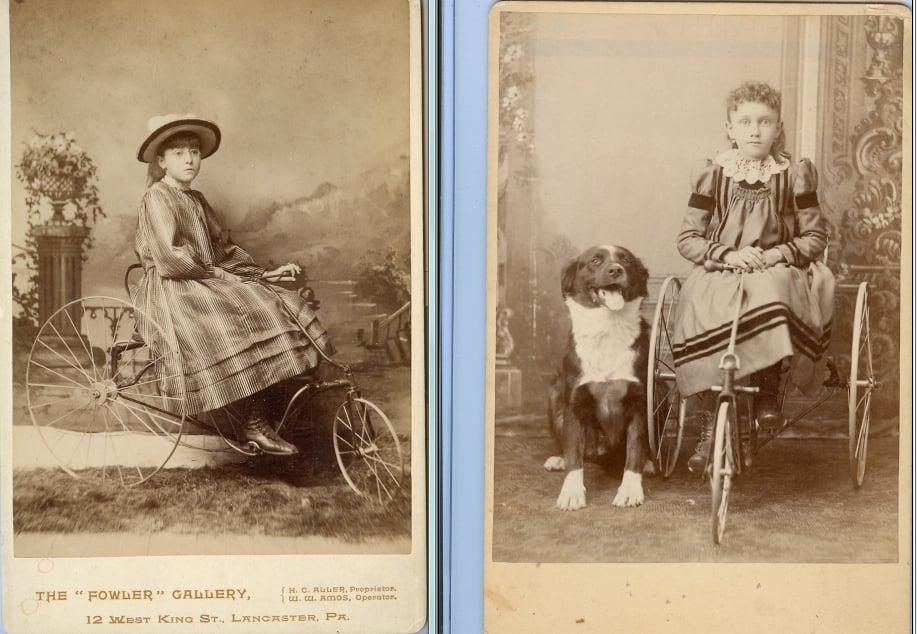
Women rode the early velocipedes, despite constant commentary suggesting they shouldn’t. Period illustrations show women in riding costumes navigating the machines quite capably.
Some riding schools specifically marketed lessons to women. The social debate was immediate and predictable.
Riding required a different posture than the era’s ideals of feminine comportment allowed for, or so the argument went. The clothing of the period — long skirts, corsets, layers — made riding genuinely difficult but not impossible. Some women modified their clothing.
Others rode anyway. This tension between the bicycle and ideas about women’s freedom would become much louder in the 1890s, when mass cycling took off.
But it started here, with the bone-shaker.
The High-Wheeler’s Brief Reign
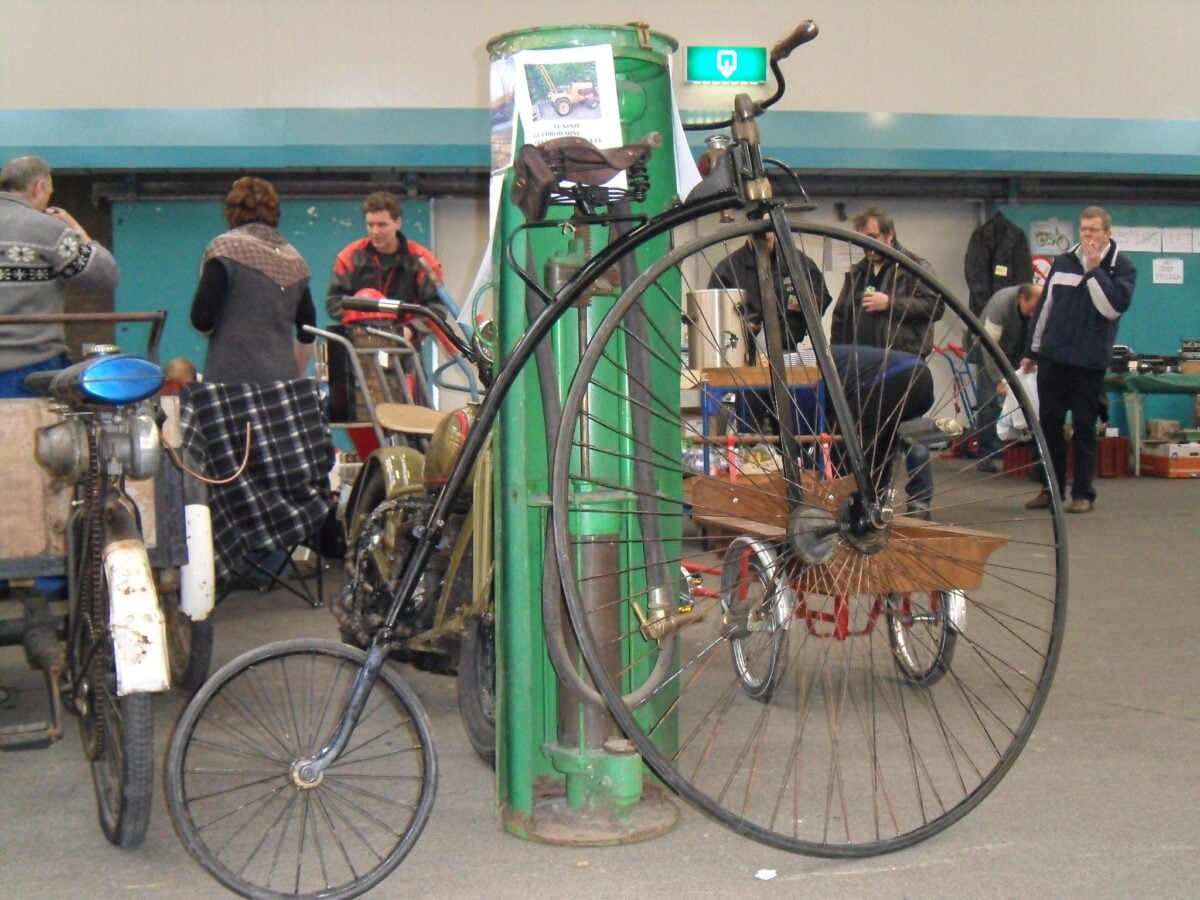
By the 1870s, inventors had worked out that a larger front wheel meant more distance covered per pedal stroke. The logical endpoint of this reasoning was the penny-farthing: a bicycle with a front wheel sometimes five feet in diameter and a tiny rear wheel trailing behind.
The penny-farthing was fast. It was also terrifying. Mounting and dismounting required skill.
If the front wheel hit a stone or a rut, you went over the handlebars head-first from a considerable height. The injury was common enough that it had a name: “taking a header.”
Despite all this, the penny-farthing was popular with young men who wanted speed and were willing to accept the risk. It dominated the 1870s and early 1880s. Racing clubs formed around it.
Records were set. There was a genuine culture built around a machine that was, by any practical measure, dangerous to ride.
Why the Safety Bicycle Changed Everything
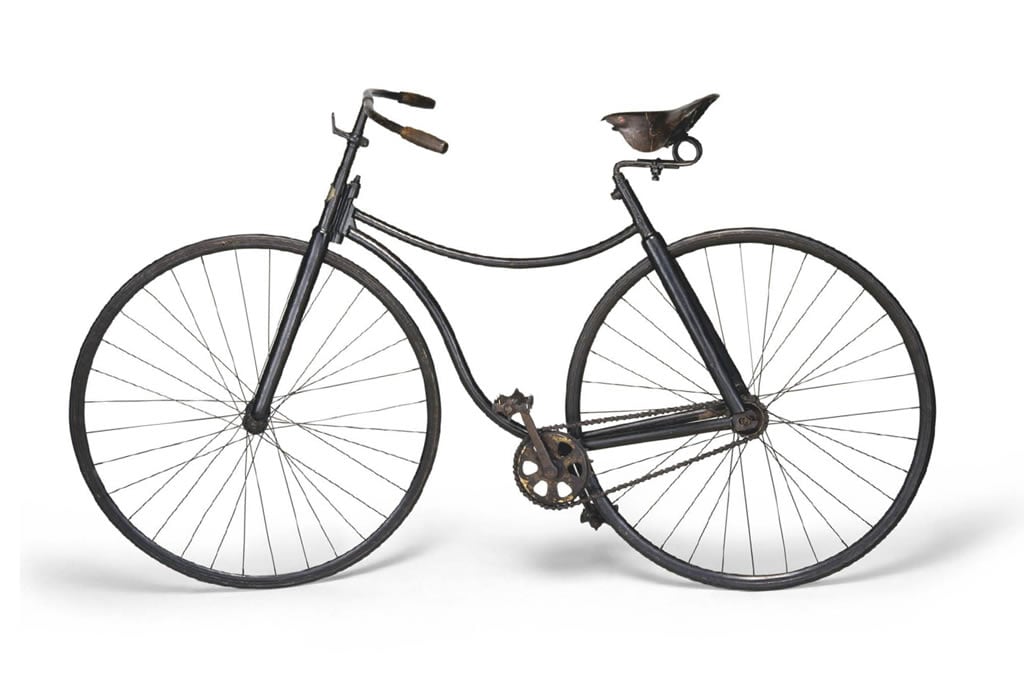
In 1885, John Kemp Starley introduced what he called the Rover Safety Bicycle. It had two wheels of equal size, a chain driving the rear wheel, and a diamond-shaped frame that became the template for essentially every bicycle built since.
It was stable. It was manageable.
Almost anyone could learn to ride it. The name was deliberate.
Starley was marketing directly against the penny-farthing, positioning his design as something ordinary people could use without risking their lives. The strategy worked.
Within a decade, penny-farthing had become a novelty.
The safety bicycle also dropped significantly in price as manufacturing scaled up. By the 1890s, owning a bicycle was within reach for the working class — not just the wealthy.
That shift changed how people moved through cities and how they thought about personal freedom.
The Tire That Made It Comfortable
A new kind of bike made riding safer. By chance, a vet from Scotland – John Boyd Dunlop – made it smoother, too.
That year in Belfast, bumpy streets made rides shaky for Dunlop’s boy on his three-wheeler. Rubber tubes filled with air were tucked around wood rims after some trial work.
What came out changed everything – soft bumps, air inside, a new kind of wheel. Bicycle rides once jolted riders mercilessly over rough roads.
That changed when air-filled tires arrived. Though Dunlop thought his idea was new, someone else had already claimed it long before.
Robert William Thomson received a patent decades prior without much fanfare. Once people learned about Thomson’s design, questions arose around who truly owned the innovation.
Legal concerns flickered briefly yet faded fast. The concept moved forward regardless of ownership disputes.
Comfort on two wheels suddenly became real. Riders noticed right away how smooth travel could be.
The harsh bounce of solid rubber vanished almost overnight. A new experience took hold where motion felt lighter, easier.
Why It Lasted This Long

That gap sticks out. From Drais’s early version to something actually rideable – almost seven decades passed. Progress crept forward, piece by awkward piece.
Each step small, none quite right until later. Time moved slowly here, despite constant trying.
A reason lies in how people moved back then – other ways already covered what was needed. Trains stretch farther every year.
Carts pulled by horses filled the streets. With so much working already, nobody felt a strong push for something new.
Bike repairs aren’t simple, really. Making pedals spin right while gears shift smoothly – and tires roll true – meant juggling several puzzles at once.
Every single piece demanded patience. History rarely flows straight, no matter how neat it seems later.
Not everyone shaping the bicycle aimed at some bold breakthrough. Solving today’s small hurdles mattered more.
Each fix stood on its own, future unclear.
The Arguments That Never Really Ended

Some stories pick one creator, one clear beginning. Not this one. From Drais through Macmillan, then Michaux and Lallement, later Starley and Dunlop – each stepped into the picture at different points.
Each brought something real. What came together wasn’t born whole from any single hand.
Some pride slips into the research. Not just facts – national loyalties shape who gets credit.
Take France: Michaux often takes the spotlight there. Across Scotland, though, Macmillan shows up again and again.
Germany tells a different story – one where Drais leads. Every version carries proof, sure.
But each one looks past what it misses too. A single breakthrough rarely tells the whole tale – keep reading and another pattern appears.
Instead of one flash of genius, there’s revision after revision. Different hands, distant lands, lives that never crossed paths.
Progress stacks quietly, built by strangers unaware of each other’s names.
What Two Wheels Really Changed

Out of a messy, drawn-out beginning came an invention whose effects stretched much further than moving from place to place. By the 1890s, riding bicycles had turned into a popular pastime enjoyed widely across different social groups.
Workers suddenly gained freedom to travel distances previously out of reach. Because of this shift, homes could be farther away from workplaces without causing hardship.
Women found freedom in the bicycle, though nobody really said so back then. Moving alone became possible – no escort needed, no horse-drawn ride, no asking.
Looking back, it’s clear how much that shifted things. Wheels spinning forward, the bike helped shape what would become the car.
Folks tinkering with early automobiles often started by fixing and building bicycles. Flight began where pedals turned – that shop belonged to the Wrights.
Foot by foot he moved, that day in 1817, as Karl von Drais glided on his crude wooden frame down Mannheim’s roads – no one saw it coming, this quiet roll where journeys hadn’t gone before.
More from Go2Tutors!

- The Romanov Crown Jewels and Their Tragic Fate
- 13 Historical Mysteries That Science Still Can’t Solve
- Famous Hoaxes That Fooled the World for Years
- 15 Child Stars with Tragic Adult Lives
- 16 Famous Jewelry Pieces in History
Like Go2Tutors’s content? Follow us on MSN.



