The Oppenheimer Diamond
Picture this: deep underground in South Africa, workers hit something that would soon become one of the most famous diamonds in history. The Oppenheimer Diamond isn’t just another pretty stone sitting in a museum display case.
This 253.7-carat wonder has stories to tell, secrets to share, and a beauty that has amazed people for decades. From its accidental discovery to its permanent home at the Smithsonian, this diamond has quite the tale.
Now let’s dig into the fascinating details that make this yellow gem so special. You’re about to discover why experts call it nearly perfect and what makes it stand out from every other diamond on Earth.
It weighs as much as a chicken egg

The Oppenheimer Diamond tips the scales at 253.7 carats, which is roughly the weight of a medium-sized chicken egg. To put this in perspective, most engagement ring diamonds weigh less than one carat.
This massive stone packs serious weight into its compact form. When you hold something that dense, you really feel the power of compressed carbon that took millions of years to form.
The weight alone tells you this isn’t your average diamond.
Workers found it completely by accident
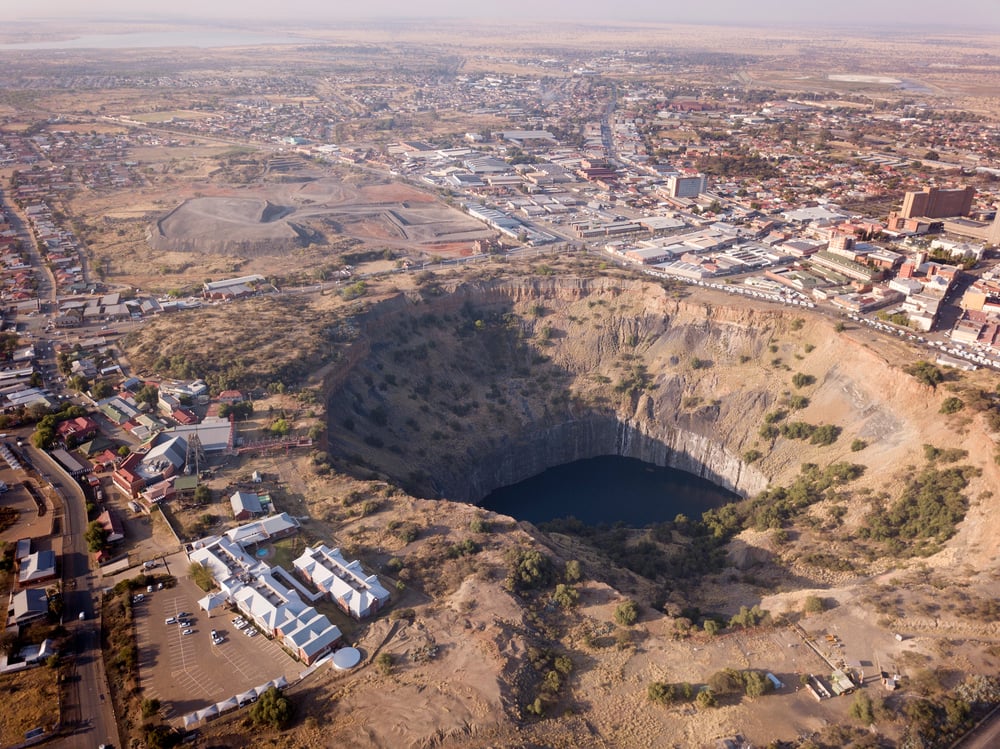
The diamond was discovered at the Dutoitspan Mine near Kimberley, South Africa in 1964. Nobody was specifically looking for a record-breaking diamond that day.
The miners were just doing their regular work when they stumbled across this golden treasure. Sometimes the best discoveries happen when you least expect them.
The mine had produced many diamonds before, but nothing quite like this beauty. It was one of those once-in-a-lifetime finds that changed everything for everyone involved.
Like Go2Tutors’s content? Follow us on MSN.
Harry Winston bought it and gave it away
Harry Winston, who donated the stone (not a gem, as it remains uncut and unpolished) to the Smithsonian Institution as a memorial. Winston was already famous for owning some of the world’s most incredible diamonds.
He purchased this uncut beauty and then surprised everyone by donating it to the museum. It was acquired by Harry Winston in 1964 when he presented it as a gift to the American people.
His generosity meant that millions of visitors could see this wonder instead of it sitting in a private collection. Winston understood that some treasures belong to everyone.
The diamond honors a mining legend
In 1964, the Oppenheimer Diamond was named in his honour by its owner, Harry Winston after Sir Ernest Oppenheimer. Ernest wasn’t just any businessman – he basically built the modern diamond industry from the ground up.
Ernest Oppenheimer (1880-1957) established what became the modern diamond industry almost single-handedly in the early decades of the 20th century. He controlled South African mines and changed how diamonds reached the world.
The diamond carries his name as a tribute to someone who understood the true value of these precious stones. It’s a fitting memorial for a man who shaped an entire industry.
It’s shaped like two pyramids stuck together

The 253.7ct Oppenheimer Diamond is in the shape of an octahedron (an eight-sided double pyramid) which looks exactly like what happens when you take two Egyptian pyramids and glue their bases together. At 253.7 carats, the Oppenheimer Diamond is a nearly perfectly formed octahedron, a shape that’s essentially an eight-sided double pyramid connected at the base.
This isn’t some weird accident of nature. Many diamond crystals naturally grow in this eight-sided shape.
What makes this one special is how perfectly it formed without any major flaws or irregular edges. Nature really showed off when it created this geometric wonder.
Like Go2Tutors’s content? Follow us on MSN.
Nobody has ever cut or polished it
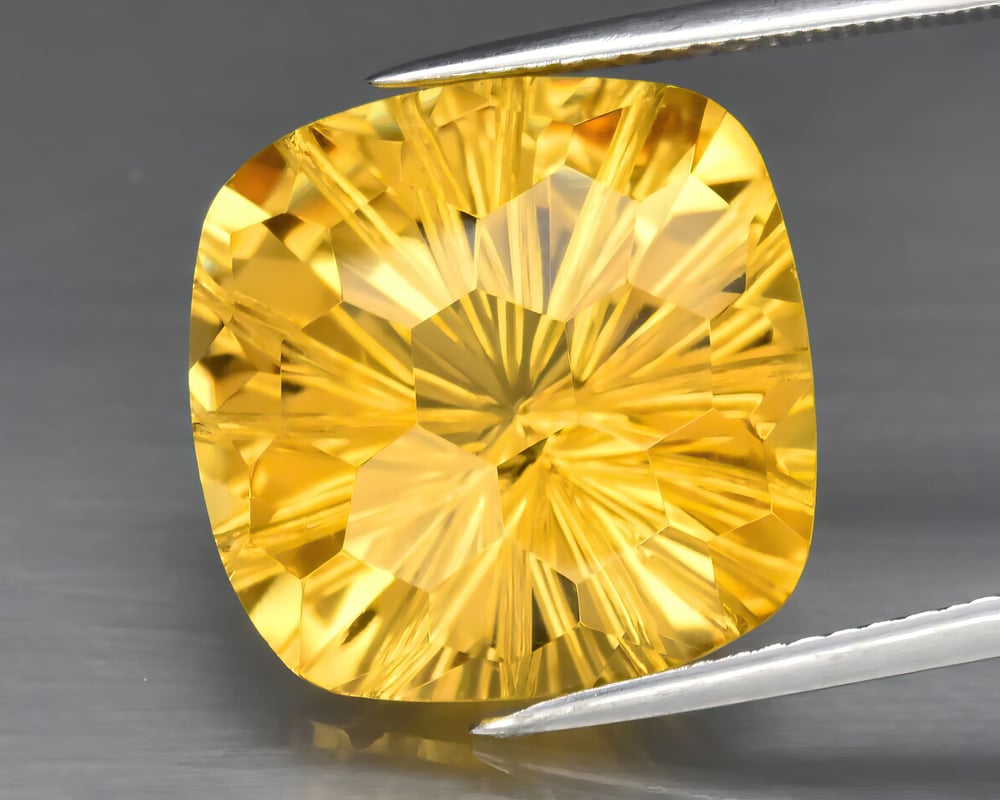
The Oppenheimer Diamond is unusual because diamonds of this size are rarely left uncut. Most big diamonds get chopped up into smaller, more traditional gem shapes.
The yellow diamond is 253.7 carats and is considered a nearly perfectly naturally formed diamond, with no additional cutting or shaping having been done to the stone after it was mined. Keeping it in its natural state was a bold choice that paid off.
Visitors to the museum get to see exactly what came out of the earth. There’s something powerful about viewing a diamond in its original, untouched form that no fancy cut can match.
It gets its color from tiny nitrogen bits

The yellow color is due to impurities of nitrogen that were substituted for some of the carbon atoms as the crystal formed. When this diamond was forming deep underground, nitrogen atoms sneaked into the crystal structure where carbon atoms should have been.
The gem owes its vivid yellow color to nitrogen impurities that were substituted for carbon atoms as the crystal formed millions of years ago. These “impurities” actually make the diamond more valuable and interesting.
Without those nitrogen atoms, this would just be another clear, colorless stone. Sometimes what makes something different is exactly what makes it beautiful.
It measures about the size of a large marble
It measures approximately 20 mm × 20 mm (0.79 in × 0.79 in) and is 3.8 cm (1.5 in) in height. That’s roughly the size of a really big marble or a small round of ping-pong.
For something so compact, it packs an enormous amount of value and beauty. You could easily hold it in your palm, yet it represents millions of years of geological processes.
The perfect proportions make it even more impressive when you consider how rarely nature creates such balanced forms. Size isn’t everything, but when it comes with perfect shape, it becomes something truly special.
Like Go2Tutors’s content? Follow us on MSN.
It sits in America’s most famous museum

The diamond remains on display in Washington DC today. The Smithsonian National Museum of Natural History has become its permanent home, where millions of people can admire it every year.
Hall of Geology, Gems and Minerals in Washington, D.C. houses this treasure alongside other incredible specimens. The museum setting gives the diamond the respect it deserves while making it accessible to curious minds from around the world.
Standing in front of the display case, visitors often can’t believe something so perfect exists in nature. It’s become one of the museum’s most popular attractions.
Scientists call it nearly flawless

This 253.7-carat, nearly flawless yellow diamond is one of the largest and most exquisite uncut diamonds ever discovered. When diamond experts use the word “flawless,” they mean serious business.
Finding any large diamond without major internal flaws is rare enough. The Oppenheimer Diamond, a nearly perfectly formed 253.7 carats (50.74 g) yellow diamond crystal represents the kind of geological perfection that happens maybe once in a generation.
The crystal structure formed so cleanly that there are virtually no inclusions or imperfections visible to experts. Mother Nature really outdid herself with this one.
It’s one of the biggest uncut diamonds on Earth

is one of the largest uncut diamonds in the world and one of the largest uncut yellow diamonds in the world. While bigger diamonds have been found, most get cut into smaller pieces for jewelry.
There are few uncut diamonds in the world comparable in size. The decision to keep this one whole makes it incredibly rare in the world of major diamonds.
Collectors and museums usually prefer cut stones, but this diamond’s natural perfection made everyone realize it should stay exactly as nature intended. Its uncut status puts it in an exclusive club of natural diamond crystals.
Like Go2Tutors’s content? Follow us on MSN.
The crystal structure follows nature’s favorite pattern
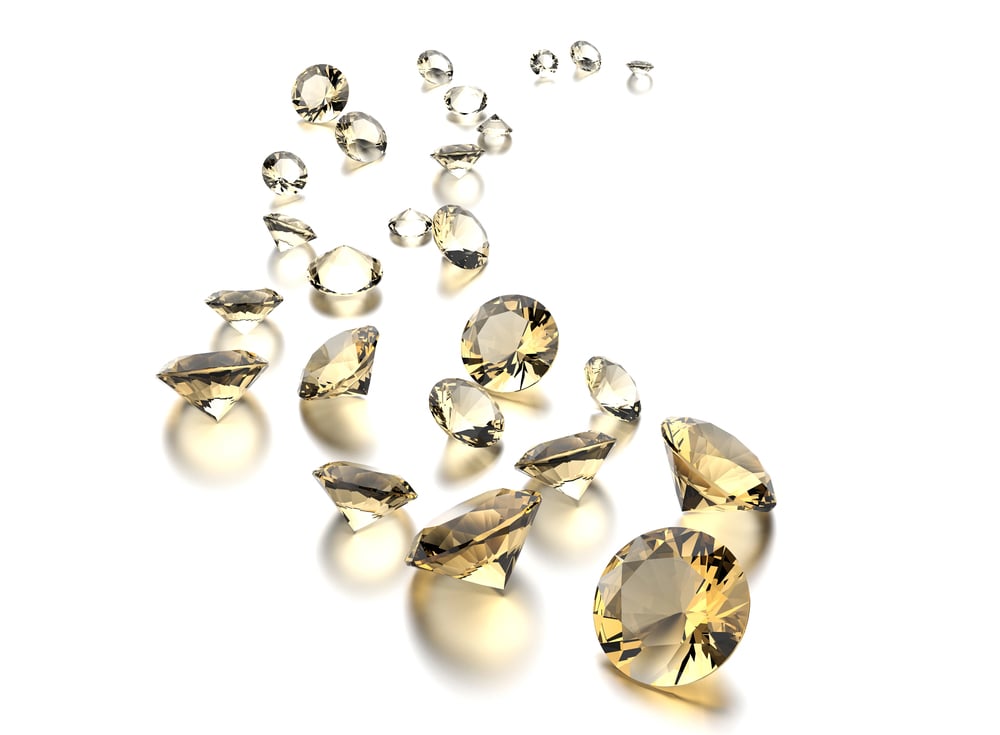
Diamond crystals naturally want to grow in octahedral shapes because of how carbon atoms prefer to arrange themselves under extreme pressure and heat. Which is a common shape for diamond crystals.
The Oppenheimer Diamond followed this pattern perfectly, creating eight triangular faces that meet in perfect symmetry. Each face reflects light in a slightly different way, giving the entire crystal a complex, shifting appearance.
The mathematical precision of its natural form amazes both scientists and artists. It’s like nature decided to show off its understanding of geometry.
It formed millions of years before humans existed

Deep beneath what would eventually become South Africa, this diamond started forming when temperatures reached over 2000 degrees Fahrenheit and pressure was thousands of times stronger than what we experience at sea level. The carbon atoms slowly arranged themselves into this perfect crystal over millions of years.
Volcanic activity eventually brought it closer to the surface where humans could eventually find it. The diamond is literally older than most life forms on Earth.
Every time someone looks at it, they’re seeing something that existed long before dinosaurs walked the planet.
Museum visitors can see it up close for free

Unlike many famous diamonds that live in private collections or bank vaults, anyone can walk into the Smithsonian and see the Oppenheimer Diamond in person. The museum’s free admission policy means that curious kids, diamond lovers, and casual tourists all get the same chance to experience this natural wonder.
The display case allows viewers to walk around and see the crystal from multiple angles. Photography is allowed, so people take home memories of their encounter with geological perfection.
This accessibility makes it one of the most democratic famous diamonds in the world.
Like Go2Tutors’s content? Follow us on MSN.
It represents the peak of natural diamond formation
Most diamonds have at least some flaws, color variations, or irregular shapes that formed during their creation process. The Oppenheimer Diamond hit the geological lottery by forming under apparently ideal conditions for millions of years without major disruptions.
The combination of perfect octahedral shape, excellent clarity, beautiful color, and impressive size creates a standard that other natural diamonds are measured against. Gemologists study it to understand how perfect diamonds form.
It’s become a textbook example of what happens when everything goes right deep underground.
The diamond connects South African mining to American museums

This single stone tells the story of how South African mining discoveries changed the global diamond trade forever. The Dutoitspan Mine where it was found became part of the larger Kimberley mining area that put South Africa on the map as the world’s diamond capital.
Harry Winston’s decision to donate it to an American museum created a permanent bridge between the African earth where it formed and the American public who can now enjoy it. as a memorial to Ernest Oppenheimer, it honors the complex history of diamond mining while making the beauty accessible to everyone.
Today, visitors from around the world can see this piece of South African geology without ever leaving Washington DC.
From ancient carbon to modern wonder

The Oppenheimer Diamond started as simple carbon deep in the Earth and ended up as one of the most admired gems in human history. Its journey from the intense heat and pressure of the planet’s interior to the climate-controlled display case of the Smithsonian tells the story of both geological time and human appreciation for natural beauty.
This 253.7-carat, nearly flawless yellow diamond is one of the largest and most exquisite uncut diamonds ever discovered and continues to inspire new generations of visitors who marvel at what nature can create given enough time and the right conditions. The diamond proves that sometimes the most incredible treasures are the ones that remain exactly as they were meant to be.
More from Go2Tutors!

- 16 Historical Figures Who Were Nothing Like You Think
- 12 Things Sold in the 80s That Are Now Illegal
- 15 VHS Tapes That Could Be Worth Thousands
- 17 Historical “What Ifs” That Would Have Changed Everything
- 18 TV Shows That Vanished Without a Finale
Like Go2Tutors’s content? Follow us on MSN.



