The Riskiest Stunts Ever Broadcast on TV
Television has always pushed boundaries to keep viewers glued to their screens. Over the decades, producers and performers have taken chances that made audiences gasp, cringe, and sometimes look away in disbelief.
From death-defying leaps to dangerous escapes, these moments weren’t just entertainment.
Evel Knievel’s Snake River Canyon jump attempt

Evel Knievel became a household name by jumping motorcycles over impossible distances. His 1974 attempt to rocket across Snake River Canyon in Idaho took things to an entirely different level.
The daredevil climbed into a steam-powered rocket called the Skycycle X-2, hoping to soar across a canyon that was over 1,500 feet wide. The parachute deployed too early during launch, causing the rocket to drift into the canyon instead of clearing it.
Knievel survived, but the stunt showed just how thin the line between glory and disaster really was.
David Blaine’s frozen in time endurance test

David Blaine spent nearly 64 hours encased in a massive block of ice in Times Square back in 2000. The magician stood inside the ice wearing only light clothing while thousands of people watched in person and millions more on television.
Medical experts monitored him constantly because hypothermia and organ failure were genuine risks. When workers finally freed him with chainsaws, Blaine was rushed straight to the hospital.
The stunt proved that sometimes the biggest danger comes from staying perfectly still.
Like Go2Tutors’s content? Follow us on MSN.
Steve-O’s whale shark riding incident

During an episode of Wildboyz, Steve-O jumped into open ocean water to ride a whale shark. These creatures can grow over 40 feet long and weigh more than 20 tons.
While whale sharks are generally gentle filter feeders, they’re still massive wild animals in their natural habitat. Steve-O grabbed onto the shark’s fin and held on as it swam through deep water.
The danger came not just from the animal itself but from being far from shore in unpredictable ocean conditions. One wrong move could have ended with him lost at sea or seriously injured.
Houdini’s water torture cell on live broadcast

Harry Houdini performed his famous water torture cell escape on early television broadcasts before his death. The illusion involved being suspended upside down in a locked glass tank filled with water.
His feet were clamped in stocks at the top while his head remained underwater. Houdini had to hold his breath, pick locks, and escape before drowning, all while cameras captured every second.
The stunt was so dangerous that Houdini’s assistants stood by with axes to break the glass if something went wrong. This escape has injured and nearly killed other performers who attempted it over the years.
Johnny Knoxville’s riot control test

Johnny Knoxville volunteered to get shot with riot control equipment during a Jackass segment. This included rubber bullets, bean bag rounds, and pepper spray at close range.
Each projectile hit him with enough force to break bones or cause serious internal injuries. The welts, bruises, and impact marks covered his body for weeks afterward.
Medical professionals have stated that these so-called non-lethal weapons can absolutely kill people under the right circumstances. Knoxville took multiple hits in a single session, turning his body into a testing ground for crowd control weapons.
Like Go2Tutors’s content? Follow us on MSN.
Travis Pastrana’s New Year’s Eve rally car jump

Travis Pastrana rang in 2010 by jumping his rally car off the Pine Street Pier in Long Beach, California, landing on a barge 269 feet away. The jump required him to launch off a ramp at highway speeds while calculating wind, weight, and distance perfectly.
If his speed was too slow, the car would plunge into the freezing harbor water. Too fast, and he would overshoot the barge entirely.
Pastrana nailed the jump, but the margin for error was incredibly small. The stunt aired live on ESPN with no second chances or safety net.
Chris Angel’s building walk illusion

Criss Angel appeared to walk up the side of the Luxor Hotel in Las Vegas during a televised special. While the exact method remains debated, Angel was genuinely suspended against the building’s exterior at dangerous heights.
Whether using wires, supports, or other rigging, any equipment failure would have sent him falling hundreds of feet. The logistics of rigging someone to a building’s exterior involve serious engineering and safety concerns.
Angel has been injured multiple times during his various televised illusions, proving that even with precautions, these stunts carry real risk.
Bear Grylls’ Everest summit broadcast

Bear Grylls didn’t just climb Mount Everest. He did it while recovering from a broken back and filmed content for television during the ascent.
Everest kills experienced climbers every single year through falls, avalanches, altitude sickness, and exposure. Grylls reached the summit at age 23, becoming one of the youngest climbers to do so.
The thin air at that altitude means your brain and body slowly shut down without supplemental oxygen. Every step above 26,000 feet happens in what climbers call the death zone.
Grylls documented parts of this journey for broadcast, combining extreme mountaineering with media production.
Like Go2Tutors’s content? Follow us on MSN.
The Man vs. Wild cliff descent with a dead camel

During one Man vs. Wild episode, Bear Grylls demonstrated survival techniques by rappelling down a cliff using rope made from a deceased camel’s intestines.
The rope could have snapped at any moment, sending him tumbling down a rocky cliff face. Using improvised equipment meant there was no standard safety testing or quality control.
Grylls descended slowly, distributing his weight carefully, but the entire process relied on hope as much as skill. Production crews follow safety protocols, but Grylls still put himself in genuinely dangerous situations for the cameras.
Robbie Knievel’s Grand Canyon jump

Following in his father’s footsteps, Robbie Knievel jumped 228 feet across a section of the Grand Canyon in 1999. The jump aired on Fox and required him to hit precise speed while launching off a ramp toward another ramp across the gap.
Below him was nothing but a fatal drop into one of America’s deepest canyons. Robbie landed successfully, but the stunt required perfect execution with zero room for mechanical failure or rider error.
His motorcycle had to perform flawlessly, his body position had to be exact, and the weather had to cooperate.
Dynamo’s phone box levitation in London

Magician Dynamo appeared to levitate alongside a moving double-decker bus in London while inside a phone booth. The stunt was filmed for his television show and involved genuinely being suspended next to moving traffic.
Whether using hidden rigging or other methods, Dynamo was physically attached to or near a moving vehicle in an urban environment. London buses weigh over 12 tons and can’t stop quickly if something goes wrong.
The combination of traffic, rigging, and public streets created multiple points where serious injury could occur.
Like Go2Tutors’s content? Follow us on MSN.
Steve Irwin’s crocodile feeding demonstrations
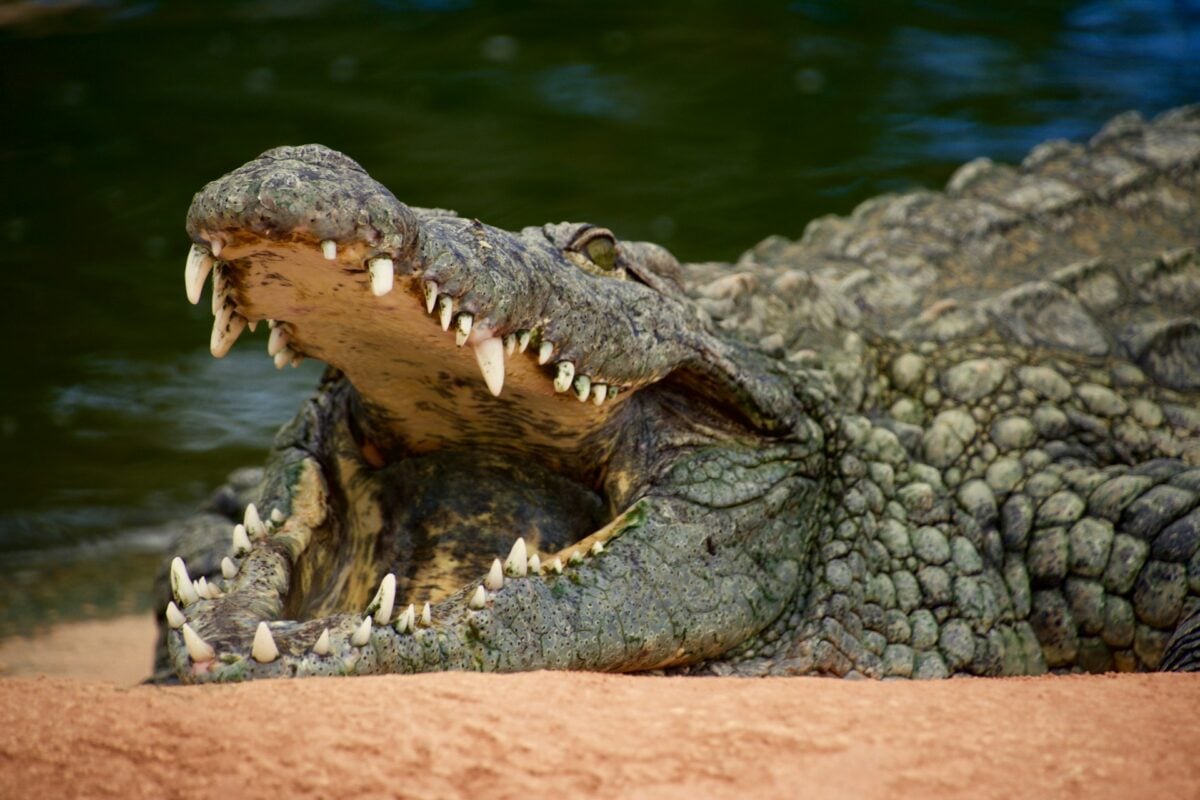
Steve Irwin regularly fed massive saltwater crocodiles during live television broadcasts at his Australia Zoo. Saltwater crocodiles are the largest living reptiles and among the most dangerous predators on Earth.
Irwin would dangle meat just inches from their jaws, often jumping over them or touching them during feeding time. These animals can explode from the water at incredible speeds and have a bite force stronger than any other animal.
Irwin’s extensive experience gave him confidence, but he was still working with apex predators that act on instinct. Each feeding demonstration carried genuine life-threatening danger.
The Super Dave Osborne building launch

Bob Einstein, performing as Super Dave Osborne, launched himself off buildings and ramps in stunts that intentionally went wrong for comedic effect. While the crashes were planned, Einstein actually got hurt regularly during these bits.
In one televised stunt, he was supposed to jump a bus but crashed spectacularly instead. The “comedy” came from real impacts, real falls, and genuine physical consequences.
Einstein broke bones and suffered injuries throughout his career, making his stunts dangerous even though audiences laughed. The line between comedy and genuine harm was paper thin.
Nitro Circus’ first double backflip on a motorcycle

Travis Pastrana completed the first double backflip on a motorcycle during a live Nitro Circus event that aired on television. The trick involves rotating the bike backward twice while airborne before landing.
Riders had crashed violently attempting this trick before Pastrana succeeded. The rotation speed, height, and landing angle all had to align perfectly.
If he under-rotated, he would land on his head or back. Over-rotation would send him past the landing ramp.
Pastrana pulled it off, but numerous riders have been paralyzed or killed attempting similar aerial motorcycle tricks.
Like Go2Tutors’s content? Follow us on MSN.
Derren Brown’s Russian roulette special

Mentalist Derren Brown claimed to play a version of chance involving a loaded weapon on a 2003 television special. While experts debate the exact methodology and whether genuine danger existed, the broadcast presented the scenario as real.
The special was controversial precisely because it appeared to show someone risking their life on television for entertainment. Broadcasting authorities investigated whether the program violated safety standards.
Regardless of the behind-the-scenes reality, the special raised serious questions about how far television would go for ratings.
Where danger meets entertainment

Television stunts have evolved from simple tricks into elaborate productions where real risk meets massive audiences. These moments stick in our memories precisely because we watched real people face genuine consequences.
The stunts from decades past still influence what performers attempt today, though safety standards have improved significantly. What once seemed like pure recklessness now gets analyzed, engineered, and monitored by teams of experts.
More from Go2Tutors!

- 16 Historical Figures Who Were Nothing Like You Think
- 12 Things Sold in the 80s That Are Now Illegal
- 15 VHS Tapes That Could Be Worth Thousands
- 17 Historical “What Ifs” That Would Have Changed Everything
- 18 TV Shows That Vanished Without a Finale
Like Go2Tutors’s content? Follow us on MSN.



