Trees with Unusual Shapes or Growth Patterns
Trees come in all sorts of forms, but some take things to an entirely different level. Twisted trunks, gravity-defying branches, and shapes that seem almost impossible appear in forests and parks around the world.
These strange trees aren’t just flukes of nature. They’re the result of environmental forces, human influence, and sometimes pure biological oddity that makes them stand out from every other tree in the forest.
Let’s look at some of the most unusual trees you’ll ever see.
Rainbow eucalyptus
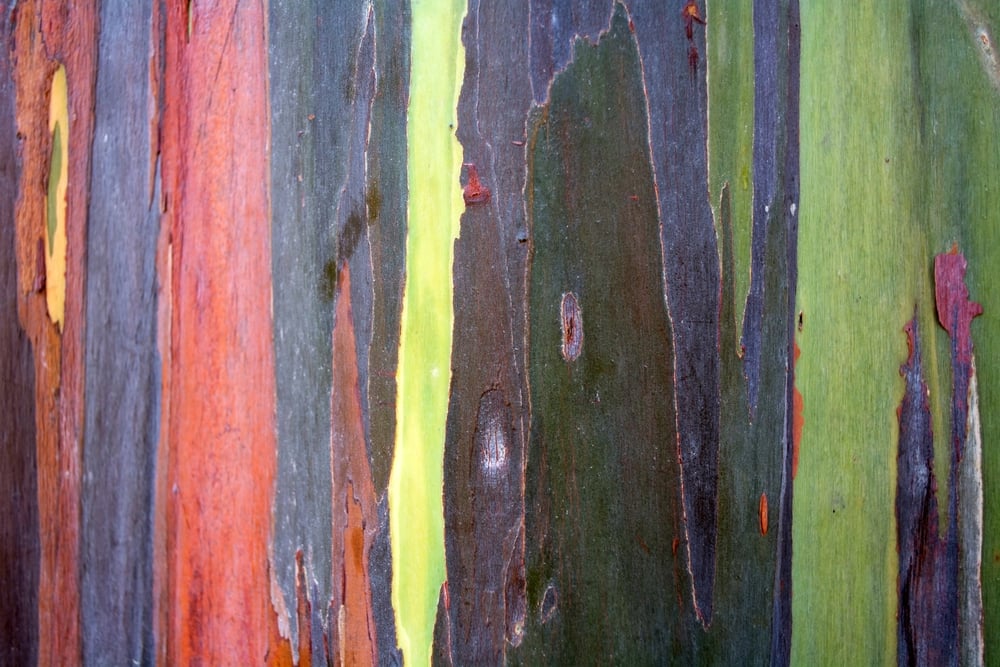
The bark on this tree looks like someone took a paintbrush and went wild with every color imaginable. Rainbow eucalyptus trees shed their bark in strips throughout the year, revealing bright green wood underneath that ages into blue, purple, orange, and maroon shades.
Native to the Philippines, Indonesia, and Papua New Guinea, these trees can grow over 200 feet tall. The color show happens because different sections of bark peel away at different times, creating a patchwork effect that changes constantly.
You can find some of these trees in Hawaii and southern Florida, where they’ve been planted in warm, humid areas that remind them of home.
Crooked Forest
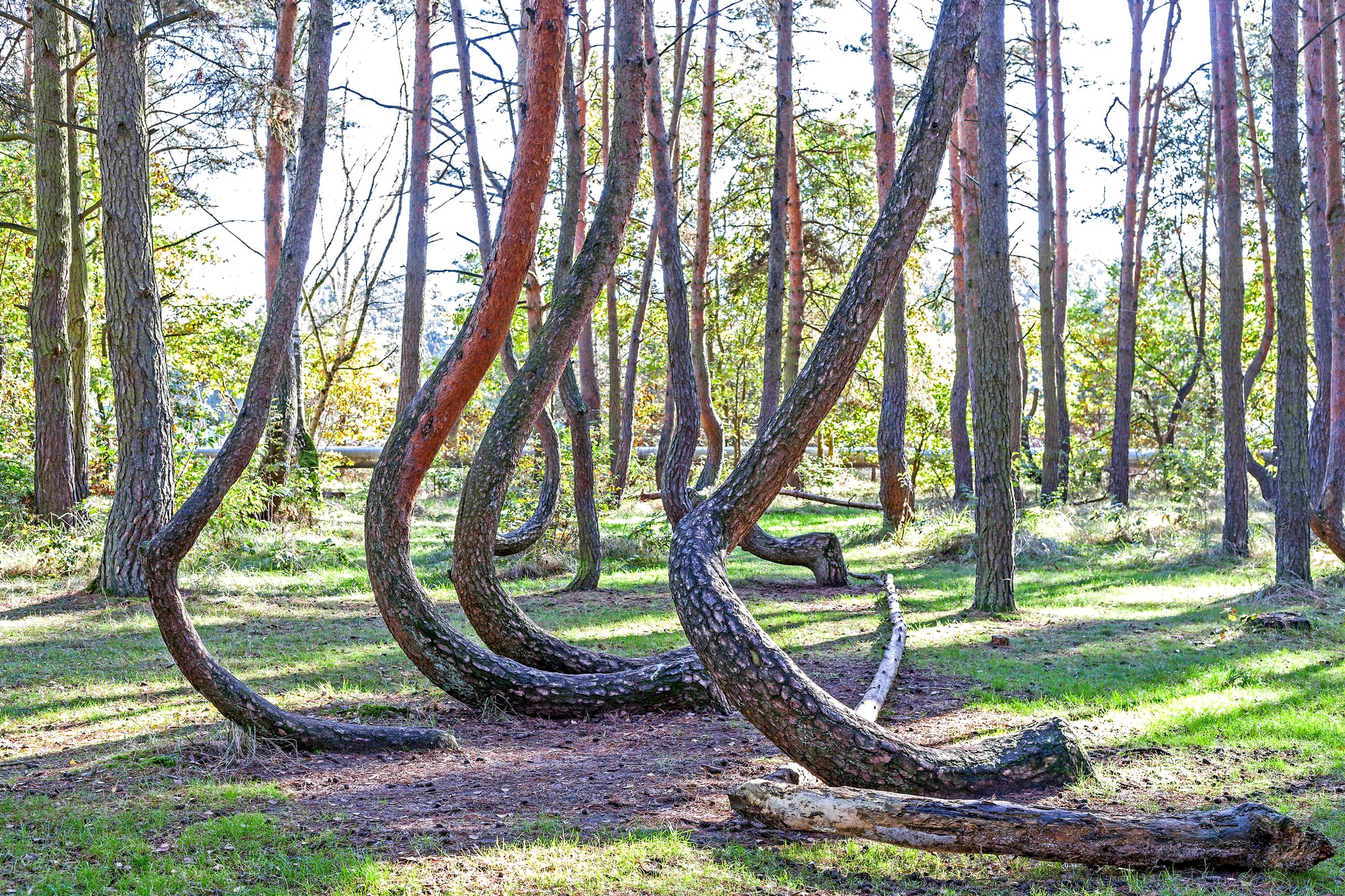
About 400 pine trees in Poland decided to grow with a sharp 90-degree bend at their base before straightening out and growing normally upward. These trees all curve in the same direction, creating an eerie uniformity that’s puzzled people for decades.
Most experts think human intervention caused this back in the 1930s, possibly for boat building or furniture making. The trees were likely held down or bent when young, then released to grow upward.
Whatever the original purpose was, it never got completed, leaving behind one of the strangest pine groves on Earth.
Baobab trees
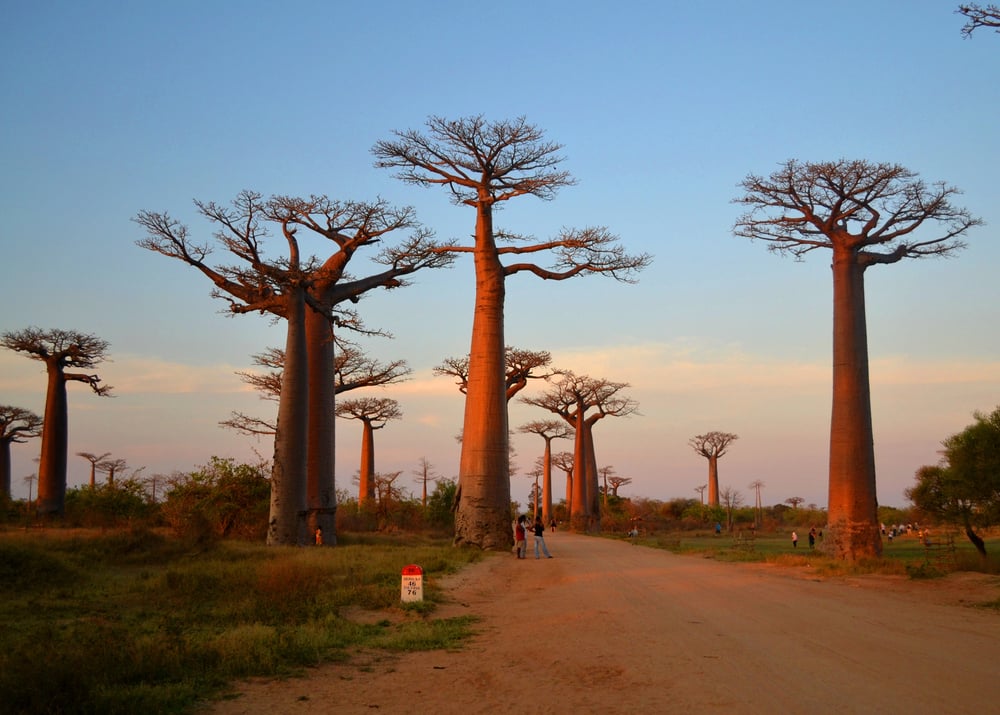
These African giants look like someone pulled them out of the ground and shoved them back in upside down. The thick, swollen trunk can reach over 30 feet in diameter, storing thousands of gallons of water to survive harsh droughts.
Branches spread out at the top in a tangled mess that resembles roots more than typical tree limbs. Some baobabs live for over 2,000 years, becoming hollow inside as they age.
Local communities have used these hollow trunks as storage spaces, shelters, and even small shops or bars.
Dragon blood tree
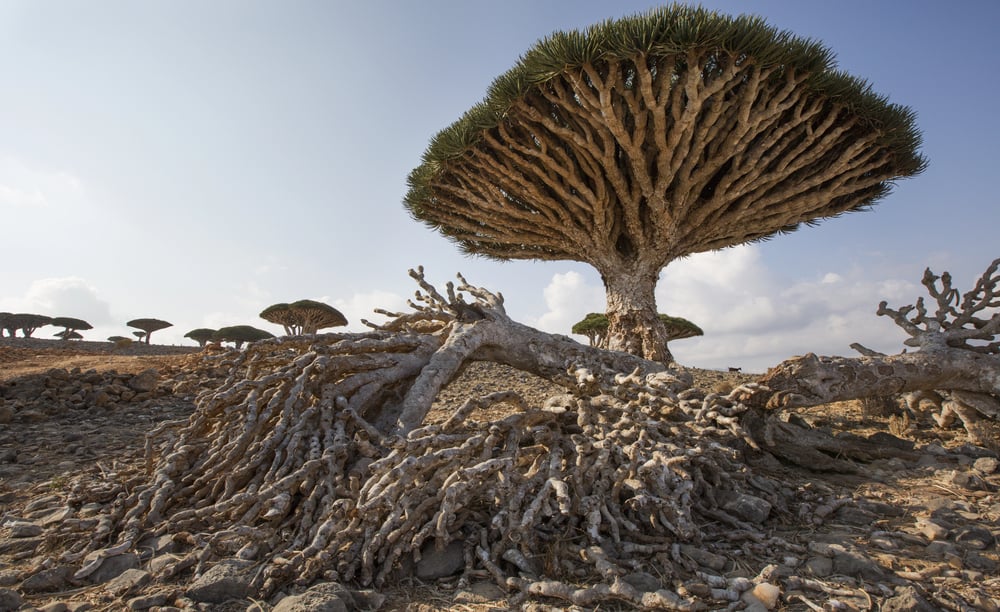
Picture an umbrella that decided to become a tree, and you’ve got the dragon blood tree from Socoron Island in Yemen. The dense crown of branches spreads out in a flat, mushroom-like canopy that looks completely different from typical trees.
This shape helps the tree collect moisture from fog and provides shade for its own roots in the harsh, dry climate. When you cut the bark, dark red sap oozes out, giving the tree its dramatic name.
This resin has been used for centuries as medicine, dye, and varnish.
Slope Point trees

Constant Antarctic winds hitting the southern tip of New Zealand have turned the trees at Slope Point into permanent flags. Every branch and twig points in the same direction, swept sideways by relentless wind that never gives them a chance to grow normally.
The trees lean so dramatically that they look like they’re about to blow away completely. This wind sculpting happens gradually over years, with new growth always pushed in the same direction.
The result is a grove of trees that serve as natural wind indicators, showing the power of consistent environmental pressure.
General Sherman
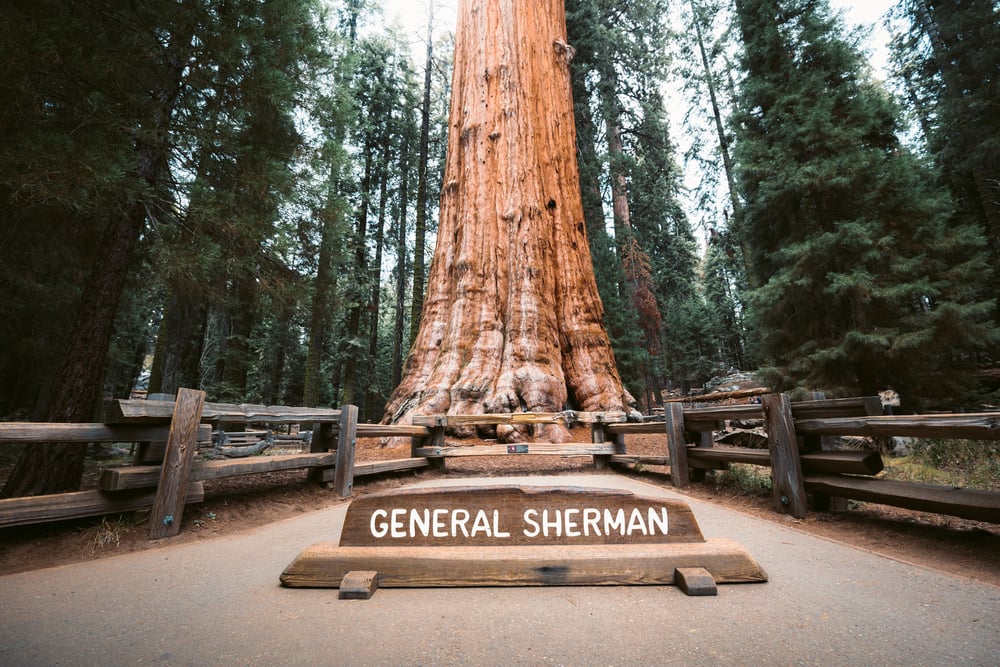
This giant sequoia in California isn’t unusually shaped, but its size pushes it into the realm of the extraordinary. The trunk alone weighs an estimated 1,385 tons, making it the largest single-stem tree by volume on the planet.
It stands 275 feet tall with a base diameter of over 36 feet. The tree is roughly 2,200 years old and continues growing, adding enough wood each year to make a 60-foot-tall tree.
Its massive form demonstrates what happens when a tree gets ideal conditions and an enormous amount of time to grow.
Chapel Oak
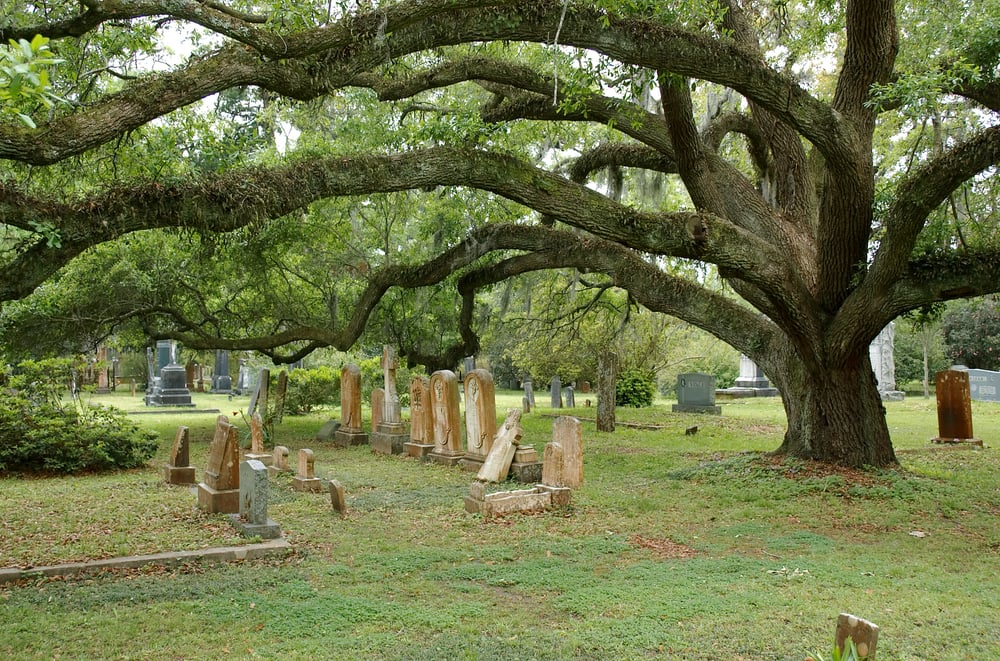
A 1,200-year-old oak tree in France has two chapels built directly into its trunk. The base of the tree is so wide that builders in the 1600s and 1800s carved out rooms inside without killing it.
One chapel sits at ground level while another perches higher up, accessible by a spiral staircase that wraps around the outside. The tree continues to live despite having these hollow spaces carved into its core.
Lightning has damaged it over the centuries, but the oak keeps producing leaves each spring from the sections that remain healthy.
Wisteria at Ashikaga
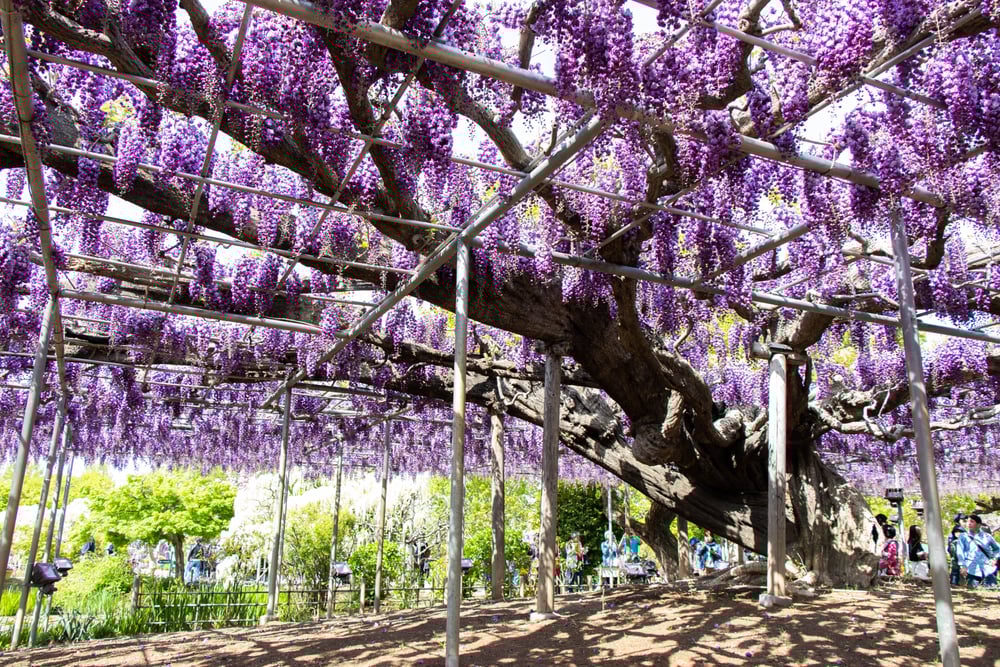
A single wisteria vine in Japan has been trained over support structures to create a canopy covering nearly 2,000 square meters. The plant isn’t technically a tree, but it’s been growing since the 1870s and now looks like a purple roof supported by dozens of pillars.
Thousands of flowers hang down in cascading clusters during bloom season, creating a scene that draws visitors from around the world. The careful training and support system required to create this shape takes constant maintenance.
Without human intervention, the vine would either collapse under its own weight or strangle itself.
Banyan trees

These trees from India start life as a seed dropped by a bird onto another tree’s branch. The young banyan sends roots down to the ground while also growing upward.
Once those aerial roots hit soil, they thicken into trunk-like pillars that support expanding branches. A single banyan can eventually look like a small forest, with dozens or even hundreds of trunks all connected to the same tree.
The Thimmamma Marrimanu in India holds the record with a canopy covering over five acres. Some banyan trees are so extensive that they’ve become landmarks, marketplaces, and gathering spots for entire villages.
Pando

What looks like a forest of 47,000 aspen trees in Utah is actually a single organism connected by one root system. Each “tree” is a genetically identical stem sprouting from the same roots, making Pando one of the heaviest and oldest living things on Earth.
The entire colony weighs around 6,600 tons and may be over 80,000 years old. Individual stems live only about 130 years before dying and being replaced by new shoots.
This growth pattern creates a grove that stays in the same location for millennia while constantly renewing itself.
Monkey puzzle tree
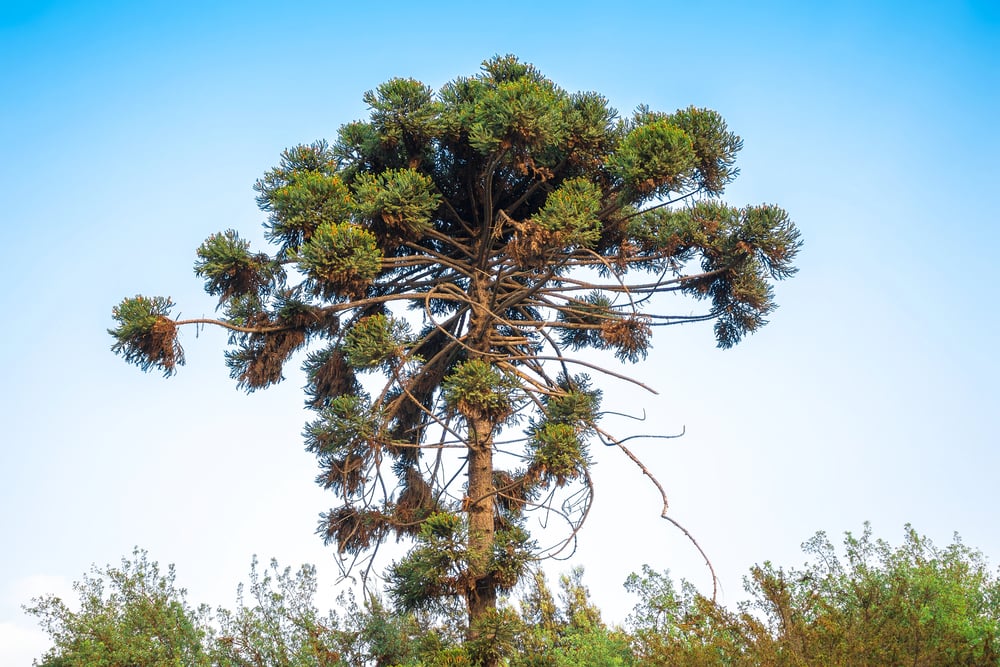
Sharp, triangular leaves cover every inch of branches on this Chilean native, making it look more like a prehistoric plant than a modern tree. The symmetrical branching pattern creates distinct layers that spiral around the trunk as the tree grows upward.
These trees evolved millions of years ago when dinosaurs still roamed, and they’ve barely changed since. The leaves are so tough and pointed that they discourage almost anything from climbing the tree.
Female trees produce large cones that can weigh over 20 pounds and contain edible seeds that were a food source for indigenous peoples.
Tule tree
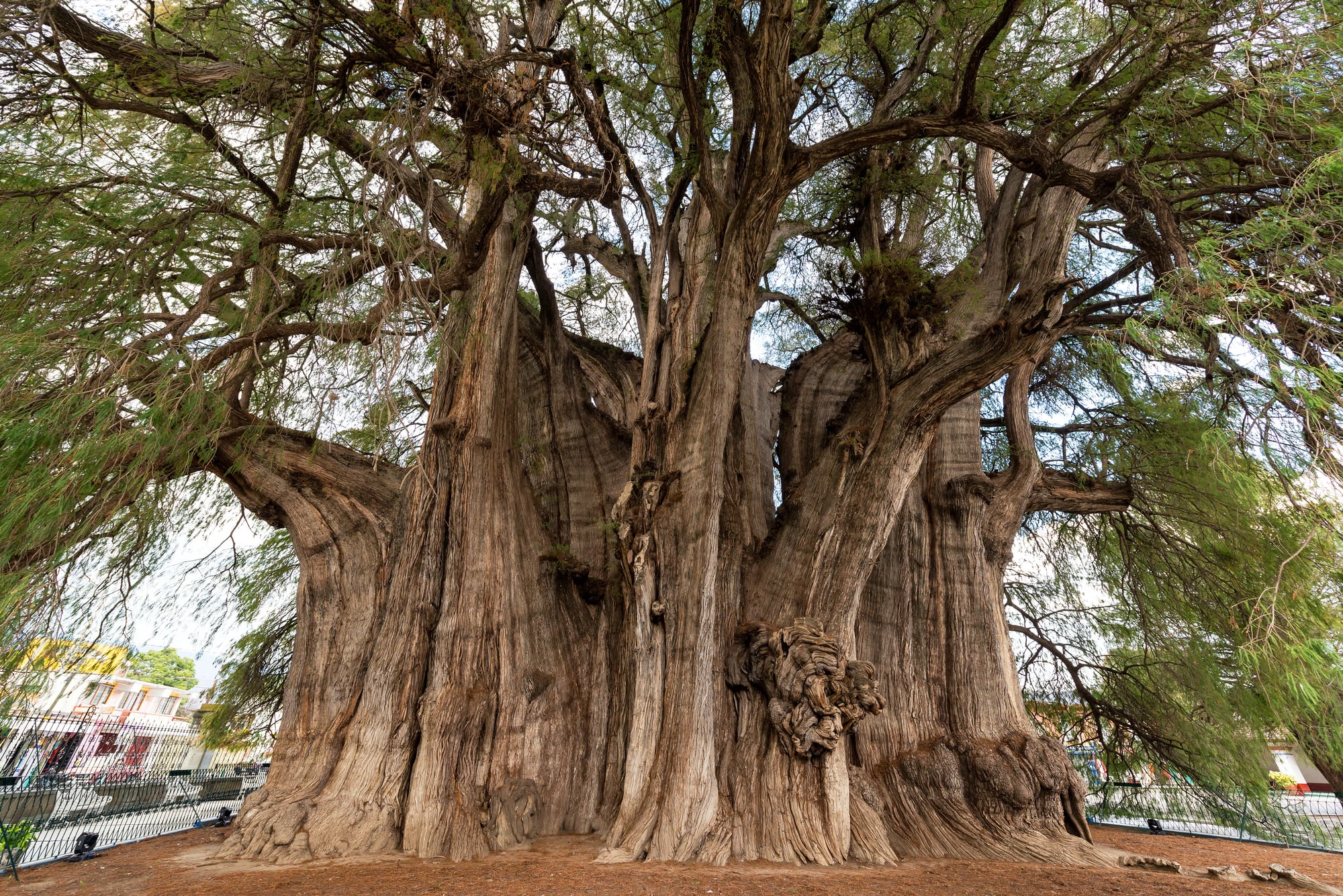
A Montezuma cypress in Oaxaca, Mexico has the stoutest trunk of any tree in the world, measuring over 42 feet in diameter. The massive base creates an irregular, lumpy surface that locals say contains shapes of animals and faces.
This tree is roughly 1,400 years old and required protection from modern development that threatened its water supply. The irregular growth pattern came from optimal growing conditions that let the tree expand in unusual ways.
It stands in a church courtyard where it’s been a community gathering spot for generations.
Avenue of the Baobabs

Only six kinds of baobab live in Madagascar, while the best-known stretch stands along a dusty track in the west. From either edge of the route, thick-trunked forms rise like pillars, branching into wide crowns above.
Known locally as renala – meaning mother of the forest – they dominate the flat terrain. Visitors flock here more than anywhere else on the island, particularly near dusk when stretched silhouettes highlight twisted outlines.
Once surrounded by thick woods, these giants remain scattered across cleared land after farming erased what used to be dense canopy.
El Árbol del Tule comparison
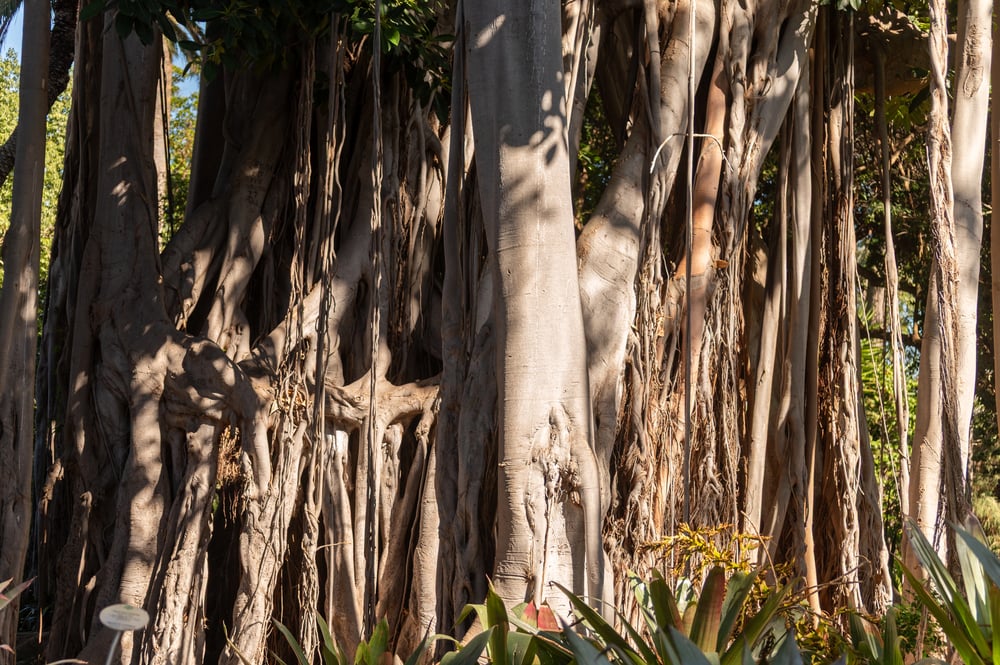
Over by the huge cypress in Mexico, the base spreads out so broad that more than thirty folks holding hands barely wrap around it. Studies measuring its rings have pushed back how old experts think it really is – maybe far beyond first guesses.
Sitting on land shaped by volcanoes, rich earth fed it while deep water sources kept roots soaked early on. While most elders of the forest tough it out in rough spots, this giant rose up where things were just right.
What you see now hints at full potential met – no shortages, no struggle, just steady decades piling on.
Beyond where odd forms take hold
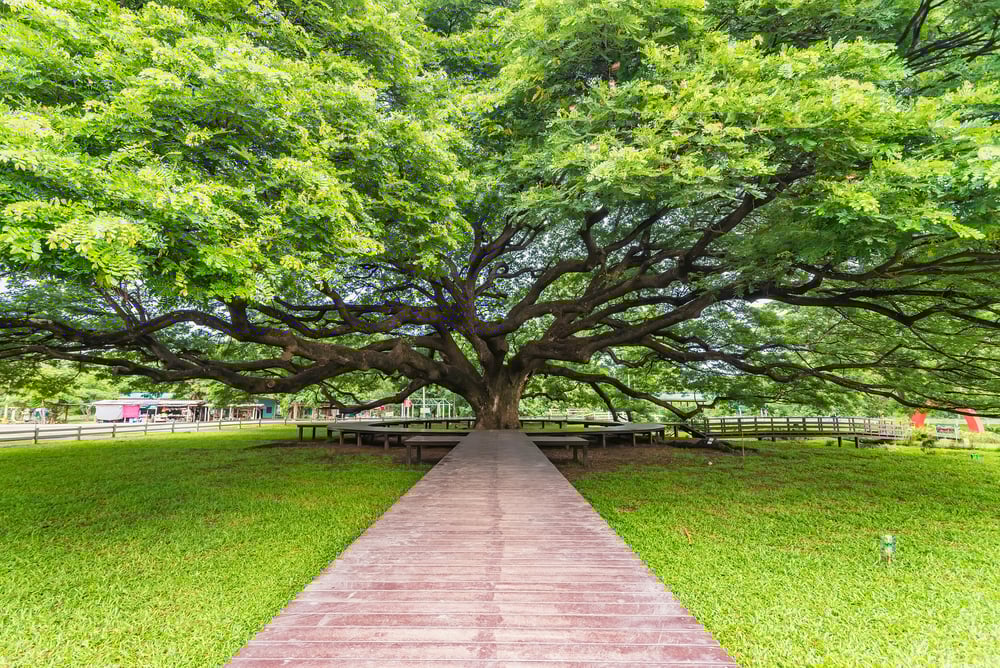
Out in the open, odd-shaped trees show how nature skips straight lines. Pressure from surroundings, rare genes, maybe even someone’s idea – these bend trunks into shapes hard to believe.
Not built fast, they grow slow, like art shaped by time itself. Each twist speaks of change, staying alive, the wild range of what grows here.
Spot a bent limb or lopsided bark? Somewhere else, whole groups of trees could be twisting in ways harder to picture.
More from Go2Tutors!

- The Romanov Crown Jewels and Their Tragic Fate
- 13 Historical Mysteries That Science Still Can’t Solve
- Famous Hoaxes That Fooled the World for Years
- 15 Child Stars with Tragic Adult Lives
- 16 Famous Jewelry Pieces in History
Like Go2Tutors’s content? Follow us on MSN.



