Records Set by People Over the Age of Ninety
Age doesn’t always mean slowing down.
While most people in their nineties are content with quieter pursuits, a remarkable few have pushed themselves to achieve what most wouldn’t attempt at any age.
These individuals have climbed the world’s tallest mountains, completed marathons, earned advanced degrees, and jumped out of planes, all while well past the age when society expects them to take it easy.
Their accomplishments aren’t just feel-good stories.
They’re genuine world records that prove the human body and mind can remain extraordinary well into the tenth decade of life.
Here’s a closer look at some of the most remarkable records set by nonagenarians who refused to let their birth certificates define their limits.
Running Marathons Past Ninety

Fauja Singh, a British runner of Indian origin, became a household name in long-distance running after completing his first marathon at age 90.
At 93, he finished a marathon in under seven hours, shattering the previous record for runners over 90 by nearly an hour.
Singh, who couldn’t walk until age five due to weak legs, didn’t take up running seriously until he was 89, after the death of his wife and son drove him to find solace in exercise.
In 2011, at age 100, he completed the Toronto Waterfront Marathon in just over eight hours, becoming the first centenarian to finish a marathon.
Though Guinness World Records couldn’t verify his age due to the absence of a birth certificate from 1911 India, his performances remain beyond dispute and continue to inspire runners worldwide.
Mathea Allansmith earned official recognition from Guinness World Records as the oldest woman to complete a marathon, achieving the feat at age 92.
The retired doctor from Hawaii didn’t start running until she was 46, but once she did, she never stopped.
She maintains a training volume of about 36 miles per week and continues running six days a week, rain or shine.
Her dedication has given her a quality of life most people half her age would envy, proving that it’s never too late to develop habits that sustain both body and mind.
Mike Fremont set the world record for the men’s 90-plus age group with a time of 6 hours, 35 minutes, and 47 seconds.
What makes his story even more compelling is that he didn’t start running until his fifties and was diagnosed with colon cancer at 69.
Doctors gave him three months to live, but Fremont overhauled his lifestyle, adopted a plant-based diet, and beat cancer without chemotherapy.
By his nineties, he’d completed over 20 marathons and become a fixture at races, always upbeat and encouraging others along the way.
Earning Degrees After Ninety
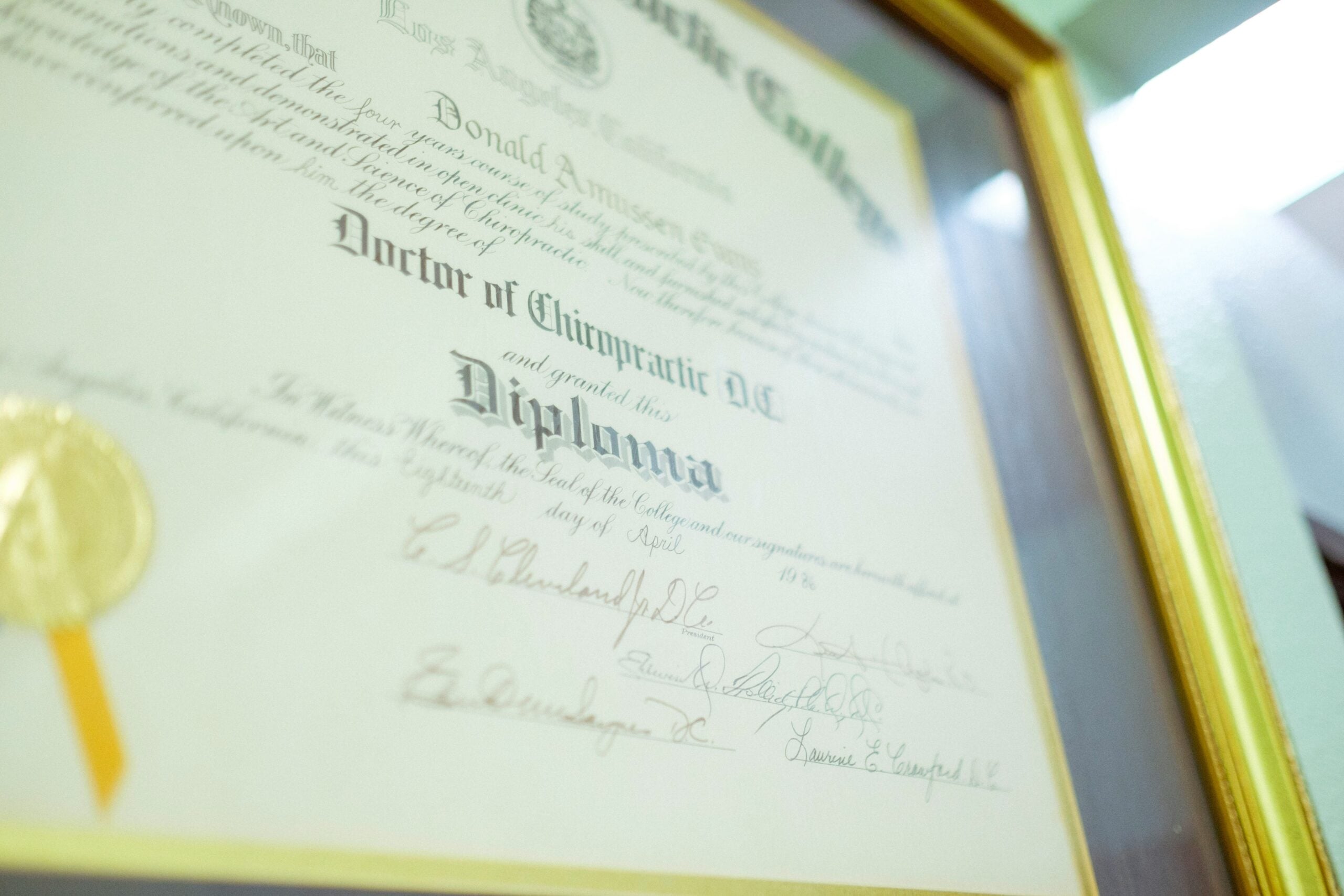
Minnie Payne became the oldest person to complete a master’s degree at the University of North Texas when she finished her program in interdisciplinary studies at age 90.
She’d already earned her bachelor’s degree from Texas Woman’s University at age 73, spending the years between writing and copy editing to stay sharp.
Payne, who grew up in poverty in South Carolina and never had the chance to attend college traditionally, spent many all-nighters completing coursework.
Her persistence wasn’t about credentials.
It was about proving to herself and her family that improvement never stops, regardless of how many birthdays you’ve celebrated.
Nola Ochs made headlines in 2007 when she graduated from Fort Hays State University at age 95, earning a general studies degree with an emphasis in history alongside her 21-year-old granddaughter.
She’d first enrolled in college in 1930 but left to raise four sons on a Kansas farm.
Seven decades later, she moved into university housing to complete the 30 credits she needed.
But Ochs wasn’t finished.
At 98, she earned her master’s degree in liberal studies, making her the oldest recipient of a graduate degree at the time.
She continued taking classes well into her hundreds, serving as a graduate teaching assistant and proving that intellectual curiosity doesn’t have an expiration date.
Conquering Mountains in Their Nineties
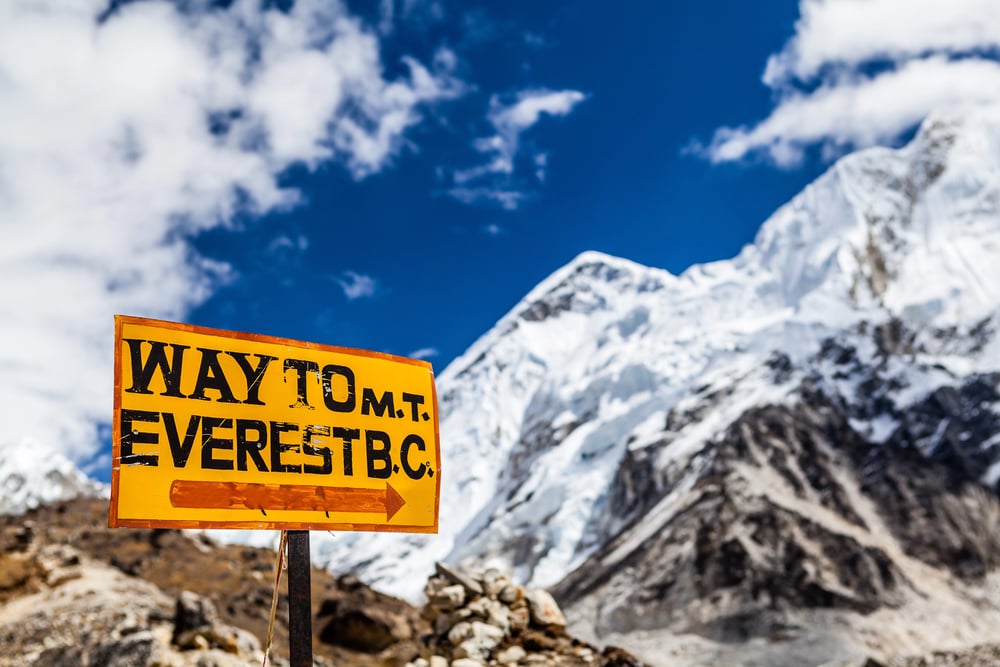
Yuichiro Miura of Japan became the oldest person to reach the summit of Mount Everest when he completed the climb at age 80 in 2013.
What’s even more astonishing is that this was his third time summiting the world’s highest peak.
He first reached the top at 70 in 2003, then again at 75 in 2008.
Between attempts, he’d broken his pelvis in a skiing accident and undergone multiple surgeries for heart arrhythmia.
His preparation for the 2013 climb included strapping weights to his legs and back while walking over five miles each day.
At altitudes above 8,000 meters, where oxygen is a third of what it is at sea level, scientists say the body ages roughly 70 additional years.
That means Miura essentially felt 150 years old when he reached the summit.
Even now, he’s talked about attempting Everest again at age 90.
In August 2023, at age 90, Miura reached the summit of Mount Fuji using a specially designed wheelchair.
Despite suffering a stroke, spinal injury, and needing pacemaker surgery, he refused to give up his connection to the mountains.
His achievements weren’t just physical triumphs.
They represented a philosophy he’s lived by his entire life: dreams don’t disappear with age, they simply require more preparation and determination.
Flying Into Their Nineties

Harry Moyer earned recognition as the oldest active pilot when, at age 100, he was still flying his Mooney aircraft in California.
He’d been flying since 1942 and had accumulated 4,500 hours in Mooney aircraft alone.
Moyer tried to fly at least once a week, weather and maintenance permitting, and on his 100th birthday in 2020, he took to the skies as he always had.
His friends and family thought the flight might be record-breaking, and they were right.
Aviation doesn’t have mandatory retirement ages for private pilots, but the mental acuity required makes century-old pilots exceptionally rare.
Jun Takahashi of Japan was recognized in 2014 as the world’s oldest active commercial pilot at age 91.
Operating out of Fujikawa Airfield near Mount Fuji, he specialized in towing gliders and training new pilots.
Students often sought him out specifically for his historical perspective.
He’d been a bomber pilot in World War II, and his nearly seven decades of flying experience gave him insights that younger instructors simply couldn’t match.
Cole Kugel, born in 1902, held the record as the oldest qualified pilot, continuing to fly until 2007 at age 105.
He was born a year before the Wright Brothers’ historic flight and earned his pilot’s license in 1945.
His last flight came in his beloved 1976 Cessna 182, which he’d navigated using only a compass and road maps when he first ferried it home 1,250 miles.
In all his years of flying, he never had a single in-flight emergency.
Skydiving Past One Hundred

Alfred Blaschke holds the record for the oldest skydiver after completing a tandem jump at age 106 in November 2023.
He’d originally planned to jump on his 100th birthday in 2017, reasoning that if he was going to do something that bold, it should be for a milestone that mattered.
The jump went perfectly, and he liked it so much he did it again at 103 to reclaim his world record after someone else broke it.
His third jump came alongside Texas Governor Greg Abbott, who’d promised to skydive with Blaschke after they met the previous year.
Bad weather delayed the jump four times, but on a clear morning, the two geared up and exited the plane at 9,000 feet.
Rut Larsson of Sweden broke the record for the oldest woman to complete a tandem parachute jump at age 103.
She discovered her passion for skydiving just before turning 90, trying paragliding on her 90th birthday and falling in love with the sensation of being in the air.
Since then, she’d tried ballooning, paragliding, and parachuting, embracing every opportunity to ‘take a walk among the clouds.’
Her first parachute jump came at 102, but she knew she wanted to hold the world record.
When she finally achieved it, she described the cloudless spring day as perfect weather for exactly the kind of adventure she craved.
Dorothy Hoffner of Chicago completed a tandem skydive at 104 in October 2023, becoming the oldest person to parachute.
It wasn’t her first jump.
She’d skydived on her 100th birthday but wanted a second attempt because she didn’t want to be pushed out of the plane this time.
She wanted to lead the jump.
And she did, tumbling out at 13,500 feet with her white hair billowing in the wind.
After landing, she told the cheering crowd that age is just a number.
When asked about the focus on her age, she called it ‘ridiculous,’ asking what age had to do with what she was doing.
Hoffner passed away just days after her record-breaking jump, but not from anything related to the skydive.
She remained active until the end, walking four blocks daily and scheduling interviews with reporters from around the world who were fascinated by her spirit.
Why These Records Still Matter

These achievements go beyond impressive statistics.
They challenge fundamental assumptions about aging and capability.
Every person on this list faced obstacles that would have been perfectly reasonable excuses to stop: heart disease, broken bones, strokes, cancer, the simple reality of being in their tenth decade.
Yet each one chose to push forward anyway, not out of recklessness but from a belief that life remains worth living fully, no matter how many years have accumulated.
Fauja Singh trained by walking miles every day with weights strapped to his body.
Yuichiro Miura spent years preparing for each Everest attempt, understanding that at his age, every detail mattered.
Minnie Payne spent many all-nighters studying to earn her master’s degree.
These weren’t people coasting on natural talent or good genetics.
They worked relentlessly for their records.
The message isn’t that everyone should climb mountains or jump out of planes in their nineties.
Most won’t, and that’s perfectly fine.
But these record-holders prove that the limits we place on ourselves based on age are often far more restrictive than they need to be.
The body may slow down, recovery takes longer, and the risks increase.
But the capacity for achievement, growth, and new experiences doesn’t vanish simply because decades have passed.
Whether it’s running a marathon, earning a degree, or trying something that scares you, these nonagenarians show that it’s never too late to set a goal and chase it.
Their legacy isn’t just the records they set.
It’s the reminder that being alive means continuing to reach for something, regardless of what the calendar says.
More from Go2Tutors!

- The Romanov Crown Jewels and Their Tragic Fate
- 13 Historical Mysteries That Science Still Can’t Solve
- Famous Hoaxes That Fooled the World for Years
- 15 Child Stars with Tragic Adult Lives
- 16 Famous Jewelry Pieces in History
Like Go2Tutors’s content? Follow us on MSN.