Watches That Cost More Than a House
Most people check the time on their phones now. The idea of wearing a watch feels almost quaint, like carrying a pocket square or writing letters by hand.
But at the highest end of watchmaking, timepieces have nothing to do with telling time anymore. They’re about engineering, artistry, and yes, status.
Some watches sell for prices that make you wonder if there’s a typo—millions of dollars for something that sits on your wrist.
These aren’t just expensive. They cost more than most homes.
More than some apartment buildings. The kind of money that changes lives, invested instead in mechanical marvels that took years to design and months to assemble by hand.
What drives someone to spend that much? And what makes these watches worth it to the people who buy them?
The Patek Philippe Grandmaster Chime

This watch holds the record for the most expensive timepiece ever sold at auction—31 million dollars. Patek Philippe made it for their 175th anniversary, and only seven exist.
It has 20 complications, which in watch terms means functions beyond telling time. Minute repeaters, perpetual calendars, moon phases.
The watch chimes the time when you press a button, a feature that dates back to when people needed to tell time in the dark.
The case reverses to show a different dial. Both sides look like miniature works of art, with hand-engraved details and enamel work that takes months to complete.
The person who bought it at auction already owned an extraordinary watch collection. At that level, you’re not buying a tool.
You’re buying history.
Jacob & Co. Billionaire Watch
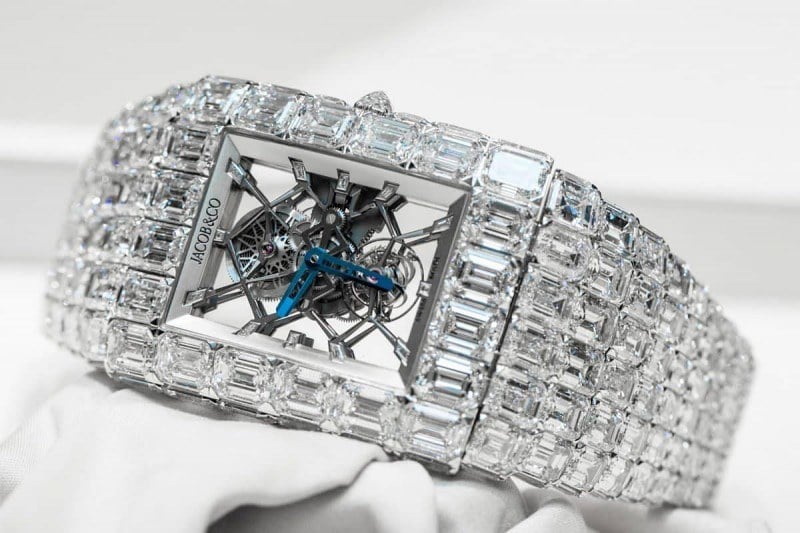
Covered entirely in emerald-cut diamonds—260 carats of them. The price hovers around 18 million dollars, and most of that cost comes from the stones themselves.
The movement almost becomes secondary, though it’s a respectable automatic tourbillon.
People either love this watch or find it absurd. There’s no middle ground.
It catches light like a disco orb and weighs enough that you’d know you’re wearing it. Jacob & Co. makes pieces for people who want everyone in the room to notice, and this delivers.
Patek Philippe Sky Moon Tourbillon

Another Patek Philippe, this one a more “modest” 1.5 million dollars. It displays the night sky as it appears from Geneva, tracking the position of stars and the phases of the moon with astonishing accuracy.
The case back shows a different view of the heavens, and the entire mechanism contains over 700 parts.
The level of detail here goes beyond what anyone needs. You could look up at the actual sky instead.
But the craftsmanship involved in miniaturizing a planetarium into a wristwatch represents hundreds of hours of work by master watchmakers. Each component gets finished by hand, even the parts you never see.
Richard Mille RM 56-02 Sapphire
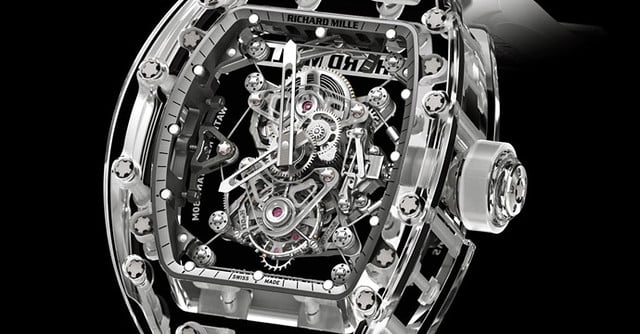
Almost entirely transparent. The case, bridges, and baseplate are all carved from sapphire crystal, one of the hardest materials on earth.
Making a watch case from sapphire presents massive technical challenges. The material doesn’t machine easily, and any imperfection makes the piece unusable.
Richard Mille prices this around 2 million to 2.2 million dollars. The movement seems to float inside, visible from every angle.
It’s an engineering showcase that also happens to be a watch. Only ten were made, and they all sold before production finished.
Breguet Marie-Antoinette Grande Complication

The original version of this watch was commissioned by a lover of Marie-Antoinette and took 44 years to complete—finished in 1827, long after both the queen and the client had died. It contained every complication known to watchmaking at the time.
Someone stole it in 1983, and it wasn’t recovered until 2007.
After the theft, Breguet made a replica using the original specifications, which took four years to complete. The original watch is valued at approximately 30 million dollars.
The watch includes a perpetual calendar, minute repeater, equation of time, and a bimetallic thermometer. It’s made almost entirely of gold, including the movement.
Chopard 201-Carat Watch
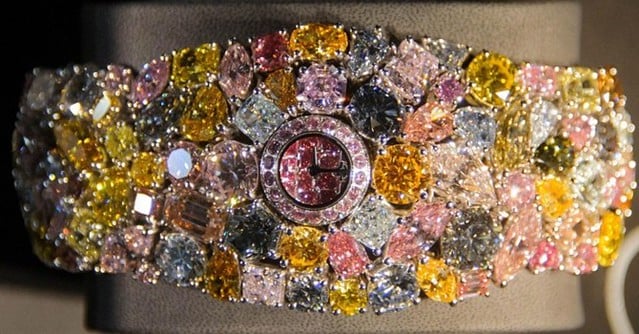
This piece shows up in record books for its sheer weight in diamonds—201 carats of them, in various colors. Pink, blue, white, and yellow diamonds cover the entire surface.
Three heart-shaped diamonds in pink, blue, and white sit at the center.
The actual watch mechanism barely matters. You’re buying jewelry that happens to tell time.
Chopard priced it at 25 million dollars, and it took years to source all the diamonds. Each stone was selected for color match and quality.
Vacheron Constantin 57260

The most complicated watch ever made, with 57 complications. Vacheron Constantin spent eight years building it for a single client who wanted to break records.
The watch is massive—you wear it like a pocket watch, not on your wrist. It has two faces and weighs over two pounds.
Functions include a Hebrew perpetual calendar, multiple time zones, sunrise and sunset times for any location, and astronomical displays. The price was never publicly disclosed, but estimates place it over 10 million dollars.
Three master watchmakers worked on it full-time for nearly a decade.
Rolex Paul Newman Daytona

The actual watch that Paul Newman wore sold for 17.8 million dollars. His wife gave it to him, and he wore it for decades until he gave it to his daughter’s boyfriend.
Not the most complicated watch or the most jeweled, but provenance matters enormously.
Regular Daytonas from that era sell for tens of thousands. This one brought millions because Newman wore it.
The watch became an icon partly because of him, and owning the actual piece connects you to that history in a way no reproduction can.
A. Lange & Söhne Grand Complication
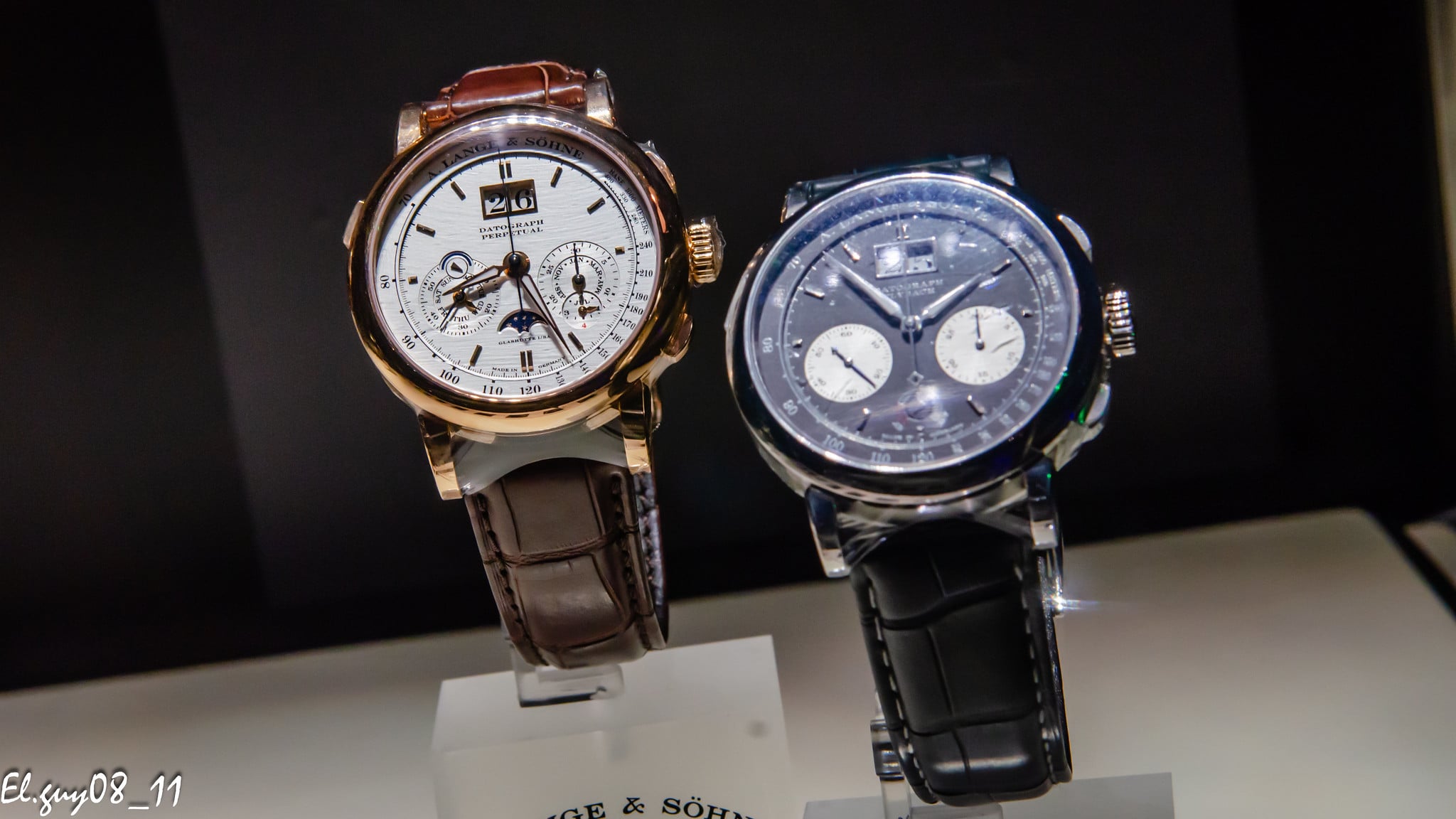
German watchmaking takes a different approach than Swiss—more angular, more technical in appearance. This watch contains a grande and petite sonnerie, minute repeater, perpetual calendar, and split-seconds chronograph.
The case measures 50mm, impossible to hide under a sleeve.
A. Lange & Söhne made six of these, each priced around 2.5 million dollars. The finishing level on German watches reaches obsessive heights.
Even the parts you can’t see get decorated. They use different metals for different components based on acoustic properties, because the chiming needs to sound perfect.
Hublot Big Bang Diamond

Another diamond-covered piece, but from a brand that’s more recent to the ultra-luxury category. Hublot covered the entire watch—case, dial, bracelet—in 1,200 diamonds totaling 140 carats.
The price sits around 5 million dollars.
Critics sometimes dismiss Hublot as flashy without the heritage of older brands. Fans appreciate their willingness to experiment with materials and designs that traditional brands avoid.
This watch definitely falls into the category of statement pieces.
Greubel Forsey Art Piece 1
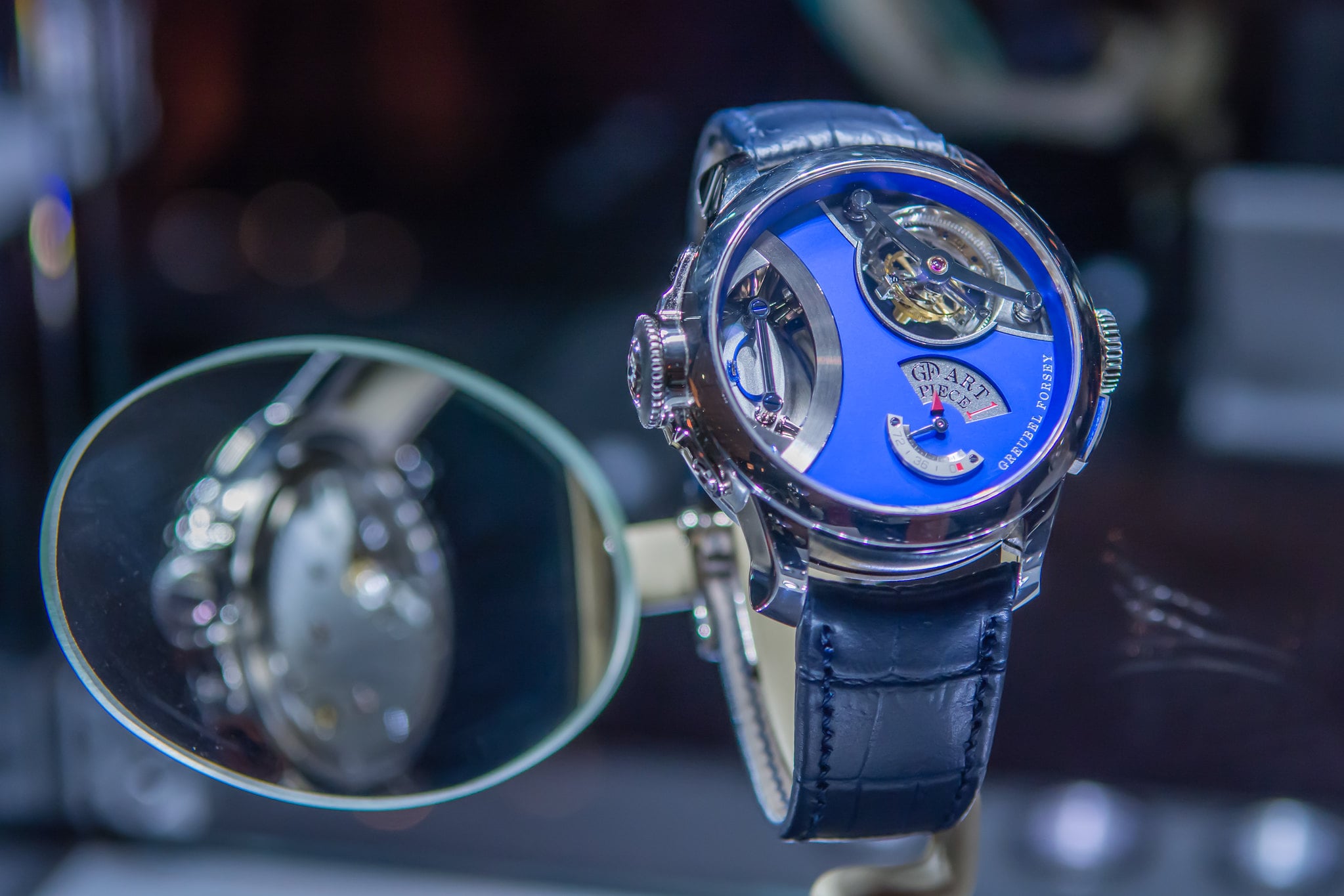
Watchmaking meets sculpture. The dial features a three-dimensional gold sculpture of a ship on a hand-painted ocean, created entirely by hand.
The movement includes a tourbillon, visible through the back, but the focus stays on the artistry of the dial.
Greubel Forsey makes watches in tiny quantities, often fewer than 100 pieces per year. This particular model had a price tag around 1.5 million dollars.
The sculpture took over 700 hours to complete, using traditional goldsmithing techniques.
Audemars Piguet Royal Oak Grande Complication
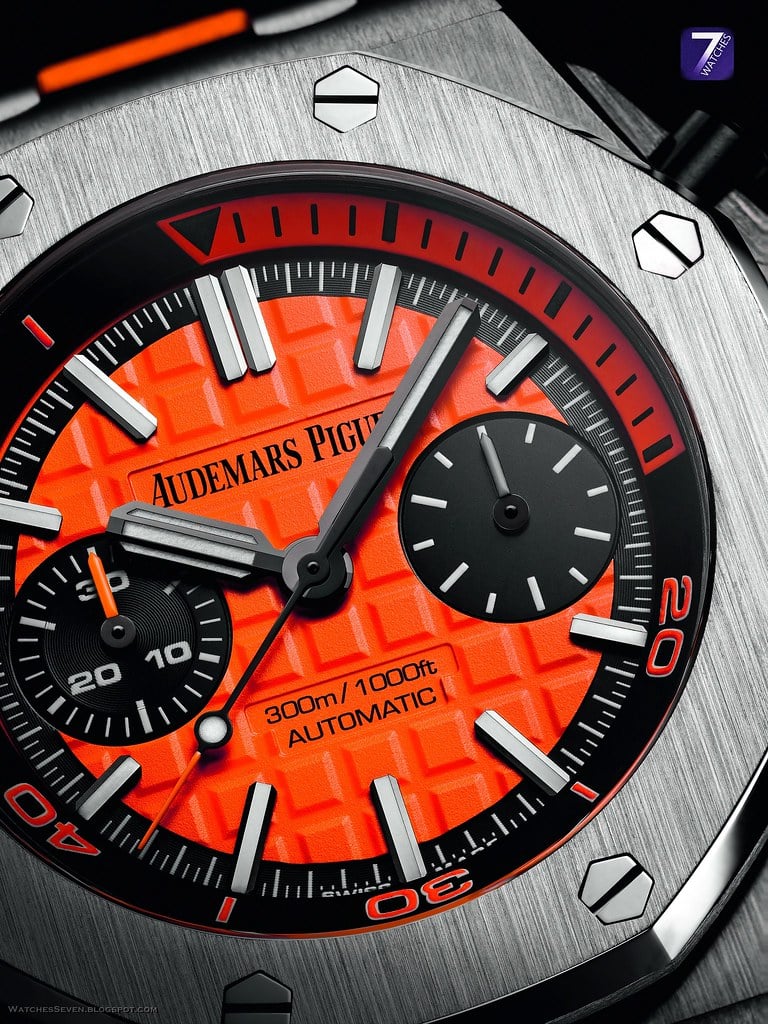
Audemars Piguet pioneered the luxury sports watch with the Royal Oak in 1972. This version adds a perpetual calendar, minute repeater, and split-seconds chronograph.
The case is titanium and ceramic, modern materials that require different manufacturing techniques than traditional gold or steel.
The price reached about 870,000 dollars. The Royal Oak design—octagonal bezel with exposed screws—divides people.
Some find it perfect, others think it looks industrial. But the design influenced everything that came after it in luxury sports watches.
F.P. Journe Tourbillon Souverain

Journe started his own brand in 1999 and quickly gained respect for technical innovation. The Tourbillon Souverain features a constant-force mechanism that delivers steady power to the escapement, improving accuracy.
The movement uses 18-karat rose gold for the bridges and baseplate, unusual and expensive.
Prices for rare F.P. Journe pieces reach into seven figures at auction. The brand makes fewer than 900 watches per year, all by hand in Geneva.
Collectors prize them for technical merit rather than brand recognition.
When Time Becomes Art

The houses these watches cost as much as aren’t mansions. They’re normal three-bedroom homes in average cities.
Places where families live, where kids grow up, where people build lives. Trading all that for something you wear on your wrist requires a particular relationship with money and objects.
These watches will outlast their owners. They’ll get passed down, auctioned off, end up in museums.
The craftsmanship ensures they’ll still work in 100 years with proper maintenance. Maybe that’s the justification—you’re not really buying a watch, you’re becoming a temporary custodian of something that transcends normal ownership.
Or maybe it’s simpler than that. Some people just really love watches.
More from Go2Tutors!

- The Romanov Crown Jewels and Their Tragic Fate
- 13 Historical Mysteries That Science Still Can’t Solve
- Famous Hoaxes That Fooled the World for Years
- 15 Child Stars with Tragic Adult Lives
- 16 Famous Jewelry Pieces in History
Like Go2Tutors’s content? Follow us on MSN.