Weird Southern Food That Only Southerners Understand
There’s a moment every Southerner knows well. You’re eating something you’ve had your whole life, something completely normal to you, and an outsider walks in and stares like you’re conducting a science experiment.
That thing on your plate — the thing you’d eat cold out of the fridge at midnight without a second thought — apparently needs explaining to the rest of the world. Southern food has always been practical, built from whatever was available, and deeply tied to the land.
Some of it looks strange. Some of it smells strange. And a whole lot of it tastes better than anything with a fancy name ever could.
Boiled Peanuts
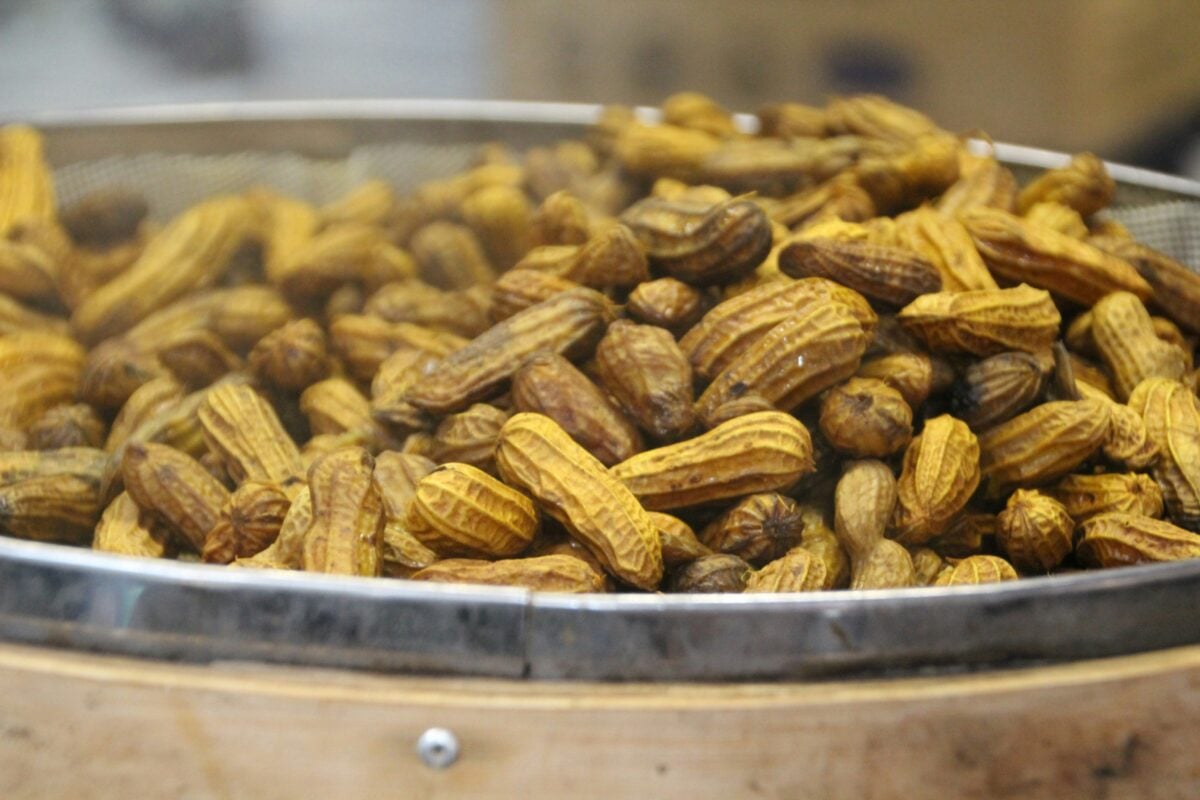
Walk past a roadside stand in Georgia or South Carolina on a summer afternoon and you’ll find a pot of boiled peanuts sitting over a flame. To anyone raised in the South, this is just a snack.
To everyone else, it’s deeply confusing. Raw green peanuts cooked in salted water until they go soft and briny — the texture is nothing like the roasted kind.
They’re almost creamy inside. You eat them warm, cracking the shell with your fingers and letting the salty liquid drip down your hand.
People who grew up eating them have a hard time explaining why they’re good. They just are.
Cracklin’
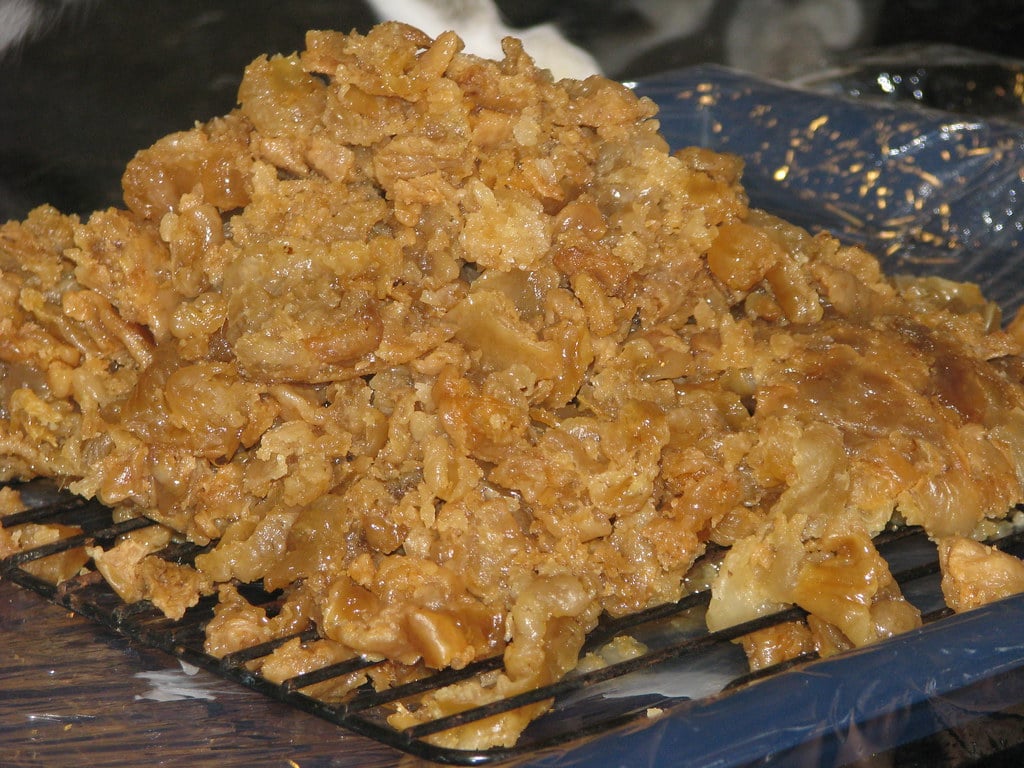
Fried pork skin sounds straightforward enough, but cracklin’ isn’t quite the same as the pork rinds you find in a gas station bag. Traditional cracklin’ is made with a layer of fat still attached beneath the skin, which gives it a different texture entirely — crunchy on the outside, rich and almost chewy in the middle.
It shows up in cornbread too. Cracklin’ cornbread is a whole other thing: crumbled pieces of fried pork skin baked right into the batter. If you’ve never had it, that description probably doesn’t help.
If you grew up with it, no explanation is needed.
Livermush
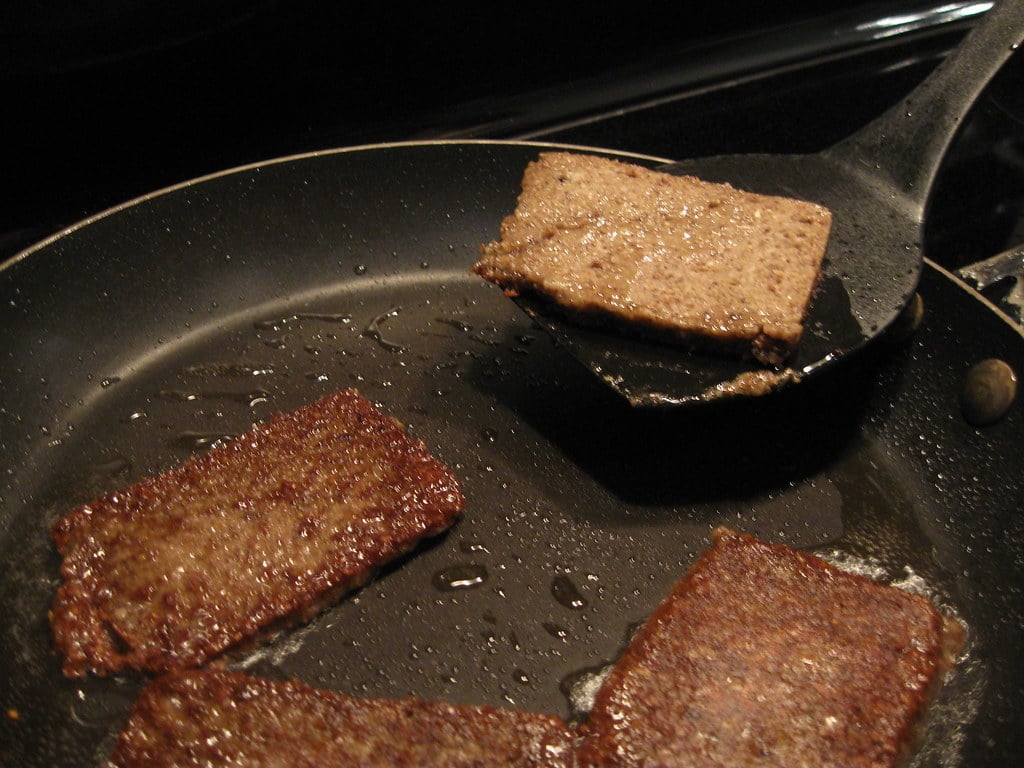
North Carolina has a deep and unshakeable attachment to livermush, and the rest of the country has largely never heard of it. It’s made from pig liver and head parts combined with cornmeal and spices, pressed into a loaf, and then sliced and pan-fried until the outside crisps up.
It’s eaten on biscuits, alongside eggs, or just straight off the skillet. There are livermush festivals.
People drive hours for the good stuff. Outsiders tend to look at the name and stop there, which is genuinely their loss.
Chicken Bog

South Carolina’s low country gave the world chicken bog, and the name does not help sell it to newcomers. It’s essentially a thick, slow-cooked mixture of chicken, rice, and smoked sausage — the rice absorbs so much liquid during cooking that the whole dish goes dense and almost sticky, which is where the “bog” part comes from.
It’s served at church suppers and family reunions by the gallon. The version at your grandmother’s house probably tasted different from your neighbor’s version, and both of them would insist their way is correct.
Chow-Chow
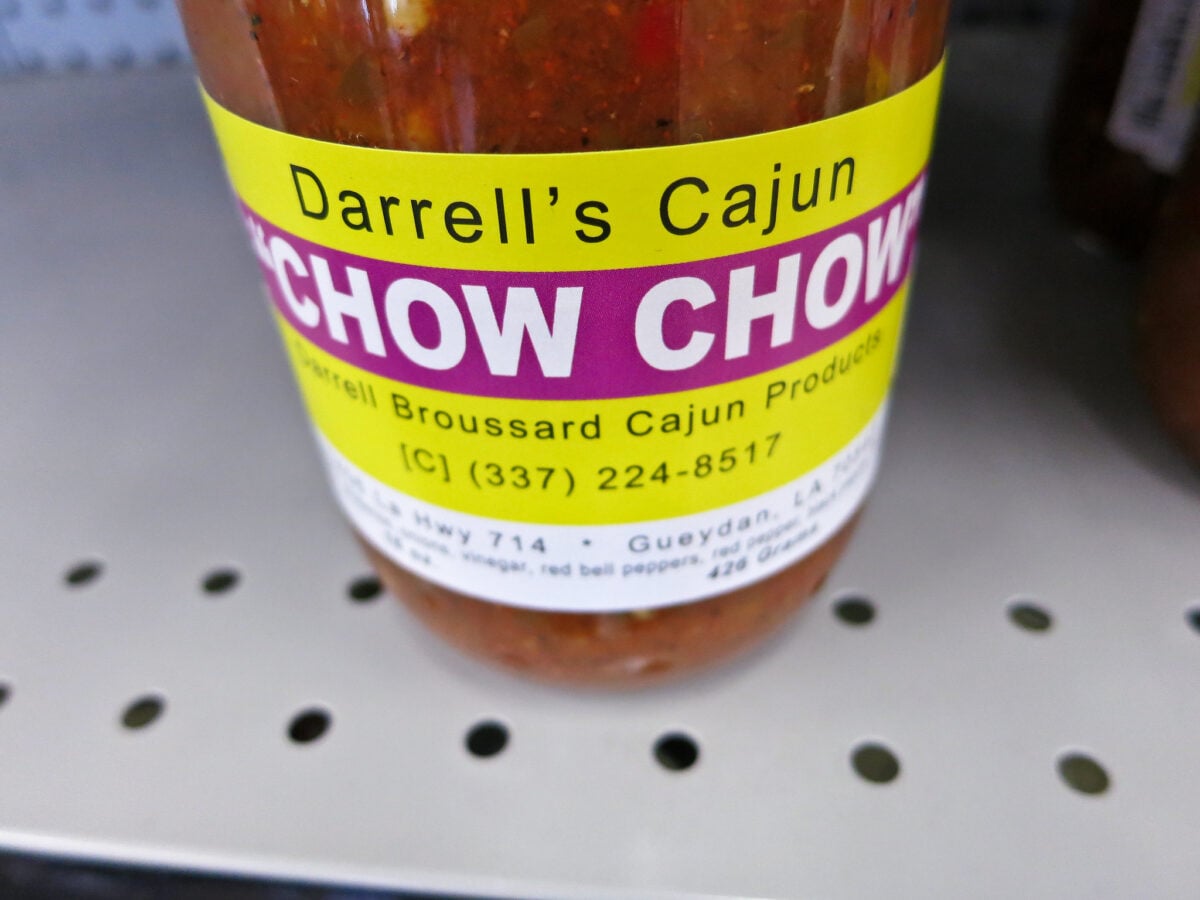
Chow-chow is a relish made from chopped pickled vegetables — cabbage, green tomatoes, peppers, onions — fermented together and then canned in jars that sit in the back of every Southern grandmother’s refrigerator. It goes on pinto beans, on hot dogs, on pretty much anything that needs a little sharp, vinegary punch.
Most people outside the South have never encountered it. Most people inside the South couldn’t imagine eating a bowl of beans without it.
Sawmill Gravy on Everything
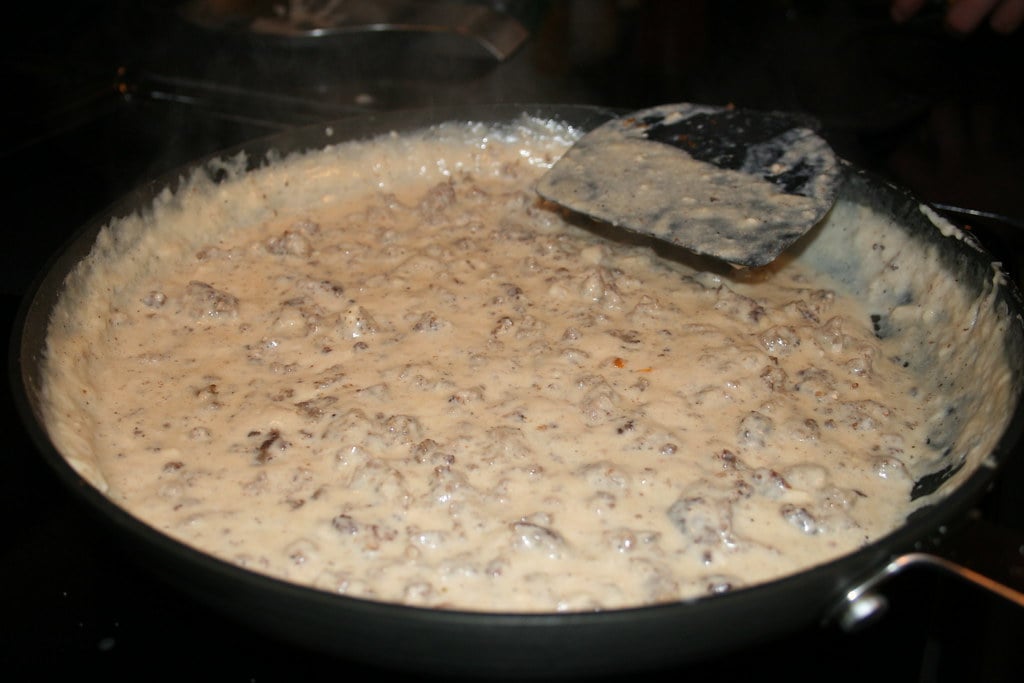
Sawmill gravy — white gravy made from pork sausage drippings, flour, and milk — is a breakfast staple throughout the South. That part is reasonably well understood.
What confuses outsiders is the quantity and the range of things it gets poured over. Biscuits, yes. But also eggs. Also grits.
Also hash browns. Also fried chicken.
Also, sometimes, a piece of toast that has no business holding that much gravy but is going to try anyway. It’s thick, peppery, and rich in a way that makes everything underneath it better.
There’s no such thing as too much.
Muscadine Everything
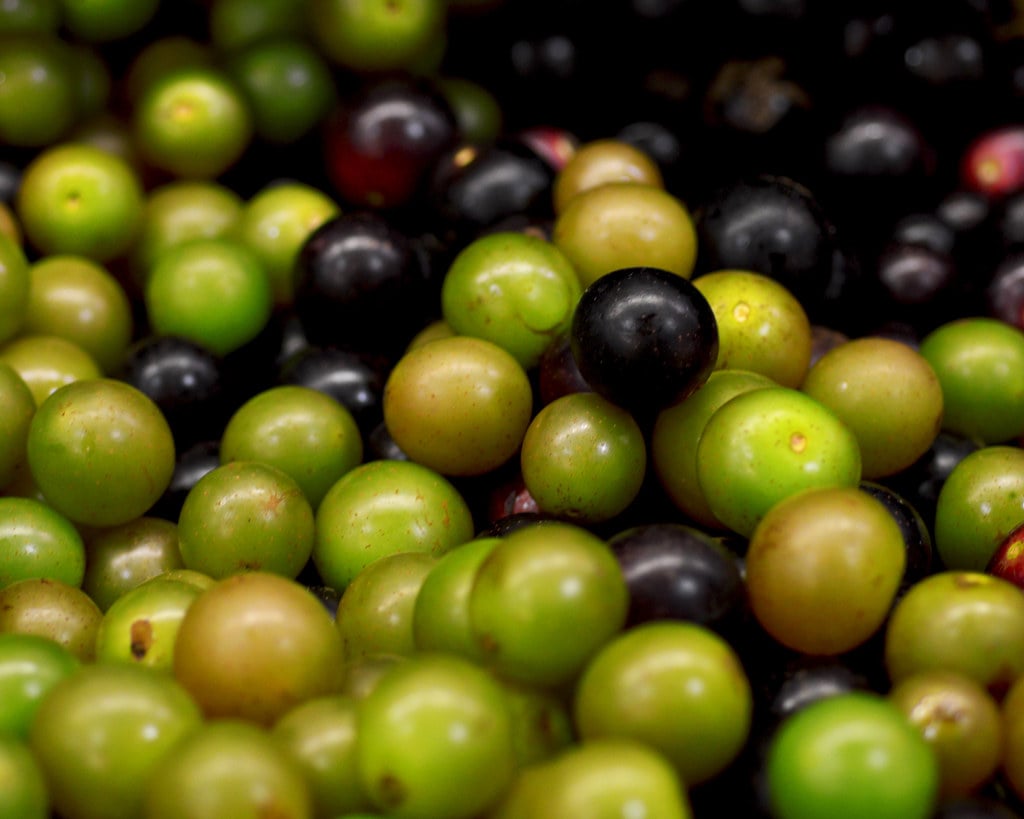
Muscadines are a thick-skinned, wild grape native to the American South, and they show up in a surprising number of places once you start looking. Muscadine jelly on a biscuit.
Muscadine wine made in someone’s shed. Muscadine hull pie, where the hulls are cooked separately from the pulp, sweetened, and used as a filling.
The flavor is bold and fruity, almost perfume-like, and nothing else tastes quite like it. You can’t really explain muscadine to someone who hasn’t had one fresh off the vine in August.
You just hand them one and watch their face.
Hog Head Cheese
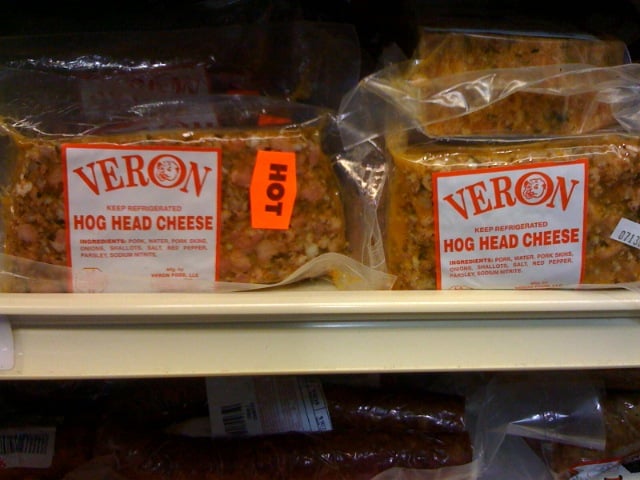
Despite the name, there’s no dairy involved. Hog head cheese is made from the meat of a pig’s head — ears, snout, jowl — simmered until the collagen releases, then pressed into a loaf that sets into a firm, sliceable gel once cooled.
It’s eaten cold, sliced thin, usually on crackers. The texture is gelatinous and dense.
The flavor is savory and porky in a deep, specific way. It’s not pretty, and it doesn’t try to be.
It is, however, a direct and efficient use of something that would otherwise go to waste, which is a very Southern thing.
Pickled Pig’s Feet
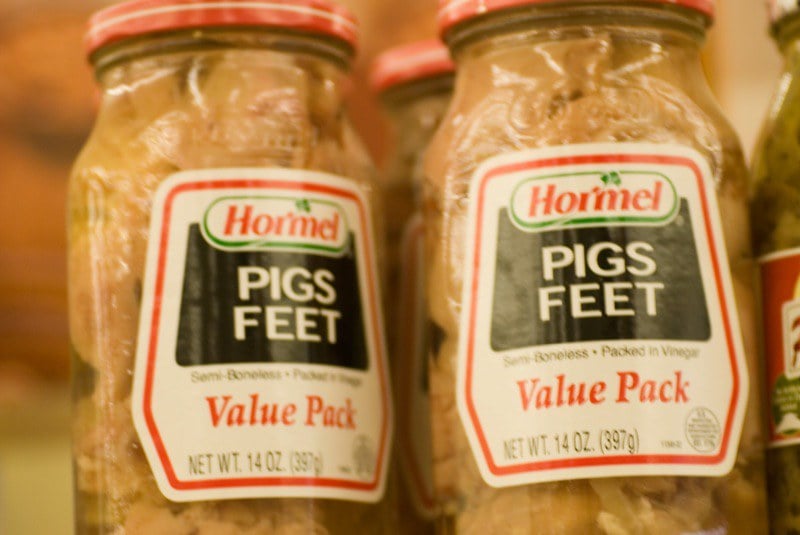
A jar of pickled pig’s feet sitting on a deli counter is invisible to a Southerner — just part of the scenery. To anyone raised elsewhere, that jar is a conversation starter.
Pig’s feet are brined in a vinegar solution with spices until they go tender and deeply flavored. They’re eaten as a snack, often pulled out of the jar at a convenience store and eaten standing up.
The texture is sticky and collagen-rich. They taste better than they look, which is the theme of a lot of this list.
Tomato Gravy

When tomatoes are at their peak in late summer, some Southern cooks make tomato gravy — fresh tomatoes cooked down with a little bacon fat, flour, and seasoning into a thick, savory sauce that goes over biscuits for breakfast. It sounds like something that belongs on pasta, but over a hot, flaky biscuit it makes complete sense.
It’s one of those seasonal dishes tied to a specific time of year. When the tomatoes are right, you make it.
When they’re not, you wait.
Fatback
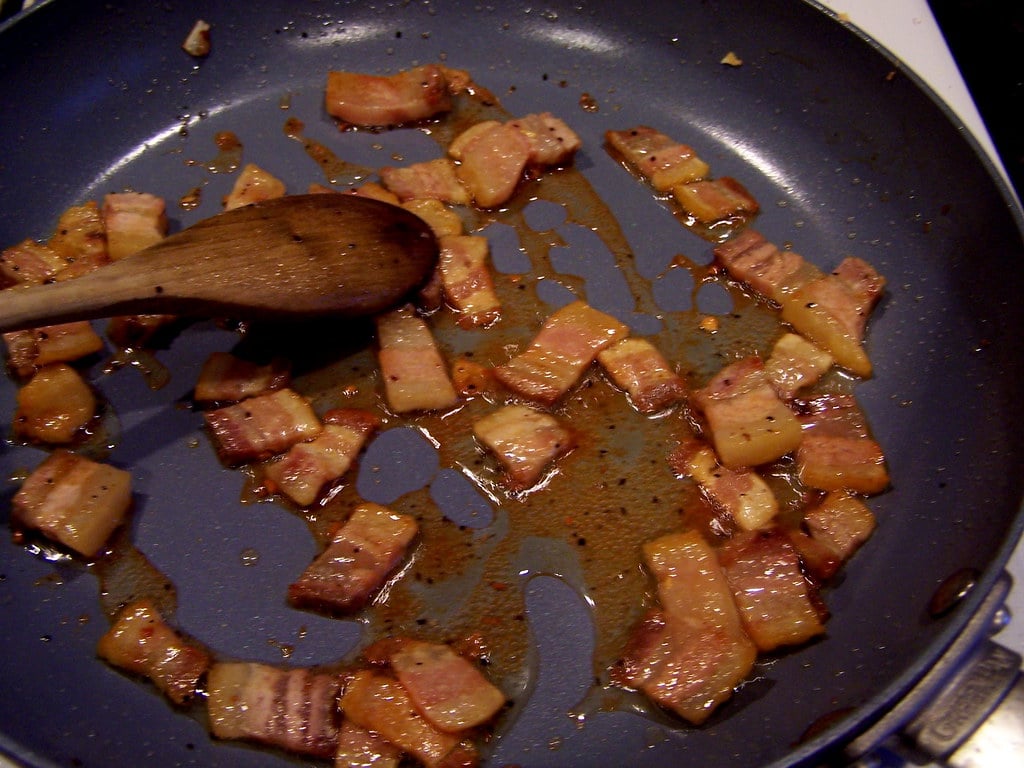
Fatback means just that – pure fat sliced from a pig’s back, soaked in salt to preserve it. Not bacon at all since no muscle shows up here, only dense white layers.
For many Southern kitchens across decades, this greasy slab built meals from nothing.
That bit of fatback tossed into beans or leafy greens brings a richness veggie broth never manages.
As it melts gradually, it deepens every bite nearby. Never meant to be eaten alone.
Think of it like butter in French kitchens or olive oil in Mediterranean ones – the quiet force behind flavors falling into place.
Cornbread in Milk
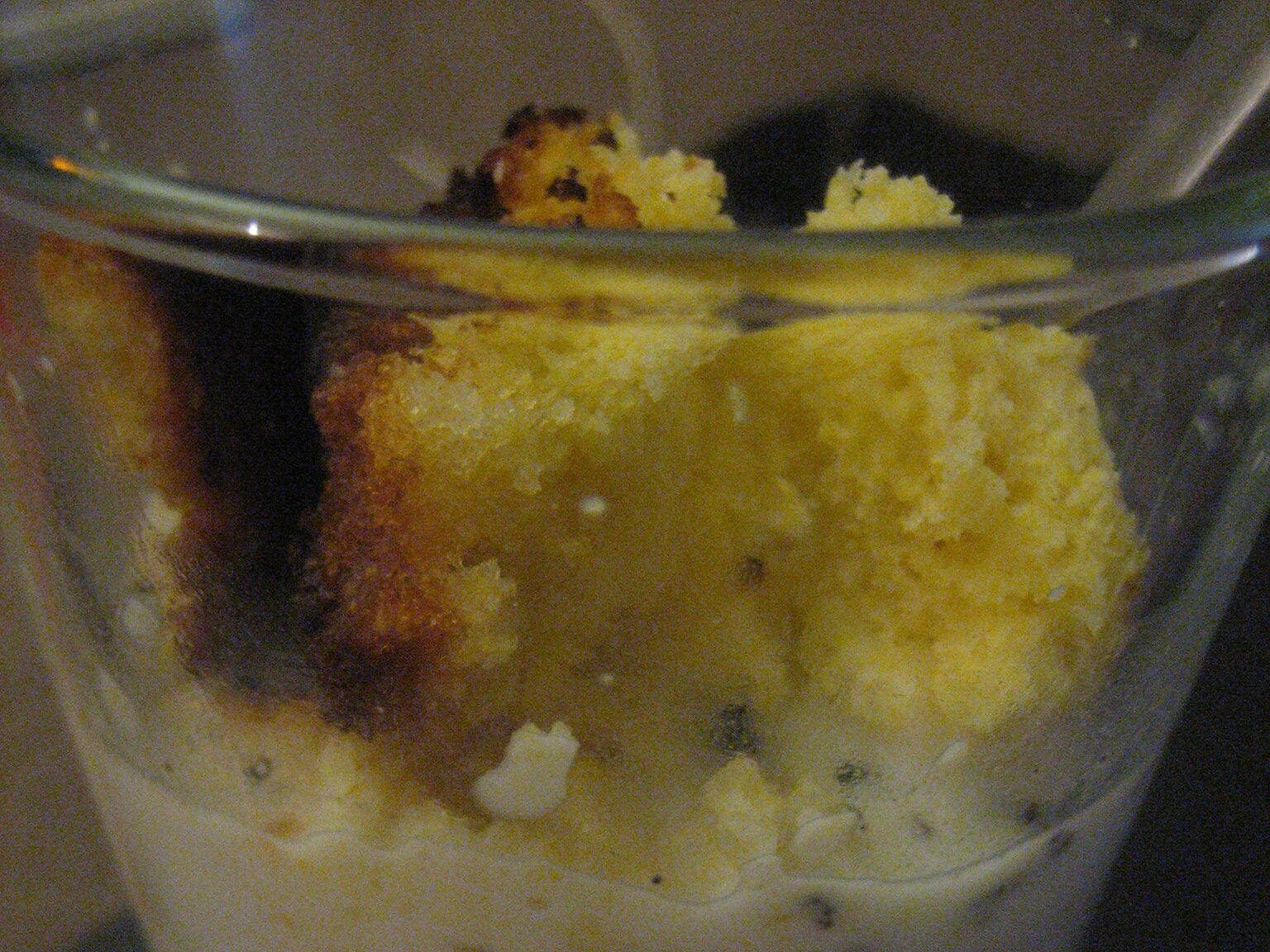
A spoon does most of the work here. Leftover cornbread goes straight into a glass, broken by hand.
Cold milk follows, soaking the pieces without warning. No stove needed.
Nothing extra joins in. Simple ends the moment you start eating.
Later at night, folks from the South – those born in a particular decade – often found themselves with a bowl of this. Milk soaks into the cornbread, turning what was once dry and breaking apart into something thick, nearly like oatmeal.
Comfort comes through here, quiet but strong, though only if you’ve lived it can you really get why. Simple? Yes. Satisfying? Without question.
Duke’s Mayonnaise as a Religion
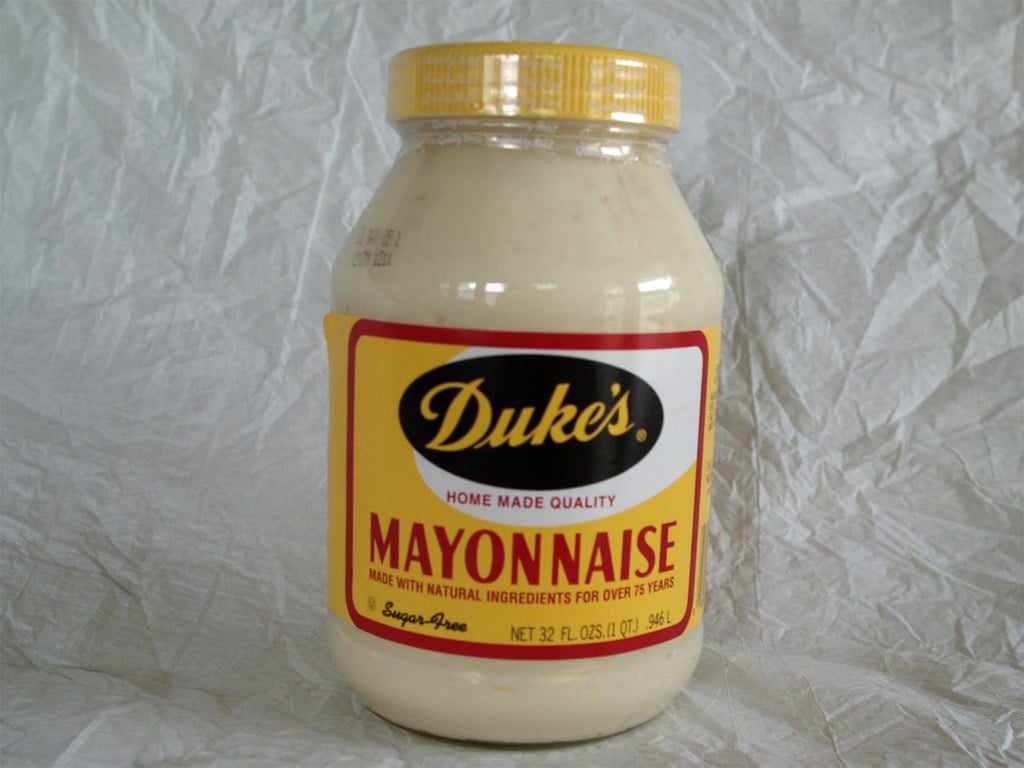
Out south, Duke’s mayonnaise shapes more than meals – it shapes pride. Its flavor stands clear: no sweetness, just a sharp depth people grow loyal to.
A recipe demanding Duke’s means business; swapping it brings frowns. When folks leave home, they tuck jars into boxes like heirlooms.
That thick spread rides along, sealed tight. Devotion here isn’t just liking one thing more.
Suggest a loyal Duke’s follower switch brands? Their faces shift like you’ve crossed an invisible line.
The Pimento Cheese Problem
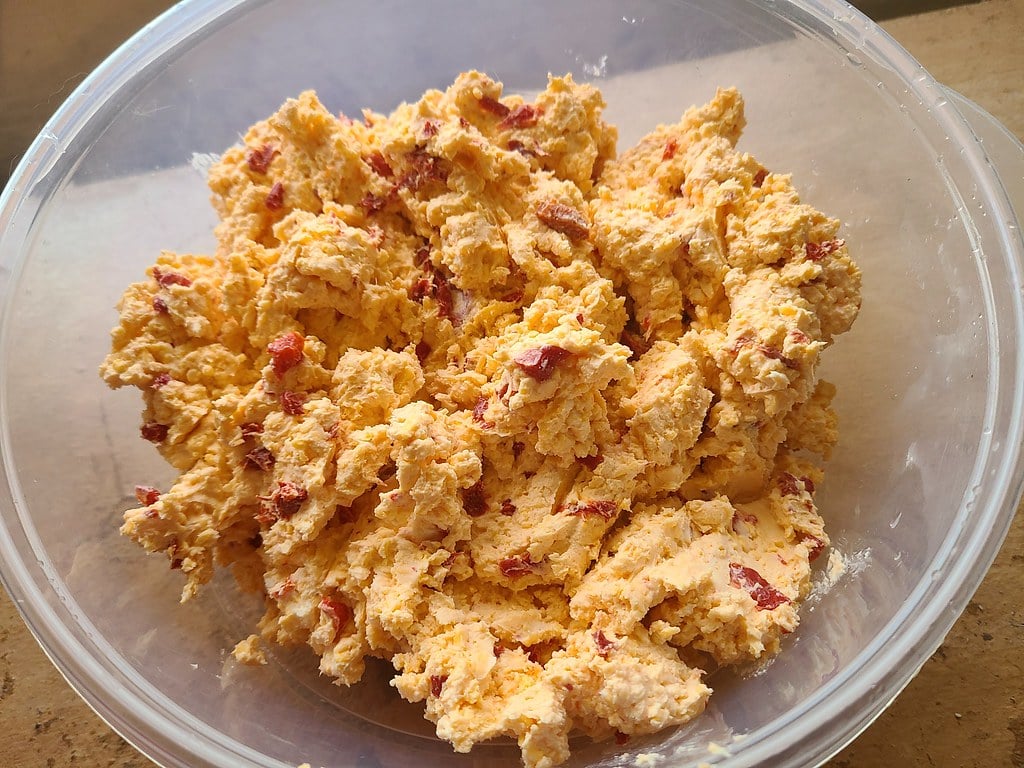
Pimento cheese tastes like tangy cheddar meeting soft cream cheese, then stirred together with sweet red peppers plus just enough black pepper to wake up your tongue. Called Southern pâté for good cause – that spreads slides onto saltines without fuss, finds home between celery ribs, lands softly on pale sandwich bread, hides inside beef patties, tucks into frankfurters, even blends right into egg yolk filling.
Folks from outside might taste it once, then pause – turns out they like it. People down South just blink when you say that like it’s news.
Store-bought in glass jars? Get the job done. But that batch brought to a cookout, sweating under plastic wrap in some auntie’s cooler, ladle half-sunk on top?
That one sticks around in your head. Long after the plate’s empty, your mind drifts back.
When Food Is Clearer Than Words

Explaining Southern cooking to someone who hasn’t lived it? That’s tricky. Not because flavors are hard to put into words.
More because the reasons behind the food make little sense without context. These meals didn’t come from recipes written down neatly.
They came from hunger meeting scraps. From cold months stretching too far.
From heat that made preserving a necessity. Leftovers never vanished.
They turned into tomorrow’s meal. Every bit had a purpose.
Leftover things from back then go beyond meals. They show daily life, plus what mattered most.
Odd items here feel odd not to shock. Their strangeness grows from actual places.
Once that clicks, a jar with pig’s feet at a shop counter seems far less unusual.
More from Go2Tutors!

- The Romanov Crown Jewels and Their Tragic Fate
- 13 Historical Mysteries That Science Still Can’t Solve
- Famous Hoaxes That Fooled the World for Years
- 15 Child Stars with Tragic Adult Lives
- 16 Famous Jewelry Pieces in History
Like Go2Tutors’s content? Follow us on MSN.



