Why the ’80s Were the Golden Age of Neighborhood Yard Sales
There’s a particular kind of Saturday morning that doesn’t really exist anymore. You’d wake up before nine, maybe spot a hand-lettered sign stapled to a telephone pole, and follow it down three blocks to find a stranger’s driveway transformed into something that felt almost like a small, chaotic museum.
Folding tables, cardboard boxes, a neighbor you’d never spoken to suddenly explaining the history of a ceramic rooster. Yard sales in the 1980s weren’t just a way to offload clutter — they were a genuine social institution, and the decade that produced them was, as it turns out, uniquely suited to make them thrive.
The Pre-Internet Treasure Hunt

Nobody knew what anything was worth. That’s not a complaint — that’s the whole point. An Atari 2600 game cartridge sitting in a shoebox had no eBay listing hovering over it, no completed auction history, no algorithmic price suggestion, and so it sold for a quarter, or a dollar, or whatever the seller’s nine-year-old decided to write on the masking tape label.
The not-knowing was the engine.
Hand-Lettered Signs
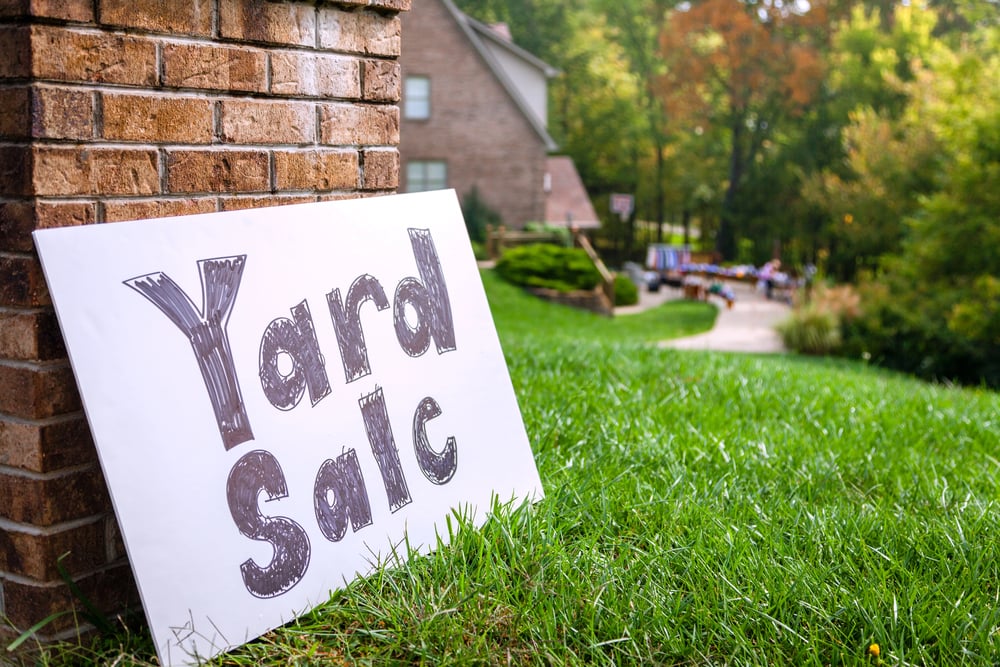
Yard sale culture in the ’80s ran on cardboard and a Sharpie. Whoever made the signs — usually a kid pressed into service the night before — gave each sale its own slightly lopsided personality before you’d even turned into the driveway.
The signs themselves were ephemeral, weather-dependent, occasionally pointing you down a dead end, which somehow made finding the actual sale feel like a minor achievement worth celebrating.
Suburban Sprawl at Its Peak

The 1980s were the decade when American suburban neighborhoods hit a particular density — not too sparse, not yet the sealed-off gated-community model that followed. Streets were walkable enough that you could hit four or five sales in a single morning without moving your car, which is saying something for a country that had essentially organized itself around the automobile.
Neighborhoods like that — connected but not crowded, familiar but not stifling — turned out to be the ideal habitat for yard sale culture to flourish.
Cash as the Only Currency

Every transaction was cash, and that fact shaped the entire experience in ways that are easy to underestimate now. There was something about handing over a crumpled dollar bill and receiving a small, slightly dusty object in return — no receipt, no digital trace, no record of the thing ever changing hands — that made every purchase feel slightly outside ordinary commerce.
It was a parallel economy, informal and immediate, operating on its own logic entirely.
The Stuff Itself
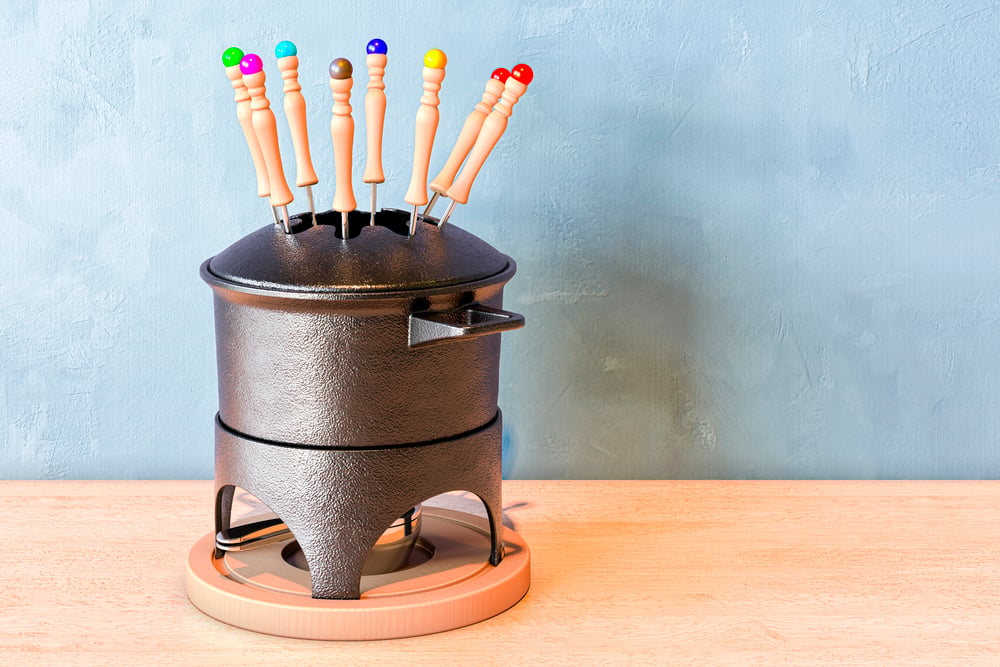
The merchandise at an ’80s yard sale was a specific kind of wonderful. Fondue sets that had been used exactly once, eight-track players, macramé wall hangings, Tupperware in colors that no longer exist, avocado-green appliances displaced by the decade’s sudden obsession with almond and white.
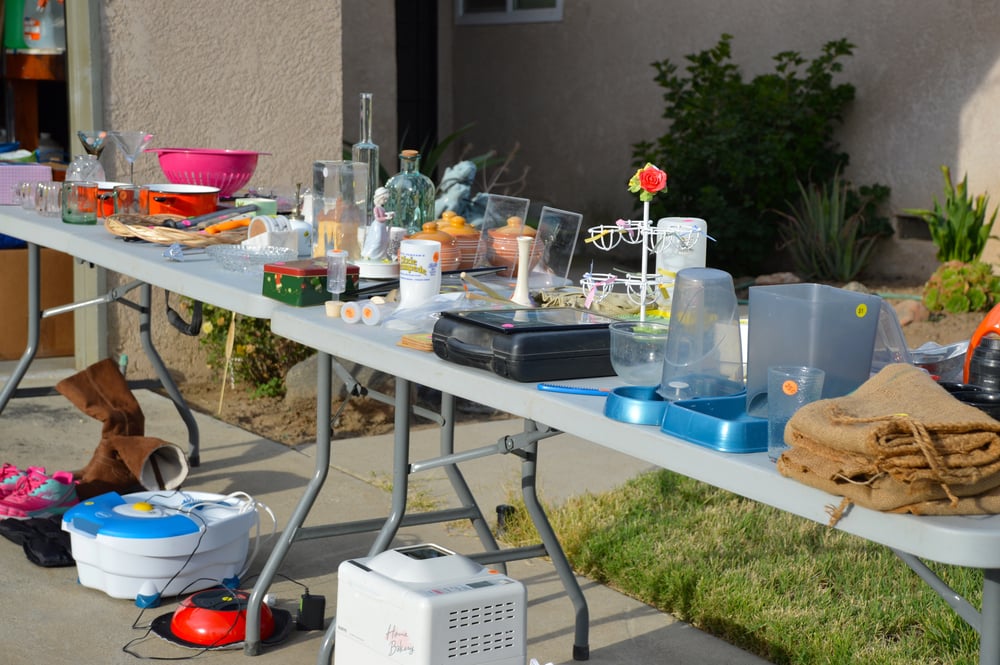
Each table was essentially an accidental archive of the previous fifteen years of American domestic life, indifferent to its own historical significance and priced accordingly.
Newspaper Classifieds

Before Craigslist, before Facebook Marketplace, before any of it, people advertised yard sales through the classified section of the local newspaper. You’d see a listing in the Saturday paper — four or five lines, maybe a street address and a start time — and that was the entire information available to you.
The terse, committed brevity of those listings (no photos, no description beyond “misc. household items”) created a low-grade suspense that made showing up feel like a reasonable gamble.
Neighborhood Familiarity

People actually knew their neighbors in a way that’s genuinely difficult to reconstruct now. Not intimately, not always warmly, but enough — enough to recognize the family three doors down, enough to know whose kids played what sport, enough that stopping to browse a stranger’s driveway felt socially legible rather than awkward.
The yard sale worked, in part, because the neighborhood itself still functioned as a social unit with actual connective tissue.
No Reseller Arbitrage
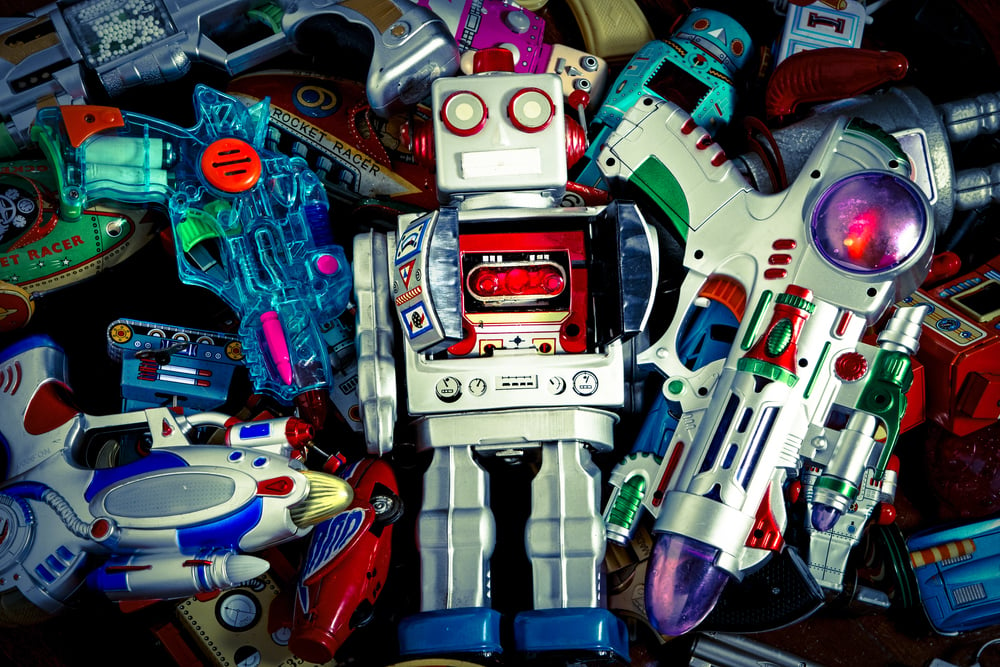
Professional resellers exist today in quantities that would have been unthinkable in 1985. A vintage toy in good condition now gets photographed and cross-referenced against sold listings before the sale even opens — sometimes by someone who drove two hours specifically to be first in line.
In the ’80s, most buyers were genuinely local, genuinely casual, and genuinely indifferent to resale value, which kept the whole ecosystem relaxed in a way it hasn’t been since.
Kids as the Labor Force
Every yard sale had children involved, and their presence changed the texture of the whole thing. They priced items with stunning randomness, guarded cash boxes with suspicious intensity, and inevitably set up a separate folding table selling warm lemonade and whatever cookies had survived the morning.
The economics of their operation made no sense whatsoever, but no one was there to point that out, and the overall effect was of something genuinely communal rather than merely transactional.
Saturday as Sacred Time

The ’80s still had a Saturday that belonged to leisure in a way the workweek didn’t. Stores were closed on Sundays in many states, screens didn’t follow you out the door, and the pressure to be productive during unstructured weekend time hadn’t yet calcified into a cultural expectation.
So Saturday morning was genuinely available — unhurried, purposeless in the best possible way — and yard sales filled that space the way water fills whatever shape holds it.
The Absence of Algorithms
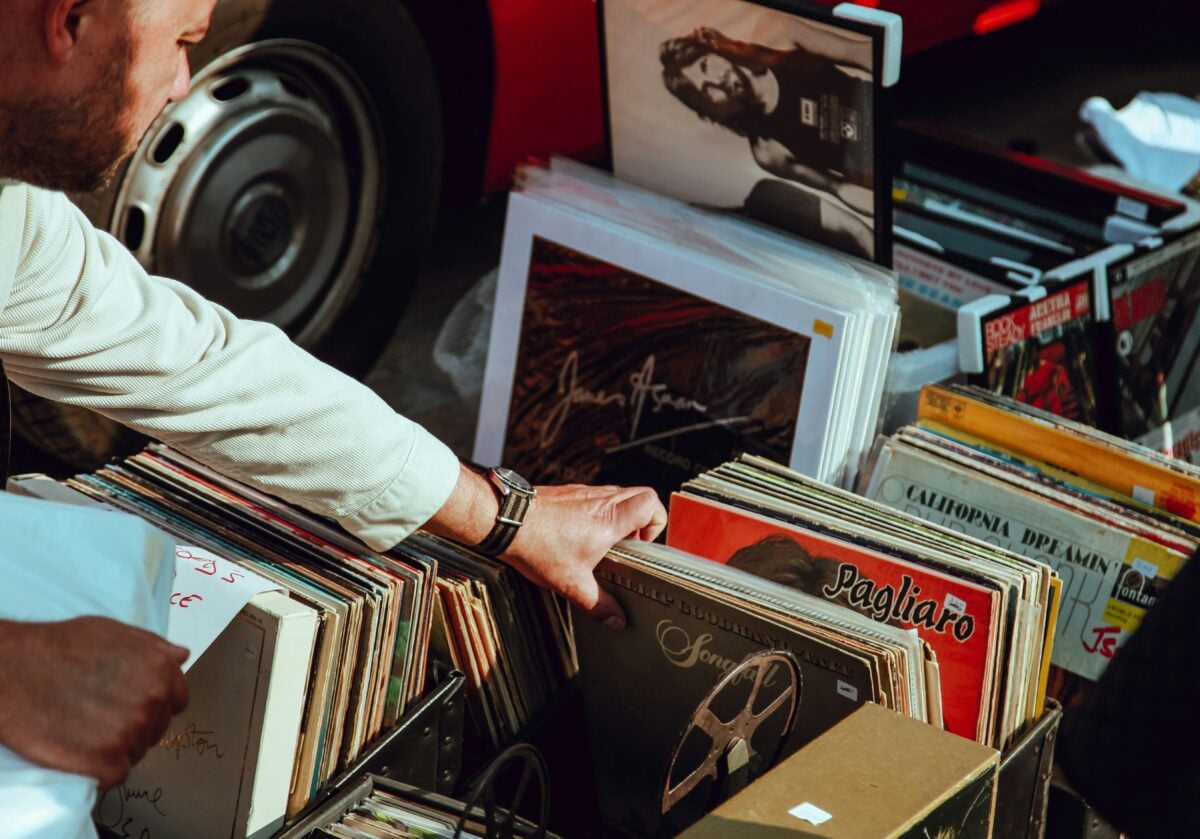
There was no system steering you toward things you’d probably like. No recommendations, no suggestions, no interface learning your preferences and nudging you toward familiar categories.
A yard sale in 1983 was radically non-personalized: you walked up, you saw what was there, and you either wanted it or you didn’t — often not understanding why. That friction between the unexpected object and the unprepared buyer produced a particular kind of discovery that optimization, by definition, cannot replicate.
Haggling as Social Theater
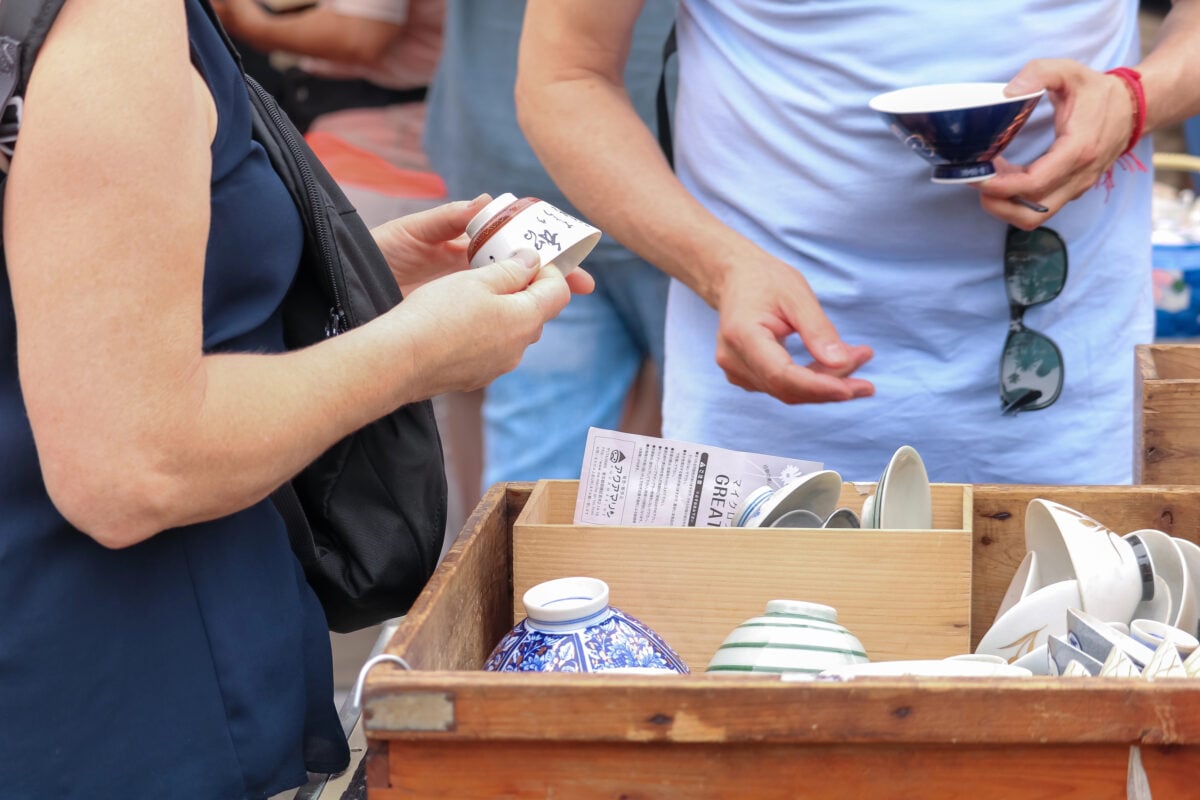
Negotiating the price of a $2 lamp was never really about the money. It was a small, structured performance — a ritual both parties understood and enjoyed, with its own beats and pauses and acceptable counteroffers.
The seller wanted to feel that the item had been valued; the buyer wanted to feel clever; and the outcome, usually a price somewhere between the two opening positions, left everyone satisfied in a way that a fixed-price tag never quite managed.
The Role of Station Wagons
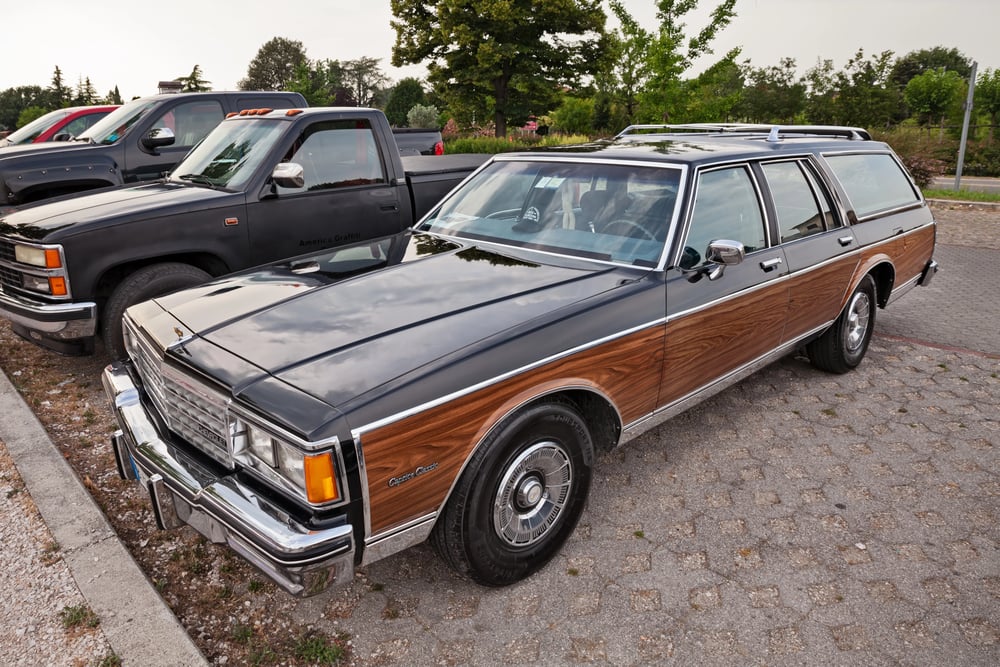
The station wagon deserves real credit here. It was the decade’s dominant family vehicle, with a cargo hold large enough to haul a box spring, a console television, and three kids simultaneously — a practical fact that made buying large, inconvenient objects at a yard sale feel like a manageable decision rather than a logistical crisis. The moment someone started folding down the rear seats to accommodate a piece of furniture they’d paid four dollars for, the sale had achieved something genuinely memorable.
Community Without an App

Yard sales were community infrastructure, built from nothing, maintained by no one, and surprisingly durable. They required only a driveway, a free Saturday, and a willingness to let strangers handle your belongings — and in return they delivered the kind of low-stakes social contact that most neighborhoods now spend considerable effort trying to engineer back into existence.
The ’80s didn’t plan for that. It just happened, because the conditions were right and no one had yet figured out how to disrupt it.
What the Lawn Said
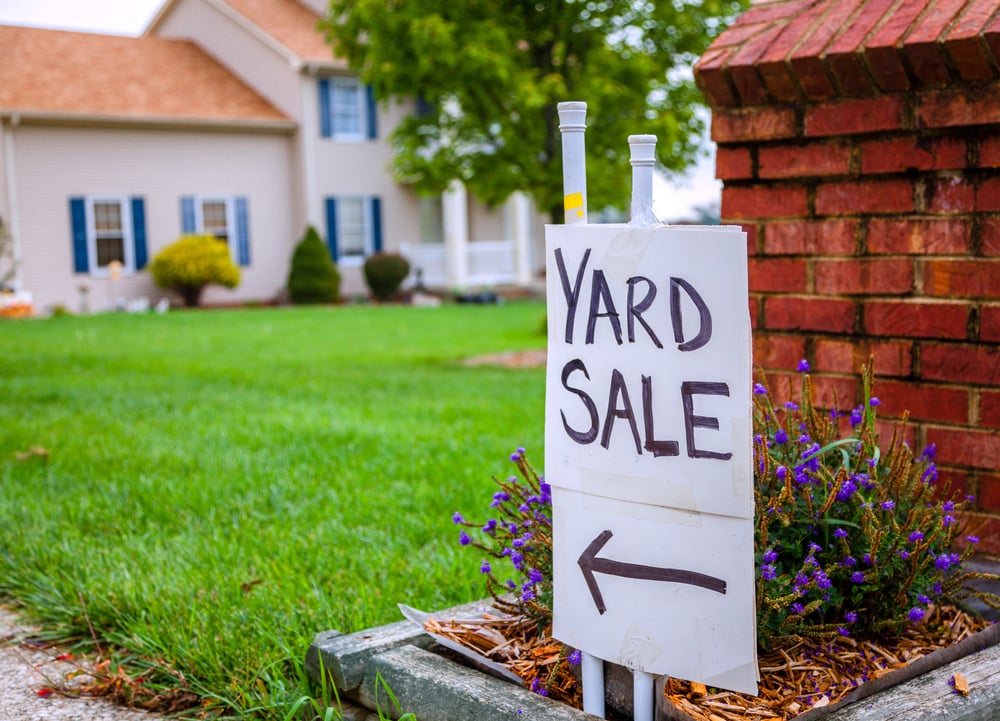
A yard sale turned an ordinary front lawn into something briefly public — a threshold crossed, a private space opened, an implicit invitation extended to anyone who happened to pass. Like a porch light left on, it signaled a household briefly permeable to the neighborhood around it, willing to be seen in the particular and revealing way that a table full of your old possessions makes unavoidable.
What you chose to sell, and what you clearly couldn’t bring yourself to price, told a quieter story than anyone mentioned out loud.
The Collective Memory Problem

Everything from the ’80s that ended up on a folding table carried cultural weight it didn’t yet know it had. A Star Wars action figure missing its lightsaber, a stack of vinyl records, a Fisher-Price toy still in reasonable condition — none of these were collectibles yet, just unwanted objects being moved along.
The decade was too recent to be nostalgic about, which meant things got undervalued in ways that now seem almost deliberately generous, like the era was leaving gifts for whoever showed up early enough.
When Everybody Came
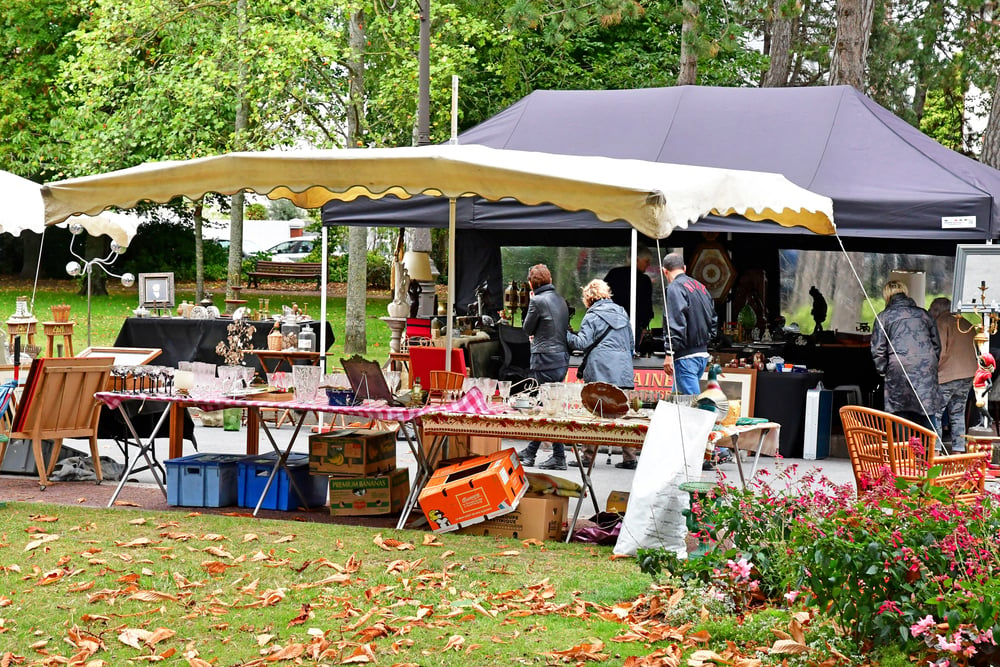
The real mark of a great ’80s yard sale was the crowd — not enormous, but consistent. Retirees arriving at 7 a.m. with flashlights before the tables were even fully set up, young couples doing their first apartment on nothing, collectors who’d never call themselves collectors, kids with coins from their piggy banks.
The variety of who showed up was itself the thing, a cross-section of the neighborhood assembled by no particular agenda, browsing side by side with the mild, companionable ease of people who share a street and temporarily, a Saturday.
The End of the Season

Come October, the yard sales stopped, and the neighborhood receded back into its separate houses. That seasonal rhythm — the spring-to-fall arc of driveways opening and closing — gave the whole enterprise a mild, reliable elegance. You knew it would end, and you knew it would come back, and that predictability made each sale feel like part of something larger than a single morning’s transaction.
Nothing about that still works quite the same way, which is either just the natural order of things or a quiet, persistent loss, depending on which side of it you’re standing on.
The Particular Light of Those Mornings
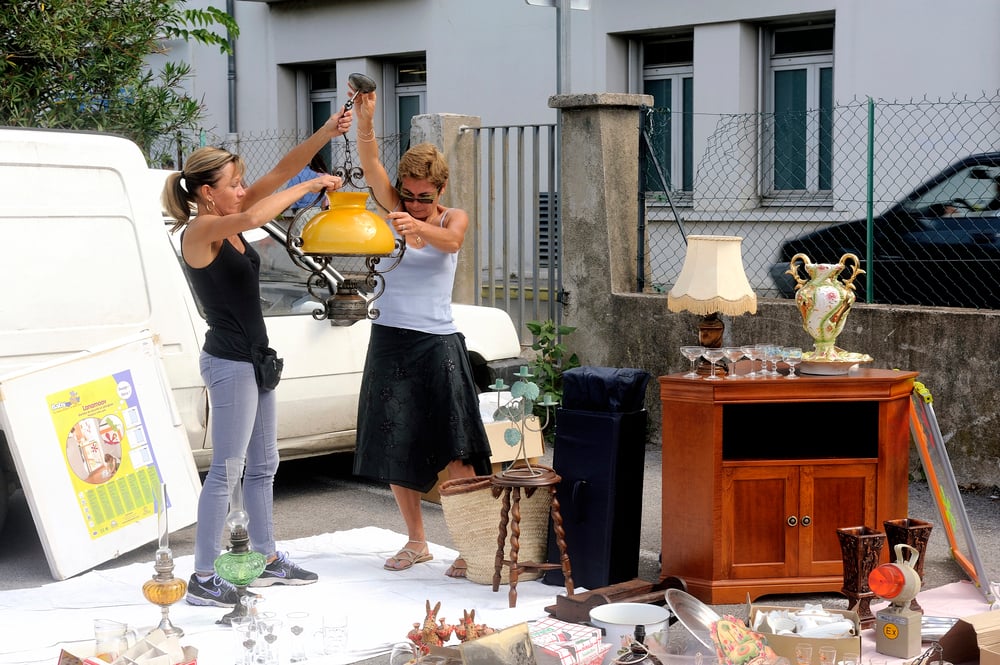
Some things don’t survive translation into the present tense. The ’80s yard sale — the cardboard signs, the cash-only transactions, the avocado-green blenders priced at fifty cents, the neighbor you finally met over a shared interest in someone else’s old lamp — belonged to a set of conditions that existed briefly and then didn’t.
Not because anyone decided to end it, but because enough small things shifted: the internet, the resellers, the sealed neighborhoods, the scheduled Saturdays. What’s left is the memory of a particular quality of morning light on a folding table, which turns out to be harder to let go of than any of the objects that were ever sold beneath it.
More from Go2Tutors!

- The Romanov Crown Jewels and Their Tragic Fate
- 13 Historical Mysteries That Science Still Can’t Solve
- Famous Hoaxes That Fooled the World for Years
- 15 Child Stars with Tragic Adult Lives
- 16 Famous Jewelry Pieces in History
Like Go2Tutors’s content? Follow us on MSN.



