World Records That Reshaped Industries
Some records don’t just break numbers—they break entire business models. When someone pushes past what everyone thought was possible, industries scramble to catch up.
Competitors study what worked, investors shift their money, and entire supply chains reorganize around the new reality. These records didn’t happen in isolation.
Each one forced industries to rethink their assumptions about speed, scale, efficiency, or cost. The changes rippled outward, affecting how millions of people work and live. Here are the records that didn’t just set new benchmarks—they redrew the map of entire sectors.
Ford’s Assembly Line Produced a Car Every 93 Minutes
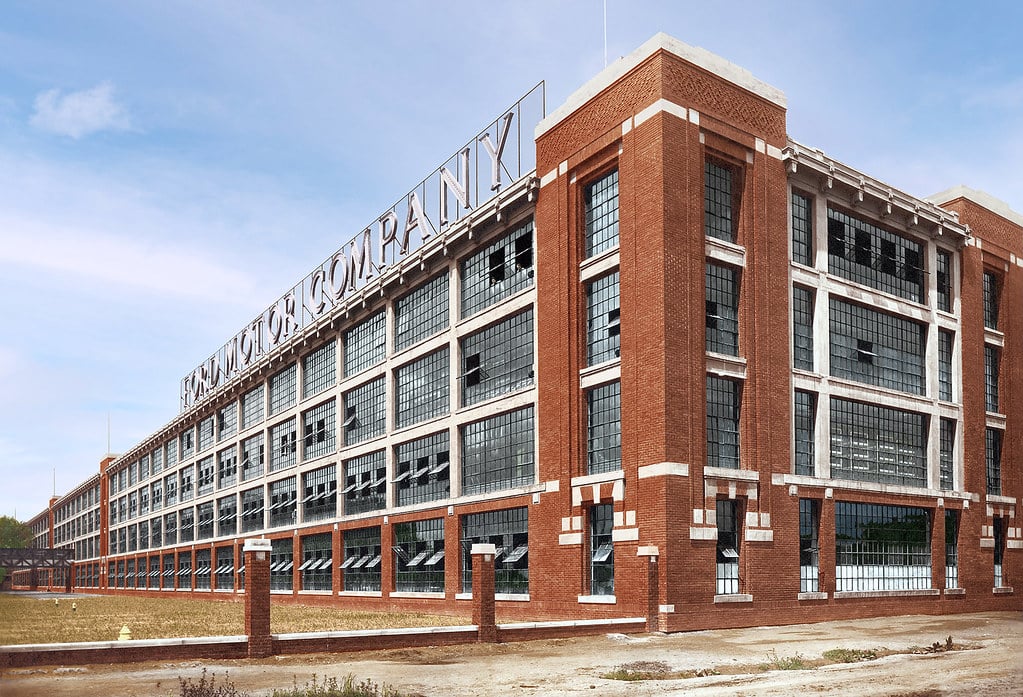
In 1913, Ford Motor Company reduced the time needed to assemble a Model T from 12 hours to 93 minutes. The company achieved this by breaking production into 84 distinct steps and moving the chassis past stationary workers rather than having workers move to the car.
The speed increase was staggering, but the real impact came from what it enabled. Ford could produce cars fast enough to drop the price from $850 to $260 while paying workers $5 per day—double the typical manufacturing wage.
Workers could actually afford to buy the products they made. Every manufacturer studied Ford’s methods.
The assembly line concept spread from automobiles to appliances, electronics, and processed foods. Modern manufacturing still relies on the principles Ford established.
The record production speed proved that standardization and specialization could make previously expensive products affordable for ordinary people.
The First Transatlantic Flight Changed Aviation Economics

Charles Lindbergh flew from New York to Paris in 33.5 hours on May 20-21, 1927. The flight covered 3,600 miles nonstop, proving that aircraft could cross oceans reliably.
Before that moment, commercial aviation consisted mainly of short regional flights. Airlines immediately began planning transatlantic routes.
Investors poured money into developing larger, more reliable aircraft. Airports expanded to accommodate the longer runways needed for planes carrying enough fuel to cross oceans.
The infrastructure investments cost millions but opened international air travel to paying customers. Within a decade, Pan American Airways was operating regular transatlantic service.
The record flight demonstrated economic viability, not just technical possibility. It showed that people would pay for the speed advantage over ships, which took five to seven days to make the same crossing.
Aviation shifted from novelty to a serious transportation business.
Container Ships Standardized Global Trade

In 1956, Malcolm McLean’s shipping company loaded 58 containers onto a converted tanker ship. The containers measured 8 feet by 8 feet by 10 feet—dimensions chosen to fit easily on trucks and trains.
Loading the ship took hours instead of days, and longshoremen couldn’t steal or damage cargo sealed inside metal boxes. The efficiency gains were immediate and dramatic.
Shipping costs dropped by 90% within a few years. Ports that adopted container handling thrived while those that resisted declined.
Global trade volumes exploded because moving goods became cheap enough to manufacture products on one continent and sell them on another profitably. The 20-foot equivalent unit became the standard measurement for shipping capacity.
Ships grew larger to carry more containers. Today’s largest container ships carry over 24,000 containers each.
The standardization that started with McLean’s record-breaking shipment reshaped manufacturing, retail, and the global economy itself.
A Single Oil Well Produced 100,000 Barrels Daily

The Spindletop oil well in Texas erupted on January 10, 1901, producing 100,000 barrels per day—more than all other oil wells in America combined. The gusher shot oil 150 feet into the air for nine days before workers capped it.
The discovery proved that massive oil reserves existed in unexpected locations. The Texas oil boom began immediately.
Companies formed overnight. Land prices skyrocketed. Within a year, Spindletop’s production made oil cheap enough to replace coal as the primary industrial fuel.
The automobile industry, which was just beginning, suddenly had access to cheap gasoline. Oil companies realized they needed better exploration techniques to find similar deposits.
Geology became a serious business rather than educated guesswork. The record production at Spindletop established petroleum as the foundation of industrial economies and funded the development of modern extraction technologies.
McDonald’s Served a Hamburger in 30 Seconds

The McDonald brothers redesigned their restaurant in 1948 to serve a hamburger in 30 seconds from order to delivery. They limited the menu to nine items, used assembly line methods in the kitchen, and eliminated plates and silverware.
The speed record came from ruthless simplification. Ray Kroc saw the operation and recognized that the system could be franchised.
The McDonald’s model proved that restaurants could operate like factories—standardized products, minimal labor, maximum speed. The fast food industry emerged directly from this insight.
Competitors scrambled to match the speed. Burger King, Wendy’s, and countless others adopted similar systems. The restaurant industry is split into two categories—fast food and everything else.
The 30-second hamburger changed how hundreds of millions of people eat and created an industry worth hundreds of billions of dollars.
Walmart Achieved the Highest Sales Per Square Foot

Walmart pioneered inventory management systems in the 1980s that tracked every item sold in real time. The company achieved sales per square foot that exceeded traditional retailers by 50% or more.
Products moved through stores so efficiently that Walmart could operate on lower profit margins and still make more money. The company shared sales data directly with suppliers, who could see exactly what sold and adjust production immediately.
This collaboration eliminated waste in the supply chain and allowed Walmart to demand lower wholesale prices. Suppliers had to comply or lose access to Walmart’s massive customer base.
Retail competitors either adopted similar technology or closed. The record efficiency forced every retailer to invest in information systems, automated warehousing, and sophisticated logistics.
Walmart’s practices became standard across retail, fundamentally changing the relationship between retailers, suppliers, and manufacturers.
A Computer Performed a Calculation in One Second That Previously Took Years
The ENIAC computer, completed in 1945, performed calculations thousands of times faster than mechanical calculators. The machine could compute a ballistics trajectory in 30 seconds—work that took human computers 20 hours.
The speed difference made previously impossible calculations practical. Governments and corporations immediately understood the implications.
Complex engineering problems that required too much computation time to be worthwhile suddenly became solvable. Weather forecasting, nuclear weapons design, and aircraft engineering—all advanced because computation speed had increased dramatically.
The computer industry grew from ENIAC’s demonstration of what electronic calculation could accomplish. IBM, Sperry Rand, and others invested millions in developing commercial computers. Every successive generation broke speed records, and each breakthrough enabled new applications.
The original speed record set by ENIAC established computation as an industry rather than a laboratory curiosity.
Credit Cards Processed Transactions in Under Five Seconds

Bank of America launched the BankAmericard in 1958, creating the first successful credit card program. The innovation wasn’t the card itself—charge cards existed.
The breakthrough was creating a system that could verify credit and authorize purchases in seconds rather than requiring phone calls to banks. The speed made credit cards practical for everyday purchases.
Retailers accepted them because transactions processed faster than checks. Consumers used them because carrying credit was more convenient than carrying cash.
The five-second authorization turned credit from a formal arrangement into an impulse purchase tool. Credit card companies competed on processing speed and network size.
Visa and Mastercard emerged as global networks. The ability to verify credit instantly reshaped consumer behavior, retail operations, and personal finance.
The record processing speed enabled an entire economy built on borrowing for immediate consumption.
FedEx Delivered Packages Overnight Across the Country

Federal Express began operations in 1973 with a hub system that could deliver packages overnight anywhere in the United States. The company flew all packages to Memphis, sorted them, and flew them to their destinations the same night.
The approach seemed wasteful—why fly a package from New York to Los Angeles via Memphis? The answer was speed and reliability. Guaranteed overnight delivery had been impossible before FedEx.
Businesses restructured operations around the assumption that critical documents or parts could arrive the next day. Just-in-time manufacturing became practical because replacement parts could be delivered within 24 hours instead of taking a week.
UPS and the Postal Service scrambled to offer competing services. The entire logistics industry reorganized around speed rather than cost.
FedEx’s overnight delivery record created an expectation of immediacy that now extends to same-day delivery and even one-hour delivery windows for some services.
Netflix Streamed Video Without Buffering Pauses

Netflix achieved smooth streaming video in 2007 by developing algorithms that predicted network congestion and adjusted video quality dynamically. The technology allowed viewers to watch movies without constant pausing to buffer data—something competing services couldn’t match.
The smooth streaming experience made video streaming a viable alternative to physical media and cable television. Blockbuster went bankrupt.
Cable companies faced cord-cutting as customers cancelled subscriptions. The entertainment industry restructured around streaming as the primary distribution method.
Television networks launched their own streaming services. Movie studios reduced theatrical releases.
The record for smooth streaming wasn’t about speed or quality—it was about reliability. Netflix proved that streaming could work well enough to replace older distribution methods, and that proof reshaped media distribution entirely.
Amazon Delivered Prime Orders Within Two Days

Amazon’s two-day delivery guarantee for Prime members in 2005 set a new standard for online retail. The company built warehouses near major cities, negotiated bulk shipping rates, and developed logistics software that could coordinate millions of packages daily.
The speed record required massive infrastructure investment. Customers changed their shopping habits. Why visit stores when Amazon delivers to your door in two days? Retail stores closed as foot traffic declined.
Shopping malls struggled. The convenience of fast delivery shifted consumer expectations permanently.
Competitors tried to match the speed. Walmart, Target, and others invested billions in their own delivery infrastructure.
The two-day delivery record forced every major retailer to become a logistics company. Retail success now depends as much on delivery capability as on product selection or pricing.
A Solar Panel Produced Electricity for Under Three Cents per Kilowatt Hour

Solar panel manufacturers achieved electricity production costs under three cents per kilowatt hour in 2020, making solar cheaper than coal, natural gas, or nuclear power. The cost reduction came from manufacturing efficiencies, larger panel sizes, and improved conversion rates.
The price record made solar economically attractive rather than just environmentally friendly. Utility companies began closing coal plants and building solar farms.
Countries that had relied on imported fuel could generate power domestically. Energy markets restructured around the assumption that renewable power would be cheaper than fossil fuels within a few years.
The record broke an assumption that had defined energy policy—that renewable power would always cost more than conventional generation. Once solar became the cheap option, investment flowed into the sector.
The cost record transformed energy from an environmental debate into an economic calculation.
SpaceX Reduced Launch Costs to $2,720 per Kilogram

A single Falcon 9 mission now spends roughly $2,720 for every kilogram it lifts into space. That figure sits near ten percent of what older rockets demanded.
Reuse made the difference – flying hardware again rather than letting it vanish after one trip. Bringing boosters back and prepping them again pulls fewer resources than crafting fresh ones from scratch.
A fresh start came with lower costs. Because of this, universities started sending up small research satellites.
Some companies saw a chance – building constellations for data or web access became possible. Old price tags used to block big plans at NASA; now those ideas moved forward.
Nowhere was the shift more clear than in how rockets were flown again instead of scrapped. One after another, firms ignored reuse and saw their influence shrink.
Across continents, teams in China, then Russia, soon followed by outfits in Europe, started building machines meant to return safely. Suddenly, launching payloads stopped being a luxury only giants could afford.
As prices dropped sharply, fresh faces entered the field without deep pockets. What once moved slowly now raced forward simply because access opened up.
Where the Ripples Reach

A single thread runs through these cases – speed, cost, or efficiency got rewritten overnight. Each time, the shift hit hard and fast.
Not a slow drift but a jolt. Everyone involved had no choice but to respond right away.
Staying still meant falling behind for good. Every day, chances are high you’re using things built on achievements once thought impossible.
What shows up in stores, where it comes from, its price tag – all tied to moments when someone beat an old standard and showed something faster, cheaper, stronger. Change keeps happening because milestones get shattered regularly.
Each time one drops, ideas shift about limits, speed, effort, and value.
More from Go2Tutors!

- 16 Historical Figures Who Were Nothing Like You Think
- 12 Things Sold in the 80s That Are Now Illegal
- 15 VHS Tapes That Could Be Worth Thousands
- 17 Historical “What Ifs” That Would Have Changed Everything
- 18 TV Shows That Vanished Without a Finale
Like Go2Tutors’s content? Follow us on MSN.



