12 Bridges That Collapsed While People Were Crossing Them
Bridges represent humanity’s triumph over natural obstacles, connecting communities and enabling commerce across rivers, valleys, and vast expanses. These engineering marvels are designed to withstand tremendous forces and carry heavy loads for decades or even centuries. Yet sometimes, catastrophic failures occur at the worst possible moment—when people are actively using them.
The collapse of a bridge during active use represents one of the most terrifying infrastructure disasters imaginable. Here is a list of 12 bridges that collapsed while people were crossing them, each incident serving as a stark reminder of how quickly engineering failures can turn routine journeys into tragedies.
Tacoma Narrows Bridge

The Tacoma Narrows Bridge in Washington State became infamous when it collapsed on November 7, 1940, just four months after opening. Strong winds caused the bridge to oscillate violently in a phenomenon called aerodynamic flutter, creating waves that grew larger and larger until the structure literally twisted itself apart. The only casualty was a cocker spaniel named Tubby, whose owner had abandoned the car and fled on foot when the bridge began its deadly dance.
Point Pleasant Bridge
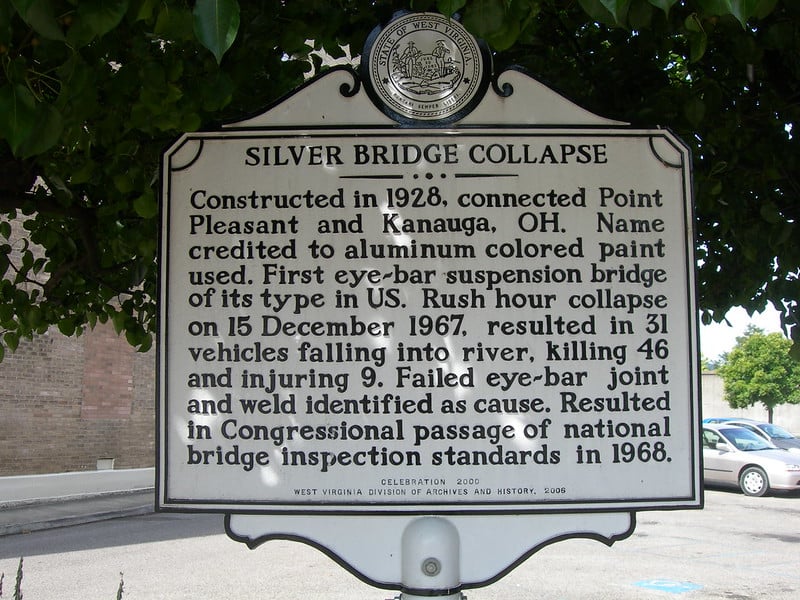
The Silver Bridge connecting Point Pleasant, West Virginia, to Ohio collapsed during rush hour on December 15, 1967, killing 46 people. The suspension bridge suddenly gave way when a critical eyebar in the suspension chain snapped due to a tiny crack that had grown over time. Cars and their occupants plunged 70 feet into the icy Ohio River below, making this one of the deadliest bridge collapses in American history.
Mianus River Bridge

Connecticut’s Mianus River Bridge on Interstate 95 partially collapsed in the early morning hours of June 28, 1983, sending three vehicles into the Mianus River. The collapse occurred when a pin and hanger assembly failed, causing a 100-foot section of the northbound lane to drop into the water below. Three people died in the incident, which highlighted serious problems with the inspection and maintenance of aging infrastructure across the United States.
Schoharie Creek Bridge

The Schoharie Creek Bridge on the New York State Thruway collapsed on April 5, 1987, when spring floods scoured away the foundation supporting one of the bridge piers. A Greyhound bus and several cars fell into the swollen creek, resulting in 10 deaths. The disaster revealed how vulnerable bridge foundations can be to water erosion, especially during extreme weather events.
Hyatt Regency Walkway

Two suspended walkways in the Hyatt Regency Hotel in Kansas City collapsed on July 17, 1981, during a crowded tea dance. The walkways, which crossed the hotel’s atrium lobby, fell onto the people below when a design change weakened the suspension system. The collapse killed 114 people and injured more than 200, making it one of the deadliest structural failures in U.S. history.
Big Bayou Canot Bridge

A towboat collision caused the Big Bayou Canot railroad bridge in Alabama to shift out of alignment just minutes before an Amtrak train crossed it on September 22, 1993. The passenger train derailed and plunged into the bayou, killing 47 people in what became the deadliest train wreck in Amtrak’s history. The bridge structure itself didn’t fail, but the misalignment created a deadly trap for the unsuspecting train.
Minneapolis I-35W Bridge
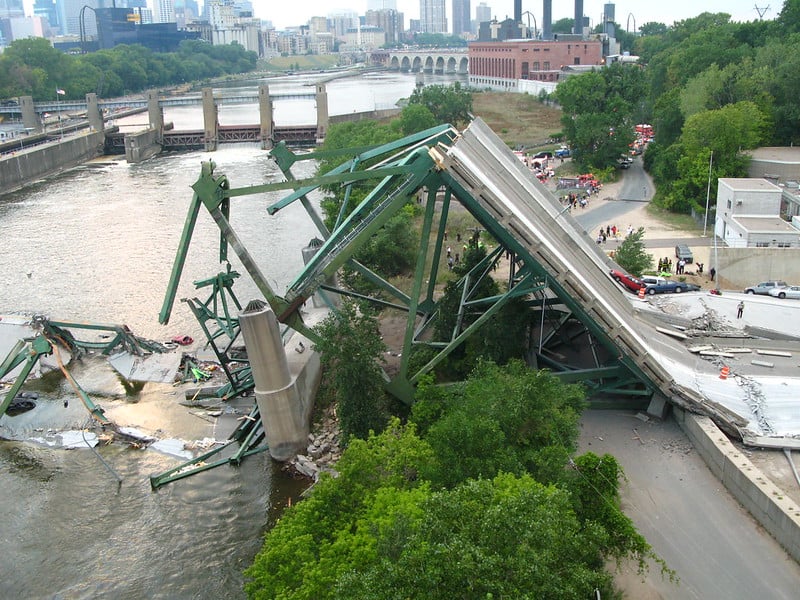
The Interstate 35W bridge over the Mississippi River in Minneapolis suddenly collapsed during evening rush hour on August 1, 2007. The eight-lane bridge fell into the river and onto the riverbank, killing 13 people and injuring 145 others. Investigators determined that undersized gusset plates, combined with the weight of construction equipment and heavy traffic, caused the catastrophic failure.
Morandi Bridge

The Morandi Bridge in Genoa, Italy, collapsed on August 14, 2018, during a severe rainstorm, killing 43 people. A 200-meter section of the cable-stayed bridge fell onto a riverbed, railroad tracks, and buildings below. The collapse was attributed to poor maintenance and the deterioration of the bridge’s innovative but problematic concrete-encased cables.
Francis Scott Key Bridge

Maryland’s Francis Scott Key Bridge partially collapsed on March 26, 2024, when a container ship lost power and struck one of the bridge’s support columns. The impact caused a significant portion of the span to fall into the Patapsco River, though the early morning timing limited casualties. Several construction workers who were performing maintenance on the bridge were killed in the collapse.
Hintze Ribeiro Bridge
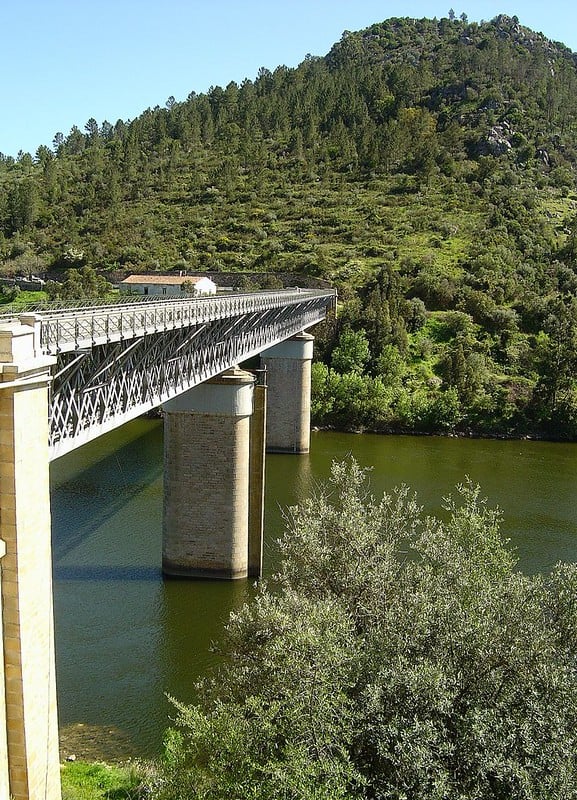
The Hintze Ribeiro Bridge in northern Portugal collapsed on March 4, 2001, when a bus and three cars were crossing during a period of heavy flooding. The historic stone arch bridge, built in the 1880s, couldn’t withstand the combined forces of the swollen river and the weight of traffic. The collapse sent the vehicles into the Douro River, killing 59 people in one of Portugal’s worst infrastructure disasters.
Sunshine Skyway Bridge

A section of Florida’s original Sunshine Skyway Bridge collapsed on May 9, 1980, when a freighter struck one of the bridge’s support columns during a violent thunderstorm. The impact brought down a 1,400-foot section of the cantilever bridge, sending a Greyhound bus and several cars into Tampa Bay. Thirty-five people lost their lives in the tragedy, which led to the construction of a replacement bridge with improved ship collision protection.
Quebec Bridge

The Quebec Bridge in Canada suffered two catastrophic collapses during its construction, but the most tragic occurred on August 29, 1907, when the south cantilever arm buckled and fell into the St. Lawrence River. Seventy-five workers were on the bridge when it collapsed, and all but eleven were killed instantly. The disaster remains one of Canada’s worst engineering failures and led to significant changes in bridge design standards.
When Engineering Meets Reality

These bridge collapses reveal how quickly decades of reliable service can end in moments of catastrophic failure. Modern engineering has learned from each of these disasters, implementing better inspection protocols, improved materials, and more sophisticated design standards. Yet bridges continue to age and face new challenges from heavier traffic loads, extreme weather events, and the simple passage of time, reminding us that vigilant maintenance and honest assessment of structural integrity remain as crucial today as ever.
More from Go2Tutors!

- 16 Historical Figures Who Were Nothing Like You Think
- 12 Things Sold in the 80s That Are Now Illegal
- 15 VHS Tapes That Could Be Worth Thousands
- 17 Historical “What Ifs” That Would Have Changed Everything
- 18 TV Shows That Vanished Without a Finale
Like Go2Tutors’s content? Follow us on MSN.



