13 Old Brass Belt Decorations With Identifiable Military Origins
A piece of brass on a belt can carry more history than a paragraph in a textbook. Military buckles, plates, and clasps were stamped with emblems, mottos, and regimental marks that make them readable long after the soldiers who wore them are gone.
The pieces below are among the most recognizable, and each can be traced to a specific army, navy, or era. Condition and authenticity matter a great deal for any of them, since reproductions are plentiful.
The Original Sam Browne Belt Fittings
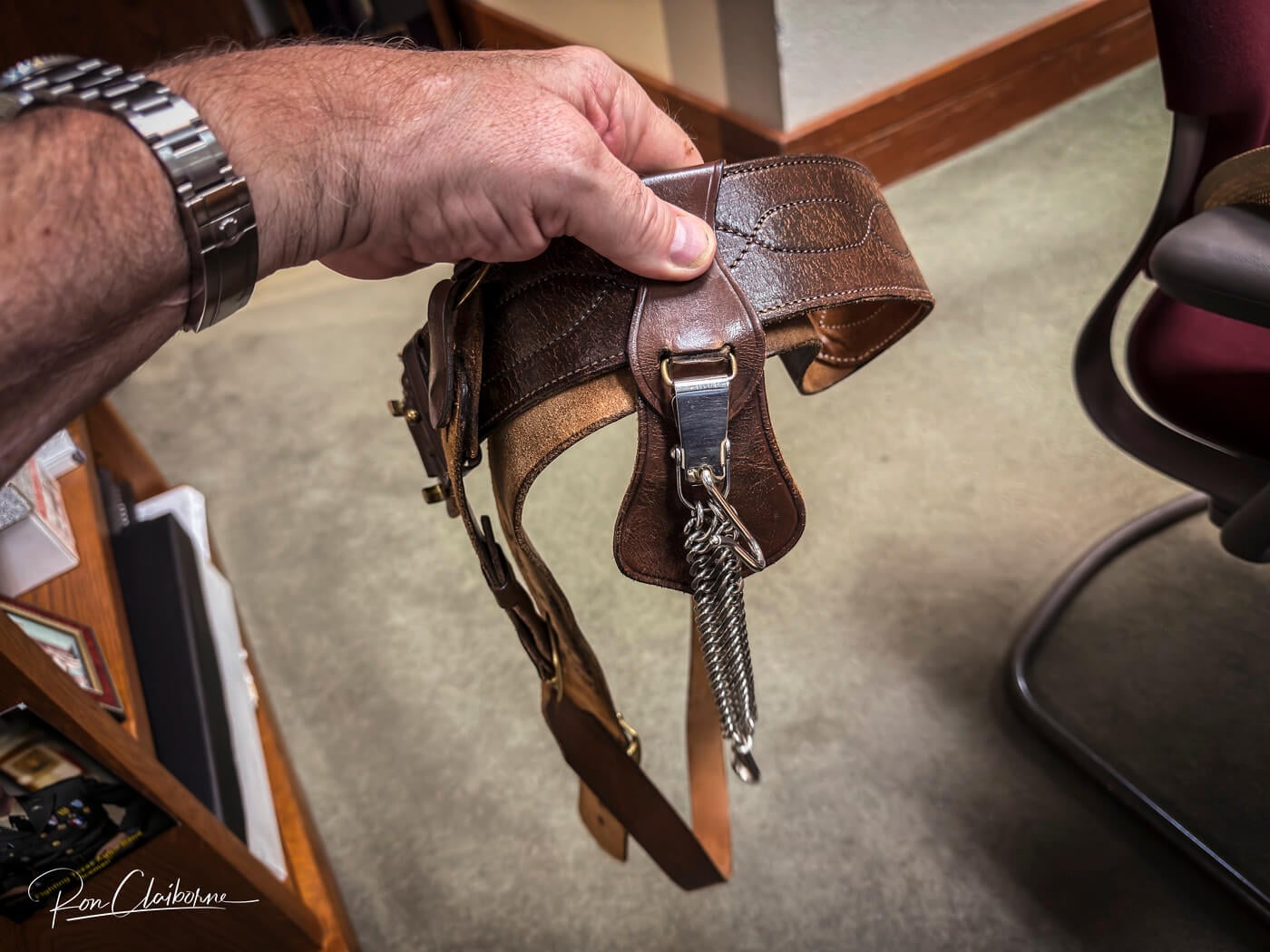
The Sam Browne belt is named after Sir Samuel James Browne, a British Indian Army officer who lost his left arm in 1858 during the Indian Mutiny. A popular account says he designed the belt to carry his sword with one hand, though some historians doubt the story.
The classic version has a double-prong brass buckle, brass D-rings, and a hook for the sword frog.
The American Sam Browne in 1921
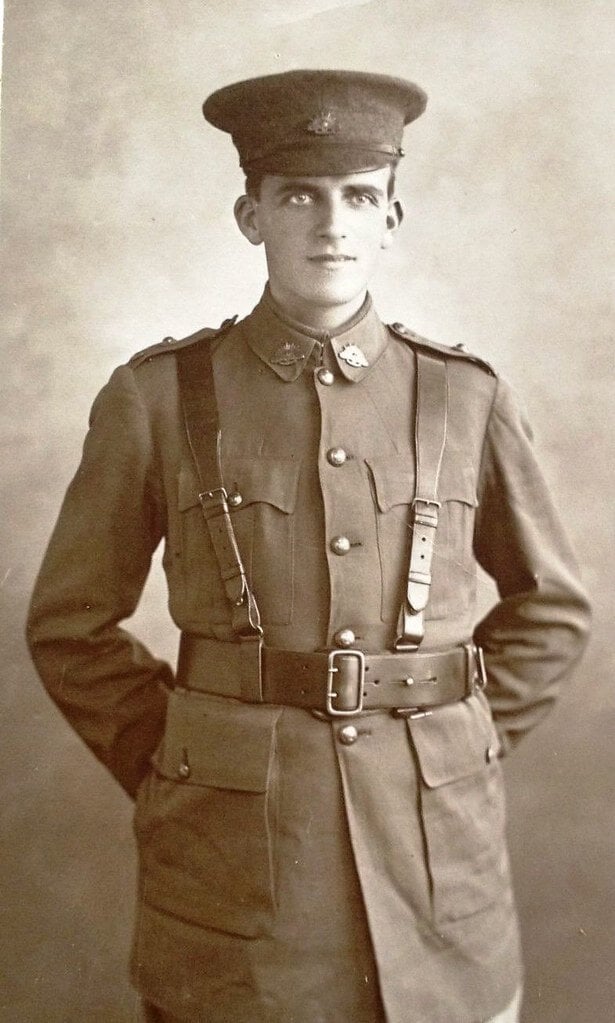
During the First World War, American Sam Browne belts carried fittings with a dull bronze finish. The Army issued new uniform regulations in 1921 that required the brass to be bright.
Collectors can sometimes date a belt by the finish on its hardware.
The Australian Ceremonial Sam Browne
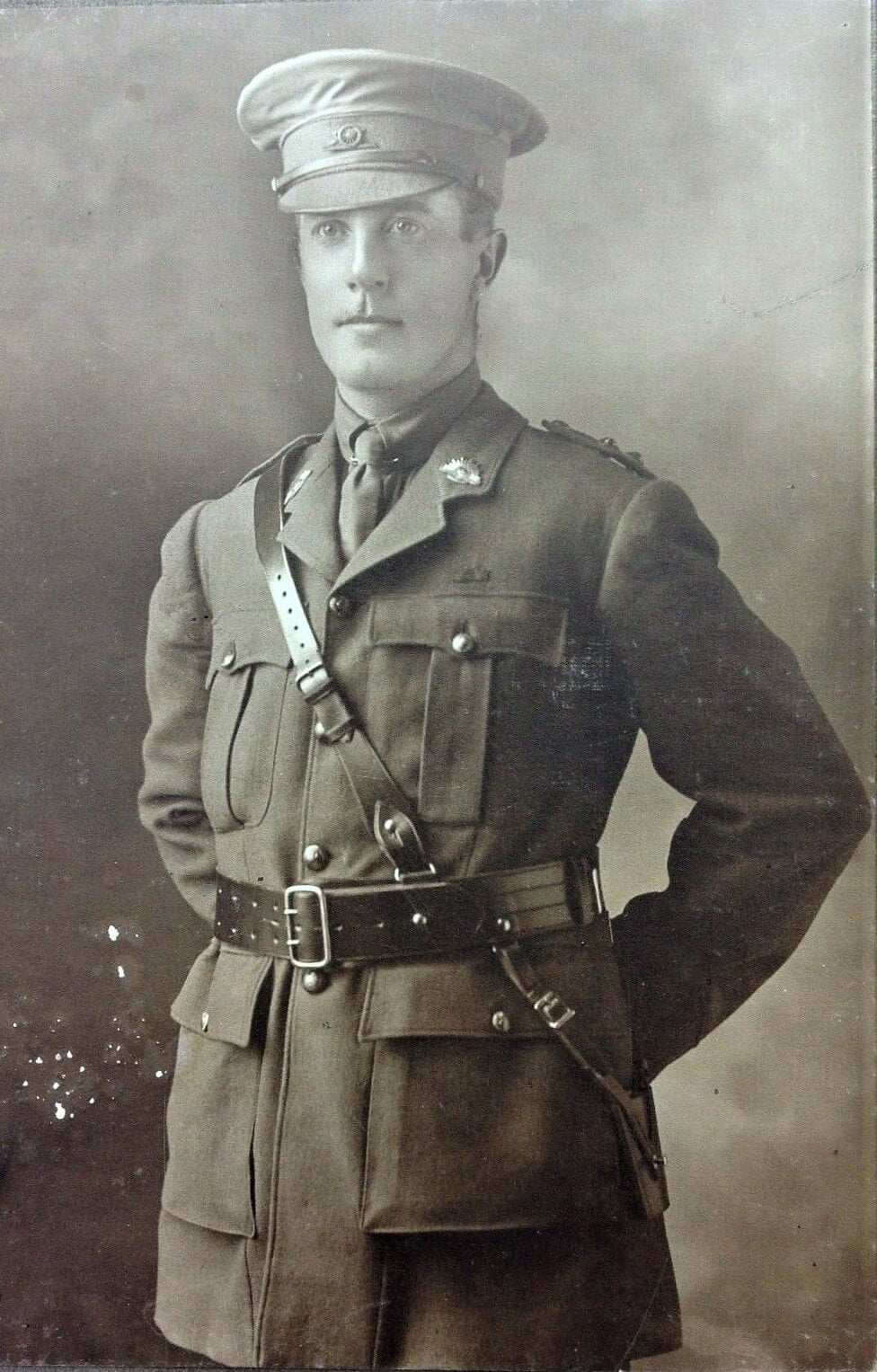
In the Australian Army, a Sam Browne belt is worn by officers and warrant officers class one on ceremonial occasions. Its brass hardware descends from the same British pattern.
A First World War example in the Australian War Memorial was worn by a medical officer attached to a British unit.
The Navy Snake Hook Buckle
An American Navy sword belt buckle in the collection of the Naval History and Heritage Command shows an eagle with outstretched wings atop a horizontal fouled anchor. Its fastening is a snake-style hook, a design common on English sword belt buckles.
The museum notes that Britain supplied buckles of this kind to the Confederate Navy during the Civil War.
The Grenadier Waist Belt Clasp
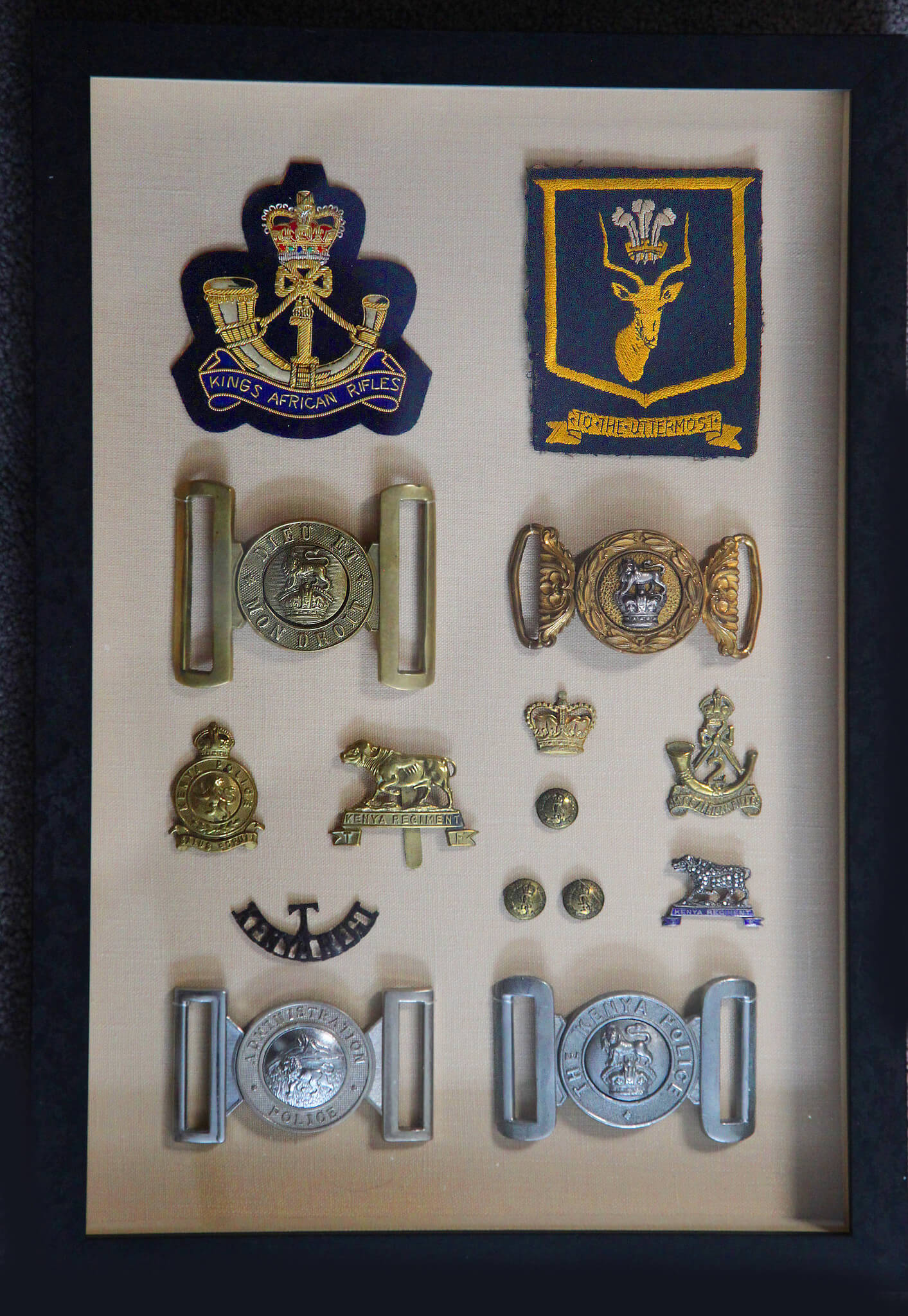
A British Army clasp from the Victorian era features a gilt grenade bearing Queen Victoria’s crown and cypher in silver. The center slots into a silver circle inscribed with the regimental title.
The cypher dates it to before 1901.
The Prussian Gott Mit Uns Buckle
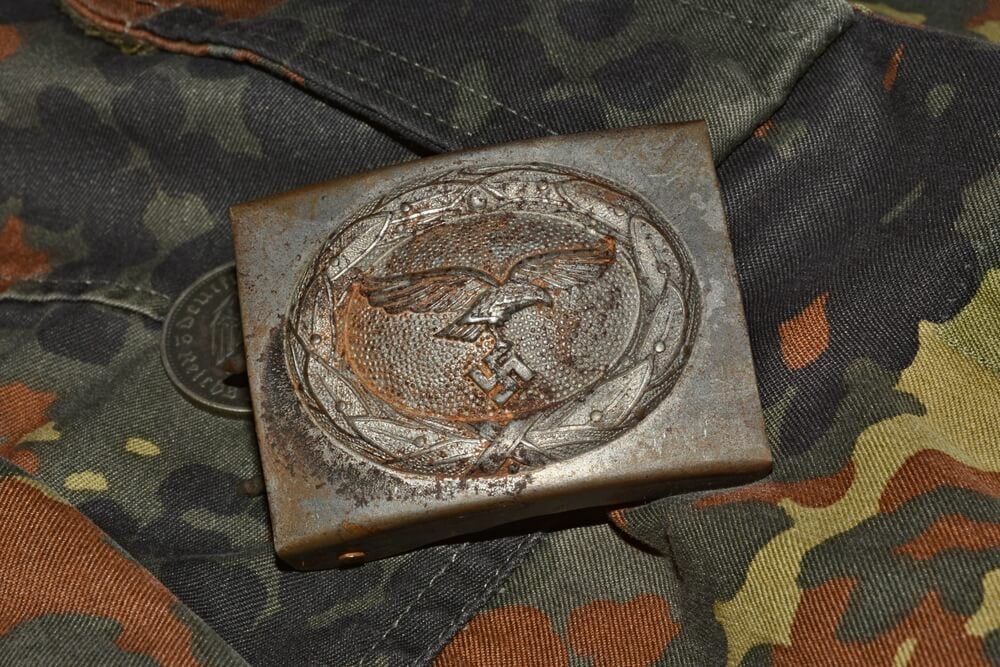
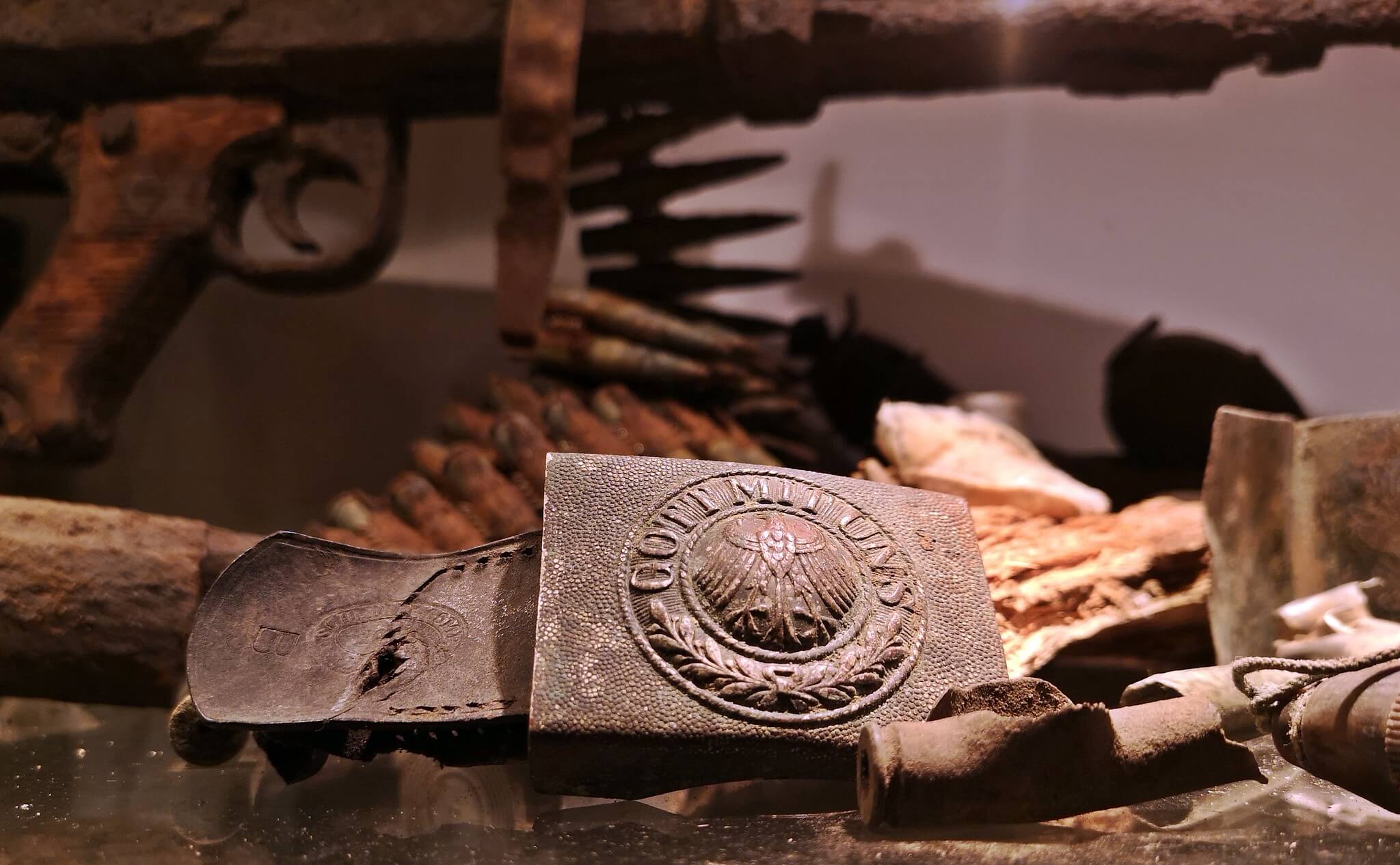
Imperial German soldiers wore belt buckles with a crown at the center, surrounded by a laurel wreath and the motto “Gott mit uns,” meaning “God with us.” The design was Prussian in origin and appears on brass examples as well as the steel versions issued later.
It was a standard issue item for foot soldiers in the First World War.
The Prussian Telegraph Troops Buckle
A long rectangular brass buckle in the Australian War Memorial’s collection carries a white metal disc with the Royal Prussian crown, a laurel wreath, and the same motto. It is said to have been worn by German Army telegraph troops.
It was taken as a souvenir by an Australian soldier who served in the First World War.
The Wehrmacht-Era Motto Buckle
The motto “Gott mit uns” did not disappear after 1918, and buckles with the phrase were also used by German forces in the Second World War. Later versions replaced the crown with an eagle, and a surviving example in the collection of the United States Holocaust Memorial Museum is painted field gray with a raised eagle badge above the motto.
The Marine Corps Emblem
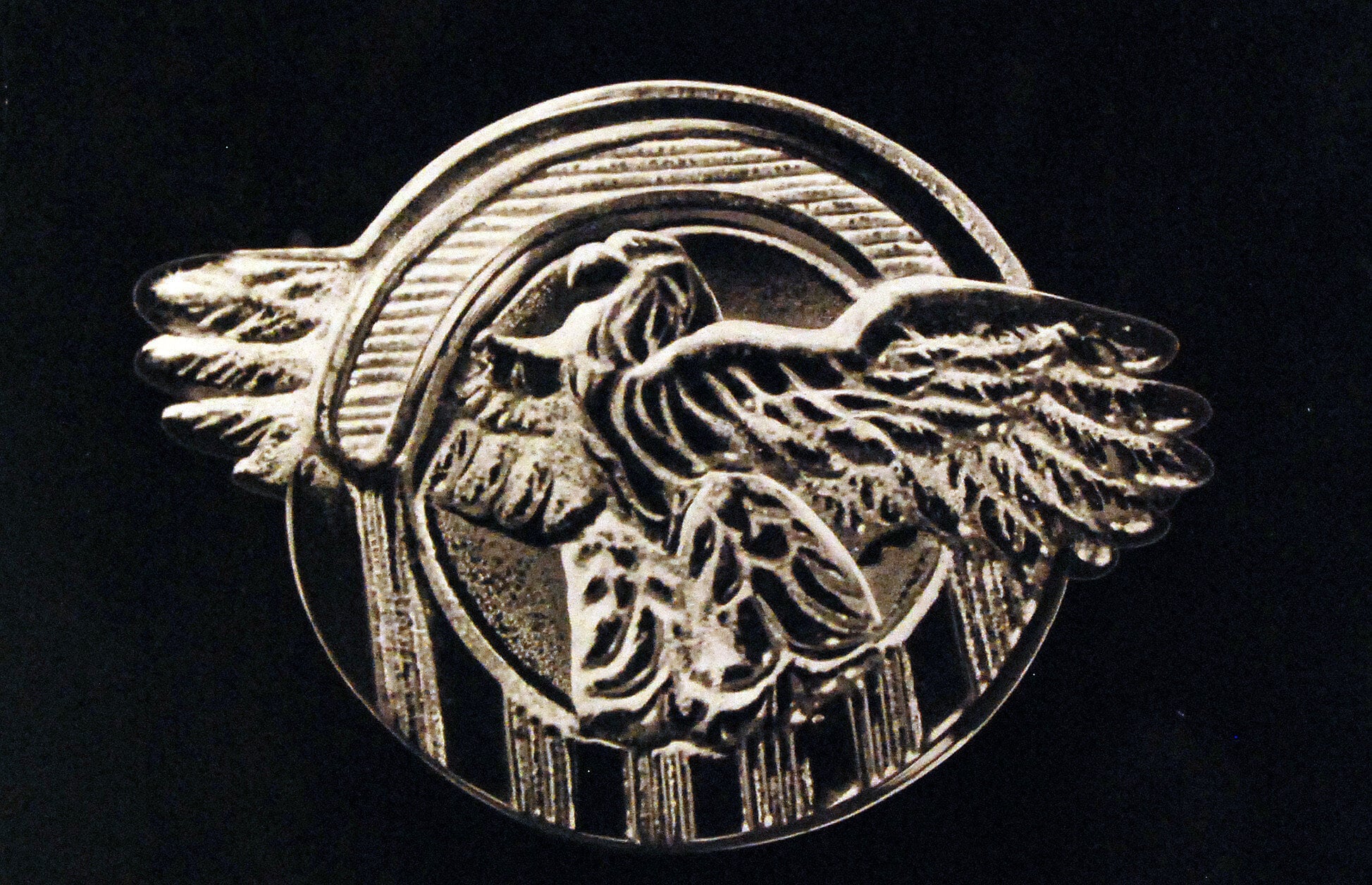
In November 1868, Marine Corps Commandant Jacob Zeilin approved an insignia featuring an eagle atop a globe and an anchor. The Marines had borrowed ideas from the British Royal Marines’ globe and laurel.
The emblem became the foundation for the Eagle, Globe, and Anchor design found on brass Marine insignia.
The Union Oval US Plate
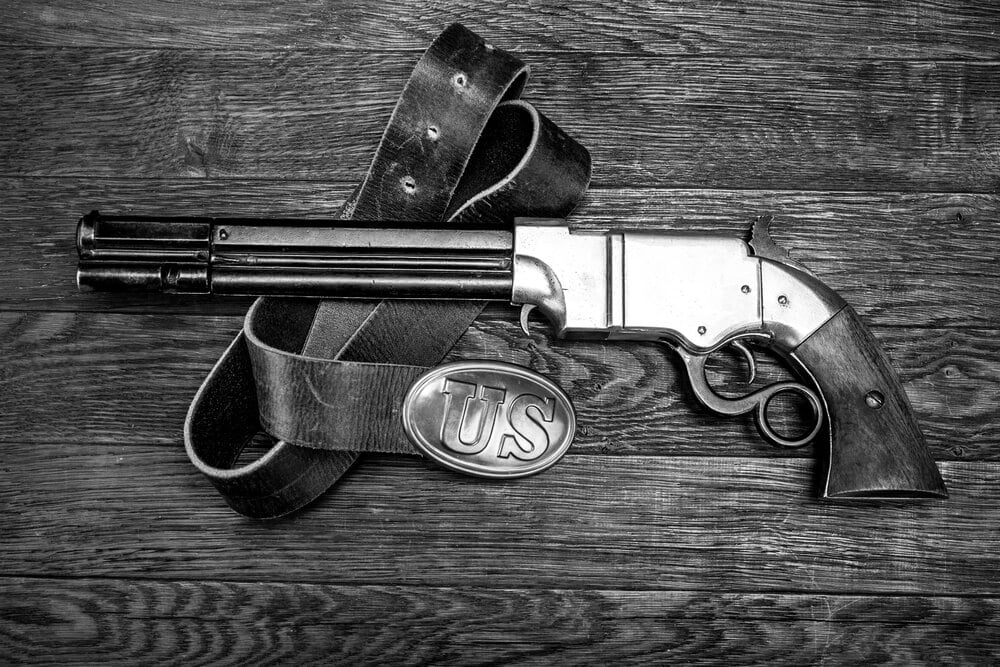
A rectangular or oval brass plate stamped with the letters US was a familiar sight on Union Army cartridge boxes during the Civil War. Mass production left a wide range of makers and finishes.
Forgeries of Civil War plates are widespread, so collectors rely on weight and casting details.
The Confederate CS Plate
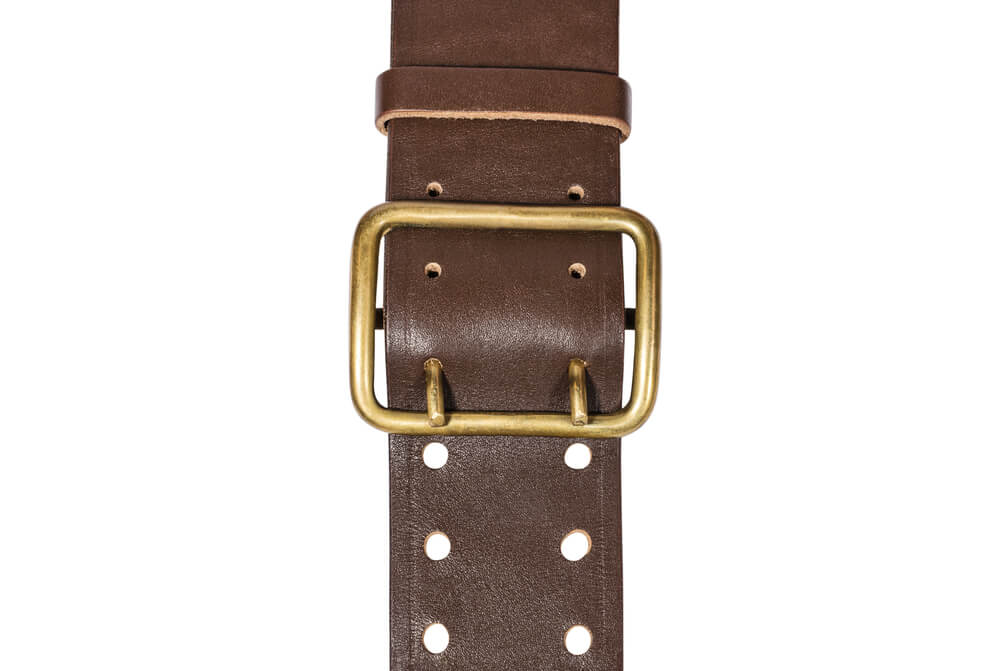
The letters CS in a similar brass format marked Confederate equipment, and many were made locally in short runs. Surviving examples vary widely in quality because of wartime shortages.
Authentic examples are scarce and tend to command high interest.
The Model 1851 Eagle Sword Belt Plate
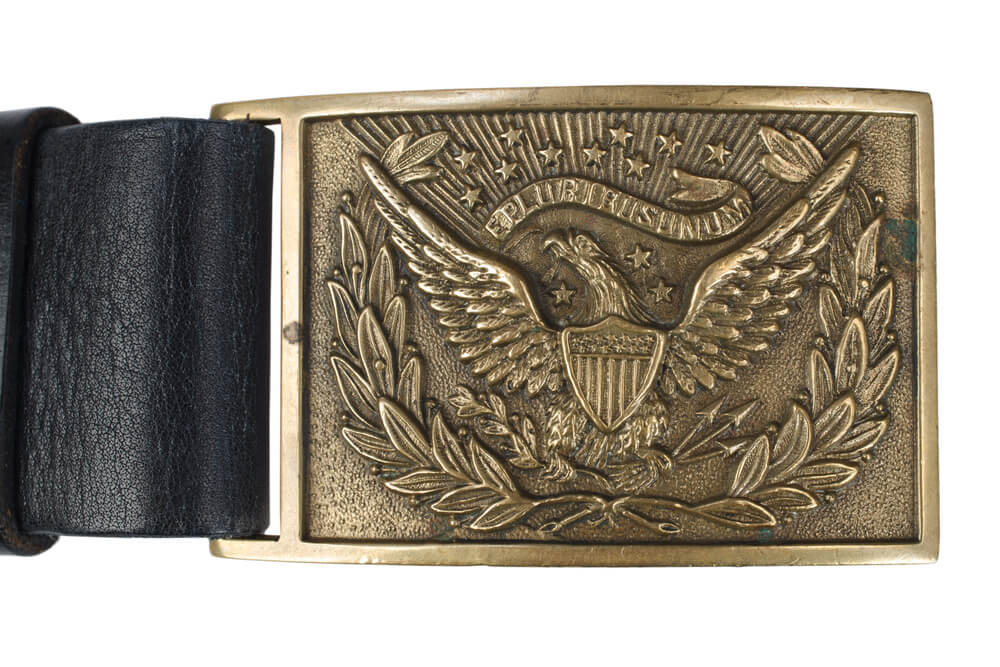
An American officer’s sword belt plate from the 1850s displayed an eagle surrounded by a wreath. It was cast in brass and gilded.
The design stayed in use through the Civil War.
The Soviet Star Buckle
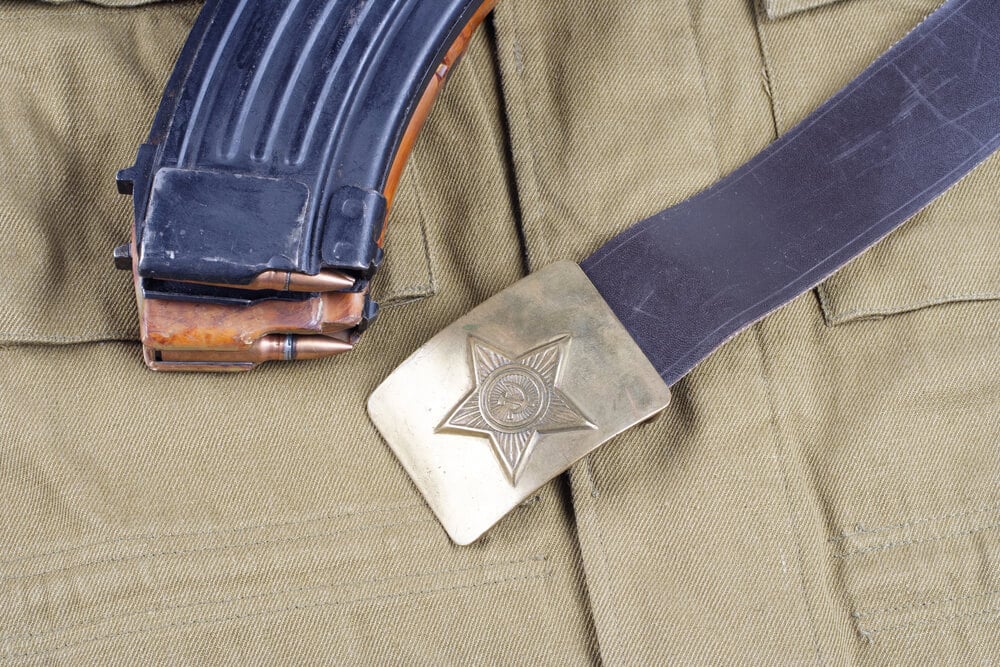
Soviet Army belt buckles featured a five-pointed star with a hammer and sickle in relief. They were stamped from brass or aluminum alloys.
The simple, uniform design made it a recognizable piece across decades of service.
What the Brass Remembers
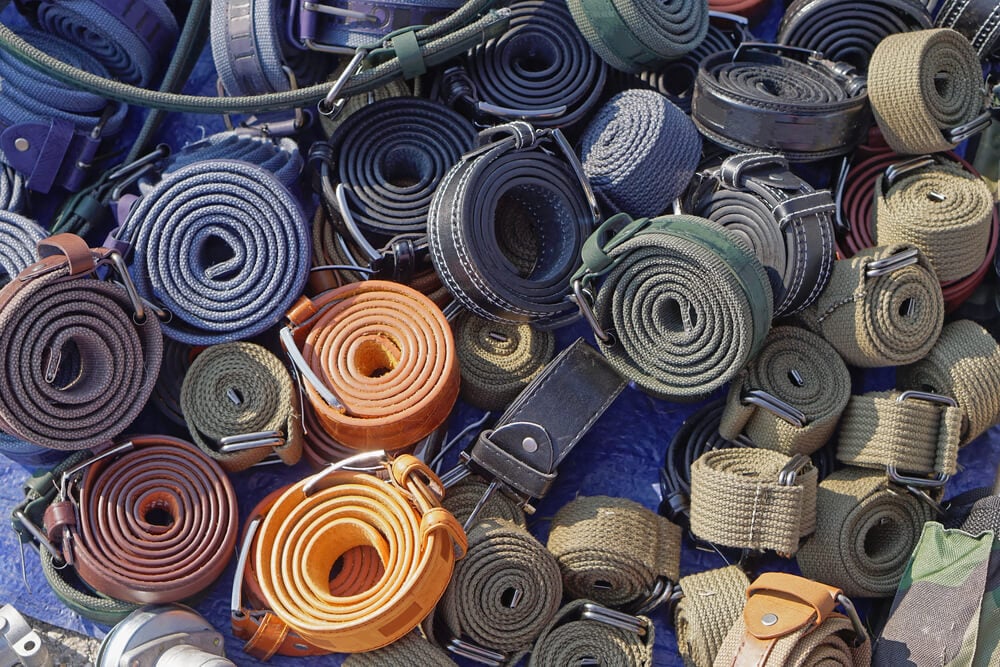
Brass is an unforgiving material, and it keeps a record of how it was used. Polished edges, scratched surfaces, and green patina all hint at conditions that a belt endured in service.
Each of these objects has a clear origin, and the stamped lettering gives a direct line to the unit or army that issued it. Collectors prize them for the same reason historians do: the marks cannot be argued with.
A buckle with a legible motto and a maker’s stamp is a small, portable document, and it can say more than a faded photograph about the person who once wore it.
More from Go2Tutors!

- 27 Silver Dollars and Half Dollars Worth Keeping
- 28 Restaurant Menu Items Nobody Orders Anymore
- 17 Places Built in Seemingly Impossible Spots
- 27 Vintage Rings Worth More Than They Look
- 25 Restricted Sites Tourists Can’t Enter
Like Go2Tutors’s content? Follow us on MSN.