14 Buildings That Look Completely Out of Place in Their Cities
Cities typically develop distinct architectural personalities over time—creating unique skylines and streetscapes that give major urban centers their recognizable character. Yet scattered throughout these otherwise cohesive environments stand remarkable architectural oddballs—structures that seem to have materialized from entirely different worlds, eras, or imaginations.
Here is a list of 14 buildings that appear strikingly out of place in their urban surroundings.
Casa Batlló – Barcelona, Spain
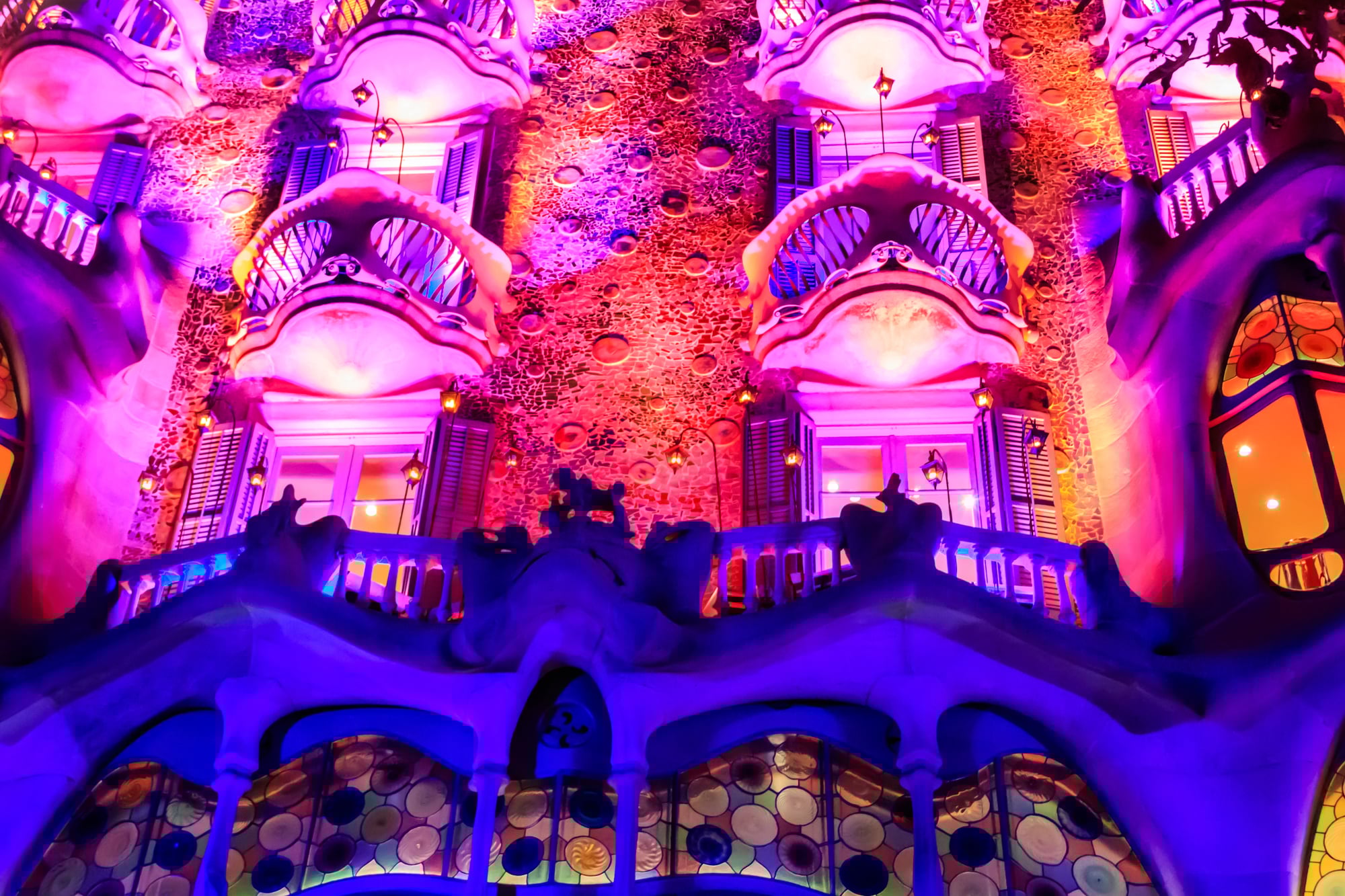
Amid Barcelona’s orderly grid system and uniform stone facades—Antoni Gaudí’s Casa Batlló erupts along the elegant Passeig de Gràcia like some psychedelic fever dream. Its undulating organic forms and wild mosaic exterior clash dramatically with neighboring buildings’ rational symmetry.
The structure’s bone-like columns and scale-textured roof create the uncanny impression of a living creature rather than an apartment building—as if some fantastic beast decided to take a nap among Barcelona’s otherwise dignified architecture.
Atomium – Brussels, Belgium

Looming above Brussels’ predominantly medieval and art nouveau cityscape stands the massive Atomium—a bizarre stainless-steel monument representing an iron crystal magnified billion times. Constructed for the World’s Fair, this scientific oddity consists of nine massive interconnected spheres that hover incongruously above the traditional European capital.
Its space-age aesthetic creates a jarring contrast against ornate guildhalls and Gothic spires—like a prop from a sci-fi film accidentally left behind after shooting wrapped.
Like Go2Tutors’s content? Follow us on MSN.
Dancing House – Prague, Czech Republic
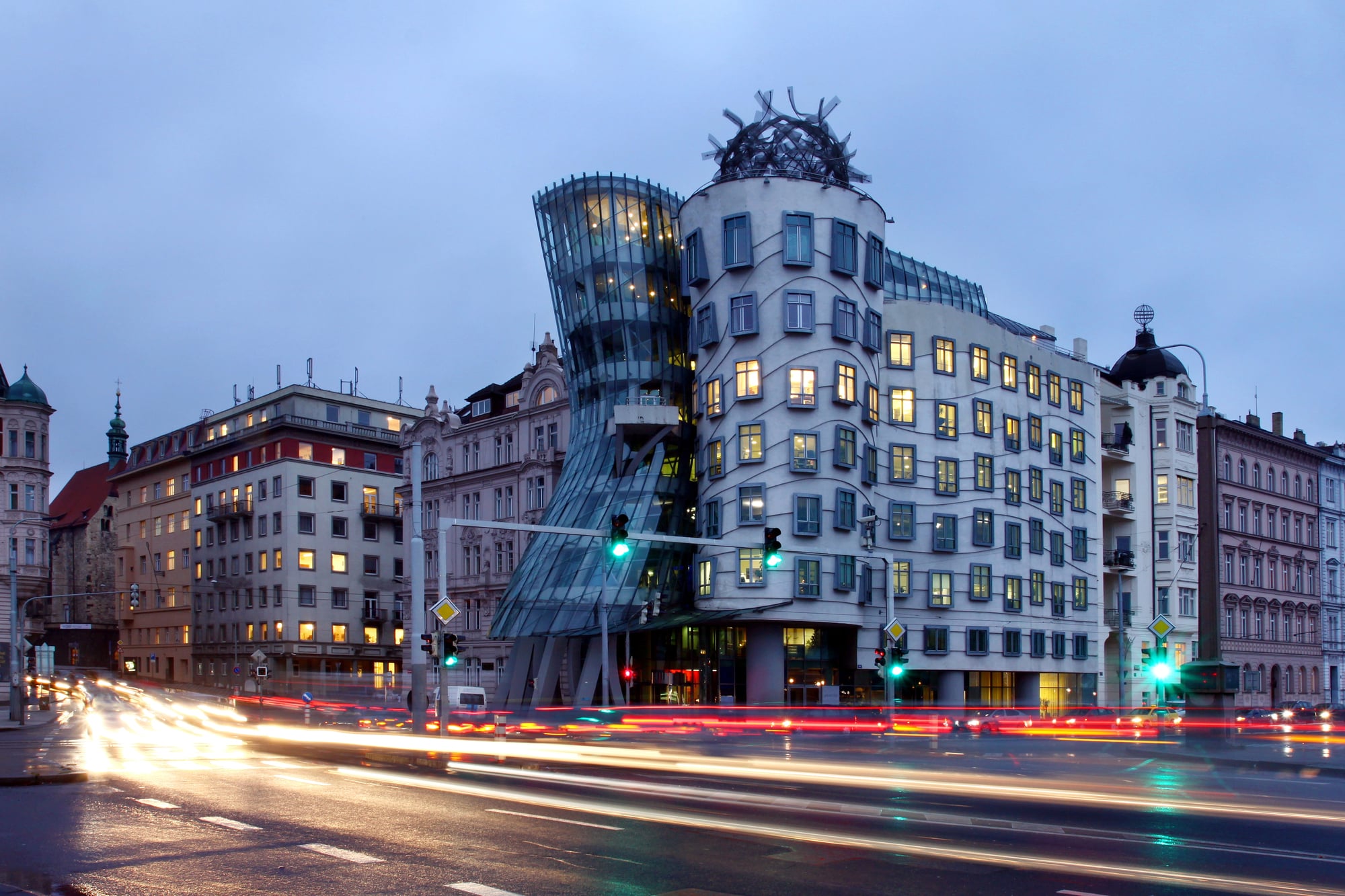
Among Prague’s baroque palaces and Gothic churches stands the impossibly fluid Dancing House—a deconstructivist building that genuinely appears caught mid-sway. Designed by Frank Gehry and Vlado Milunić, these concrete towers resemble a dancing couple—nicknamed “Fred and Ginger” for obvious reasons.
Its curved glass surfaces and asymmetrical windows suggest frozen motion—completely contradicting the rigid symmetry and ornate details defining Prague’s centuries-old skyline. Tourists often stop in their tracks, wondering how such architectural rebellion found approval in this fiercely protected historic center.
Heydar Aliyev Center – Baku, Azerbaijan

Amidst Baku’s landscape of severe Soviet-era blocks and ancient Islamic structures rises Zaha Hadid’s Heydar Aliyev Center—a building composed entirely of sweeping curves and pristine white surfaces. The structure utterly rejects straight lines—favoring instead continuous forms that seem to melt into the surrounding plaza.
This avant-garde cultural hub stands in dramatic opposition to both the harsh geometry of communist architecture and the intricate patterns of traditional Azerbaijani buildings—resembling nothing so much as a spacecraft that touched down gently among conventional urban forms.
Habitat 67 – Montreal, Canada

In a city characterized by European-influenced architecture and predictable high-rises—Habitat 67 looks like some giant child stacked concrete blocks during playtime. Moshe Safdie’s experimental housing complex consists of identical prefabricated modules arranged in seemingly random combinations—defying gravity and conventional urban planning simultaneously.
The Brutalist structure’s revolutionary approach to modular living creates a startling visual interruption in Montreal’s skyline—appearing more like a concrete mountain than human habitation.
Like Go2Tutors’s content? Follow us on MSN.
Peckham Library – London, UK
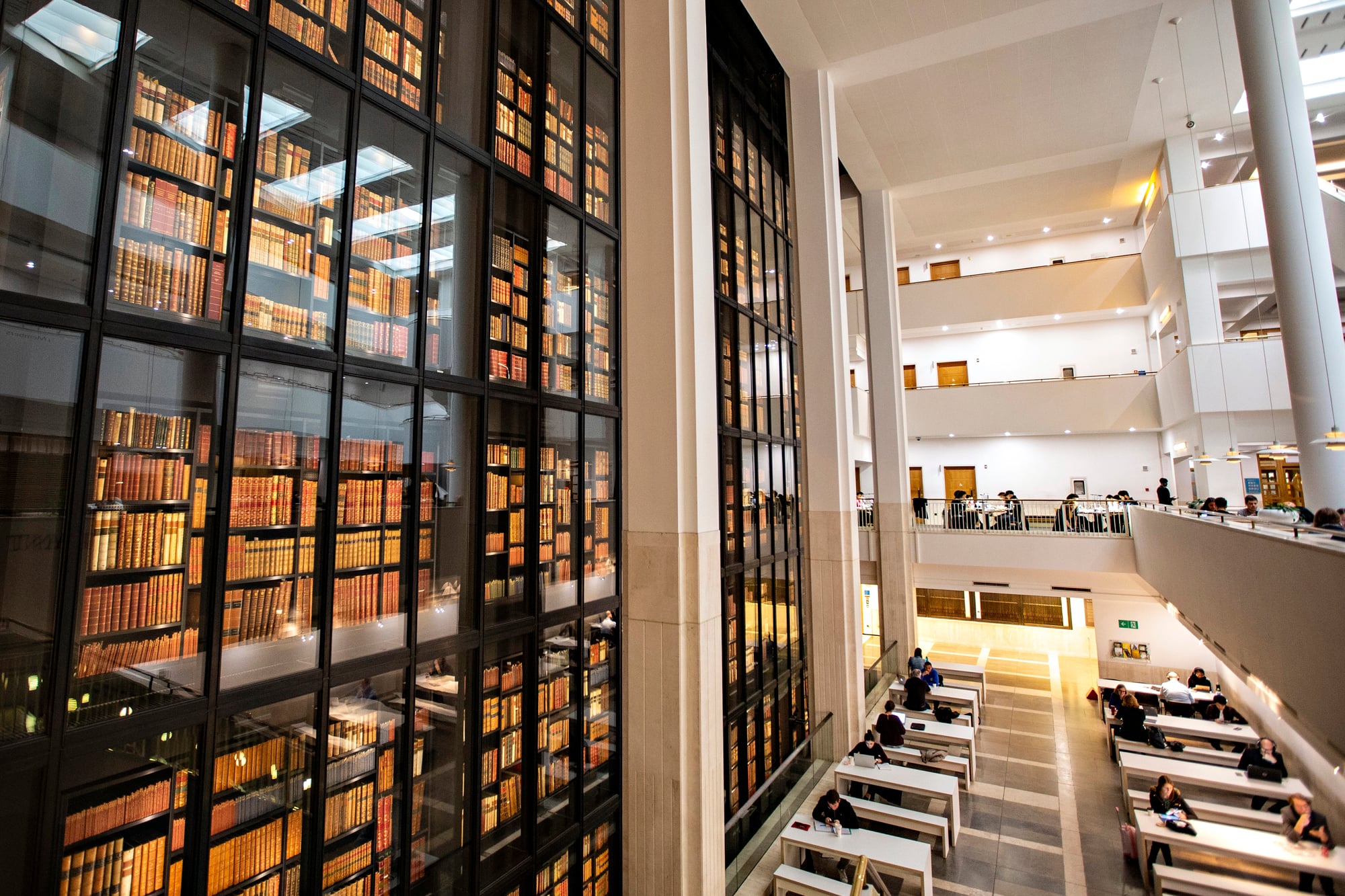
Nestled among London’s Victorian terraces stands the bright turquoise Peckham Library—resembling nothing so much as an inverted letter “L” with a copper-clad crown. The building hovers improbably over a public square on thin steel legs—creating a truly unexpected silhouette in this working-class South London neighborhood.
Its vibrant colors and unconventional shape make it look more like an abstract sculpture than a functional public building—a colorful anomaly amid London’s predominantly brick and stone architecture.
Cathedral of Brasília – Brasília, Brazil
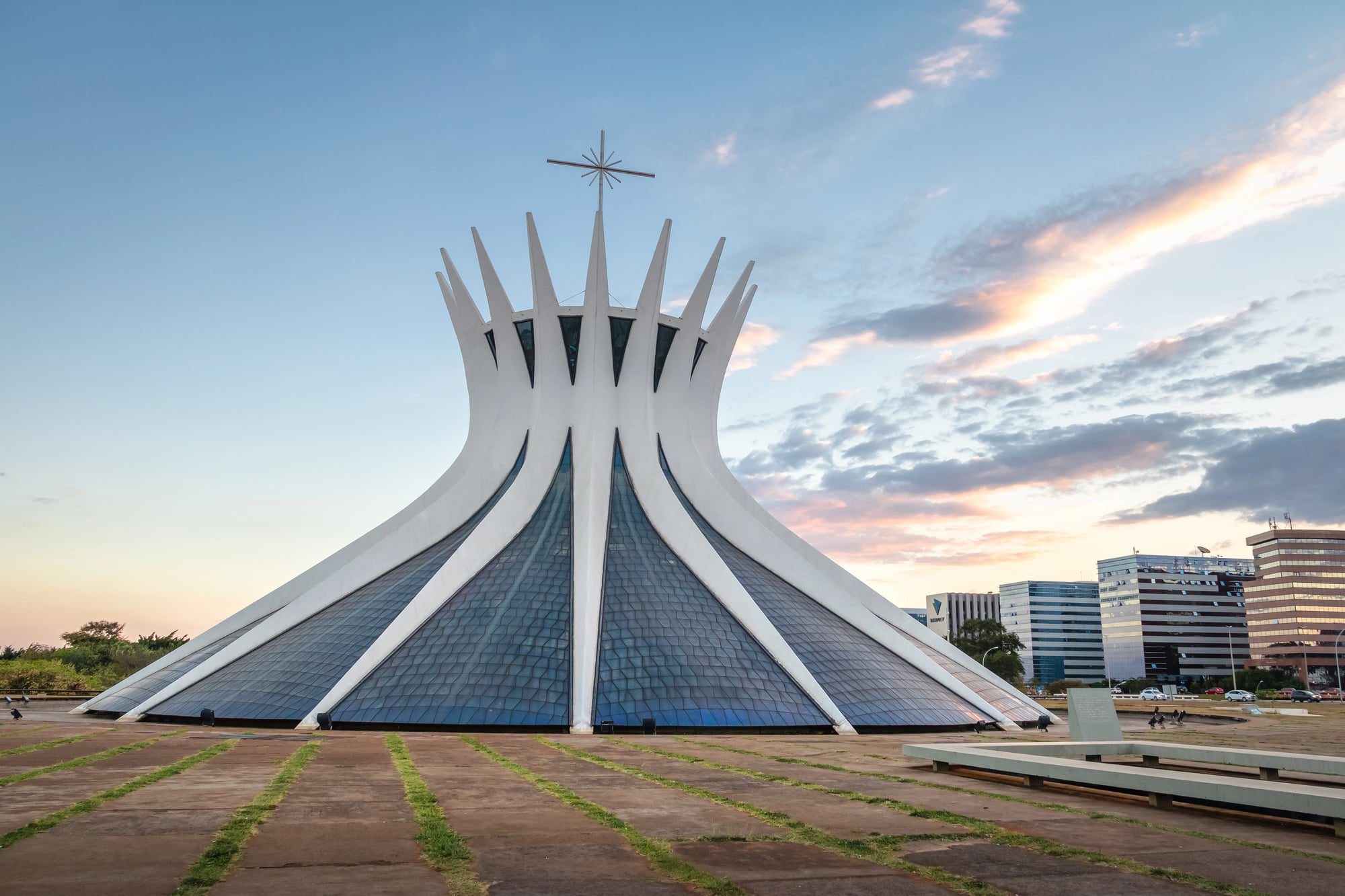
Within Brazil’s meticulously planned modernist capital stands Oscar Niemeyer’s Cathedral—resembling either a crown of thorns or some enormous white flower opening toward heaven. Sixteen hyperboloid concrete columns rise dramatically from the ground, meeting at the top around a circular space filled with spectacular stained glass.
Unlike the city’s predominantly horizontal government buildings, the cathedral creates a powerful vertical emphasis through its unconventional structure—as though it descended from another dimension into the rational grid of Brazil’s purpose-built capital.
Crooked House – Sopot, Poland
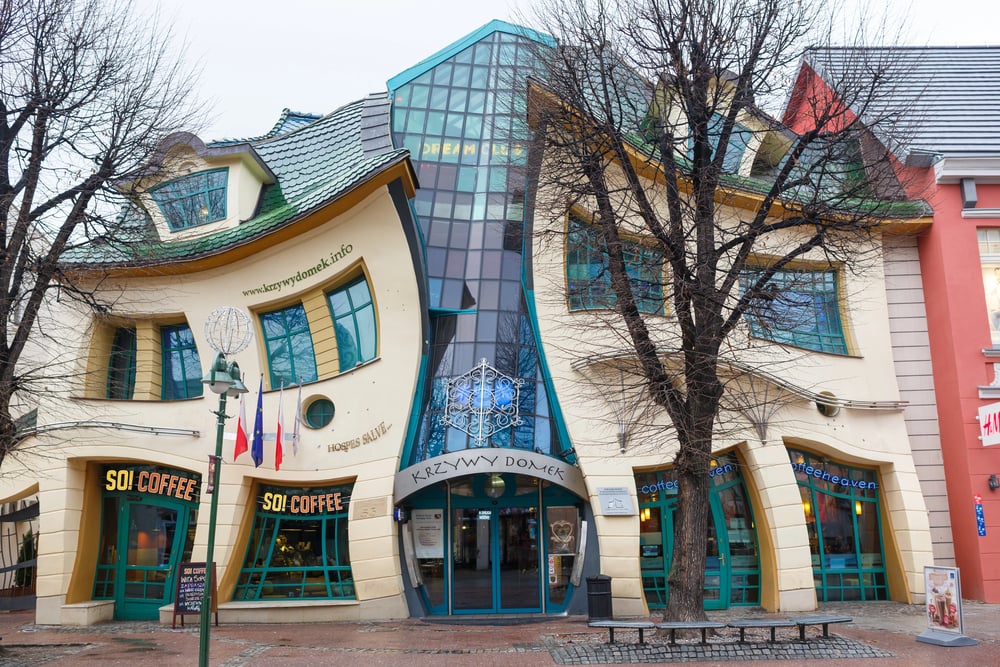
Among elegant seaside resorts and the traditional architecture of Sopot stands Krzywy Domek—a building that genuinely looks like it melted in the summer sun. Inspired by fairy tale illustrations, this commercial structure features warped walls, undulating rooflines, and distorted windows creating the distinct impression of viewing architecture through some funhouse mirror.
Its cartoon-like appearance creates such a surreal interruption in this conventional Baltic town that visitors often question their eyesight rather than the architect’s sanity.
Like Go2Tutors’s content? Follow us on MSN.
Cube Houses – Rotterdam, Netherlands
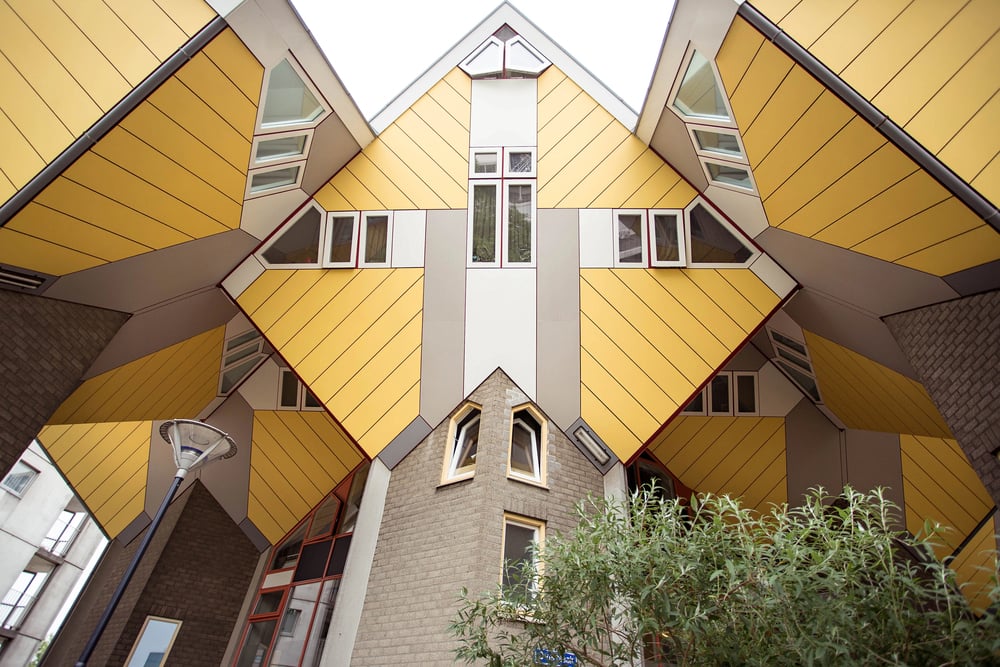
Rising above Rotterdam’s practical post-war architecture stand Piet Blom’s Cube Houses—bizarre yellow cubes tilted degrees and perched atop hexagonal pylons. Designed to represent abstract trees forming an urban forest, these homes completely reimagine spatial orientation.
Their unusual angles mean walls become floors and floors become walls inside—creating profoundly disorienting living spaces wildly different from Rotterdam’s otherwise straightforward reconstruction architecture.
Casa dos Bicos – Lisbon, Portugal
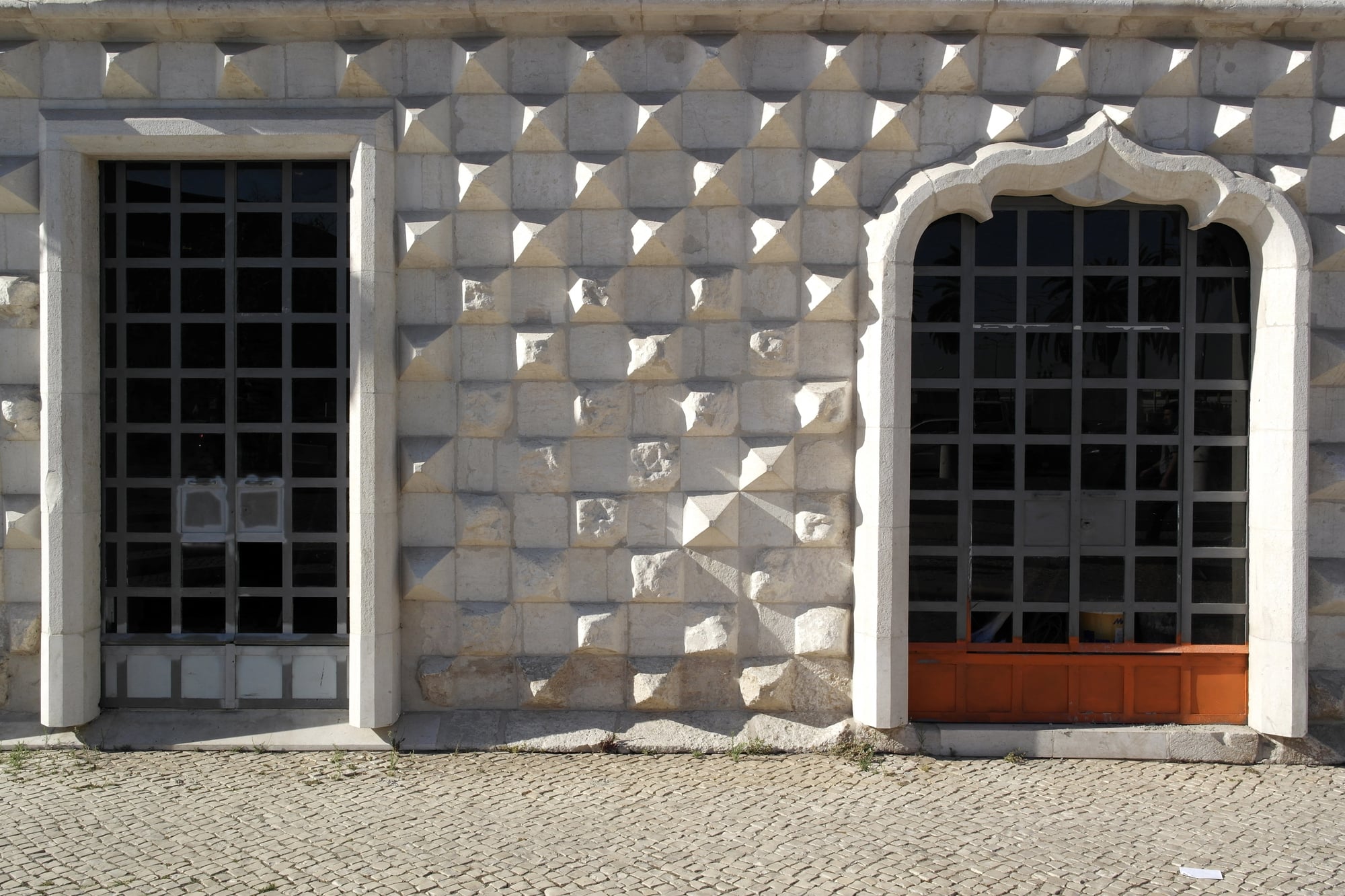
Among Lisbon’s ornate Manueline buildings and azulejo-covered facades stands the peculiar Casa dos Bicos or “House of Spikes”—featuring exterior walls covered entirely in diamond-shaped stone projections. Built in the early century by the son of Portugal’s viceroy to India, this structure combines Portuguese Gothic with Italian Renaissance influences to create something resembling a giant jewel-encrusted fortress.
Its unusual textured surface creates a striking contrast against Lisbon’s smooth stucco and tile buildings—like an architectural porcupine hiding among conventional structures.
Kunsthaus Graz – Graz, Austria
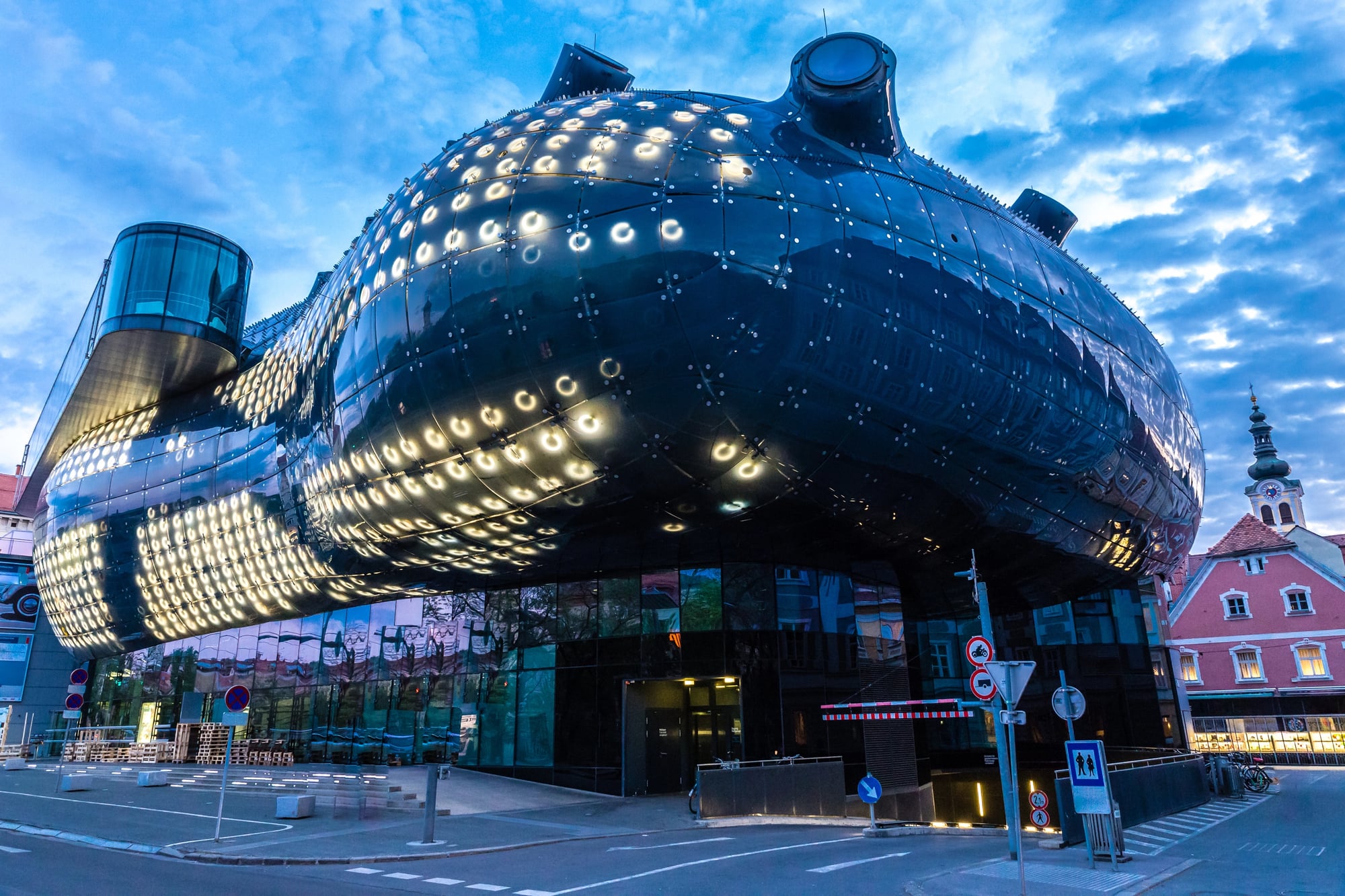
Nestled among red-tiled roofs and baroque buildings of UNESCO-protected Graz sits the Kunsthaus—a contemporary art museum resembling some enormous blue alien blob. Locals affectionately call this biomorphic structure the “Friendly Alien” due to its otherworldly appearance and strange light-emitting nozzles protruding from its acrylic skin.
The building’s organic form and high-tech elements create a shocking contrast with medieval and Renaissance surroundings—looking exactly like a visitor from another galaxy that accidentally materialized in this ancient Austrian city.
Like Go2Tutors’s content? Follow us on MSN.
The Basket Building – Newark, Ohio
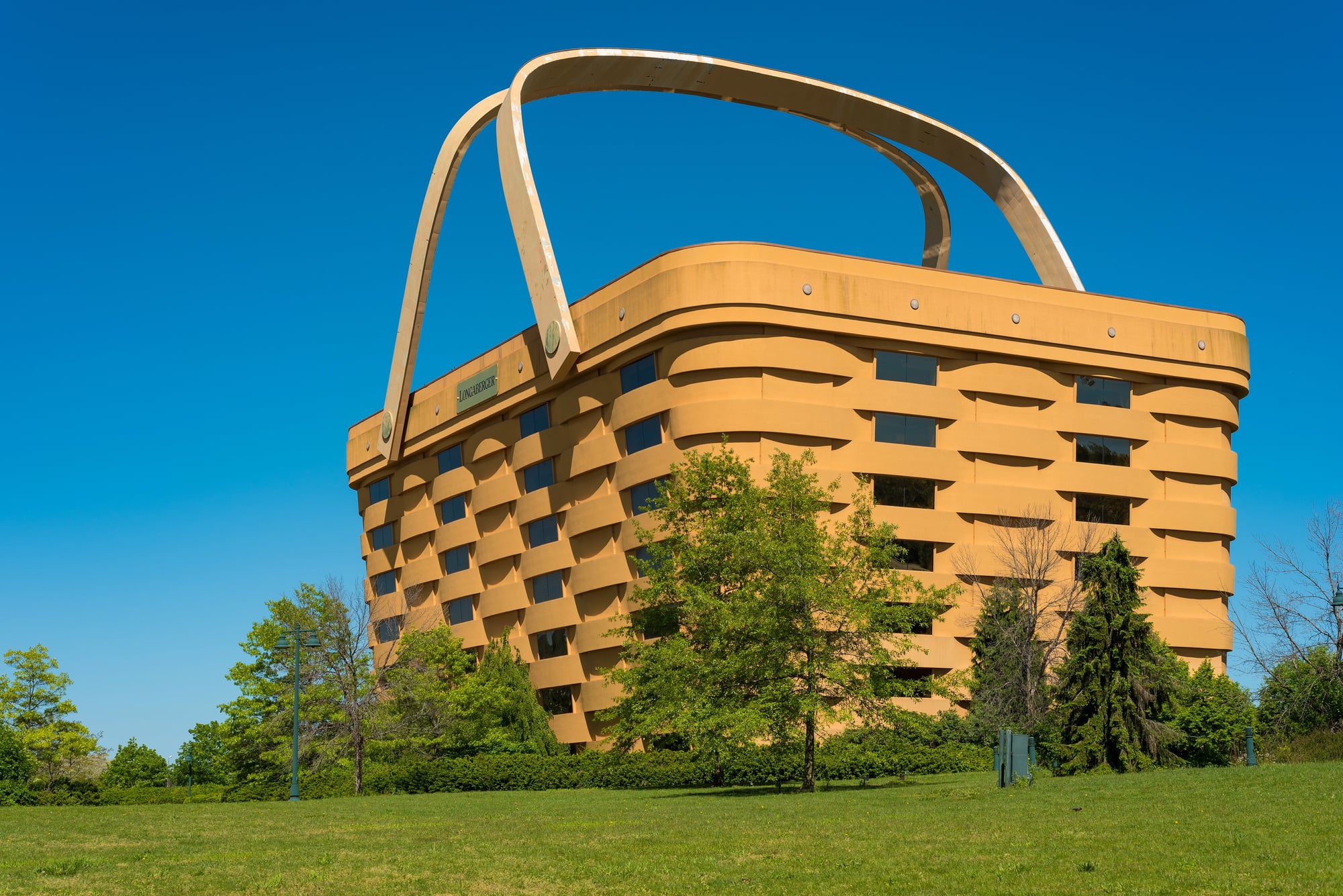
In unremarkable small-town Ohio stands a seven-story office building shaped precisely like an enormous picnic basket, complete with functional handles. The former headquarters of Longaberger Basket Company translates the company’s product directly into architectural form—creating a truly surreal sight along an otherwise forgettable American highway.
The square-foot basket suggests some giant accidentally abandoned their lunch in the middle of Newark—forming a whimsical yet utterly incongruous landmark in this modest Midwestern landscape.
Walkie Talkie Building – London, UK
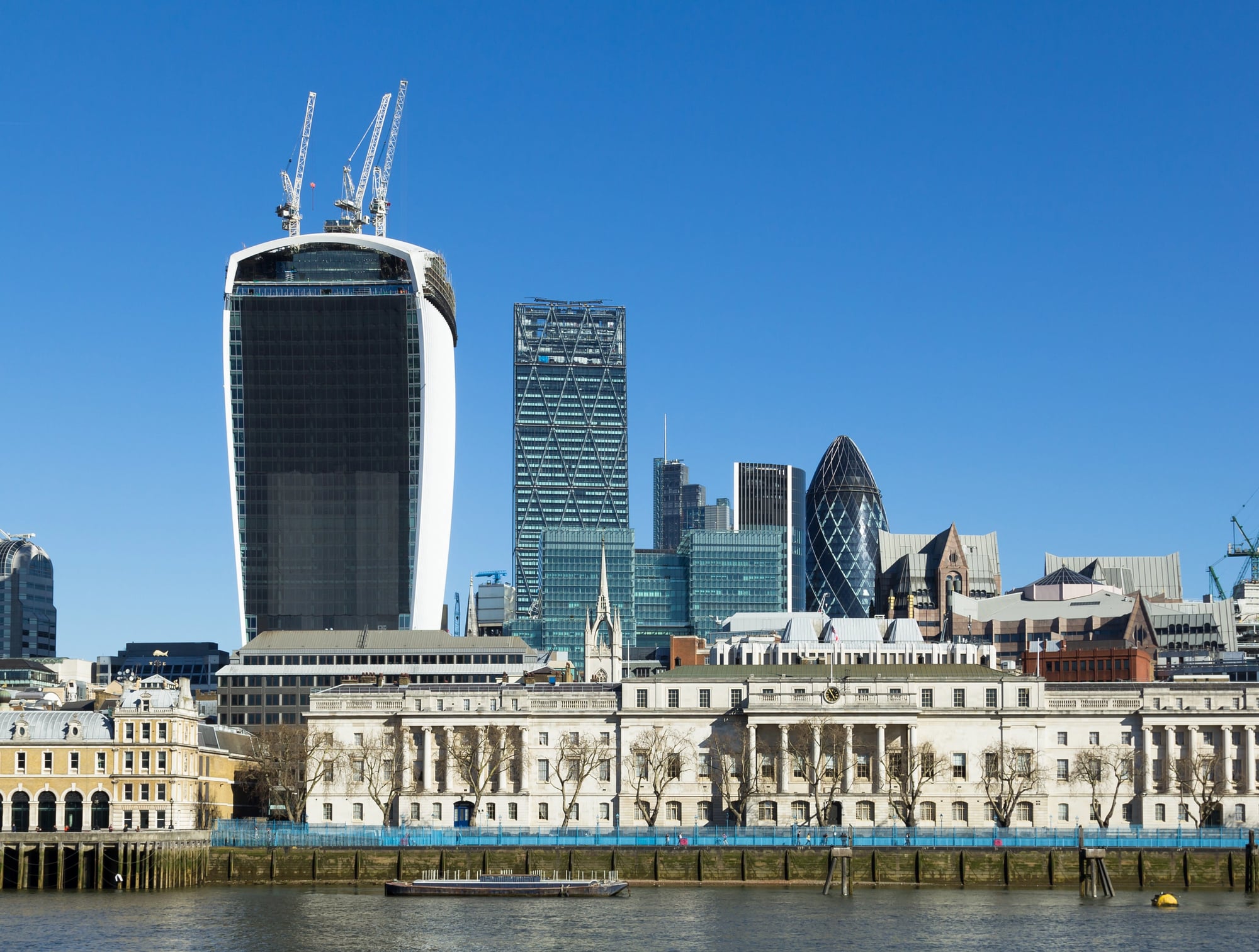
London’s carefully protected historic skyline now includes the controversial Fenchurch Street—nicknamed “Walkie Talkie” due to its top-heavy form that actually widens as it rises. Rafael Viñoly’s commercial skyscraper completely inverts the traditional tapered shape expected of tall buildings—resulting in a structure that appears to be bulging unnaturally from its site.
Its concave glass facade once concentrated sunlight so intensely it melted parts of a parked car—earning additional nickname “Fryscraper.” The building’s aggressive profile disrupts London’s composed skyline like an uninvited guest at a formal architectural dinner party.
Robot Building – Bangkok, Thailand
Among Bangkok’s ornate temples and sleek modern towers stands United Overseas Bank headquarters—commonly known as Robot Building due to its unmistakable appearance. Designed deliberately by Sumet Jumsai to reflect banking computerization, the structure literally resembles a robot with two “eyes” and decorative “nuts and bolts” incorporated throughout its facade.
This cartoonish interpretation of technology creates a weirdly playful presence amid a serious business district—as though childhood imagination temporarily seized control of urban planning department.
Like Go2Tutors’s content? Follow us on MSN.
Architectural Anomalies: Beautiful Misfits
These architectural oddities challenge expectations of urban coherence by introducing radical forms, materials, and concepts into otherwise predictable cityscapes. Many initially faced fierce public criticism and mockery—yet most eventually transformed into beloved landmarks attracting tourists and defining their cities’ evolving identities.
Their jarring presence reminds us that great architecture serves beyond mere function—expressing cultural values, technological aspirations, and artistic vision sometimes at harmony’s expense. These beautiful misfits demonstrate how occasionally, the most meaningful urban experiences come through buildings that stubbornly refuse to fit in.
More from Go2Tutors!

- 18 Unexpectedly Valuable Collectibles You Might Have Lying Around
- 15 Things Every Teenager in the ’70s Did That Teens Today Wouldn’t Understand
- 15 Strange Things People Have Tried to Ban (And Failed)
- 15 Inventions That Were Immediately Banned After Being Created
- 20 Actors Who Were Almost Cast in Iconic Roles
Like Go2Tutors’s content? Follow us on MSN.