14 Fish That Survive by Walking on Land
Most fish stay in the water where they belong, but evolution has a funny way of breaking its own rules. Scattered across the globe, from African swamps to Florida parking lots, there’s a surprising number of fish that decided water wasn’t enough. These amphibious oddballs have developed ways to breathe air, move across dry ground, and survive in places that would spell disaster for their fully aquatic cousins. Here’s a list of 14 fish that have truly mastered the art of living between two worlds.
Mudskipper
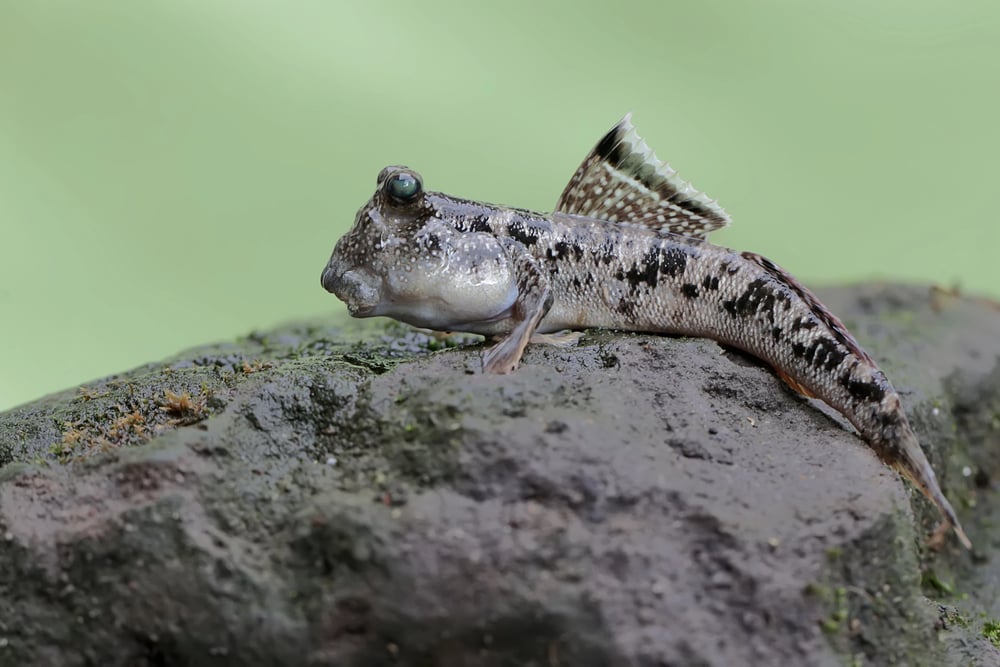
Mudskippers might be the poster children for fish that don’t know their place. These goggle-eyed characters spend about three-quarters of their lives out of water, hopping around mudflats and mangrove swamps like tiny, slippery acrobats. They’ve got jointed pectoral fins that work like miniature legs, letting them scoot from one tide pool to the next with surprising agility. Their bulging eyes sit on top of their heads so they can watch for predators above and below the waterline at the same time. To breathe on land, they trap water in their oversized gills and absorb oxygen through their skin and mouth lining. Kind of like a fish version of holding your breath but way more efficient.
Northern Snakehead
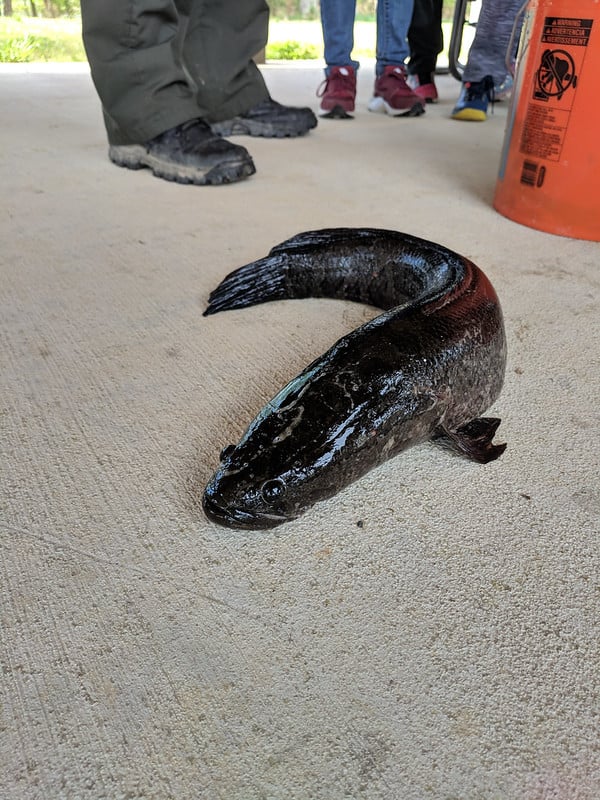
The northern snakehead earned its reputation as an aquatic nightmare when it showed up uninvited in Maryland waterways back in 2002. This Asian native can wriggle across land using its pectoral fins for support, allowing it to migrate between ponds and streams when conditions get rough. It’s an aggressive predator with no natural enemies in North America, which means it basically showed up to the party and started eating everything in sight. The snakehead uses a primitive labyrinth organ to breathe air, so it can survive out of water long enough to find a new home—sometimes traveling impressive distances before settling into its next hunting ground.
Walking Catfish
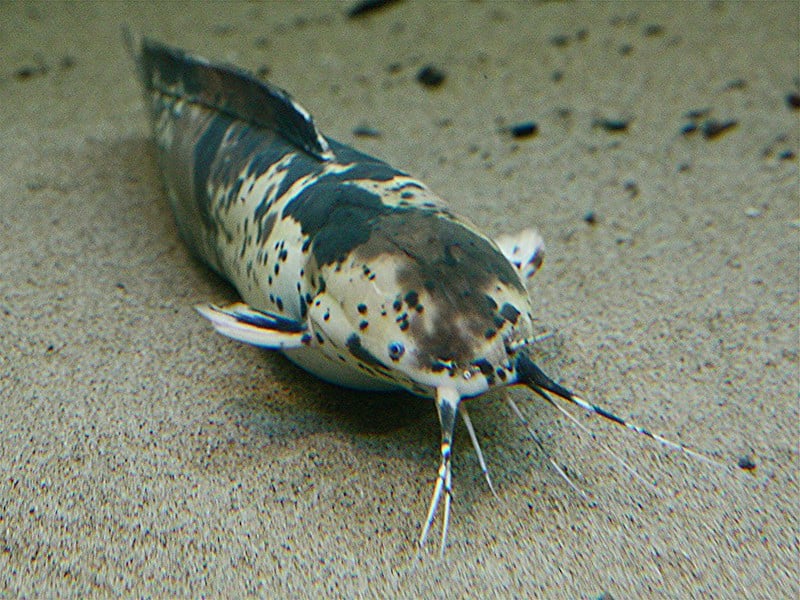
Florida residents might spot these Southeast Asian invaders taking a stroll through a Walmart parking lot during heavy rain. Which is either hilarious or terrifying depending on your perspective. They first appeared in Broward County in 1967 and have since spread throughout central and south Florida, using storm drains as a highway system. Walking catfish can travel up to three-quarters of a mile on land and survive 18 hours out of water by using their spine-like pectoral fins to drag themselves along. Despite early fears that they’d devastate native fish populations, they’ve turned out to be more of an oddball nuisance than a genuine ecological disaster.
Climbing Perch
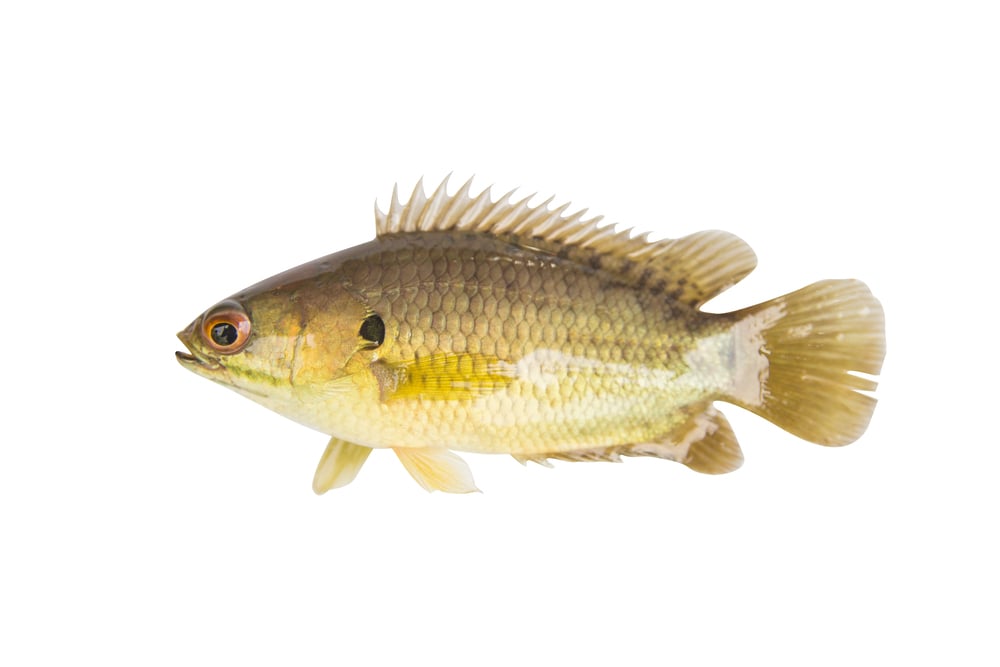
The climbing perch got its name from old legends about it scaling trees, which is definitely not true, but what it can do is still pretty impressive. This Asian species can haul itself several hundred meters across land using its pectoral fins, gill covers, and tail for propulsion. It survives the journey by breathing through a maze-like organ called a labyrinth, which extracts oxygen from the air for six to ten hours at a stretch. In Australia, where fishing boats accidentally introduced them, climbing perch have become an invasive problem not because they eat native species, but because native birds choke on their spiny fins—a darkly ironic twist that makes them dangerous as prey rather than predator.
Mangrove Rivulus
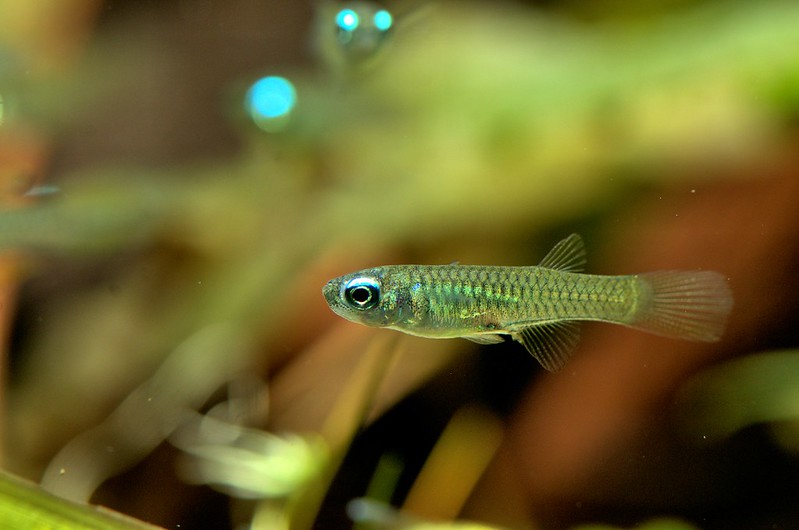
The mangrove rivulus holds the title for the world’s only self-fertilizing vertebrate, which means these tiny fish can reproduce without a partner and create genetic clones of themselves. They’re barely bigger than your thumb but can survive up to two months on land by breathing through their skin. When they need to move between puddles or crab burrows, they perform a tail-flip maneuver that launches them head over heels across the ground. Their skin is packed with capillaries that pull oxygen right out of the air, and they’ll happily set up shop in hollow logs, leaf litter, or abandoned crab homes until conditions improve.
Senegal Bichir
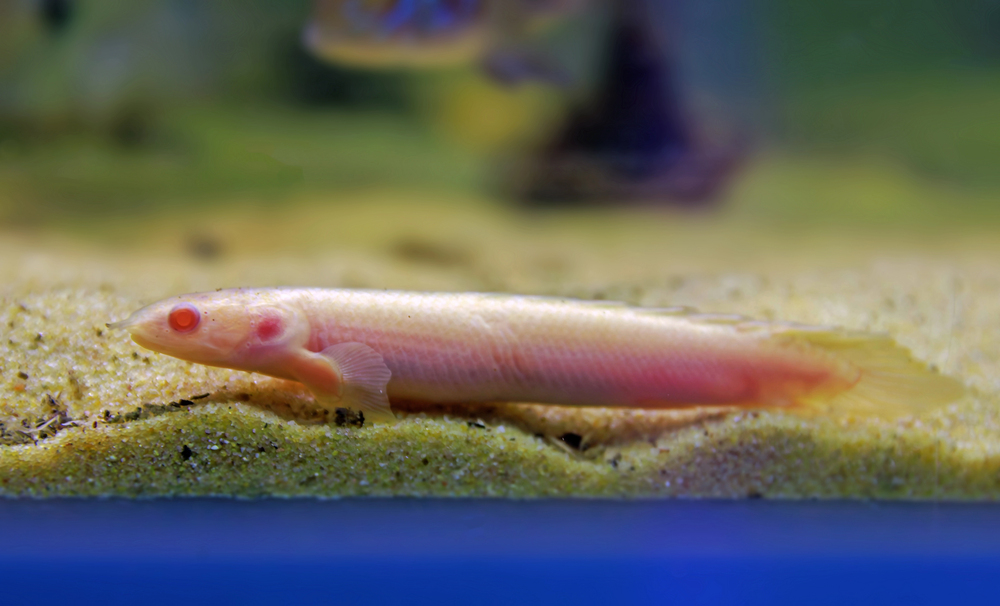
Bichirs are living fossils that have been swimming around for about 60 million years, and the Senegal bichir is the smallest of the bunch at around 14 inches long. These African fish have actual lungs instead of swim bladders, plus they’ve got fleshy pectoral fins that let them walk along the bottom or even across land when their skin stays moist. Scientists actually raised some bichirs on land to see what would happen. And the fish responded by developing modified bones and larger gills, proving they’ve got serious evolutionary potential. Their thick, bony scales are so tough that researchers have studied them as a model for lightweight body armor.
West African Lungfish
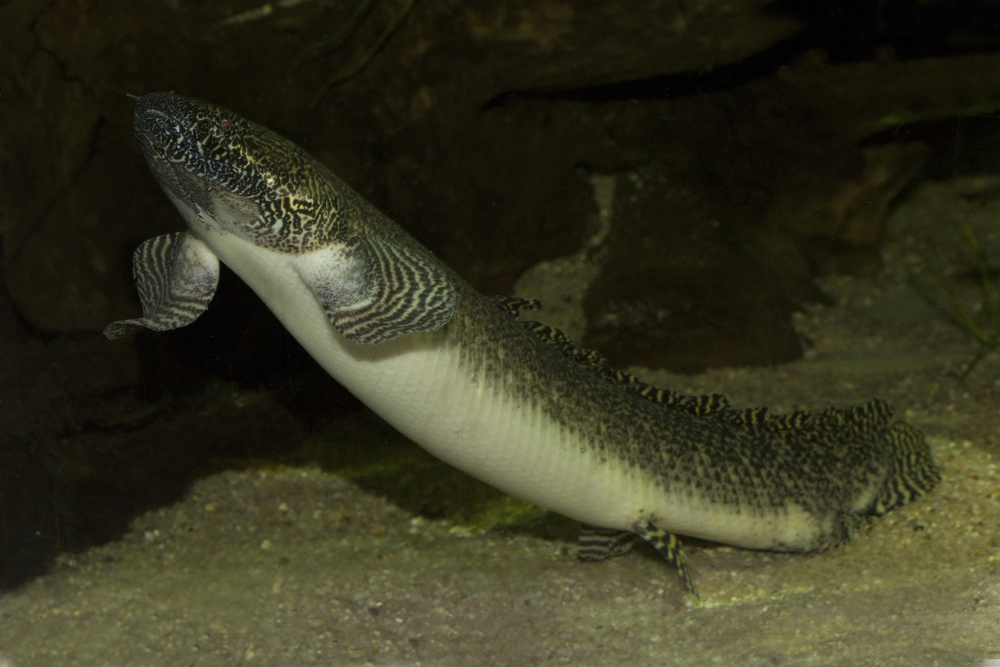
The West African lungfish looks like a fat, slimy eel that took a wrong turn somewhere in evolutionary history. It can grow up to three feet long and uses whip-like pelvic fins to lift its body off the bottom when moving underwater, which resembles walking more than swimming. These fish have actual lungs and must surface every half hour or so to gulp air, making them obligate air-breathers. During droughts, they’ll bury themselves in mud and create a mucus cocoon that hardens into a protective shell, allowing them to survive for over three years without food or water—a feat that sounds more like science fiction than biology.
Leaping Blenny
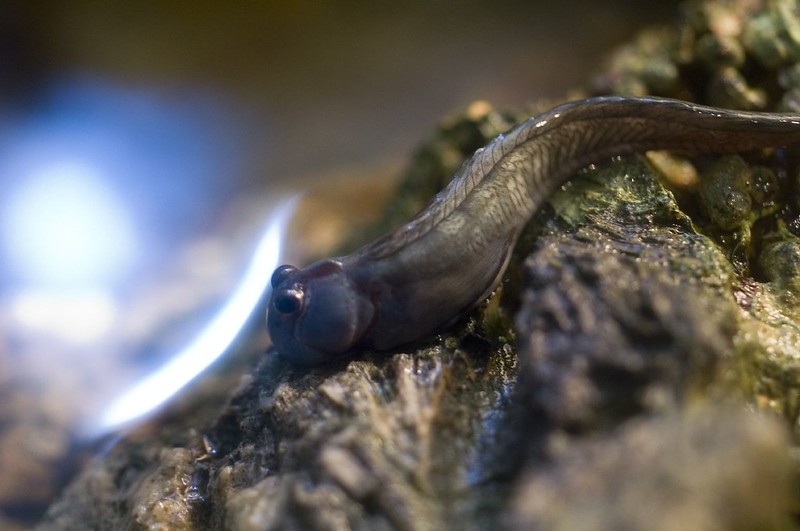
The leaping blenny took one look at the ocean and decided it had better opportunities on land. This three-inch fish with an orange-red dorsal fin lives in the splash zone around Pacific islands, where it’s developed a spring-loaded jumping technique that’s genuinely remarkable to watch. It curls its tail against its body and releases it like a coiled spring, launching itself several times its own body length across the rocks. Several blenny species can survive out of water for hours, still the Pacific leaping blenny has gone full terrestrial, spending most of its time on land and only getting wet from ocean spray.
Woolly Sculpin
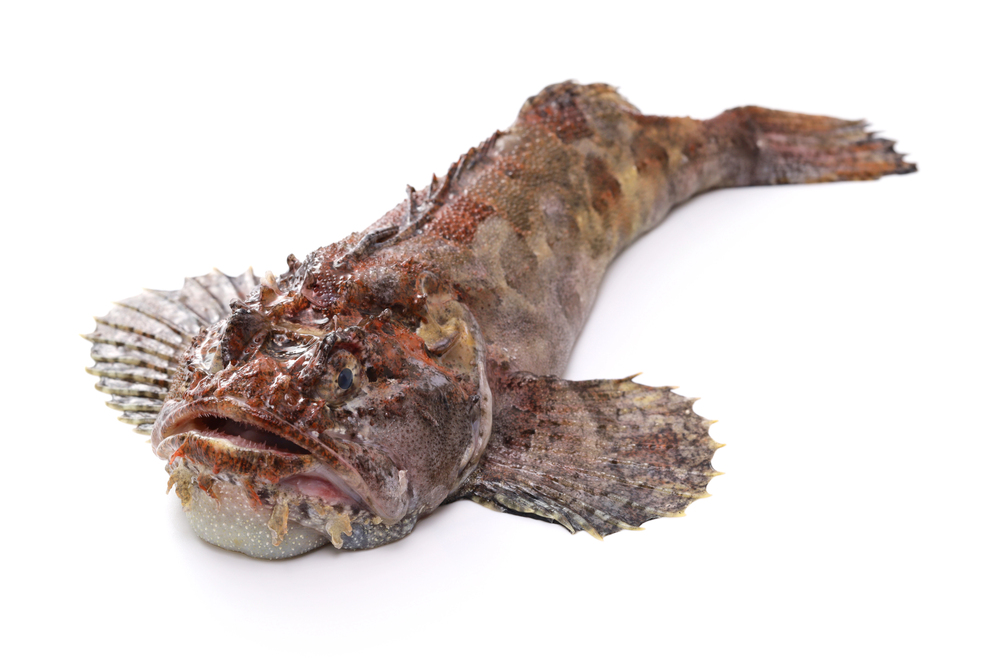
Woolly sculpins hang out in tide pools along the Pacific Coast of North America, where oxygen levels can drop to dangerous lows when the sun beats down. When things get too stuffy underwater, these fish simply leave the pool and breathe air until conditions improve. They’re not the most elegant land travelers, but they get the job done. Their ability to switch between water and air breathing gives them access to tide pool real estate that other fish can’t handle, which is a pretty sweet evolutionary advantage when you think about it.
Marbled African Lungfish
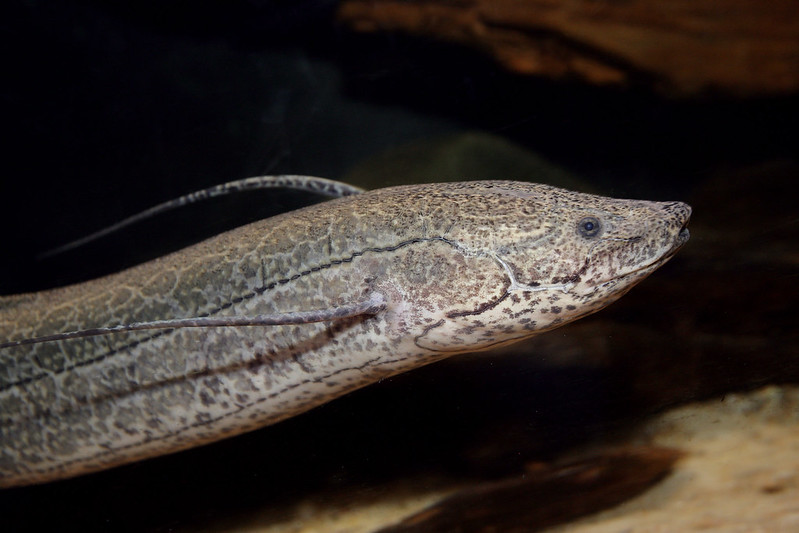
The marbled African lungfish is the giant of its family, capable of reaching nearly six feet in length and weighing up to 40 pounds. Like its West African cousin, it uses its fleshy pelvic fins to walk along the bottom of lakes and rivers, creating a gait that researchers find fascinating because it resembles how early tetrapods might have moved. These massive fish are obligate air-breathers with fully functional lungs, and juveniles even sport external gills that make them look like oversized salamanders. They’re powerful predators with crushing jaws designed to crack open crustaceans and gulp down smaller fish whole.
Eel Catfish
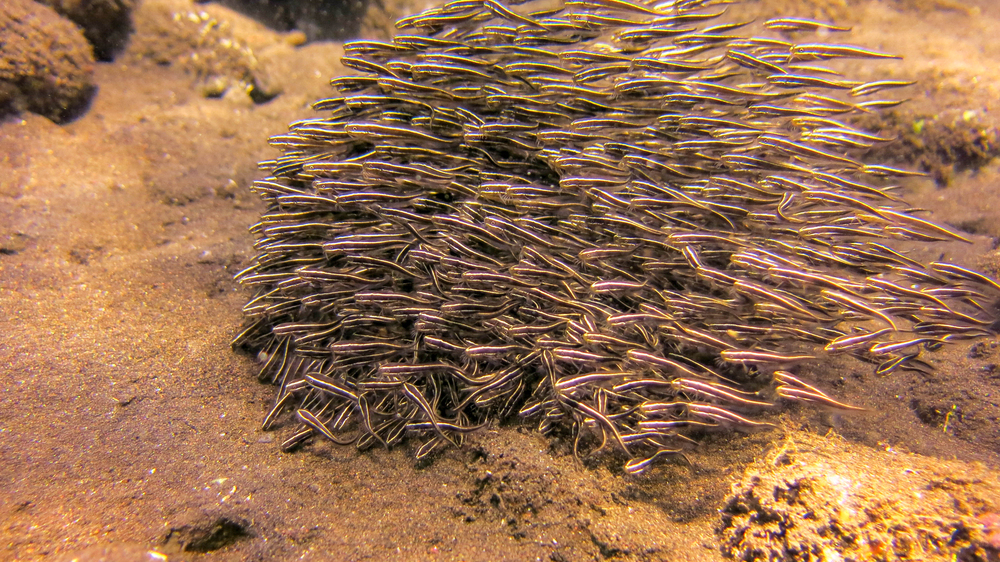
The eel catfish lives in African swamps where the line between land and water gets pretty blurry. When the mood strikes or when prey appears on land, these fish will propel themselves out of the muddy water to hunt terrestrial insects like beetles—because why limit yourself to aquatic snacks when there’s a whole buffet on shore? They’re particularly fond of making these hunting excursions during wet weather when the ground is moist and their skin won’t dry out. Their body shape and strong pectoral fins make them surprisingly effective at these brief terrestrial hunting trips.
Cave Angel Fish
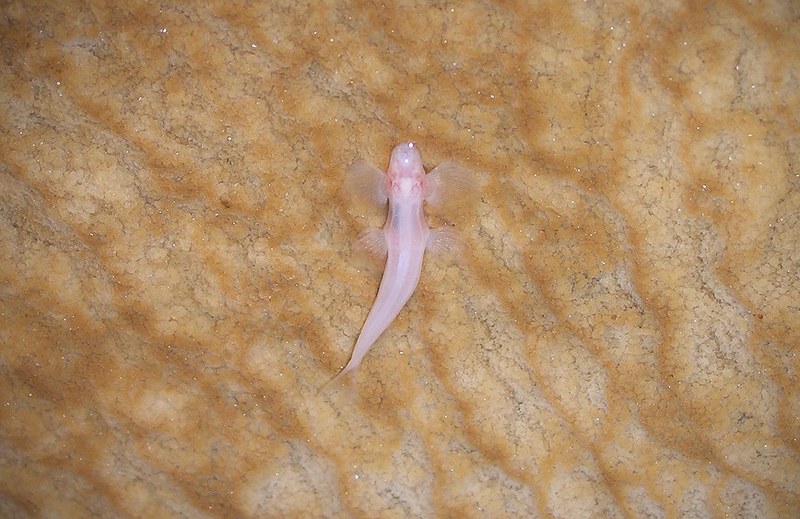
The cave angel fish is one of the rarest and most bizarre fish on this list, found only in a single cave system in Thailand. This blind, pale fish has an unusually robust pelvic girdle that connects its spine to its fins, giving it a bone structure that’s eerily similar to early land-walking vertebrates. Researchers studying CT scans discovered that at least ten other species of hillstream loach share similar skeletal features, suggesting that the ability to walk might be more common in this family than anyone realized. The cave angel fish represents a living example of how the transition from fins to legs might have happened millions of years ago.
Ornate Bichir
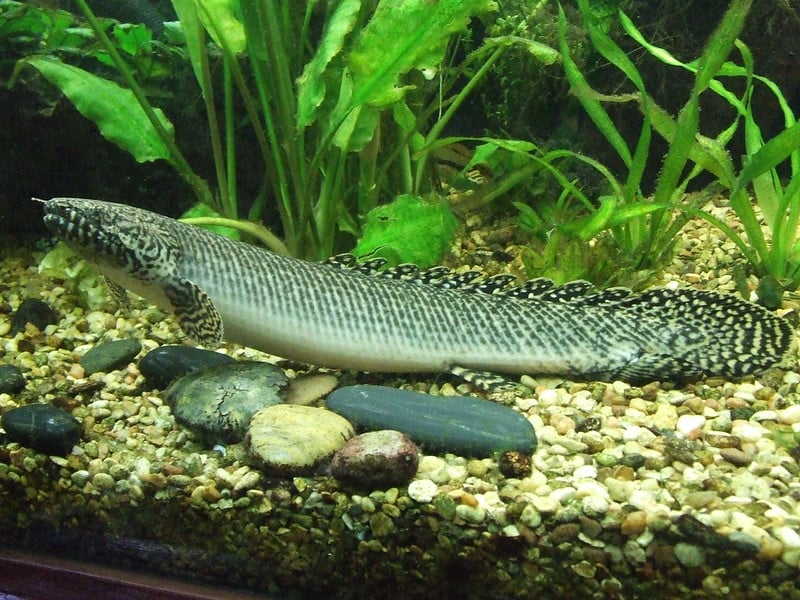
The ornate bichir sports a striking pattern of bright yellow markings on a dark brown body, making it one of the more visually impressive members of the bichir family. Like its Senegal cousin, it has lungs and fleshy pectoral fins that enable it to walk along substrates or across land when necessary. These fish can reach up to two feet in length and inhabit shallow, muddy waters across central Africa. They’re capable of surviving brief periods on land as long as their skin remains wet, using their paddle-like fins to drag themselves toward better habitat.
Grunion
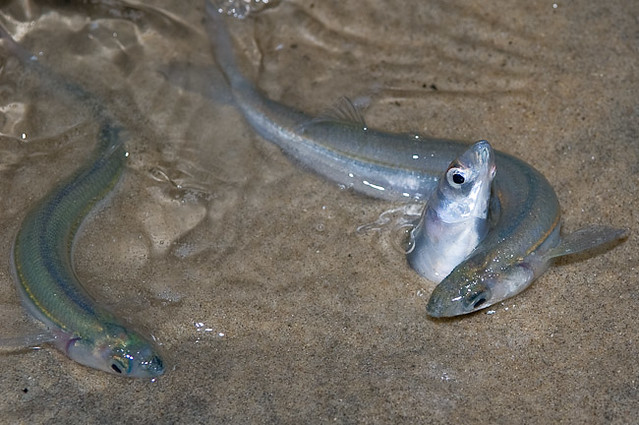
California grunions take beach invasions to a whole new level during their spawning runs. These sardine-sized fish ride the highest tides of spring and summer right up onto sandy beaches, where females dig into the sand and lay their eggs above the tide line. The entire spawning process happens on land, with thousands of fish flopping around in the wet sand for several minutes before riding the next wave back to sea. Their eggs develop in the moist sand for about two weeks until the next set of high tides washes them out, triggering the larvae to hatch almost instantly—a perfectly timed biological alarm clock that’s been running for millennia.
A World Between Water and Land
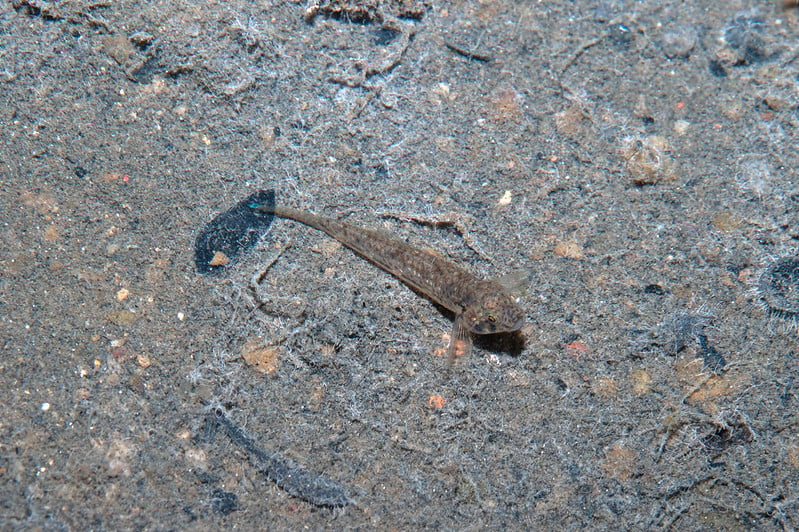
These 14 species prove that the boundary between aquatic and terrestrial life isn’t as solid as it seems. From mudskippers spending most of their lives on mudflats to grunions staging beach invasions for reproduction, each species has found its own solution to the challenge of leaving the water. Their adaptations offer scientists valuable clues about how our own ancestors made the leap from fins to feet millions of years ago. Turning an evolutionary what-if into biological reality.
More from Go2Tutors!

- The Romanov Crown Jewels and Their Tragic Fate
- 13 Historical Mysteries That Science Still Can’t Solve
- Famous Hoaxes That Fooled the World for Years
- 15 Child Stars with Tragic Adult Lives
- 16 Famous Jewelry Pieces in History
Like Go2Tutors’s content? Follow us on MSN.