14 Military Campaigns That Failed Because of Bad Weather
Weather has always been a great disruptor in warfare. Generals can predict enemy movements, calculate supply needs, even outmaneuver a larger force—but the elements? They obey no plan. Time and again, entire campaigns have fallen apart not because of poor strategy or strong opposition, but due to cold snaps, storms, heatwaves, or floods that no one could fully prepare for.
In many cases, the weather became a silent opponent—indifferent to ambition, unaware of politics, and completely unforgiving. These 14 military campaigns serve as harsh reminders that no army, no matter how disciplined or well-equipped, is immune to nature’s wrath.
Napoleon’s Invasion of Russia (1812)

Napoleon entered Russia with more than 600,000 troops—he left with under 30,000. The retreat from Moscow was a slow-motion disaster, as temperatures plunged to minus 30 degrees Fahrenheit. Horses collapsed en masse, wagons were abandoned, and soldiers wrapped themselves in torn cloth just to survive the night. What should’ve been an organized withdrawal turned into chaos. The cold didn’t just freeze limbs—it froze Napoleon’s myth of invincibility.
The Spanish Armada (1588)

Philip II of Spain sent 130 ships across the Channel to crush England and restore Catholic rule. But while naval skirmishes bruised the fleet, it was a series of brutal storms that shattered it. Galleons were dashed against rocky shores or scattered across the North Sea. Nearly half never returned to Spain. For all its power on paper, the “Invincible Armada” wasn’t built to weather the storm—literally.
The German Push at Stalingrad (1942–1943)

By the time the Germans reached Stalingrad, winter had arrived—brutal, merciless, and perfectly timed. German troops, still dressed for fall, found themselves encased in snow and ice. Blizzards grounded supply planes, leaving units with little food or ammunition. Temperatures hit minus 40 degrees. Trapped among the ruins, over 200,000 soldiers died or surrendered. Victory slipped away not through battle, but through frostbite and hunger.
The Mongol Invasions of Japan (1274 & 1281)

Kublai Khan launched two massive invasions of Japan—both ended the same way. Typhoons, later called “kamikaze” or divine winds, slammed into the fleets, destroying thousands of ships and drowning the majority of the warriors. The second attempt in 1281 was especially catastrophic. Just as the Mongols prepared to land, another storm swept in, tearing the invasion force apart. Nature defended Japan where weapons couldn’t.
Alexander the Great’s March Through Gedrosia (325 BC)

Fresh from his Indian campaigns, Alexander chose a shortcut through the Gedrosian Desert—modern southern Iran and Pakistan. It proved nearly fatal. Scorching heat and scarce water decimated his army. Sandstorms buried supplies, while dehydration and sun exposure killed thousands. By the time Alexander emerged, three-quarters of his force was gone—defeated not by enemies, but the desert itself.
The English Attack on Cartagena (1741)

One of Britain’s largest naval expeditions—186 ships and 27,000 men—set sail for Cartagena in present-day Colombia. But tropical heat and disease hit harder than Spanish cannon fire. Yellow fever, malaria, and dysentery tore through the ranks, killing more than 18,000. The climate, not combat, did the most damage. Few made it home, and those who did came back scarred—physically and otherwise.
Sweden’s Invasion of Russia (1708–1709)

Charles XII of Sweden headed toward Moscow after initial victories, but winter had other plans. Temperatures dropped to minus 50 degrees Fahrenheit. Soldiers froze mid-march. Entire divisions vanished, unable to keep pace or find shelter. By the time they faced the Russians at Poltava, the Swedish army was a husk of what it had been. The cold didn’t just stall momentum—it flipped the war entirely.
The British Expedition to Buenos Aires (1807)

Expecting light resistance, British troops entered Buenos Aires in the middle of a torrential downpour. Streets turned to rivers, firearms became useless, and visibility dropped to near zero. Locals, watching from rooftops and windows, fired down on the confused invaders. The storm hadn’t just ruined gunpowder—it ruined the plan. What was meant to be a swift conquest turned into an embarrassing retreat.
France’s Long History with the Russian Winter (1812 redux)

Napoleon’s doomed Russian campaign wasn’t unique. Over the centuries, various invading armies made the same mistake—entering Russia in late summer, only to face winter unprepared. Cold didn’t merely kill—it destroyed morale, wrecked equipment, and severed supply lines. Leaders kept thinking they’d escape the fate of their predecessors. None did.
Germany’s Army Group Center (1941–1942)

Operation Barbarossa started strong—German forces surged toward Moscow. But the advance stalled as winter set in. Snow buried roads, supply trucks got stuck, and weapons malfunctioned in minus 40 degrees. Soldiers still wore light uniforms, ill-equipped for the Russian freeze. The offensive ground to a halt. Moscow was saved—not by firepower, but by frost.
The Persian Invasion of Greece (480 BC)

Xerxes’ campaign brought 200,000 troops and over 1,000 ships toward Greece. But storms near Mount Athos ripped through the fleet, sinking 400 ships and killing thousands. The fleet, now scattered and diminished, forced Xerxes to rely on overstretched land routes. Though Persia would later fall at Salamis due to tactical missteps, the weather had already delivered the first blow.
The Crimean War Winter (1854–1855)
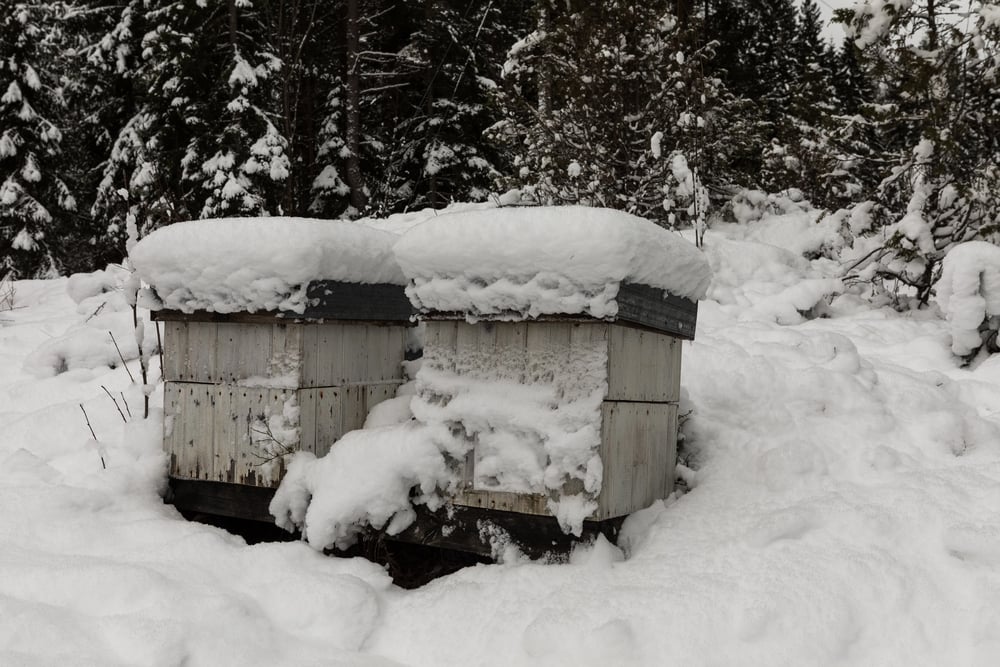
Winter in Crimea turned trench warfare into slow death. British troops had no winter coats, little food, and nowhere to shelter. Supply lines collapsed under snow and ice. Disease—cholera, typhus, dysentery—raged through the camps, killing far more than enemy fire. For soldiers on all sides, the battle wasn’t against each other—it was survival itself.
Valley Forge, American Revolutionary War (1777–1778)

The winter encampment at Valley Forge nearly broke the Continental Army. Soldiers went barefoot in deep snow, leaving bloody footprints along frozen paths. Lacking coats, blankets, and often food, they faced sub-zero temperatures for weeks. Yet despite the misery, the army held together. Barely. The weather tested not just endurance, but belief in the revolution.
The Winter War in Finland (1939–1940)

Soviet forces outnumbered the Finns more than two to one—but winter made it irrelevant. As temperatures dropped to minus 40, Soviet tanks and troops bogged down in deep snow. Finnish ski units, nimble and well-prepared, harassed them constantly. Roads became traps. The equipment froze. The Red Army’s advantage vanished in the cold, and what was supposed to be a quick victory turned into a humiliating quagmire.
When Weather Turns the Tide

From deserts to tundras, hurricanes to hailstorms, weather has a long track record of breaking even the most powerful armies. These campaigns didn’t just fail—they unraveled, often spectacularly, because of conditions no commander could control. In the end, nature has no allegiance, no strategy—only the power to shift history in an instant.
More from Go2Tutors!

- 16 Historical Figures Who Were Nothing Like You Think
- 12 Things Sold in the 80s That Are Now Illegal
- 15 VHS Tapes That Could Be Worth Thousands
- 17 Historical “What Ifs” That Would Have Changed Everything
- 18 TV Shows That Vanished Without a Finale
Like Go2Tutors’s content? Follow us on MSN.



