14 Underground Natural Wonders Most People Never Get to See
While millions of tourists flock to famous landmarks like the Grand Canyon or Niagara Falls, some of Earth’s most spectacular natural wonders remain hidden beneath our feet. These underground marvels have been carved, sculpted, and formed over millions of years, creating breathtaking landscapes that rival anything on the surface.
Here is a list of 14 underground natural wonders that most people never get the chance to witness firsthand.
Son Doong Cave
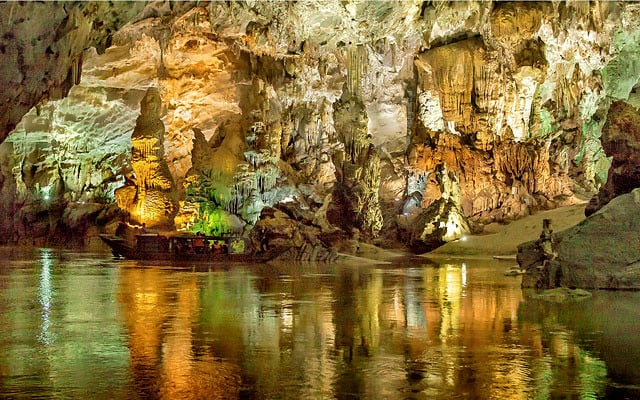
Deep in Vietnam’s jungles sits the world’s largest cave passage — so enormous you could fit a 40-story skyscraper inside with room to spare. Son Doong Cave stretches over 5.5 miles long. Some sections reach 460 feet high and 500 feet wide, though the cave system is so vast it has its own weather patterns, complete with clouds and fog that form inside the chambers.
Antelope Canyon
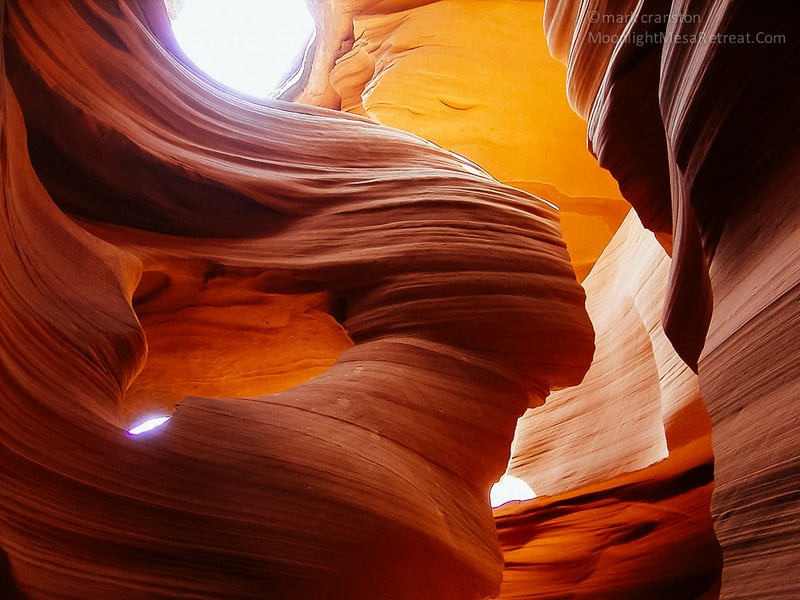
This slot canyon in Arizona looks like something from another planet. Its smooth, wave-like walls seem to flow like liquid stone, carved by flash floods over thousands of years into a natural sculpture gallery where light beams dance through the openings above. The canyon’s walls change color throughout the day — shifting from deep purples to brilliant oranges as sunlight filters down through the slots.
Carlsbad Caverns

Beneath the New Mexico desert lies one of North America’s most extensive cave systems, featuring the famous Big Room that spans 14 acres. The caverns house over 400,000 Mexican free-tailed bats that create a natural spectacle each evening — spiraling out of the cave entrance in a living tornado. These limestone formations have been growing for over 4 million years, creating an underground palace of stalactites and stalagmites.
Mammoth Cave

Kentucky’s Mammoth Cave system holds the record as the world’s longest known cave network. Over 400 miles of surveyed passages exist, yet new sections are still being discovered. The cave formed in a thick limestone layer, creating multiple levels of interconnected tunnels that early explorers used as shelter — even as a source of saltpeter for gunpowder. Today, the cave ecosystem supports unique blind fish and other creatures that have adapted to life in perpetual darkness.
Jeita Grotto

Lebanon’s Jeita Grotto consists of two interconnected limestone caves carved out over millions of years by underground rivers. The upper gallery showcases massive stalactites and stalagmites, while the lower cave can only be explored by boat as it follows an underground river. The grotto’s chambers are filled with formations that resemble everything from massive cathedrals to delicate curtains made of stone.
Waitomo Glowworm Caves

New Zealand’s Waitomo Caves offer a magical experience where thousands of tiny glowworms illuminate the darkness like a living constellation. These creatures — found nowhere else on Earth — create a bioluminescent display that transforms the cave ceiling into what looks like a starry night sky. The caves formed over 30 million years ago when the area was still underwater, and the limestone walls now serve as the perfect backdrop for this natural light show.
Škocjan Caves

Slovenia’s Škocjan Caves feature one of the world’s largest underground canyons. The chambers are so large they could hold the Statue of Liberty, while the Reka River disappears into the cave system, creating a thunderous underground waterfall that echoes through the massive chambers. The caves have been inhabited by humans for over 10,000 years — ancient pottery fragments found inside suggest they were once used for burial ceremonies.
Lechuguilla Cave

Hidden beneath New Mexico’s Carlsbad Caverns National Park, Lechuguilla Cave remained undiscovered until 1986 — making it one of the most recently found major cave systems. The cave is famous for its rare mineral formations and pristine condition. Some chambers contain formations found nowhere else on Earth, though scientists believe the cave was formed not by water from above, but by sulfuric acid rising from oil deposits deep underground.
Reed Flute Cave

Known as the ‘Palace of Natural Arts’ in Guilin, China, Reed Flute Cave has been attracting visitors for over 1,200 years. Ancient inscriptions dating back to 792 AD are still visible on the walls — testament to its long history. The cave gets its name from the reeds that grow outside, which can be made into flutes, and the interior features a wonderland of limestone formations reflected in crystal-clear underground pools.
Postojna Cave

Slovenia’s Postojna Cave system stretches for 15 miles and can be explored partly by underground train — making it one of the most accessible major cave systems in the world. The caves are home to the olm, a bizarre blind salamander that can live for over 100 years and survive without food for a decade. The cave’s concert hall, a natural chamber with perfect acoustics, has hosted musical performances for over 200 years.
Fingal’s Cave
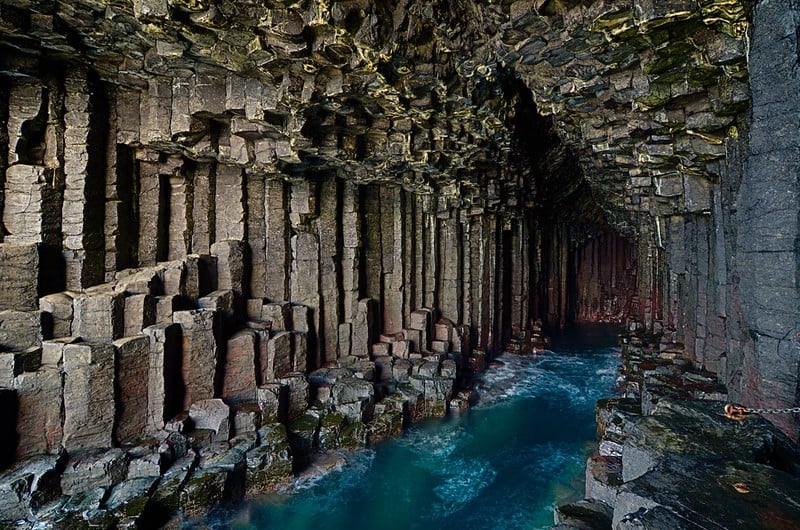
Located on the uninhabited island of Staffa in Scotland, Fingal’s Cave is entirely formed from hexagonal basalt columns that create a natural cathedral. The cave was formed by ancient volcanic activity, and the geometric precision of the rock formations inspired Felix Mendelssohn to compose his famous ‘Hebrides Overture’ after visiting in 1829. The cave’s unique shape creates haunting acoustics that amplify the sound of waves crashing against its walls.
Gruta do Lago Azul

Brazil’s Blue Lake Cave contains one of the most stunning underground lakes in the world, with water so blue and clear it seems almost artificial. The lake sits 250 feet below ground and is so deep that divers have never found the bottom, despite exploring to depths of over 280 feet. The cave’s blue color comes from the way sunlight filters through an underwater opening, creating an ethereal glow that illuminates the entire chamber.
Cueva de las Maravillas

The Dominican Republic’s Cave of Wonders contains some of the Caribbean’s most important prehistoric art, with over 500 pictographs and petroglyphs created by the Taíno people over 800 years ago. The cave system features multiple levels connected by underground rivers, and the artwork depicts everything from human figures to animals and abstract symbols. The cave’s natural formations include massive flowstone curtains and delicate soda straws that have been growing for thousands of years.
Eisriesenwelt

Austria’s Eisriesenwelt, or ‘World of the Ice Giants,’ is the largest ice cave system in the world, stretching over 26 miles through the Austrian Alps. The cave maintains freezing temperatures year-round, creating a frozen wonderland of ice formations that include massive frozen waterfalls and delicate ice crystals. Visitors explore the cave by lamplight, just as the first explorers did over a century ago, adding to the mysterious atmosphere of this frozen underground realm.
Hidden Worlds Still Waiting

These underground wonders remind us that Earth still holds countless secrets beneath its surface, many of which remain completely unexplored. Scientists estimate that we’ve only discovered a fraction of the world’s cave systems, meaning there are likely thousands of hidden chambers and passages waiting to be found. Each of these natural formations took millions of years to create, representing a slow-motion sculpture project that continues today, one drop of water at a time.
More from Go2Tutors!

- 16 Historical Figures Who Were Nothing Like You Think
- 12 Things Sold in the 80s That Are Now Illegal
- 15 VHS Tapes That Could Be Worth Thousands
- 17 Historical “What Ifs” That Would Have Changed Everything
- 18 TV Shows That Vanished Without a Finale
Like Go2Tutors’s content? Follow us on MSN.